Nara, Japan


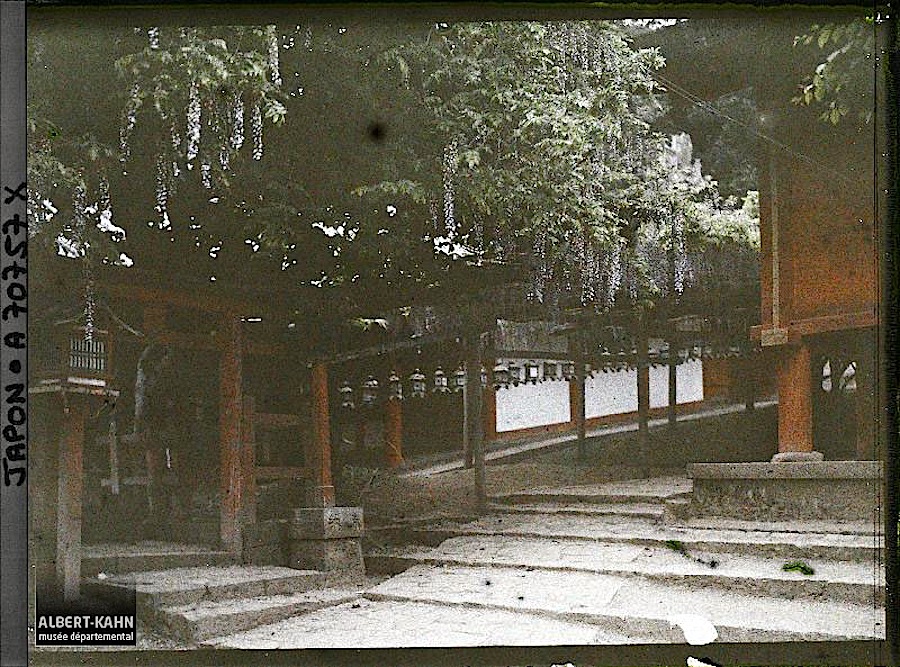
Kasuga-jinja (or Kasuga-taisha) Sanctuary and wisteria, Nara, Japan, Spring 1926, by Roger Dumas, via Archives of the Planet Collection – Albert Kahn Museum /Département des Hauts-de-Seine (all three photos here).
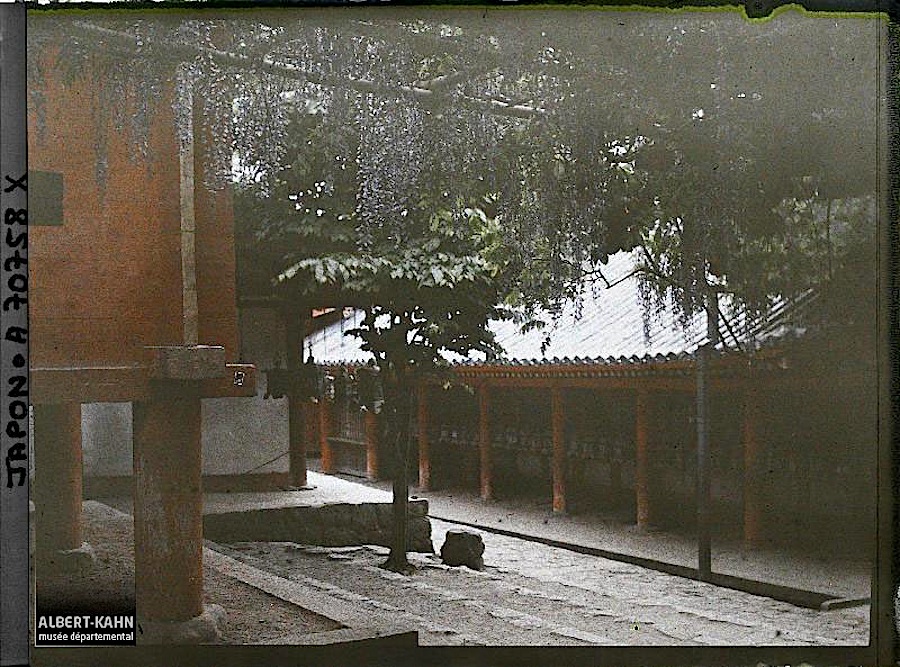
The Shinto shrine (first built in 768 A.D.) is famous for its thousands of bronze and stone lanterns. It is located on the edge of Nara Park, home to freely roaming deer said to be messengers of the gods.
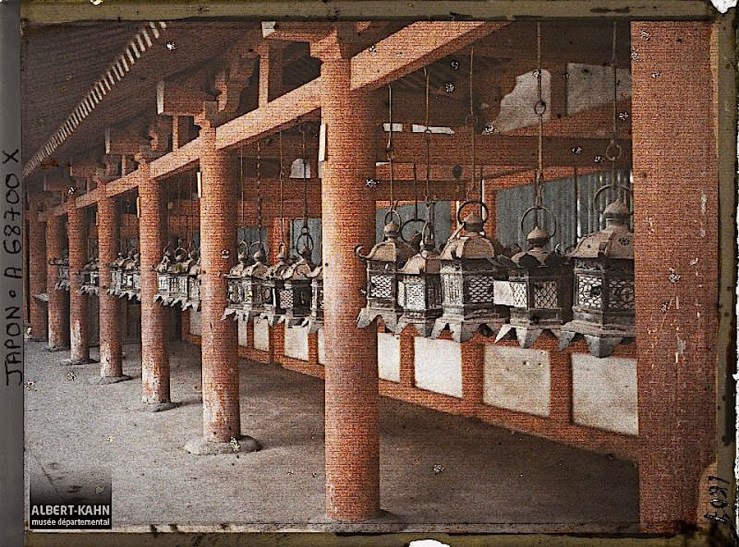
Temple of lanterns, Japan, A68700X, Musee Albert-Kahn, Archives de la Planete

The autochromes above are three of about seventy-two thousand that were commissioned and then archived by Albert Kahn, a wealthy French banker and pacifist, between 1909 and 1931. Kahn sent thirteen photographers and filmmakers to fifty countries “to fix, once and for all, aspects, practices, and modes of human activity whose fatal disappearance is no longer ‘a matter of time.'”* The resulting collection is called Archives de la Planète and now resides in its own museum at Kahn’s old suburban estate at Boulogne-Billancourt, just west of Paris. Since June 2016, the archive has also been available for viewing online here.


*words of Albert Kahn, 1912. Also, the above photos (A 70 757 X, A 70 758 X, A 68 700 X) are © Collection Archives de la Planète – Musée Albert-Kahn and used under its terms, here.
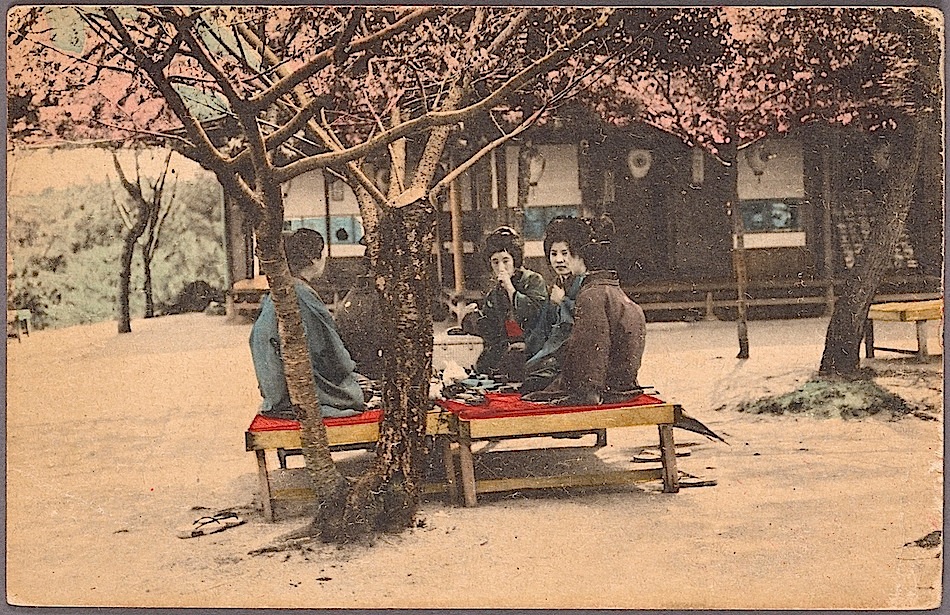
Life in gardens: tea and talk

“Picnic-style tea ceremony,” Japan, ca. 1900, a hand-colored postcard, via The New York Public Library.

It may be a “ceremony,” but I think it’s more likely an informal bite to eat after a long walk under the cherry blossoms — with lots of conversation.

Nagasaki


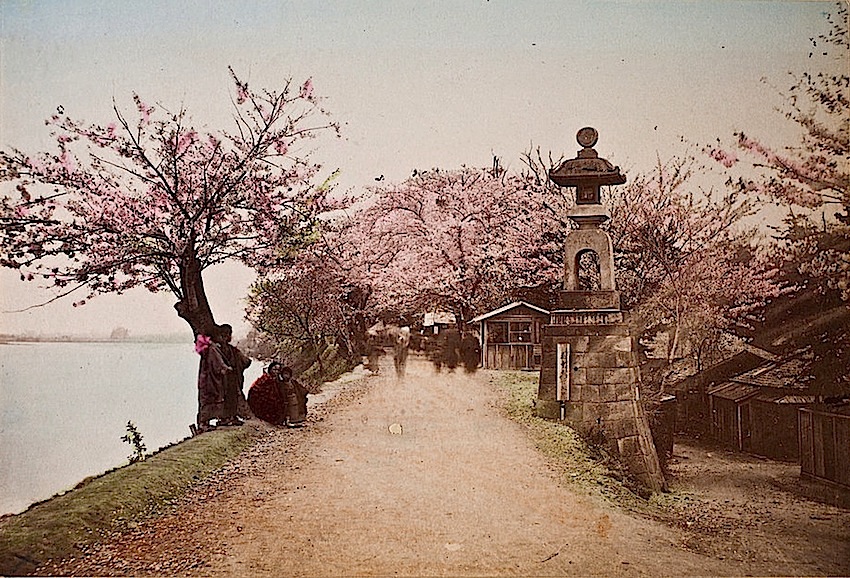
Blooming cherry trees in Nagasaki, Japan, an hand-colored souvenir photo collected by Nikolaj Gerasimov, ca. 1900, via Society of Swedish Literature in Finland Commons on flickr.

Life in gardens: Aoyama

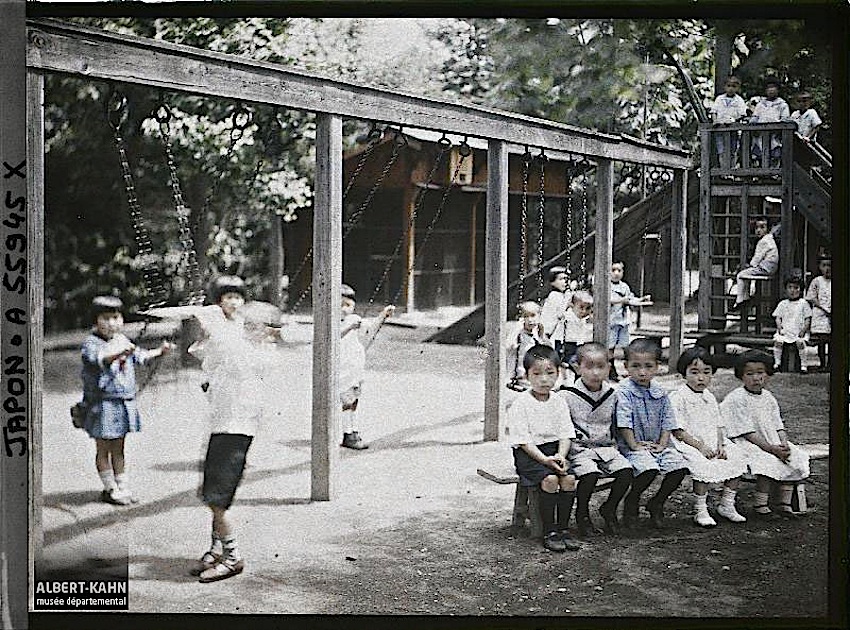
Ecole d'Aoyama, enfants et balançoires, Tôkyô, Japon, été 1926, (Autochrome, 9 x 12 cm), Roger Dumas, Département des Hauts-de-Seine, musée Albert-Kahn, Archives de la Planète, A 55 945 XA very nice playground at a school in Aoyama, a neighborhood of Tokyo, summer 1926, by Roger Dumas, via Archives of the Planet Collection – Albert Kahn Museum /Département des Hauts-de-Seine.

This autochrome is one of about 72,000 that were commissioned and then archived by Albert Kahn, a wealthy French banker who was committed to the ideal of universal peace and believed that “knowledge of foreign cultures encourages respect and peaceful relations between nations.”* He was also acutely aware that the 20th century was going to bring rapid material change to the world.

Accordingly, from 1909 to 1931, Kahn sent thirteen photographers and filmmakers to 50 countries “to fix, once and for all, aspects, practices, and modes of human activity whose fatal disappearance is no longer ‘a matter of time.'”†  The resulting collection is called Archives de la Planète and now resides in its own museum at Kahn’s old suburban estate at Boulogne-Billancourt, just west of Paris. Since June 2016, the archive has also been available for viewing online here.


*Collections Albert Kahn website. Also, the above photo (A 55 945 X) is © Collection Archives de la Planète – Musée Albert-Kahn and used under its terms, here.
†words of Albert Kahn, 1912.

Vintage landscape: Tokyo

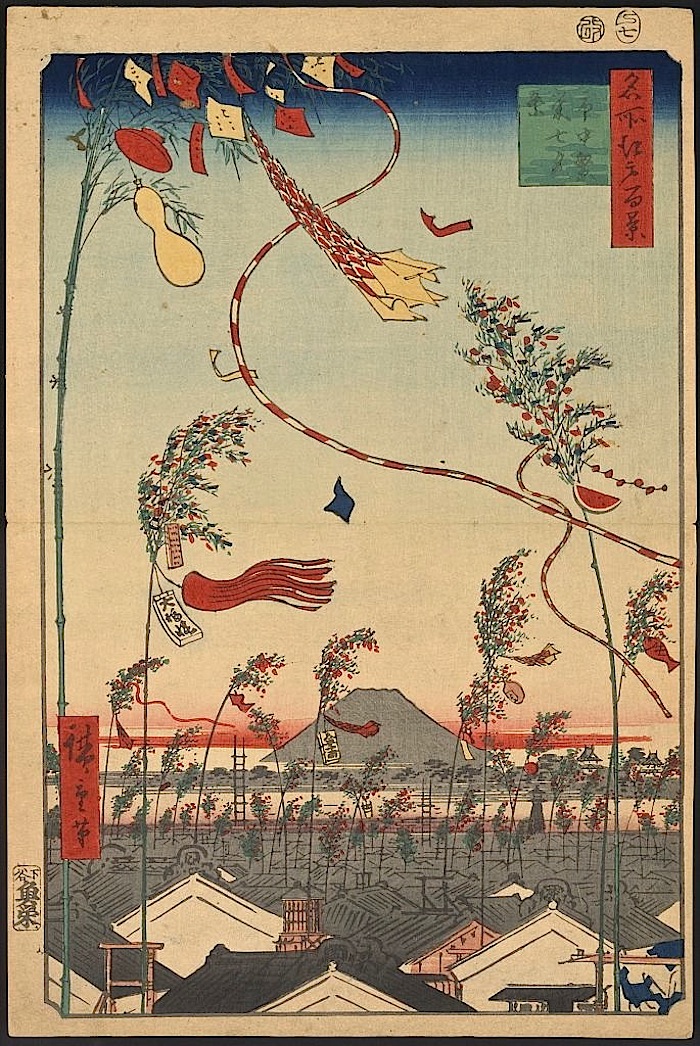
Japanese festival, Library of CongressShichūhan’ei tanabata matsuri (The city flourishing, Tanabata Festival), 1857, by Andō Hiroshige, via Library of Congress Prints and Photographs Division.

The print shows tall bamboo decorated with cutout ornaments and paper streamers bearing wishes above Tokyo’s rooftops during the festival, which begins on July 7. Tanabata, or “evening of the seventh,”  honors the yearly meeting of two deities/stars/lovers, Orihime (Vega) and Hikoboshi (Altair).