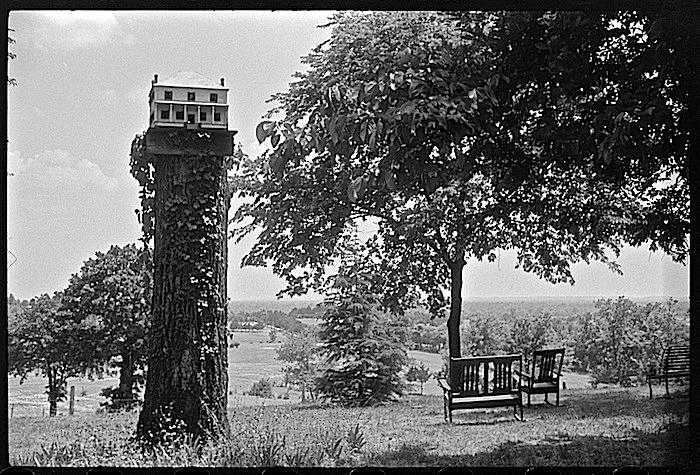
 “Birdhouse and landscape at an old plantation home [probably this one] near Eutaw, Alabama,” May 1941, by Jack Delano, via Library of Congress Prints and Photographs Division.
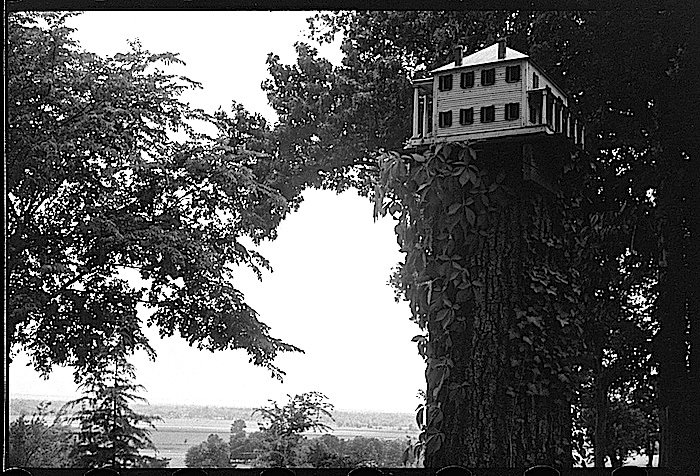
As I was reading about the history of birdhouses, I learned that shelters like the one above, which mirror a builder’s own house or other nearby architecture, were common in Turkey from the 15th century (and probably earlier).
Their compassionate purpose was to provide winter protection to non-migratory birds. Many were quite ornate and built right onto the sides of “mosques, madrasas, libraries, houses, inns, baths, tombs, bridges, churches, synagogues, and even palaces,” according to the Turkish Cultural Foundation website.*
In Europe, during the same period, birdhouses were built from baskets, wood, and clay as traps for collecting eggs or for capturing the birds themselves.
In colonial-era North America, both Native Americans and European settlers used birdhouses to attract and increase the local bird population for hunting and insect control.
Pines in the distance begin to brighten,
deep blue to something like green.
Everything winged must be dreaming.
— Susan Ludvigson, from “Grace“
*There is also a nice photo here of the very large birdhouses that were placed in Istanbul parks in the 1960s. Last December, I saw many small birdhouses in the trees along the Hippodrome, put there by the local government.

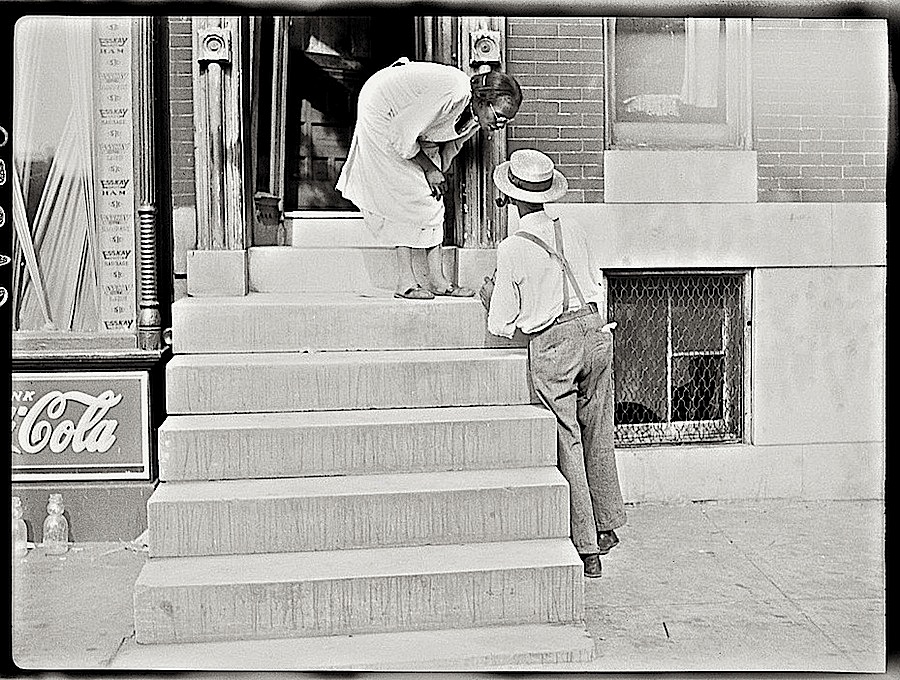 This photo was among a set of 1938 photos of Baltimore, Maryland, by John Vachon, via Library of Congress Prints and Photographs Division (all four pictures).
 “Resident of Dover, Delaware,” July 1938, by John Vachon.
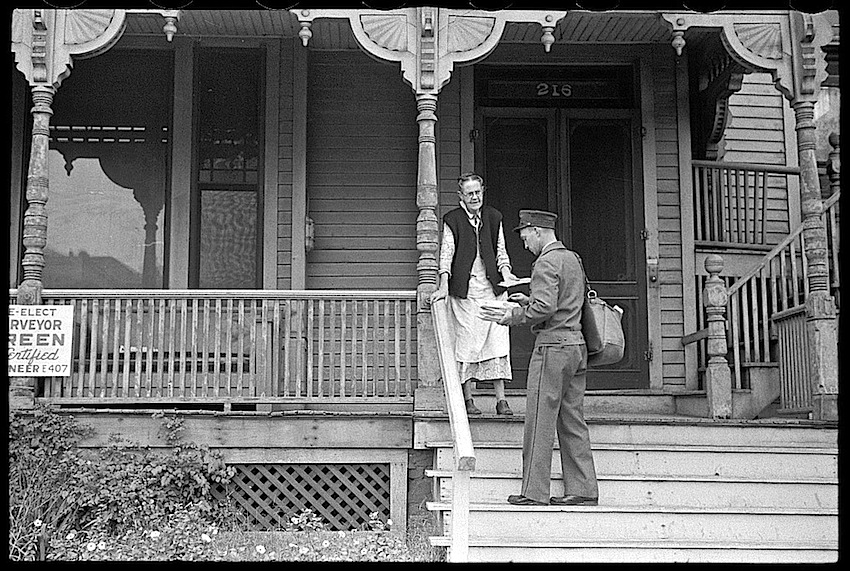 “Morning mail, Omaha, Nebraska,” November 1938, by John Vachon.
 “On the porch of a general store in Hinesville, Georgia,” April 1941, by Jack Delano.



 The vegetable garden and cold frames of the
 enclos*ure