
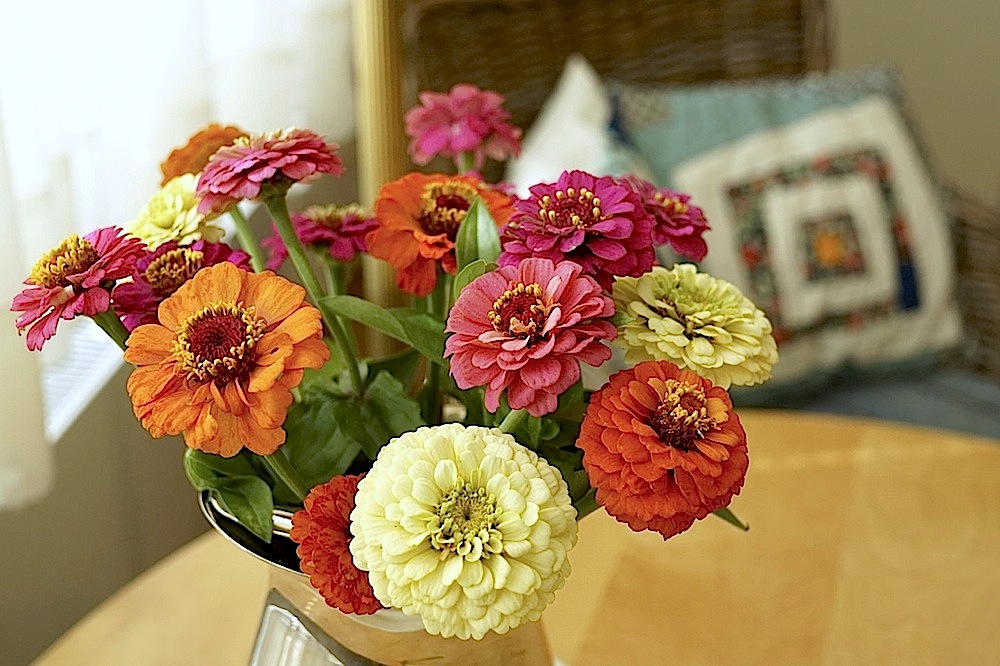
 Just zinnias — from the Stuttgart Saturday flower market.
To see what other garden bloggers have put in vases today, please visit Cathy at Rambling in the Garden.
Just zinnias — from the Stuttgart Saturday flower market.
To see what other garden bloggers have put in vases today, please visit Cathy at Rambling in the Garden.
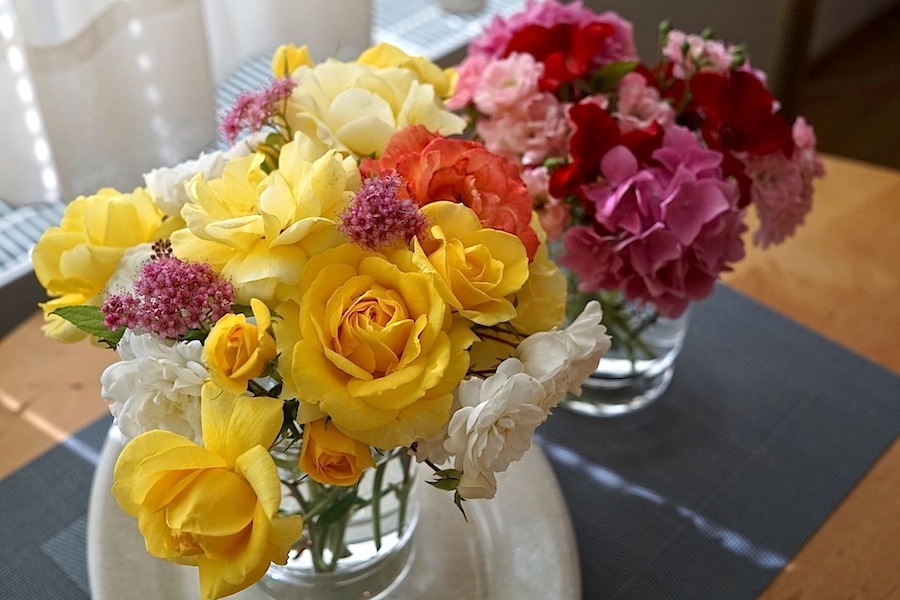 This weekend, I made two arrangements with roses, spirea, and hydrangea — all from our yard.

I like red and pink together, but I find dark red so difficult to photograph. It just swallows all the light.
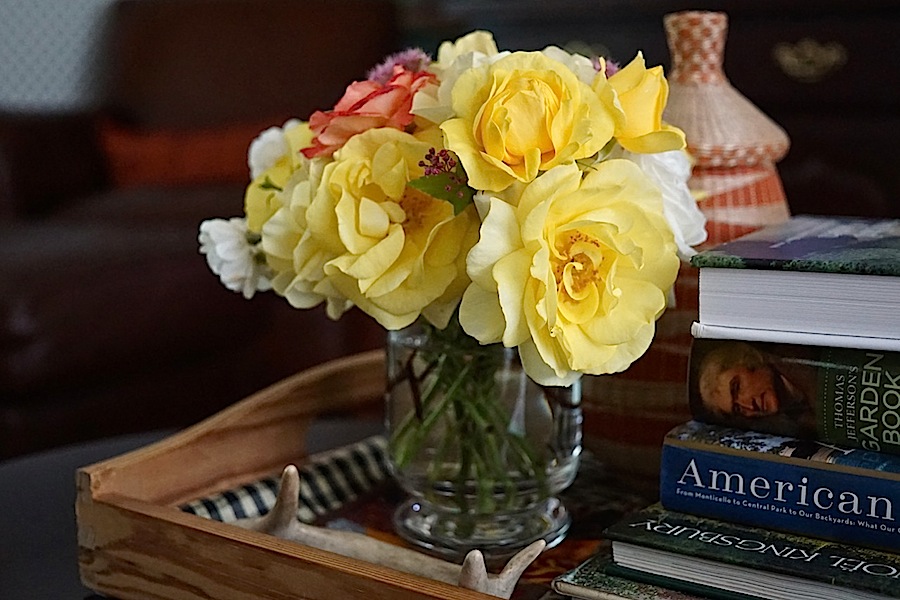
I put the yellow arrangement on the coffee table.
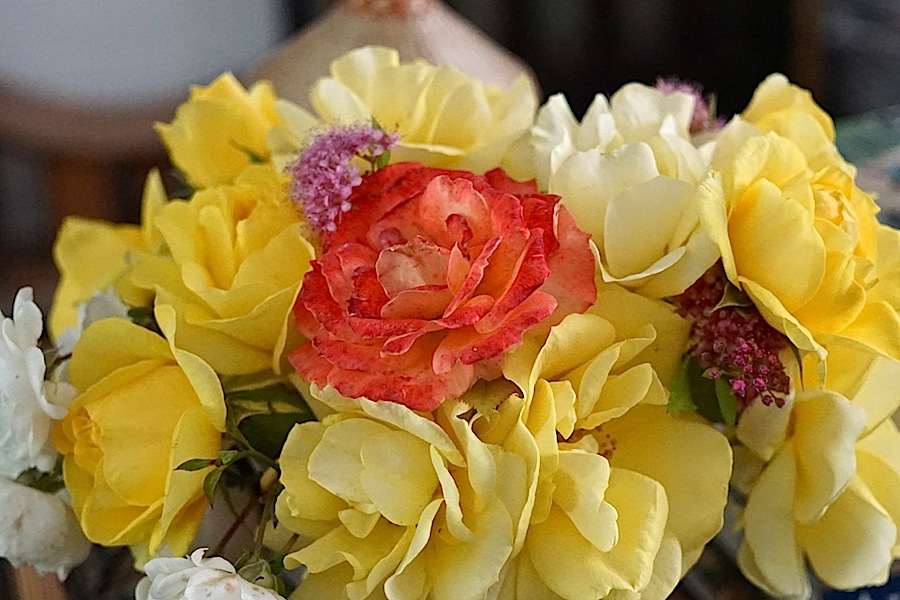
That orange rose is the only one that’s fragrant.
To see what other garden bloggers have put in vases today, please visit Cathy at Rambling in the Garden.
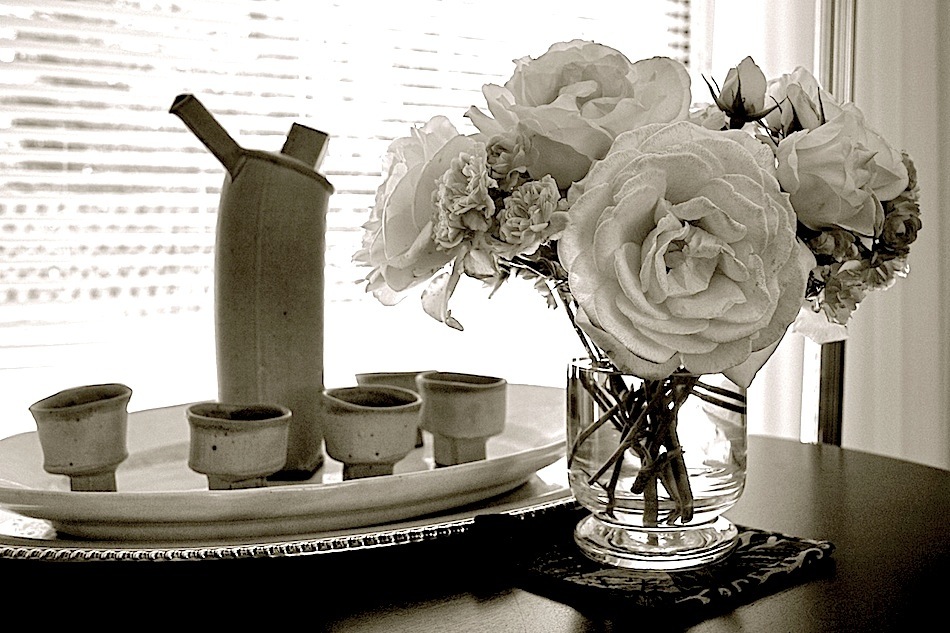
These white, yellow, and pink roses came from bushes that were in our garden when we moved into the house, and last summer they looked a bit sad and didn’t produce many flowers. But I mulched them well with fallen leaves in autumn and continuously fed them my used coffee grounds over the winter. Then, we had a lot of rain this spring and June, and, finally, some sun and warmth in July, so when we got back from France on Friday each bush had several open blooms.

The arrangement’s color combination, however, while cheerful in the living room, wasn’t very pretty in my pictures, so I switched to black and white.
To see what other garden bloggers have put in vases today, please visit Cathy at Rambling in the Garden.
And if you voz to see my roziz
As is a boon to all men’s noziz —
You’d fall upon your back and scream —
“O Lawk — O crikey! It’s a dream!”— Edward Lear
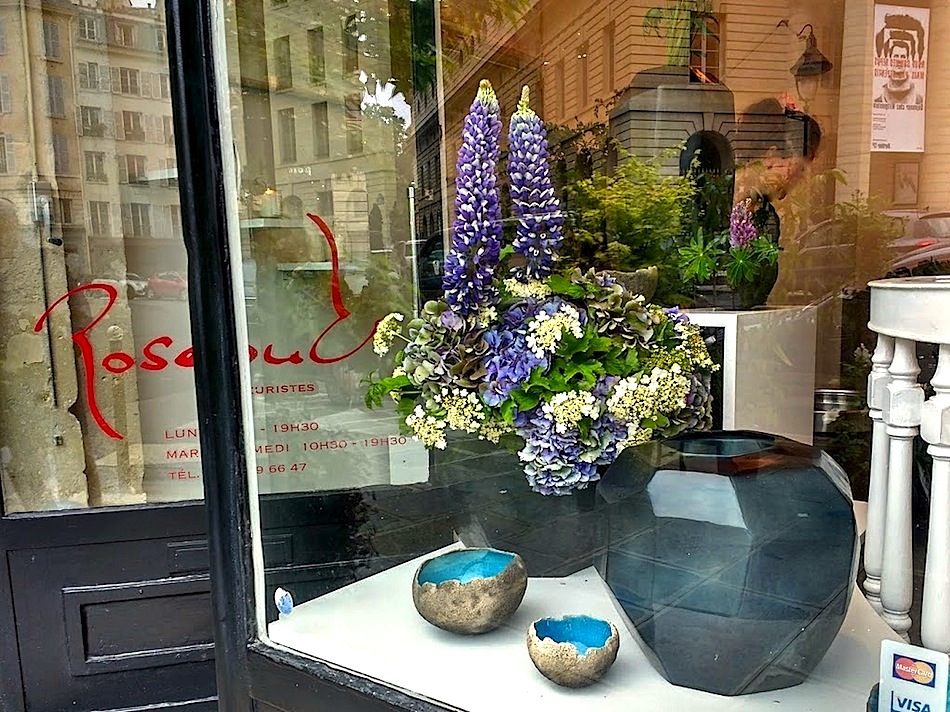
We spent the long holiday weekend in Paris, just getting back this afternoon — so I don’t have a flower arrangement of my own today. But I can offer a few pictures of the windows of two florists in the area north of the Luxembourg Garden: Rosebud and Stanislaus Draber.

On the train to France, I read an article in Paris-Match magazine, “La Fleur Fait Sa Révolution!”
“The flower has become a symbol of an urban renaissance, creative and super-cool,” it said. “One talks flowers with the same appetite that characterizes the foodistas for cooking. The opening of peonies, the Japanese [pruning] knife, and the art of the bouquet are now at the heart of urban conversations.” The trend is “embodied by the explosion of the neo-artisans who are also called the ‘makers’ (les «makers»).”
The article also mentions that the flower-market gardens around Paris “have almost disappeared in favor of the industrialized Dutch market. If nothing is done within ten years, there will be no bouquets of real scented garden roses for the high fashion Parisian florists.”

To see what other gardeners/bloggers/makers have put in vases today, please visit Cathy at Rambling in the Garden.
ADDENDUM: There’s an interesting video clip by Rick Steves of a giant Dutch commercial flower auction here.
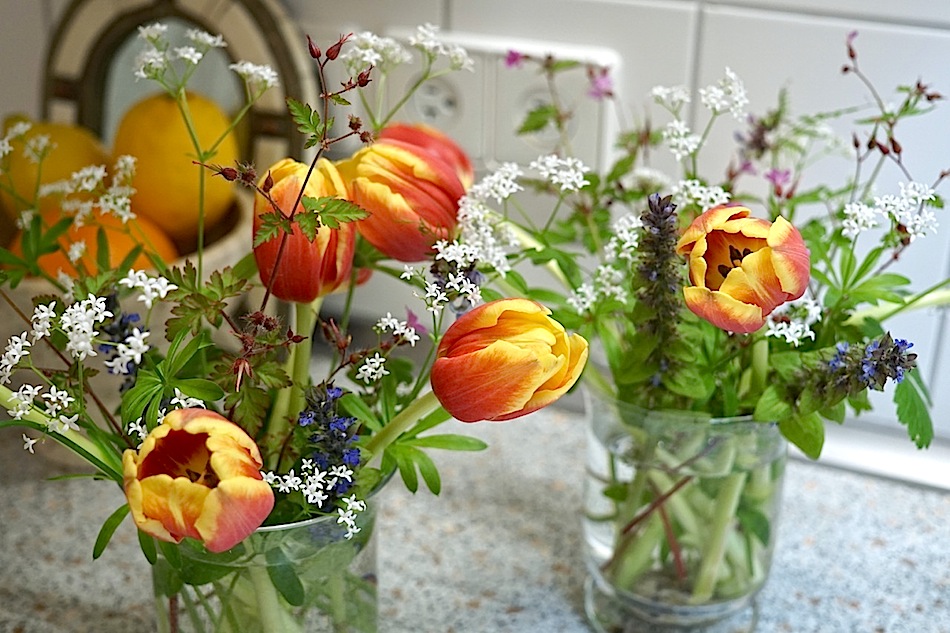 This morning, I combined the tulips that I bought last week at the supermarket with some white sweet woodruff, or Galium oderatum, just picked from a shady spot in our backyard.
The flowers in my arrangements smell lightly of honey, but sources say that as the plant wilts and dries, its leaves will smell like fresh-cut hay and vanilla.
G. oderatum is native to Europe. In Germany, it is known as Waldmeister or ‘master of the forest.’ Traditionally in spring, before it blooms, its leaves have been added to wine to create May wine or Mai Bowle.
For a good discussion of the culinary uses of the herb in Germany — where it flavors jell-O and hard candy — see this article, “May’s sweetest herb,” in the blog Spoonfuls of Germany.
To see what other gardeners have put in a vase today, please visit Cathy at Rambling in the Garden.
 enclos*ure