
 Old farm bell as planter, Oglethorpe County, Georgia, May 1936, by L.D. Andrew, via Historic American Buildings Survey (HABS), Library of Congress Prints and Photographs Division.
Have a happy 2015!
Old farm bell as planter, Oglethorpe County, Georgia, May 1936, by L.D. Andrew, via Historic American Buildings Survey (HABS), Library of Congress Prints and Photographs Division.
Have a happy 2015!
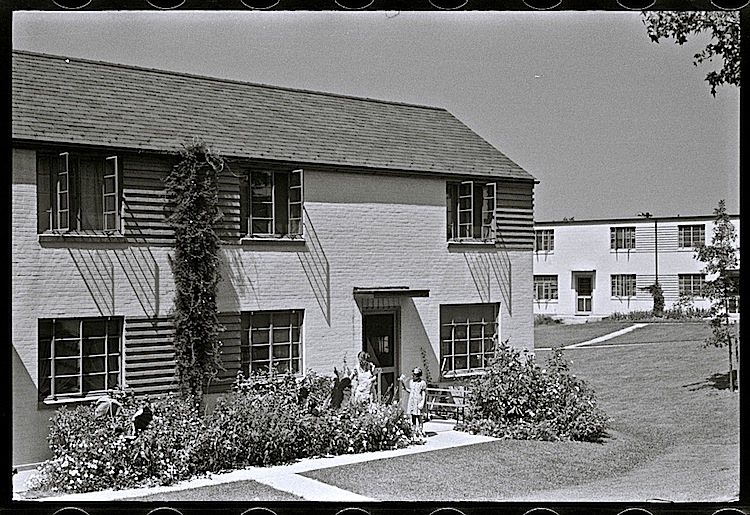 Mother and daughter cut flowers in their cottage style garden in Greenbelt, Maryland, near Washington, D.C., September 1938, by Marion Post Wolcott, via Library of Congress Prints and Photographs Division.
Greenbelt was one of three* “Greenbelt Towns” created by the New Deal federal government in the late 1930s. The built-from-scratch communities were designed to provide the best of both city and country living.
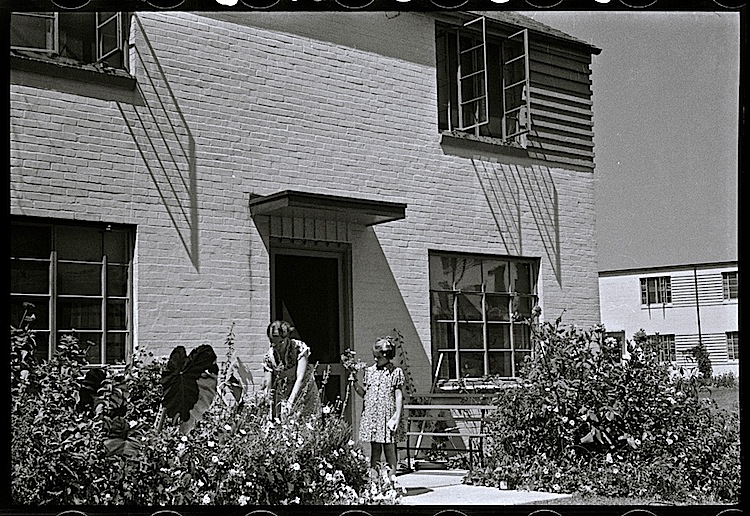
In addition to affordable housing, they incorporated commercial, medical, educational, and social facilities — all within park-like landscaping.
. . .Greenbelt was an experiment in both the physical and social planning that preceded its construction. Homes were grouped in superblocks, with a system of interior walkways permitting residents to go from home to town center without crossing a major street. Pedestrian and vehicular traffic were carefully separated. The two curving major streets were laid out upon and below a crescent-shaped natural ridge. Shops, school, ball fields, and community buildings were grouped in the center of this crescent.
. . .The first families were chosen not only to meet [low] income criteria, but also to demonstrate willingness to participate in community organizations.
[They] arrived on October 1, 1937, [and] found no established patterns or institutions of community life. Almost all were under 30 years of age. All considered themselves pioneers in a new way of life. A mix of blue and white collar workers, they reflected the religious composition of Baltimore and Washington, D.C.—Protestant, Catholic, and Jewish; but because of the racial bias controlling public policy at that time, all were white.†
. . .In 1952, when Congress voted to sell off the greenbelt towns, citizens in Greenbelt formed a housing cooperative (Greenbelt Veterans Housing Corporation, later Greenbelt Homes, Inc.)
— “The History of Greenbelt, Maryland“
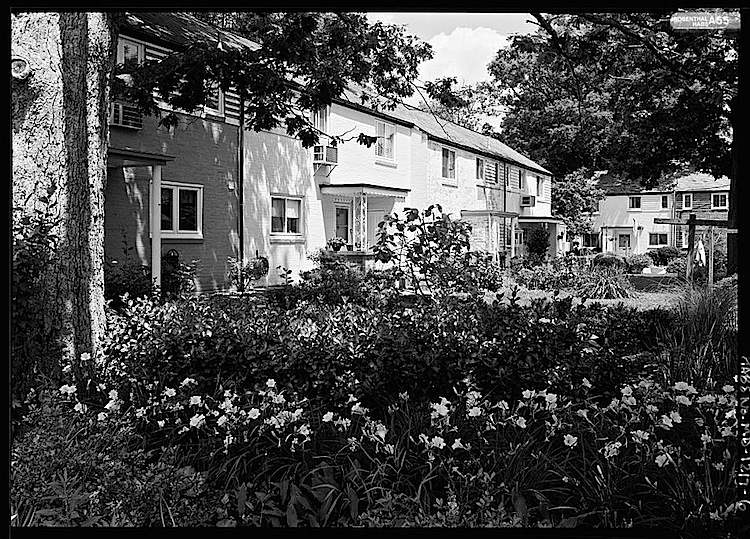
“Old Greenbelt” has been well preserved over the years and was designated a National Historic Landmark in 1997. The photo above shows some of its rowhouses with gardens in 2005. It was taken by James W. Rosenthal for an Historic American Buildings Survey (via Library of Congress).
More Library of Congress photos of Greenbelt are here (1938) and here (2005).
*Along with Greendale, Wisconsin, near Milwaukee, and Greenhills, Ohio, near Cincinnati.
†The Census found that 41% of residents were African-American in 2000.
 Entrance porch of the Peter Neff Cottage, Kenyon College, Gambier, Ohio. Photo taken 1951 by Perry E. Borchers for an Historic American Buildings Survey (HABS), via Library of Congress Prints and Photographs Division.
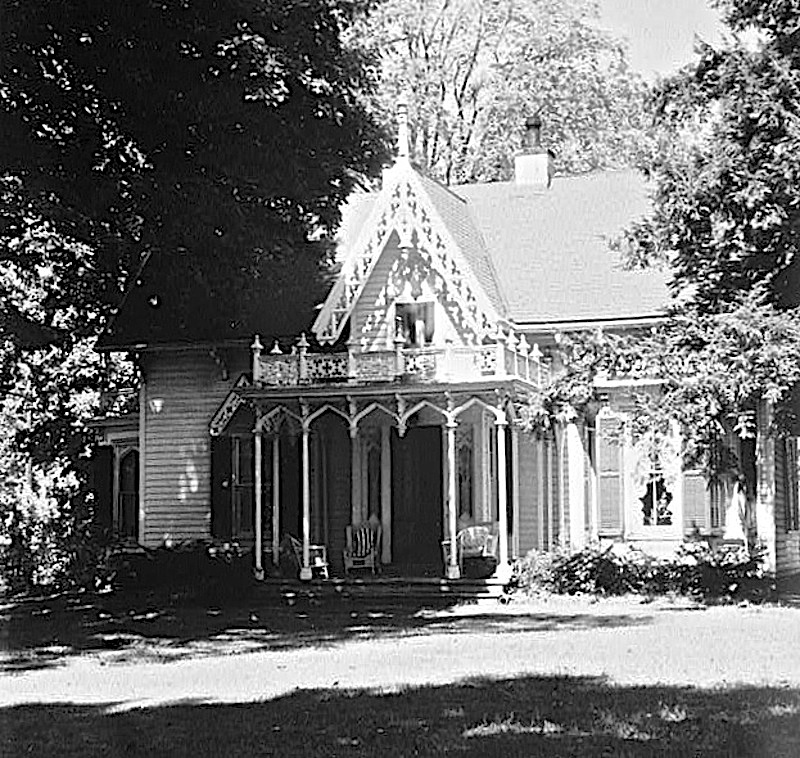 Another 1951 photo of the porch, also by Perry E. Borchers for the HABS (cropped by me).
The HABS report for this house said it “may be the finest example of Gothic Revival cottage style and wood detail in Ohio.” It was built about 1860 for Peter Neff, a co-inventor of the tintype and an alumnus and benefactor of Kenyon College.
All was not happy in this charming abode, however. Neff quarreled with nearby Kenyon over the bells of the campus’s Church of the Holy Spirit, “which he claimed had driven him to the brink of nervous collapse,” according to the Historic Campus Architecture Project.
“Place yourself and family in my location, about seven hundred feet distant,” he wrote in a 19-page open letter. “How would you like this ding dong every fifteen minutes? . . . [It is] machinery wearing out flesh and blood to those who have any nerves. It is too much bell-ringing . . . it is a sickening nuisance.”
Neff finally moved away from the campus and its bells in 1888.
The house is now named Clifford* Place and is the residence of the Dean of Students.
*The name of one of Neff’s daughters.
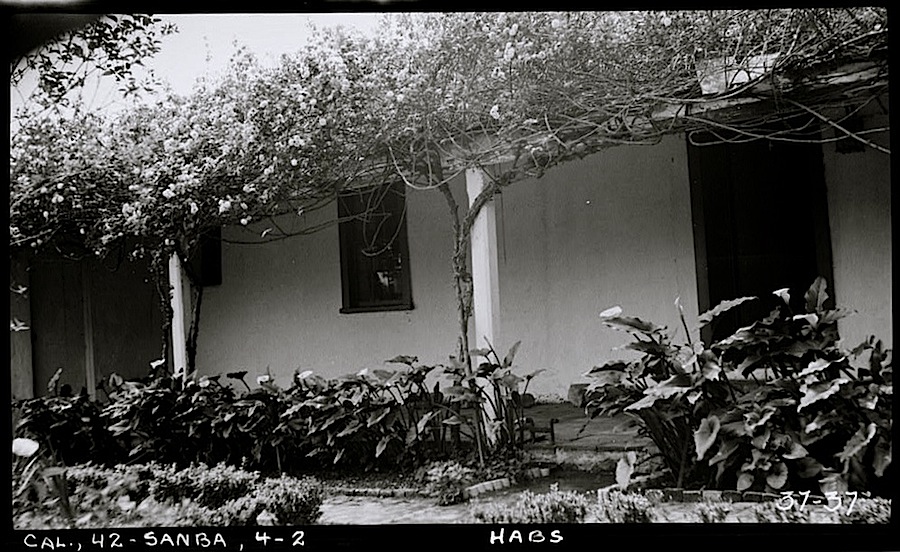 The north porch of the Vhay House, 835 Leguna Street, Santa Barbara, California, April 1934, by C. A. Fletcher for an Historic American Buildings Survey (HABS), via Library of Congress Prints and Photographs Division.*
 The Rafael Gonzalez House, which was owned by Louise and David Vhay at the time of these photos, was built in 1825. It is a typical adobe townhouse of the Mexican California period, with walls over 2′ (.61 m.) thick.
Gonzalez was a soldier and landowner when he built the house for his Italian bride. He became mayor or alcalde of Santa Barbara in 1829. His daughter, Salome, inherited the home in 1866 and lived there until 1923.
The Vhays restored and enlarged the house. It is now occupied by Randall House Rare Books.
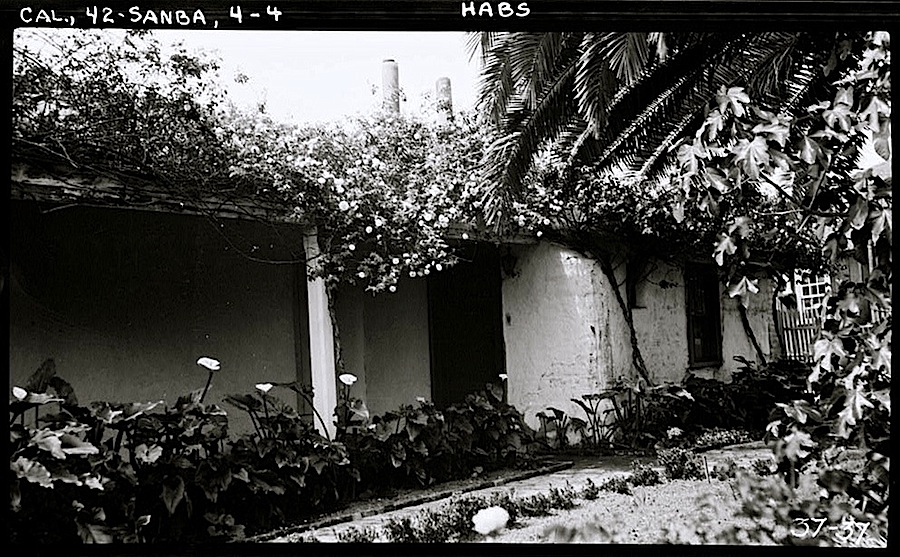 Above: bougainvillea above and calla lilies below, along the north porch, by C. A. Fletcher.
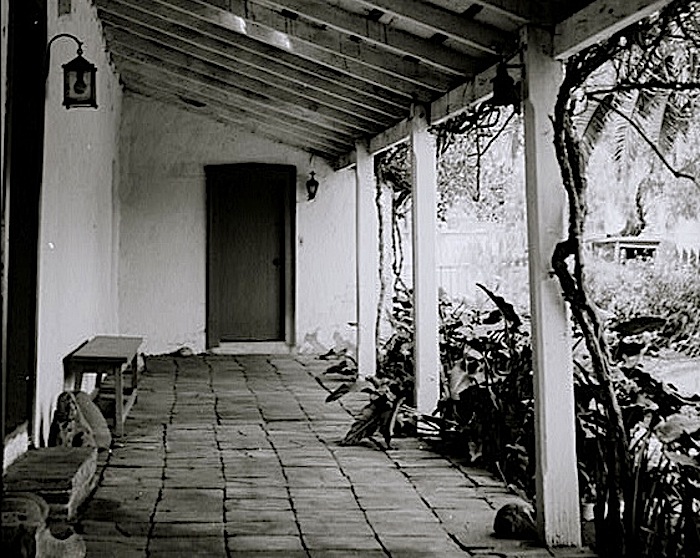 Above: north porch, by C. A. Fletcher (cropped by me).
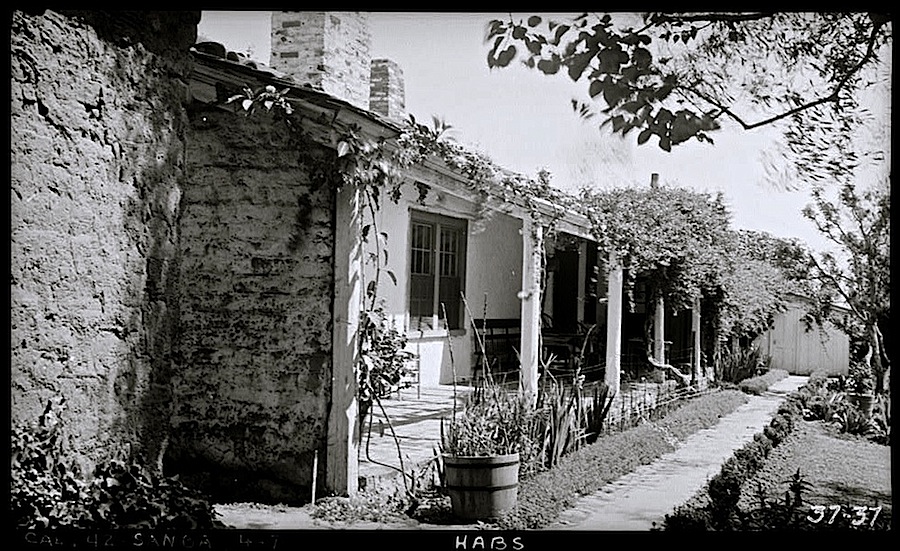 Above: south porch from the southwest. Photographed April 1934, by H. F. Withey.
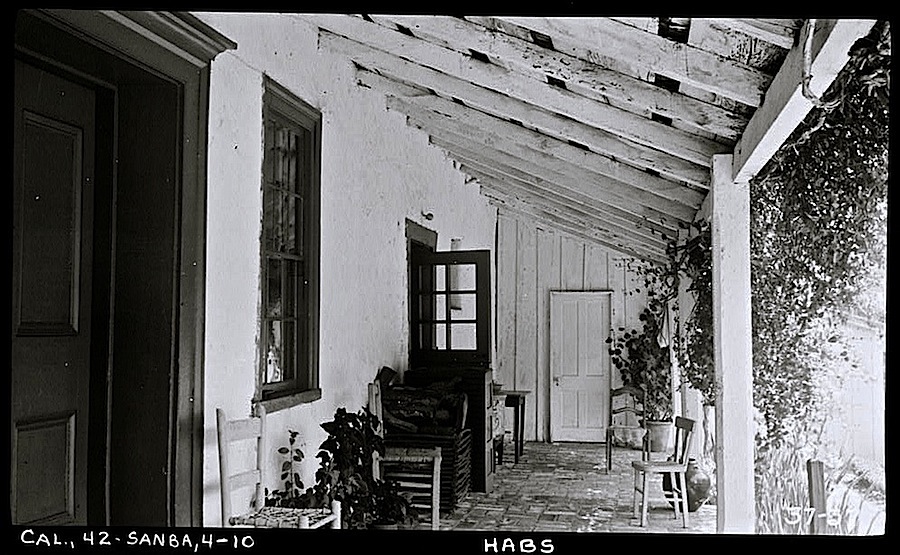 Above: detail of south porch, east end, by H. F. Withey.
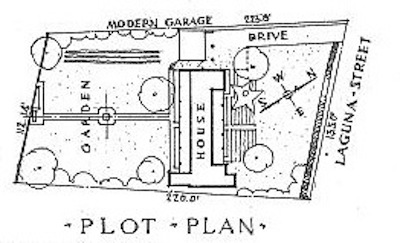
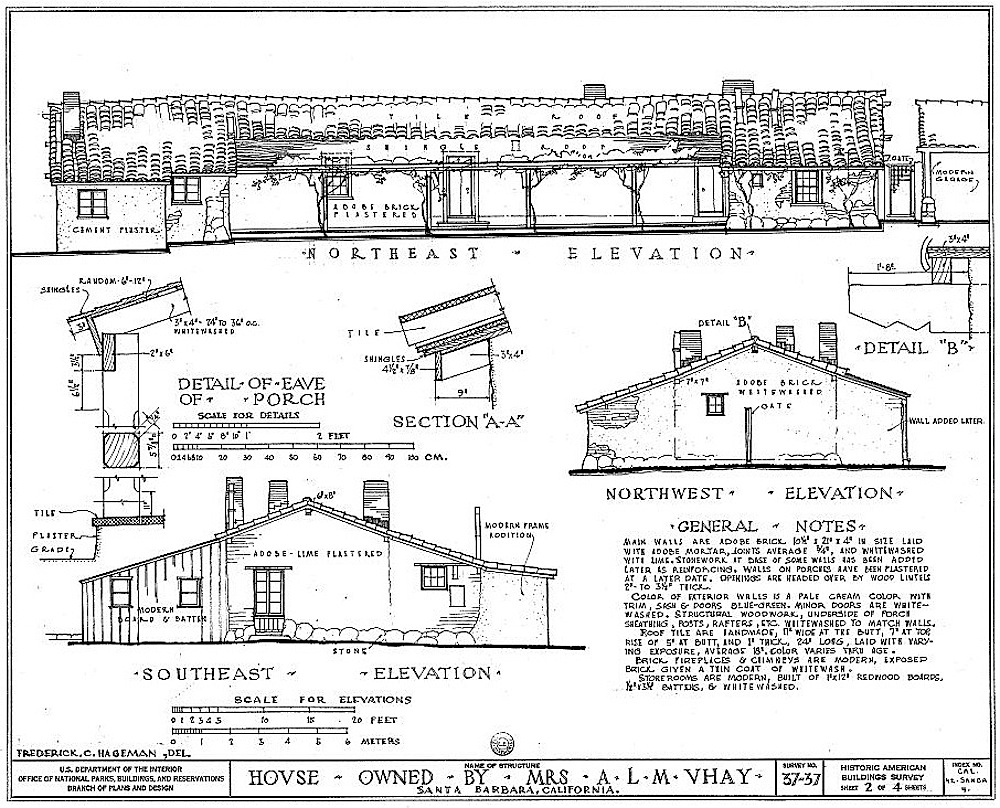 Above: 1934 drawing by Frederick C. Hageman (also the small plan above).
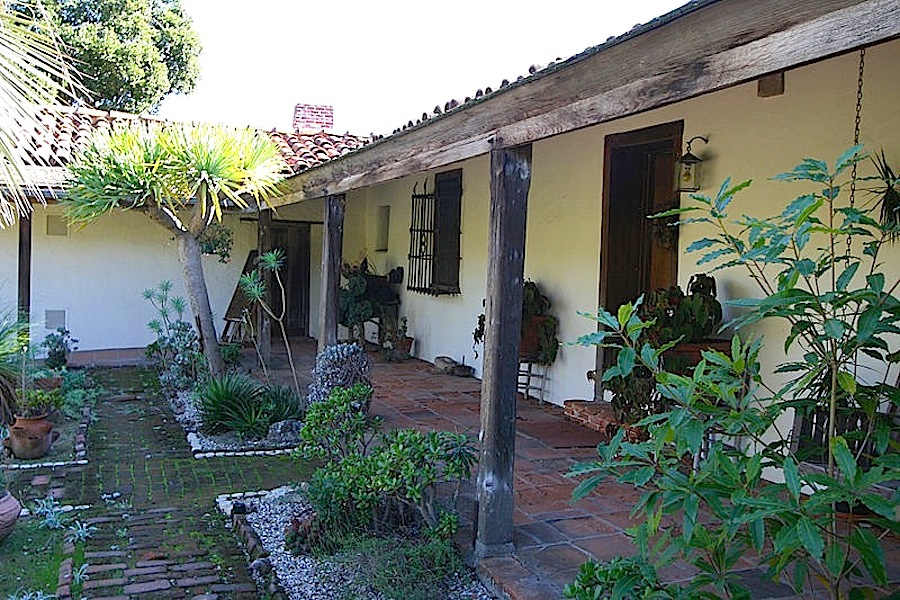 Above: 2010 photo of the Rafael Gonzalez House, now a rare book store, by Dilly Lynn, via Wikimedia Commons. There’s also a nice painting of the house in 1953 here.
The house was designated a National Historic Landmark in 1970.
. . . — for a sec
he even sees the calla lily’s furl
in the gesture of voilà!— Farnoosh Fathi, from “Sympathy“
*All photos and drawings here, except the last image, via Vhay House HABS, Library of Congress.
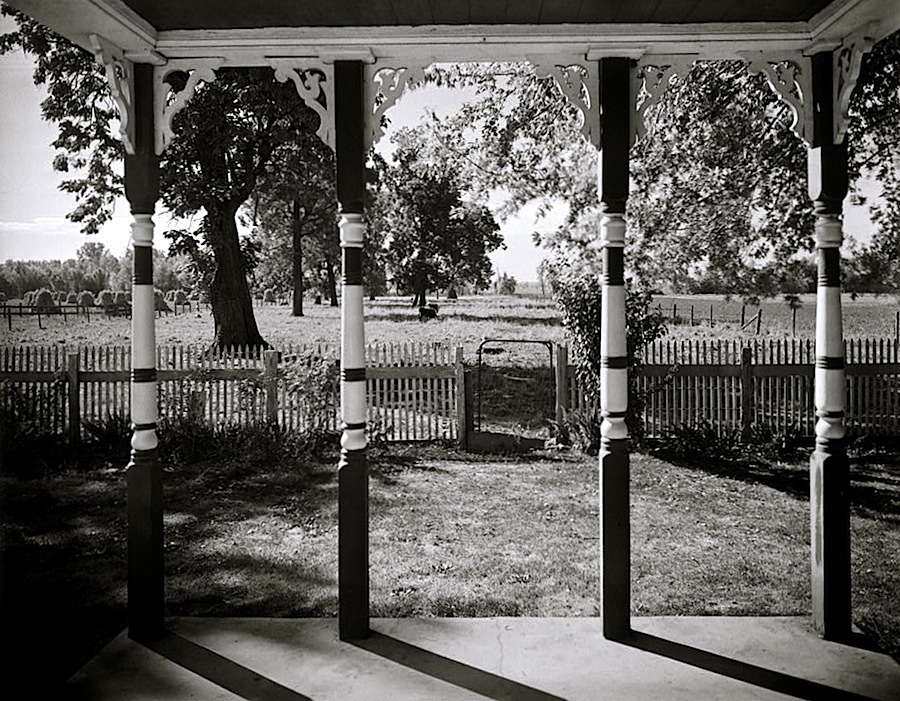 Above: View from the porch of the Flanders Callaway House, Warren County, Missouri, 1938, by Charles or Alexander Piaget, working with Charles van Ravenswaay (later incorporated into a 1985 HABS).*
All photos here via Library of Congress Prints and Photographs Division.
Above: “View from White House porch [looking north to Lafayette Park],” Washington, D.C., 1920, from National Photo Company Collection. President and Mrs. Wilson introduced sheep to the White House lawn. The wool went to the Red Cross.
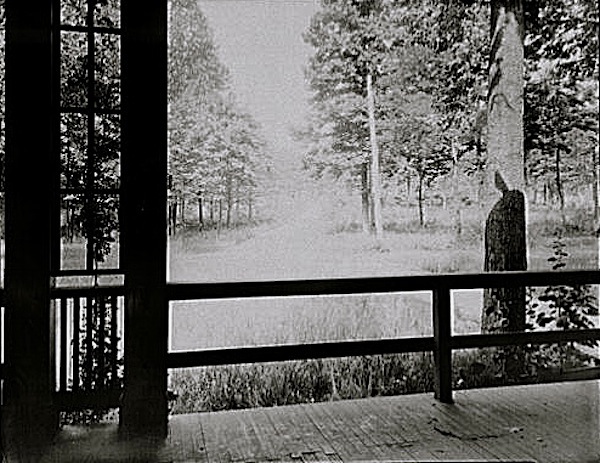 Above: View from porch at Shady Rest Sanatorium, White Heath, Illinois, ca. 1920 – 1950, by Theodor Horydczak.
Above: Looking north from the porch of the Kolb-Pou-Newton House [or Boxwood], Madison, Georgia, June 1936, by L. D. Andrew for HABS.
Above: View of garden from the porch – Oakland Plantation, Natchitoches Parish, Louisiana, ca. 1988, by HABS.
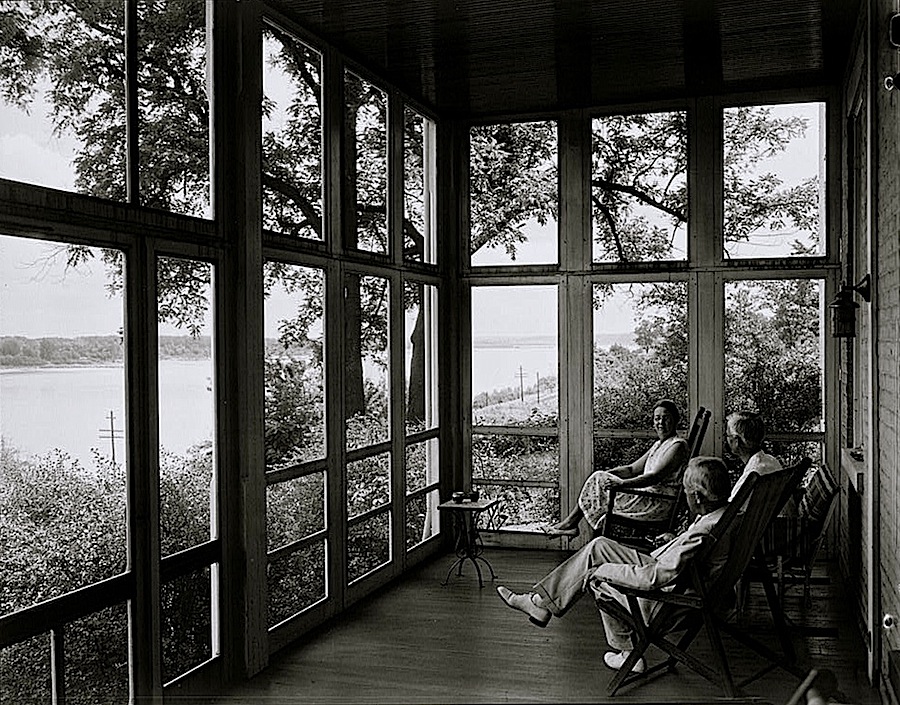 Above: Mr. and Mrs. J. H. Dickbrader and Mr. Arcularius on the porch of the Dickbrader House, Franklin County, Missouri, by HABS.
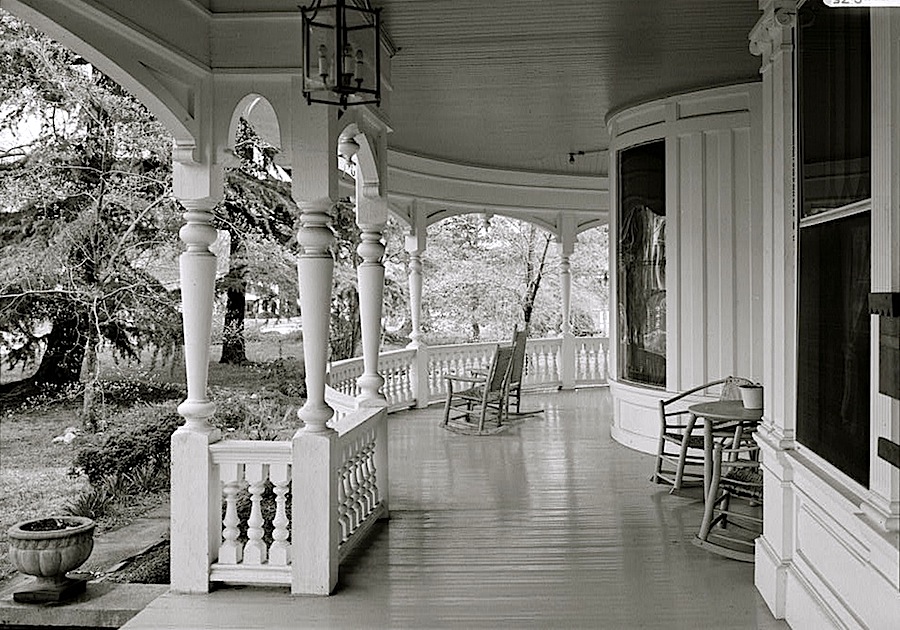 Above: John Calvin Owings House, Laurens, South Carolina, by HABS.
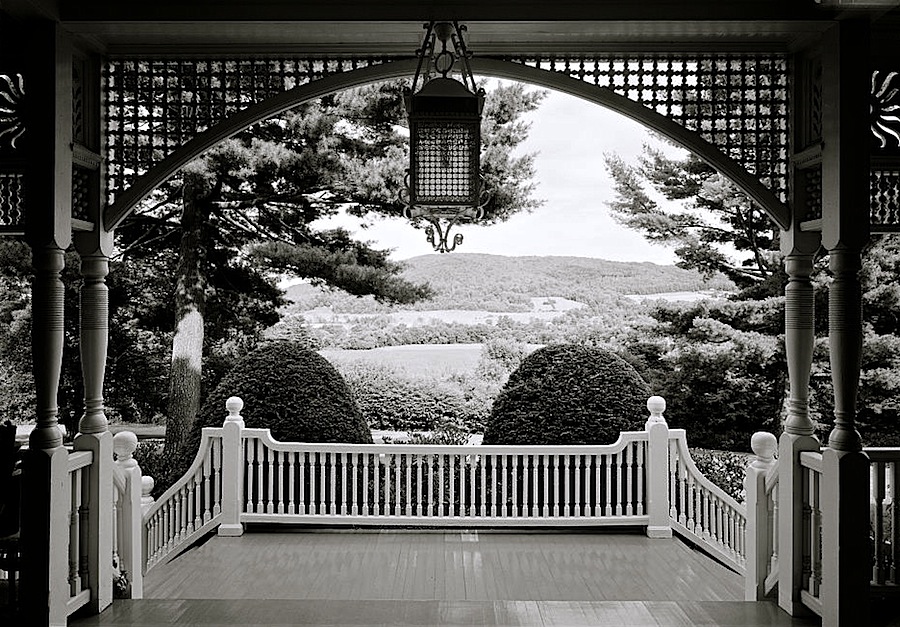 Above: View from the veranda of the Billings Farm and Museum to Blake Hill, Marsh-Billings-Rockefeller National Historical Park, Woodstock, Vermont, 2001, by David W. Haas for HABS.
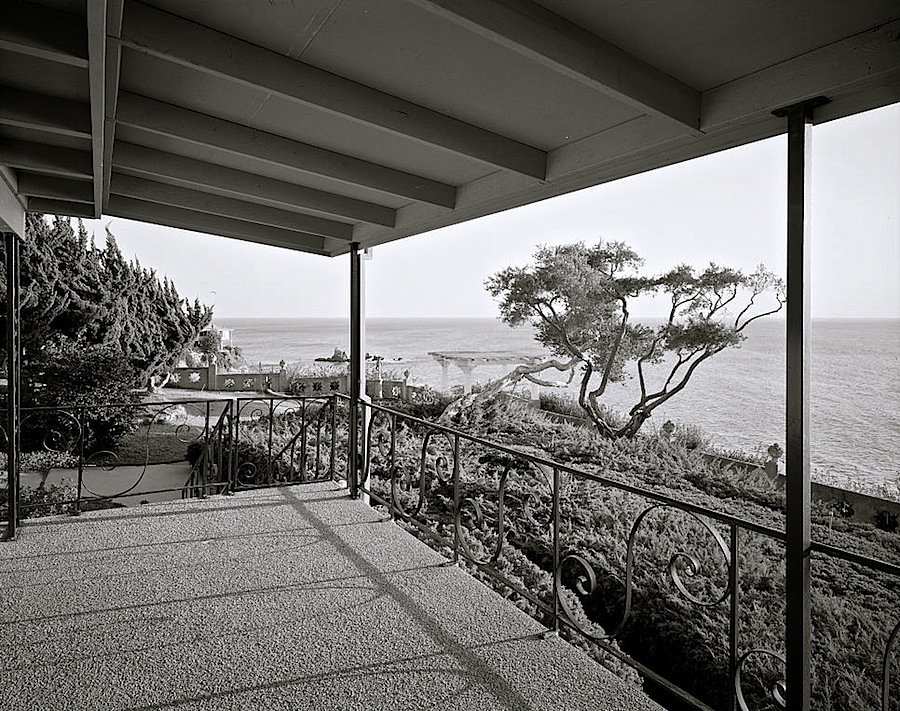 Above: Porch of Smithcliffs House, North Coast Highway, Laguna Beach, California, by HABS.
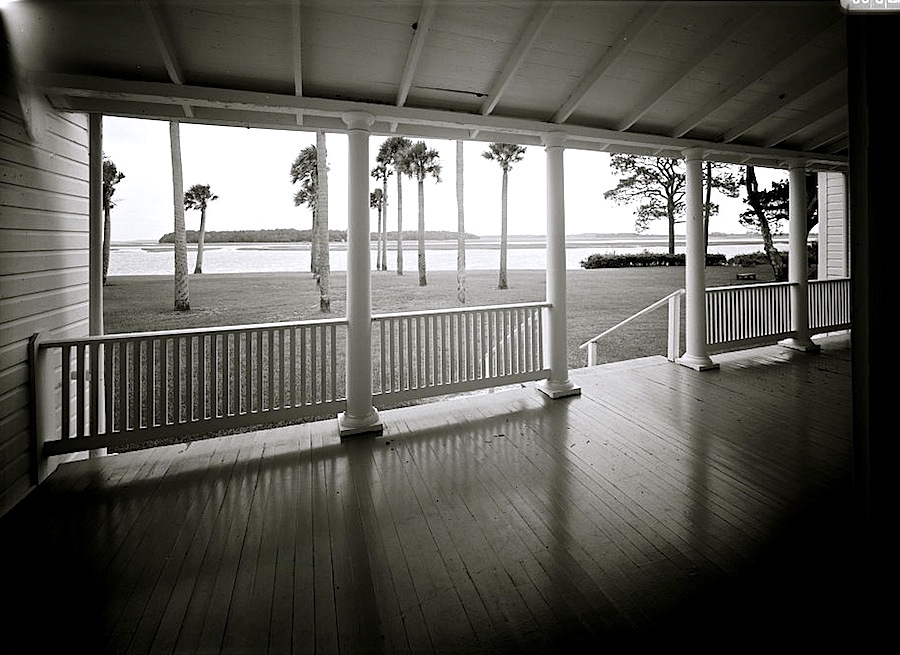 Above: “View from north porch, looking northeast toward Fort George River – Kingsley Plantation House,” Jacksonville, Florida, 1005, by Jack Boucher for HABS.
Above: “View from north porch looking south into Back Hall, with Reception Hall south door open [and closed] – Homewood (cropped slightly by me),” Baltimore, Maryland, 2005, by James W. Rosenthal for HABS.
*Historic American Building Survey
 enclos*ure