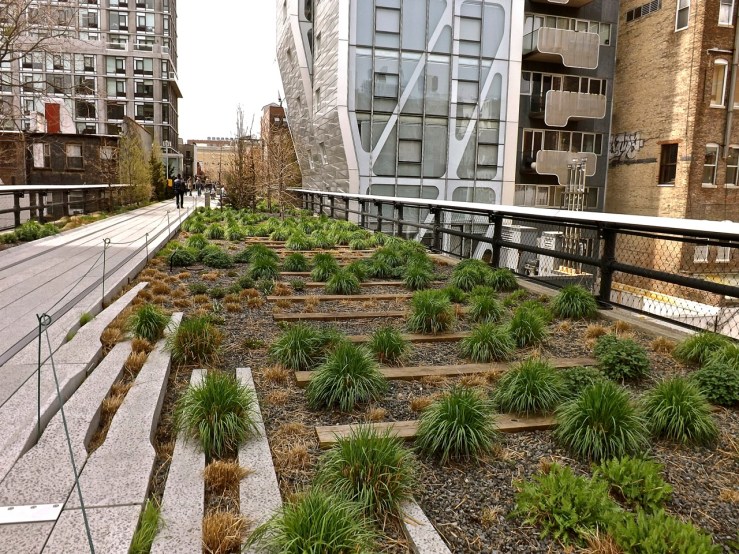
I want to share my photos from our walk along the High Line in New York City last month.
It was actually our second walk — I left my camera behind on the first. It’s such a remarkable place that my husband, who has limited patience for garden tourism, readily agreed to go back with me.
The High Line is a meadow and woodland park on top of about a mile of abandoned elevated railway line.
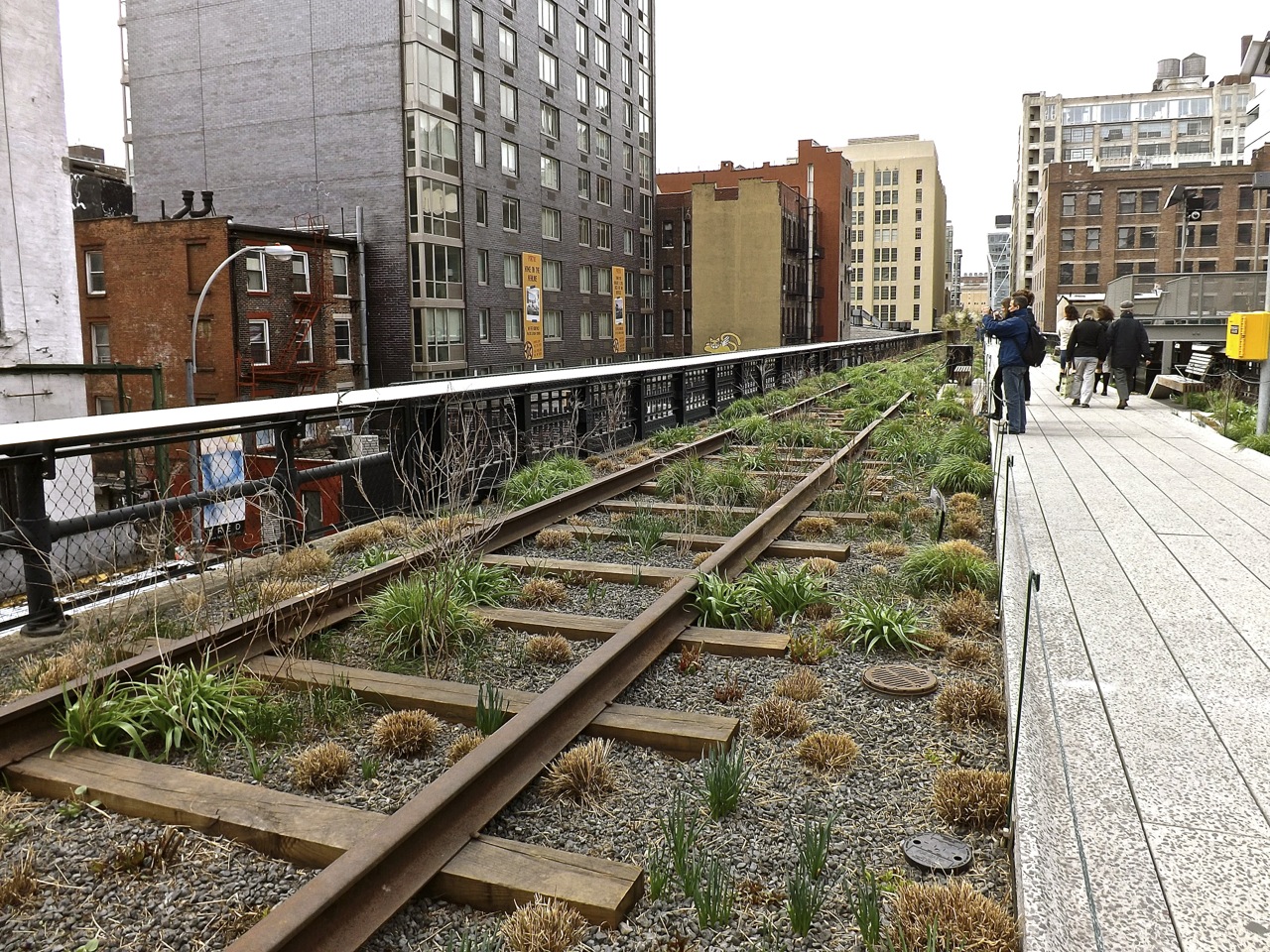
It trails through an crowded urban landscape and rather than offer you a retreat from the city, it puts you right up in the city’s face — with apartment windows and construction sites almost within touch and noisy traffic moving below. The juxtaposition is thought-provoking, and the raised views are fascinating.
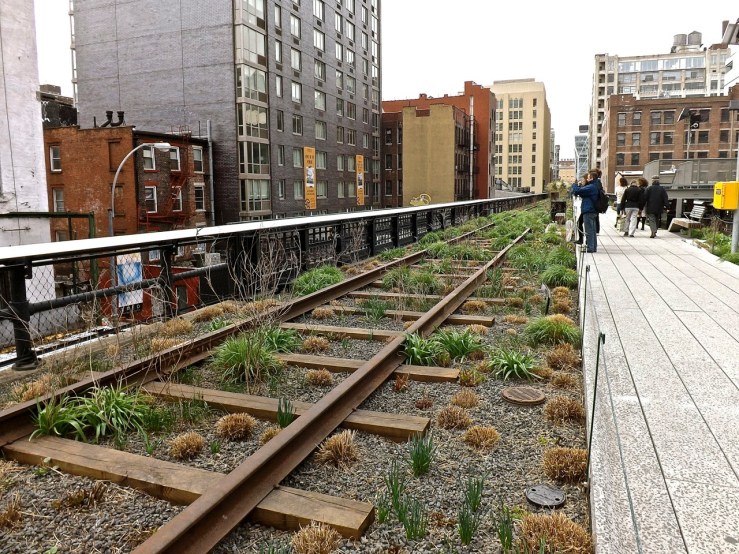
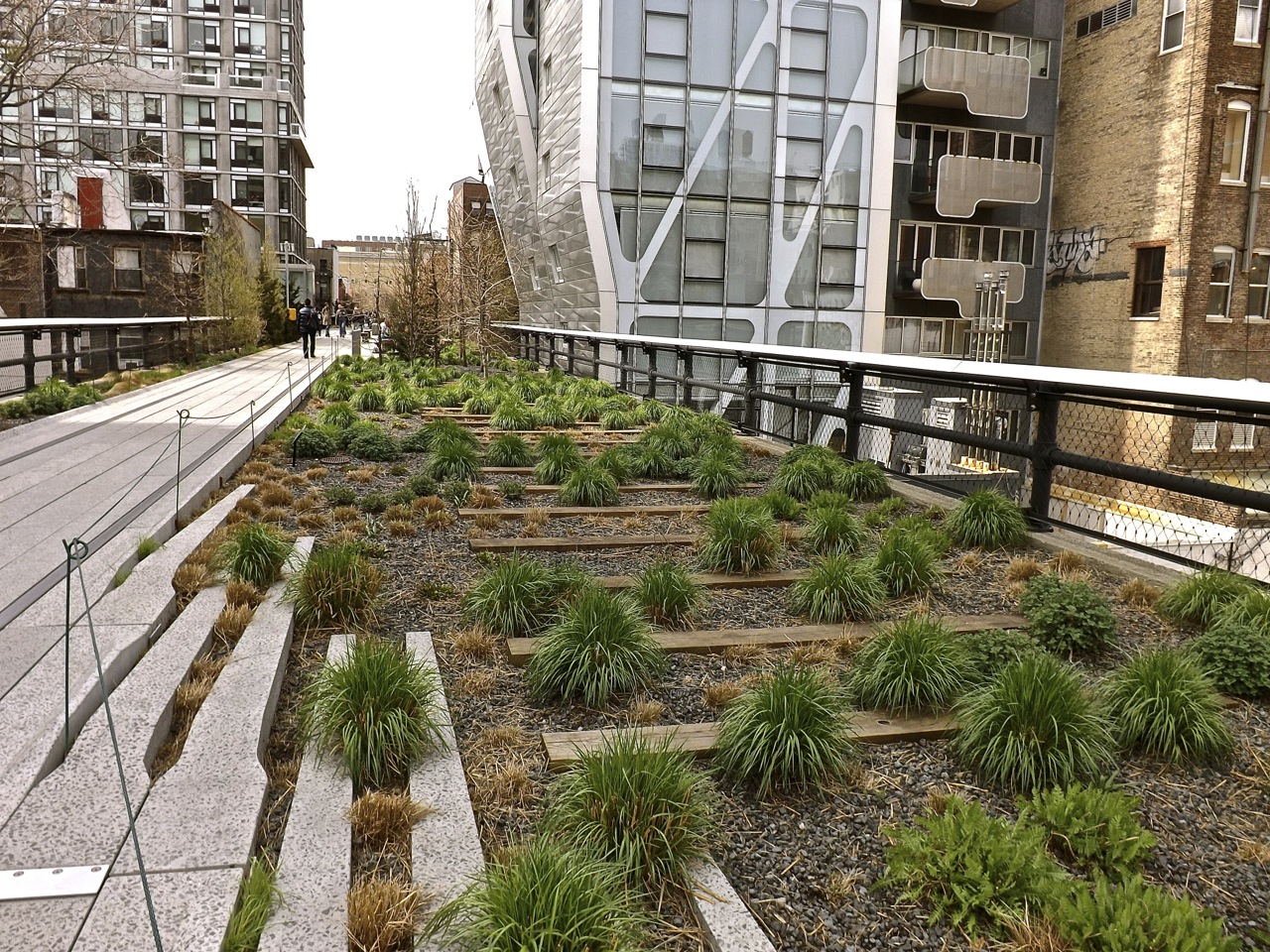
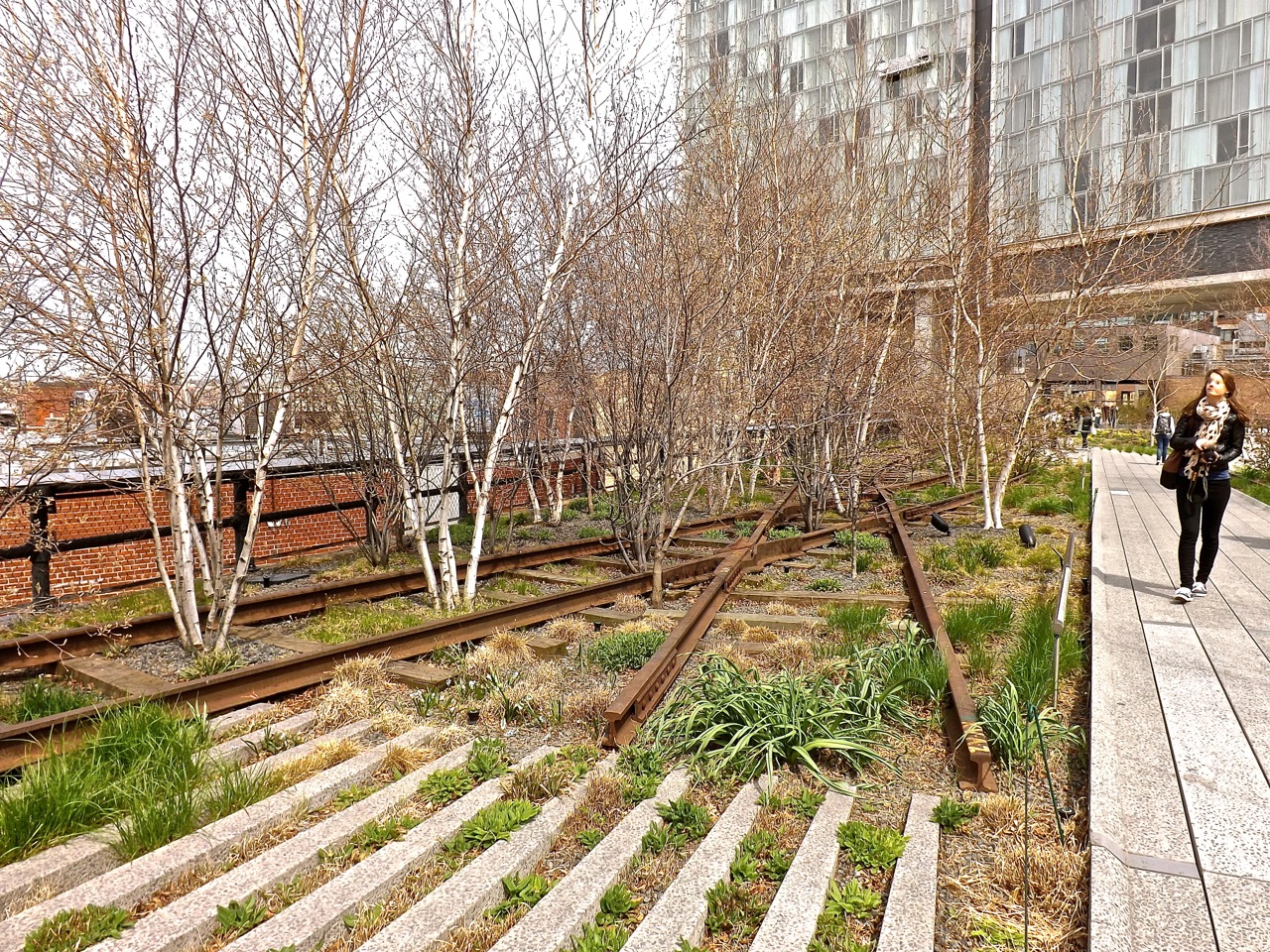
In early April, of course, we weren’t seeing most of the plants at their best, but it was interesting to see so clearly the arrangement and spacing of the grasses, some emerging perennials, and the shrubs and small trees — as well as the features of the built structure.
The High Line’s planting plans were designed by Piet Oudolf, and I found a good summary of his approach to the meadow areas in an article by Tom Stuart-Smith in The Telegraph.
For Oudolf, planting has always been about creating moods and eliciting emotions. But the [High Line] gains an extra weight by connecting us to how plants grow in the wild. The design becomes much more about creating a plant community rather than a collection of individuals. To take one section of planting . . . , the plan shows a loose matrix of grass species planted throughout; in this case a mix of Panicum virgatum ‘Heiliger Hain’ and Calamagrostis brachytricha spaced about 1-1.5m apart with about 20 other varieties of perennial flower spread through in different-sized groups, from one plant used just singly to another planted in generous groups. The flowers therefore are always seen within a matrix of grasses, just as they might be in nature.
The full article — related to the recent publication of the book Planting, A New Perspective — is very interesting about Oudolf’s technique and influence.
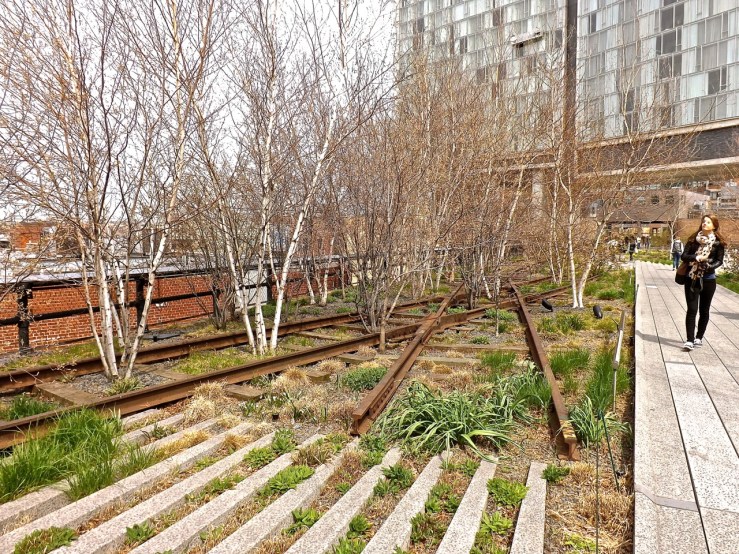
I found my photos weren’t very useful at a few inches wide, so please click on the first thumbnail below to scroll through full-size images.
(The plants of the High Line aren’t labeled, but, you can download a list to take with you here.)

At the W. 30th St. and 10th Ave. (north) entrance looking to the Hudson River and the historic rail yards section of the H.L., still under construction.

A long stretch of bench with scaffolding.

An advertisement for the Metropolitan Museum of Art being hand painted.

Painters at work.

“Wildflower Field”

Nearby construction.

Even in chilly April, the H.L. was full of people.

The walkway rises so that visitors look down on or right into the trees.

26th St. viewing platform.

The frame echoes billboards once attached to the H.L.

“Woodland Flyover”

The concrete walkway is cut to echo the lines of the rail tracks.

23th St. lawn.

Flowering quince.

In the distance, a sport complex built over an old Hudson River pier.

Coming up on the “10th Ave. Square” (at 17th St.).

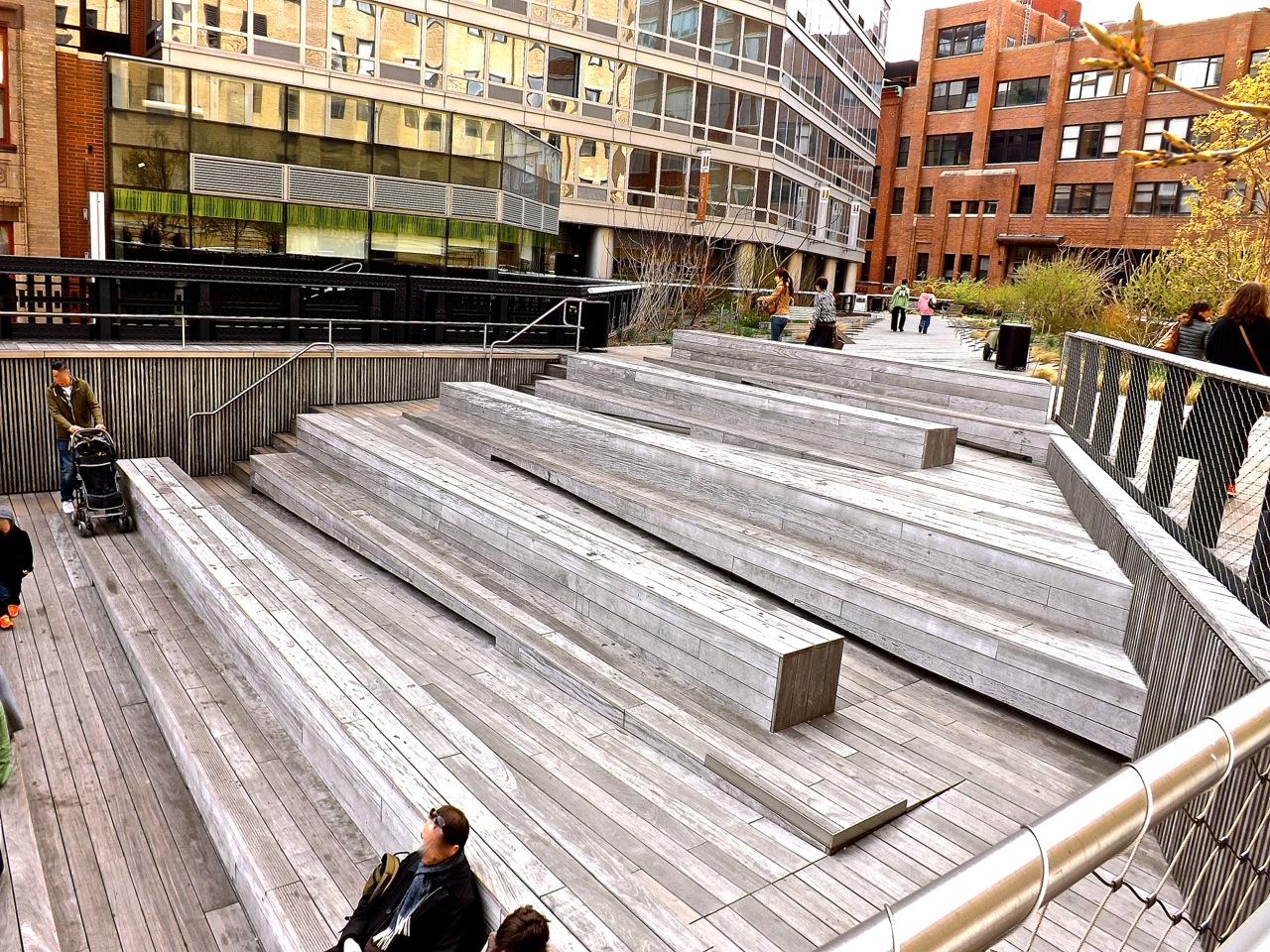
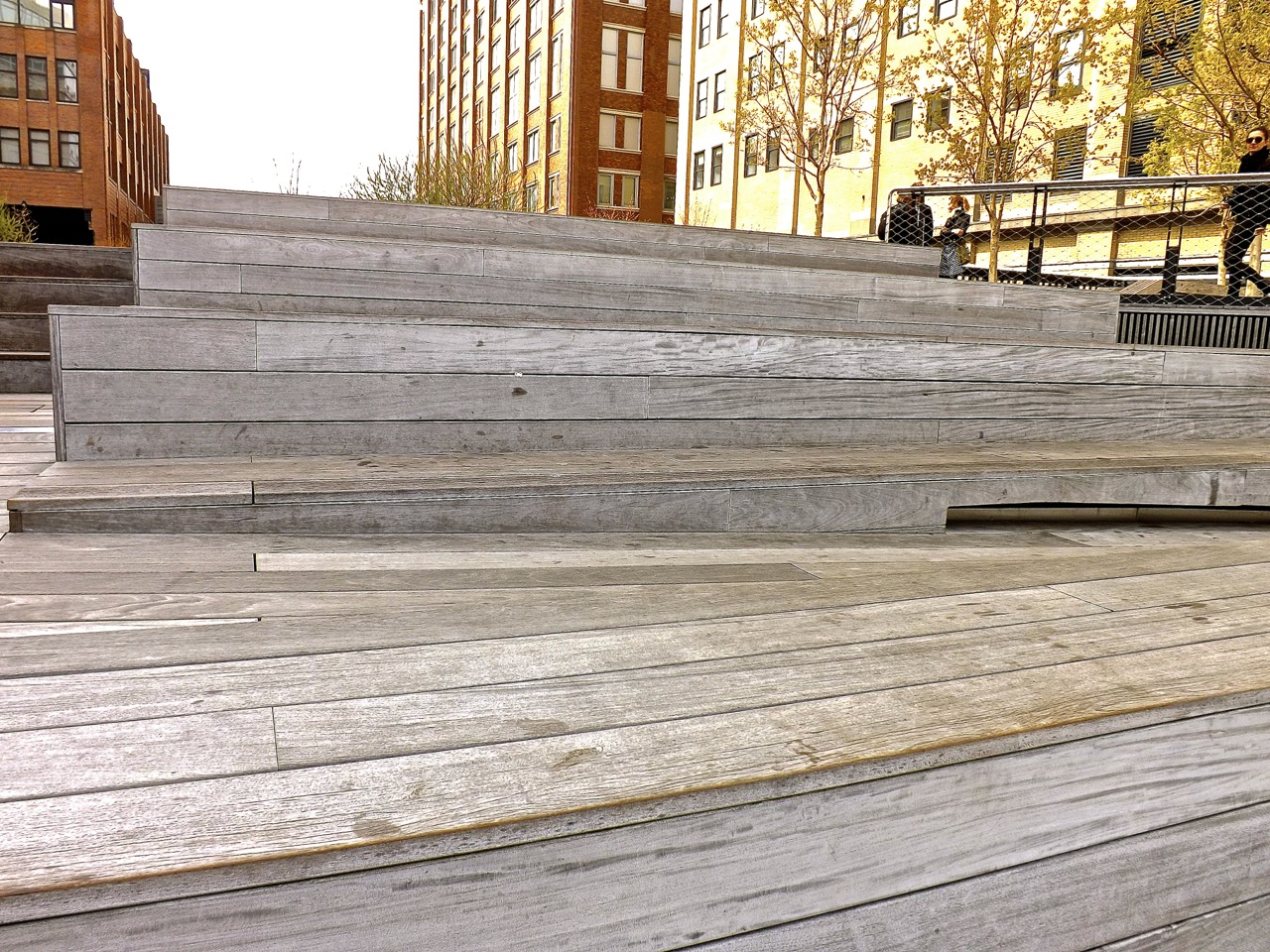
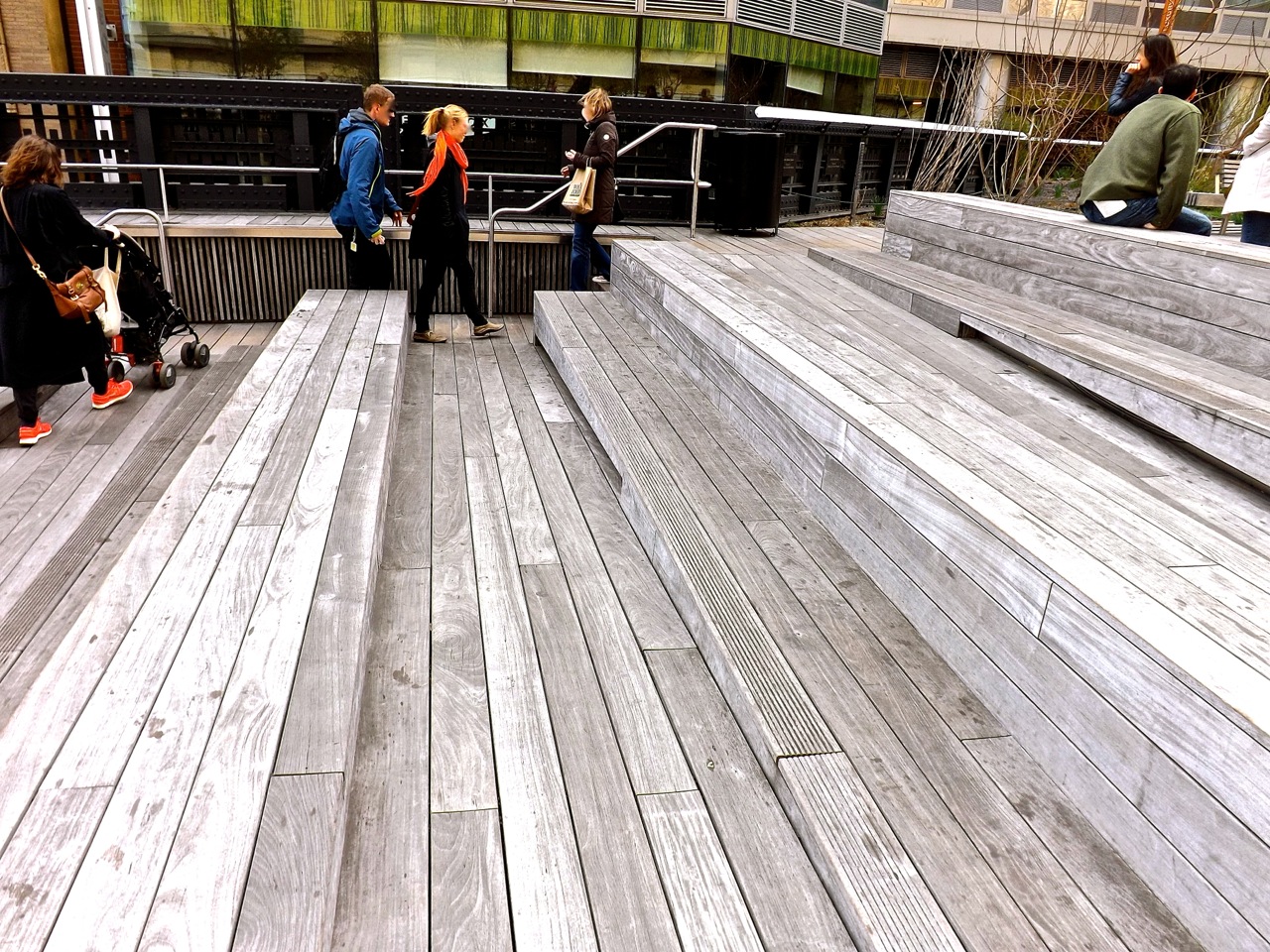
The lines of the benches repeat those of the decking.

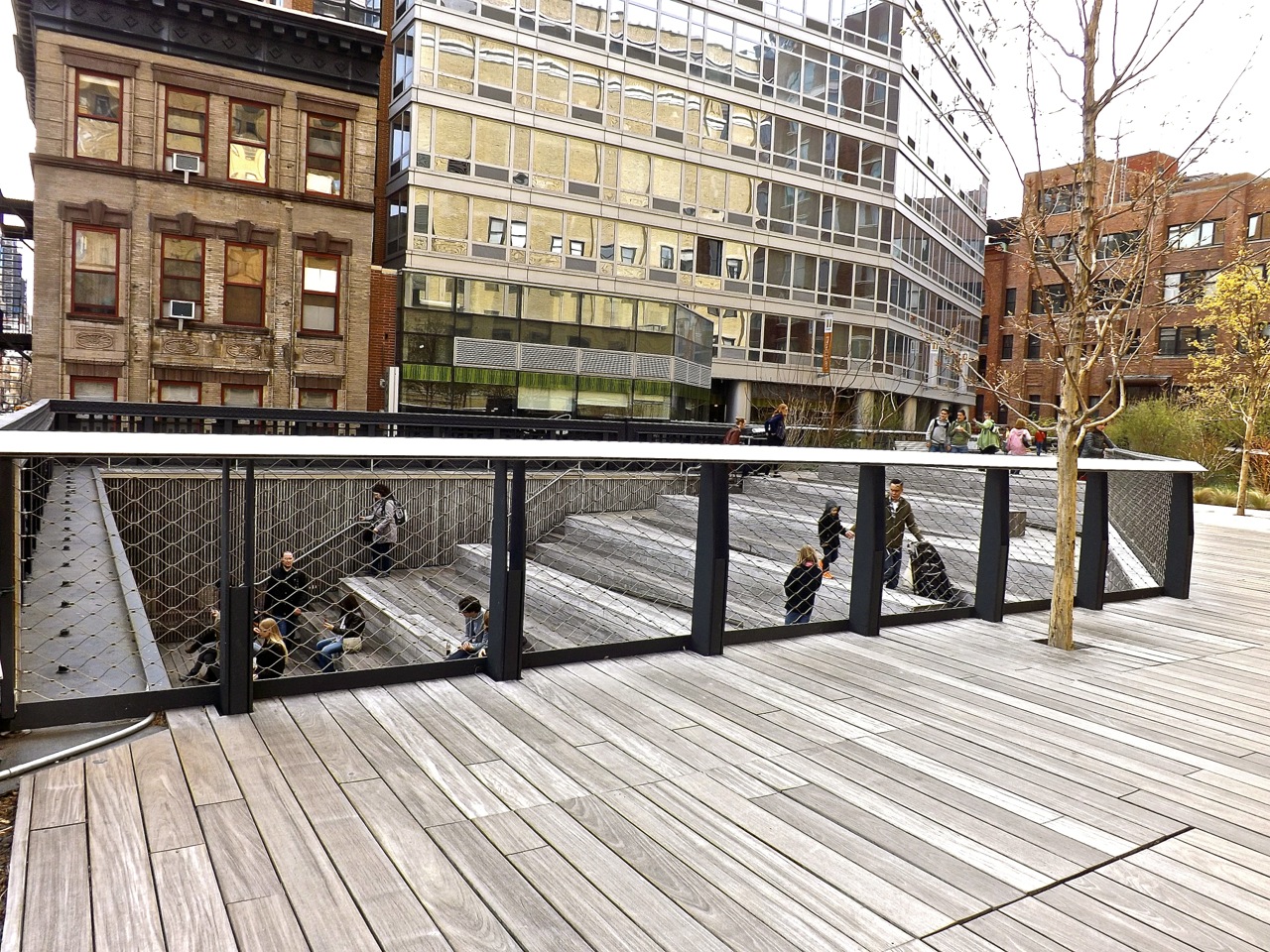
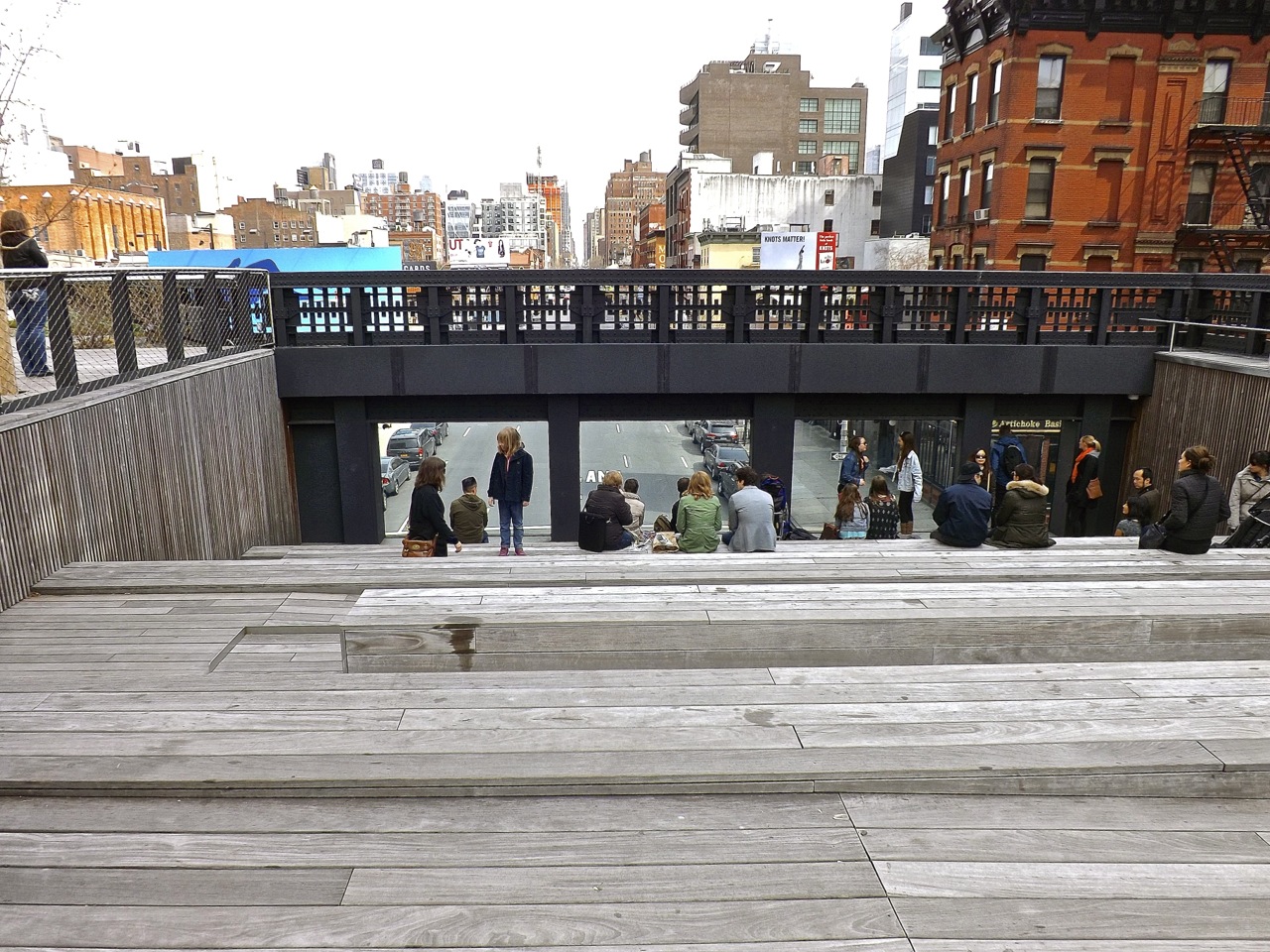
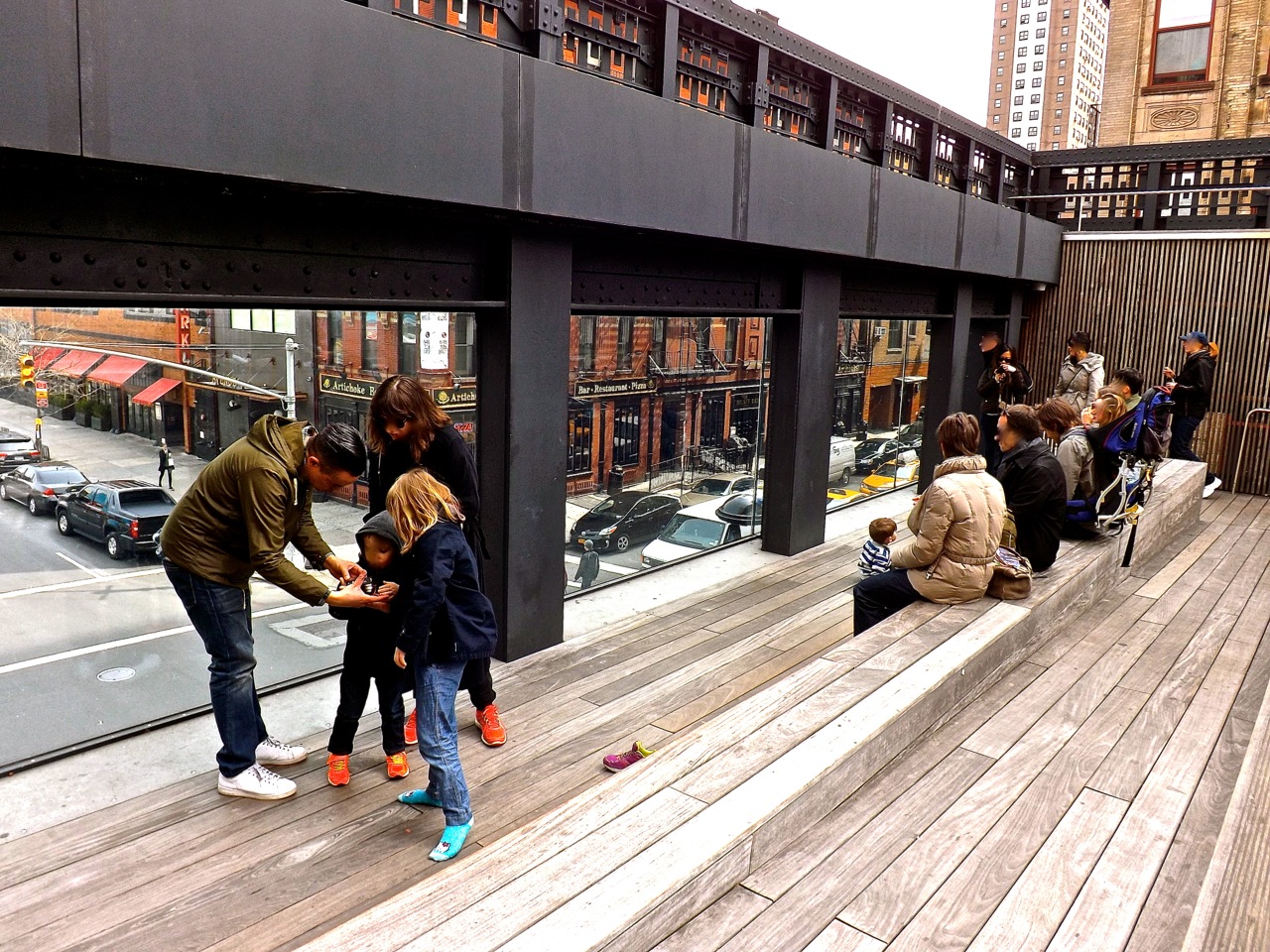
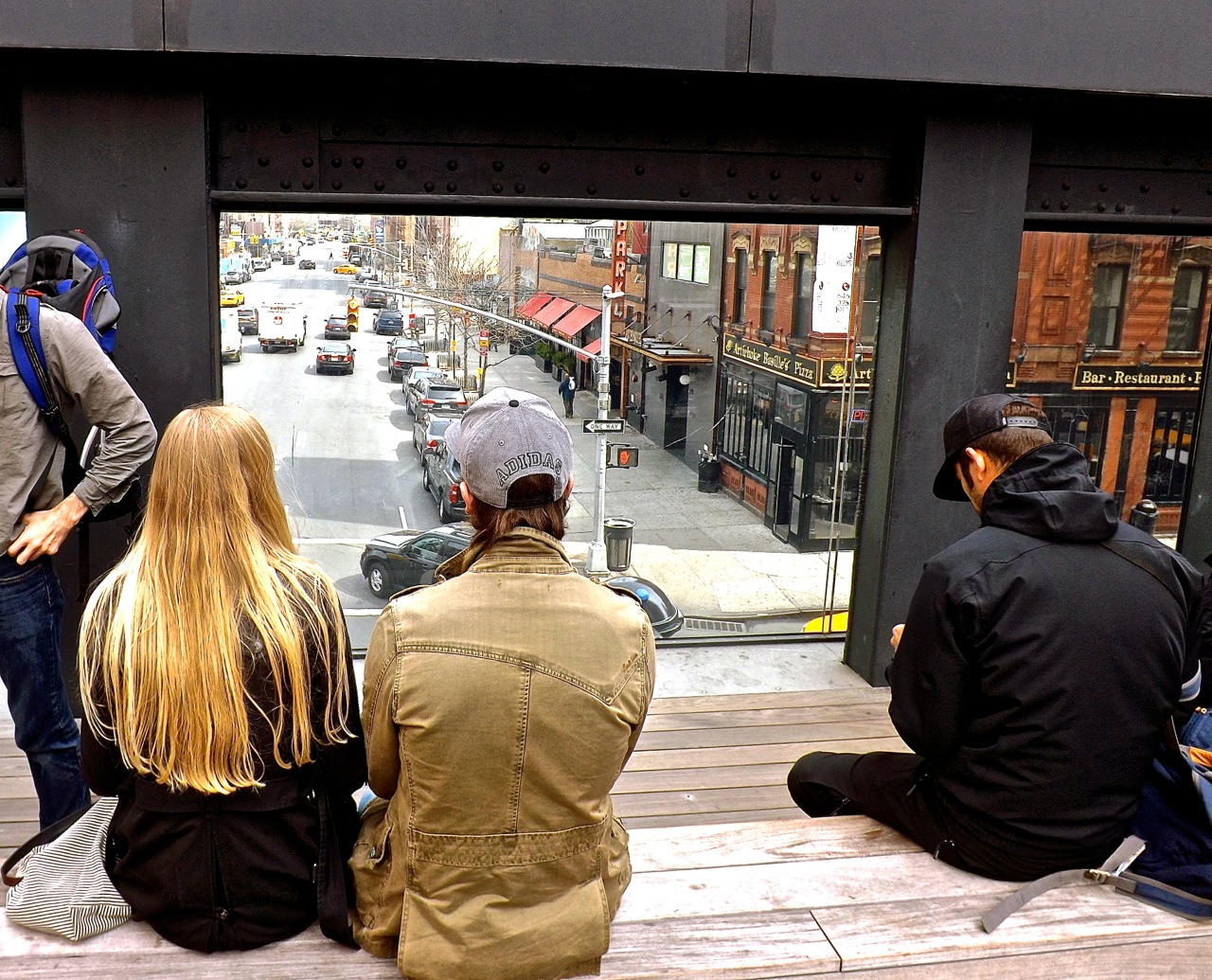
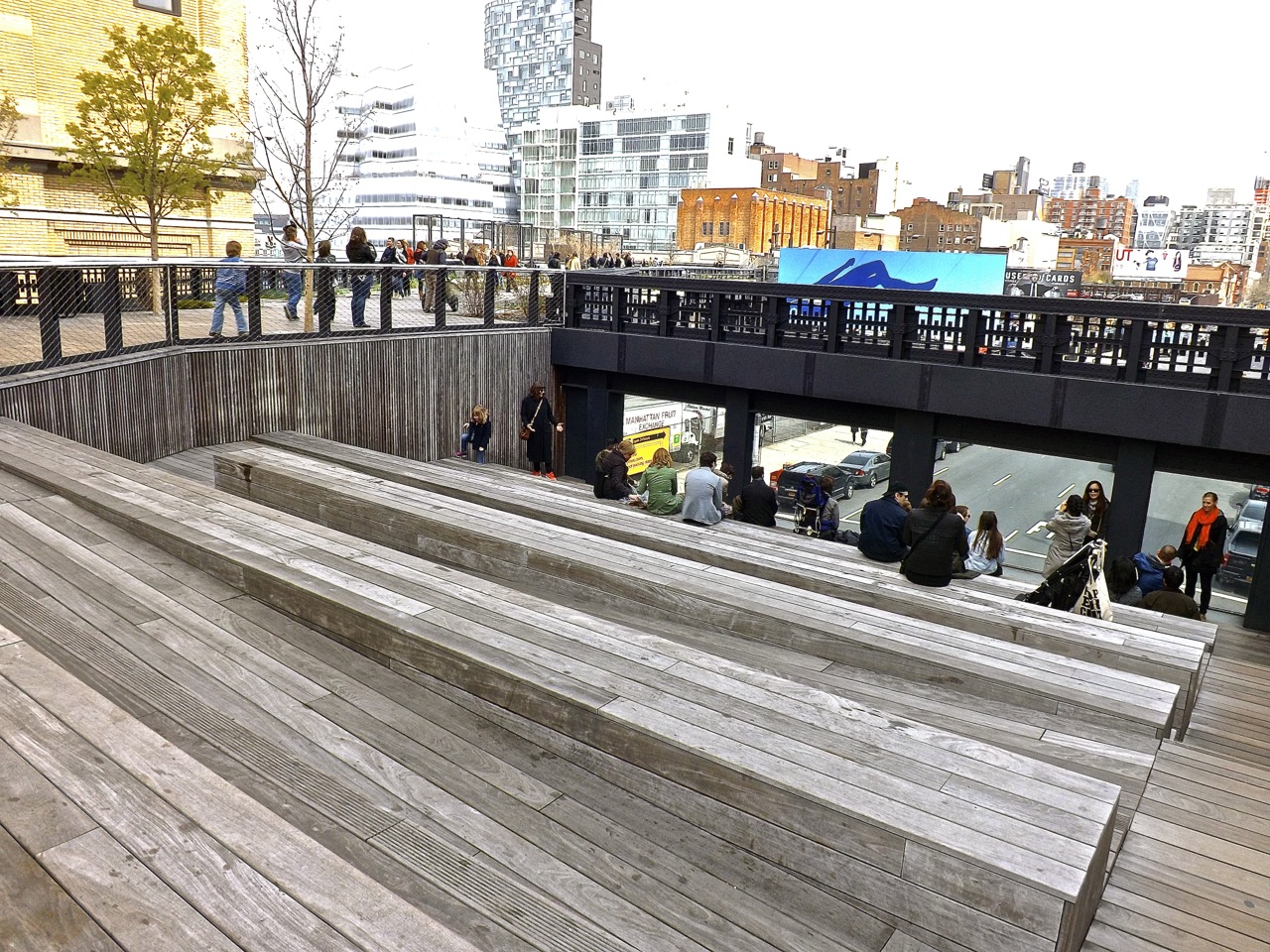
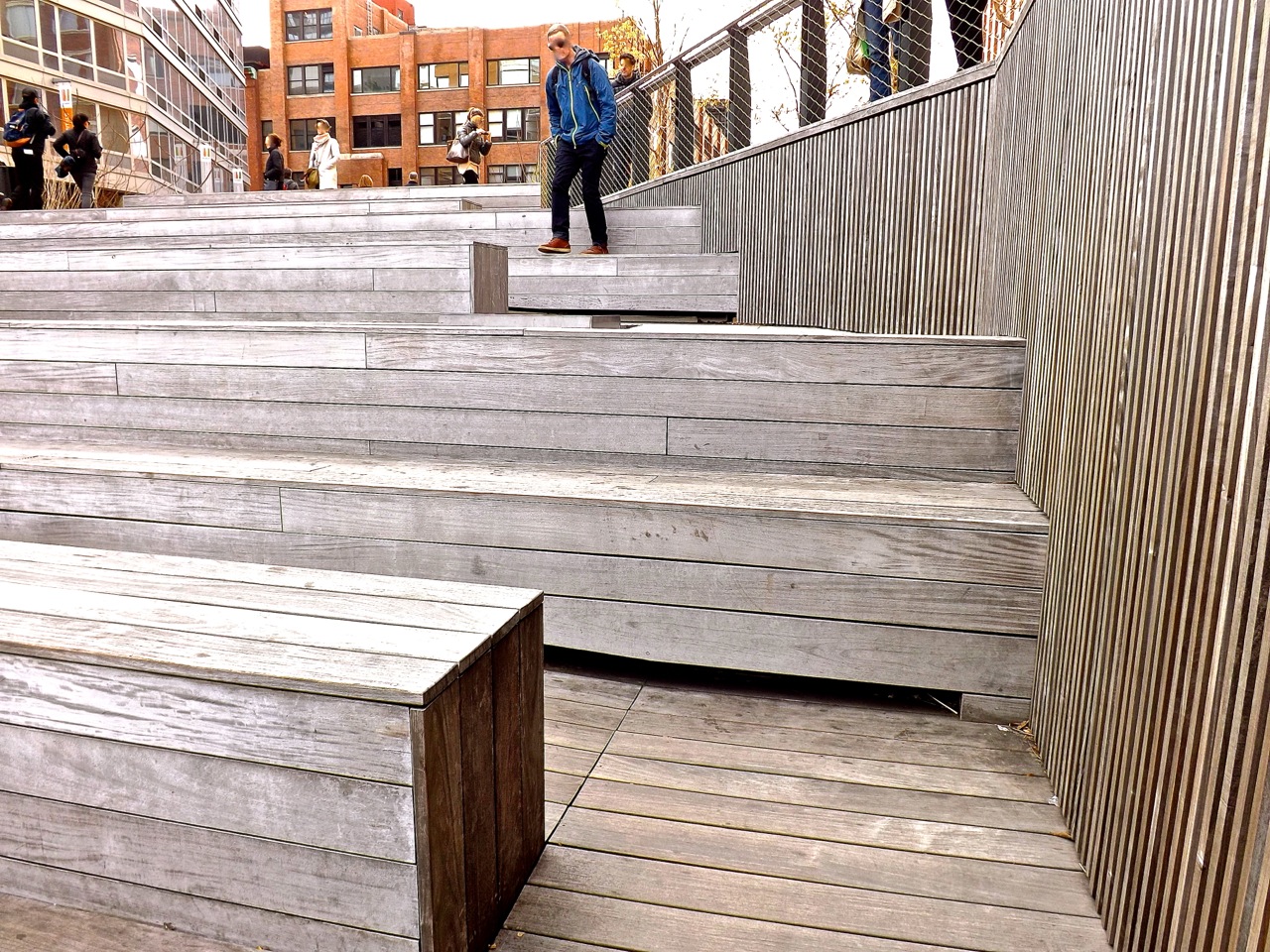
Steps/benches for viewing the traffic below.

The blue billboard is art commissioned for the H.L.

Walking up to the “Chelsea Market Passage,” formerly a Nabisco factory.

“The River That Flows Both Ways,” artwork that portrays the colors of water.

The H.L. gardeners’ toolboxes on tricycles.

And a peek at their work area in the Passage.

There is a cafe in the same section.

A view of the Hudson River.

“The Sundeck” area. A few of the recliners are cleverly placed on wheels on the old rail tracks. Unfortunately, someone must have envisioned mashed toes and fingers, because they are locked not to move.

Old pier posts on the river.

A nearby balcony.

A H.L. gardener weeding and the new building of the Whitney Museum of American Art (due to open in 2015).

“The Gansevoort Woodland.”

Redbud blooms.

At the southern exit at Gansevoort and Washington Sts.

The streets beneath the H.L.










 enclos*ure