Pasadena, California

A repeat post from July 2013. . .
1930 Pasadena garden, Archives of American Gardens, Smithsonian Institution Unidentified garden in Pasadena, California, 1930, by Diggers Garden Club, via Archives of American Gardens, Garden Club of America Collection, Smithsonian Institution Commons on flickr.

Simple, elegant, and a little mysterious. . .

The Diggers Garden Club was founded in 1924 and still exists today.  It is a member of the Garden Club of America (which celebrated its centennial in 2013).

At its 75th anniversary, the GCA donated 3,000 glass lantern slides (of which this is one) and over 30,000 film slides to the Smithsonian Institution’s Archives of American Gardens.  Its members continue to contribute to the collection, which now has over 60,000 images.

Many of the gardens pictured in the Archives’ slides are unidentified.  The Smithsonian is asking the public’s help in finding names and locations.  Click here to view its “Mystery Gardens Initiative.”

I do think a garden should be seductive. The strength of any garden is its ability to take you away.

— David L. Culp, in “3,000 Plants, and Then Some,” The New York Times.

Life in gardens: wildflowers

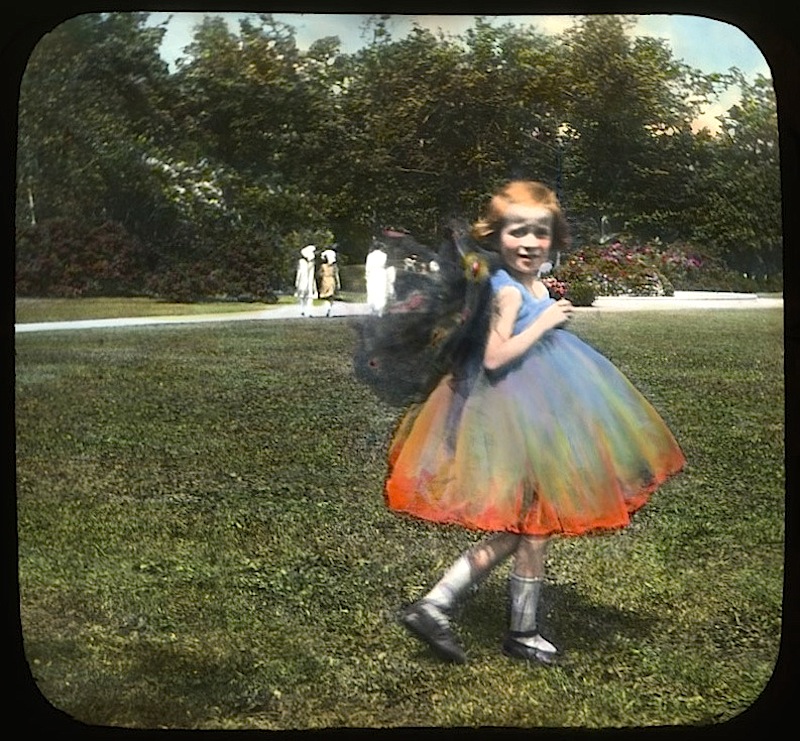
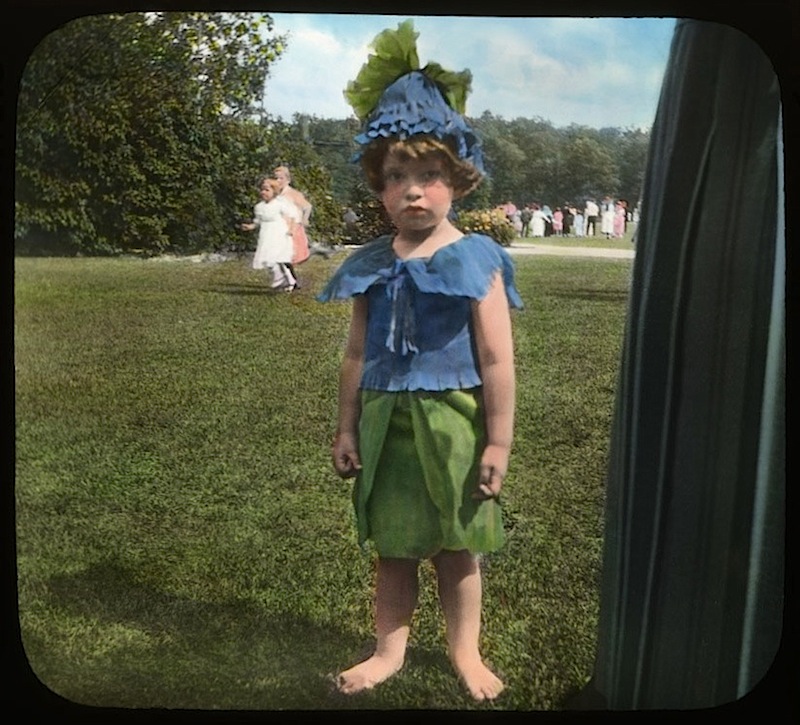
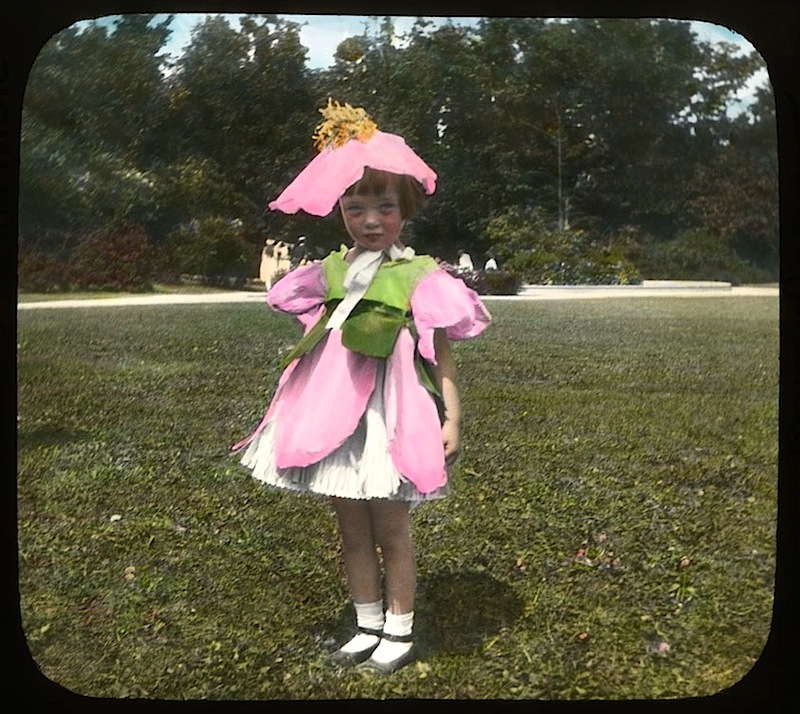
5 Child:ren in wildflower costumes, Chicago, ca. 1920, The Field Museum LibraryChildren costumed as flowers or insects for an event of the Wild Flower Preservation Society, Illinois Chapter, probably in a Chicago park, ca. 1920, hand-colored glass lantern slides by an unknown photographer, via The Field Museum Library Commons on flickr (all images here).

6 Child:ren in wildflower costumes, Chicago, ca. 1920, The Field Museum Library

The Wild Flower Preservation Society of America was founded in 1902 with money given to the New York Botanical Garden by Olivia E. and Caroline Phelps Stokes.  The funds were to be used for the protection of native plants.

1 Child:ren in wildflower costumes, Chicago, ca. 1920, The Field Museum Library

The Society dissolved in 1933, but much of its work was taken up by the Garden Club of America and by another Wild Flower Preservation Society, founded in 1925 in Washington, D.C. (which seems no longer to exist).

2 Child:ren in wildflower costumes, Chicago, ca. 1920, The Field Museum Library

3 Child:ren in wildflower costumes, Chicago, ca. 1920, The Field Museum Library

4 Child:ren in wildflower costumes, Chicago, ca. 1920, The Field Museum Library

7 Child:ren in wildflower costumes, Chicago, ca. 1920, The Field Museum Library

12 Child:ren in wildflower costumes, Chicago, ca. 1920, The Field Museum LibraryAbove and below: Mayapples.9 Child:ren in wildflower costumes, Chicago, ca. 1920, The Field Museum Library

10 Child:ren in wildflower costumes, Chicago, ca. 1920, The Field Museum LibraryAbove: a bee.

13 Child:ren in wildflower costumes, Chicago, ca. 1920, The Field Museum Library
Click here to see several more of the slides.

Vintage landscape: Thornewood

A little Monday morning prettiness. . .

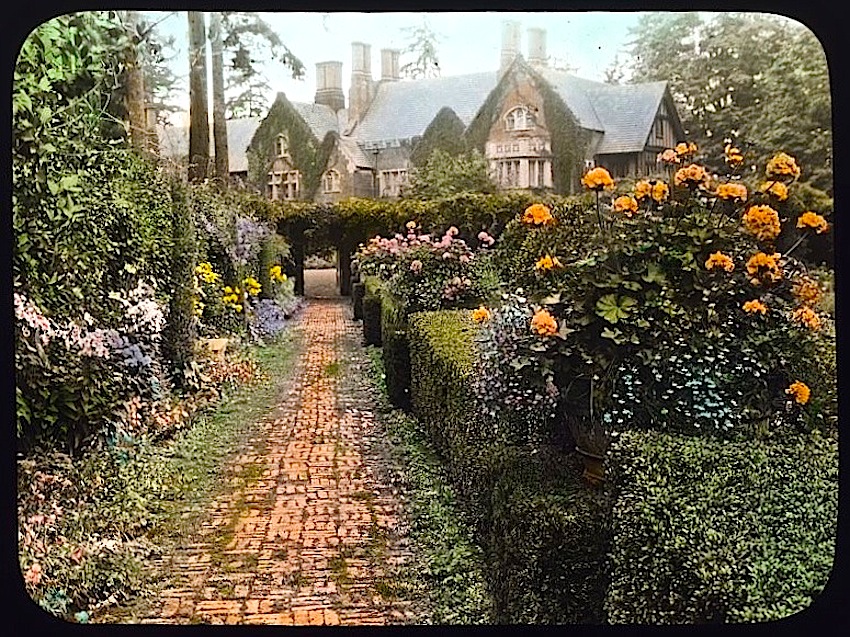
Thornewood, 1923, F.B.Johnston, via LibraryCongressThe walk to the house from the flower garden at “Thornewood,” Lakewood, Washington, 1923, a hand-colored glass lantern slide by Frances Benjamin Johnston, via Library of Congress Prints and Photographs Division.

The house was built between 1909 and 1911 for Chester and Anna Thorne — constructed partly  from a 400-year-old Elizabethan manor house, which Chester purchased in England and had dismantled and shipped to Lakewood.

Thornewood’s over 30 acres of formal “English” gardens were designed by James Frederick Dawson and John Charles Olmsted of Olmsted Brothers from 1908 to 1913.  They were originally cared for by 28 gardeners.

In 1926, House Beautiful magazine named Thornewood one of the five most beautiful formal gardens in America. In 1929, the Garden Club of America held its national convention there.

Today, the property still exists as the Thornewood Castle Inn and Gardens.

It is magnificent. It is what God would have done if he had the money.

— [of a perfectly groomed estate] Noel Coward