Garden Bloggers’ Bloom Day: Celosia

This Bloom Day, I’m most taken with this stand of Celosia argentea.  The annual self-seeded all over the garden, and we transplanted a number of the babies to this spot at the southeast end of the two parallel retaining walls (see garden plan here).
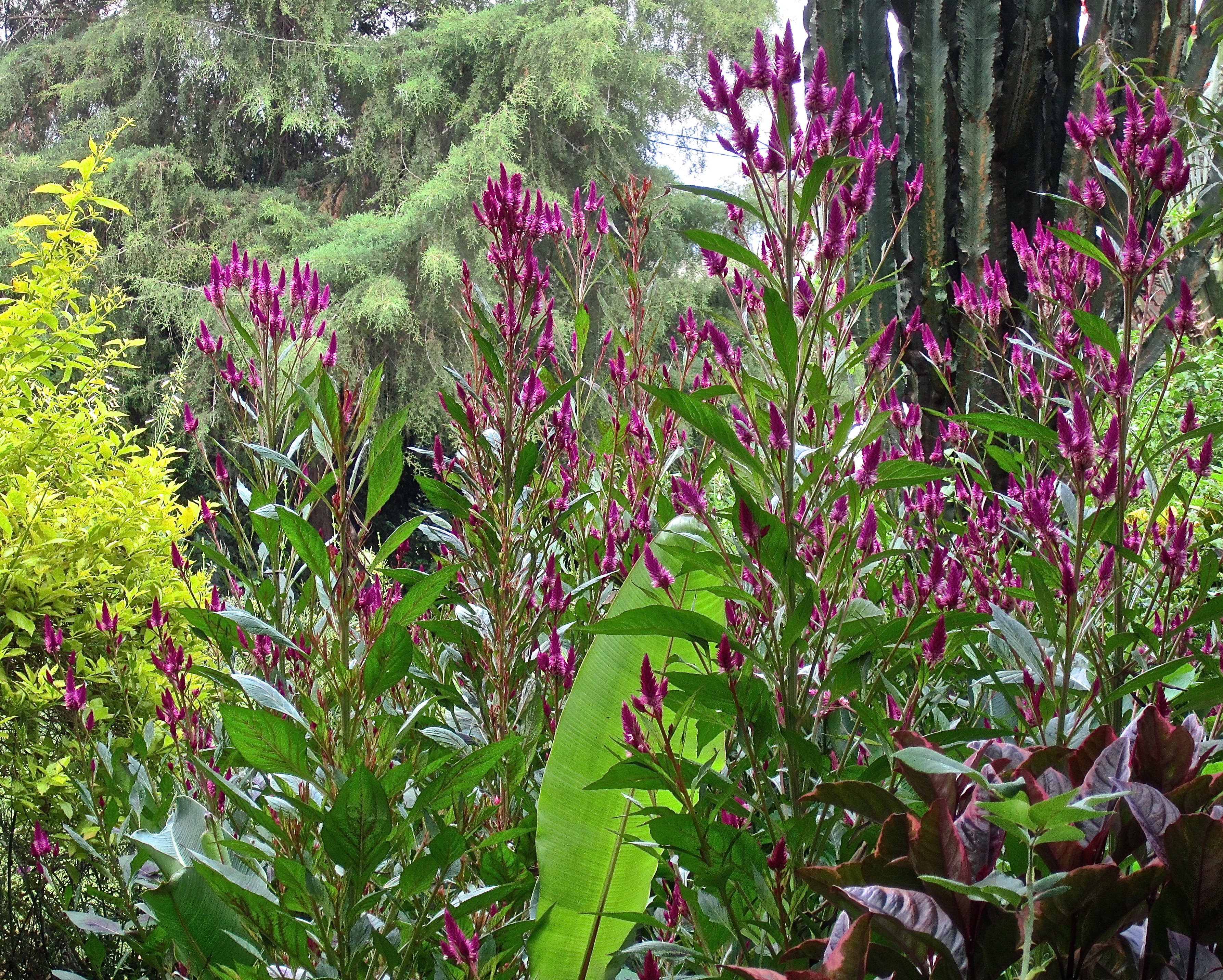
Eventually, some very tall Heliconia rostrata will grow up here (you can see one leaf in the front of the photo above), but this is a nice filler until the transplanted roots really take off.
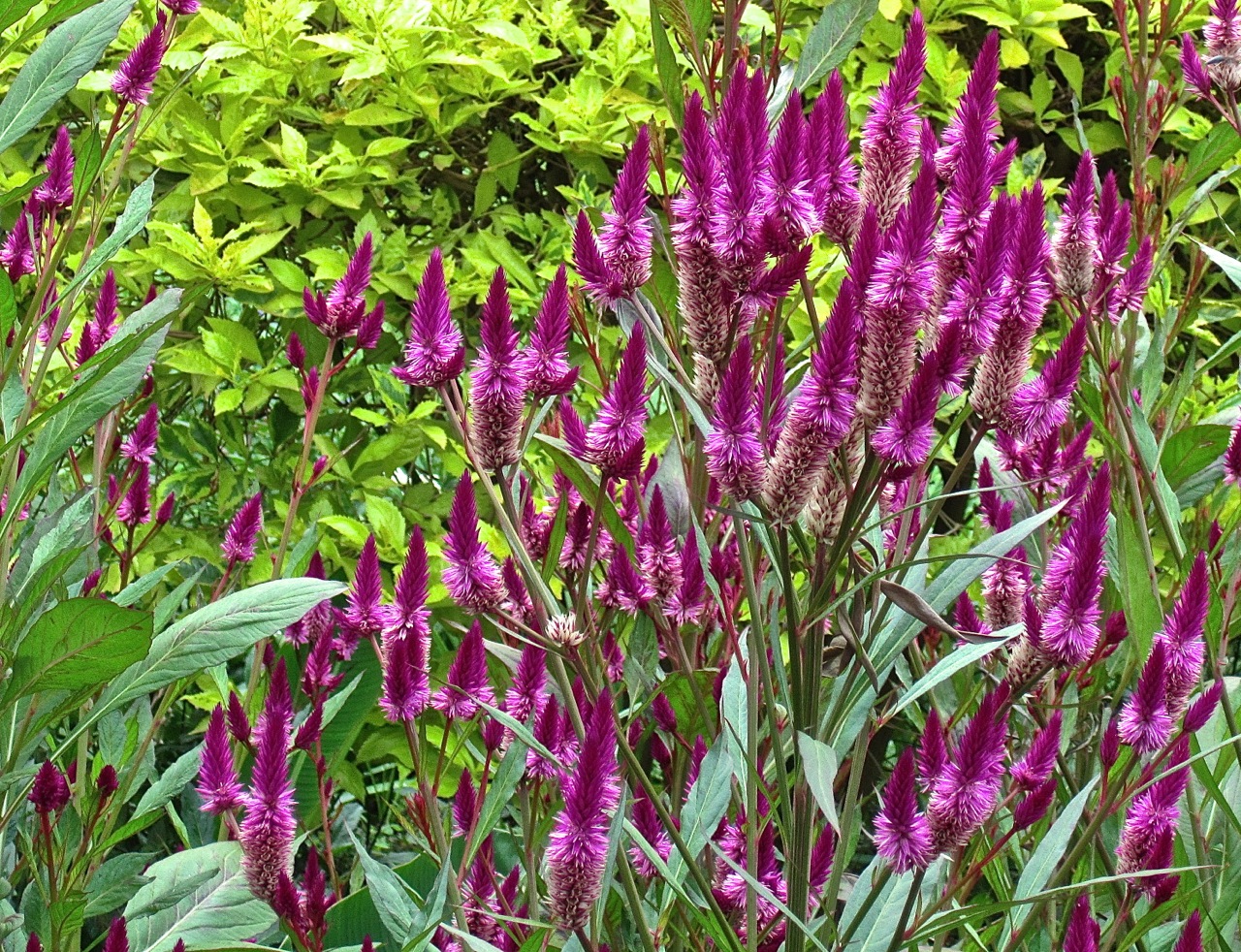
I believe my plants are a red-leafed Celosia argentea var. argentea, which is commonly know in Africa as Lagos spinach.  (Although I may have var. spicata, similar to ‘Flamingo Feathers.’)  Harvested before it flowers, the plant is an important leaf vegetable in tropical Africa and Southeast Asia.  In Nigeria, it is called soko yokoto, which means ‘make husbands fat and happy.’  In Swahili, it’s called mfungu.

To prepare it, boil (don’t steam) the leaves and tender stems for five minutes, and then drain away the cooking water (which eliminates the oxalic acid and nitrates).  It is said to taste like spinach and contains very good levels of protein, vitamins A, C, and E, calcium, and iron.
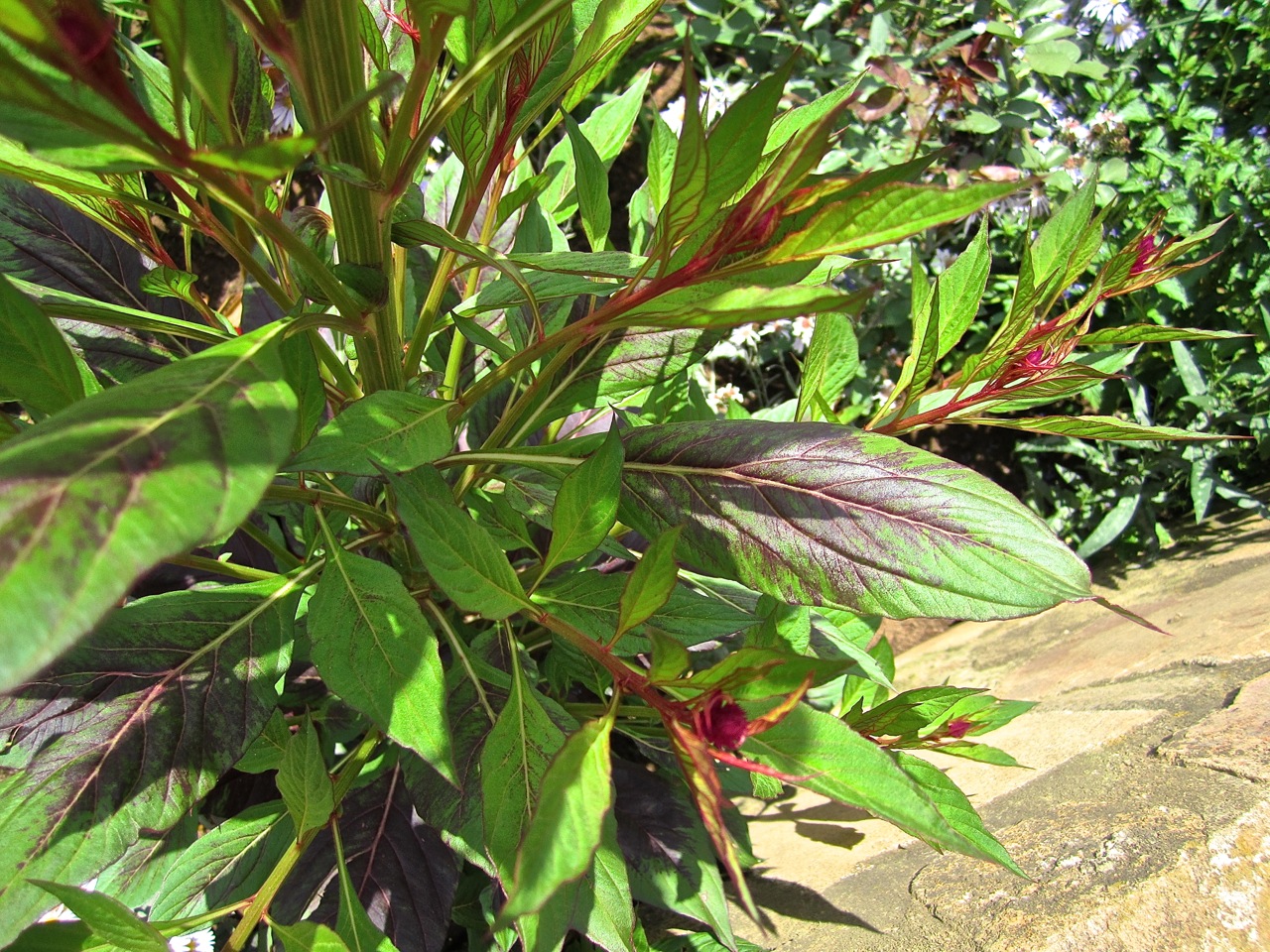
The genus Celosia is a member of the amaranth family.  The name comes from the Greek word kelos, meaning ‘burned’ — referring to the flame-shaped and colored blooms.  Most sources I looked at gave the genus’s probable origin as Africa.

To see what’s blooming in other garden bloggers’ gardens, check out May Dreams Gardens.

Garden Bloggers’ Bloom Day for May

We have quite a number of blooming plants right now, but it’s been so wet lately that most are looking a bit rain-addled.

I love these Kniphofia uvaria or red-hot-poker plants even though these spikes are about done. They are the most beautiful orange.

They have bloomed steadily since we arrived in September.

My favorite blooms today are from a pink bougainvillea growing up into this conifer (I don’t have a name for it). They are now eye-level with our upstairs bedroom windows.

Bougainvillea is planted all along the front of the garden and is kept severely clipped as a tall hedge, but a long branch has escaped and has almost reached the top of the tree.

To see what’s blooming in other garden bloggers’ gardens, check out May Dreams Gardens.

(It’s raining again.)

Vintage landscape: wildflowers

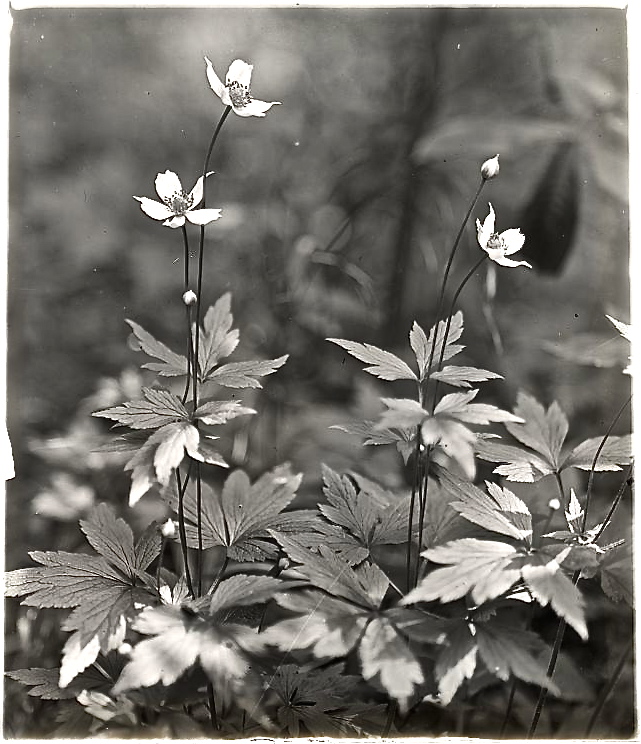
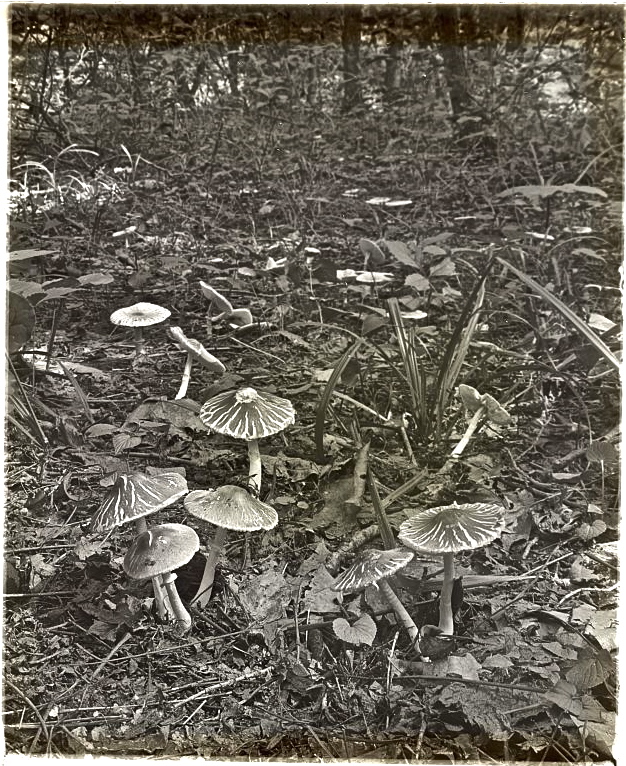
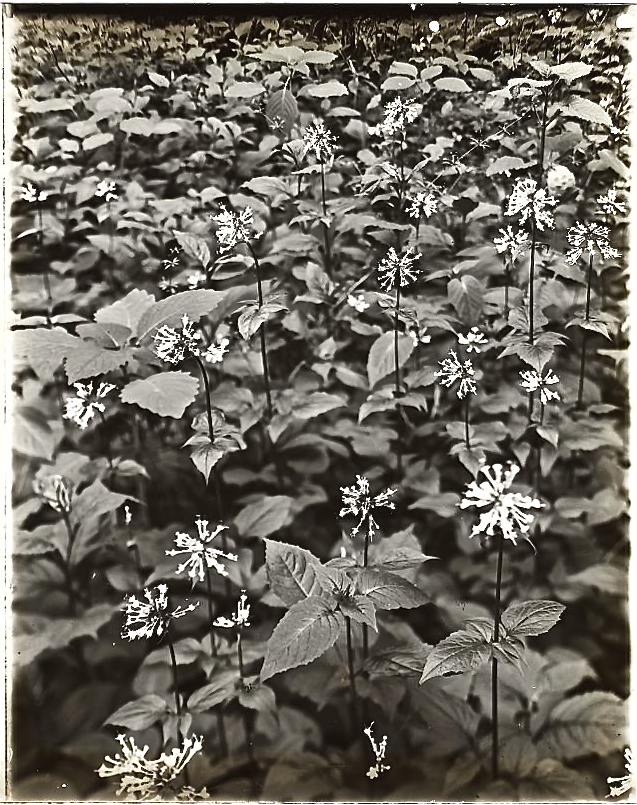
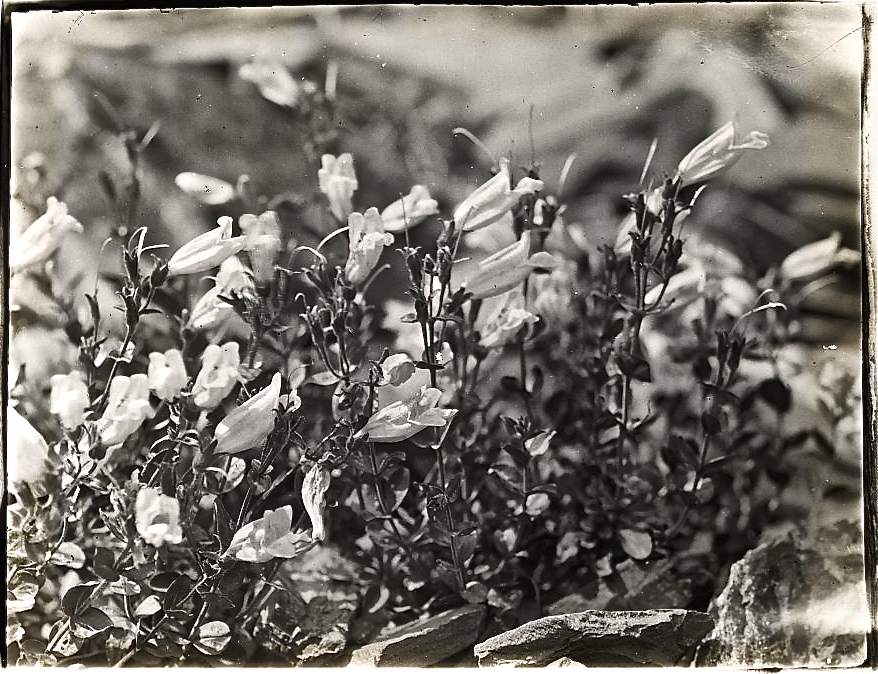
While the hand-colored images are the stars of the recently released collection of lantern slides taken by Frances Benjamin Johnston, among the new material are these lovely black and white photographs of wildflowers. Johnston used these pictures to illustrate her popular lecture, “Wild Flower Gardening.”

The slide at the top is “Unidentified house, woodland pathway, 1920.” All the portraits of flowers below were taken between 1915 and 1927.

Wood anemone. (All labels by the Library of Congress; click any photo to enlarge it.)

Wildflowers.

Bell flower (campanula).

Woodland mushrooms.

Wildflowers in bloom.

Bell flower (campanula).

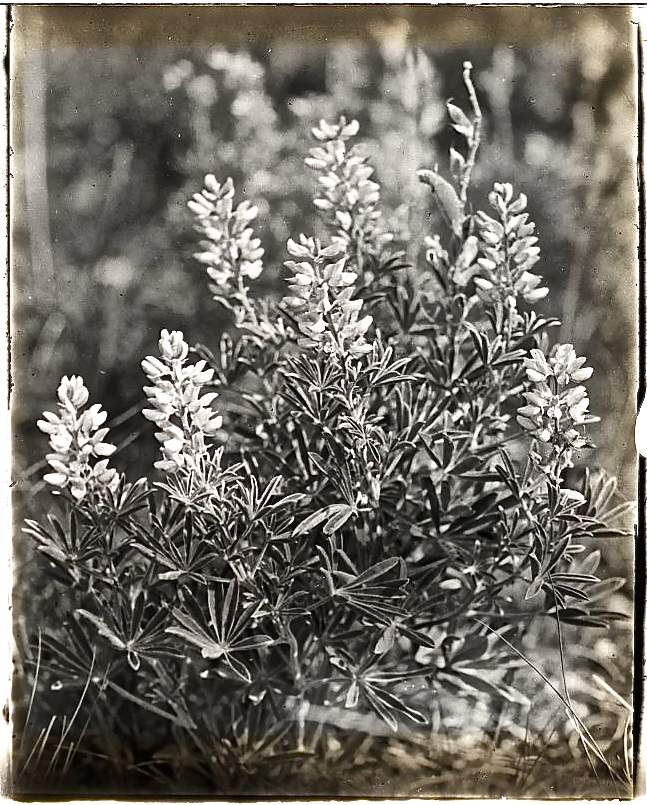
Lupin (lupinus).

Unidentified garden or park, woodland daffodils, 1920 (also the photo below).

All photos are from the Frances Benjamin Johnston Collection, Library of Congress Prints and Photographs Division.

Garden Bloggers’ Bloom Day in April

I’m afraid this will have to count for my Bloom Day post this month — it’s pouring outside.  To see what’s blooming in other garden bloggers’ gardens, go to May Dreams Gardens, here.

Garden Bloggers’ Bloom Day for March

I’m traveling today, so I must confess that I took these photos before I left. However, this plant has bloomed non stop for the last six months, so I’m sure it is blooming today too.

Since we arrived in Rwanda in September, I have been telling people that this is a poinsettia, a shrub that can also get really large in frost-free climates. But after identifying our orange and white Mussaenda frondosa last month, I realized that it is a Mussaenda erythrophylla.

M. erythrophylla is native to tropical West Africa and is also known as Ashanti blood, red flag blood, or tropical dogwood. It can reach heights of 30 ft. (about 9 m.). Below, it’s growing up into our acacia tree.

The bracts of this plant glow so red that I’ve had a hard time getting good pictures of it. It will bloom all year long.

The plant cannot well tolerate temperatures below 40°F.  It prefers full sun, but will bloom in part shade.  It needs moderate amounts of water.

Thanks to Carol at May Dreams Garden for hosting Garden Bloggers’ Bloom Day. Click the link to see what’s blooming in other GB’s gardens today.

Garden Bloggers’ Bloom Day in February

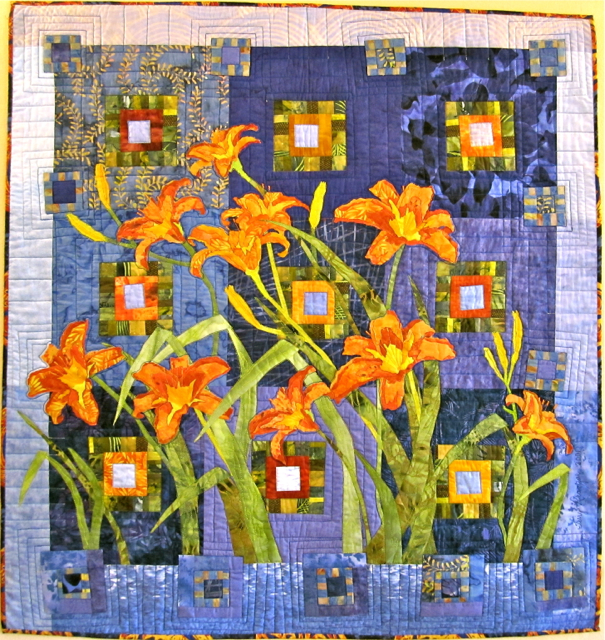
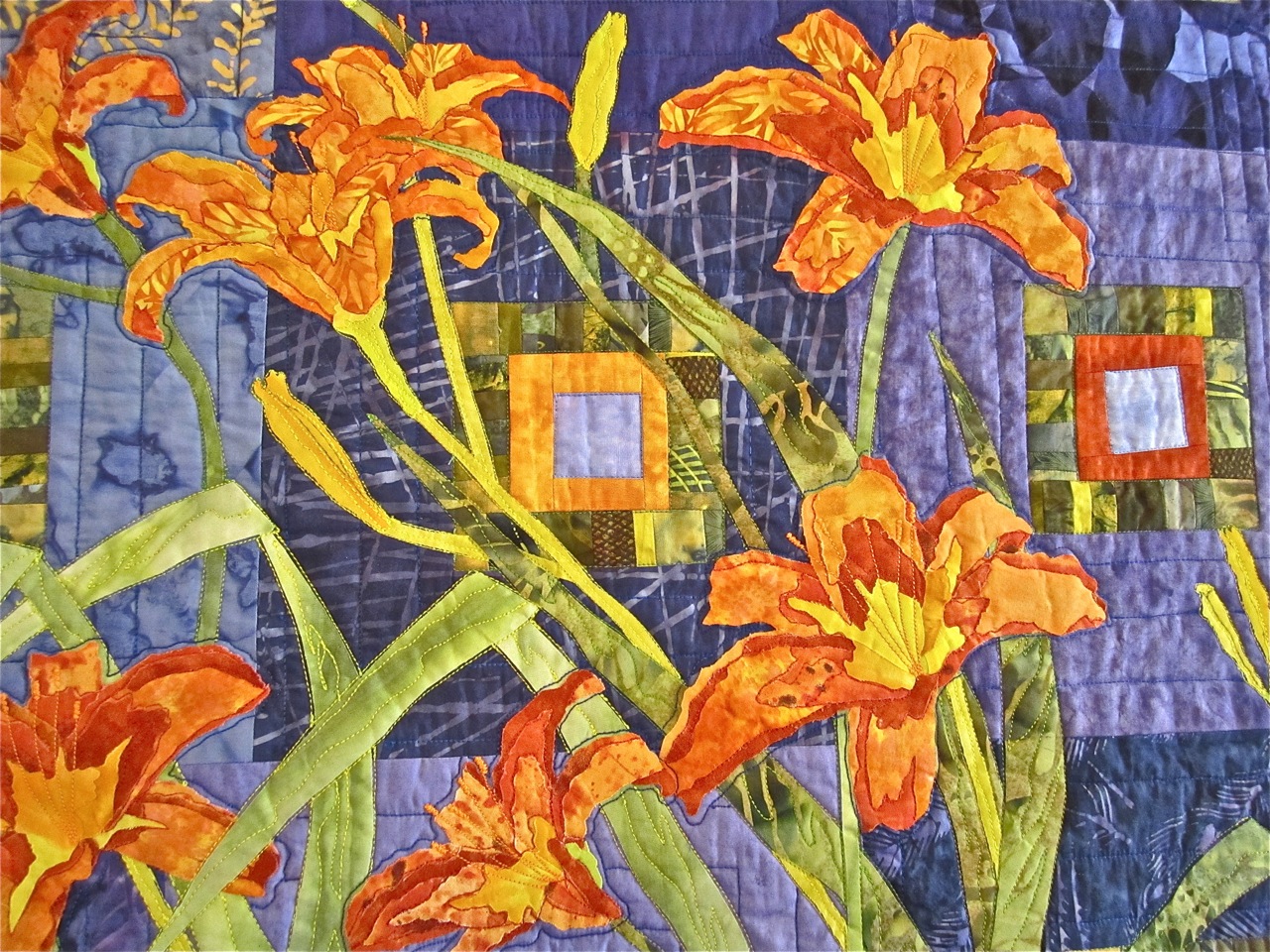
This quilt recently arrived at our house as part of our Art in Embassies exhibition of contemporary fine American crafts.   It has been generously loaned by fiber artist Terry Kramzar of Kennett Square, Pennsylvania, and the title is “Tiger Lilies.”

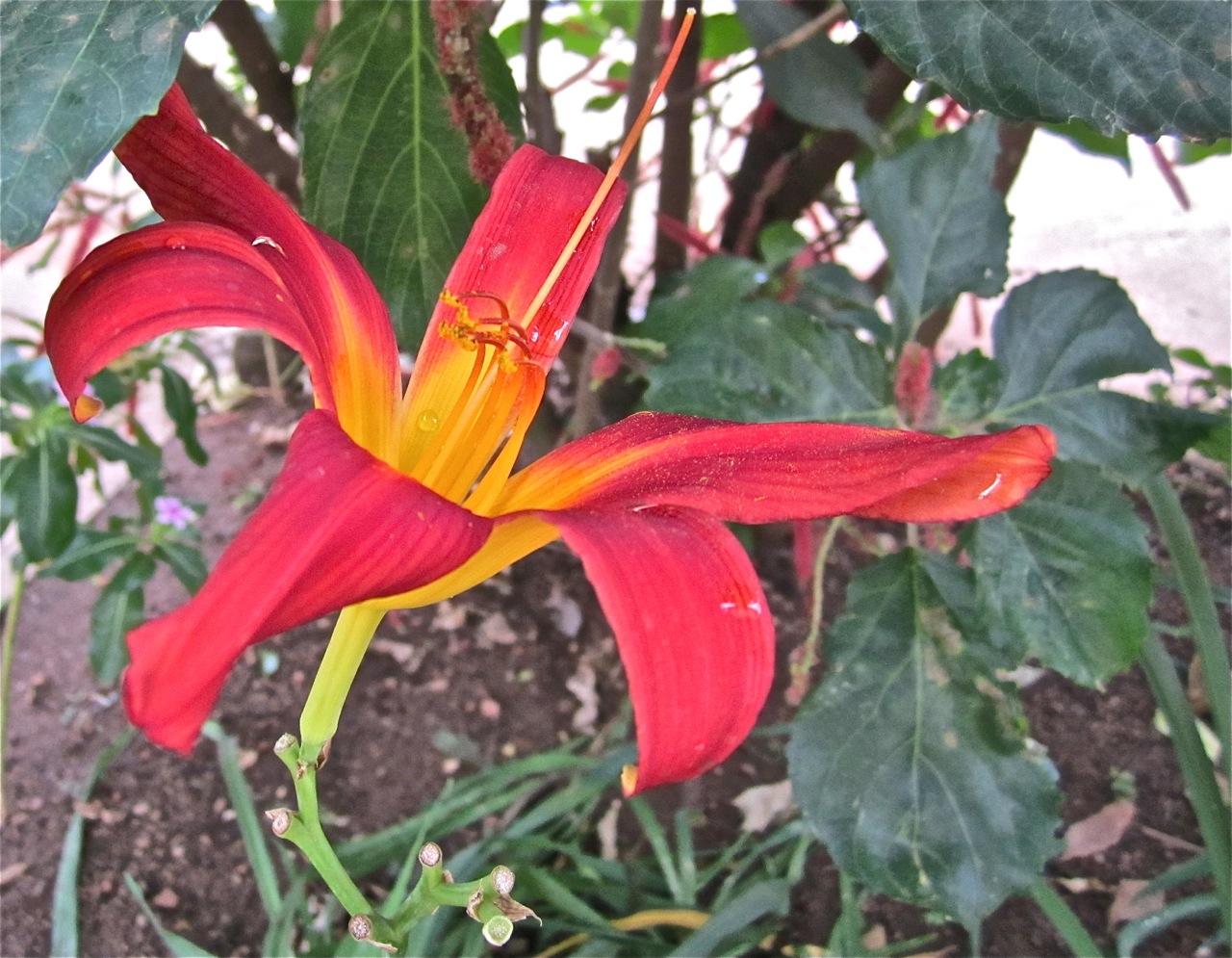
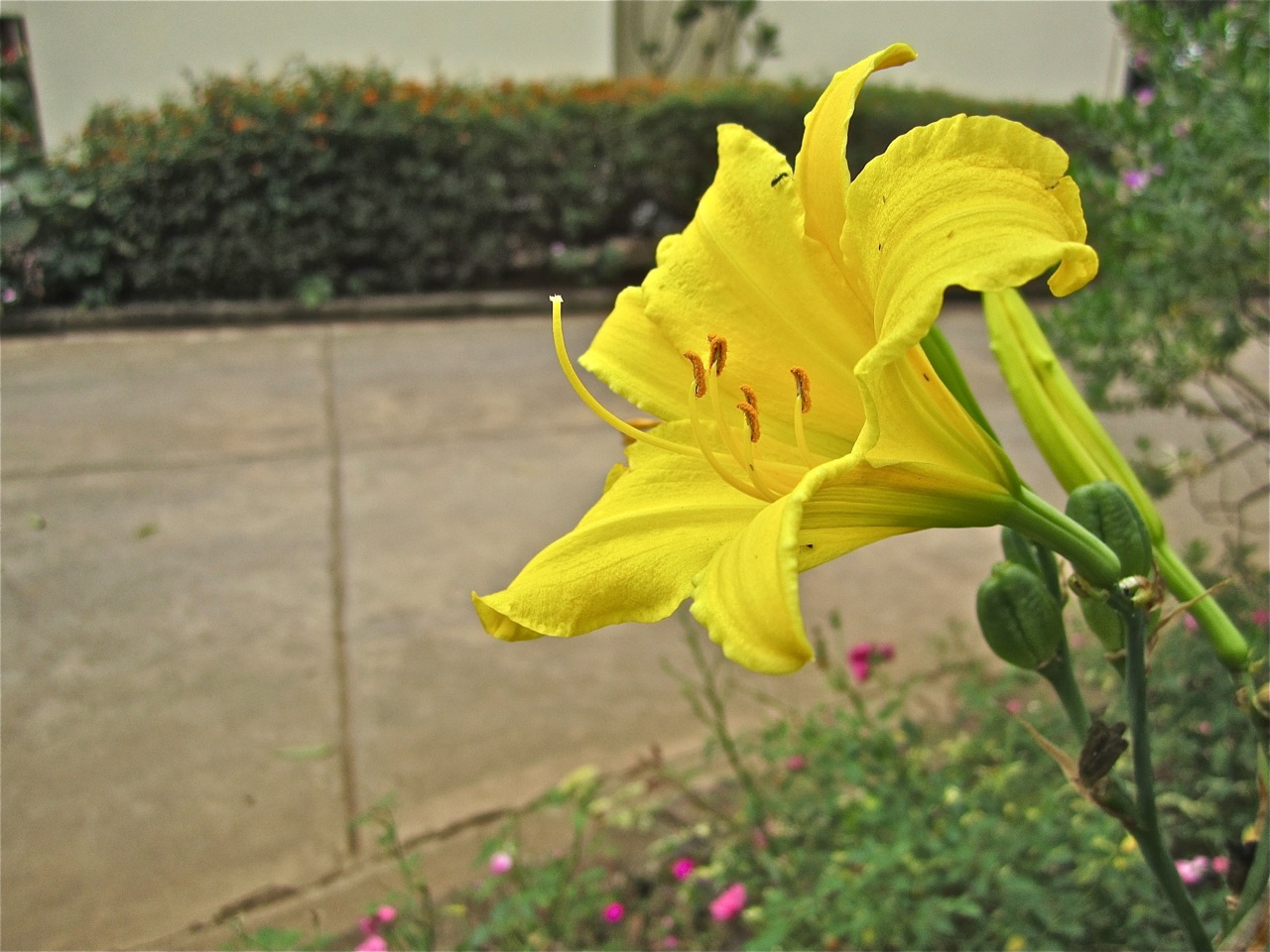
I had the idea that I would feature daylilies for this month’s Garden Bloggers’ Bloom Day when we unpacked the quilt. Today, I went out into the garden, which normally has a lot of blooming daylilies around the drive, and found only two.

I have no idea which cultivars of Hemerocallis these are.  You can see some of the new ones for 2012 at allanbecker.gardenguru.

The tiger lilies in the quilt are Hemorocallis fulva. They are native to the Himalayas, China, Japan, Korea, and southeastern Russia and were brought to America from England in the early 17th century.

Here’s a little of what else is blooming in the garden today.

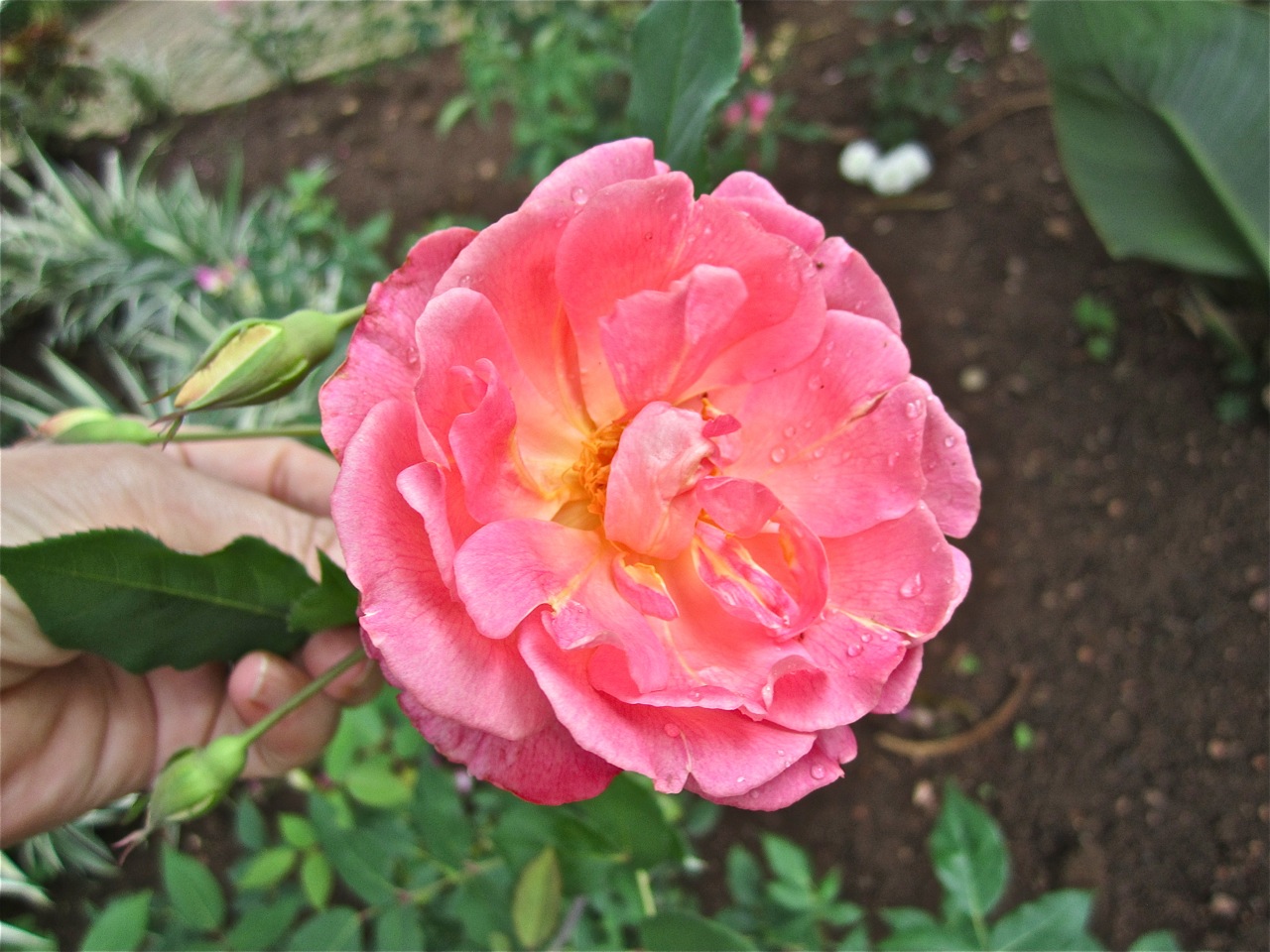
A small pink (a bit coral) shrub rose of unknown variety. This is really nice. We need to try to root some cuttings.

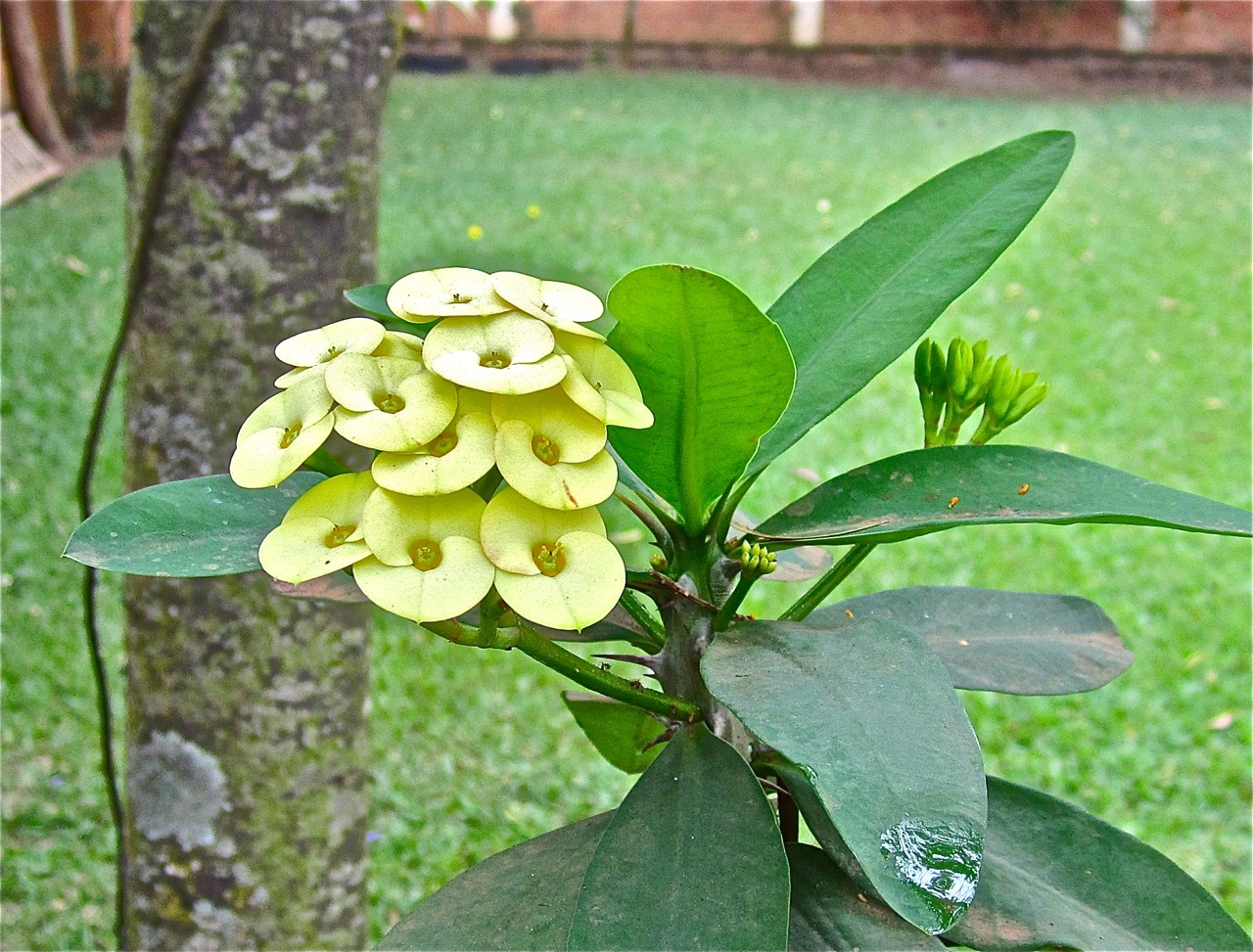
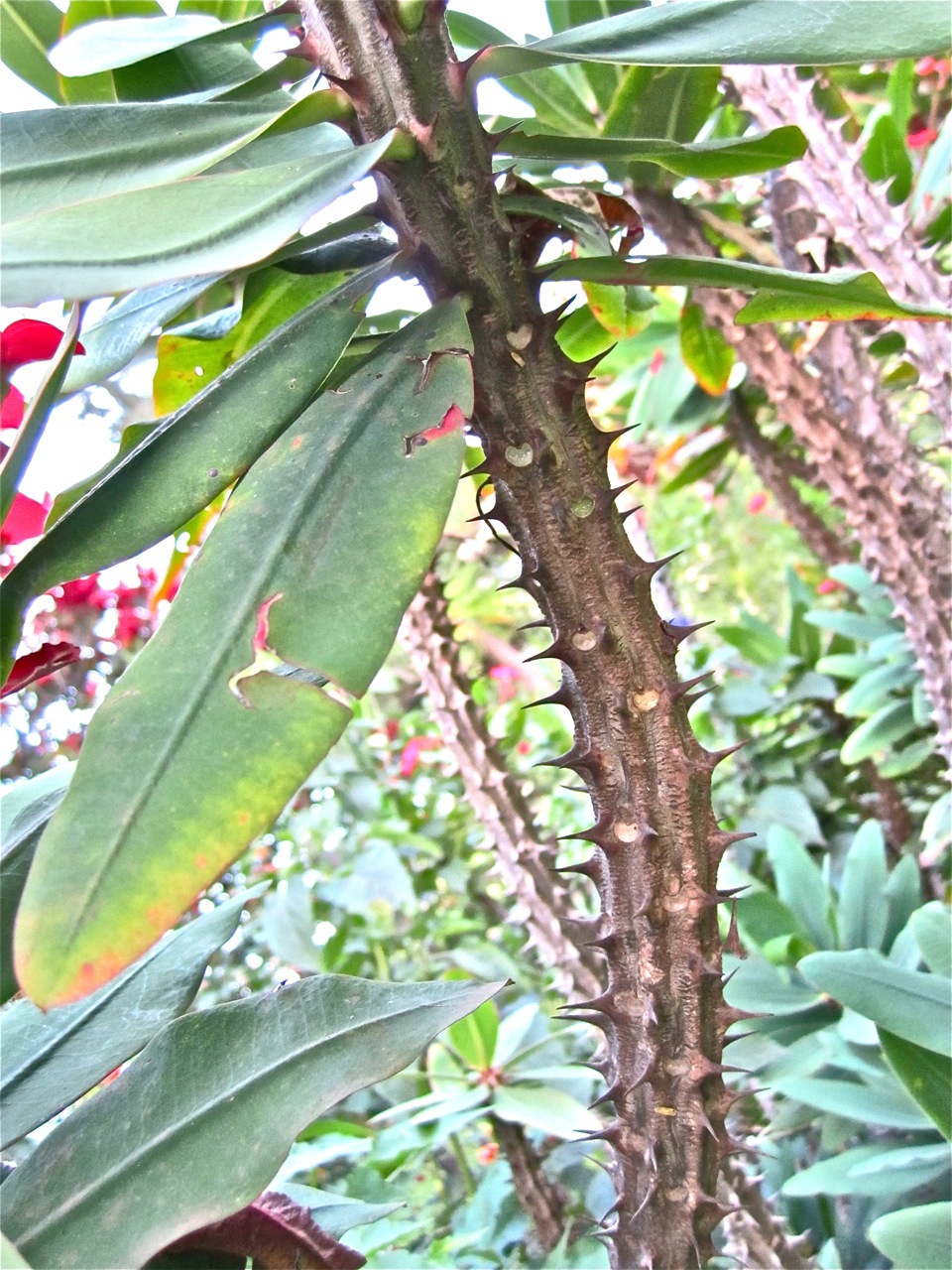
We also have this yellow crown of thorns or Euphorbia Milii, native to Madagascar. I like this plant, and there are two of them in the garden. One, with red blooms, is right next to some steps, and this one is in a rather ugly container next to the parking area. It’s not going to be fun to move them.

Here’s why.

Our lobster claw or false bird of paradise, Heliconia (I think I have Heliconia rostrata), has put forth a lot of huge blooms, but its foliage is a little tatty. Heliconias are native to the tropical Americas and the Pacific Ocean, west to Indonesia.

Thanks to Carol of May Dreams Gardens for hosting Garden Bloggers’ Bloom Day (the 15th day of every month).