Fairbanks, Alaska

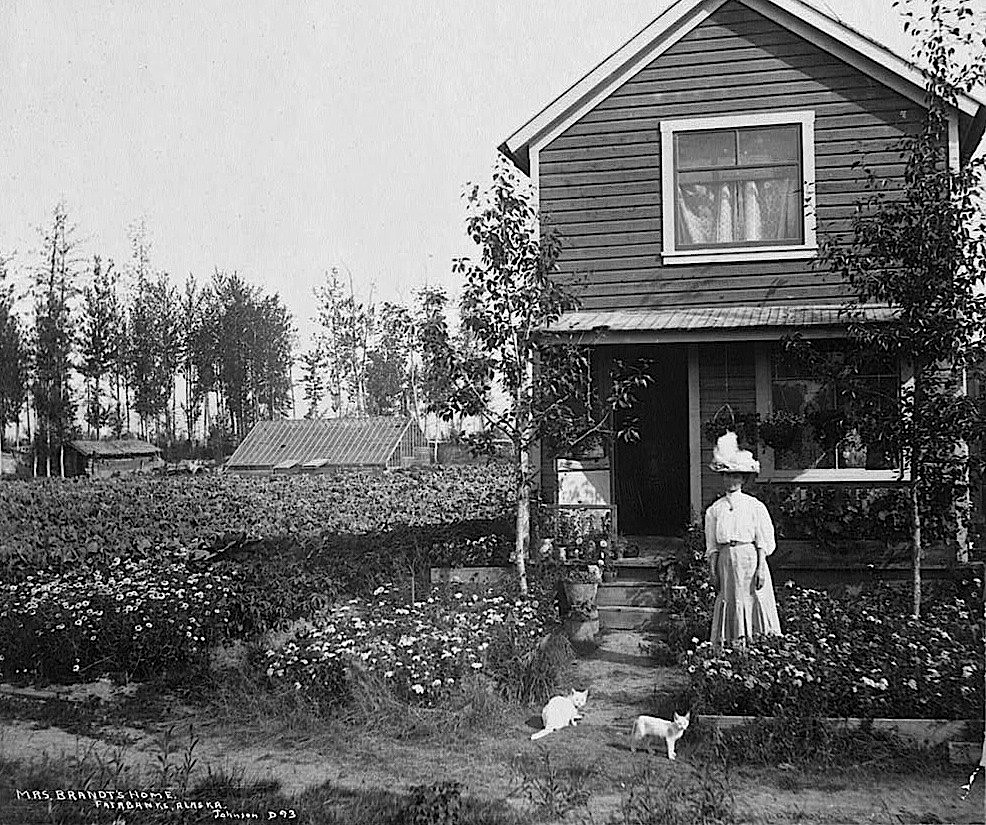
“Mrs. Brandt’s home, Fairbanks, Alaska,” 1916, via Library of Congress Prints and Photographs Division.

Fairbanks was founded in 1901 as a trading post supplying gold miners in the area.  It became an incorporated city in 1903. “By 1905, [it] had electricity and sewer service, a powerplant, a three-story skyscraper, saloons, stores, police and fire protection, and a thriving “Red Light” district,” according to fairbanks-alaska.com.

This may be the home of Margaret Brandt, a widow who was a city telephone operator from 1905 to 1938.

The photograph is one of over sixteen thousand created or collected by Frank G. Carpenter and his daughter, Frances, to illustrate his geography textbooks and popular travel books.

Click on the image for a larger view.
Front steps, Finland

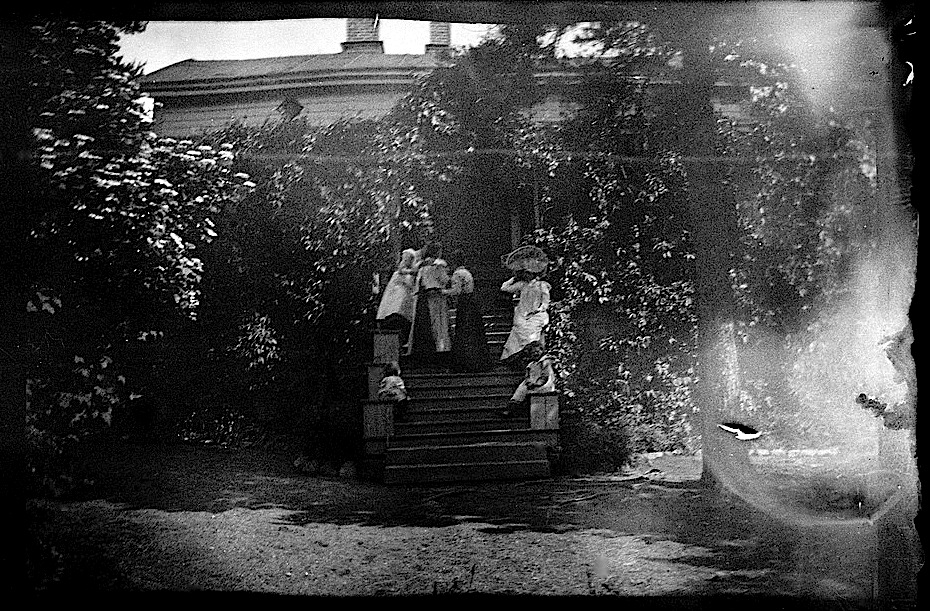
Front garden and steps, probably Finland, ca. 1900, by Hugo Simbergvia Finnish National Gallery on flickr (under CC license).

So much activity and anticipation in this shadowy old photo: the three women on the top left are waiting for the appearance of someone at the door.  Below them, a toddler has been left to perch a little precariously on the steps. On the right, a woman with a very large hat and a little girl pose for the camera. Vines everywhere.

(There’s a larger view here.)

Sheffield, Alabama

“Kenneth Hall gives daughter Peggy a shower with garden hose in front of their [Tennessee Valley Authority] defense home, Sheffield, Alabama,” 1942, Arthur Rothstein, via Library of Congress Prints and Photographs Division.

Victoria, Australia

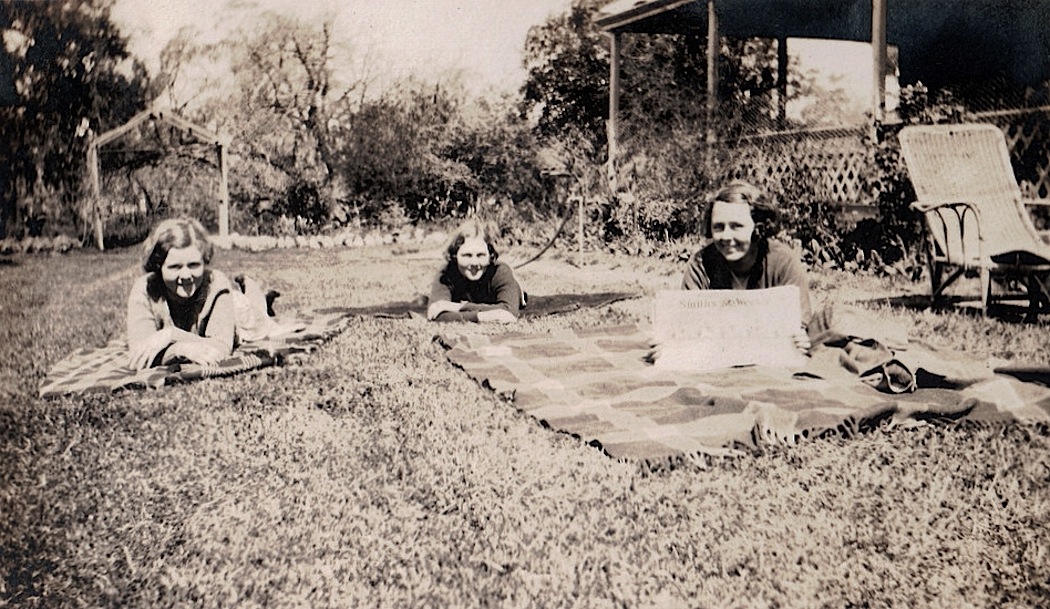
“Relaxing in the garden,” photographer unknown, via Genealogical Society of Victoria (Melbourne) on flickr (under CC license).

The young woman on the right is holding up a copy of Smith’s Weekly, a tabloid newspaper published from 1919 to 1950.

Washington, D.C.

Small front gardens and a sidewalk cafe on 17th Street, N.W., between H and I Streets, August 1973, by Dick Swanson for DOCUMERICA, via The U.S. National Archives Commons on flickr.

(Click on the image for a better view.)

None of these buildings remain today. The current view (from the ground) is here.

DOCUMERICA was an photography program of the U.S. Environmental Protection Agency (EPA). From 1972 to 1977, it hired over 100 photographers to “document subjects of environmental concern.” They created an archive of about 80,000 images.

In addition to recording damage to the nation’s landscapes, the project captured “the era’s trends, fashions, problems, and achievements,” according to the Archives, which held an exhibit of the photos, “Searching for the Seventies,” in 2013.