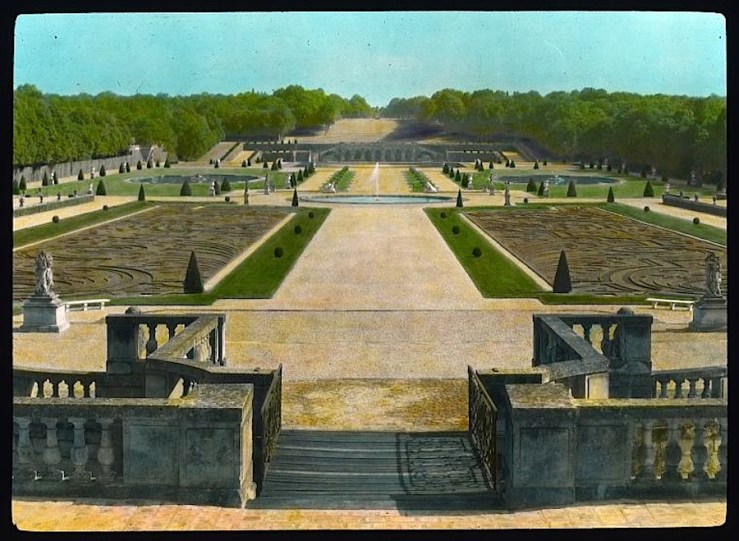
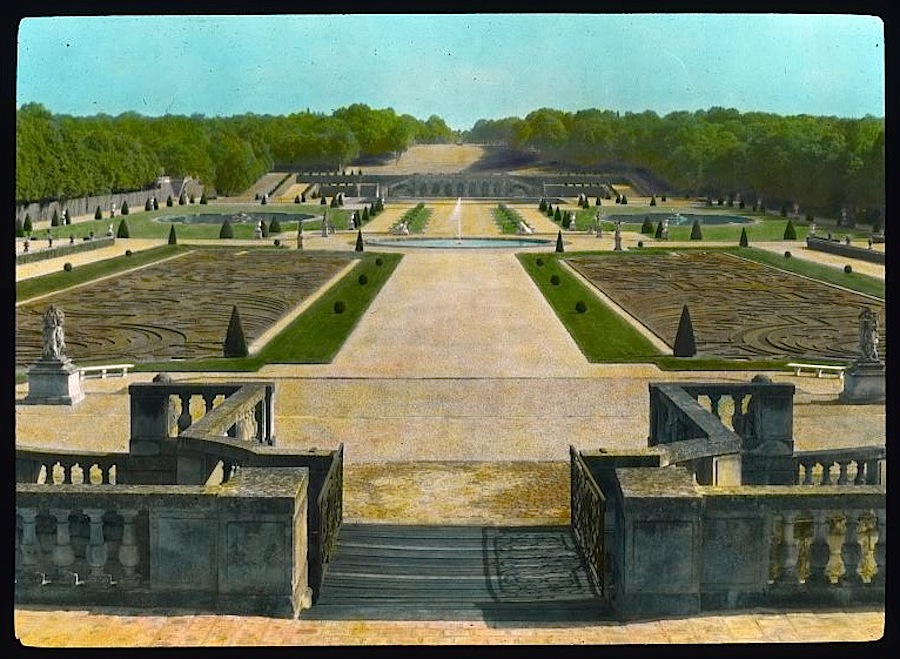
View from the château, Maincy, France, 1925, by Frances Benjamin Johnston, via Library of Congress Prints and Photographs Division.
Vaux-le-Vicomte — the château and garden together — was “the first great work of the French baroque,” according to garden historian Tom Turner.
In his book, The Seven Ages of Paris, Alistair Horne tells the story of the estate’s big reveal to Louis XIV, then only 22 years old and struggling with a nearly bankrupt treasury:
Nicolas Fouquet, a vain, ostentatious and ambitious parvenu, had been Louis’s minister superintendent of finance since 1653. Now aged forty-five, he had just built himself a magnificent mansion at Vaux-le-Vicomte. . . . [O]n 17 August 1661, [he] audaciously invited the King to a lavish gala. . . The massive iron gates gleamed with freshly applied gilt; in the vast gardens laid down by André le Nôtre 200 jets d’eau and fifty fountains spouted on either side of a main alley nearly a kilometer long. For the previous five years, some 18,000 workmen had toiled to produce this wonder of the modern age, eradicating three villages that had happened to be in the way. Certainly it trumped the modest royal hunting-lodge of the King’s father out at Versailles, which Louis was currently doing up.
Inside the imposing mansion the royal party dined off a magnificent gold service which likewise must have made its impression on the King, who had had to sell off his plate to meet military expenditure. . . . [T]he whole episode outraged him. At various points in the evening, Louis came close to losing his temper — whispering to his mother, “Madame, shall we make these people disgorge?” . . . Less than three weeks later, just as he was arriving at a meeting in Nantes, Fouquet was arrested by the legendary D’Artagnan of Three Musketeers fame.
After the arrest, Louis took possession of artwork, furniture, and all the orange trees from Vaux-le-Vicomte. More importantly, he sent its architect, Louis Le Vau, and its painter-decorator, Charles Le Brun — and, of course, Le Nôtre — to Versailles. Fouquet died in prison in 1680.
Seven Ages . . . is a very good history to read if you are planning a trip to the Paris.
I have been taught never to brag but now
I cannot help it: I keep
a beautiful garden, all abundance . . .
I want to take my neighbors into the garden
and show them: Here is consolation.
— Paisley Rekdal, from “Happiness“

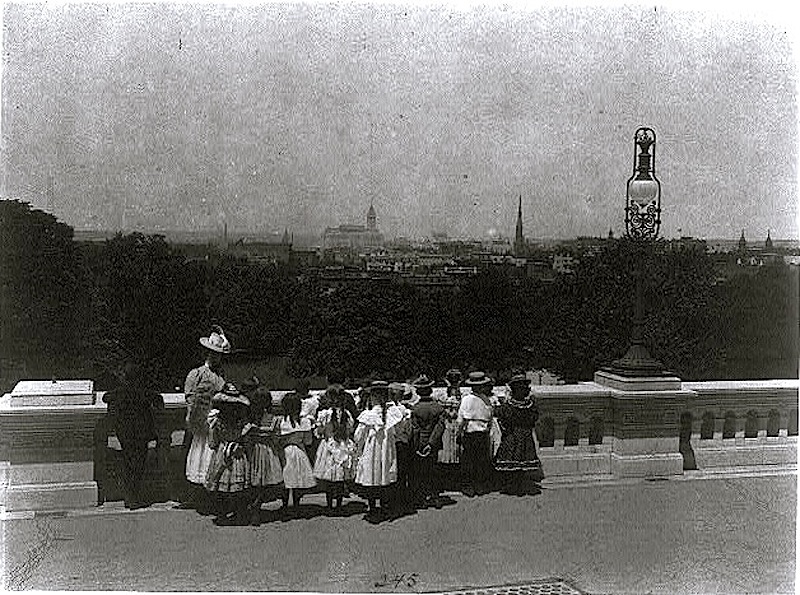
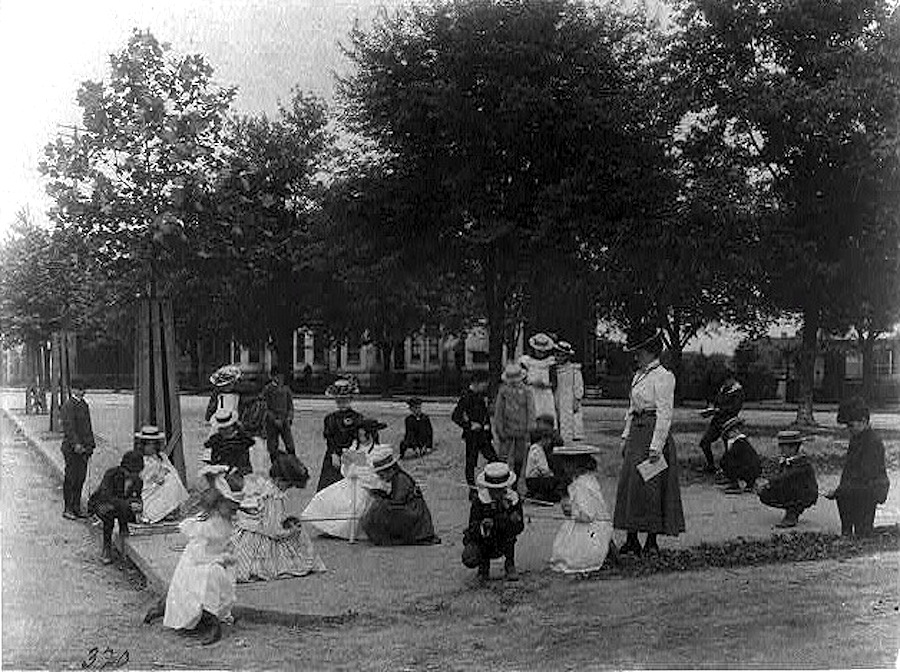 “6th Division mathematics class on a street paving problem,” Washington, D.C., ca. 1899, by Frances Benjamin Johnston, via Library of Congress Prints and Photographs Division.
 enclos*ure