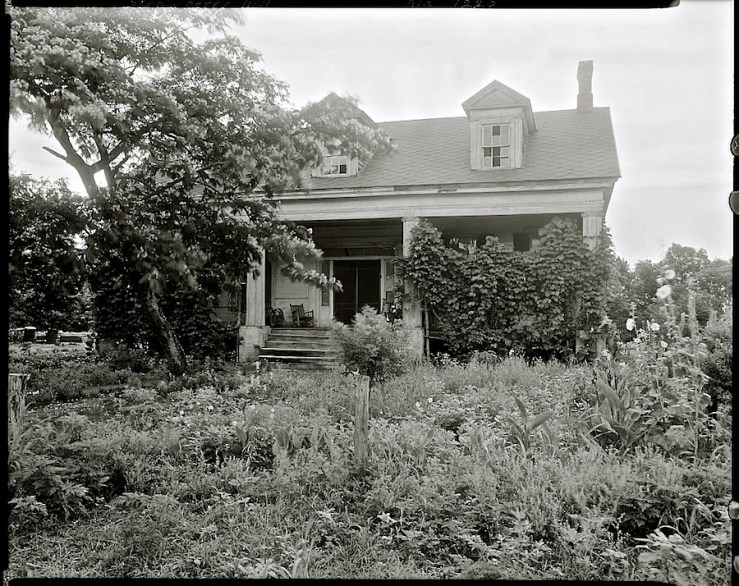
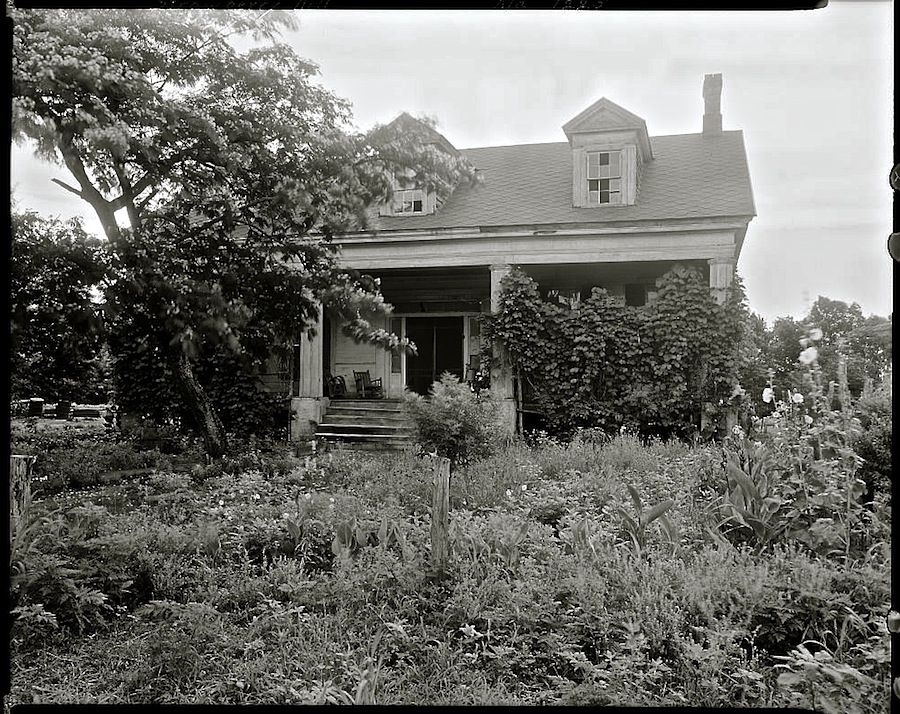
 Strawberry Hill, Greene County, Alabama, in 1939. Photo by Frances Benjamin Johnston, via the Library of Congress Prints and Photographs Division. (Click on the image for a larger view.)
I’ve been looking at and bookmarking a lot of old photographs of beautiful porches lately, so today, I’m starting a Sunday series for these pictures.
The porch, particularly the front porch, connects — with a pause — the private interior of the house with the communal landscape beyond it. Andrew Jackson Downing wrote:
A porch strengthens or conveys expression of purpose, because, instead of leaving the entrance door bare, as in manufactories and buildings of inferior description, it serves both as a note of preparation, and an effectual shelter and protection to the entrance. . . .
The unclouded splendor and fierce heat of our summer sun, render this general appendage a source of real comfort and enjoyment; and the long veranda round many of our country residences stands instead of the paved terraces of the English mansions as the place for promenade; while during the warmer portions of the season, half of the days or evenings are there passed in the enjoyment of cool breezes, secure under the low roofs supported by the open colonnade, from the solar rays, or the dews of night.
In his pattern books of the 1840s and 50s, Downing popularized the front porch for the American home as a link to nature.
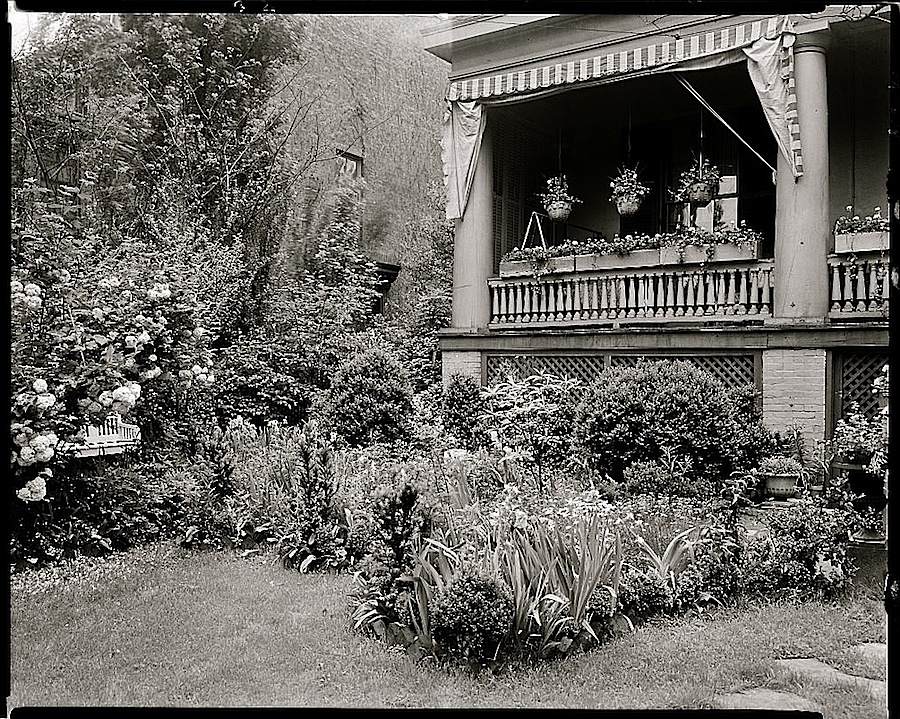
I see it as a box seat for the theater of the garden or of the street. Although the one above seems to have half drawn its curtains against the buzzing and chirping action of the cottage garden below.
The porch — and 1821 house attached — still exist, although without the vines and flowers. The surrounding land is now a cattle ranch. In fact, it is currently for sale for about $3.8 million.

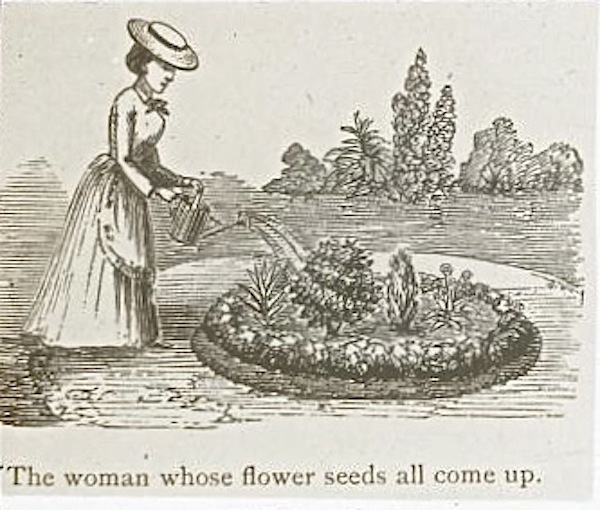 The successful lady gardener dresses in modest clothes with sensible hat and apron and stays home to care for her flowers.
 While the unsuccessful one dresses in low-cut bodice and frilly hat, threatens her flowers and chickens with an umbrella, and then goes out on the town.
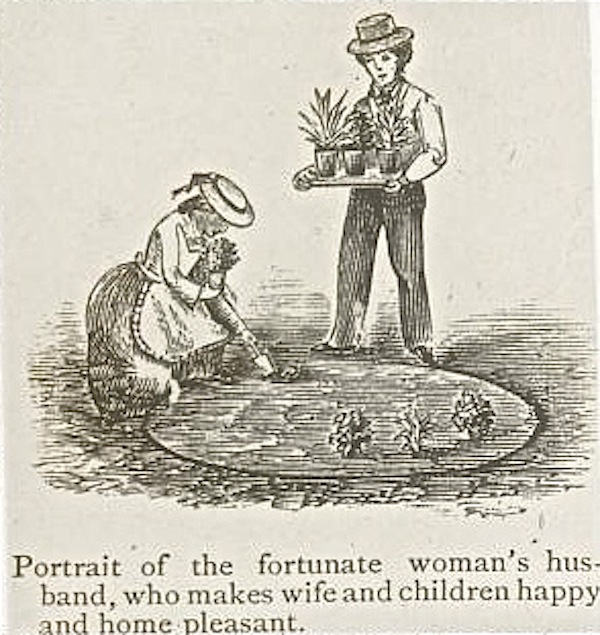 A good husband carries and then holds the pots — he’s a keeper.
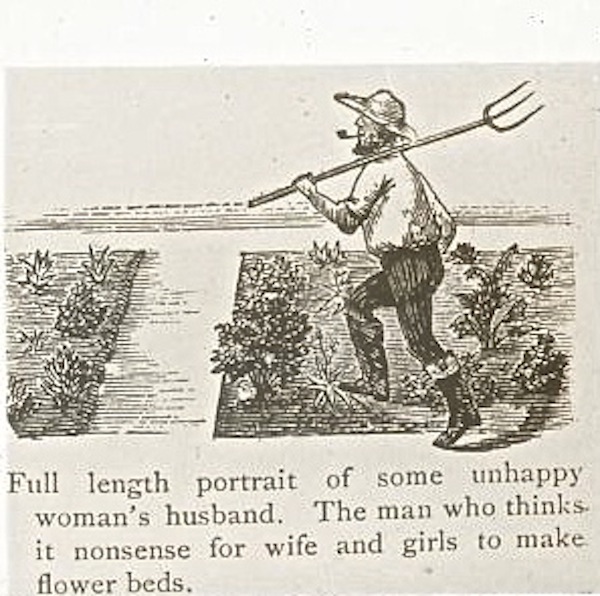 Oh, dump him.


 enclos*ure