
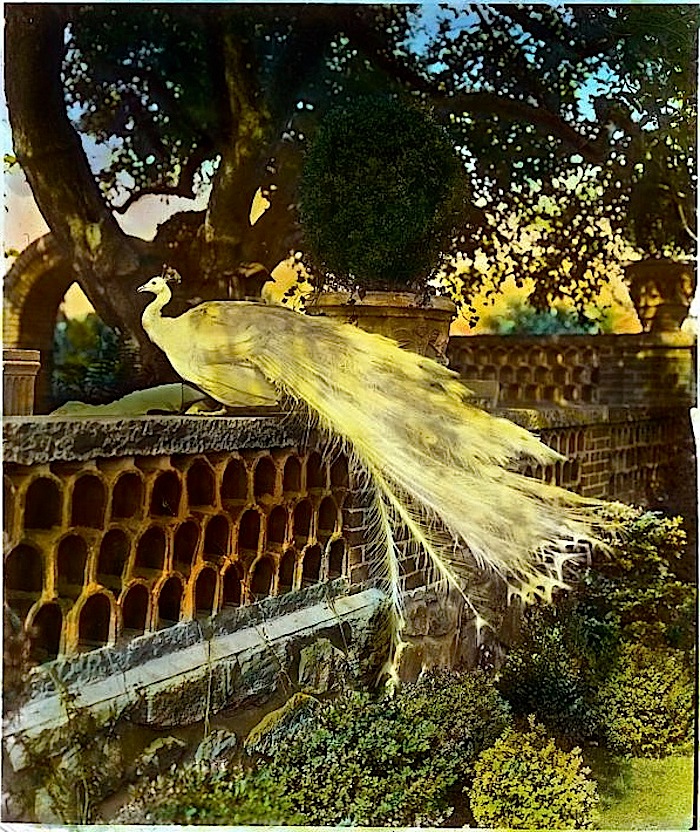
 John Wesley Baxter house, Greenwich, Connecticut, 1920, by Frances Benjamin Johnston, via Library of Congress Prints and Photographs Division.
Tag: Frances Benjamin Johnston
The Sunday porch: Sherrill Inn
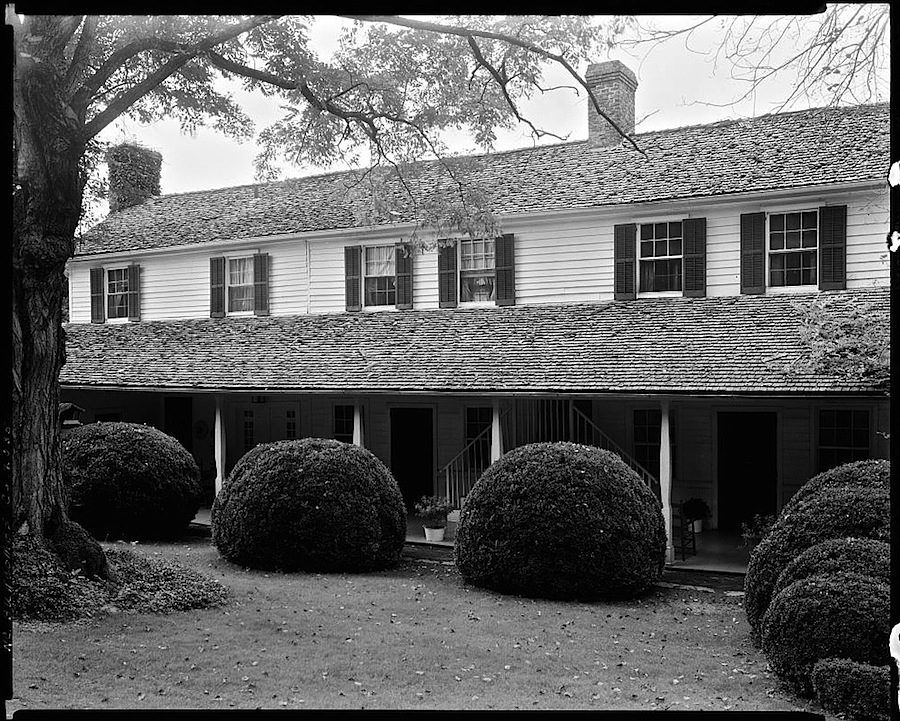 Sherrill Inn, Hickory Nut Gap, Buncombe County, North Carolina, in 1938, by Frances Benjamin Johnston, via Library of Congress Prints and Photographs Division (all photos here).
I know, and even better. . .
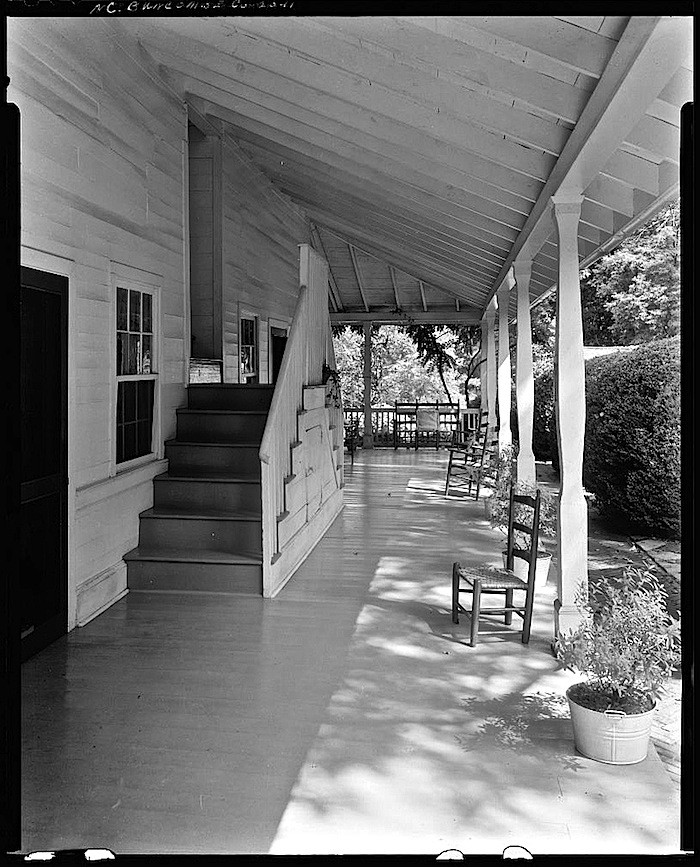 This is what’s behind the boxwoods. (There’s another photo of this section of the porch here.)
In the nomination form for inclusion in the National Register of Historic Places, the porch columns were described thusly:
The porch is supported by gracefully tapered posts each rising without interruption from rectangular bases to approximately balustrade level, where it is quickly cinched in on all four sides; above, the post gently flares out to original width near eye level and then back in, until near the top the taper reaches its conclusion to flare quickly into a cap for the porch roof supporting plate to rest upon.
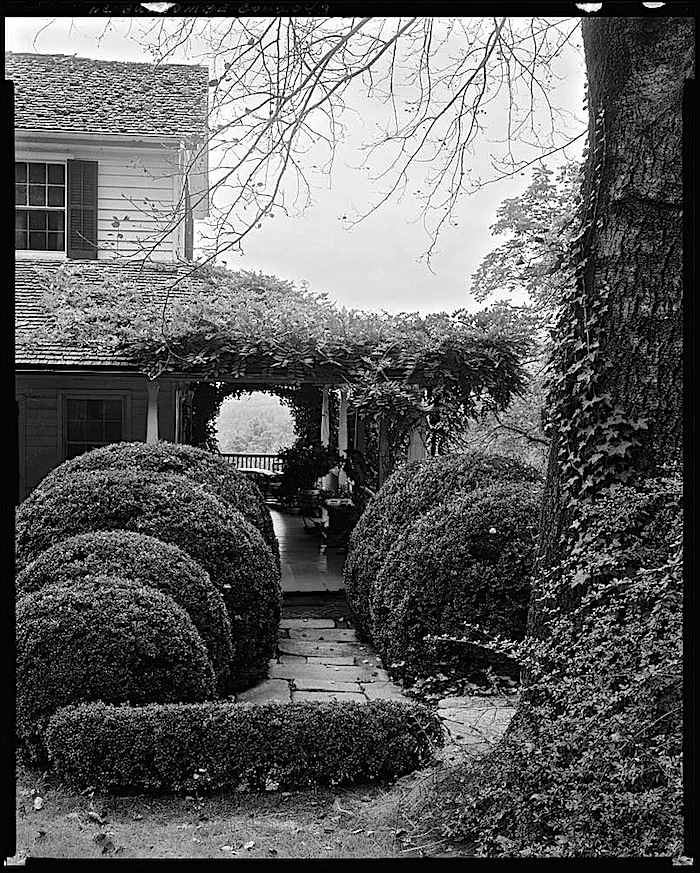
At the corner of the L-shaped porch,
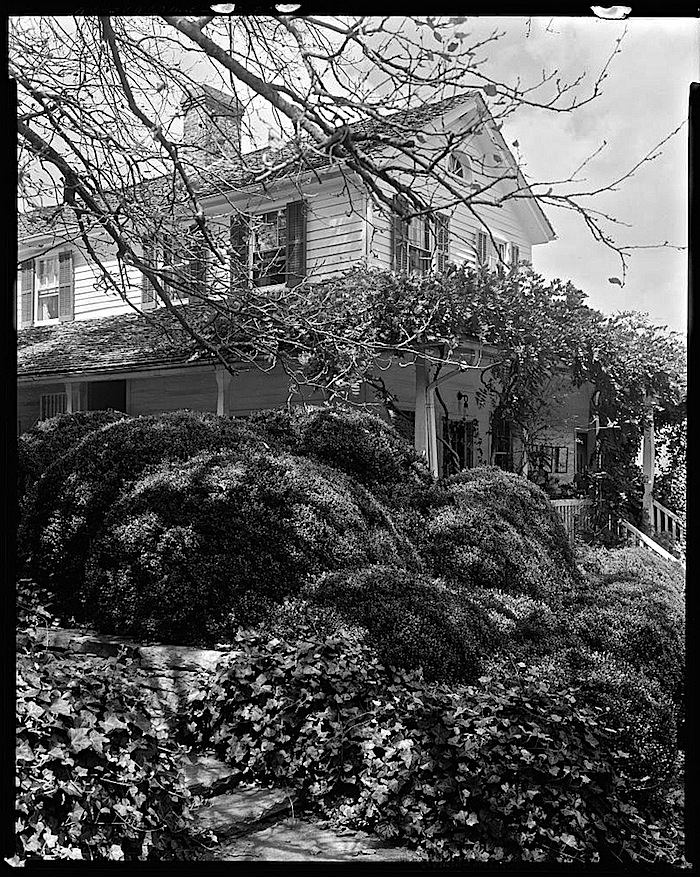
. . .the boxwoods cover the slope like giant boulders.
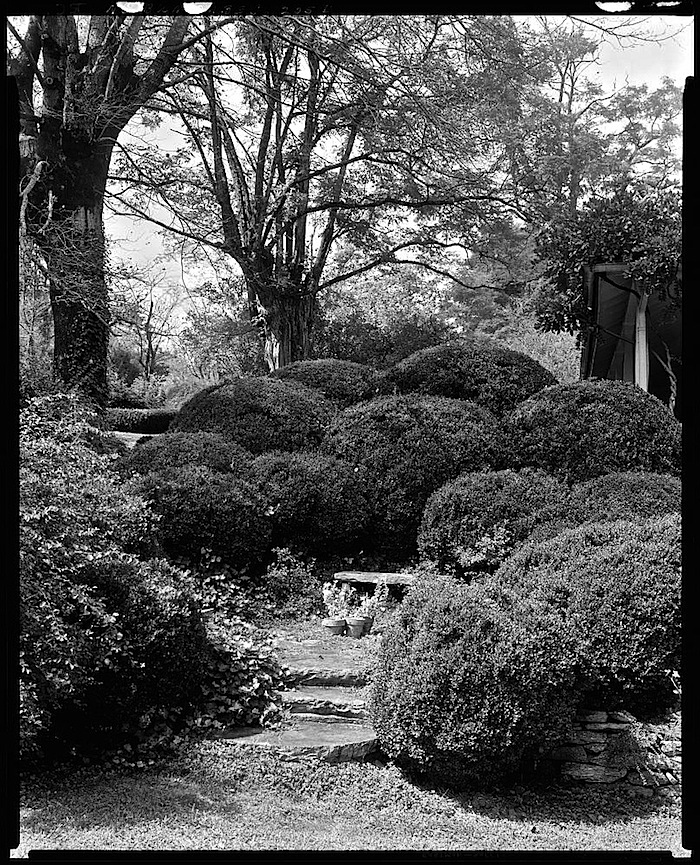
And below is the porch after the turn,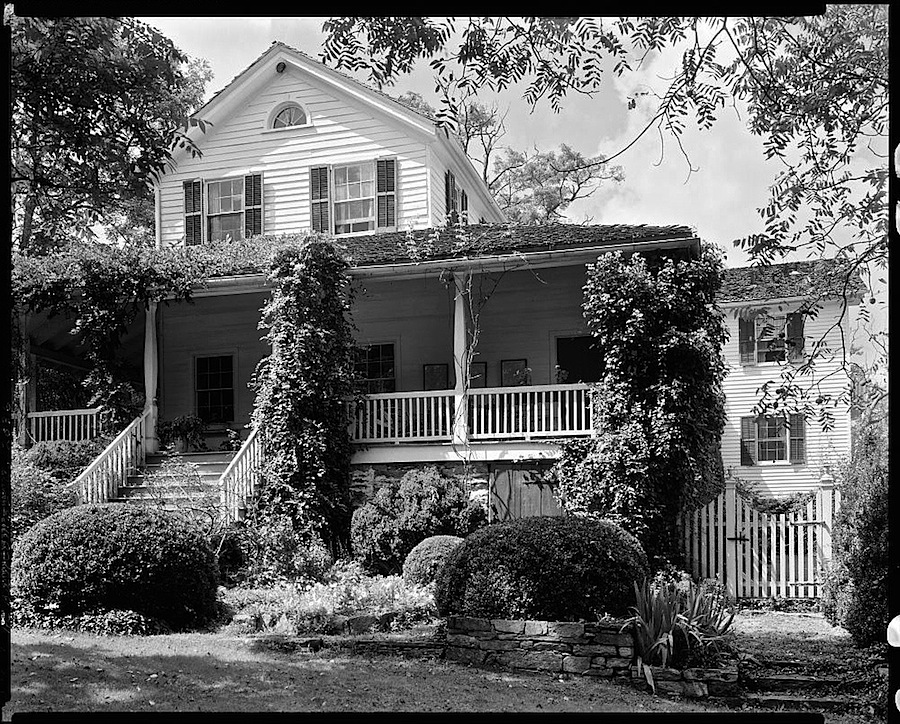
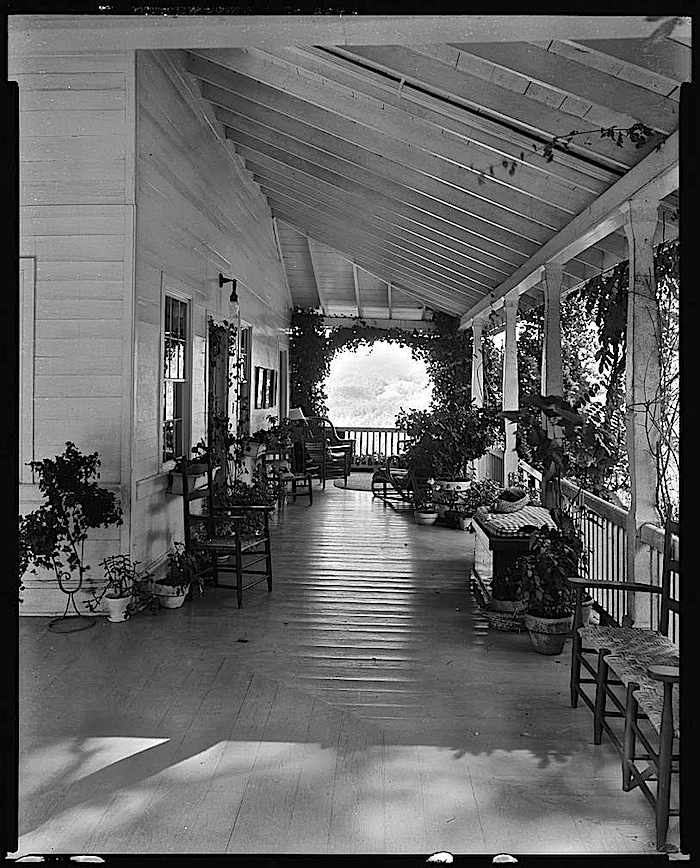
and a view of the mountains.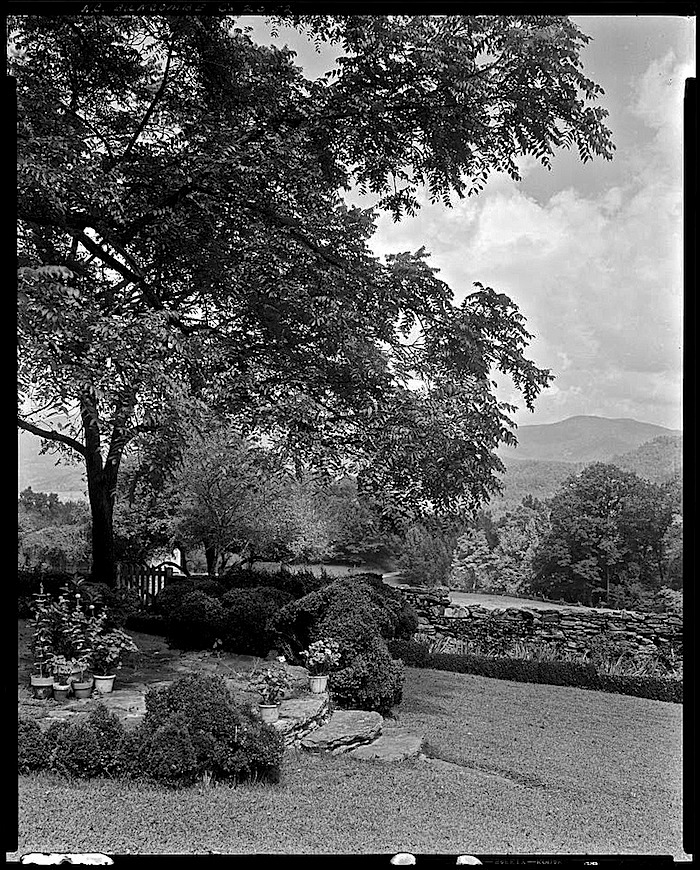
A bit of heaven.
Best of all, it seems that most of the old boxwoods are still in place. The property is being run as an organic farm by descendants of the McClures, the couple who owned the Inn when Johnston took these photos.
Pictures of a beautifully styled wedding held at the Inn in recent years show it to have been in loving hands over the decades.
The house began as two log structures, possibly built by 1806 or maybe even earlier. Between 1839 and 1850, Bedford Sherrill connected and enlarged those buildings to make an inn for travelers on the “Hickory Nut Turnpike,” an early stage route to western North Carolina.
There are many more details about the history and design of the house and grounds here.
Vintage landscape: the axis
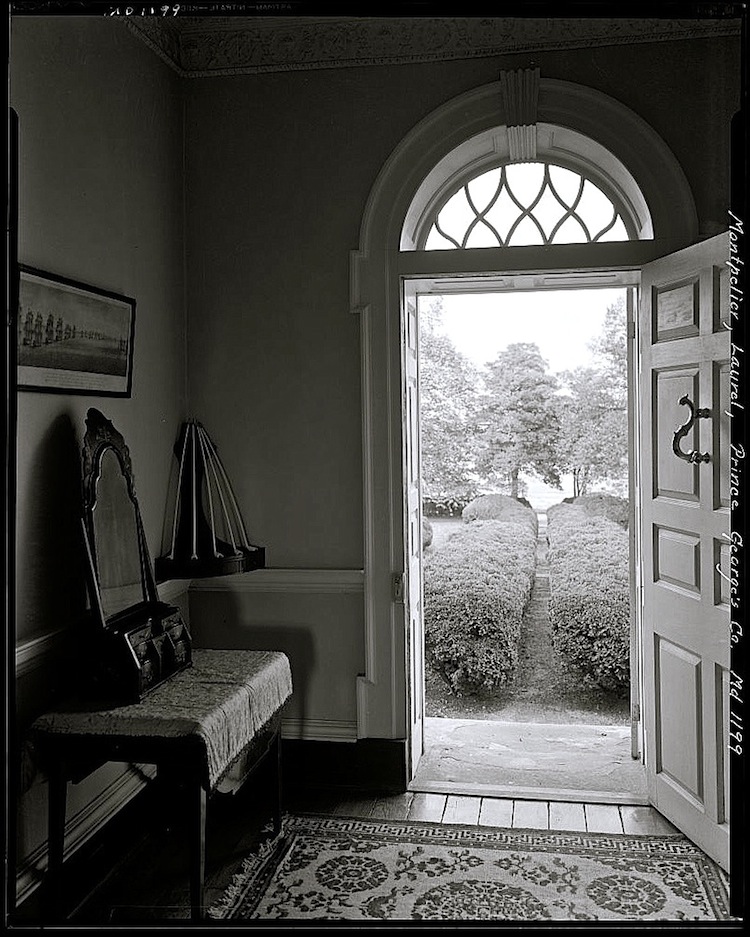 Montpelier, south of Laurel, Md., 1931, by Frances Benjamin Johnston, via Library of Congress Prints and Photographs Division.
(Those are antique smoking pipes in the corner.)
 The house was built in the early 1780s. George Washington was a guest there several times, and Abigail Adams praised the owners’ “true English hospitality” after a stay.
It still stands, although the boxwoods along the front walkway are gone.
 The estate is open to the public and available for events. (Although, it has been closed for much of 2013 for renovations.)

Vintage landscape: the sunken garden
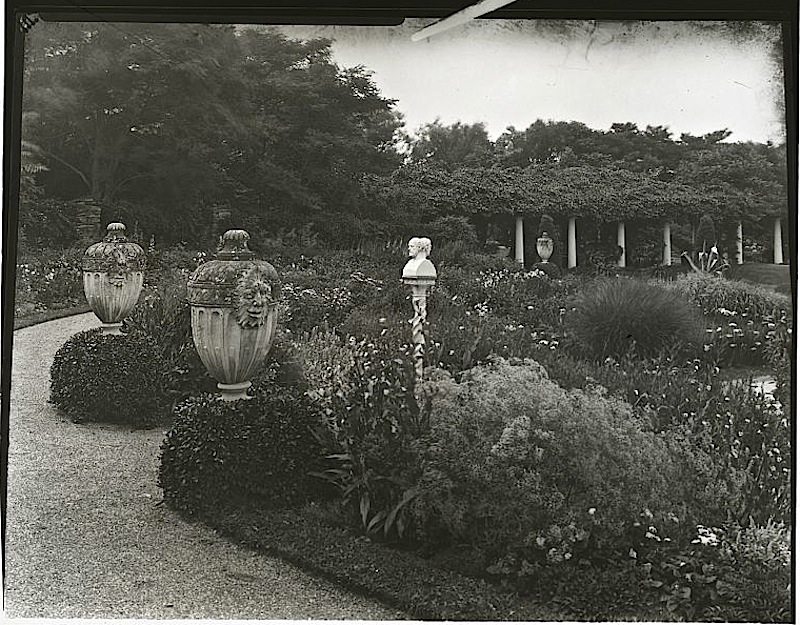 . . . at Hammersmith Farm, Newport, Rhode Island, 1917, by Frances Benjamin Johnston, via Library of Congress Prints and Photographs Division.
 The pergola overlooking the sunken garden. The hand-colored lantern slide is also by Johnston from 1917.
The house, originally on 75 acres, was built for the great-grandfather of Jackie Kennedy’s stepfather. She lived there during her childhood, and her wedding reception was held there.
The garden at the time of the photo had been designed about 7 years before by James Frederick Dawson and Henry Hill Blossom of Olmsted Brothers. Today, the house still stands, but the garden is not the same, according to the Library’s online catalogue.
The Sunday porch: iron lace
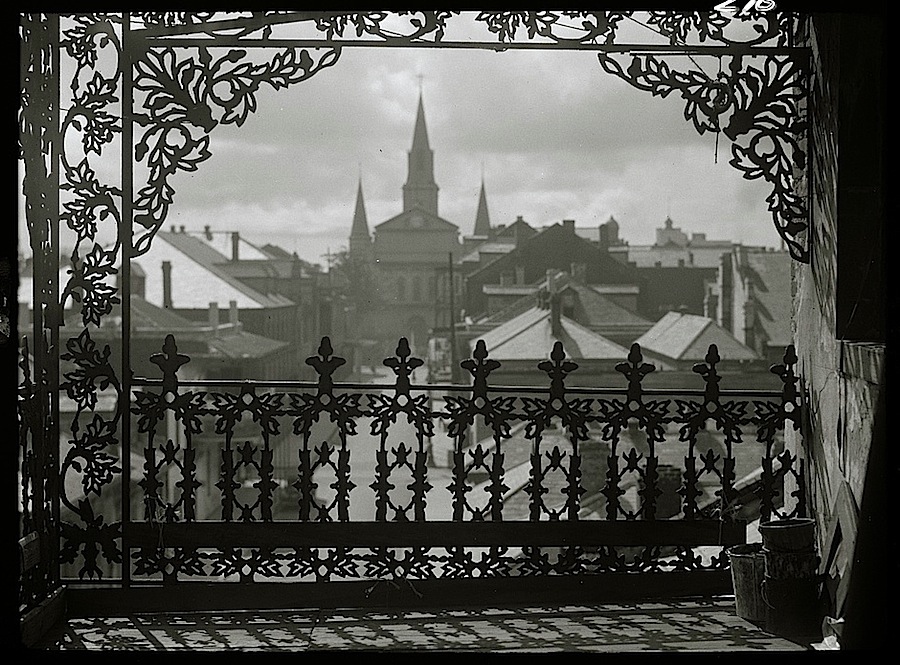 “A vista through iron lace, New Orleans,” ca. 1920-26, by Arnold Genthe, via Library of Congress Prints and Photographs Division.
This is a covered third floor balcony, and it has a wonderful view of the back of St. Louis Cathedral in the French Quarter.
The 1836 house still stands* — wrought iron intact — at 716 Orleans Street. It is now light pink with dark green shutters and is known as the Le Pretre Mansion, for one of its first owners.
It was on the market as recently as this past April — for $2.65 million. Here’s a 1937 photo of the entire house.
An exotic horror/ghost story goes with the mansion:
In the 19th century, a Turk, supposedly the brother of a sultan, arrived in New Orleans and rented the house. He was conspicuously wealthy, with an entourage of servants and beautiful young girls — all thought to have been stolen from the sultan.
Rumors quickly spread about the situation, even as the home became the scene of lavish high-society parties. One night screams came from inside; the next morning, neighbors entered to find the tenant and the young beauties lying dead in a pool of blood. The mystery remains unsolved. Local ghost experts say you can sometimes hear exotic music and piercing shrieks.
— “Walking Tour in New Orleans,” Frommer’s(.com)
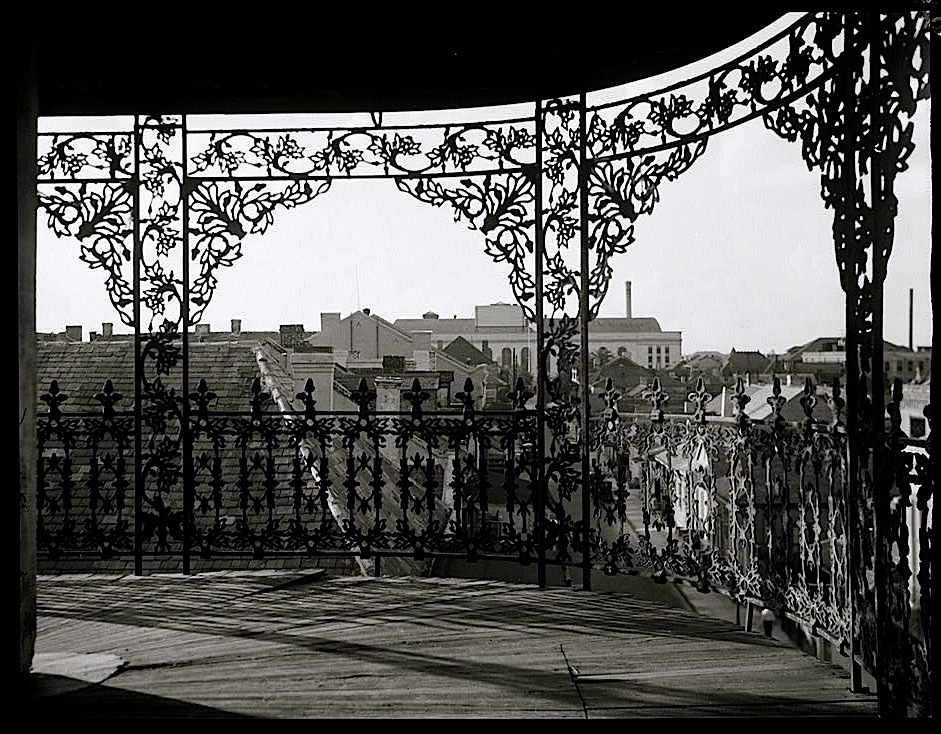 The view above, from the same balcony, looking northeast on Orleans Street, was photographed in 1936, by Richard Koch for a Historic American Buildings Survey, via Library of Congress Prints and Photographs Division.
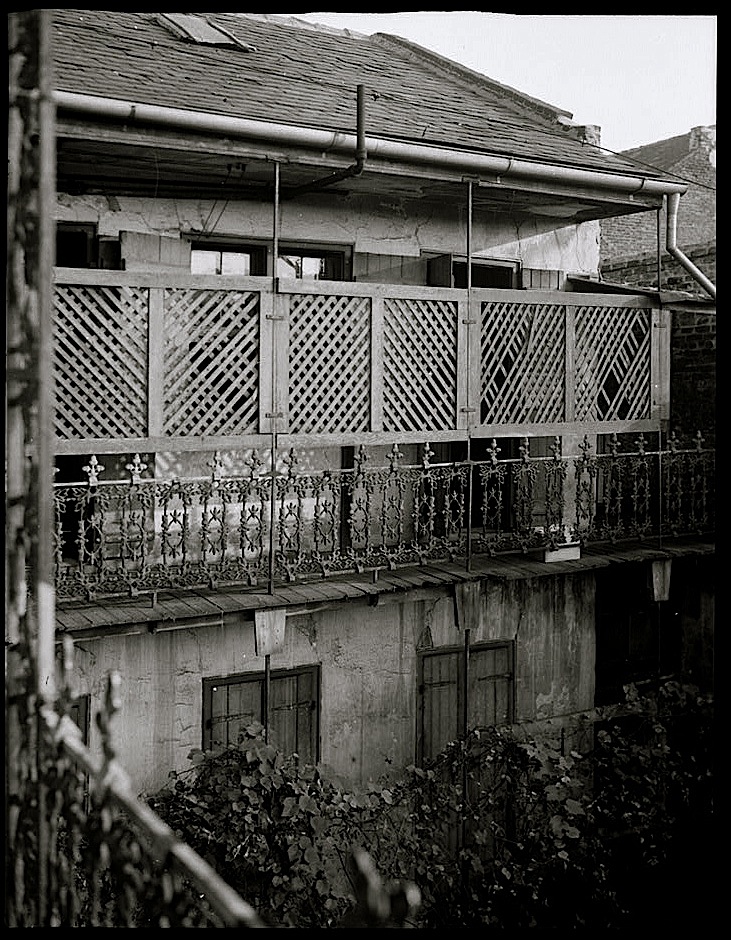 This privacy panel along the second floor balcony of the service wing, overlooking the courtyard, is interesting too. Photo also by Richard Koch for HABS.
 enclos*ure