
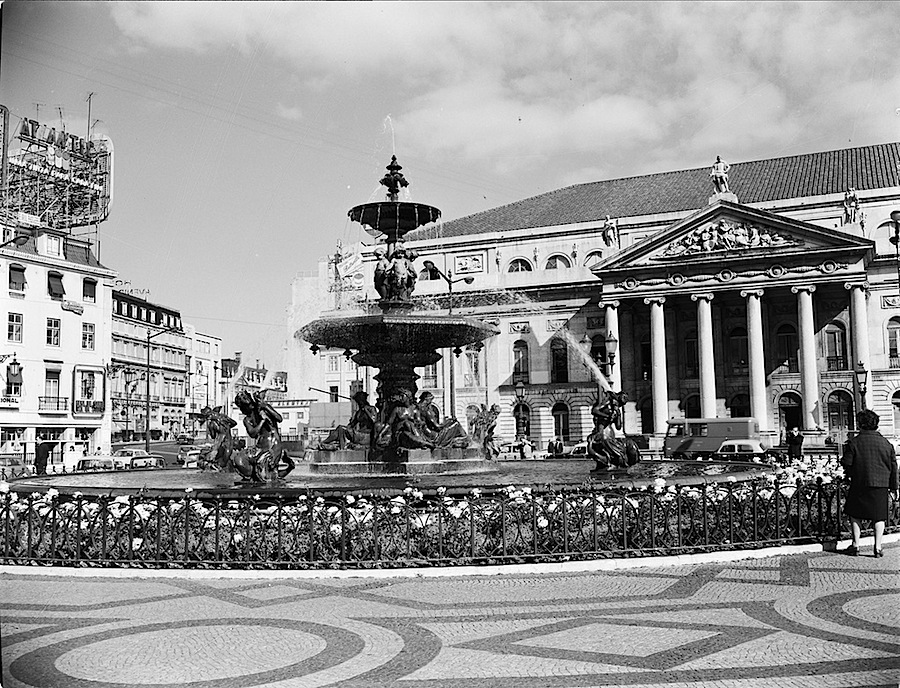
 Rossio (or Pedro IV) Square, Lisbon, Portugal, ca. mid 20th c., by Estúdio Mário Novais, via Art Library of the Calouste Gulbenkian Foundation Commons on flickr (under CC license).
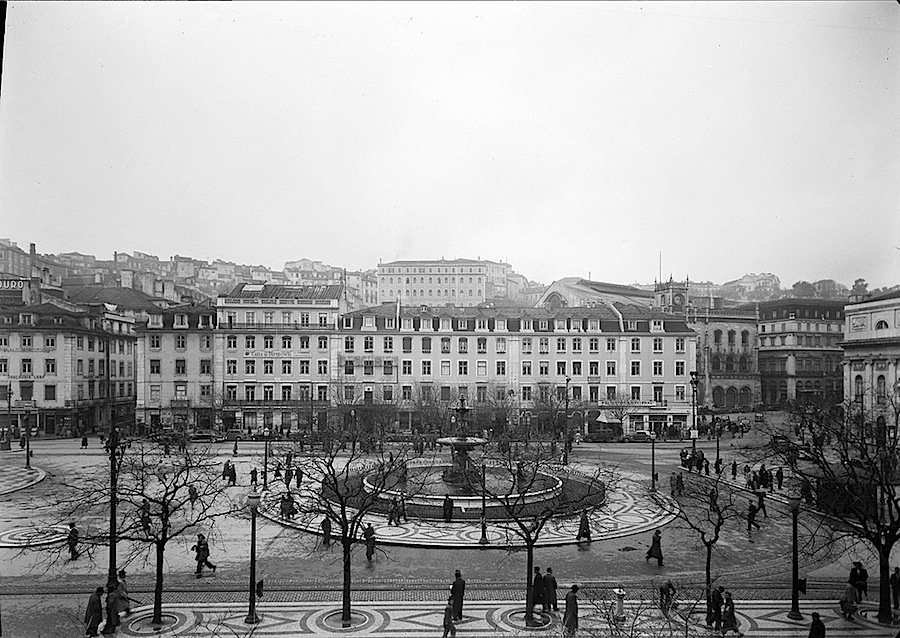
The Rossio has been an important central Lisbon square since the 14th century. Rossio roughly means “commons.” Its current appearance, however, was formed in the mid (paving) and late (fountains and column) 1800s.
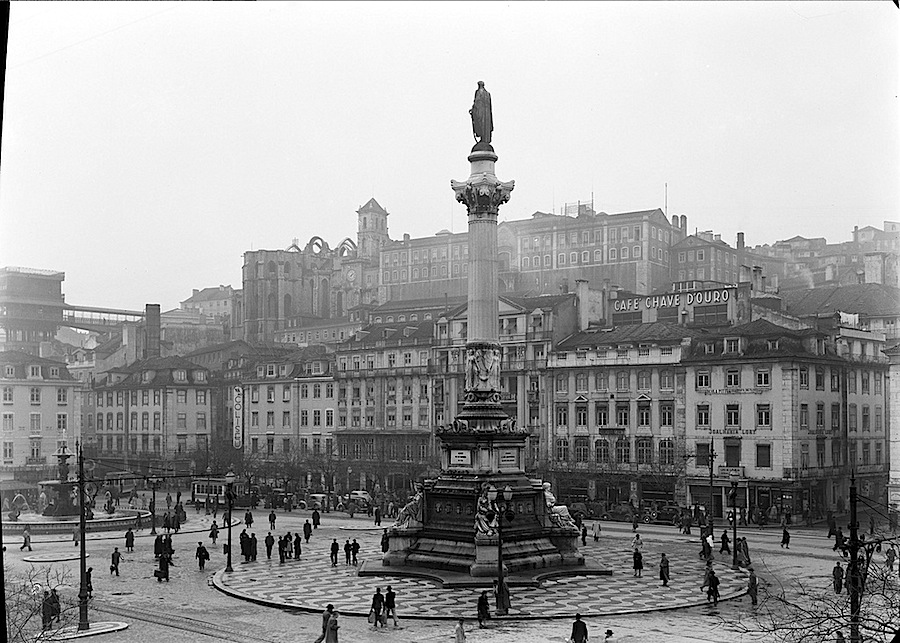
The distinctive paving — calçada Portuguesa — is made up of small irregular cobblestones of white limestone and black basalt. In 1842, the governor of São Jorge Castle, Eusebio Furtado, set prisoners to work laying an unusual zigzag pattern on its parade ground. The effect was so popular that in 1848 Furtado was asked to use the same sort of design (and prisoners) on the Rossio Square. After that, “Portuguese pavement” spread across the city and country and ultimately out to the colonies of Brazil and Macau.
Although beautiful, it’s said to be extremely slippery when wet.

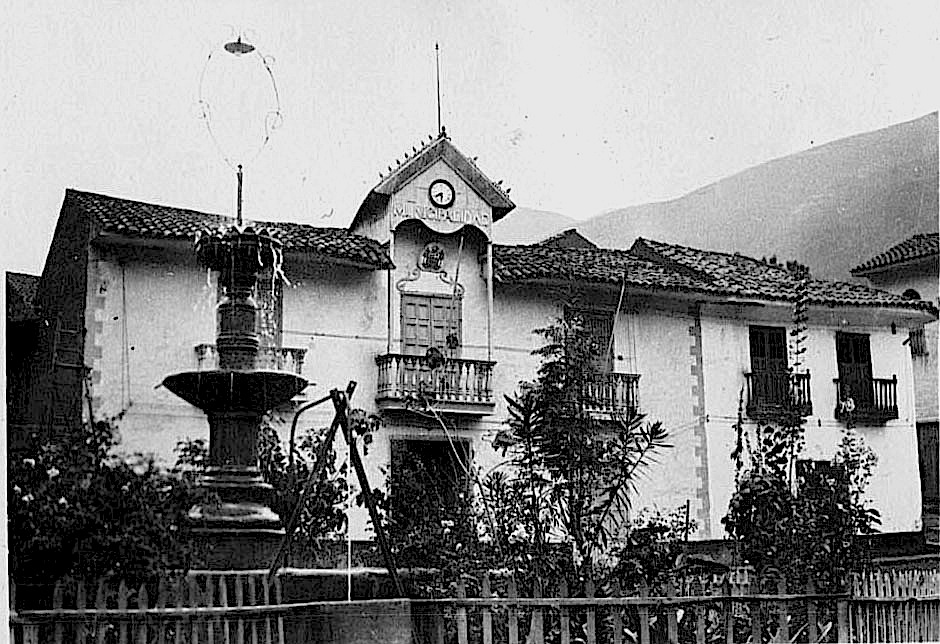
 enclos*ure