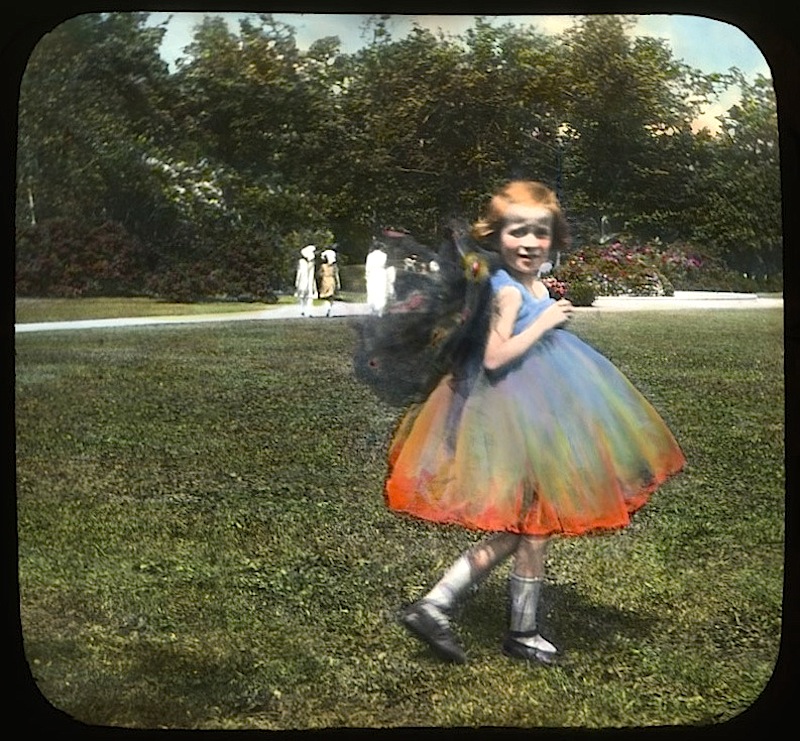
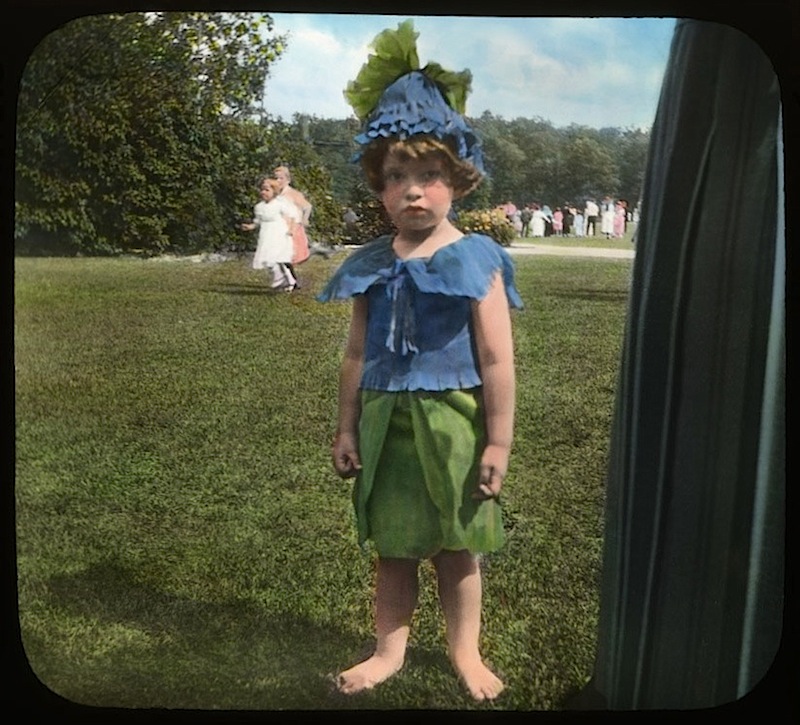
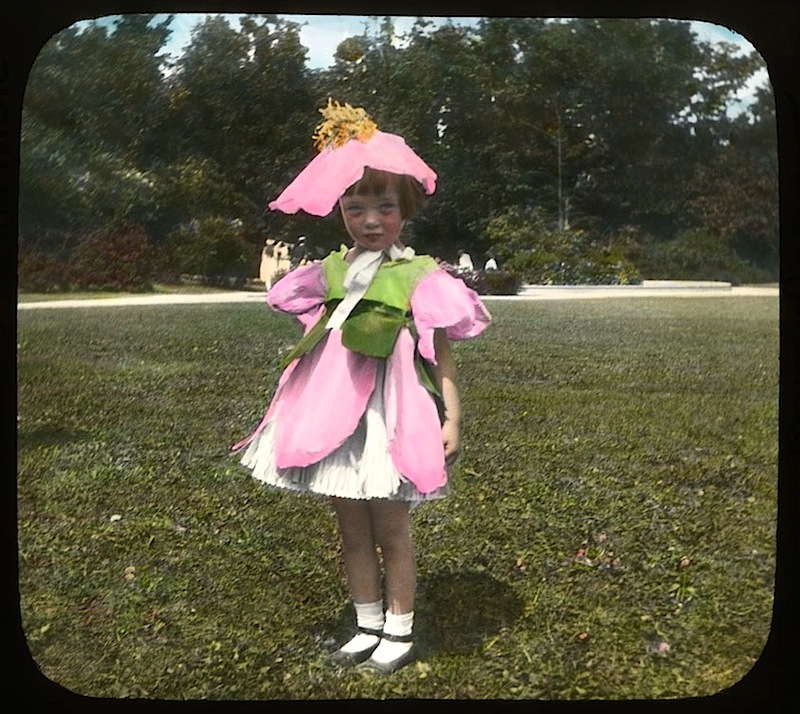
Children costumed as flowers or insects for an event of the Wild Flower Preservation Society, Illinois Chapter, probably in a Chicago park, ca. 1920, hand-colored glass lantern slides by an unknown photographer, via The Field Museum Library Commons on flickr (all images here).
The Wild Flower Preservation Society of America was founded in 1902 with money given to the New York Botanical Garden by Olivia E. and Caroline Phelps Stokes. The funds were to be used for the protection of native plants.
The Society dissolved in 1933, but much of its work was taken up by the Garden Club of America and by another Wild Flower Preservation Society, founded in 1925 in Washington, D.C. (which seems no longer to exist).
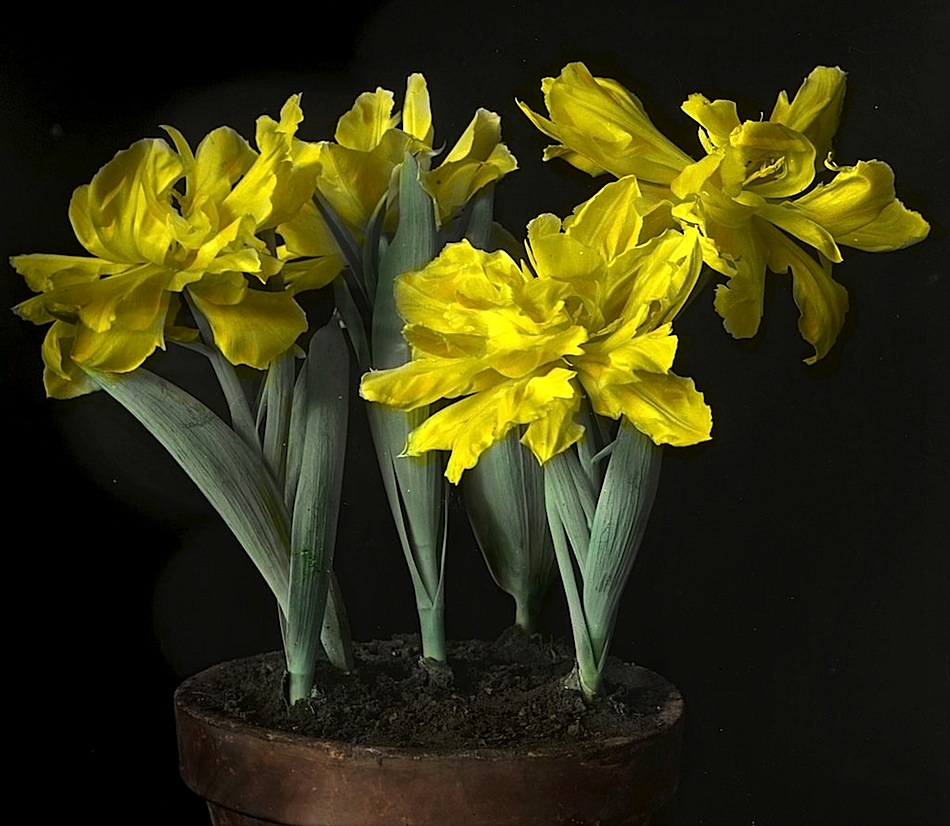
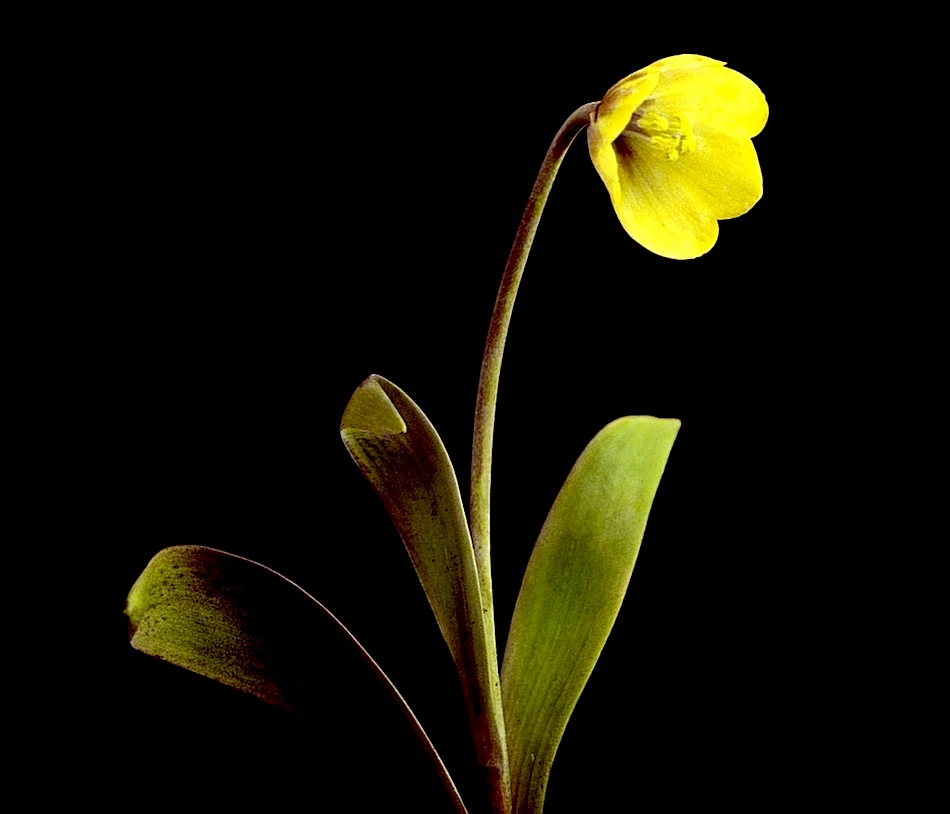
“Early Double Tulip: Van de Hoeff,” Alberta, Canada, ca. 1930, hand-colored glass lantern slide by William Copeland McCalla, via Provincial Archives of Alberta Commons on flickr (all images here).
“Fritillaria Pudica Spreng – Yellow or Mission Bell.”
The photographer, William McCalla, was interested in botany and photography from an early age. He studied at Cornell University in the early 1890s and later worked in western Canada as a farmer, librarian, and Natural History teacher. While teaching from 1925 to 1938, he made over 1,000 lantern slides of plants and animals as visual aids.
The slides were donated to the Archives by his son and granddaughter in 1982 and 2007.
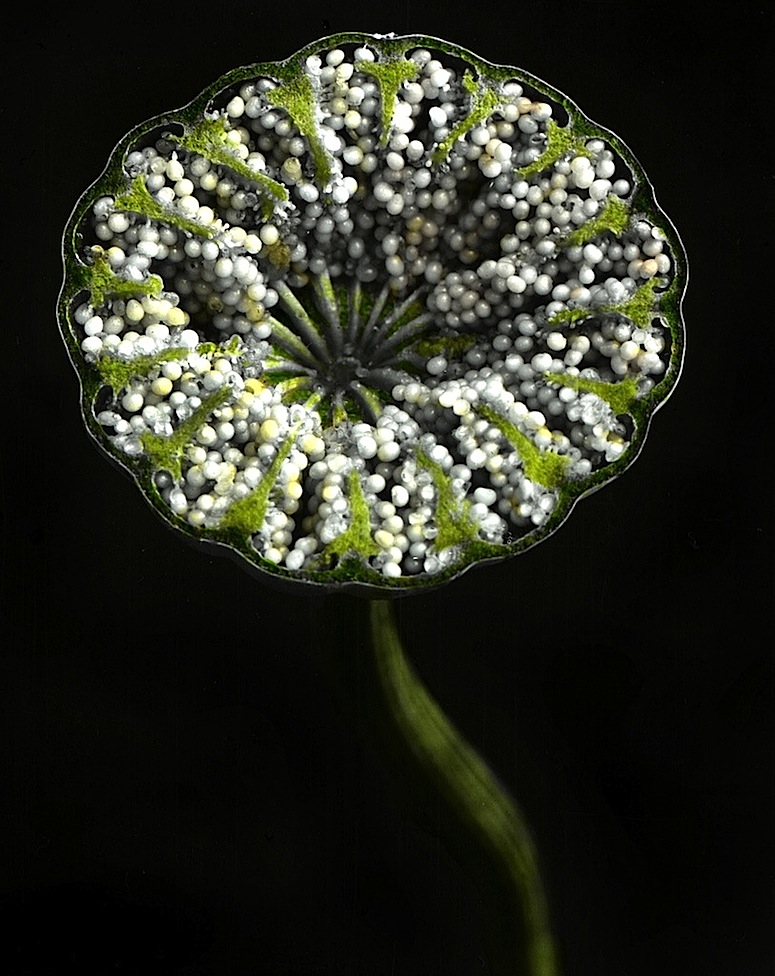
“Cross-section of poppy capsule.”
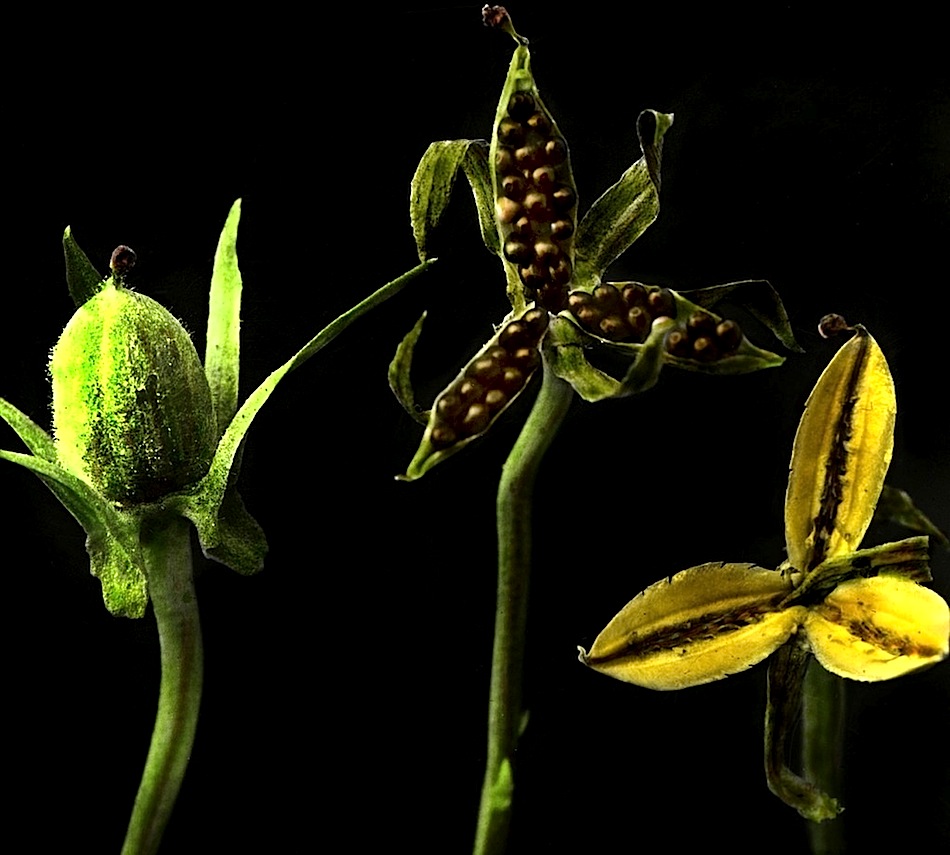
“How Violets scatter their seeds: capsule open: [capsule] empty.”
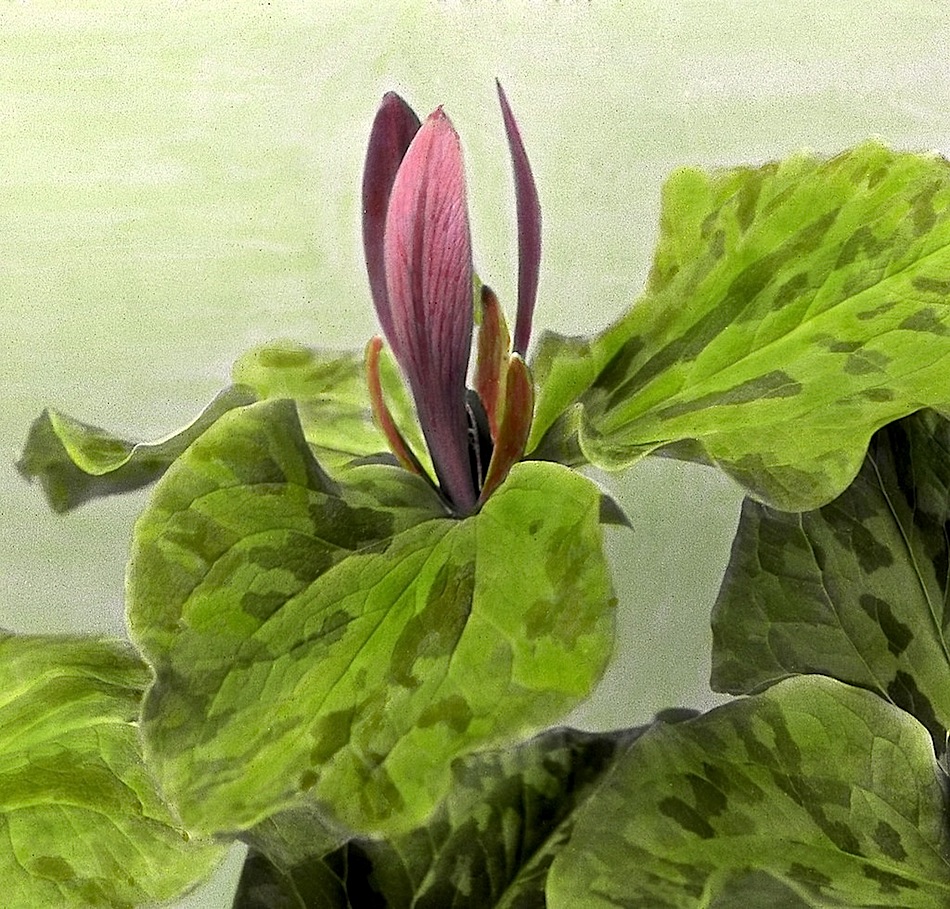
“Trillium sessile: Californicum wats.”
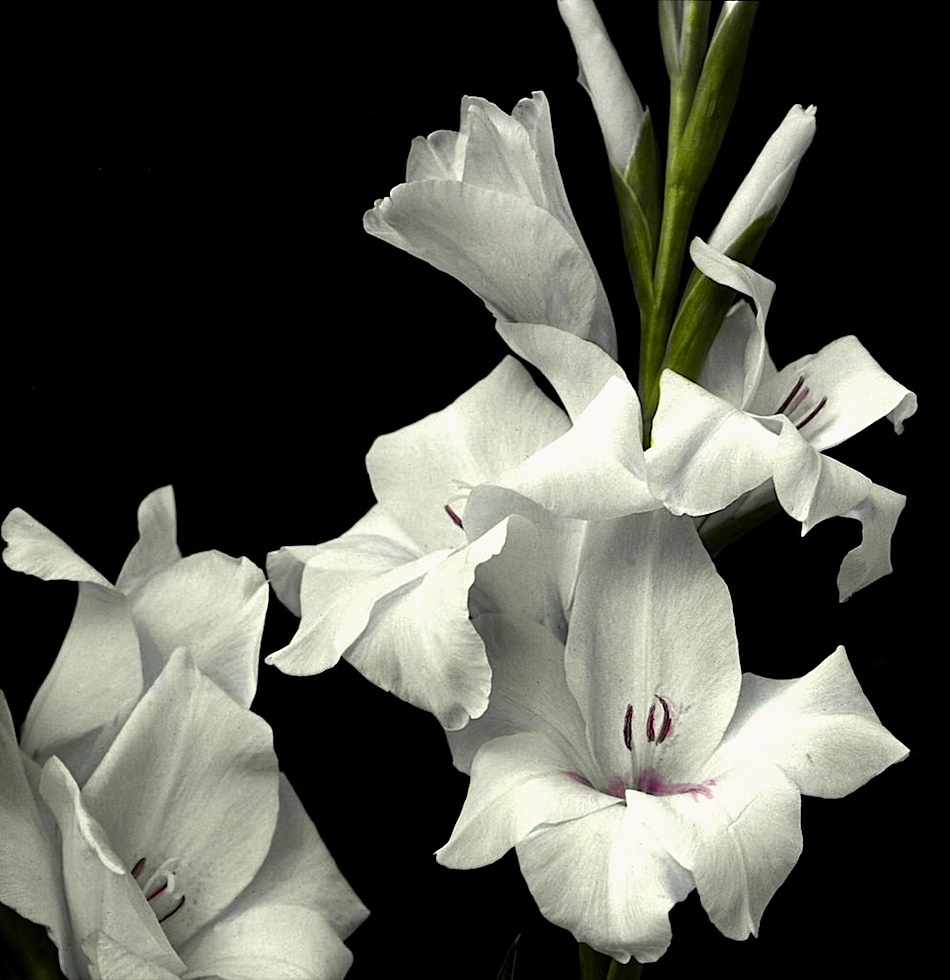
“Gladiolus Star of Bethlehem.”
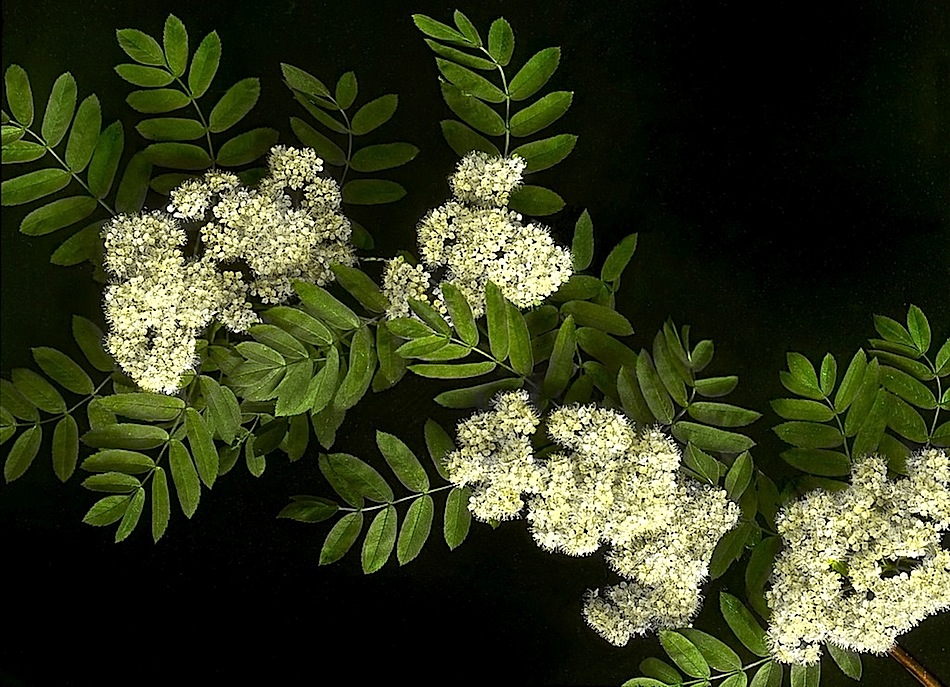
“Mountain Ash.”
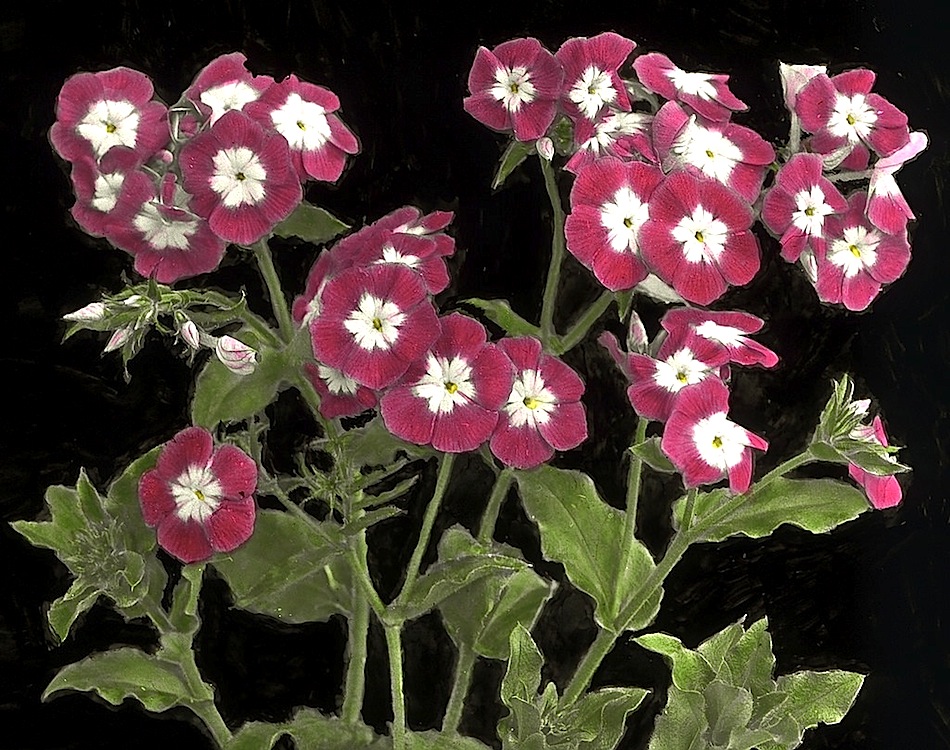
“Phlox Drummondii.”
You can see more of McCalla’s beautiful flower portraits here.
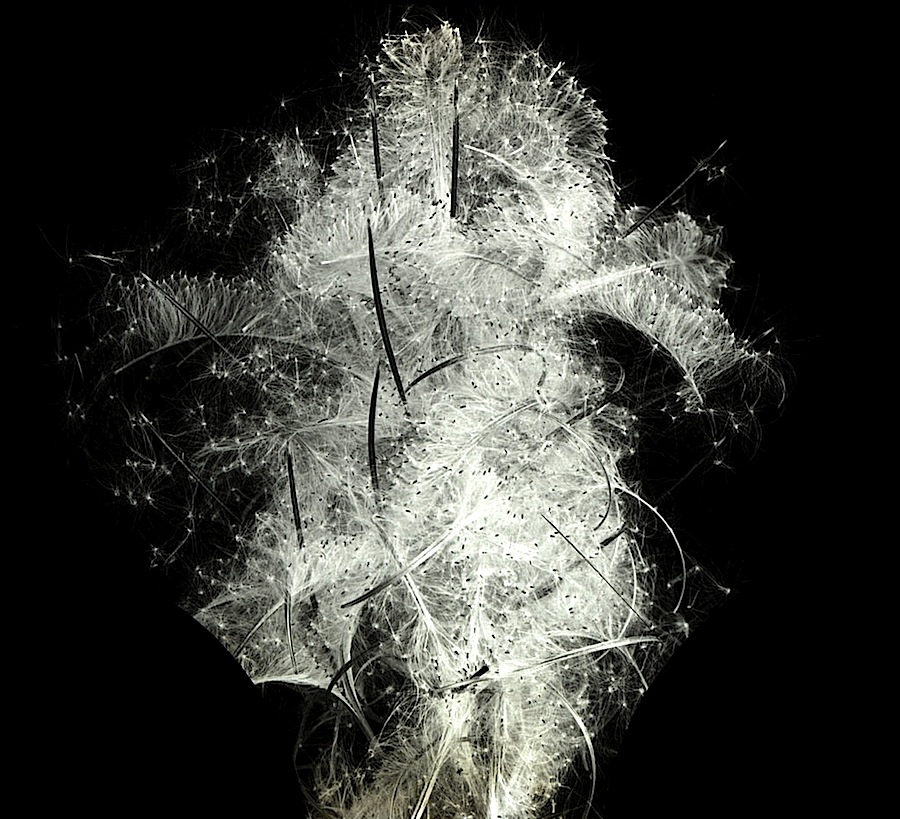
“Epilobium angustifolium discharging seeds,” Alberta, Canada, ca. 1930, glass lantern slide by William Copeland McCalla, via Provincial Archives of Alberta Commons on flickr.
The plant is now named Chamerion angustifolium. In Canada, it is commonly known as fireweed because it is quick to colonize damp sites made open by fires.
The photographer, William McCalla, was a farmer, librarian, and Natural History teacher. As visual aids for his classes and lectures, he made over 1,000 lantern slides of plants and animals. They were donated to the Archives by his son and granddaughter in 1982 and 2007. I will have more of McCalla’s flower portraits tomorrow.
follower of the fourth-oldest dream—
the landscape burning and burning.
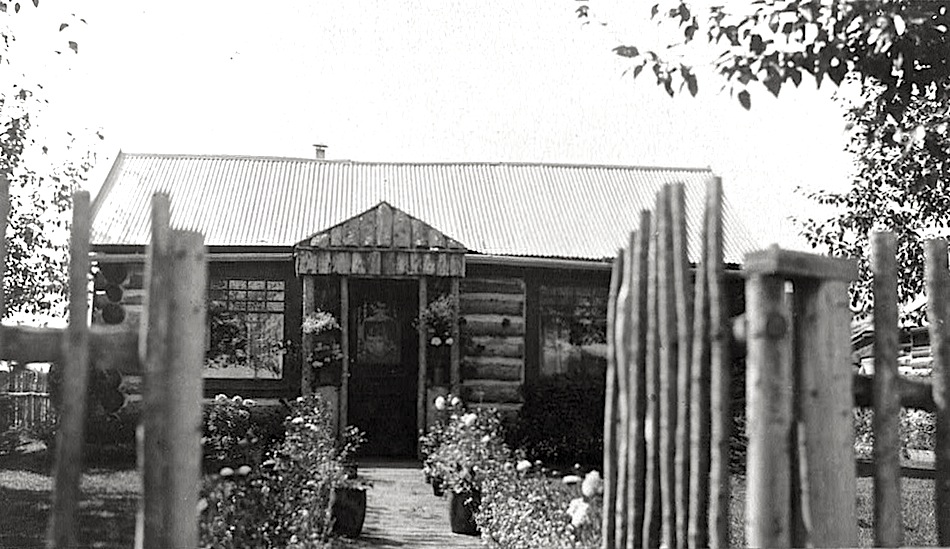
Log cabin in Alaska, probably Fairbanks, between 1900 and 1916, via Library of Congress Prints and Photographs Division.
The photograph is one of over sixteen thousand created or collected by Frank G. Carpenter and his daughter Frances to illustrate his geography textbooks and popular travel books.
There are three more charming Alaska log cabins from the same collection here, here, and here.
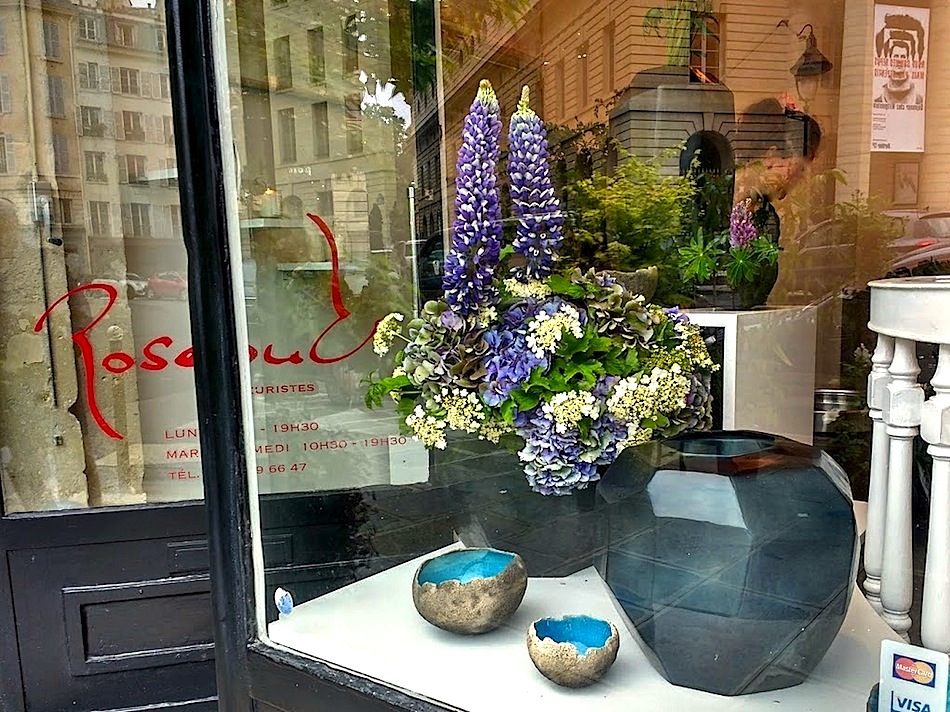
Passing by the windows of Rosebud Fleuristes, 4, Place de l’Odéon, Paris. In the vase are lupin, viburnum, and hydrangea flowers.
We spent the long holiday weekend in Paris, just getting back this afternoon — so I don’t have a flower arrangement of my own today. But I can offer a few pictures of the windows of two florists in the area north of the Luxembourg Garden: Rosebud and Stanislaus Draber.
Foxtail lilies and viburnum flowers at Rosebud, which was mentioned in the Paris-Match article as having been created with “a concept of florist-art gallery” (à l’origine d’un concept de fleuriste-galerie d’art).
On the train to France, I read an article in Paris-Match magazine, “La Fleur Fait Sa Révolution!”
“The flower has become a symbol of an urban renaissance, creative and super-cool,” it said. “One talks flowers with the same appetite that characterizes the foodistas for cooking. The opening of peonies, the Japanese [pruning] knife, and the art of the bouquet are now at the heart of urban conversations.” The trend is “embodied by the explosion of the neo-artisans who are also called the ‘makers’ (les «makers»).”
The article also mentions that the flower-market gardens around Paris “have almost disappeared in favor of the industrialized Dutch market. If nothing is done within ten years, there will be no bouquets of real scented garden roses for the high fashion Parisian florists.”
Peonies, roses, and sweet peas in the window of Stanislas Draber, 19, rue Racine, Paris.
To see what other gardeners/bloggers/makers have put in vases today, please visit Cathy at Rambling in the Garden.
ADDENDUM: There’s an interesting video clip by Rick Steves of a giant Dutch commercial flower auction here.

 Children costumed as flowers or insects for an event of the Wild Flower Preservation Society, Illinois Chapter, probably in a Chicago park, ca. 1920, hand-colored glass lantern slides by an unknown photographer, via The Field Museum Library Commons on flickr (all images here).


 Above and below: Mayapples.
 Above: a bee.


 enclos*ure