The Sunday porch: Route 800

barnesville-oh-1974-documerica-u-s-national-archives“Residents of an older home,* built in the 1850’s, take advantage of the summer weather to sit on their front porch off Route #800.” Barnesville, Ohio, July 1974. Below, the back porch.

back-porch-barnesville-oh-1974-documerica-u-s-national-archives

Both photos above were taken by Erik Calonius for DOCUMERICA, an early photography program of the U.S. Environmental Protection Agency (EPA). They are shown, with the original caption, via The U.S. National Archives Commons on flickr.

From 1972 to 1977, the EPA hired over 100 photographers to “document subjects of environmental concern.” They created an archive of about 20,000 images.

In addition to recording damage to the nation’s landscapes, the project captured “the era’s trends, fashions, problems, and achievements,” according to the Archives, which held an exhibit of the photos, “Searching for the Seventies,” in 2013.

By 1974, the proliferation of porchless ranch-style houses, air-conditioning, and television had made sitting on a shady front porch in hot weather something of an anomaly for many Americans.


*A visitor to the first photo’s flickr page wrote, “This house stood on the north side of State Route 800, near Barnesville, at about 40.014772, -81.168533. The section pictured here may have been of log construction.”

Life in gardens: Little Duck Key

Out of the cradle endlessly rocking. . .

Little Duck Keys, 1975, via Natl. Archives“American dreams at Little Duck Key [– part of the Florida Keys]. Commercial camping sites and travel trailer courts have sprung up throughout the Keys. Even on the smaller Keys like Little Duck, where no facilities have yet been constructed, camping is permitted by local authorities,” ca. 1975.

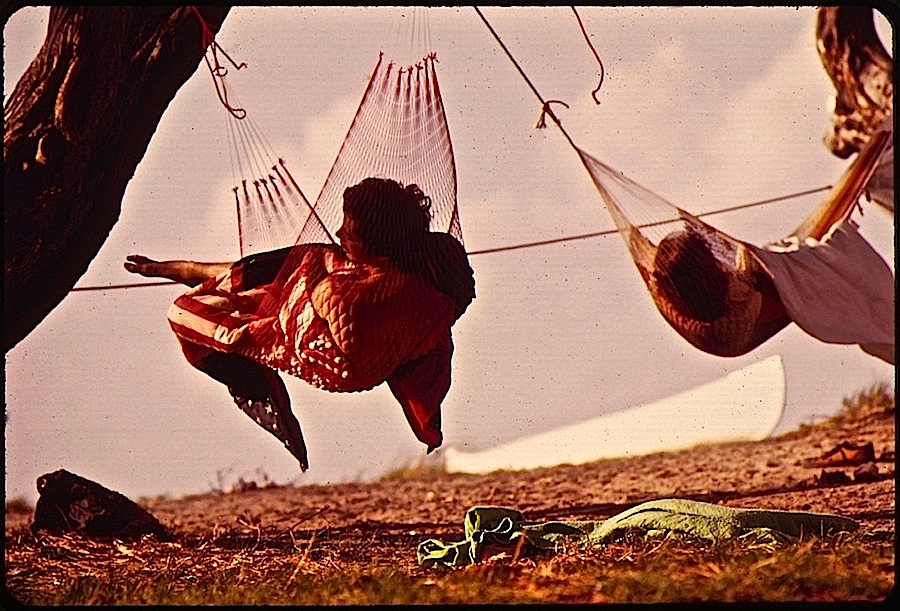
Little Duck Keys, 1975, via Natl. Archives“Campers on Little Duck Key sleep in their own hammocks,” ca. 1975.

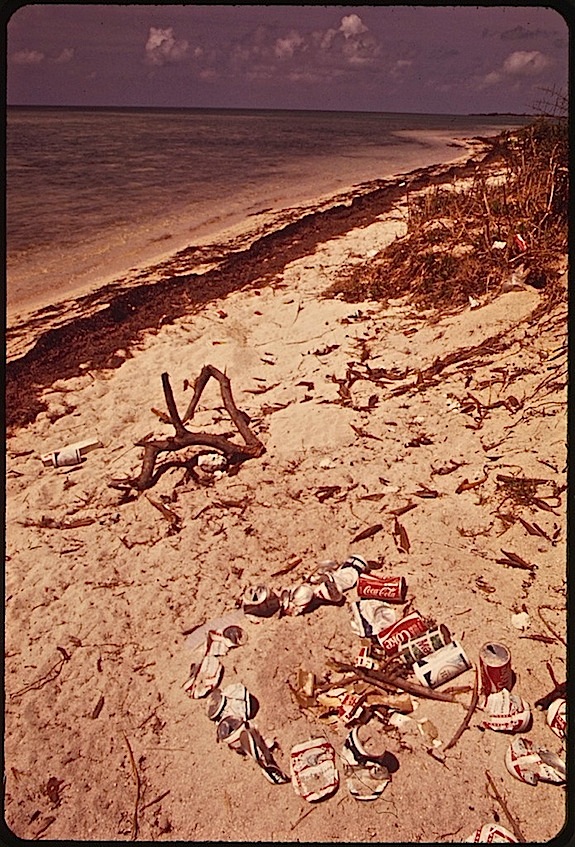
Little Duck Key, Fla., 1975, via National Archives“Beach at Little Duck Key. Little Duck, in the lower Florida Keys, is a tiny island which has not been commercially developed[;] the beach is open to visitors, who are not always careful to preserve its unspoiled appearance,” ca. 1975.

All three photos here were taken by Flip Schulke for DOCUMERICA, a 1970’s photography program of the U.S. Environmental Protection Agency.  They are shown with the original captions.

The EPA hired over 100 photographers to “document subjects of environmental concern.”  The work continued until 1977 and left behind an archive of about 20,000 images.

In addition to recording damage to the nation’s landscapes, the project captured “the era’s trends, fashions, problems, and achievements,” according to the U.S. National Archives, which held an exhibit of the photos, “Searching for the Seventies,” in 2013. 

There are more pictures from DOCUMERICA here.

Over the sterile sands and the fields beyond, where the child leaving his bed wander’d alone, bareheaded, barefoot . . . .

Borne hither, ere all eludes me, hurriedly,
A man, yet by these tears a little boy again,
Throwing myself on the sand, confronting the waves,
I, chanter of pains and joys, uniter of here and hereafter,
Taking all hints to use them, but swiftly leaping beyond them,
A reminiscence sing.

— Walt Whitman, from “Out of the Cradle. . .

Vintage landscape: Poca, WV

Vintage landscape/enclos*ure: Poca, W.V., 1973,, via Natl. Archives“Water cooling towers of the John Amos Power Plant* loom over Poca, [West Virginia], home that is on the other side of the Kanawha River. Two of the towers emit great clouds of steam.”

This photo† (shown here with original caption) was taken in August 1973 by Harry Schaefer for DOCUMERICA, a photography project of the U.S. Environmental Protection Agency.

There are more pictures from DOCUMERICA here.


*Three-unit coal-fired power plant.

†Via the U.S. National Archives Commons on flickr.

The Sunday porch: Chicago

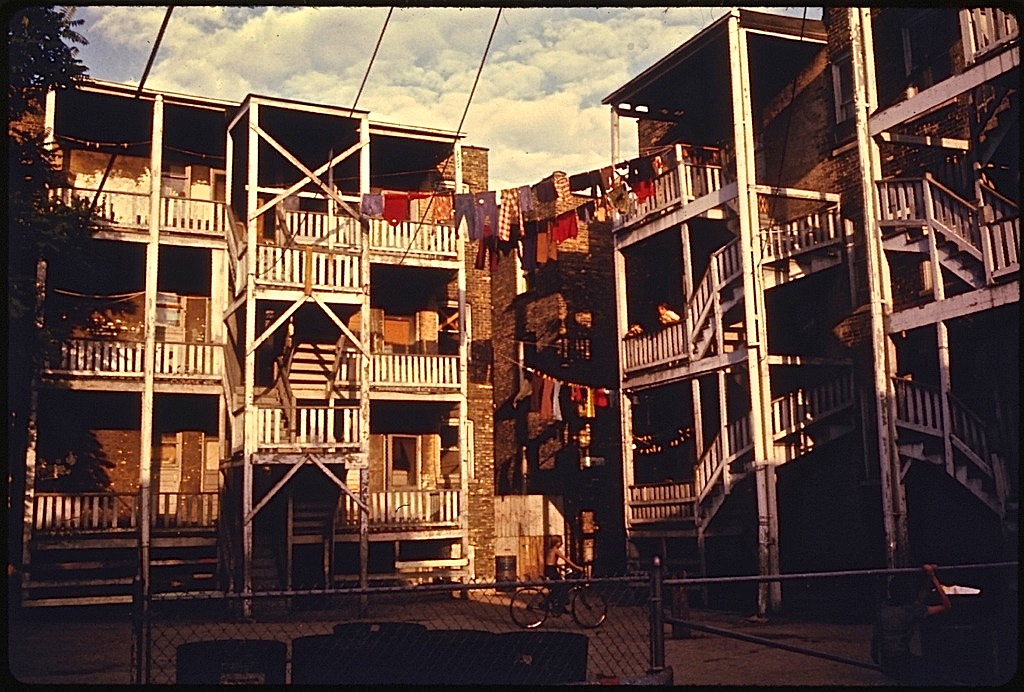
Chicago porches, 1974, via Natl. Archives“Housing and back porches in the inner city of uptown Chicago, Illinois, a neighborhood of poor white southerners. The inner city today is an absolute contradiction [from] the main stream America of gas stations, expressways, shopping centers and tract homes. It is populated by Blacks, Latins and the white poor. Some of the best American architecture survives in her “worst” neighborhoods.”

This photo* was taken by Danny Lyon in August 1974 for DOCUMERICA, a 1970’s photography program of the U.S. Environmental Protection Agency. It’s shown here with the original caption, presumably written by the photographer.

There are more pictures from DOCUMERICA here.


*Via the U.S. National Archives Commons on flickr.

Vintage landscape: Chicago mural

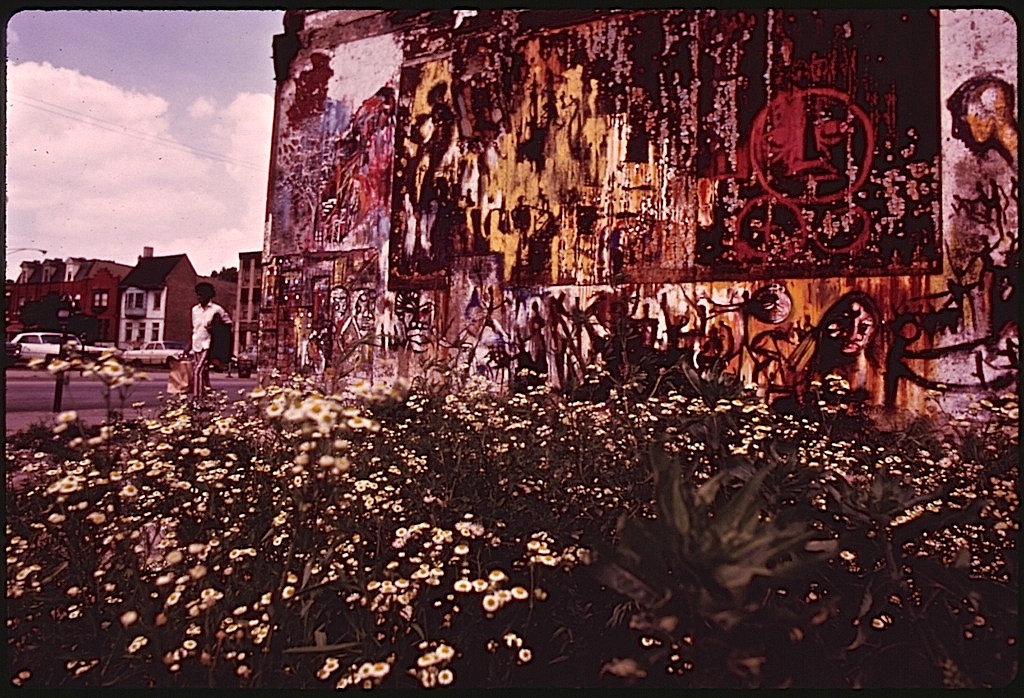
Vintage landscape:enclos*ure - Chicago mural, 1973, John H. White, via Natl. Archives“Deteriorated wall mural adjacent to a vacant lot on 35th Street in South Side Chicago. Many Black artists are active in painting outdoor murals in the city’s Black communities. They feel it is a means of sharing art with people of the ghetto who never go to the museums.”

This July 1973 photo was taken by John H. White for DOCUMERICA, a 1970’s photography program of the U.S. Environmental Protection Agency.  It’s shown here with the original caption.

The EPA hired over 100 photographers to “document subjects of environmental concern.”  The work continued until 1977 and left behind an archive of about 20,000 images.

In addition to recording damage to the nation’s landscapes, the project captured “the era’s trends, fashions, problems, and achievements,” according to the U.S. National Archives, which held an exhibit of the photos, “Searching for the Seventies,” in 2013. 

There are more pictures from DOCUMERICA here.