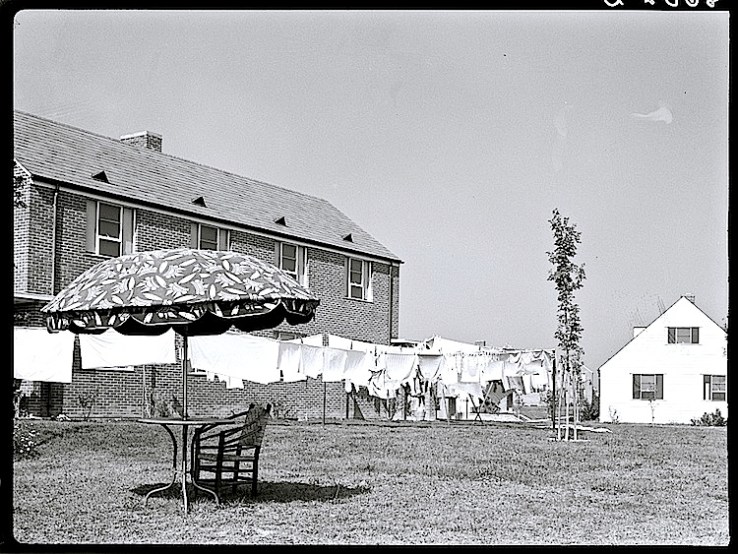
 Greenhills, Ohio, October 1938, by John Vachon for the U.S. Resettlement Administration, via Library of Congress Prints and Photographs Division.
Greenhills, Ohio is one of only three “Greenbelt Towns” built [by the federal government] in the United States. The other two are Greenbelt, Maryland, and Greendale, Wisconsin. The three towns had their start during the Depression Era.*
. . . The building of these towns provided much needed jobs for those in the trades (brick layers, plumbers, carpenters, electricians, etc.), as well as people not in the trades who worked at clearing land, digging trenches, etc.
. . . The most important aspect of these towns was to provide low income families with affordable housing to raise their children in and a safe environment with access to large open “green” spaces. Pathways were created in each section of homes to connect the sections to each other, as well as provide a pathway to the Village center.
— The Village of Greenhills website
There are more Library of Congress photos of Greenhills here.
*The first residents moved in in April 1938.

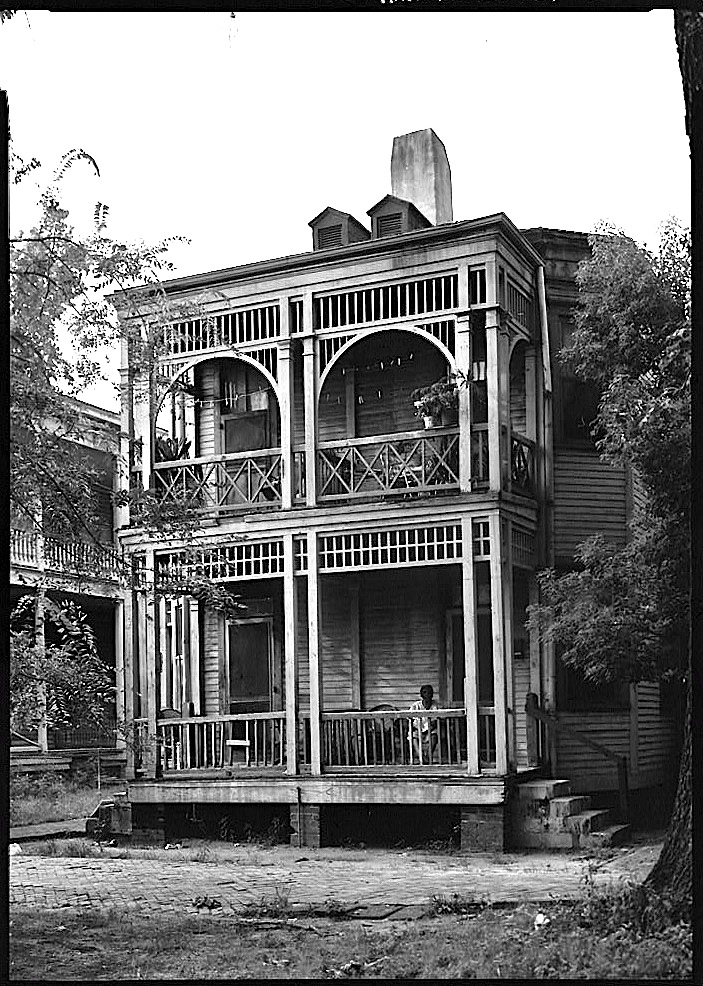 West Park Avenue, Victorian Historic District, Savannah, Georgia, 1979, by Walter Smalling, Jr. for an Historic American Buildings Survey (HABS), via Library of Congress Prints and Photographs Division.


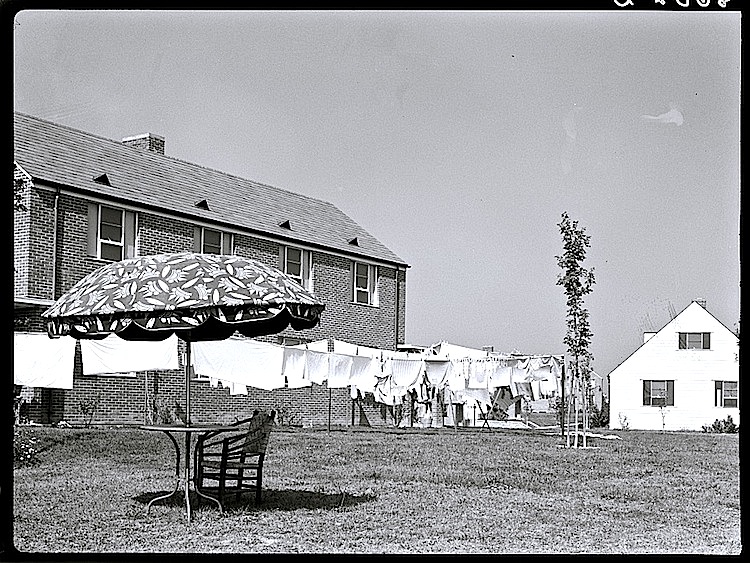
 enclos*ure