Here’s one little dream. . .

To have a pied-à-terre in Brussels and to have it be on Rue de la Cigogne.

Rue de la Cigogne is a ruelle or alleyway about 70 m. (230′) long between Rue Rempart des Moines and Rue de Flandre in the neighborhood of Dansaert.

Click any thumbnail in the gallery above to scroll through larger images.

All day all over the city every person
Wanders a different city, sealed intact
And haunted as the abandoned subway stations
Under the city. Where is my alley doorway?

— Robert Pinsky, from “City Elegies — I. The Day Dreamers

A Sunday in the streets of Brussels

On the first day of our recent travels, we were lucky enough to arrive in Brussels on its annual “Car Free Sunday.” The streets of the city were closed to “all traffic with an engine”* from 9:00 a.m. to 7:00 p.m.

The streets were full of happy bikers, skaters, skateboarders, and walkers — in about that order. In addition, stands devoted to regional food and drink, organic farming, and ecology were set up from the Grand’Place to the Royal Palace and Brussels Park.

This slideshow requires JavaScript.

I like this garden (above slides) at the Mont des Arts. Like so many outdoor spaces in Brussels, its design successfully encompasses many centuries.

Under the rows of pleached trees, there were booths selling food and wine from France, so, bien sur, we had fois gras sandwiches for lunch.

This slideshow requires JavaScript.

A little farther east, on the street between the Royal Palace (above slides) and Brussels Park, sod had been put down over the stone block paving, and people were picnicking on every kind of organic cuisine.

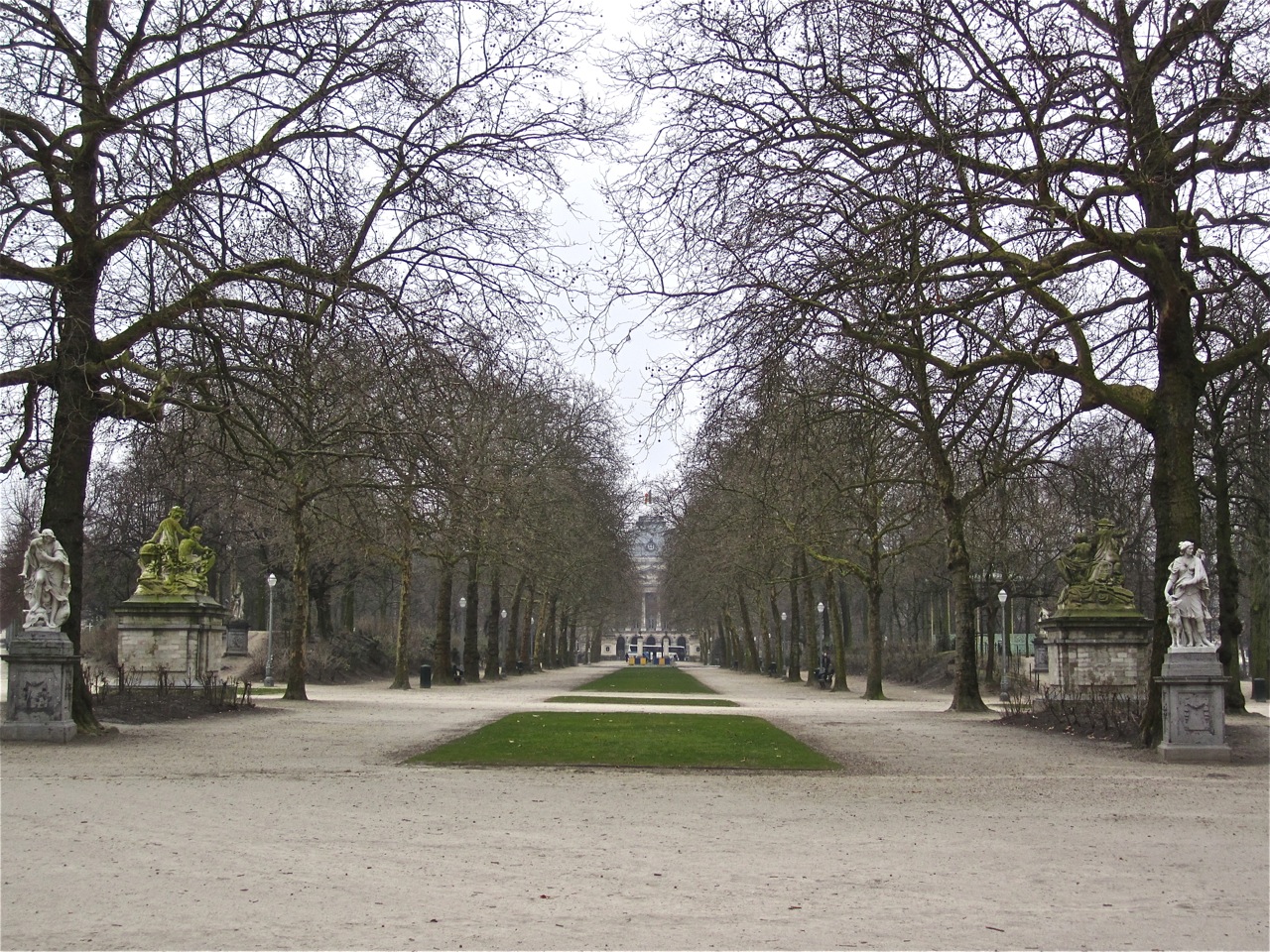
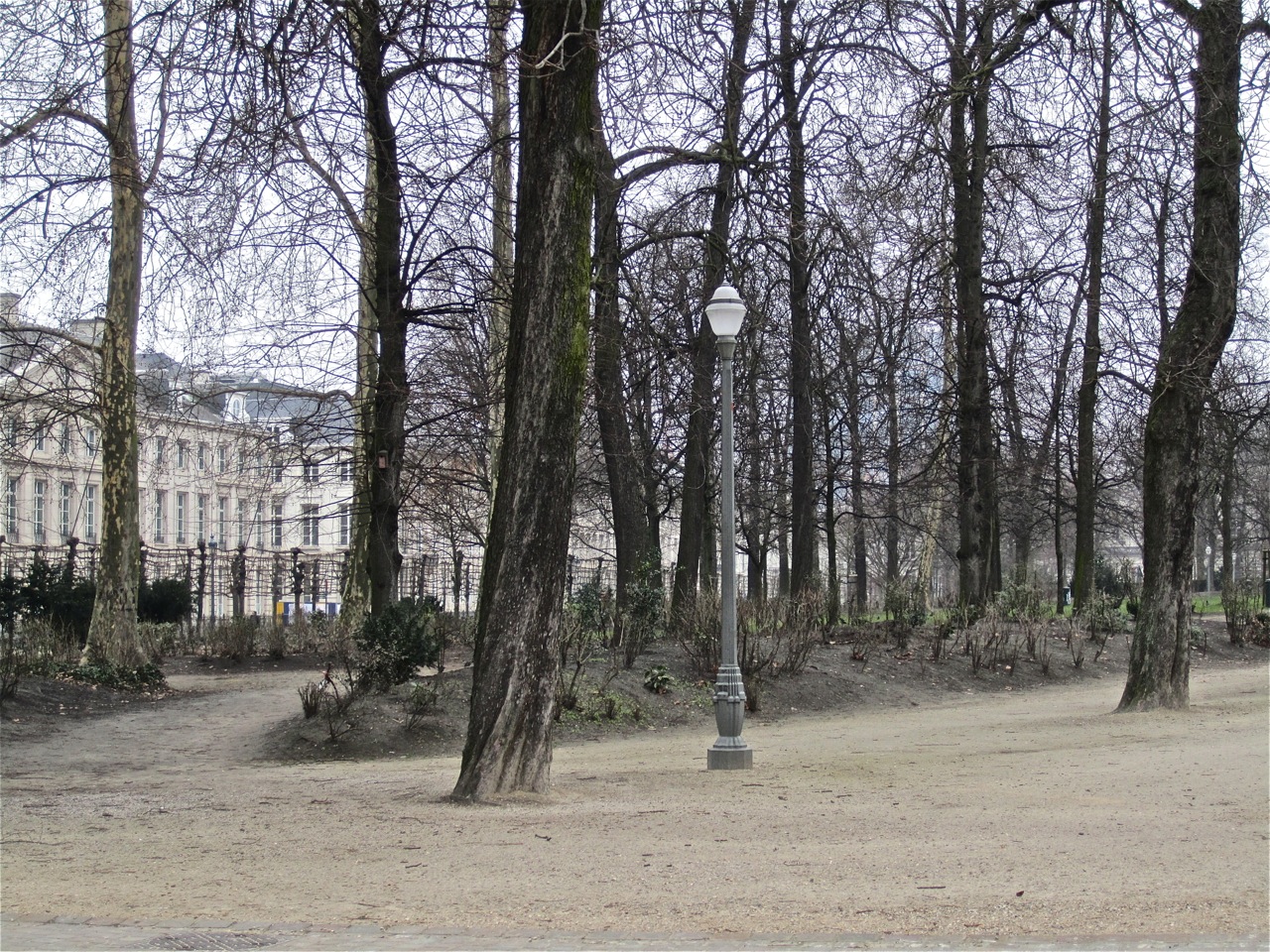
I also really like Brussels Park (below slides).  It has very formal wide gravel walkways laid out in the shape of the Free Masonry symbol of an architect’s compass. Two rows of espaliered trees surround its perimeter.  But inside, there are forest-style groupings of very tall trees, long berms planted in a natural way with a variety of shrubs, and some well-used grass.

This slideshow requires JavaScript.

In the afternoon, we went back to our hotel for a rest and found that the street under our window had been blocked off for children’s activities. A local radio station had set up a stage, and, for the length of our planned nap, it featured a teenage punk rock band. I must admit they sang and played (what seemed like) their one song over and over again with some proficiency (I guess).

We ended our lovely day of walking in the neighborhood of Dansaert, along Rue de Flandre (or Vlaamsesteenweg), where the shops and residents were having a street-long yard sale/block party. At no. 17, we ate traditional Belgian food at the restaurant Viva M’Boma** (long live grandmother), which we highly recommend — as long as you eat meat.

To scroll through larger versions of all the photos above, click on ‘Continue reading’ below.


*Except for buses, taxis, some delivery vans, police, and ambulance.  The event is always in September, to coincide with the  European Week of Mobility.  I found one webpage indicating that it will be on September 16 in 2014.

**But they are normally closed on Sundays — and Wednesdays.  Main courses are between 11€ and 18€.

 

Glimpsed in Brussels

. . . these oversized flower pots near the Brussels Central railway station, a couple of weeks ago.

In Brussels Park

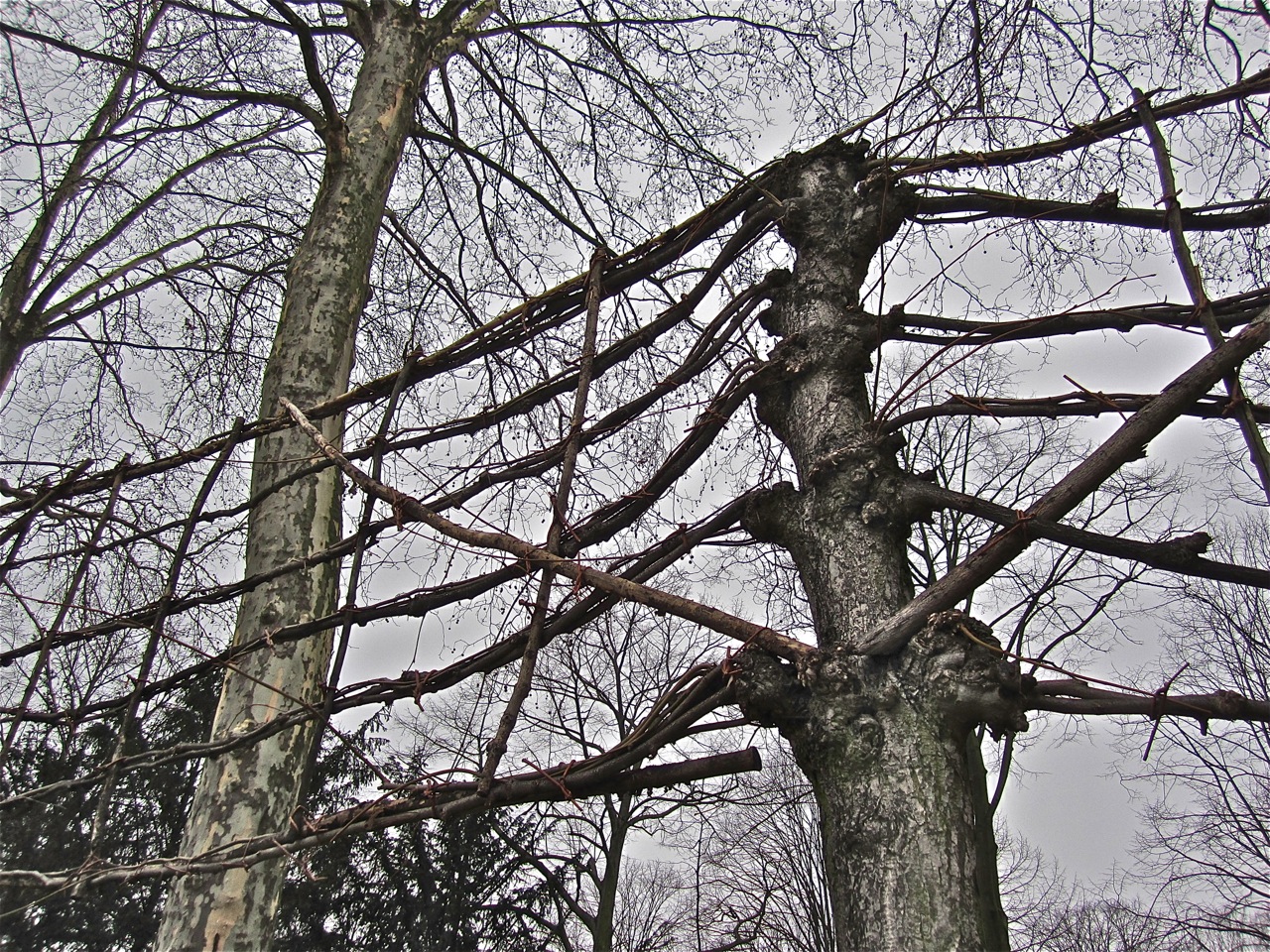
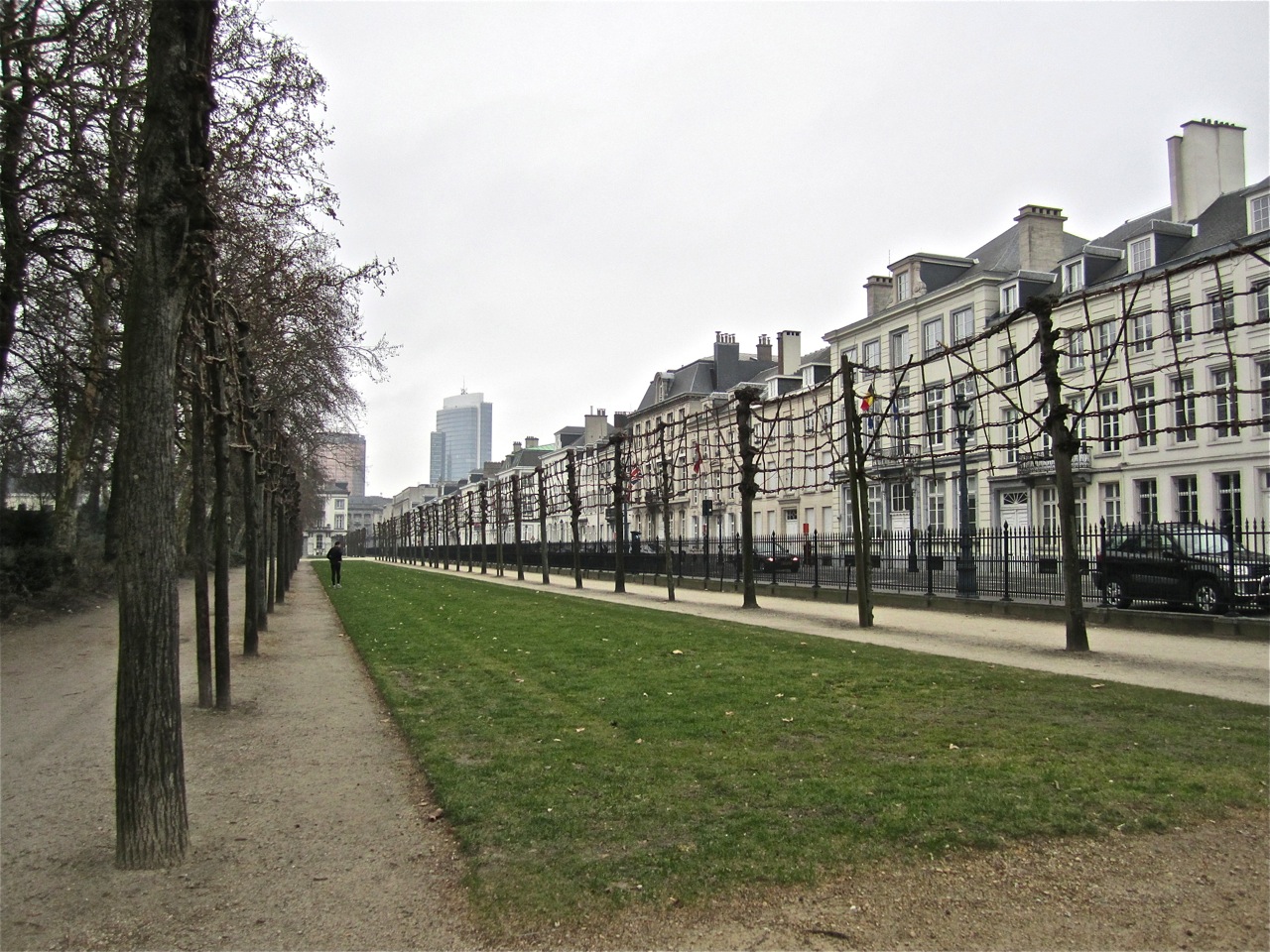
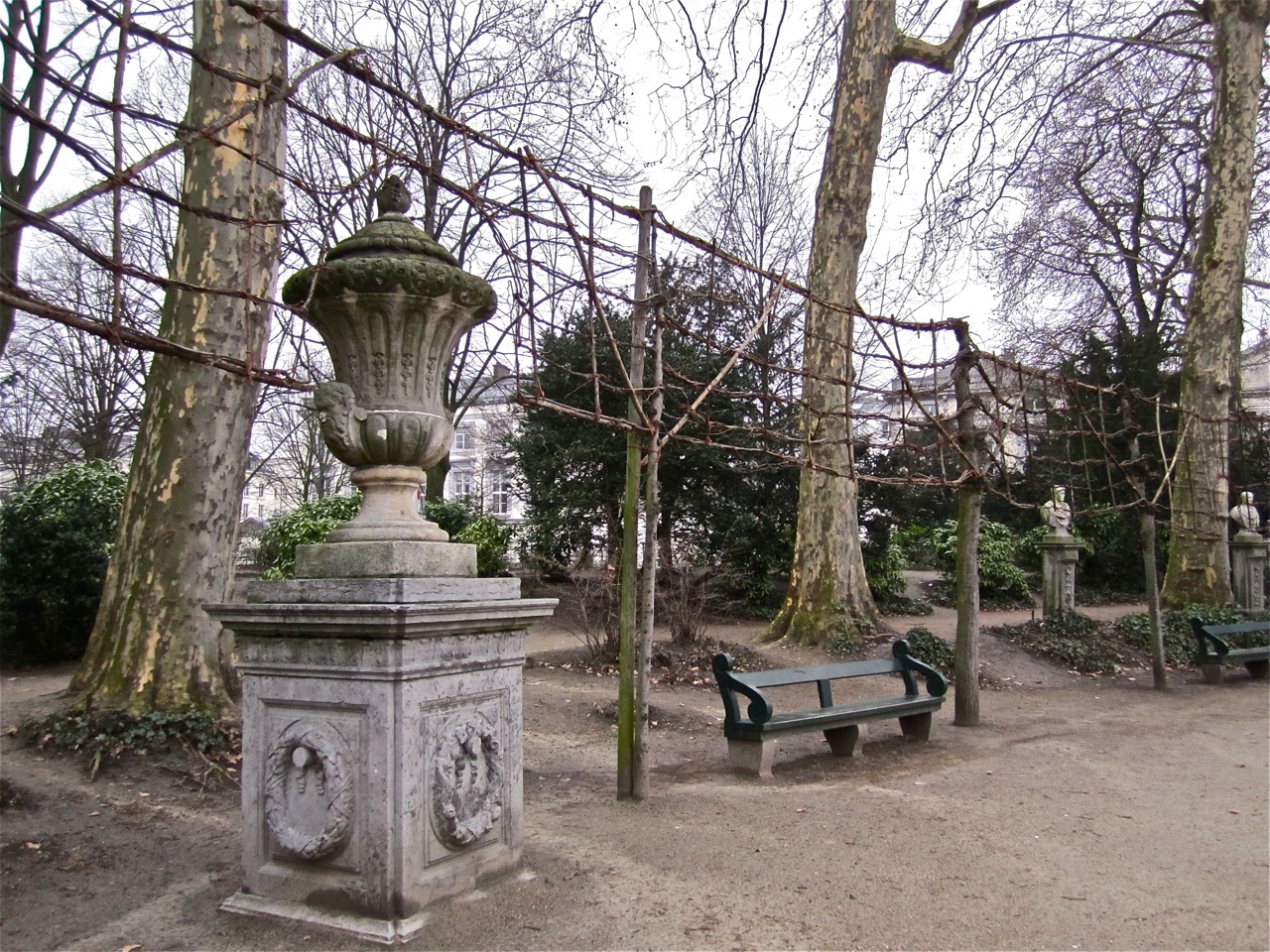
I noticed the bare, pleached trees near the end of the taxi ride from the airport  — a double row of long limbs on high, grid supports.

As soon as we dropped our bags at the hotel (and after a mid-morning snack of Liege waffles), we walked back to Brussels Park.

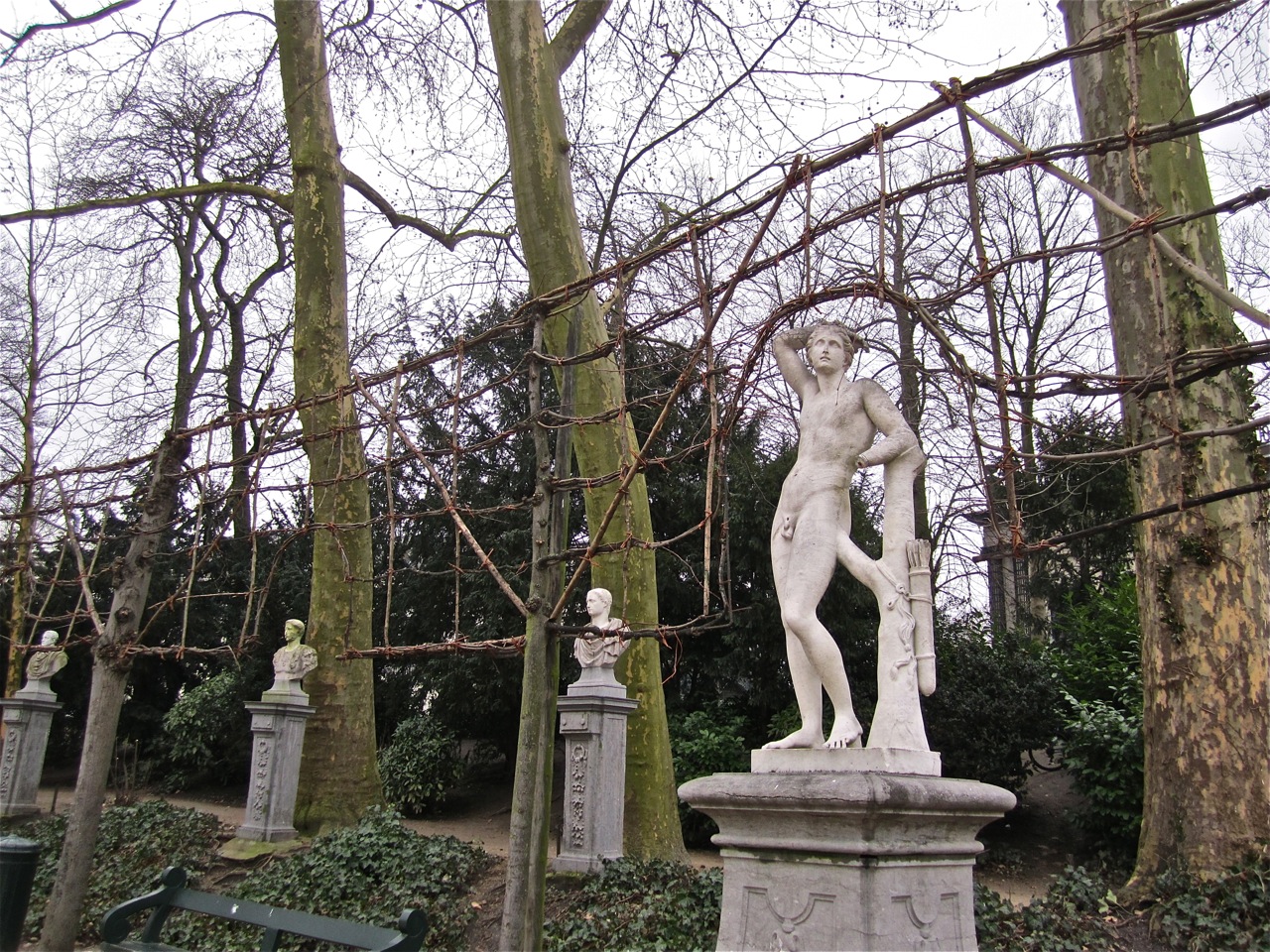
The Parc de Bruxelles (or Warandepark in Dutch) is the largest urban park in the city center, as well as the oldest. A rectangle, it is capped on the north end by the Belgian Parliament (the park is on a north-east to south-west axis) and on the south end by the Royal Palace (below).

In the 12th century, it was the hunting ground for the dukes of Brabant. In 1774, Empress Maria Therese of Austria (the ruler of Brussels at that time) ordered that the space be turned into a French-style garden.

The original design by Barnabé Guimard remains to this day.  The predominate feature of the layout — that the north fountain and the two outer wide allées form the shape of an architect’s compass — reflects the influence of Free Masonry in 18th c. Brussels.

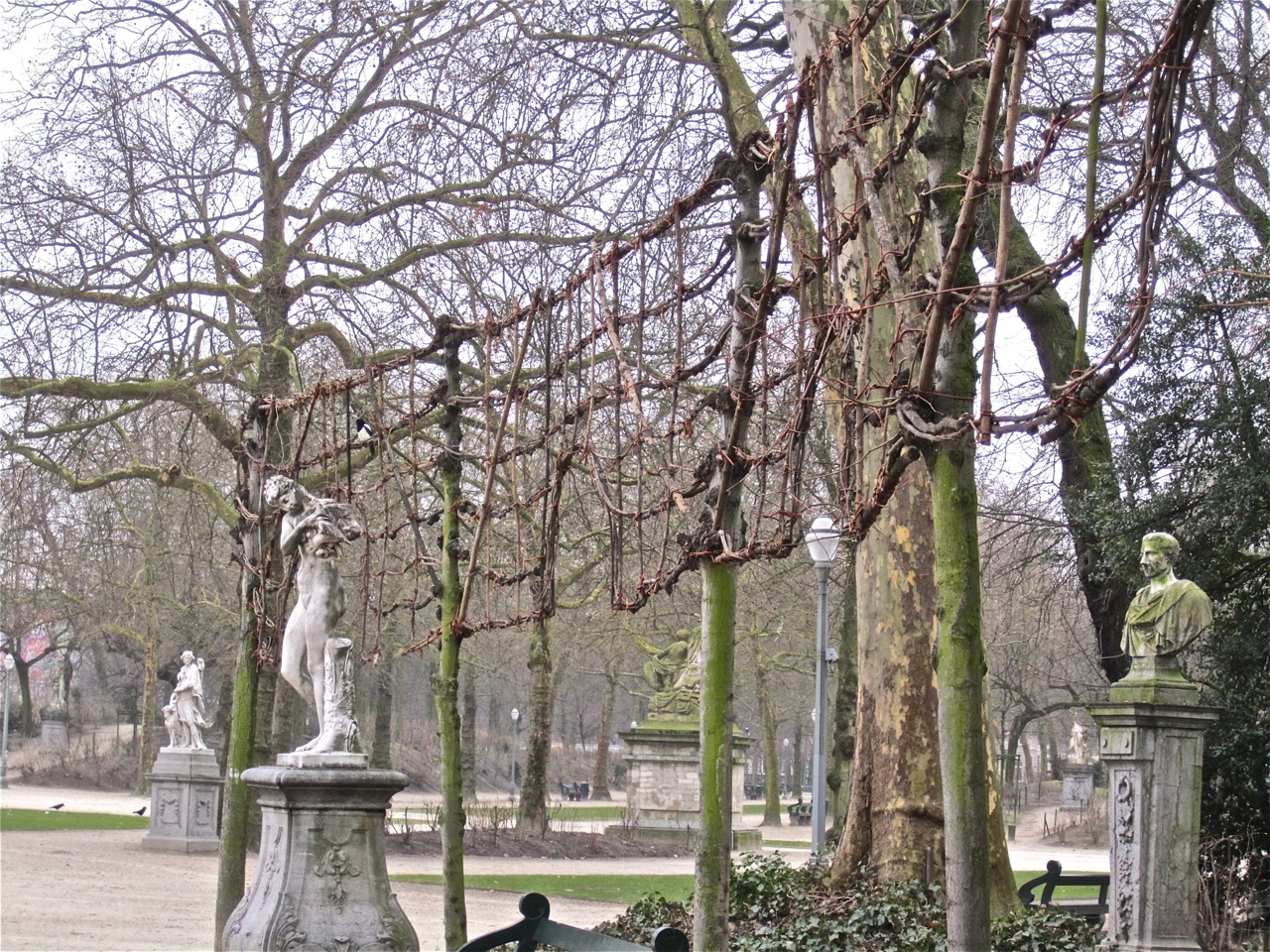
While formal, symmetrical, and on a grand scale, the park is simply planted with banks of shrubs, forest-style groupings of tall (naturally shaped) trees, and the rows of pleached lime trees, which border the whole garden and the north fountain.

Curvy, auxiliary paths wind between the main allées.

On the west side is a lovely 1841 bandstand designed by Jean-Pierre Cluysenaer.

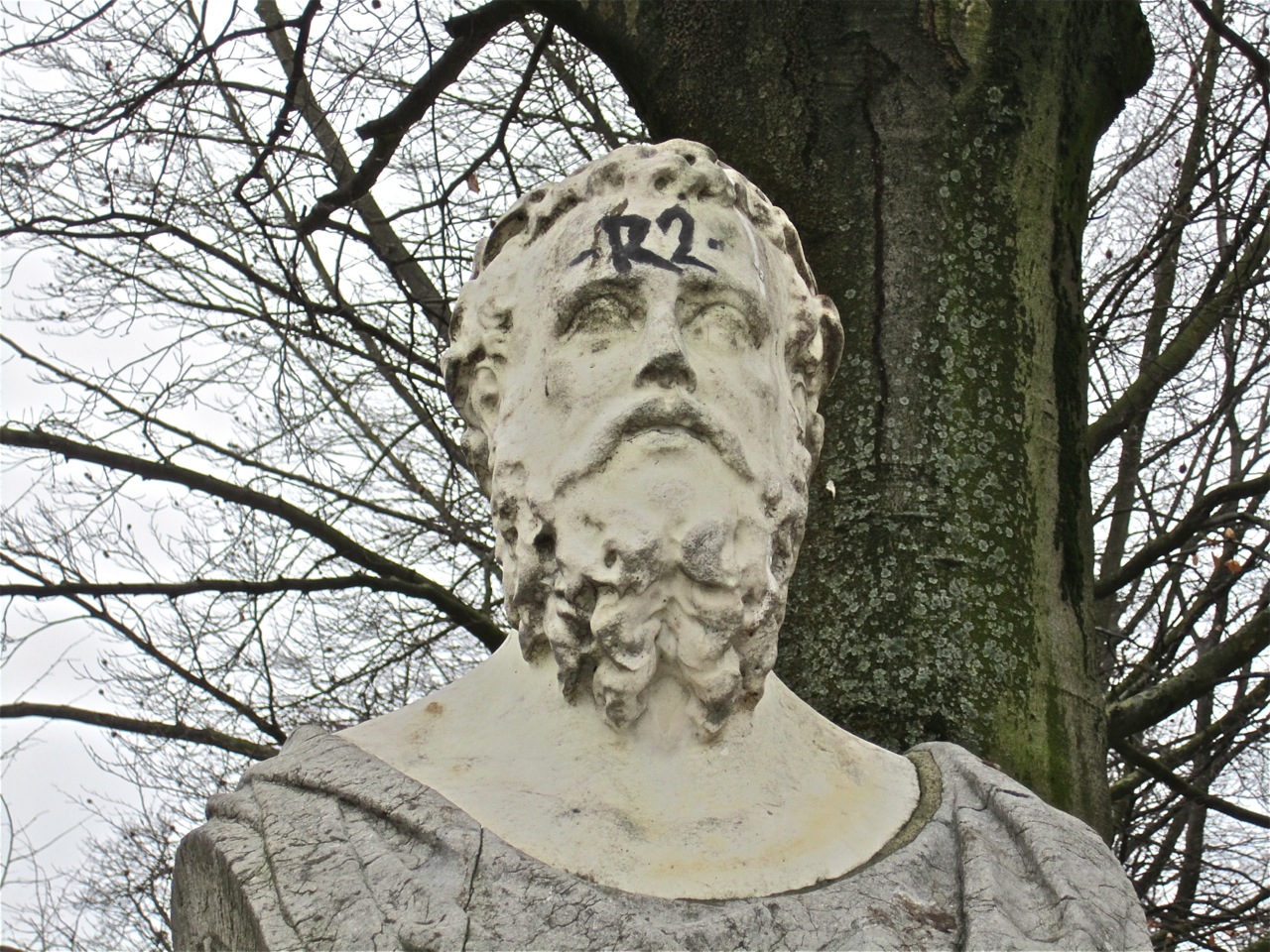
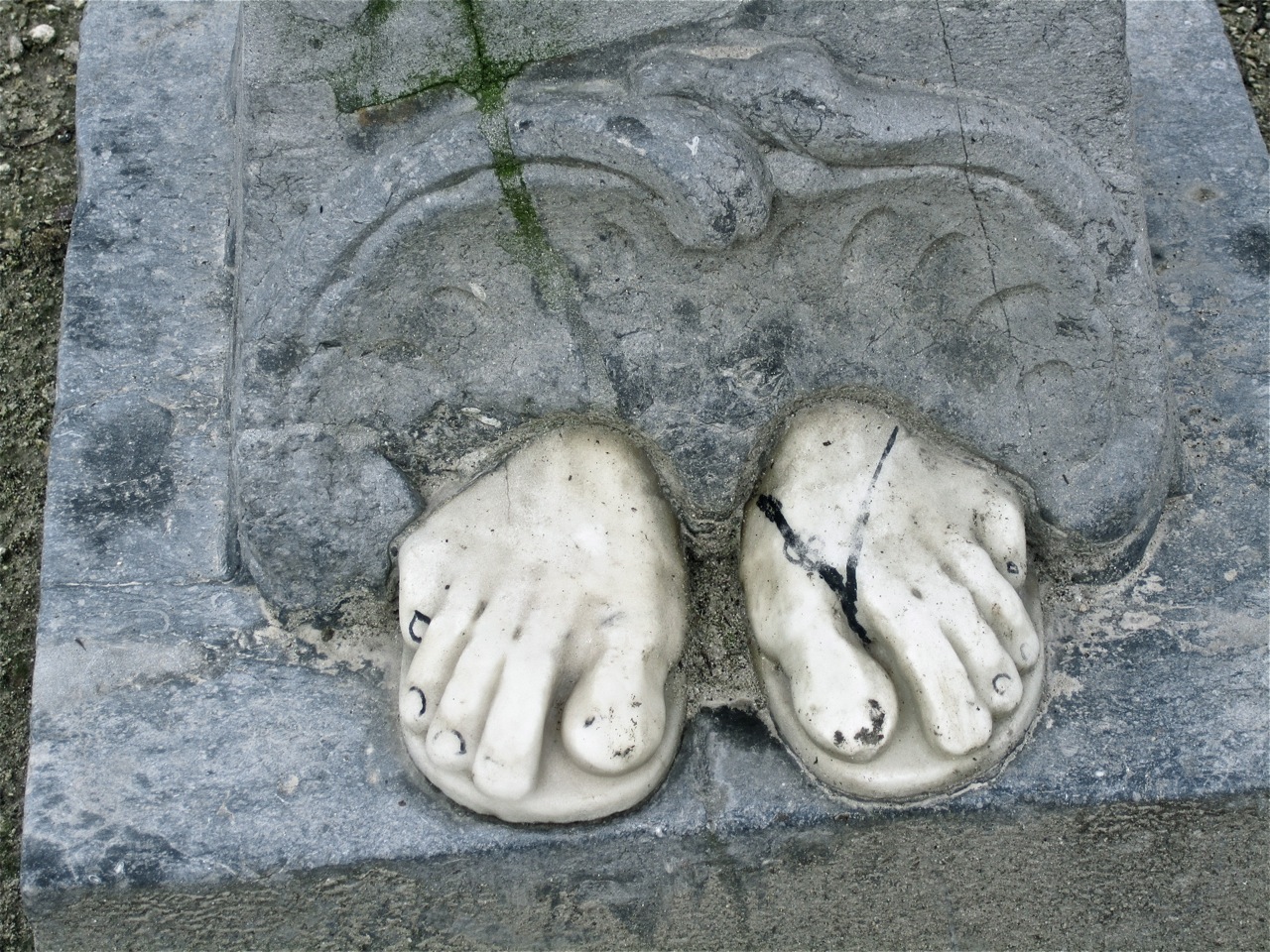
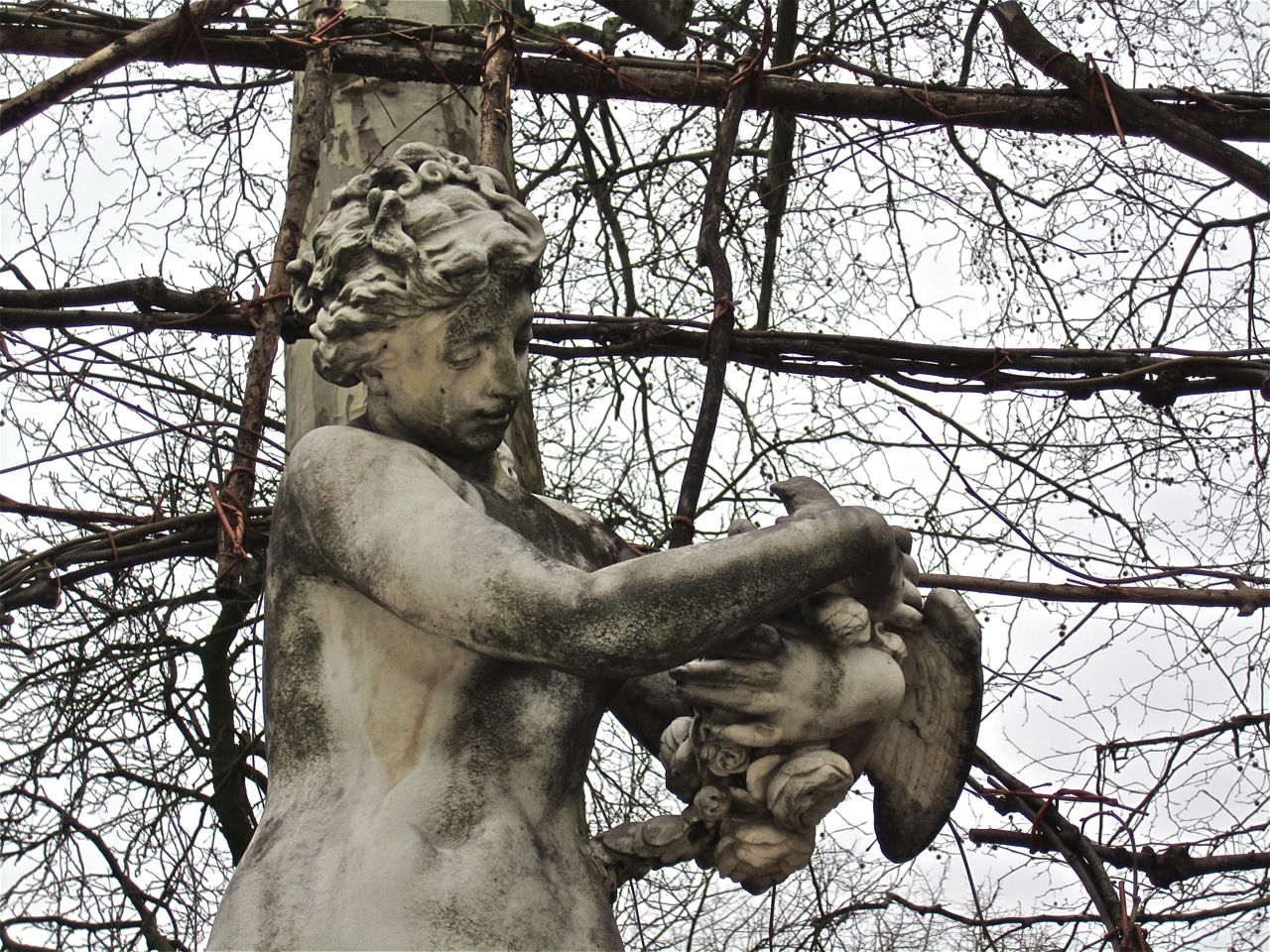
The park also contains about 60 sculptures inspired by Roman-Greek myths.  Most were originally taken from the Brabant dukes’ castle, Tervuren, and the Thurn und Taxis Palace.  Today, however, many are copies.  The entire park underwent a restoration in 2001.

The urns and sculptures below circle the north fountain.

To scroll through larger versions of the above photos (and some others), click on ‘Continue reading’ below and then on any thumbnail in the gallery.

Continue reading “In Brussels Park”

Korte violetstraat, Brussels


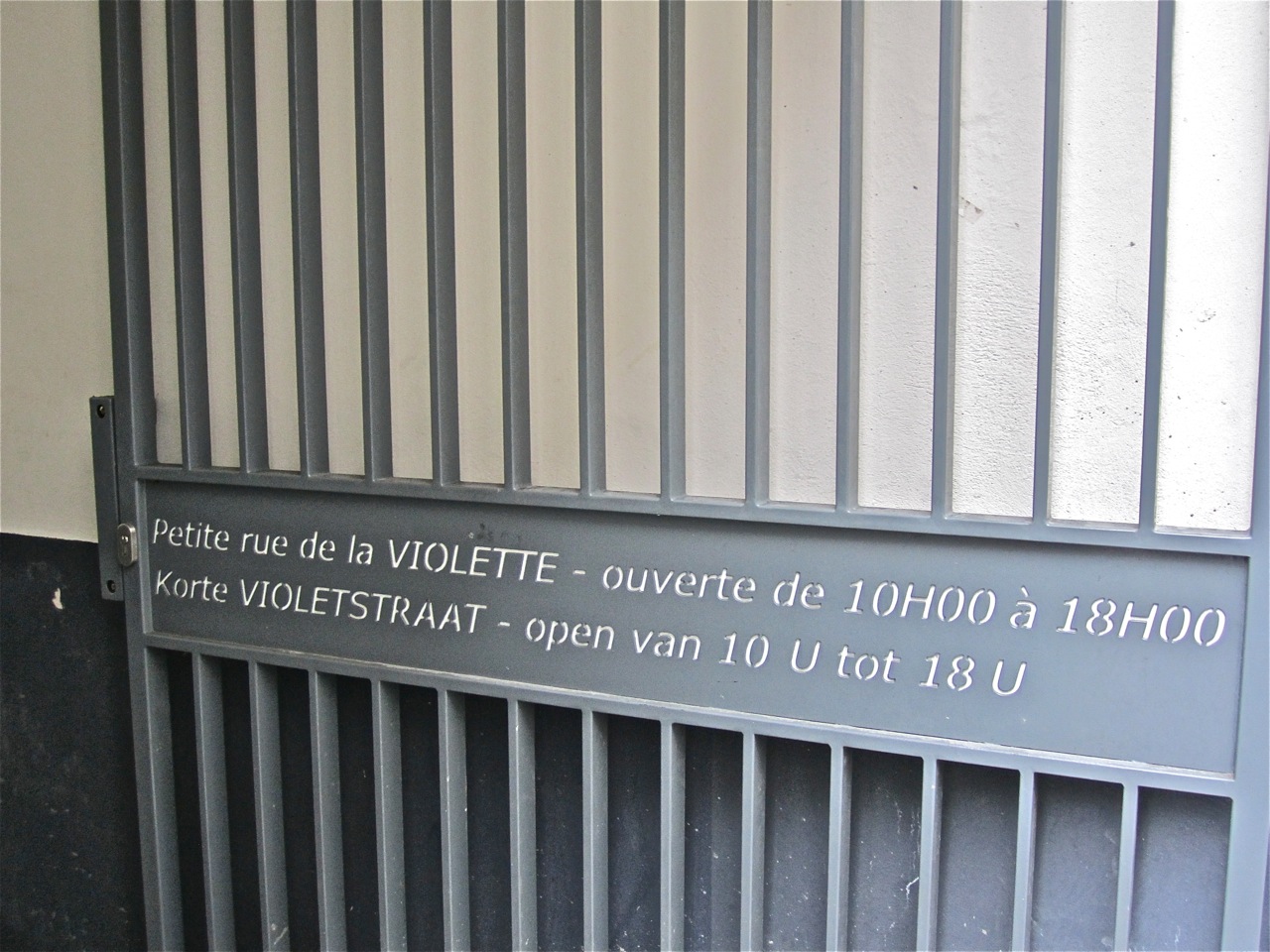
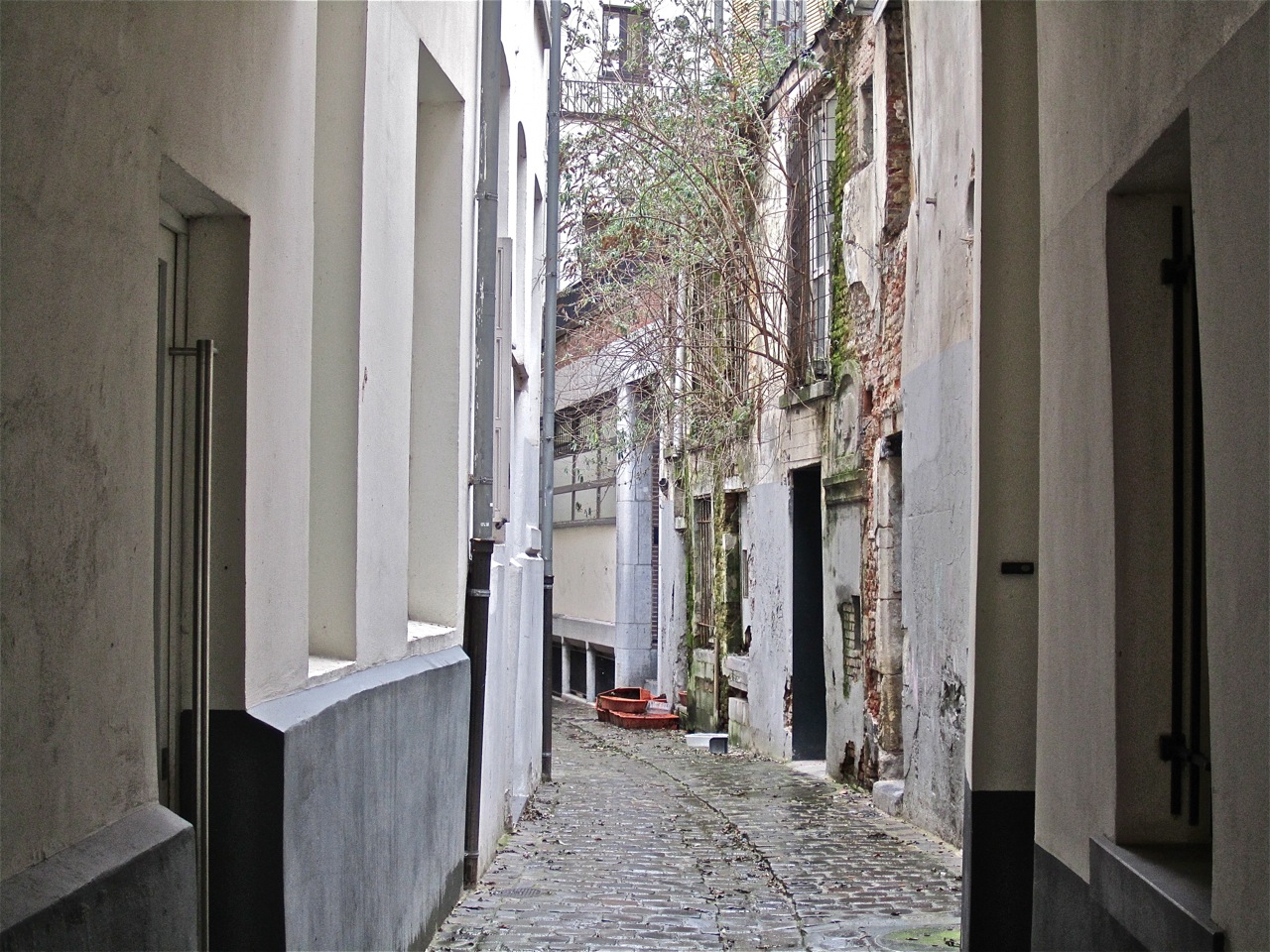
On a walk around the neighborhood just south of the Grand-Place (Grote Markt in Dutch) in Brussels, I came across the gate to ‘Little Violet Street.’

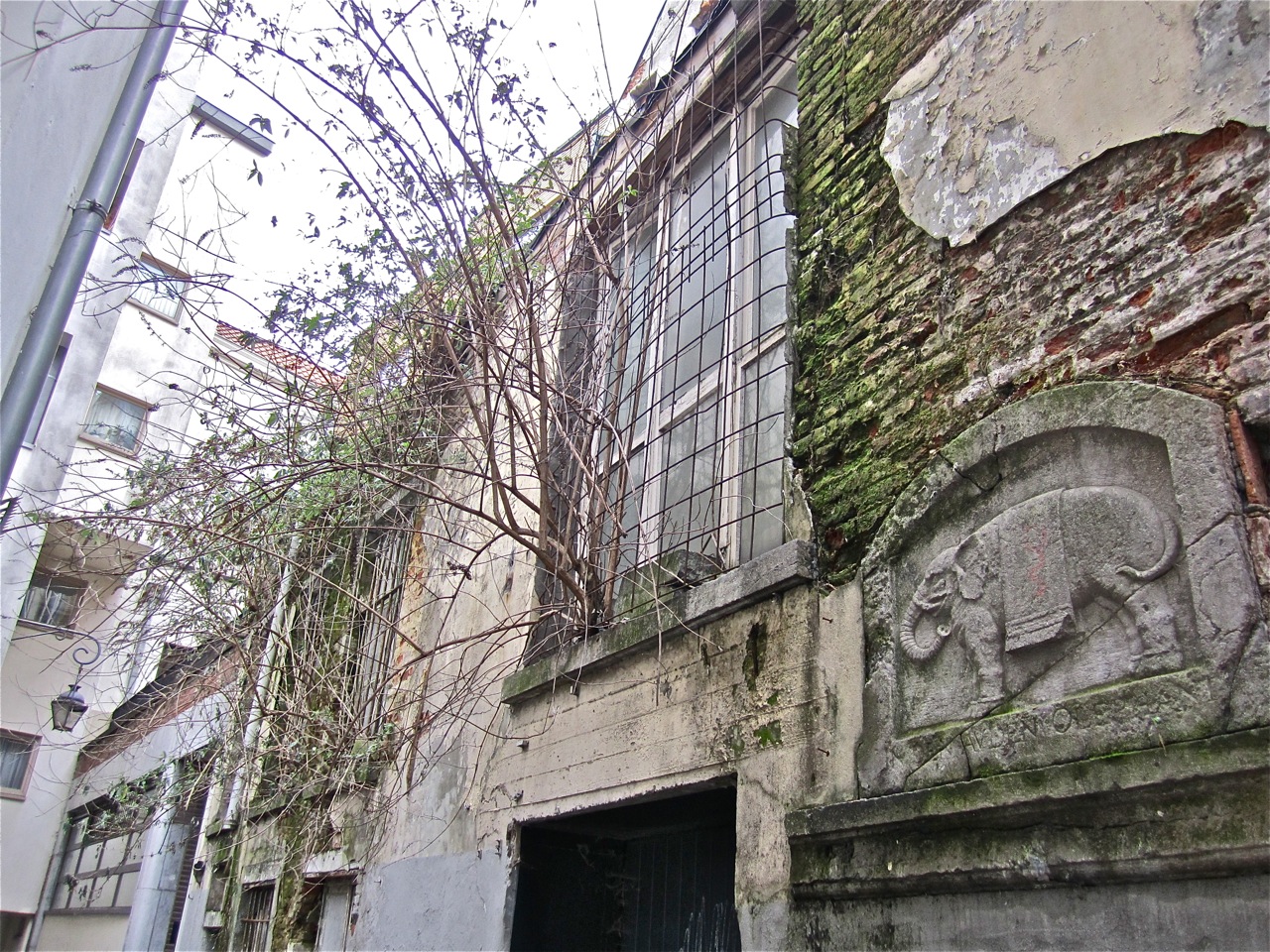
Halfway down the pedestrian way, an elephant gable stone marks the site of the 16th century “Old Elephant” tavern. (Click the photos to enlarge them.)

Gable stones are carved and often painted stone tablets set into exterior walls of buildings. Coming into use in the 16th century, they both identified (in the days before house numbers) and decorated homes and businesses. They can be found in many northern European cities, like Brussels, Amsterdam, Maastricht, Lille, and Copenhagen.

According to Wikipedia, “they normally combine a picture with an inscription, or sometimes just a date. Some illustrate the name or profession of the owner, for instance a quill pen as a badge for an author, or a ship for a sailor. Some are named after notable people (The King of Bohemia) or faraway trading destinations (Königsberg). Some stones act as talismans, quoting from holy scripture.”