
 Round enclosure on Eeuwigelaan (street) in Bergen, The Netherlands, 1926, by A. J. Bonda, via Archief Alkmaar Commons on flickr.
I have been wondering about the purpose of this really nice rustic fence in a wooded area (there’s another view here). In a much larger version of the photo, you can see barbed wire all around the top rails. The ground inside has either been dug out or worn away. There are two benches nearby, with more barbed wire fencing behind them. What appears to be a road in the background is actually a canal. (And you can also see that the man standing on the right is wearing wooden shoes.)
It could have been the site of a large tree of special local significance, which then died and was removed. Or the spot of some other removed shrine or monument. But why not take away the fence and fill the hole after dismantling what was inside? Then I thought it might have been the small crater itself that was important — perhaps the remains of a WWI shelling in the area.
Today, this street is lined with very large homes.
ADDENDUM: Nope, wrong all round. 🙂 Please see the very interesting comment below.
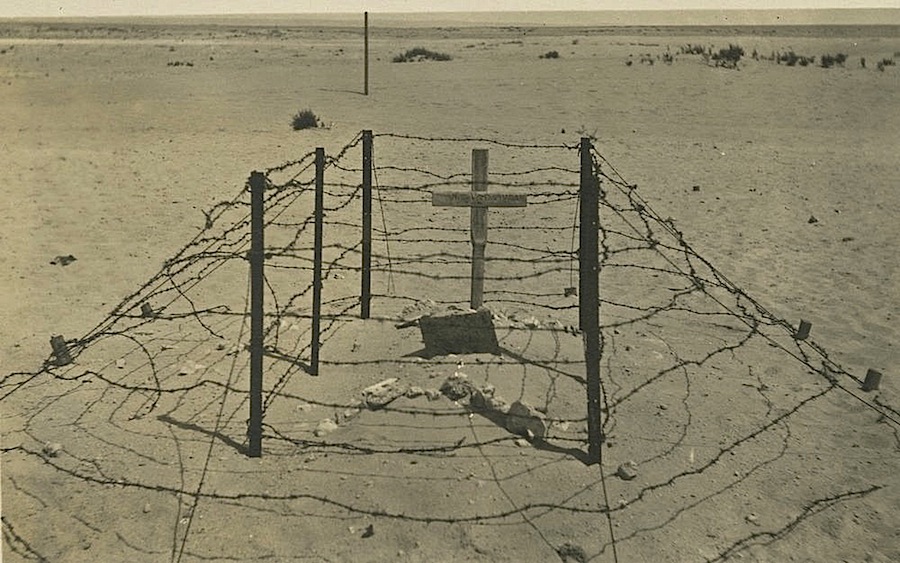

 enclos*ure