Lorraine, France

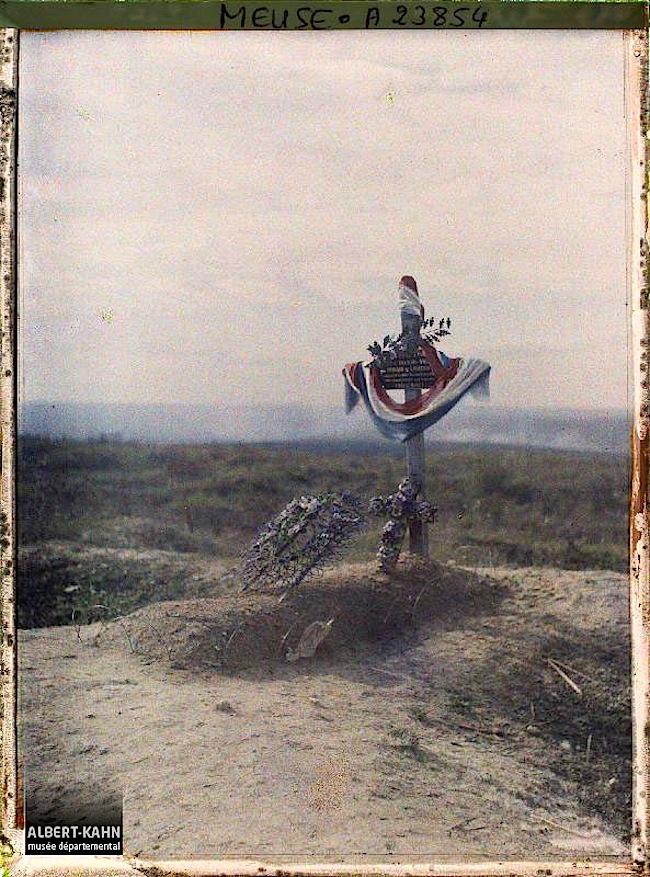
Grave of General Ernest Ancelin, Fort de Douaumont (Lorraine), France, September 20, 1920, by Georges Chevalier, via Archives of the Planet Collection – Albert Kahn Museum /Département des Hauts-de-Seine.

The General fell during an attack on the fort in October 1916.

The image above is one of about seventy-two thousand that were commissioned and then archived by Albert Kahn, a wealthy French banker and pacifist, between 1909 and 1931. Kahn sent thirteen photographers and filmmakers to fifty countries “to fix, once and for all, aspects, practices, and modes of human activity whose fatal disappearance is no longer ‘a matter of time.'”* The resulting collection is called Archives de la Planète and now resides in its own museum at Kahn’s old suburban estate at Boulogne-Billancourt, just west of Paris. Since June 2016, the archive has also been available for viewing online here.


*words of Albert Kahn, 1912. Also, the above photo (A 23 854) is © Collection Archives de la Planète – Musée Albert-Kahn and used under its terms, here.
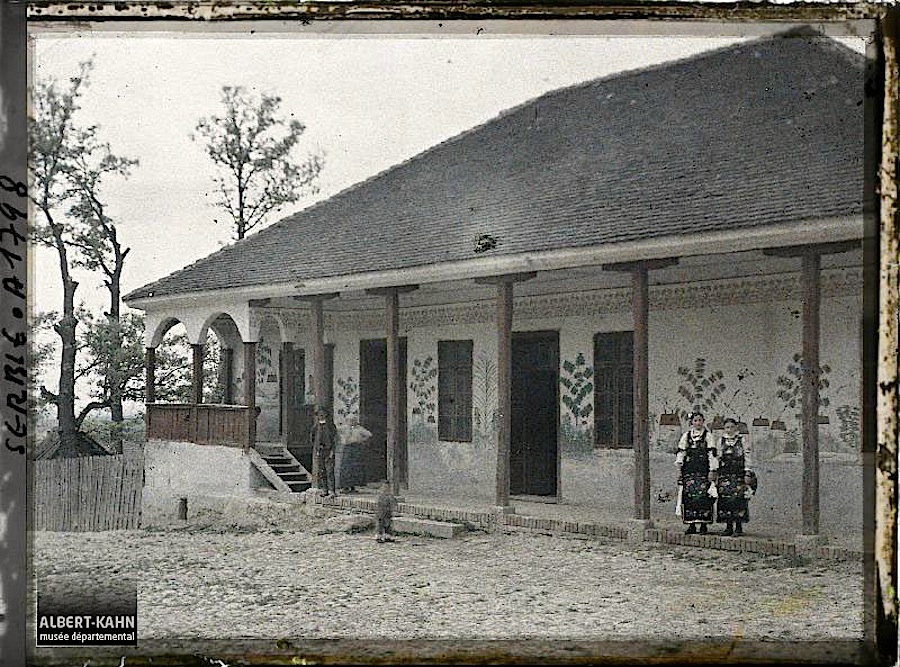
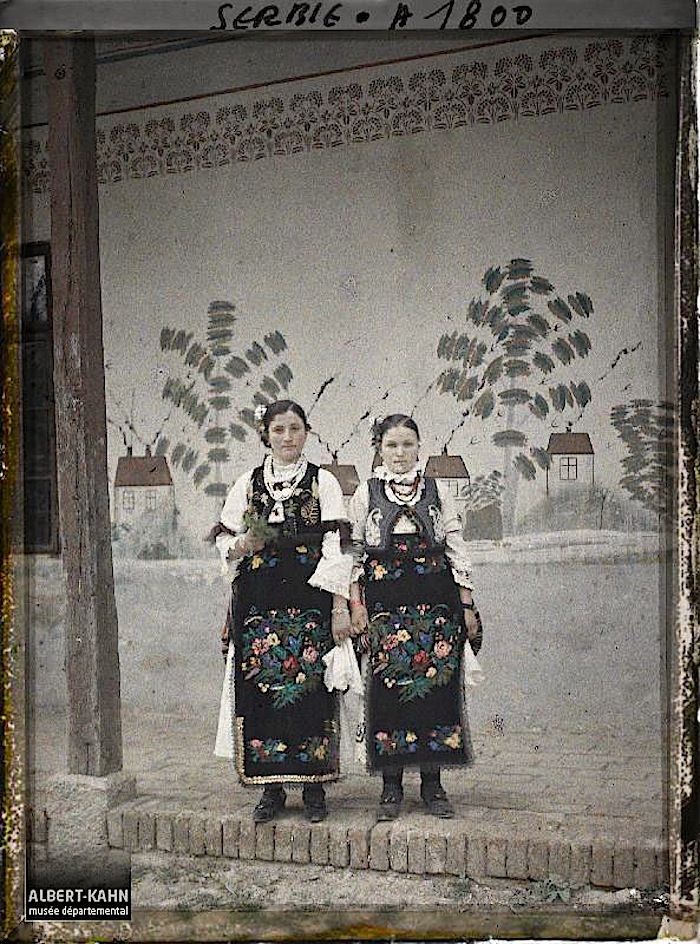
The Sunday porch: Belgrade

The front porch of an inn* on the Avala road, Belgrade area, Serbia, April 1913, by
Auguste Léon, via Archives of the Planet Collection – Albert Kahn Museum /Département des Hauts-de-Seine (all three images here).

Two young girls in traditional dress.

These autochromes are three of about seventy-two thousand that were commissioned and then archived by Albert Kahn, a wealthy French banker who was committed to the ideal of universal peace and believed that “knowledge of foreign cultures encourages respect and peaceful relations between nations.”† He was also acutely aware that the 20th century was going to bring rapid material change to the world.

Accordingly, from 1909 to 1931, Kahn sent thirteen photographers and filmmakers to fifty countries “to fix, once and for all, aspects, practices, and modes of human activity whose fatal disappearance is no longer ‘a matter of time.’”†† The resulting collection is called Archives de la Planète and now resides in its own museum at Kahn’s old suburban estate at Boulogne-Billancourt, just west of Paris. Since June 2016, the archive has also been available for viewing online here.

Showing the backs of the skirts and vests.

*On the first image above it is called an auberge (inn), on the others, it is called a maison (house).
†Collections Albert Kahn website. Also, the above photos (A 1 798, A 1 800, A 69 405 X) are © Collection Archives de la Planète – Musée Albert-Kahn and used under its terms, here.
††Words of Albert Kahn, 1912.

The flower seller, Chartres


Le marché aux fleurs, Chartres, France, August 19, 1922, by Auguste Léon, via Archives of the Planet Collection – Albert Kahn Museum /Département des Hauts-de-Seine.

One of my favorite blogs, It’s About Time by garden historian Barbara Wells Sarudy, is currently posting a series on paintings of flower sellers by American artists. Check it out here.

The autochrome above is one of about seventy-two thousand that were commissioned and then archived by Albert Kahn, a wealthy French banker, between 1909 and 1931. Kahn sent thirteen photographers and filmmakers to fifty countries “to fix, once and for all, aspects, practices, and modes of human activity whose fatal disappearance is no longer ‘a matter of time.'”* The resulting collection is called Archives de la Planète and now resides in its own museum at Kahn’s old suburban estate at Boulogne-Billancourt, just west of Paris. Since June 2016, the archive has also been available for viewing online here.


*words of Albert Kahn, 1912. Also, the above photos (A 33804 S) are © Collection Archives de la Planète – Musée Albert-Kahn and used under its terms, here.

Poppies, Sweden


A young woman and two little girls in front of a row of double poppies, Gagnef, Sweden, August 1910, by Auguste Léon, via Archives of the Planet Collection – Albert Kahn Museum /Département des Hauts-de-Seine (both photos).

Another woman and her two daughters in Gagnef. What are those pink flowers next to them?

The autochromes above are two of about seventy-two thousand that were commissioned and then archived by Albert Kahn, a wealthy French banker, between 1909 and 1931. Kahn sent thirteen photographers and filmmakers to fifty countries “to fix, once and for all, aspects, practices, and modes of human activity whose fatal disappearance is no longer ‘a matter of time.'”* The resulting collection is called Archives de la Planète and now resides in its own museum at Kahn’s old suburban estate at Boulogne-Billancourt, just west of Paris. Since June 2016, the archive has also been available for viewing online here.


*words of Albert Kahn, 1912. Also, the above photos (A 436 and A 425) are © Collection Archives de la Planète – Musée Albert-Kahn and used under its terms, here.

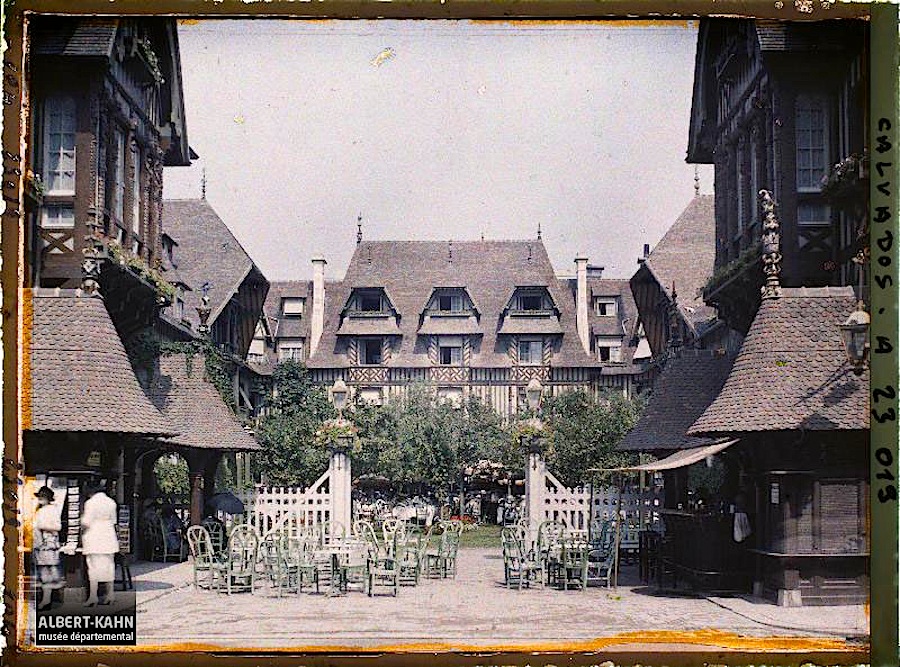
Normandy courtyard


The courtyard of Le Normandy Hotel, Deauville, France, August 8, 1920, an autochrome by Georges Chevalier, via Archives of the Planet Collection – Albert Kahn Museum /Département des Hauts-de-Seine.

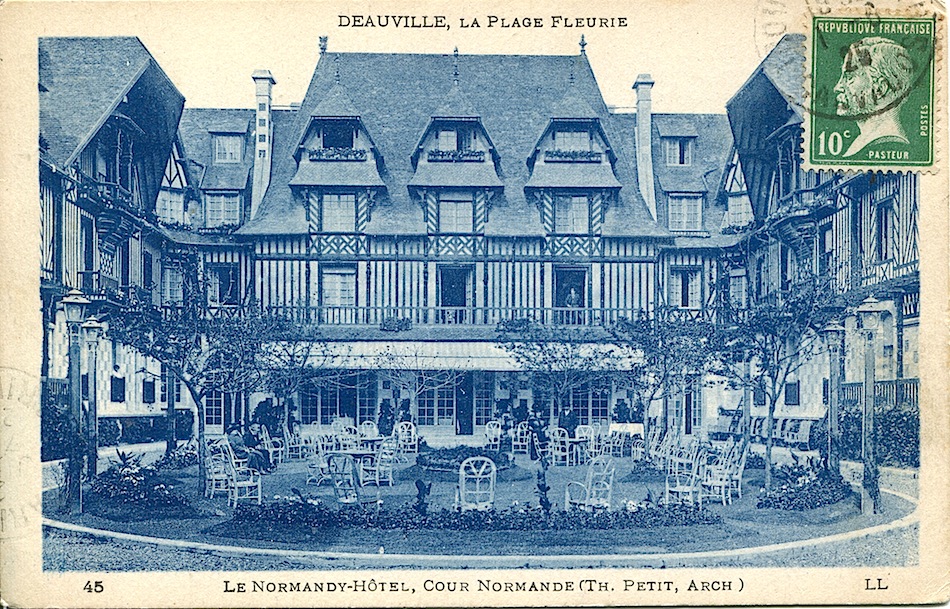
Such pretty little green chairs; here’s another photo. . .

Inside the Cour Normande, ca. 1925, a postcard by Levy et Neurdein Reunis, via pellethepoet on flickr, under CC license.

The 5-star hotel was built in an Anglo-Norman style in 1912.  It appeared in the 1996 “The Murder on the Links” episode of Agatha Christies’ Poirot with David Suchet. Today, the courtyard looks much the same as it did in the 1920s, although the chairs and tables have been replaced with more little trees.

The image at the top is one of about seventy-two thousand that were commissioned and then archived by Albert Kahn, a wealthy French banker and pacifist, between 1909 and 1931. Kahn sent thirteen photographers and filmmakers to fifty countries “to fix, once and for all, aspects, practices, and modes of human activity whose fatal disappearance is no longer ‘a matter of time.'”* The resulting collection is called Archives de la Planète and now resides in its own museum at Kahn’s old suburban estate at Boulogne-Billancourt, just west of Paris. Since June 2016, the archive has also been available for viewing online here.


*words of Albert Kahn, 1912. Also, the photo at the top (A 23 019) is © Collection Archives de la Planète – Musée Albert-Kahn and used under its terms, here.