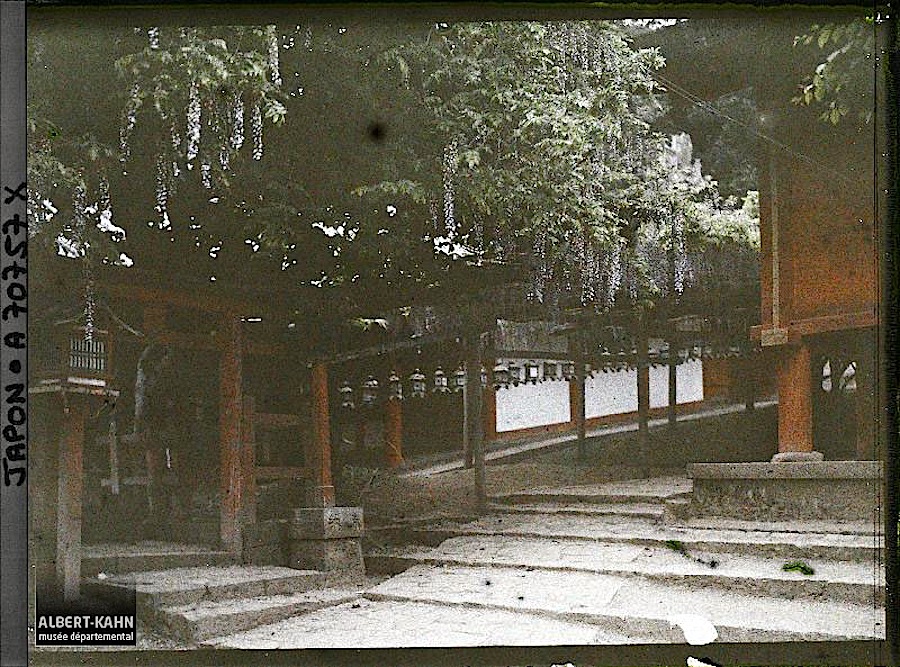
Nara, Japan


Kasuga-jinja (or Kasuga-taisha) Sanctuary and wisteria, Nara, Japan, Spring 1926, by Roger Dumas, via Archives of the Planet Collection – Albert Kahn Museum /Département des Hauts-de-Seine (all three photos here).
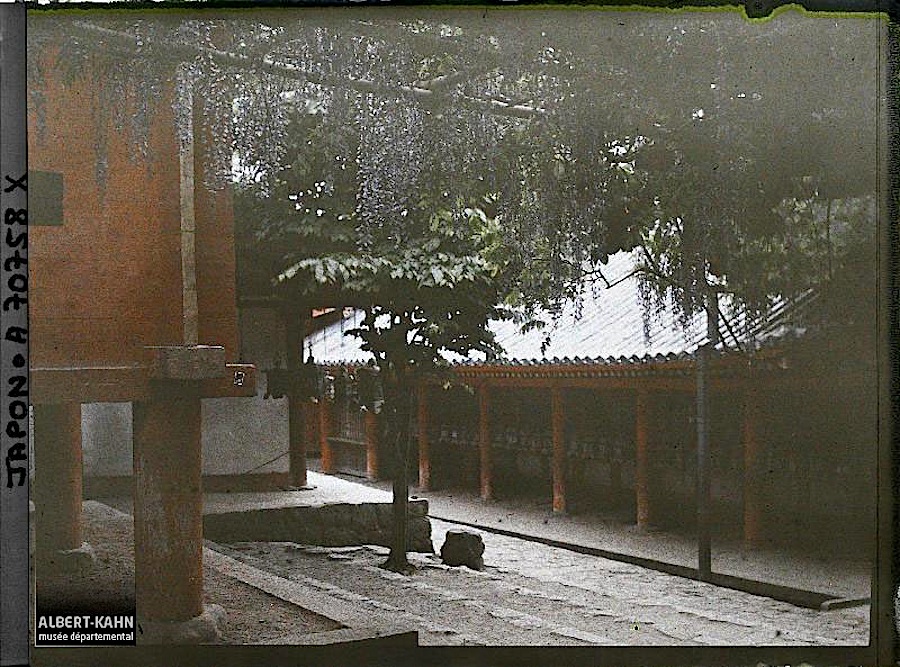
The Shinto shrine (first built in 768 A.D.) is famous for its thousands of bronze and stone lanterns. It is located on the edge of Nara Park, home to freely roaming deer said to be messengers of the gods.
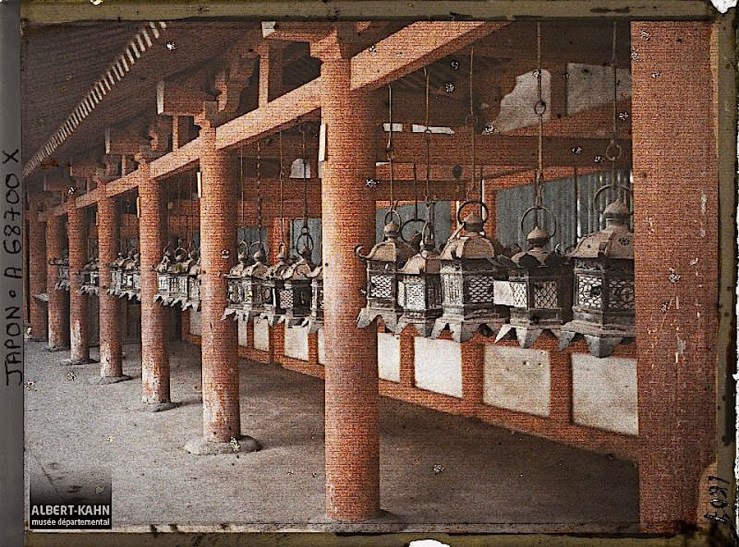
Temple of lanterns, Japan, A68700X, Musee Albert-Kahn, Archives de la Planete

The autochromes above are three of about seventy-two thousand that were commissioned and then archived by Albert Kahn, a wealthy French banker and pacifist, between 1909 and 1931. Kahn sent thirteen photographers and filmmakers to fifty countries “to fix, once and for all, aspects, practices, and modes of human activity whose fatal disappearance is no longer ‘a matter of time.'”* The resulting collection is called Archives de la Planète and now resides in its own museum at Kahn’s old suburban estate at Boulogne-Billancourt, just west of Paris. Since June 2016, the archive has also been available for viewing online here.


*words of Albert Kahn, 1912. Also, the above photos (A 70 757 X, A 70 758 X, A 68 700 X) are © Collection Archives de la Planète – Musée Albert-Kahn and used under its terms, here.
A look around


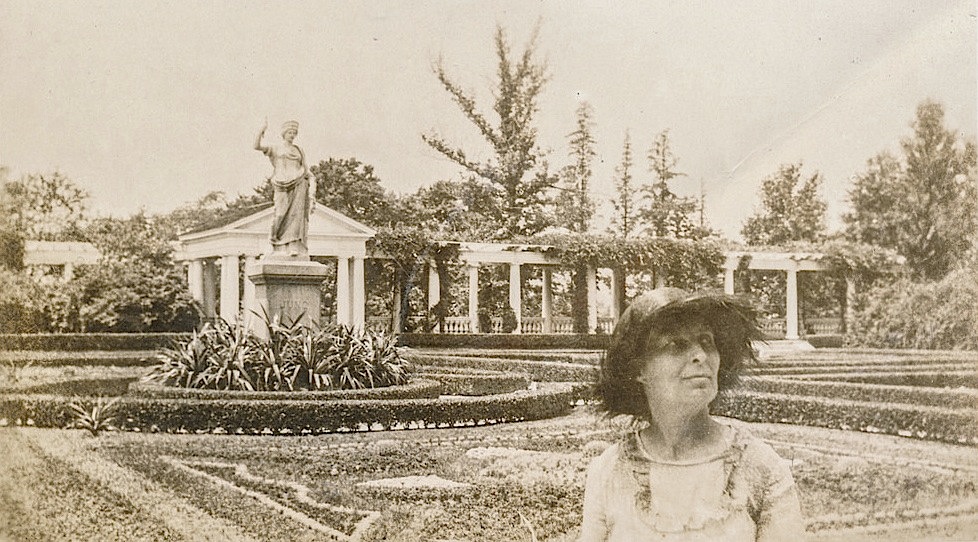
A woman admiring a garden at the Missouri Botanical Gardens, St. Louis, ca. 1910 to ca. 1935, via simpleinsomnia on flickr, under CC license.

On the back of the photo:  “Shaw’s gardens. This gives wrong impression of you.”

Englewood, New Jersey

“Beechgate,” Englewood, New Jersey, 1918, a hand-colored glass lantern slide by Frances Benjamin Johnston, via Library of Congress Prints and Photographs Division.

Some mid-week prettiness. . . . The four-acre garden was designed by Anna Gilman Hill about 1911.

Hill and her husband also owned “Grey Gardens,” the East Hampton estate later famously inhabited by Edith Bouvier Beale and “Little Edie.” She was Director of the Garden Club of America for six years in the 1920s, and, in 1938, she wrote a book about her gardening life, called Forty Years of Gardening. You can read it online here.

Uptown garden


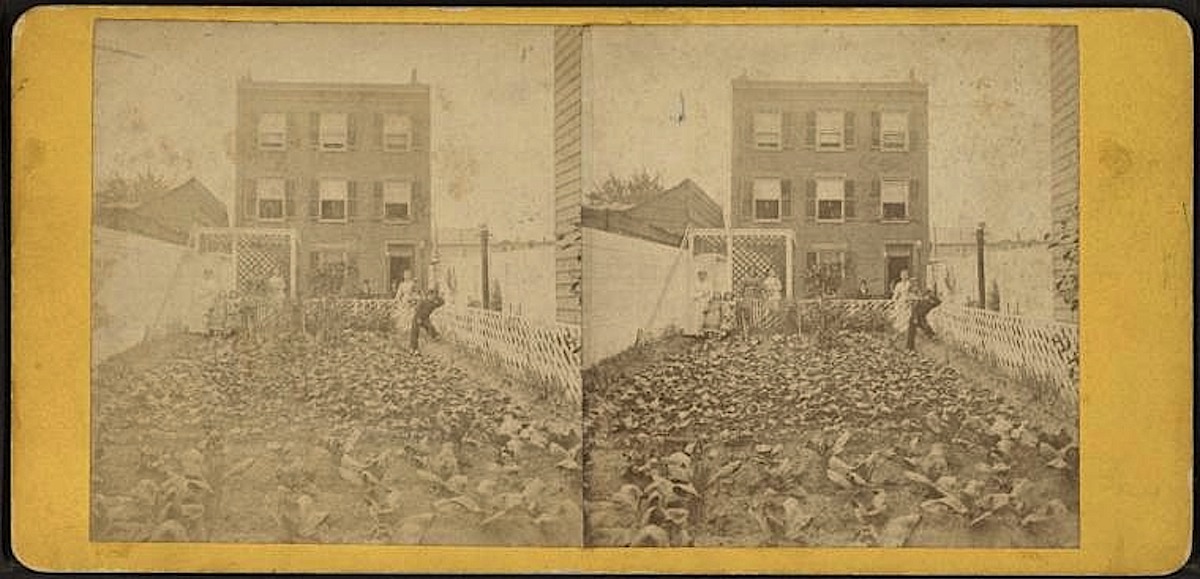
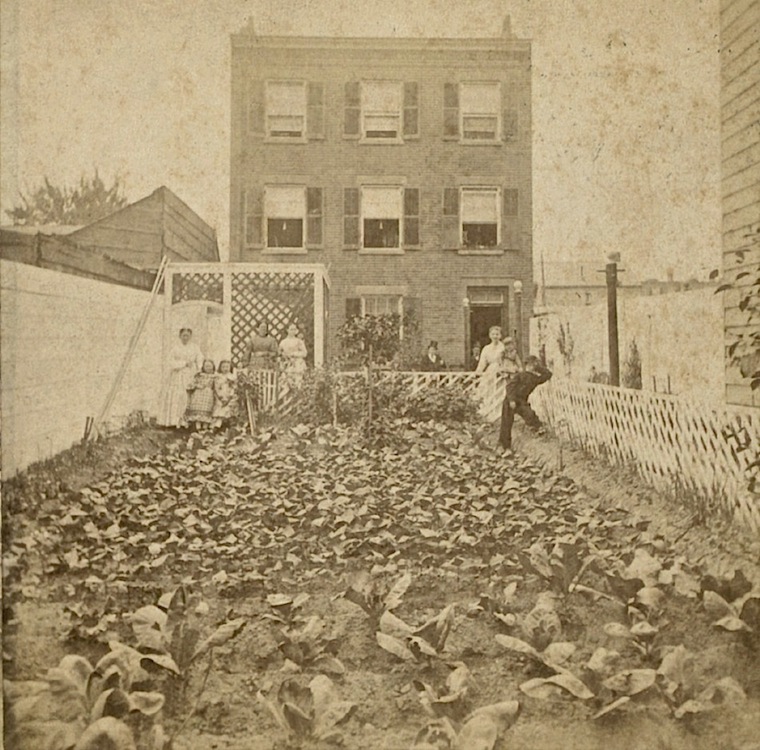
“Artist’s uptown residence,” New York City, ca. 1860, via Robert Dennis Collection of Stereoscopic Views, New York Public Library.

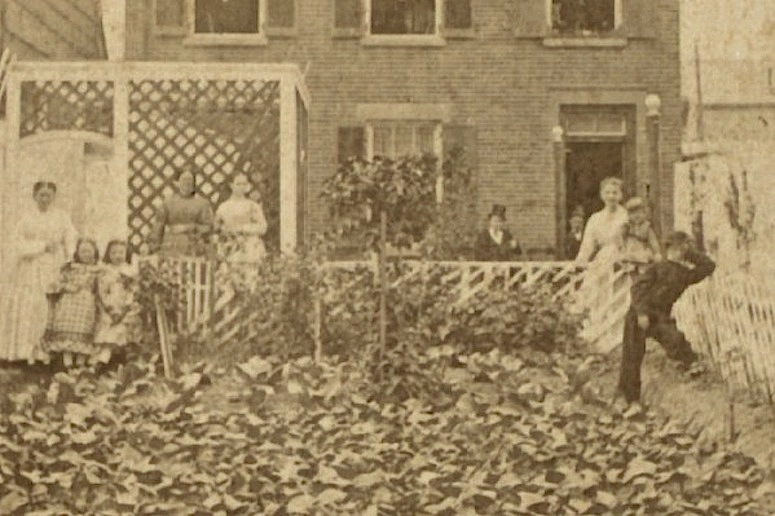
Detail from above image.

Upper Manhattan at this time was rapidly transforming from country to city — as villages and small farms became blocks of middle-class rowhouses. This backyard, with its neat latticed sitting area and then large cabbage garden, seems to encapsulate the change.

Detail.

Unfortunately, we don’t have the name of the artist or the address. Is he one of the two men in top hats sitting by the door, or was she standing in front of them, balancing a small boy on the fence — or maybe taking the picture?

The Sunday porch: Tampa, Florida

“Firemen aboard truck,” Tampa, Florida, October 1919, via Florida Memory Commons on flickr (State Library and Archives of Florida).

It’s not about the firetruck — snazzy as it is — but that trellis mounted over the front porch behind it. Was it simply ornamental, or did the vines help keep the porch and house cooler?