“Life class, summer school, National Academy of Design,” probably New York City area, ca. 1910 to ca. 1915, by Bain News Service, via Library of Congress Prints and Photographs Division on flickr.
The students are drawing or painting a boy left of center in the photo.
Garden of “As You Like It,” the James Harper Poor House, East Hampton, New York, ca. 1915, by Frances Benjamin Johnston, via Library of Congress Prints and Photographs Division Commons on flickr.
Poor was a New York City businessman (dry goods) and Shakespeare devotee, who, in 1899, bought a shingled American Colonial country house, part of which was built in the 17th century. He then changed its style to English or Tudor Revival — all half-timber and stucco, as was so fashionable at that time. Today, the property is The Baker House 1650 bed and breakfast.
A repeat porch from June 2014. . . “Remains of log dogtrot house near Webberville Road. . . Austin Texas,” 1935, probably by Fannie Ratchford, via Texas State Archives.
Unfortunately, it’s a little out of focus, but still beautiful.
. . . I woo the wind
That still delays his coming. Why so slow,
Gentle and voluble spirit of the air?
Oh, come and breathe upon the fainting earth
Coolness and life!
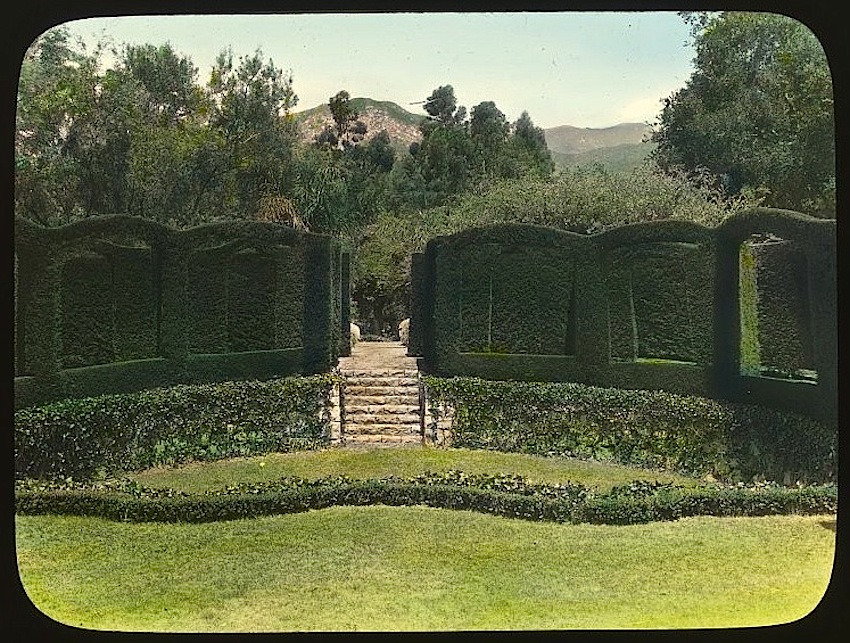
The outdoor theater of the Piranhurst estate of Henry Ernest and Ellen Chabot Bothin, Montecito, California, 1917, hand-colored glass lantern slides by Frances Benjamin Johnston, via Library of Congress Prints and Photographs Division.
The Bothin’s fortune was made in coffee and spices (San Francisco), real estate, and water. Their estate became famous in the 1920s for the parties and performances held in its 350-acre “Tea Gardens” — which included the clipped cypress theater shown here.
Looking from the stage to the box seats.
Today, the site is in ruins and is part of the Mar Y Cel open space preserve. There are histories of the property here and here.
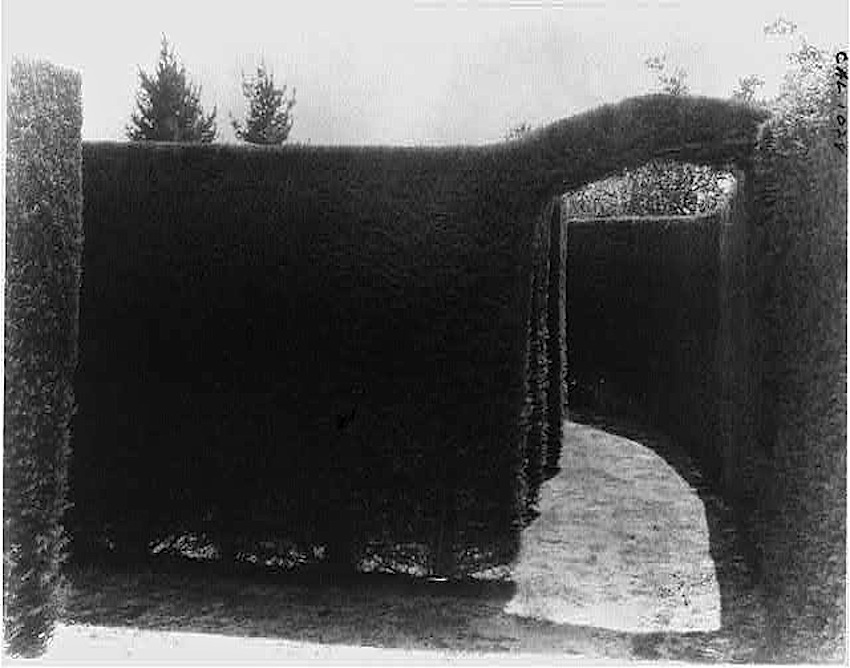
The backstage wings, a photo by F. B. Johnston, 1917, also via Library of Congress.
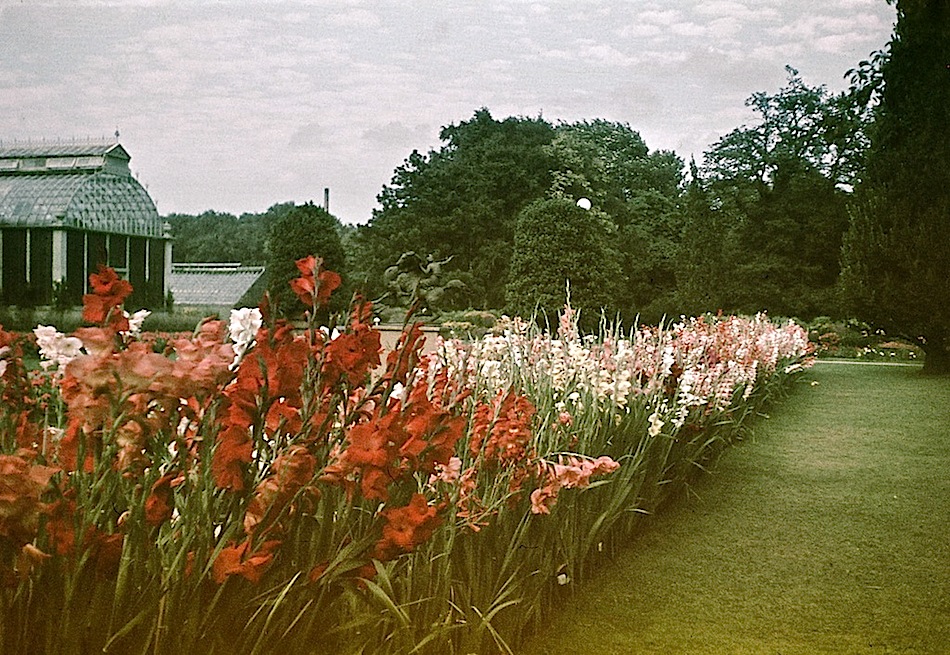
“Flower bed (blomsterrabatt) with gladiolus at Trädgårdsföreningen, The Garden Society of Gothenburg, founded in 1842,” Göteborg (Gothenburg), Sweden, 1944, a color slide by Fredrik Bruno, via Swedish National Heritage Board Commons on flickr.
The glads offer no solution:
being—falling—
you mustn’t count the days—
fulfillment
livid, tattered, or beautiful.

 “Life class, summer school, National Academy of Design,” probably New York City area, ca. 1910 to ca. 1915, by Bain News Service, via Library of Congress Prints and Photographs Division on flickr.


 enclos*ure