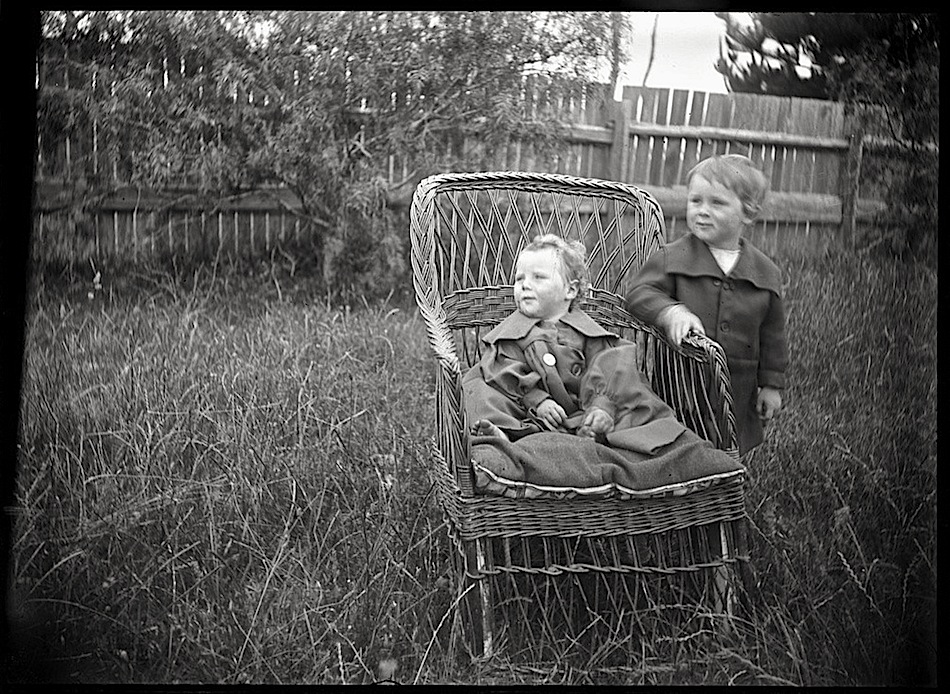
Young boy and baby girl in long grass, probably Tilba Tilba area, New South Wales, ca. 1895, by William Henry Corkhill, via National Library of Australia Commons on flickr.
Corkhill was an amateur photographer who took thousands of pictures of his family members and neighbors between 1890 and 1910, often posing them in their gardens. In 1975, his daughter gave his approximately 1,000 surviving glass plate negatives to the National Library.
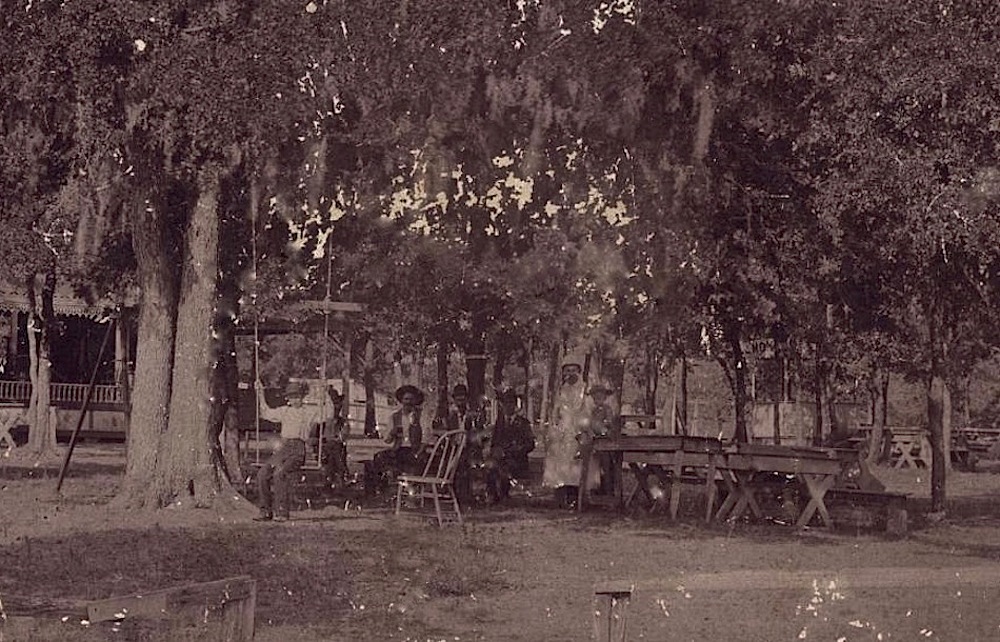
Five adults and two children at wooden tables beneath the large trees of Pressler’s Beer Garden, Austin, Texas, between 1890 and 1910, by Samuel B. Hill, via Austin Public Library and The Portal to Texas History (University of North Texas Libraries).
Pressler’s (originally a brewery) was located at 1327 West 6th Street for more than 30 years, closing in 1910. Its grounds featured a concert hall and dance pavilion, “ornamental shrubbery, arbors, and a fountain. . . . a boating ramp, a shooting club, and an alligator pond.” Pressler’s also hosted the German-American Austin Garten Association one Sunday every month.
Detail of photo above. Click to enlarge.
The city had at least five biergartens at the time of the photo above. “Austin’s beer gardens of the 19th century were tightly woven into the fabric of local social life,” according to an interesting article in The Austin Chronicle, “Gardens of Eden.” “They were convivial places, patronized by both men and women, their families, and children.” They were particularly loved for their musical performances.
Today, only Scholz Garten remains — the oldest operating business in Texas.
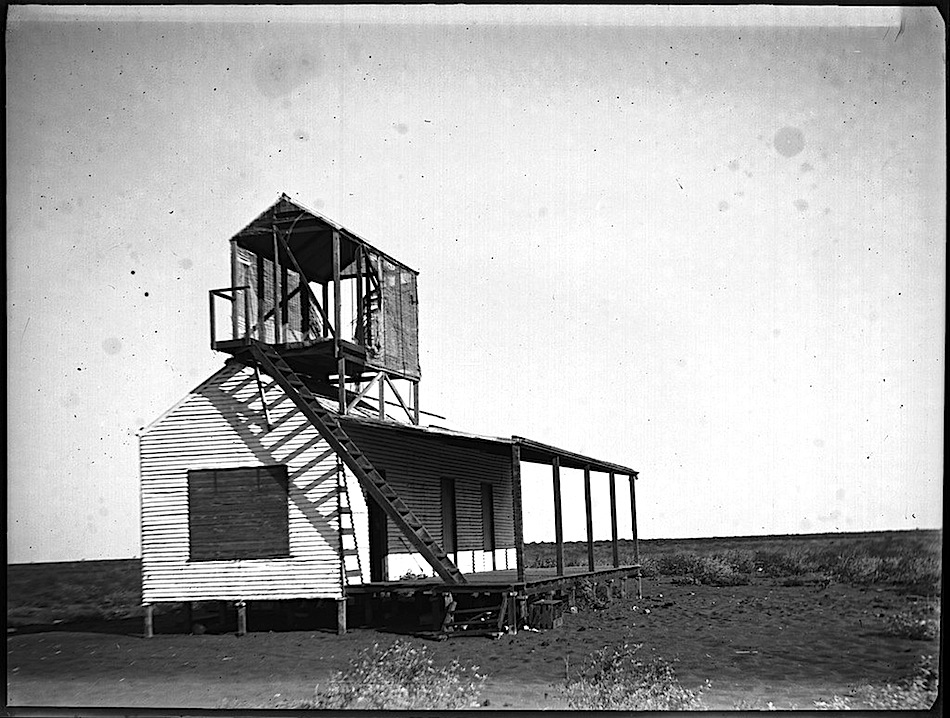
“Dwelling with ladder and wooden structure on top,” Dunbar, Queensland, between 1900 and 1951, by John Flynn, viaAustralian Inland Mission Collection, National Library of Australia Commons on flickr.
I have no explanation for the second-story (sleeping porch maybe?). . . but it’s kinda cool.
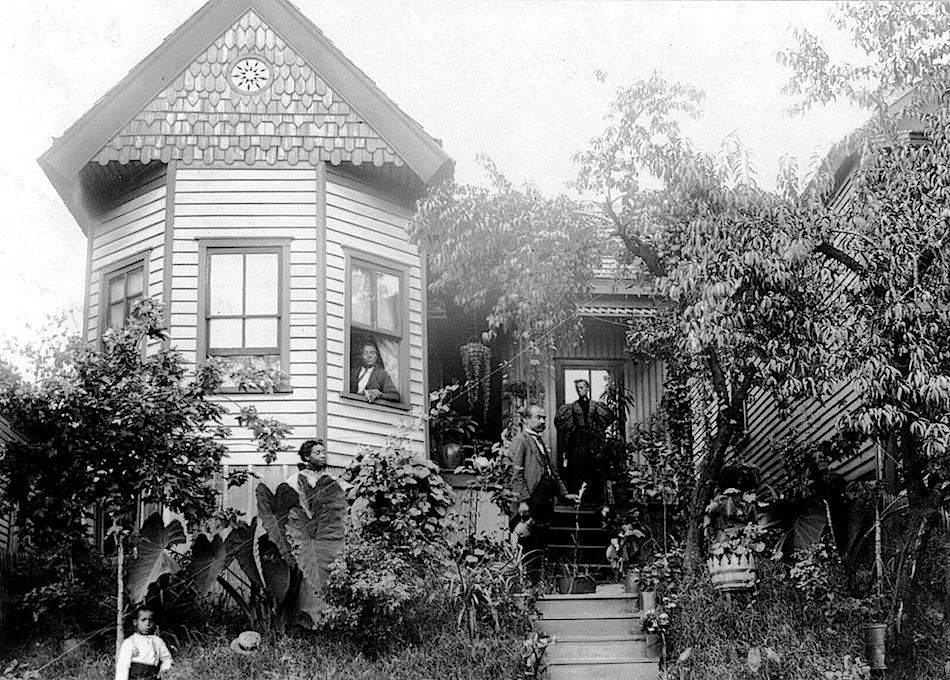
“Home of C.C. Dodson, Knoxville,” Tennessee, ca. 1899, via African American Photographs Assembled for 1900 Paris Exposition collection, Library of Congress Prints and Photographs Division.
Dodson was a jeweler who owned a shop on West Vine Avenue in 1899. ‘Exuberant’ is the word I would use for his family’s front yard.
The photos collected by W.E.B. Du Bois for the 1900 Paris international exhibition particularly featured middle-class African Americans and their homes and institutions. “The photographs of affluent young African American men and women challenged the scientific ‘evidence’ and popular racist caricatures of the day that ridiculed and sought to diminish African American social and economic success,” according to the Library of Congress’s online catalogue.
In 2003, the Library of Congress published a book of 150 of the images, entitled A Small Nation of People. You can listen to a good NPR interview with its co-author, historian Deborah Willis, here.


 enclos*ure
