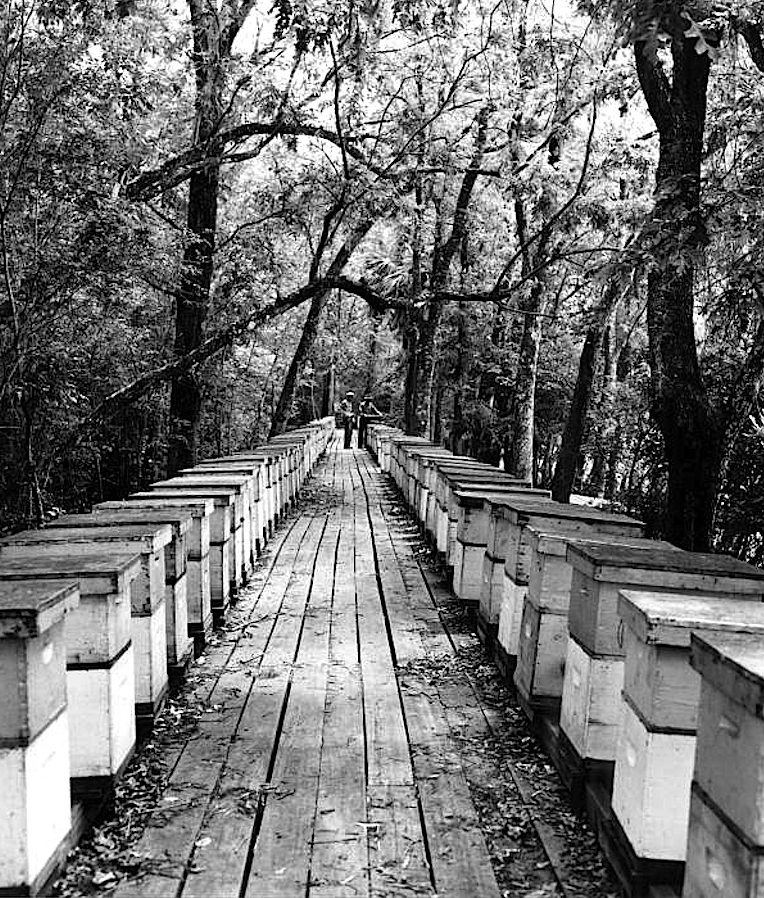
“Beekeepers Wallace Anderson and R.R. Talbert tending to tupelo honey beehives in Apalachicola, Florida,” May 6, 1948, via Florida Memory (State Library and Archives of Florida) Commons on flickr.
Another note on the Archive’s website says, “Typical scaffold, platform 14 to 16 feet high and 300 to 700 feet long on which colonies (hives) are placed.”
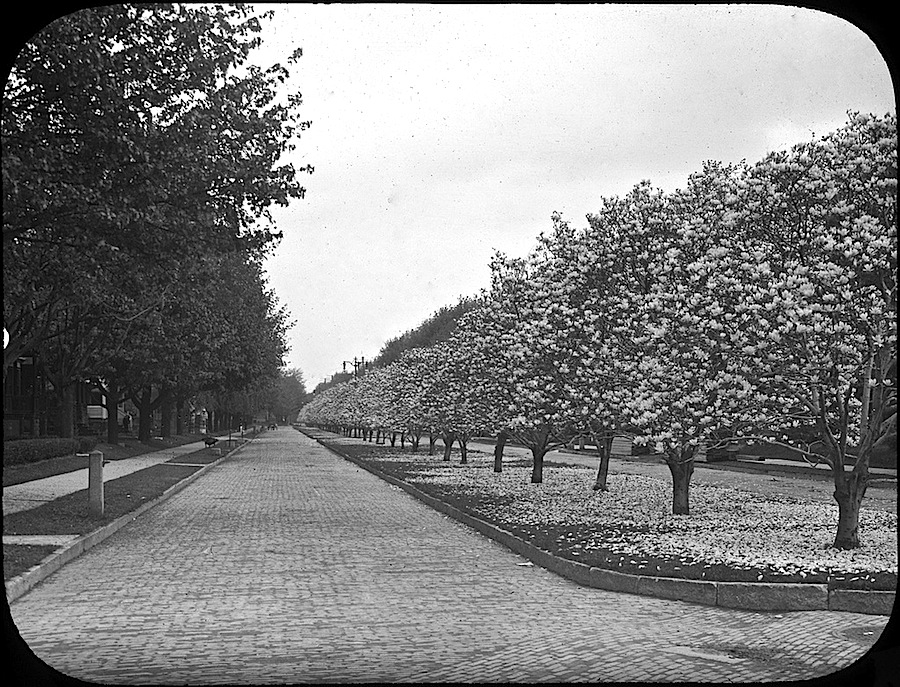
Magnolias in Rochester, New York, undated, via Arthur Peck Collection, OSU Special Collections & Archives Commons on flickr.
Since the late 19th century, Oxford Street in the city’s Park Avenue neighborhood has attracted visitors in May for its display of blooming magnolia trees. There is another vintage picture of the trees here.
Arthur Peck was a Professor of Landscape Architecture at the Oregon Agricultural College* from 1908 to 1948. This picture was part of his teaching library of 24 boxes of glass lantern slides — now in OSU’s archives.
*The college later became Oregon State University (OSU).
“Beechgate,” Englewood, New Jersey, 1918, a hand-colored glass lantern slide by Frances Benjamin Johnston, via Library of Congress Prints and Photographs Division.
Hill and her husband also owned “Grey Gardens,” the East Hampton estate later famously inhabited by Edith Bouvier Beale and “Little Edie.” She was Director of the Garden Club of America for six years in the 1920s, and, in 1938, she wrote a book about her gardening life, called Forty Years of Gardening. You can read it online here.
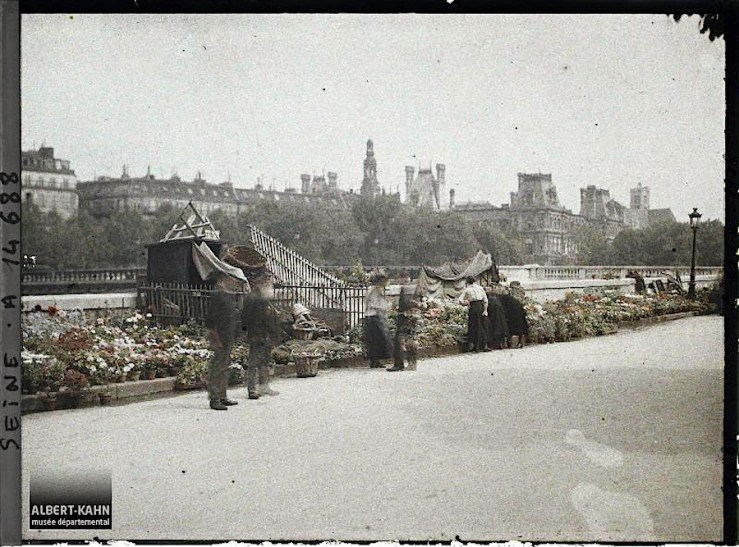
Flower sellers at Place Louis-Lépine on the l’île de la Cité, at Quai de la Corse, Paris, France, May 2, 1918, by Auguste Léon, via Archives of the Planet Collection – Albert Kahn Museum /Département des Hauts-de-Seine (both photos).
There has been a flower market on or near this spot since 1808. Since June 2014, it has been called Queen Elizabeth II Flower Market, to commemorate the visit of the British queen just prior to the 70th anniversary of D-Day.
Looking the other directions, with the Hotel de Ville in the background across the river.
These autochromes are two of about seventy-two thousand that were commissioned and then archived by Albert Kahn, a wealthy French banker and pacifist, between 1909 and 1931. Kahn sent thirteen photographers and filmmakers to fifty countries “to fix, once and for all, aspects, practices, and modes of human activity whose fatal disappearance is no longer ‘a matter of time.'”* The resulting collection is called Archives de la Planète and now resides in its own museum at Kahn’s old suburban estate at Boulogne-Billancourt, just west of Paris. Since June 2016, the archive has also been available for viewing online here.

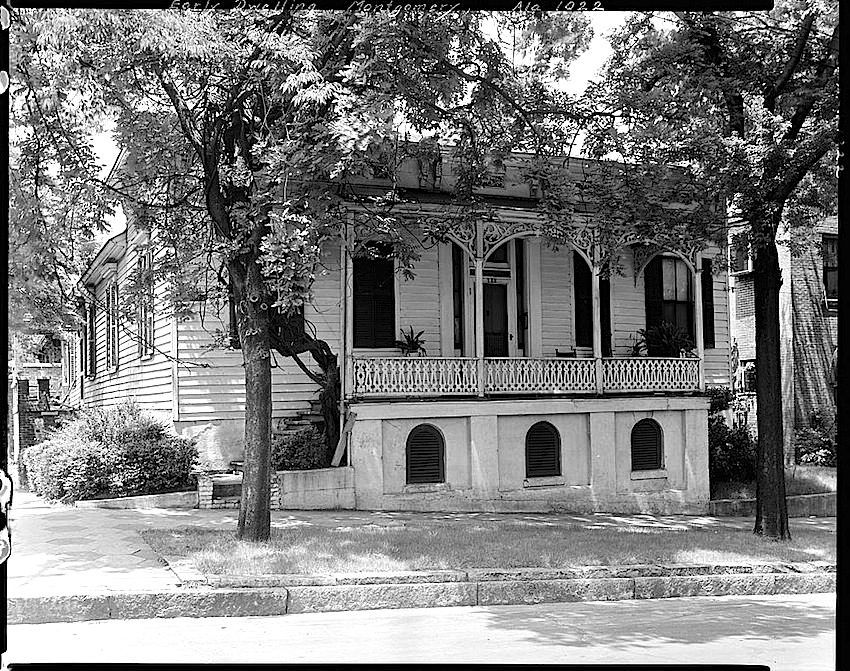 “Early dwelling, 222 S. Perry St.,” Montgomery, Alabama, 1939, by Frances Benjamin Johnston, via Library of Congress Prints and Photographs Division.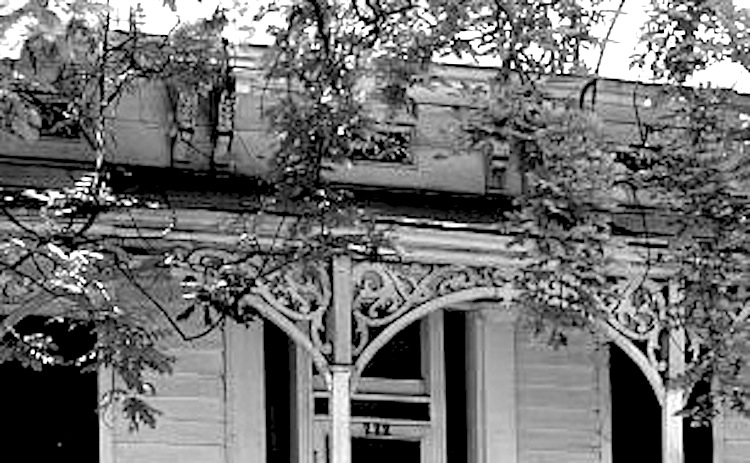


 enclos*ure