
While we’re all waiting for the Chelsea Flower Show to open next week and for pictures to emerge, here are a few things that I particularly liked when I visited the original Chelsea — the Chelsea Physic Garden — about a week and a half ago.
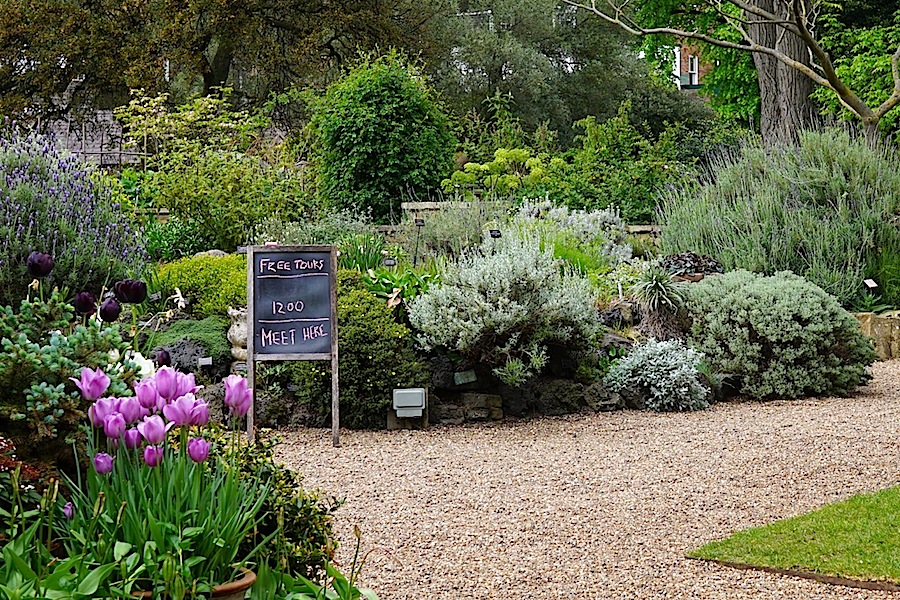
The four-acre London garden was founded in 1673 by the Worshipful Society of Apothecaries in order to grow medicinal plants and train their apprentices. It is the second oldest botanic garden in Britain, after the one at Oxford.
 1. The Pond Rockery area (also shown at the top). The sides are planted in Mediterranean and alpine plants.
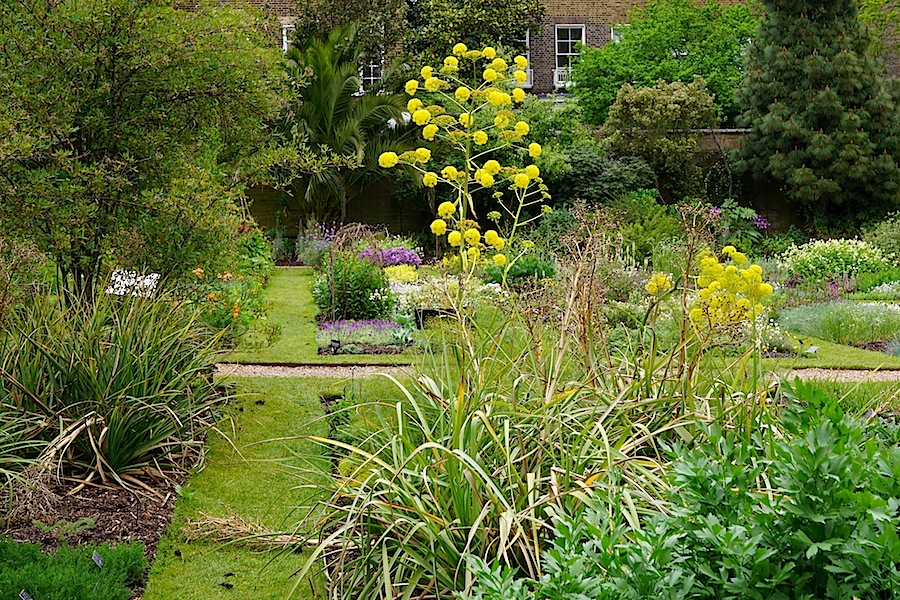 2. This giant fennel. It was a beacon in the Botanical Order Beds at about 8′ tall.
 It did not have a label, but I have since looked it up — Ferula communes.
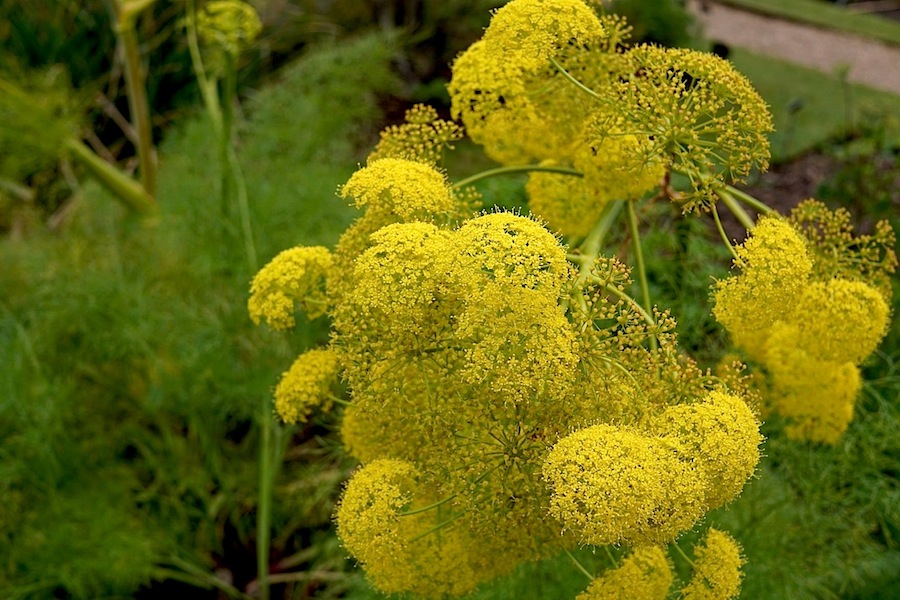 The species is part of the carrot family, Apiaceae. (Common fennel belongs to another genus, Foeniculum.)
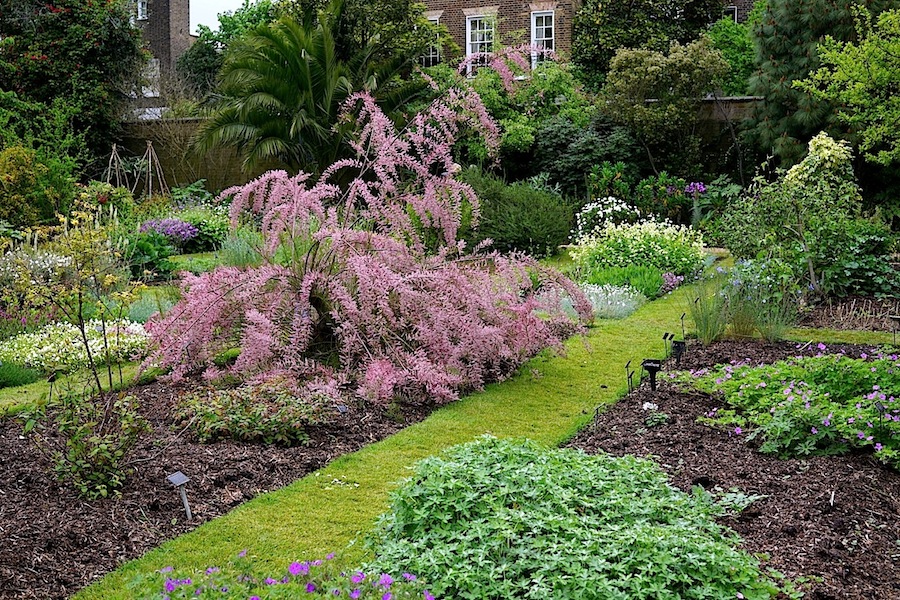 This tamarix in the center of the beds was a star too.
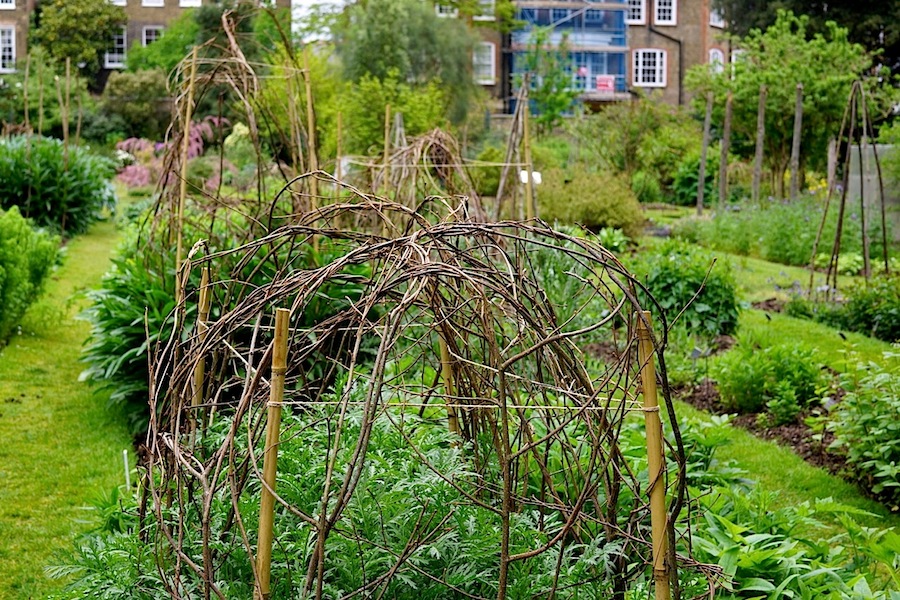
 3. The plant supports of bamboo, string, and shrub and vine cuttings.

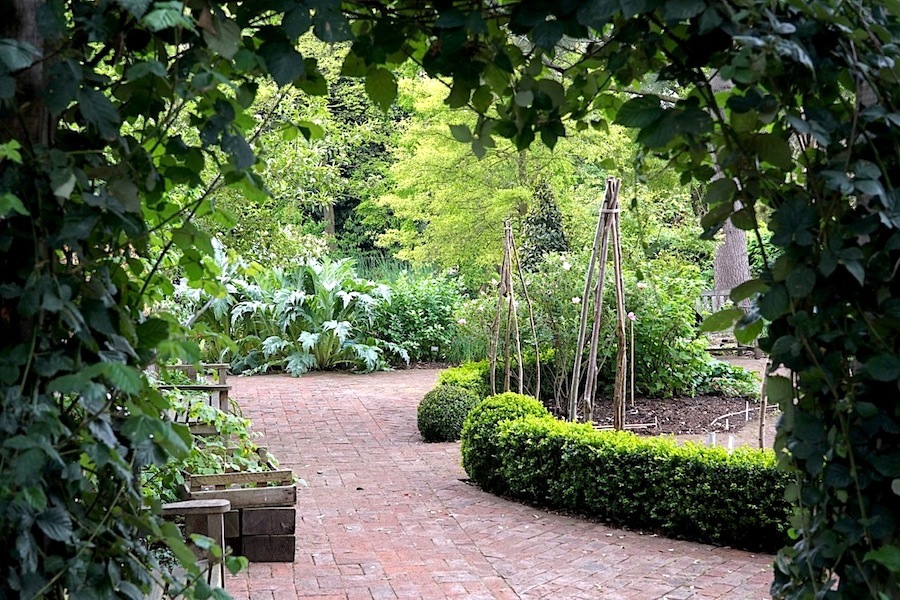 4. This neat little kitchen garden arrangement and its beautiful cardoons.


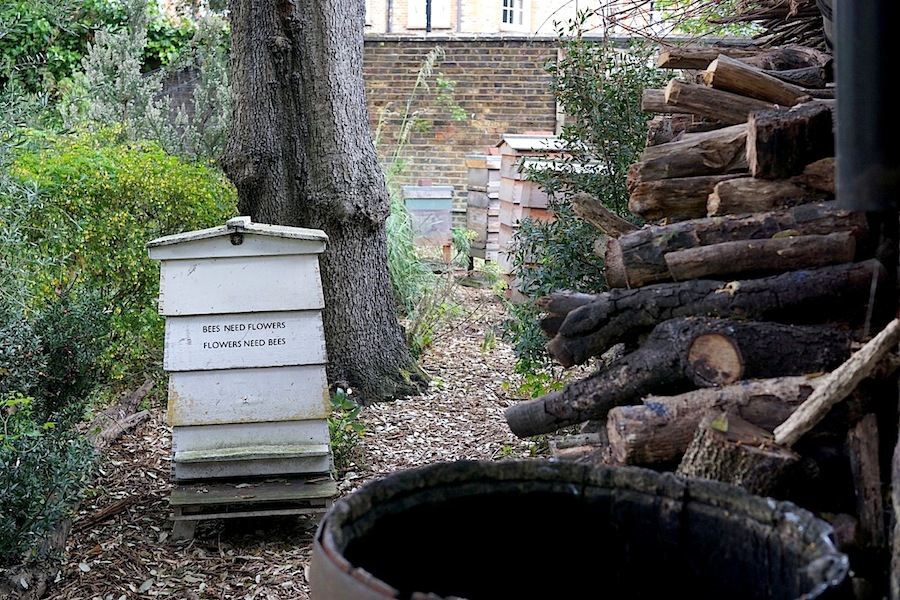 And the nearby beehives.
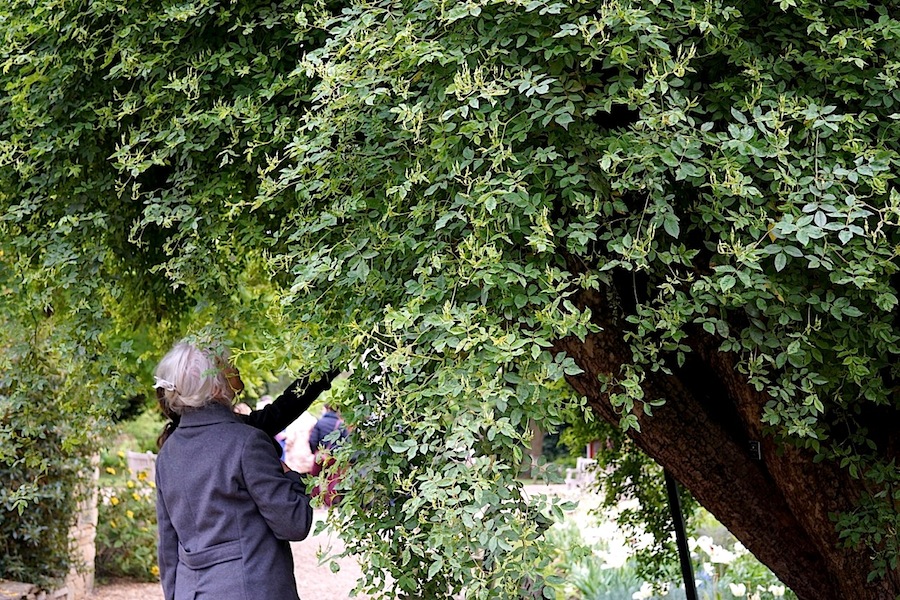 5. This trunk of a Catalpa bignonioide, which is supporting a huge Rosa Brunoni or Himalayan musk rose.
 The rest of the tree was cut off. It may have died, but it may also have been too large for the space.
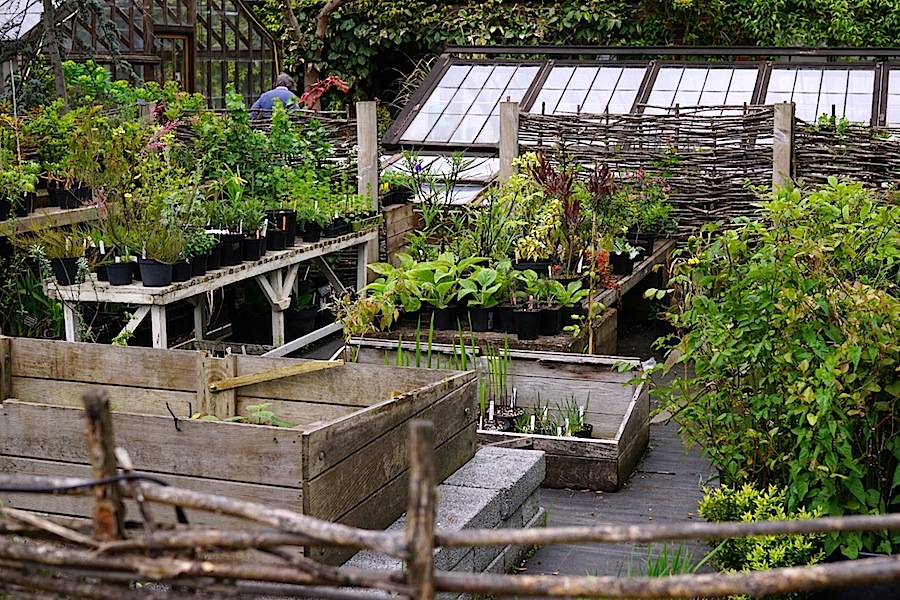
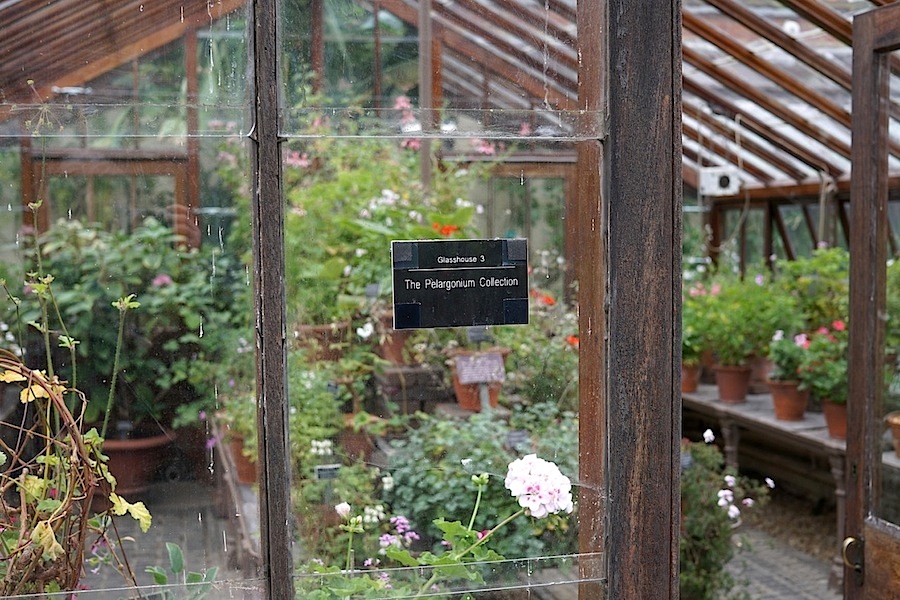
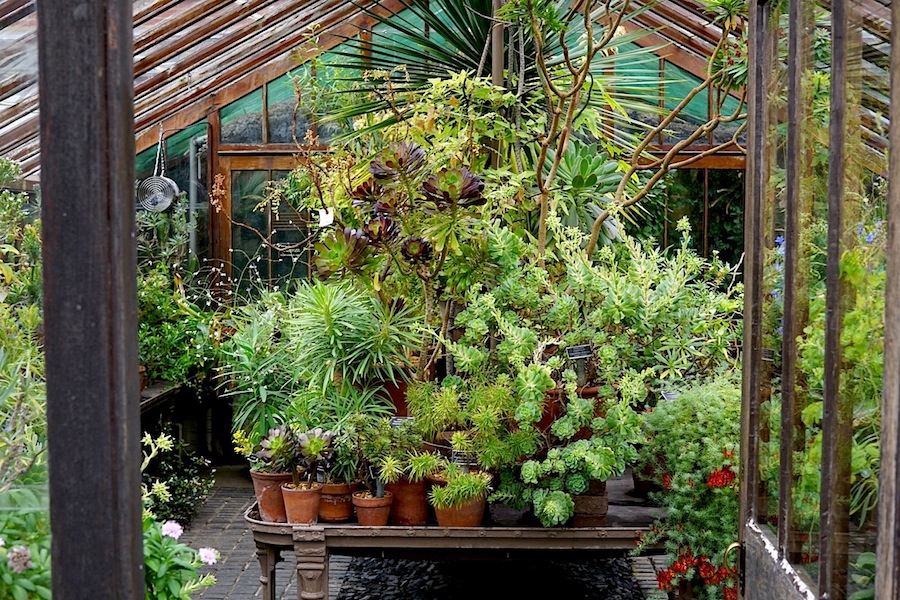
 6. The greenhouse area.


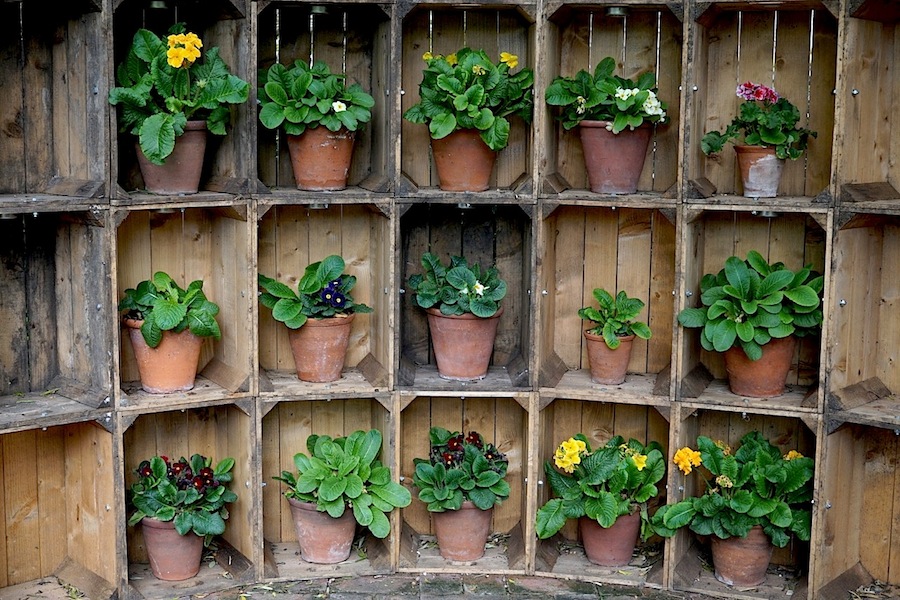
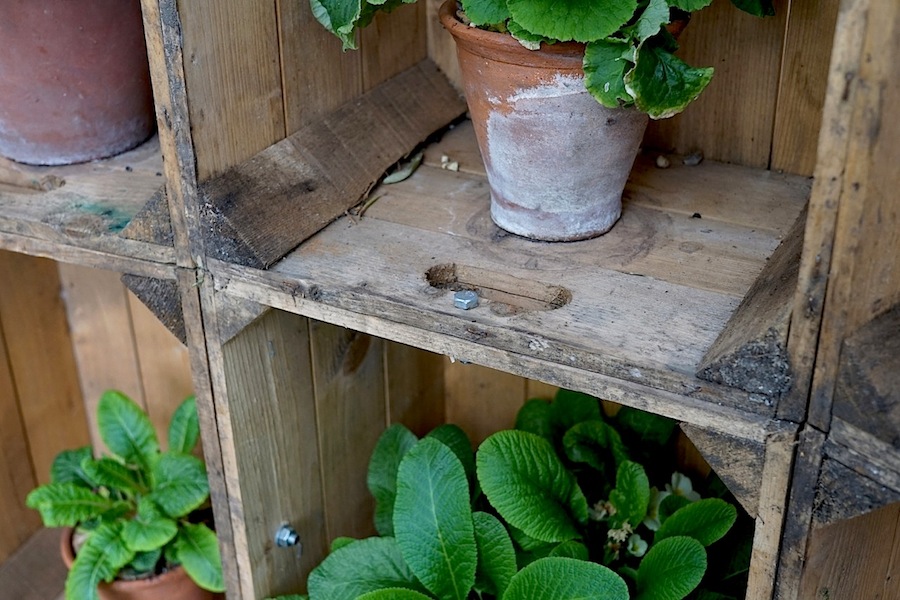
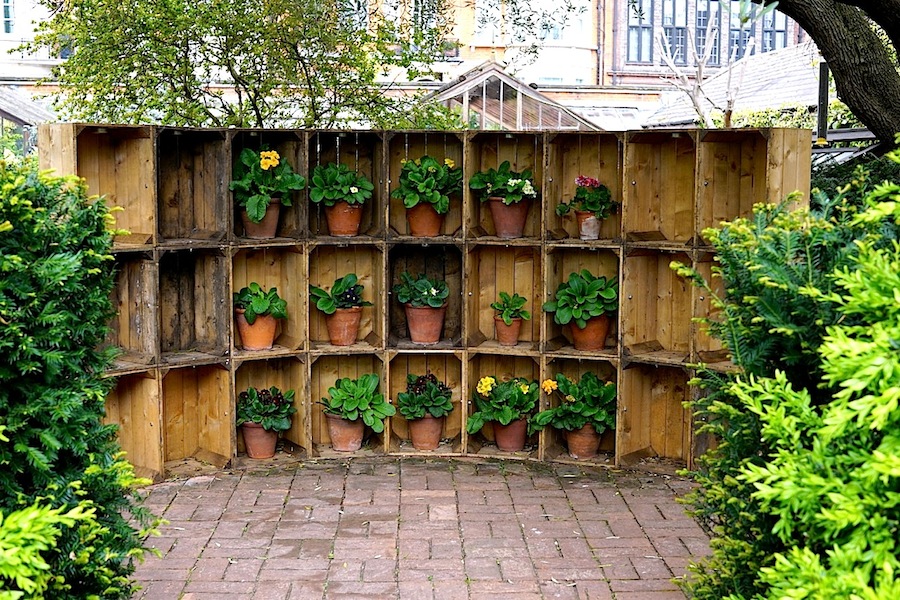 7. This primrose display, which — with the giant fennel — made my “most desired” list that day (along with this).
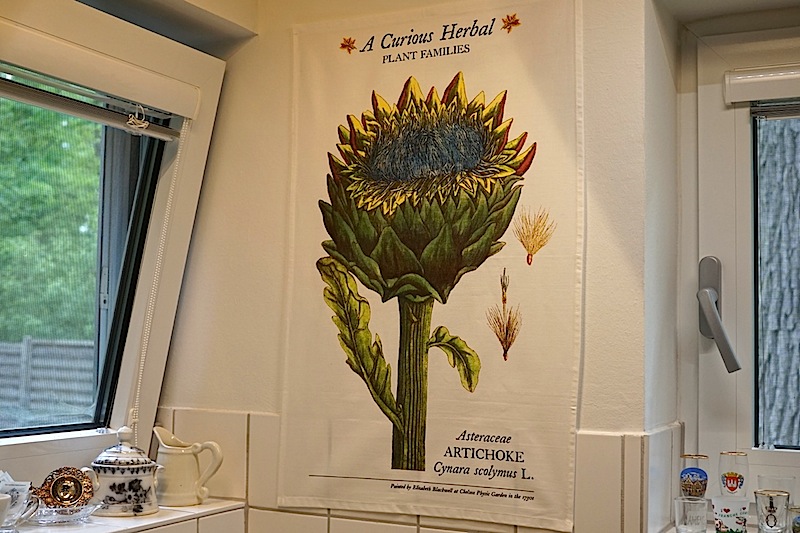 8. My tea towel from the gift shop.
 (And the café is excellent.)

 enclos*ure