Verona, Italy

A group of children with flowers in the cloister of San Zeno, Verona, Italy, May 10, 1918, by Fernand Cuville, via Archives of the Planet Collection – Albert Kahn Museum /Département des Hauts-de-Seine.

Tradition has it that the crypt of San Zeno is where Romeo married Juliet.

The autochrome above is one of about seventy-two thousand that were commissioned and then archived by Albert Kahn, a wealthy French banker and pacifist, between 1909 and 1931. Kahn sent thirteen photographers and filmmakers to fifty countries “to fix, once and for all, aspects, practices, and modes of human activity whose fatal disappearance is no longer ‘a matter of time.'”* The resulting collection is called Archives de la Planète and now resides in its own museum at Kahn’s old suburban estate at Boulogne-Billancourt, just west of Paris. Since June 2016, the archive has also been available for viewing online here.


*words of Albert Kahn, 1912. Also, the above photo (A 19 474) is © Collection Archives de la Planète – Musée Albert-Kahn and used under its terms, here.
Memorial Day

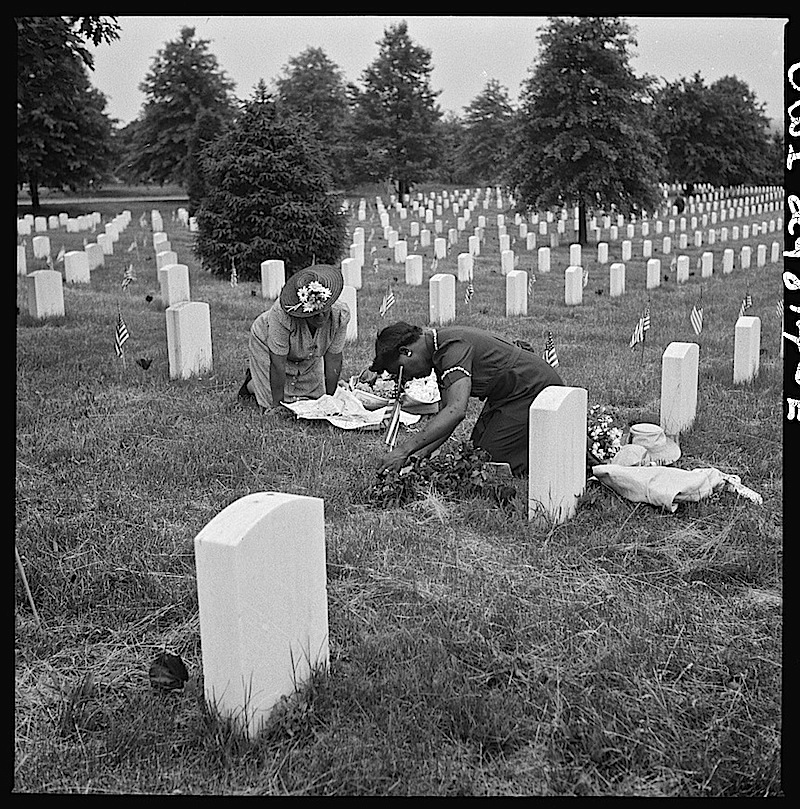
Memorial Day 2, Arlington, E. Bubley, Library of Congress“Decorating a soldier’s grave in one of the Negro sections on Memorial Day [1943],” Arlington Cemetery, Virginia, by Esther Bubley, via Library of Congress Prints and Photographs Division.

The graves of service members were segregated by race until 1948.

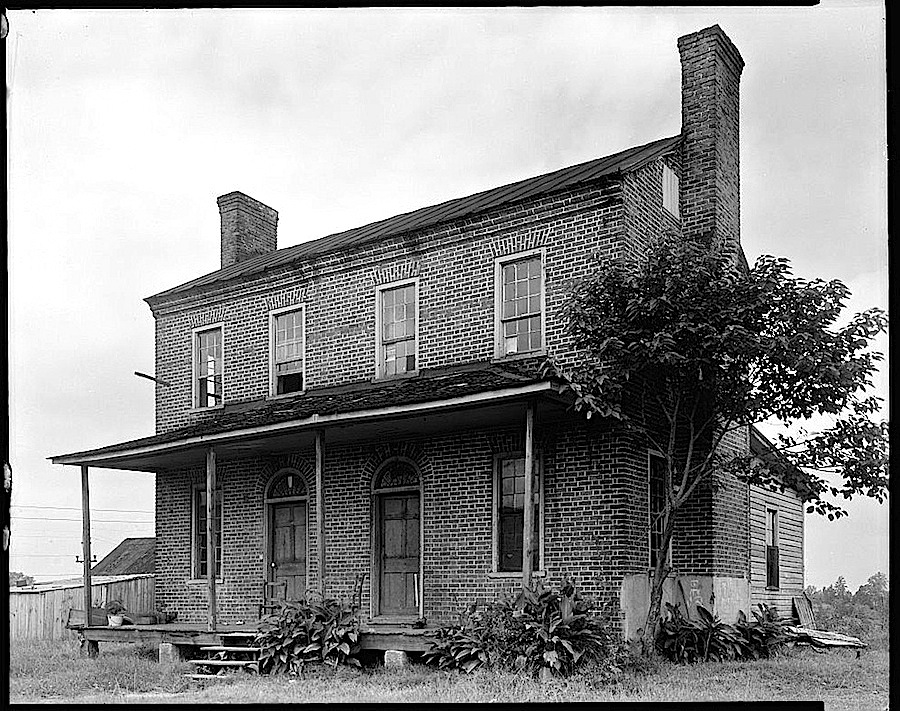
The Sunday porch: Dallas, North Carolina


Mason House, near Dallas, North Carolina, 1938, by Frances Benjamin Johnston, via
Library of Congress Prints and Photographs Division.

A narrow porch for a narrow house. I think those are cannas at the bases of the columns.

This picture was published in The Early Architecture of North Carolina by Johnston and Thomas Tileston Waterman in 1941, but I can’t find out anything else about the building.

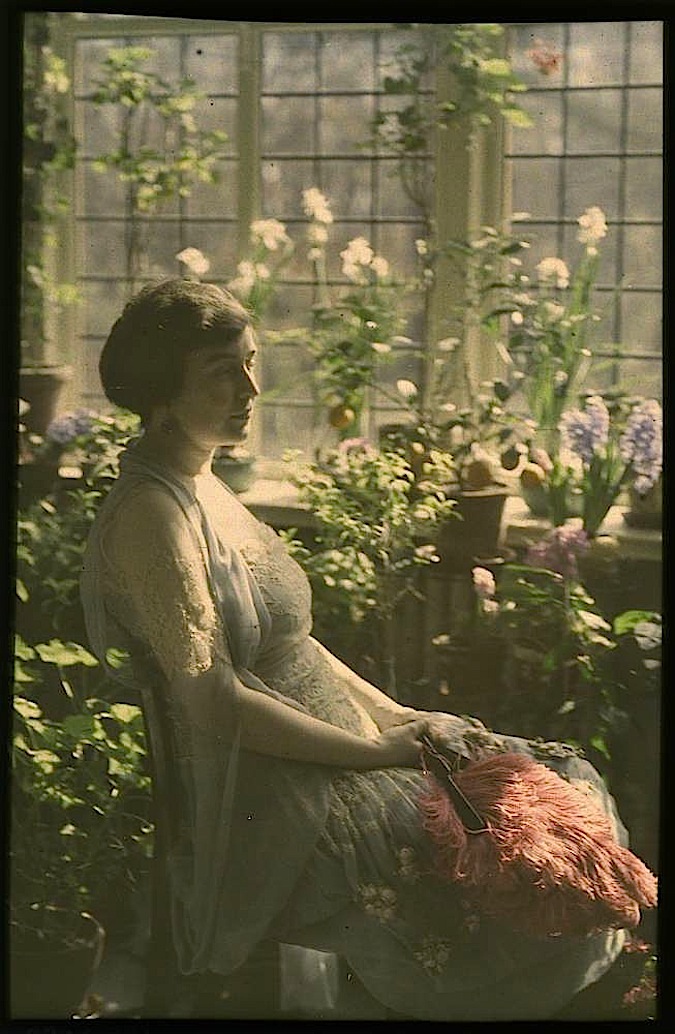
Greenhouse portrait

“Woman in greenhouse,” ca. 1910, an autochrome by Mrs. Benjamin F. Russell, via George Eastman Museum Commons on flickr.

I have not been able to find out anything about Mrs. Russell.

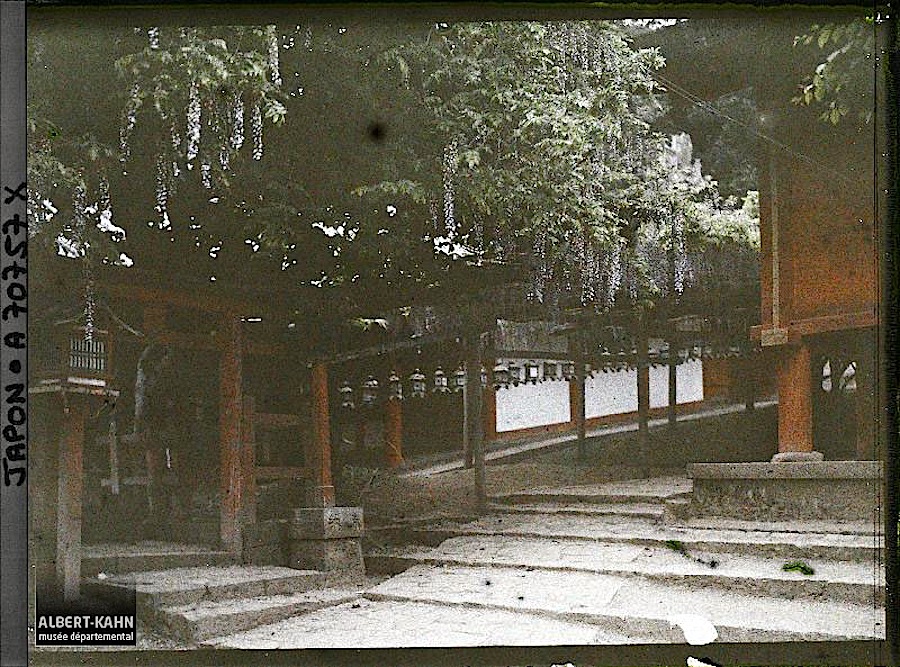
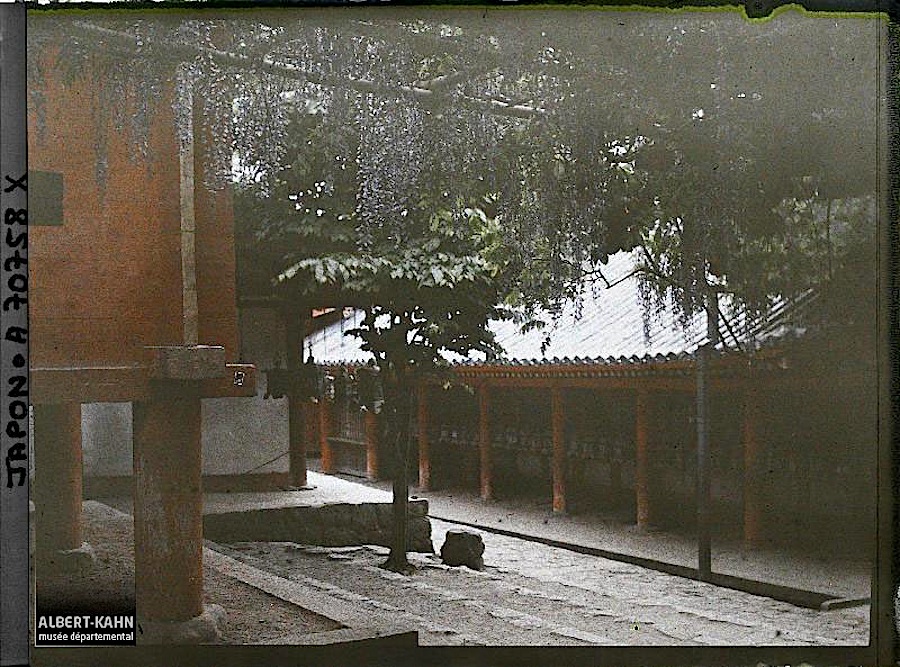
Nara, Japan


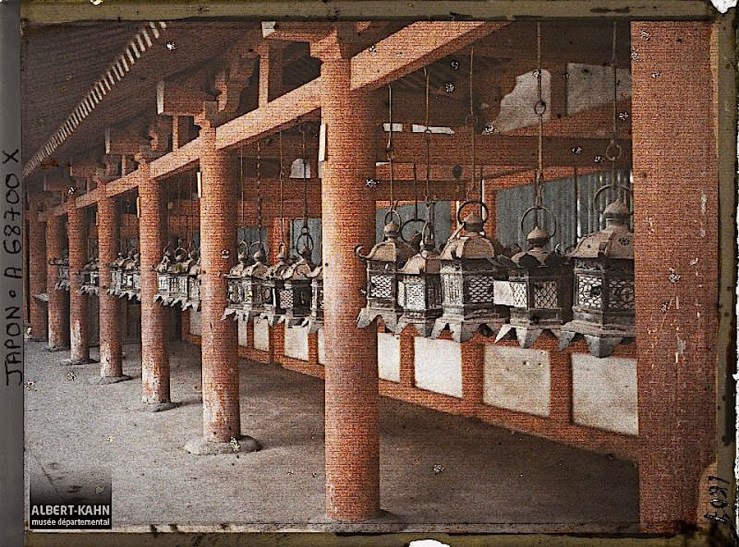
Kasuga-jinja (or Kasuga-taisha) Sanctuary and wisteria, Nara, Japan, Spring 1926, by Roger Dumas, via Archives of the Planet Collection – Albert Kahn Museum /Département des Hauts-de-Seine (all three photos here).

The Shinto shrine (first built in 768 A.D.) is famous for its thousands of bronze and stone lanterns. It is located on the edge of Nara Park, home to freely roaming deer said to be messengers of the gods.

Temple of lanterns, Japan, A68700X, Musee Albert-Kahn, Archives de la Planete

The autochromes above are three of about seventy-two thousand that were commissioned and then archived by Albert Kahn, a wealthy French banker and pacifist, between 1909 and 1931. Kahn sent thirteen photographers and filmmakers to fifty countries “to fix, once and for all, aspects, practices, and modes of human activity whose fatal disappearance is no longer ‘a matter of time.'”* The resulting collection is called Archives de la Planète and now resides in its own museum at Kahn’s old suburban estate at Boulogne-Billancourt, just west of Paris. Since June 2016, the archive has also been available for viewing online here.


*words of Albert Kahn, 1912. Also, the above photos (A 70 757 X, A 70 758 X, A 68 700 X) are © Collection Archives de la Planète – Musée Albert-Kahn and used under its terms, here.