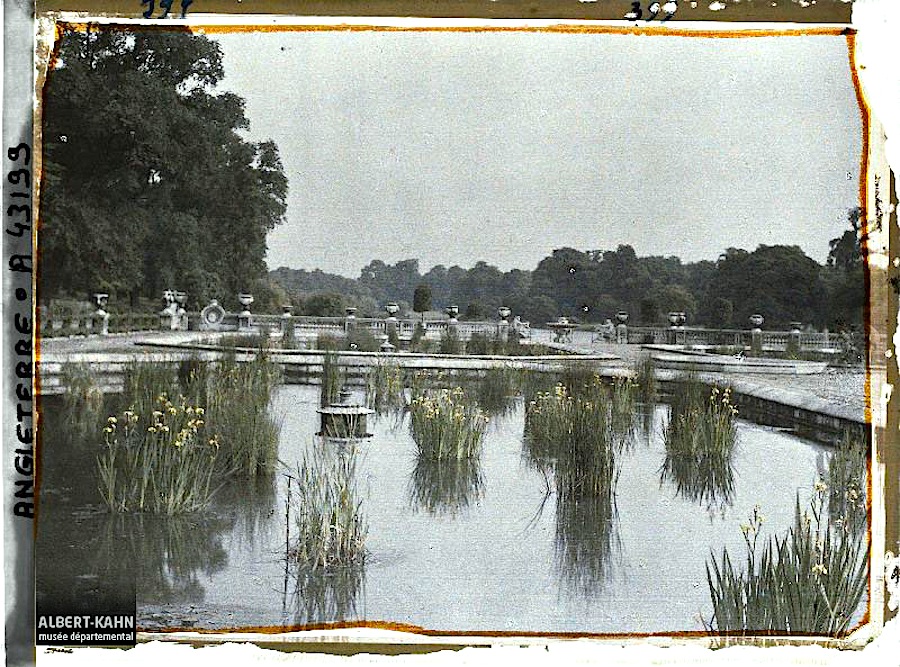
Kensington Gardens, London


Yellow flag iris (I. pseudacorus) in the basins of the Italian Gardens of Kensington Gardens, London, June 1924, by Roger Dumas, via Archives of the Planet Collection – Albert Kahn Museum /Département des Hauts-de-Seine.

These water gardens are over 150 years old and may have been a gift from Prince Albert to Queen Victoria.

This autochrome is one of about seventy-two thousand that were commissioned and then archived by Albert Kahn, a wealthy French banker and pacifist, between 1909 and 1931. Kahn sent thirteen photographers and filmmakers to fifty countries “to fix, once and for all, aspects, practices, and modes of human activity whose fatal disappearance is no longer ‘a matter of time.'”* The resulting collection is called Archives de la Planète and now resides in its own museum at Kahn’s old suburban estate at Boulogne-Billancourt, just west of Paris. Since June 2016, the archive has also been available for viewing online here.


*words of Albert Kahn, 1912. Also, the above photo (A 43 199) is © Collection Archives de la Planète – Musée Albert-Kahn and used under its terms, here.

Wreathed

Woman in daisy field, Library of Congress“Woman with wreath of leaves in her hair sitting in a field of daisies,” ca. 1900, photographer unknown, via Library of Congress Prints and Photographs Division.

This photo was part of a large group of “artistic photographs,” primarily by early women photographers, that was donated to the Library of Congress by Frances Benjamin Johnston. In the spring of 1900, she had used some of these images in an exhibition of work by American women photographers at the Exposition Universelle Internationale in Paris.

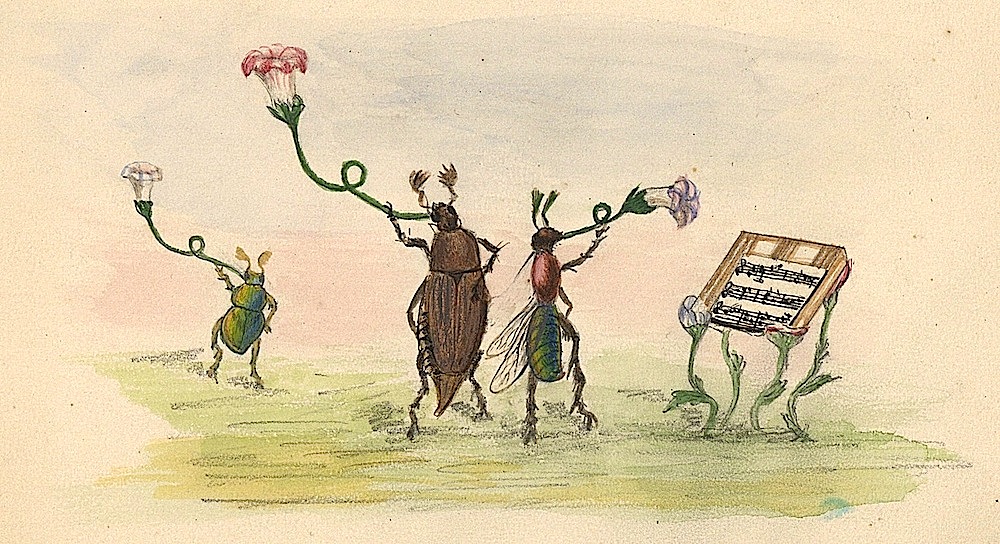
Põrnikate orkester

“Beetle orchestra,” artist and date unknown, via National Archives of Estonia Commons on flickr.

The pencil and watercolor drawing comes from an album of poetry and fanciful sketches of bugs and birds.  It was found in the 18th century manor house of the Saadjärve estate, which has belonged to several noble Baltic German families over the centuries. The album may be connected to the von Koskulls, who owned the property in the 19th century. There are more examples of the drawings here.

By the way, an Instagram post by @smithsoniangardens reminds us that although “[t]hey may be less elegant than other pollinators, . . . beetles have been providing their pollination services far longer than many of the well-known pollinators. Ancient and abundant in numbers, there are almost four times as many species of beetles as animals with backbones!” (This is Pollinator Week.)

As always, you can click on the image for a little better view.

Edmonton, Alberta

Gladys Reeves and father, W.P. Reeves, ca. 1940, vía Provincial Archives of Alberta Commons on flickr.

Gladys Reeves immigrated from England to Alberta with her family when she was 14 years old. A year later, she began working for photographer Ernest Brown as a receptionist and later as an apprentice. In 1920, she set up her own studio, The Art League, in Edmonton. She may have been the first woman in the region to operate her own photography business — which she ran until 1950. She was also a serious gardener and won a medal for best garden in the city in 1907.

You can click on the picture to get a larger view.

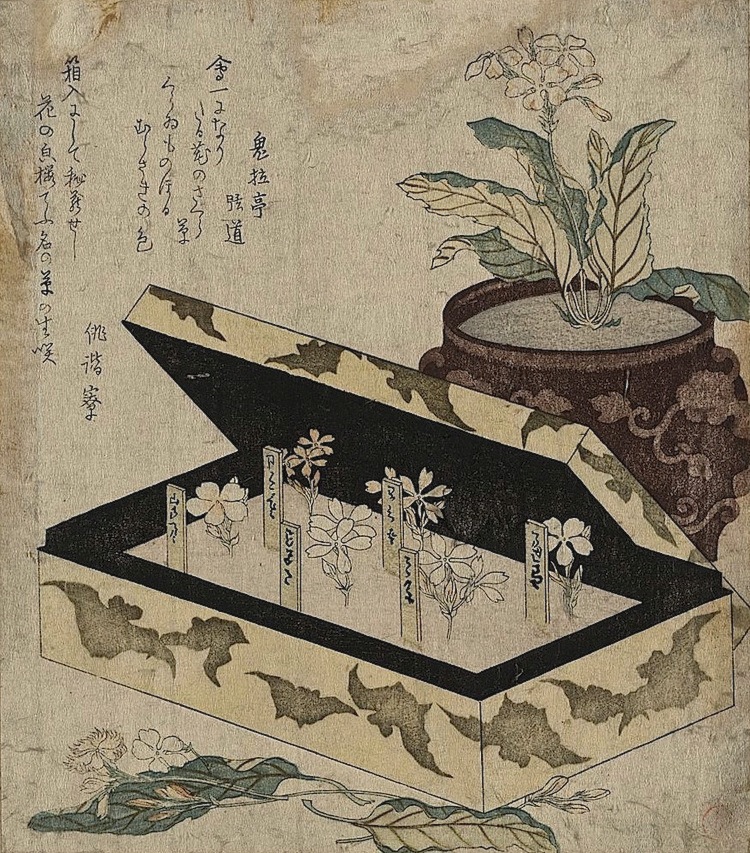
Primrose box

Sakurasō (primrose: Primula sieboldii or P. japonica), ca. 1810, a woodcut print by Kubo Shunman, via Library of Congress Prints and Photographs Division.

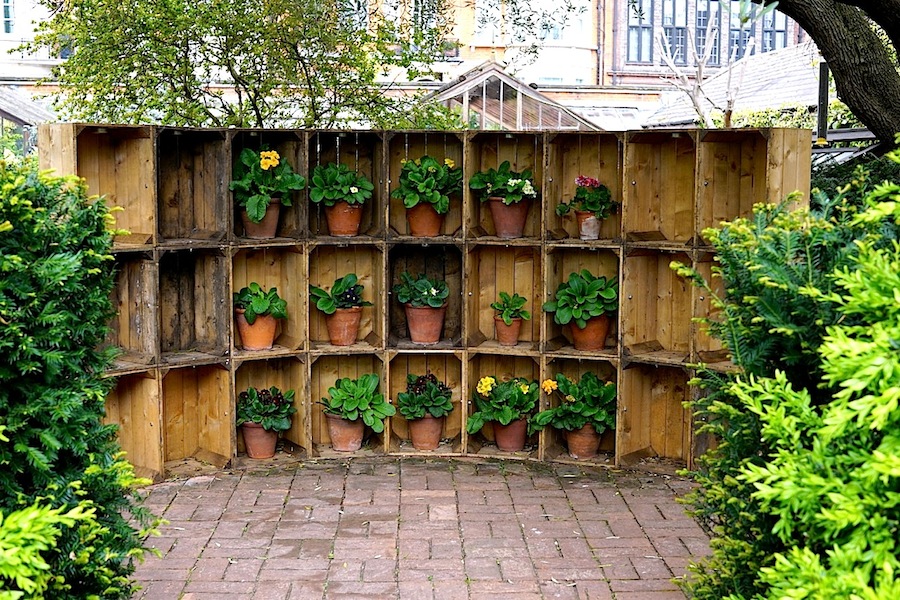
Another way to display primroses. This also makes me think of photographer Sibylle Pietrek’s boxed flowers here.

To see how many garden bloggers have arranged flowers today, please take a look at “In a vase on Monday,” hosted by Cathy at Rambling in the Garden.

Also, the blog It’s About Time, is currently running a series of posts of paintings, “Arranging Flowers in 19C & Early 20C America.”