


The photo is from Fennel and Fern’s “Real gardens” section*, which is always interesting. I love the simplicity of this labyrinth by Adrian Fisher at Parham House and Gardens in England. It appears to me both whimsical and profound. (Click on the photo to link to the F&F post.)
*My “oasis” garden in Niger was featured here in August.

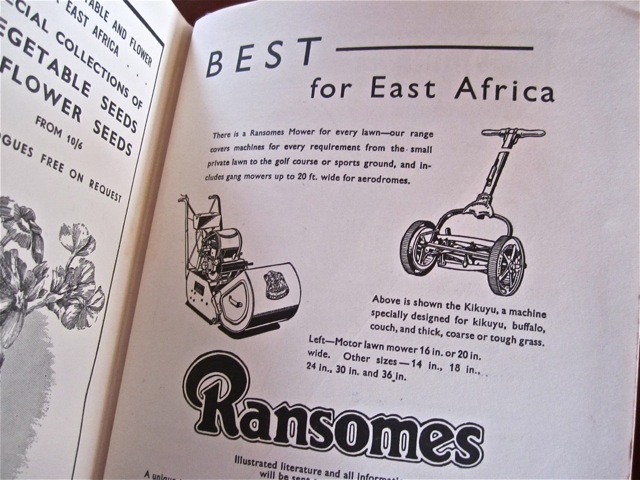
This was my husband’s Christmas present to me — a copy of the third edition (1950) of Gardening in East Africa, by the members of the Kenya Horticultural Society and of the Kenya, Uganda, and Tanganyika Civil Services.
Rwanda (then the eastern edge of the Belgian Congo) just makes it onto the left side of the frontispiece map.
I like the first chapter’s opening sentence: “This chapter is intended for the beginner rather than for the hardened gardener.” ‘Hardened,’ not skilled or experienced, but hardened — as in, “I’ve been through a lot.”
The writer then chides those already toughened up Kenya gardeners who adopt “a pseudomodest manner” with newcomers:
“You have forgotten about the innumerable insect pests and plagues, cutworms, flies, aphides, and the fact that each kind of plant has a pest of its own to all seeming. What about the scorching wind, the burning sun, the hungry hares and antelopes nibbling your roses and carnations to death, the mousebirds that steal your fruit and tear your flowers to shreds? Think of the torrents of tropical rain, the raging floods that batter all your plants to the ground, and wash off your lovely top soil far, far away into the Desert or the Indian Ocean. . . .” And please don’t get him started on the locusts.
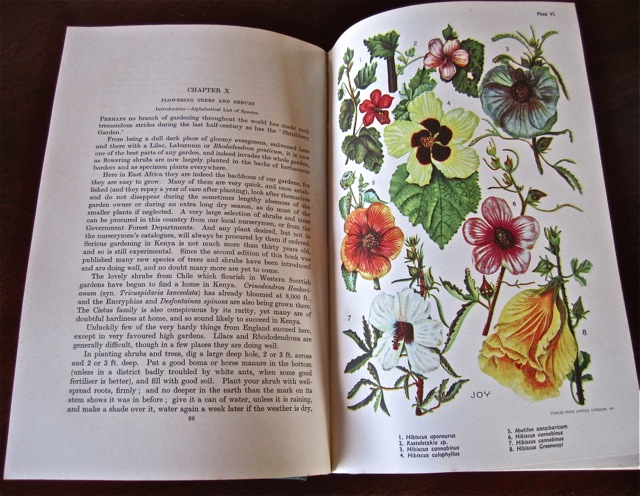
Most of the color plates in the book were painted by Joy Adamson of “Born Free” fame. The previous year, she had received the Grenfell Gold Medal from the Royal Horticultural Society for her botanical artwork.
Lady Muriel Jex-Blake (daughter of the 14th Earl of Pembroke, no less) was President of the Kenya Horticultural Society and author of three chapters of the book, as well as of her own book, Some Wildflowers of Kenya.
Her husband, Dr. Arthur John Jex-Blake, was the book’s editor. He made a promising start as a physician in England, but after serving in World War I and marrying Muriel in 1920, he left it all behind to live outside Nairobi.
The writer of his 1957 obituary noted that Dr. Jex-Blake always felt overshadowed by his aunt (Sophia Jex-Blake, one of the first women doctors in Great Britain and co-founder of two medical schools for women) and his sisters (the heads of Lady Margaret Hall, Oxford, and Girton College), but “he loved flowers, the classics, and beautiful things.”
In 1948, however, as he completed his preface to the third edition, he seemed to be finding the post-war times challenging. In expressing his gratitude to his publishers, he nearly lost control of his final sentence:
“For, after three piping years of peace, printers and publishers, like the rest of the industrial world, are ever at the mercy of the impersonal incompetence of officialdom and the well-organized administrative chaos now, alas! so painfully familiar to everybody who lives and works in England.”
In a comment, Diana of Elephant’s Eye asked me about Rwandan native plants. I had to say that I wasn’t sure how many, if any, of the plants in my garden are native to this country or region. It’s amazing how many common ornamental plants in East African gardens are of South American or Asian origin, brought here by colonists or other travelers.
Other plants originate from north, west, or southern Africa, but may have traveled to Rwanda via sojourns in European collectors’ conservatories.
To help me work it all out, I just bought The Illustrated Field Guide to the Plants of Nyungwe National Park which covers, with color photos, 650 species native to Rwanda.
It has already helped me identify two flowering vines in the garden that were unfamiliar to me, Clerodendron thomsoniae and Clerodendron thomsoniae var. delectum. They also go by the common names of Beauty Bush, Bleeding Glory-Bower, or Bleeding Heart Vine.

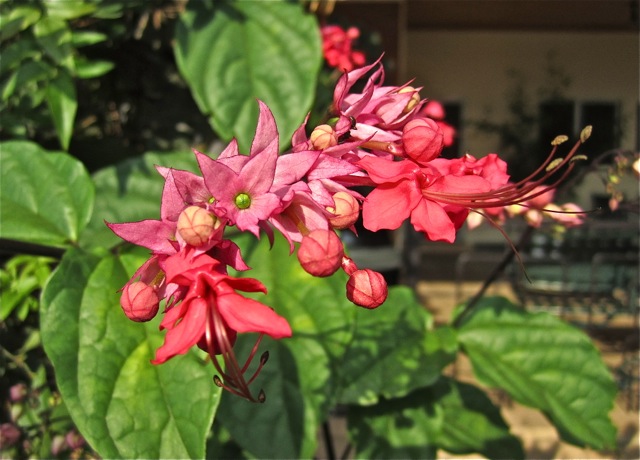
I found that the species is native to tropical West Africa, from Cameroon to Senegal. But a very similar-looking cousin, Clerodendron fuscum, is native to Rwanda and other parts of East Africa — as are two much less showy species, C. johnstonii and C. bukobense.
They are all lianas — long-stemmed, woody vines that use trees as a means of vertical support to reach the light.
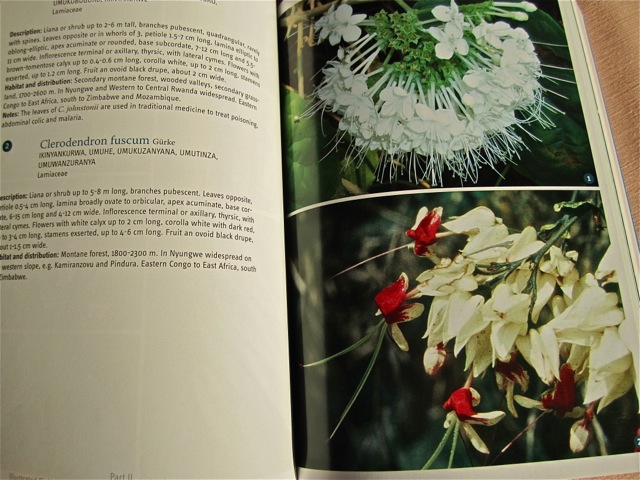
Clerodendron thomsoniae has just the sort of exotic, showy blooms that would have been very desirable to the Victorians. Wikipedia said its 19th century popularity eventually declined, however, because “its root system must be partially submerged in water most of the time and it wants very good light.” Other sources did not indicate that it needs to grow in particularly damp ground. Mine does not. But in the U.S., it probably will not be hardy outside of Florida or California.
Wikipedia also said the species was named in honor of “Rev. William Cooper Thomson (fl. 1820’s-1880’s), a missionary and physician in Nigeria.” However, a further Google search turned up a Rev. Thomson who was a linguist, not a doctor, with the Church Missionary Society in Sierra Leone. He was a man of zeal in the propagation of the gospel and the crusade against slavery. In 1841, he led an ultimately fruitless expedition to make treaties with the Muslim Fulani people in what is now Guinea. He died during the journey in 1843.
That much is confirmed by other articles and a copy of his journal posted on the internet. There is no indication, however, of how this William Cooper Thomson might have come to have a popular hothouse plant named after him.
A French website said that the species was named for surgeon-botanist Thomas Thomson (1817-1878), co-author of the first volume of Flora Indica and eventually Superintendent of the botanical garden in Calcutta, India. Swedish Wikipedia also says that Thomas T. is origin of the name. But Thomas T. never served in Africa.
The source for the English Wikipedia entry is the CRC World Dictionary of Plant Names by Umberto Quattrocchi, which unfortunately is not on-line and costs £204. If any reader does have access to this book, maybe you could let us know what it says. Other sites also give a William Cooper Thomson. as the origin of the name, but they are obviously just quoting Wikipedia.
Regardless of the source of its name, it is really a lovely African plant.
ADDENDUM: Please see KAMCDONALD’s comment below for more about the source of the name, which was given in honor of the first wife of William Cooper Thomson, a missionary in Nigeria and son of the William Cooper T. discussed above.
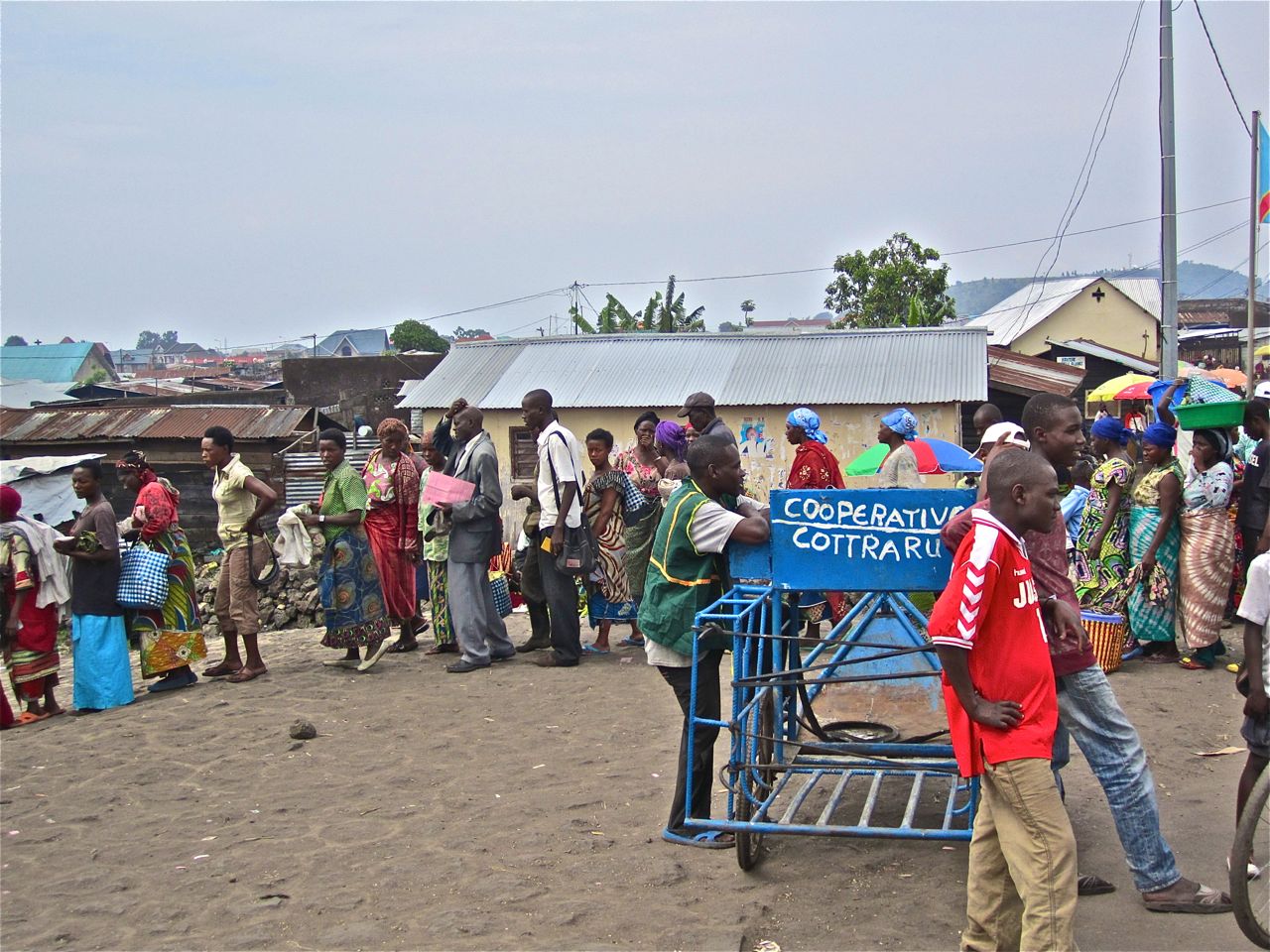
On the second day of our recent trip to the north of Rwanda, we visited a border crossing with the Democratic Republic of Congo (DRC), this one located between the otherwise contiguous cities of Gisenyi (Rwanda) and Goma (DRC).
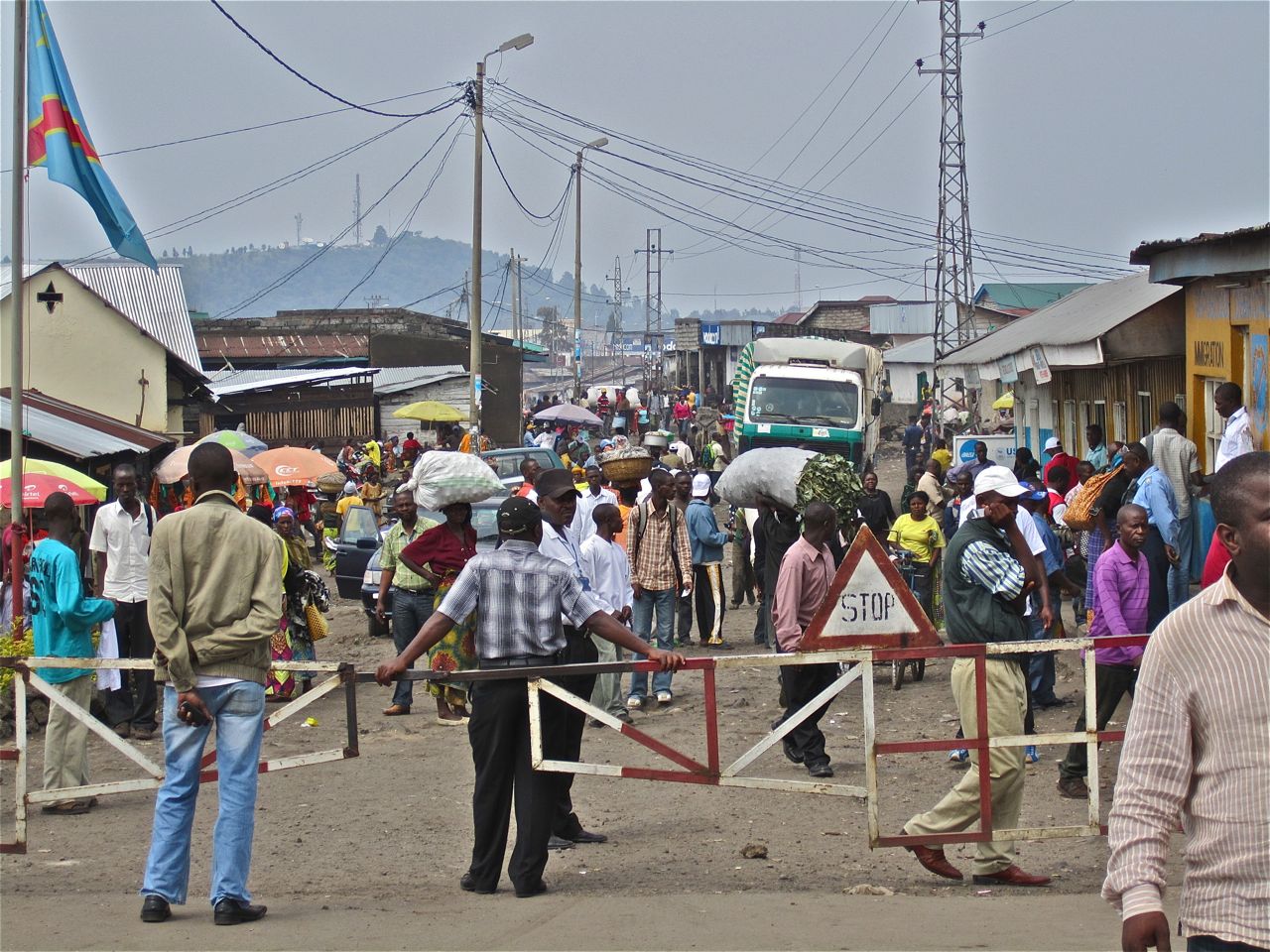
We watched a line of people, almost all carrying large parcels of food, waiting to enter eastern Congo.
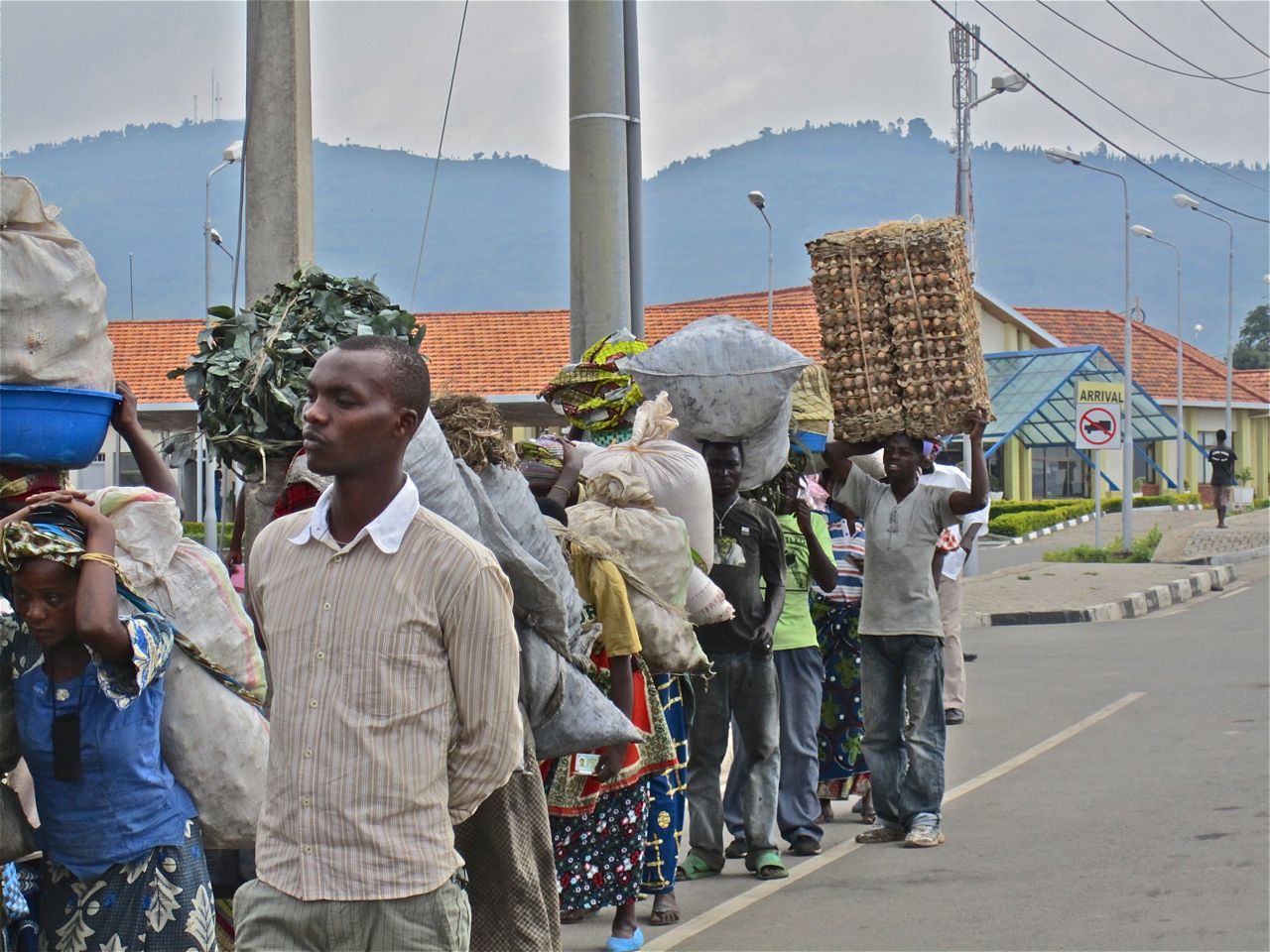
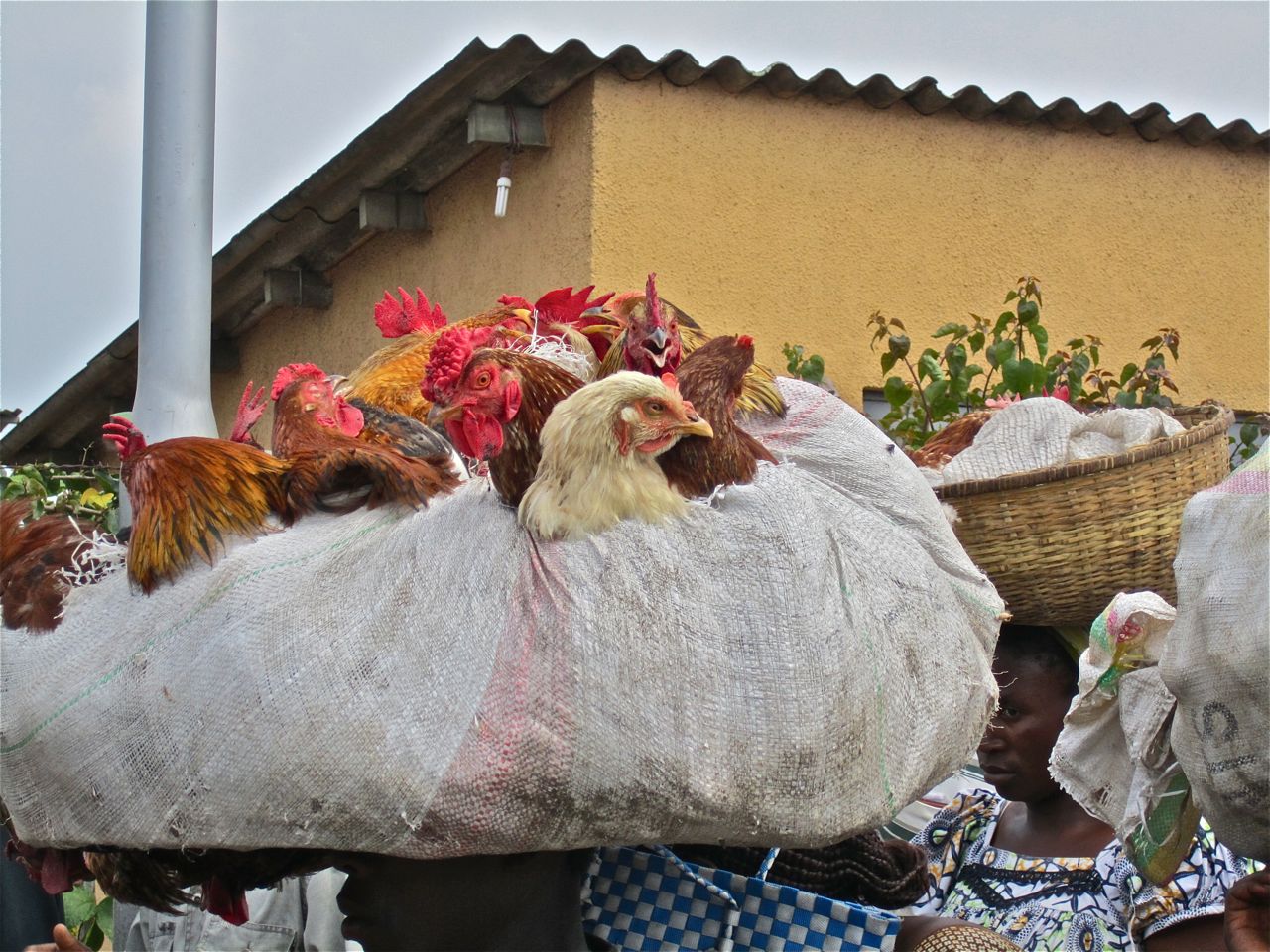
We watched another line of people, now almost empty-handed, coming back into Rwanda.
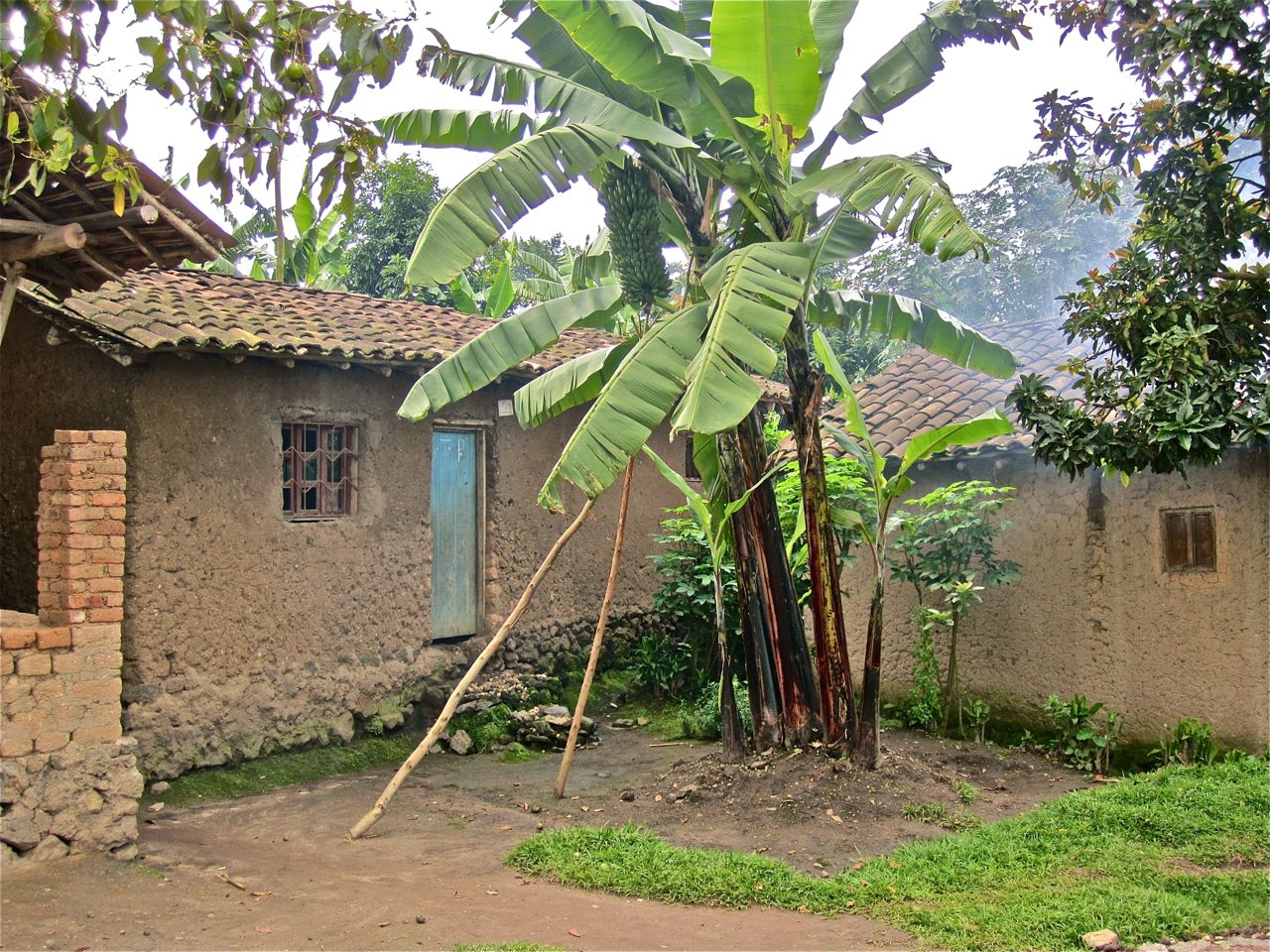
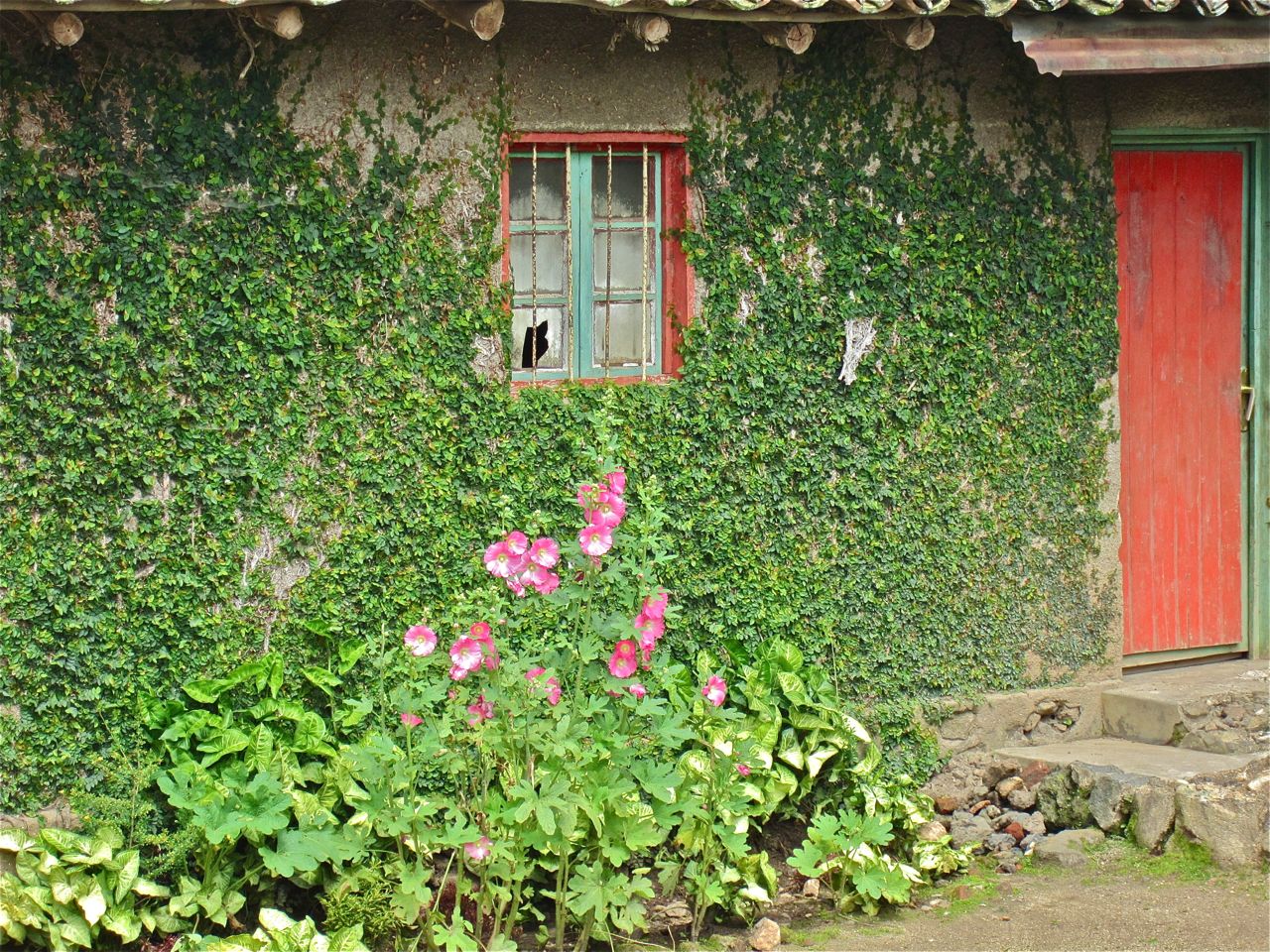
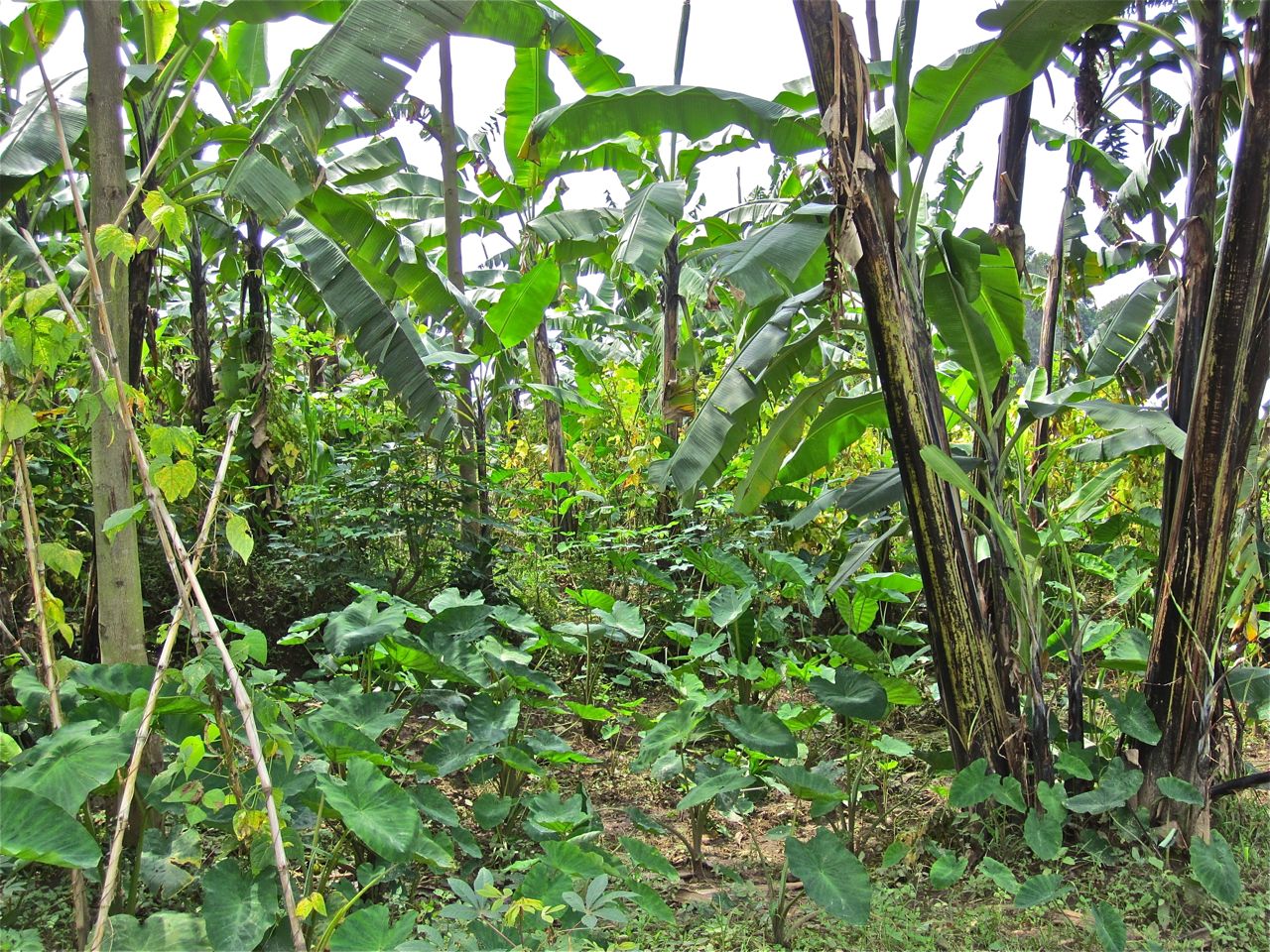
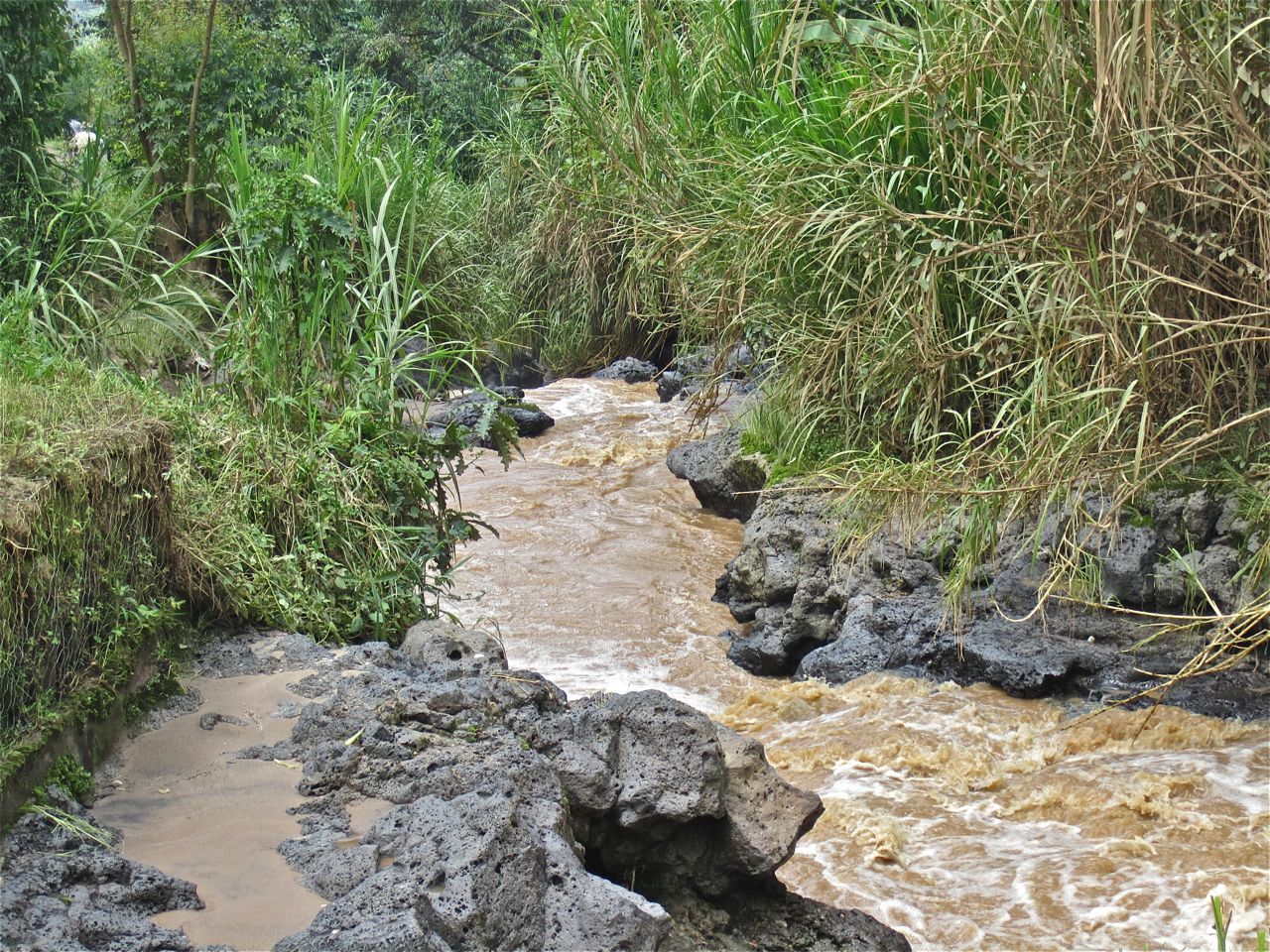
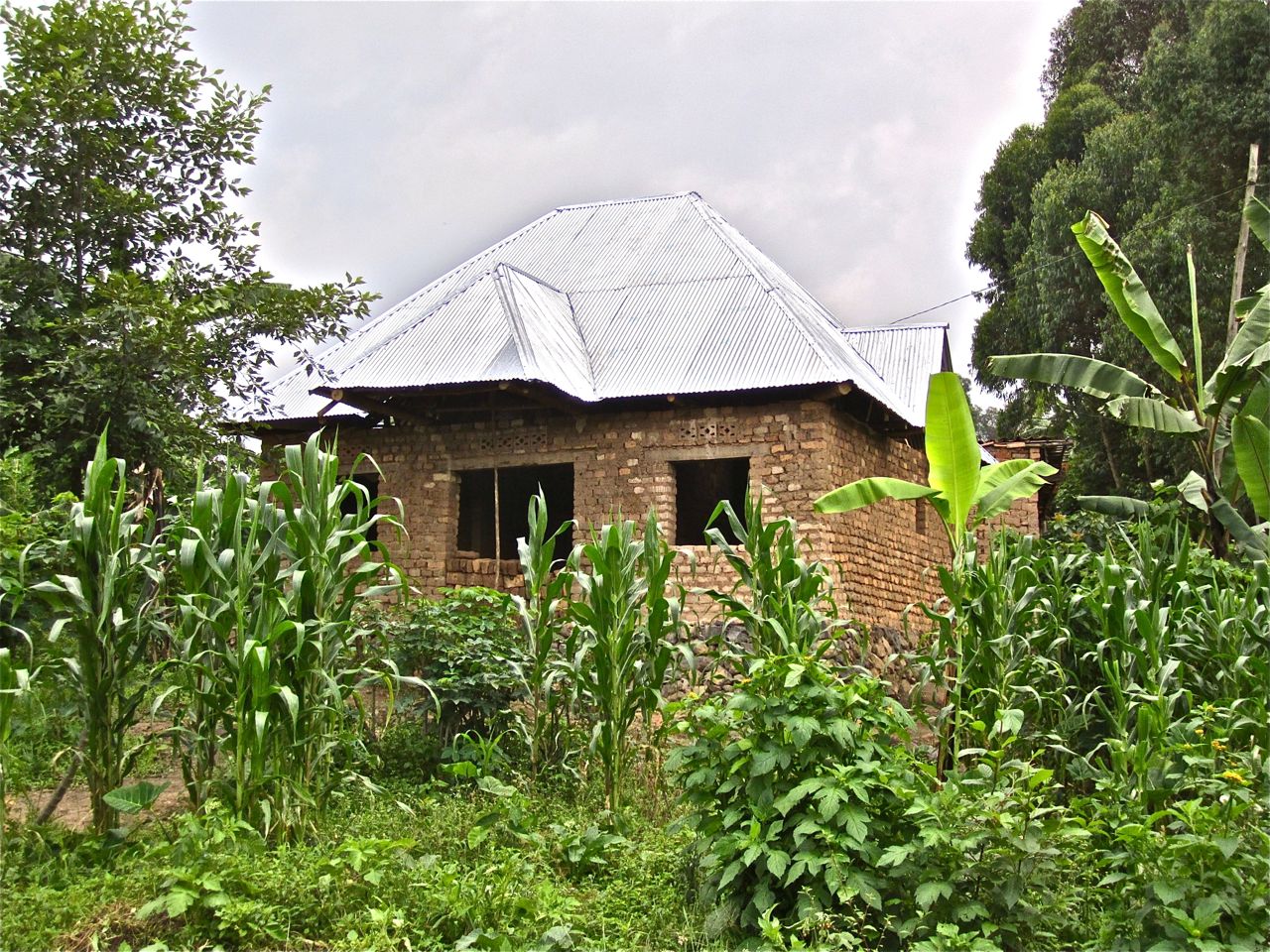
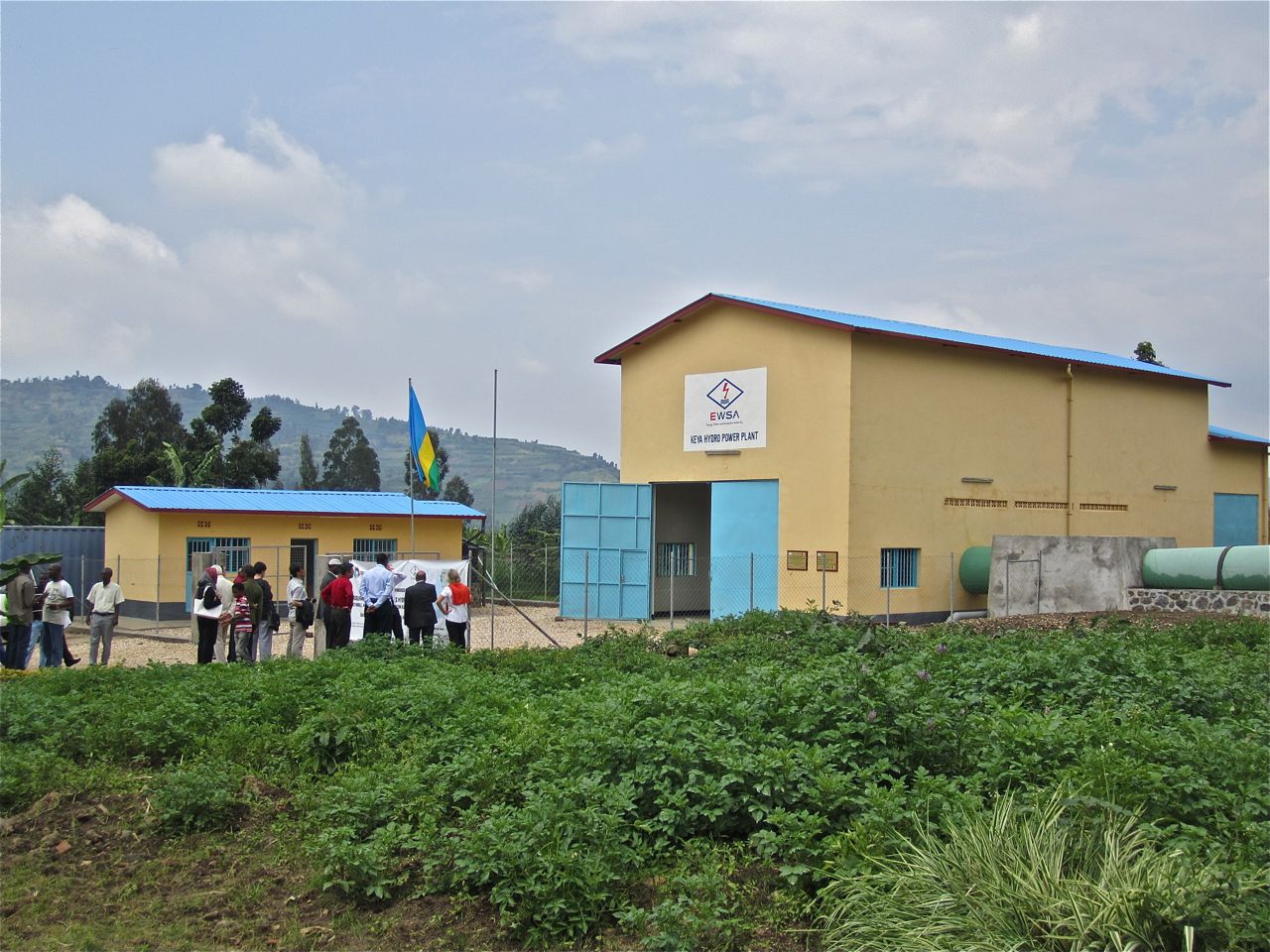
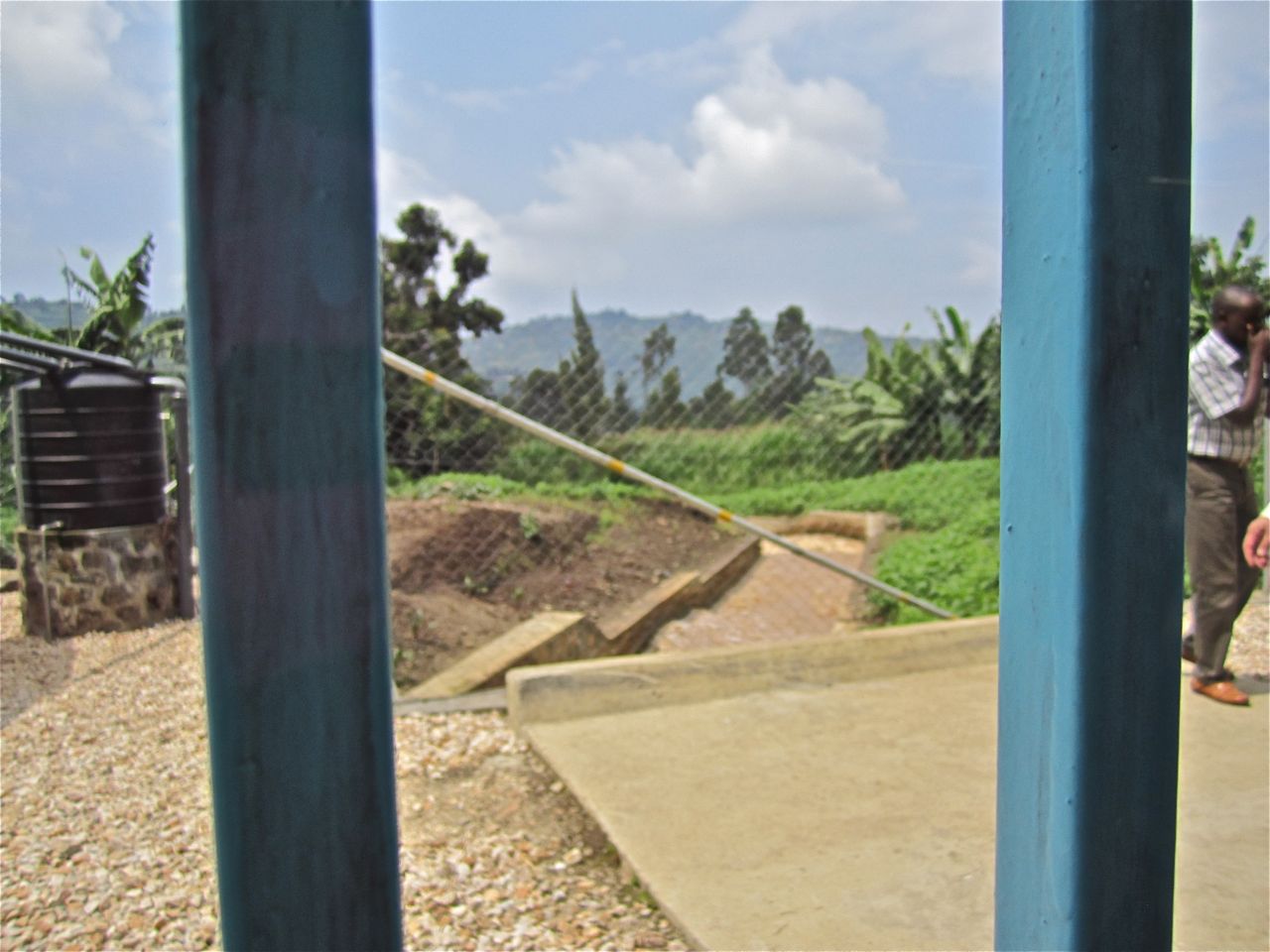
Afterwards, we headed about 10 miles east to visit a small hydro-electric plant. The unpaved road to the plant was too rough for the bus, so we had a walk through the neighboring village.

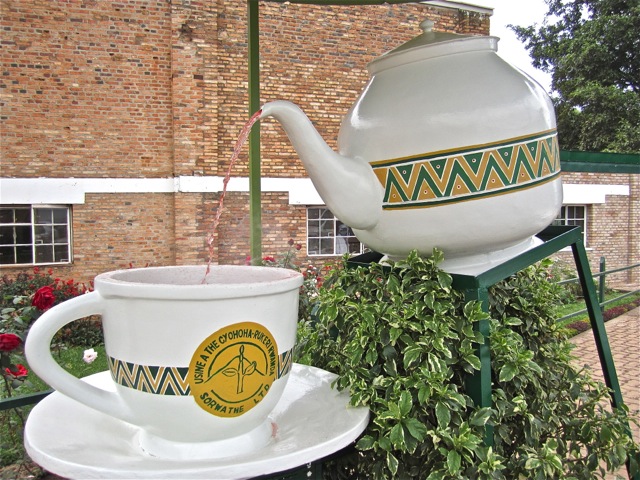
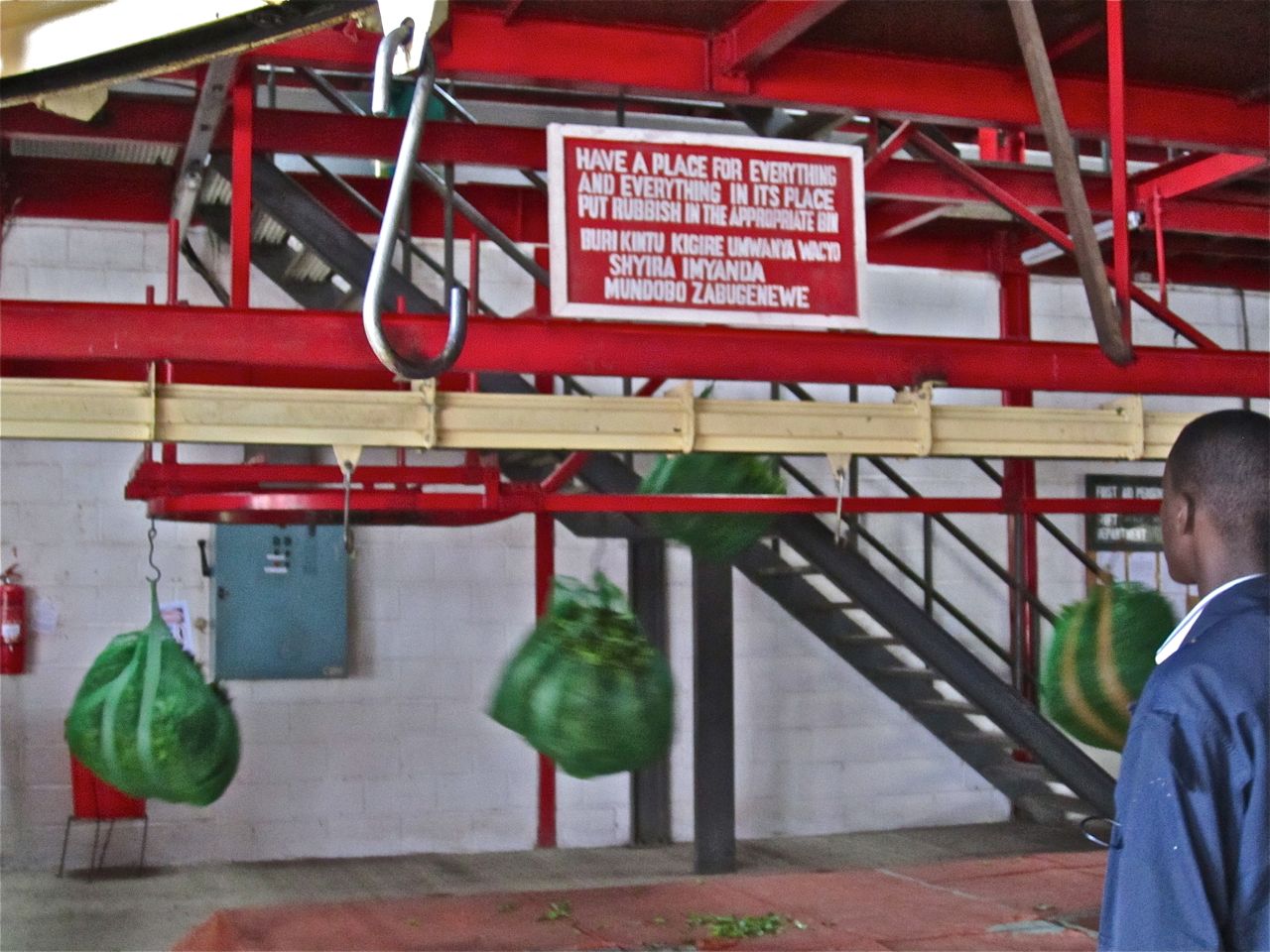
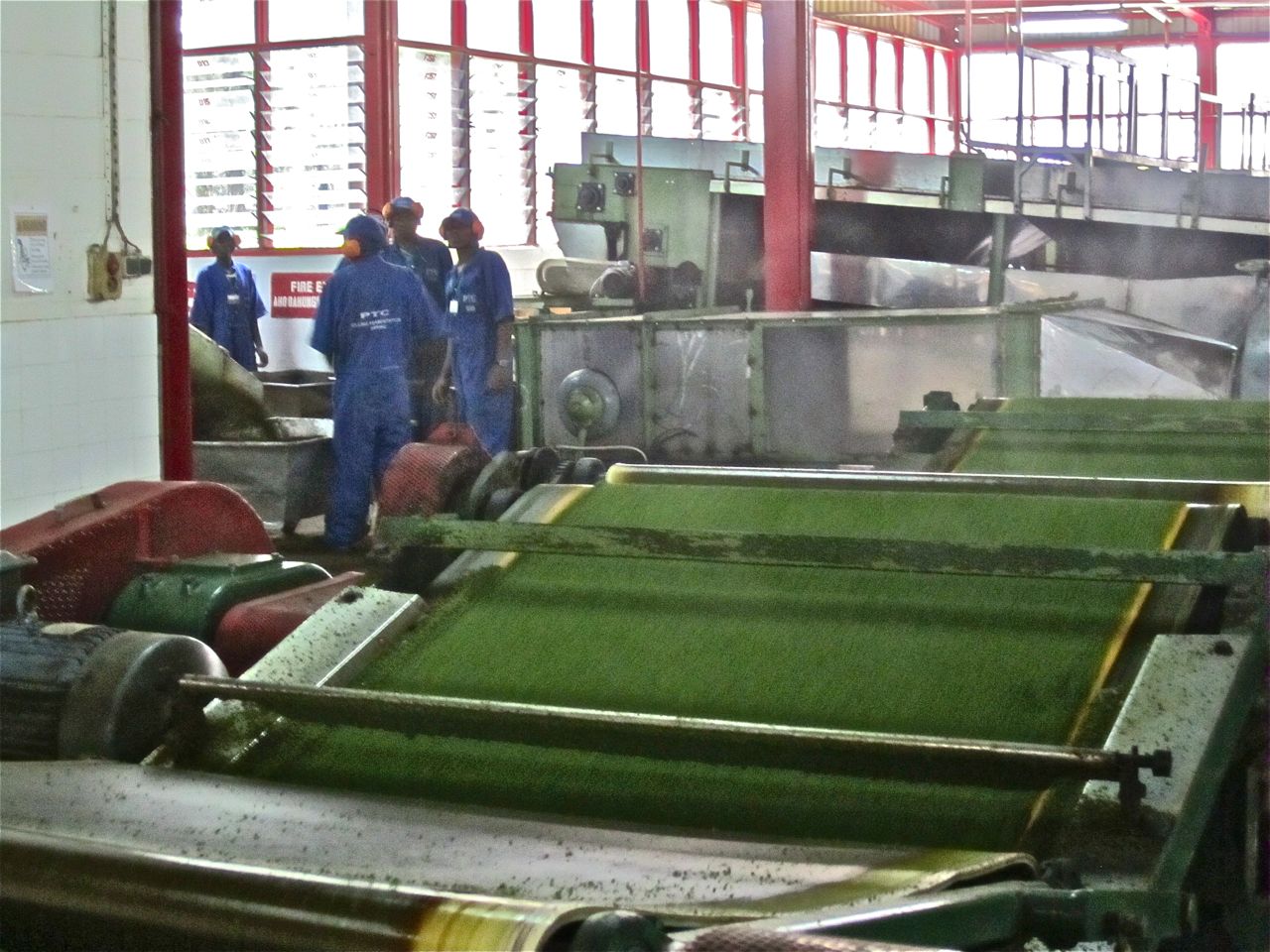
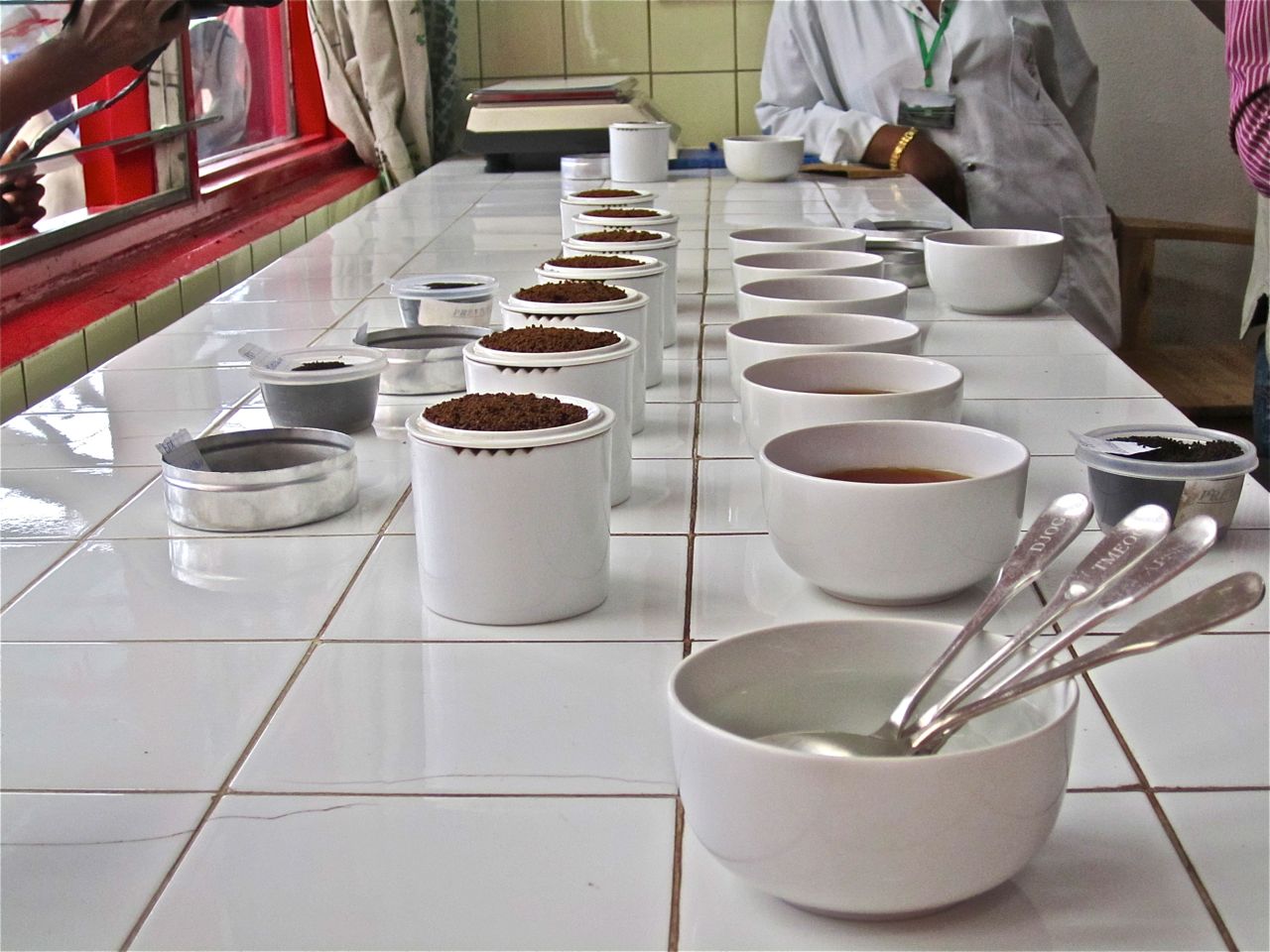
We ended our trip at the Pfunda Tea Company factory. Two thousand people work on the Pfunda Tea Estate, and the company also runs a cooperative for area tea farmers. All the tea is raised without pesticides, and, in February 2011, Pfunda Tea Company became the first company in Rwanda to obtain Rainforest Alliance certification.
One hundred and fifty people work 8 hours shifts in the tea factory, day and night. They will produce over 4.4 million lbs. (or 2 million kgs.) of black tea this year. The climate, altitude, and soil of the area is excellent for growing high-quality tea.
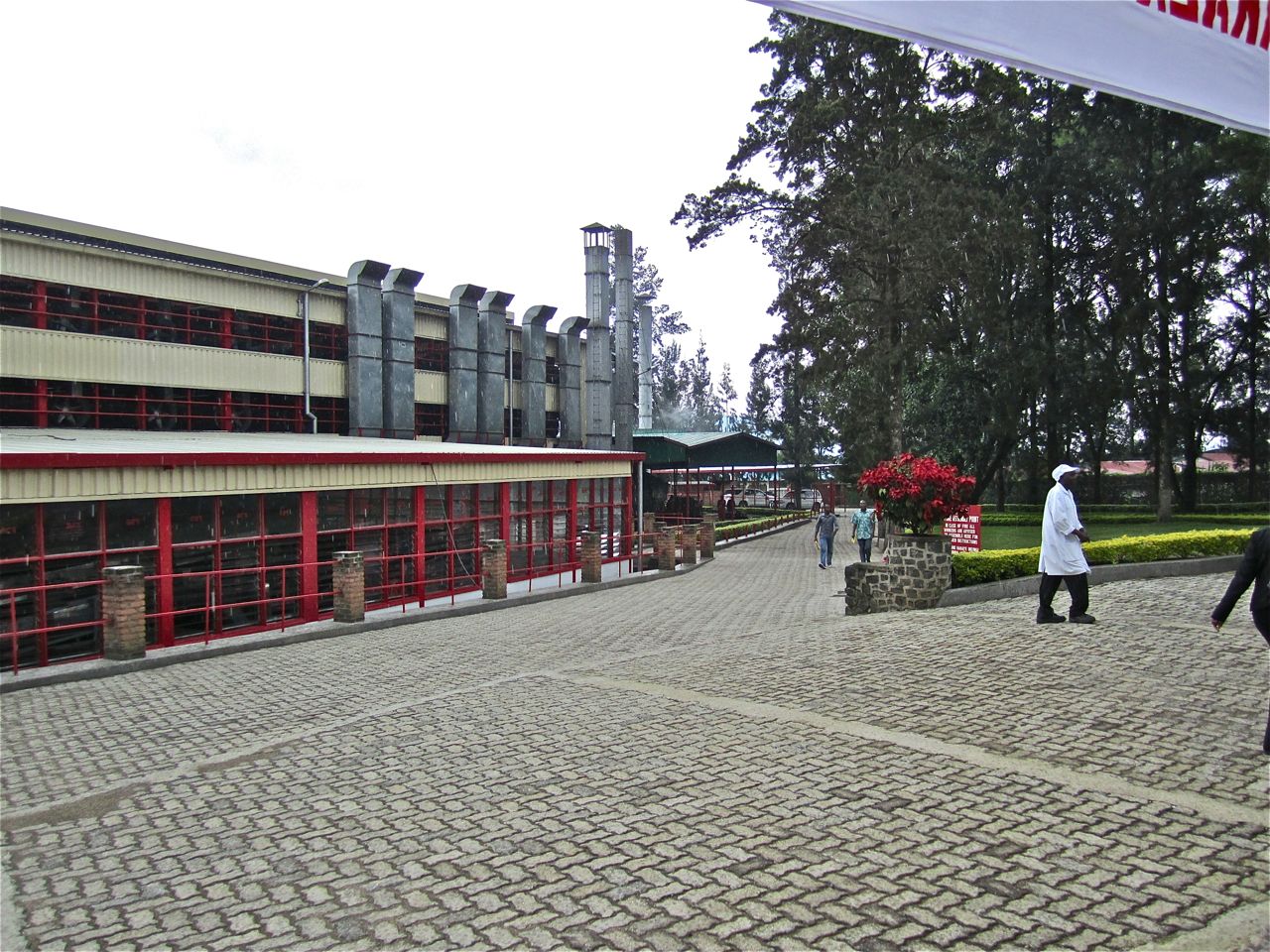
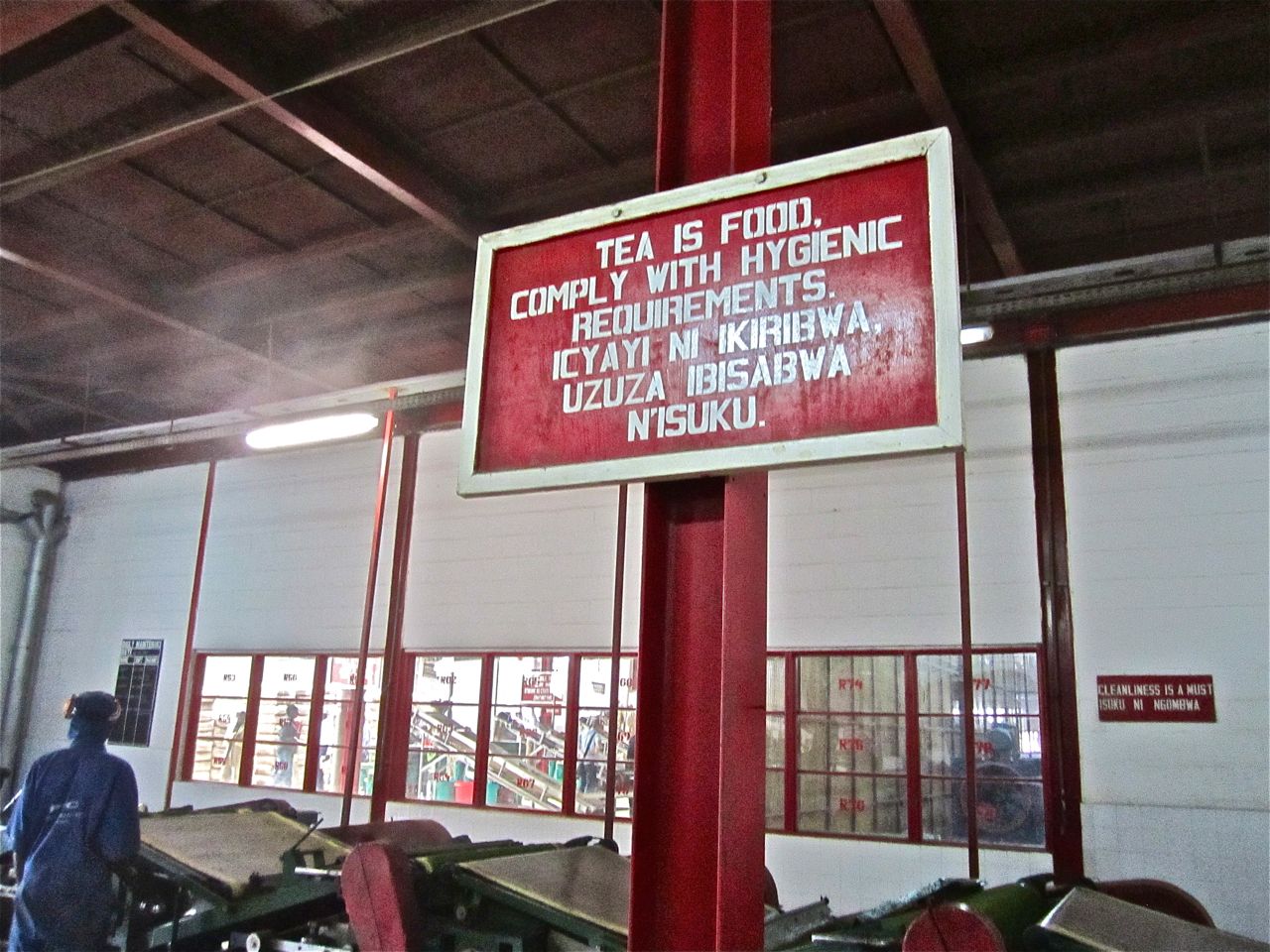
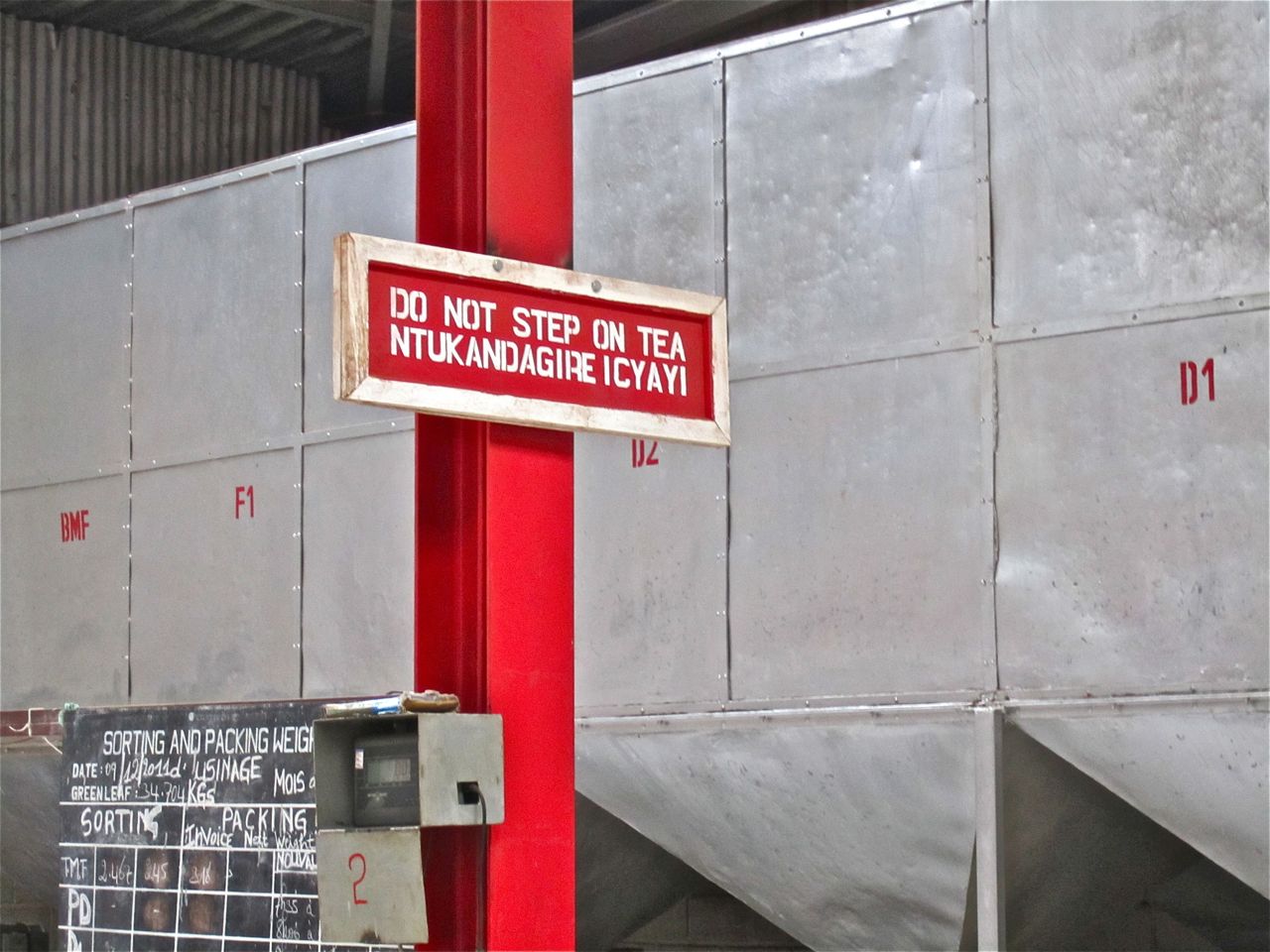
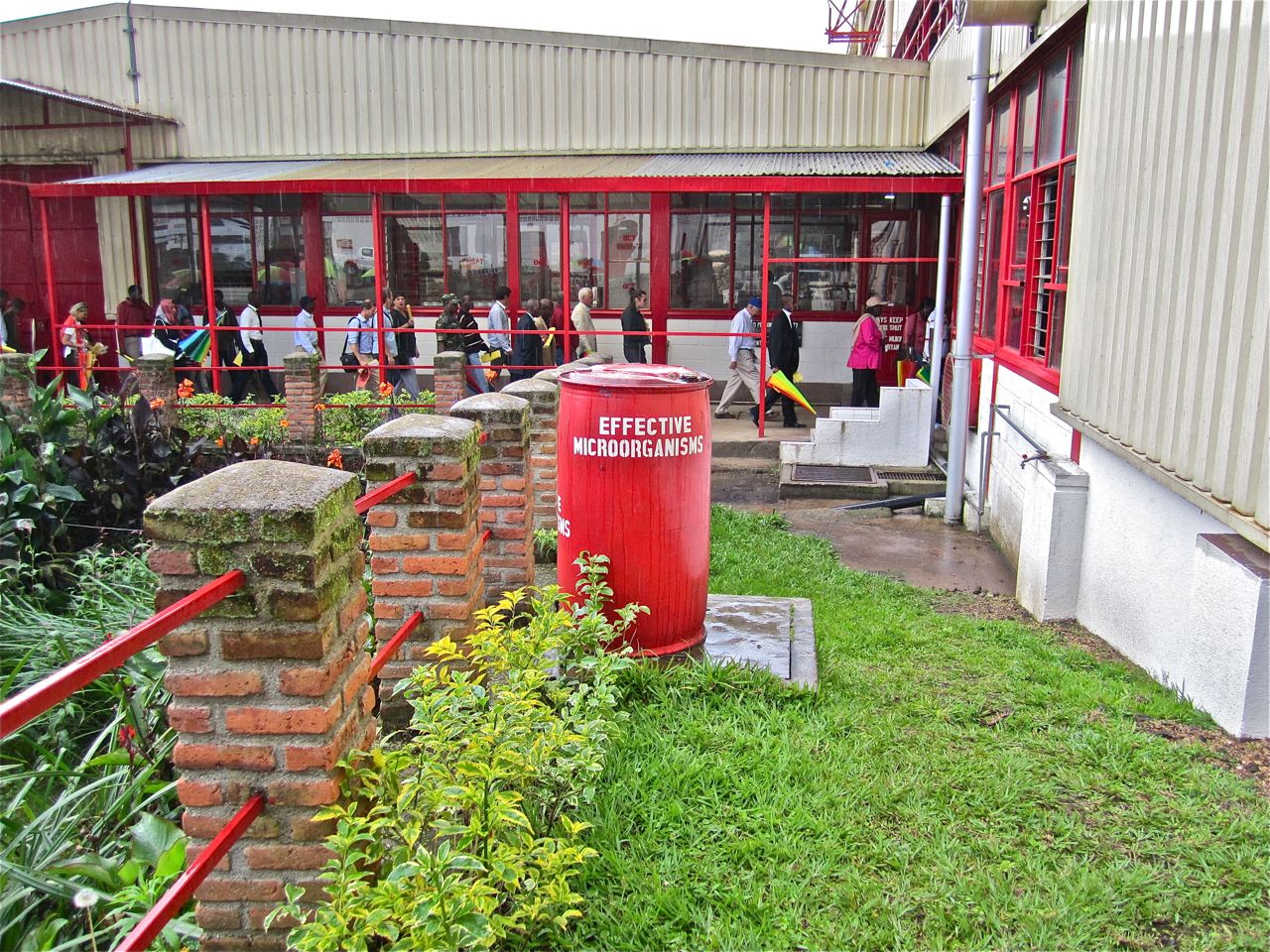
The design of the factory and its surrounding grounds — even its signage — struck me as remarkably consistent, orderly, and pleasant. Lots of straight, clean lines in red paint and low hedges.
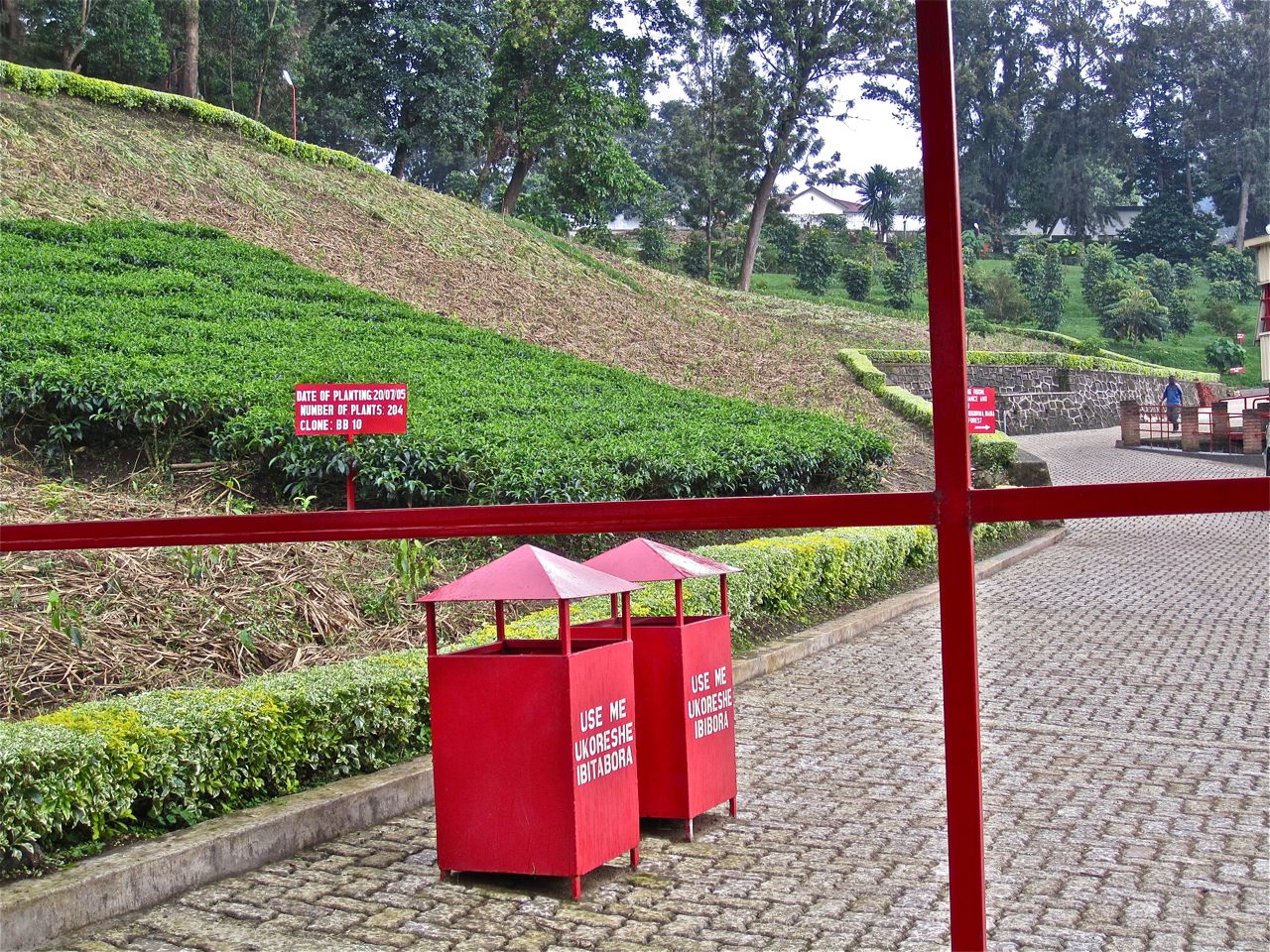
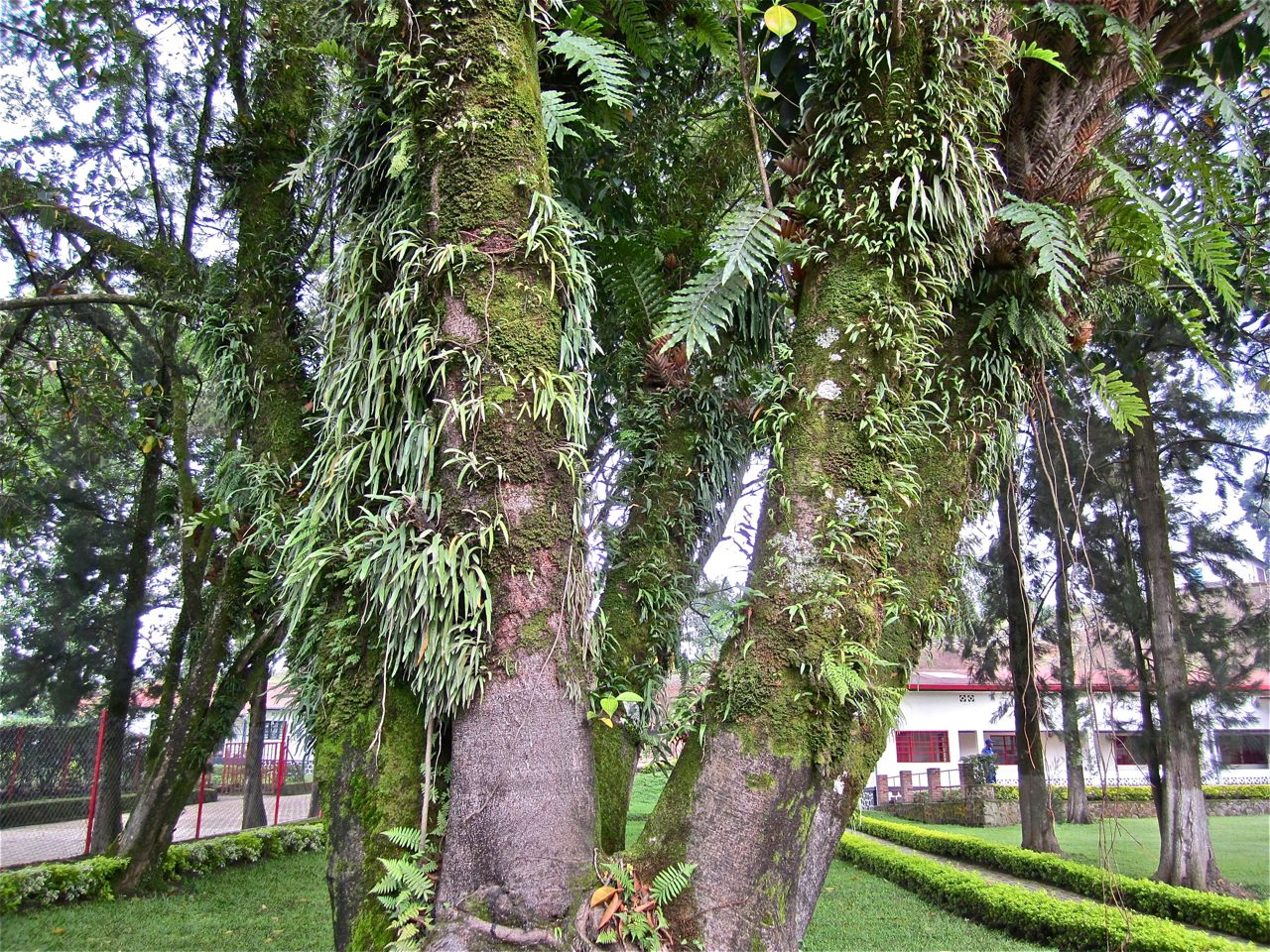
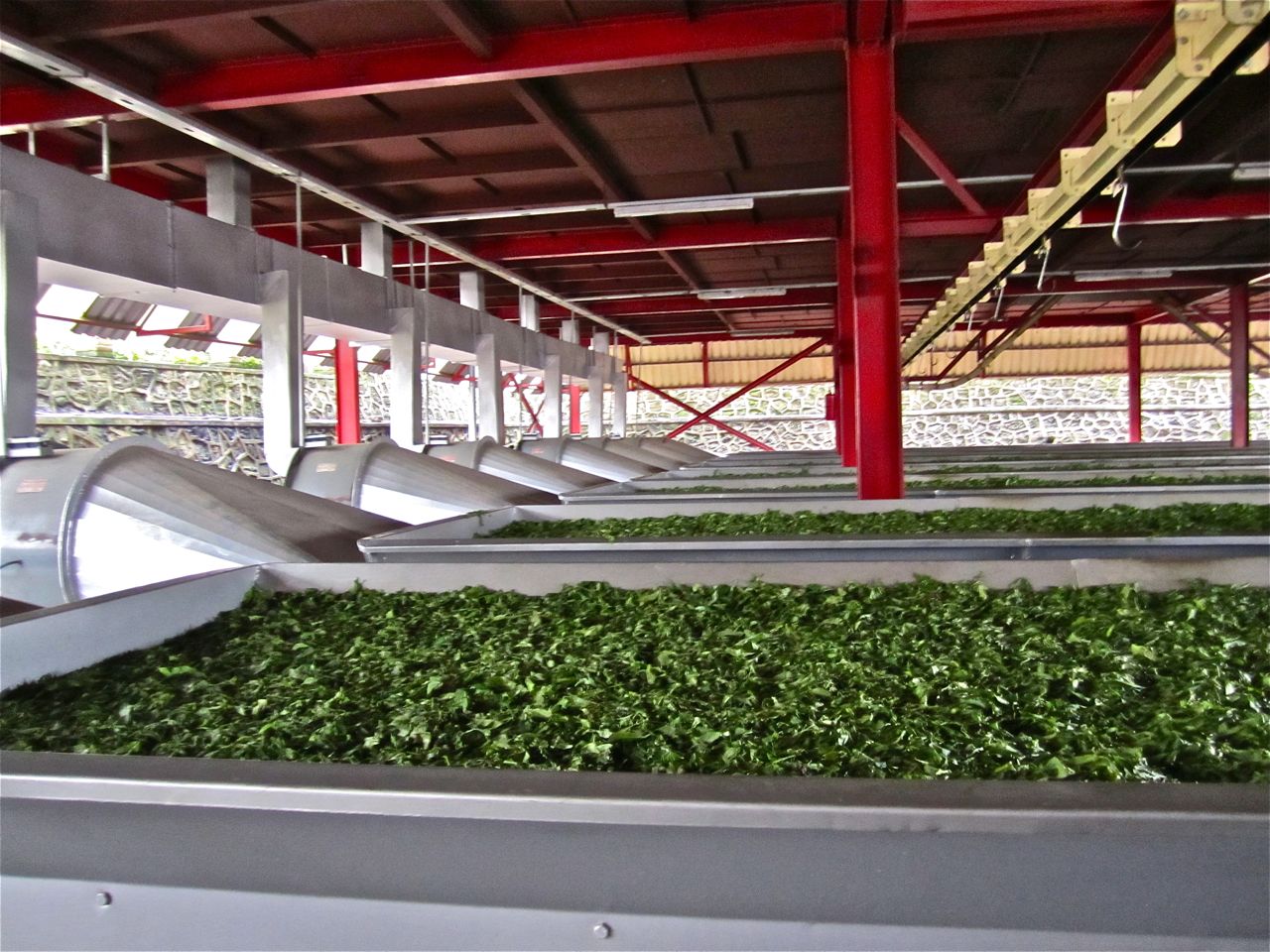


Waste water from the tea processing is diverted to a garden pool and treated with “Effective Microorganisms,” a product that cleans water and eliminates bad odors with a combination of microorganisms that were collected and cultivated naturally.
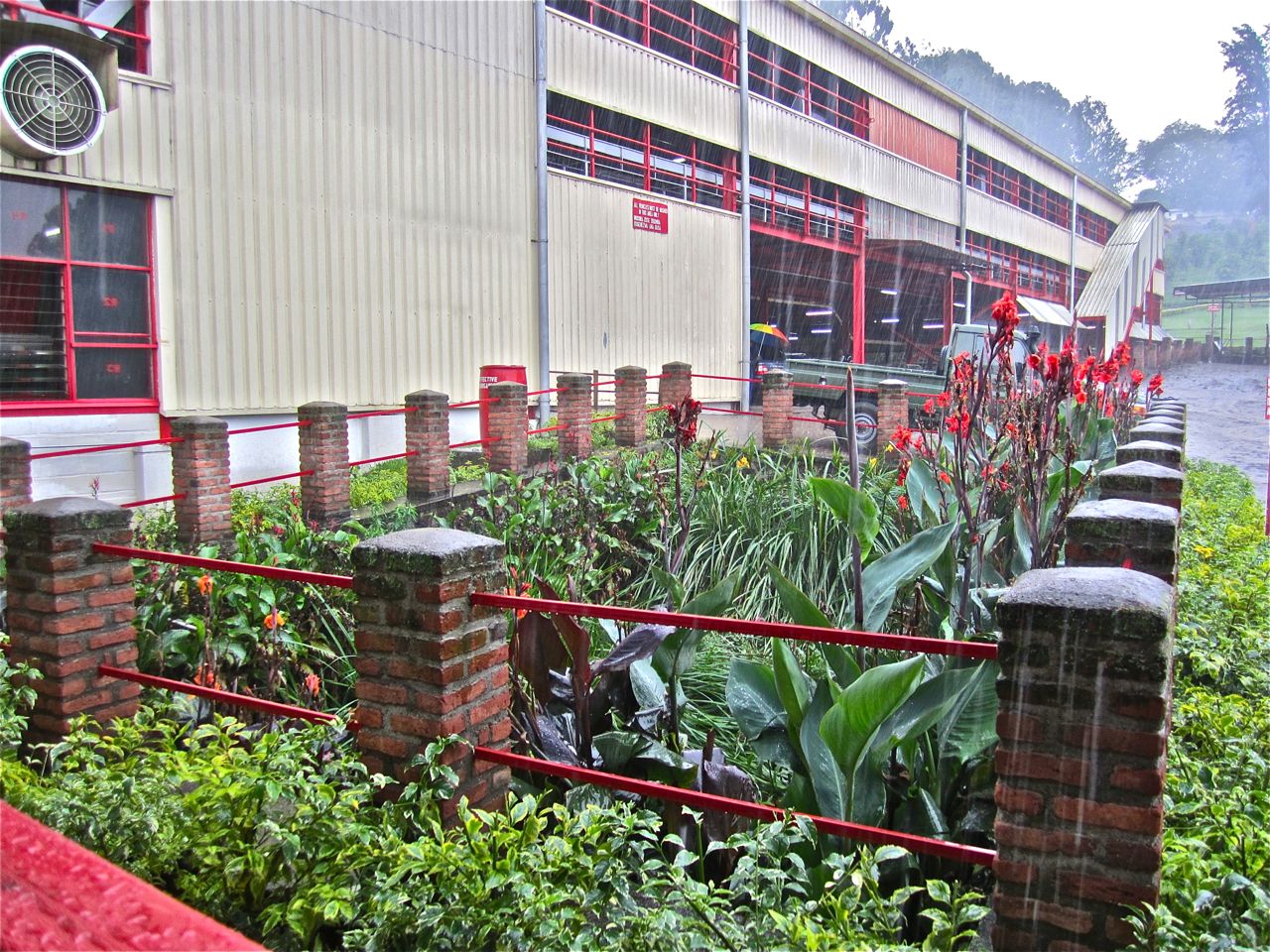
As we travel, I am always looking for recurrent elements in the landscapes and urban surroundings through which we pass, as well as in the architecture and craft. I am trying to grasp what Rwanda really looks like, what it cares about, how it experiences its environment (and how I experience its environment) and how I can interpret at least some of that in a garden design.
 enclos*ure