
This is really exciting. Yesterday, the Library of Congress released online the digital images of more than 1,000 hand-colored, glass-plate lantern slides of gardens taken (mostly) by Frances Benjamin Johnston.
The images in the collection were taken from 1895 to 1935. Originally black and white photographs, Johnston had them hand tinted and made into slides to illustrate her popular garden lectures, which she gave to garden clubs, horticultural societies, and museum audiences from 1915 to 1930. As part of the Garden Beautiful Movement, she encouraged Americans to grow gardens on tenement lots, in row-house yards and in parks, which had deteriorated from industrial pollution and neglect during the Gilded Age.
The slides have not been seen in public since Johnston last projected them during her lectures. They depict more than 200 sites — primarily private gardens — in all regions of the United States and in Europe. The entire collection, 1,130 digital images, can be found in the Library’s Prints and Photographs Online Catalog, here.
I’ve just begun to enjoy this beautiful resource, but here are 11 images that I pulled out quickly during my first enthusiastic look.
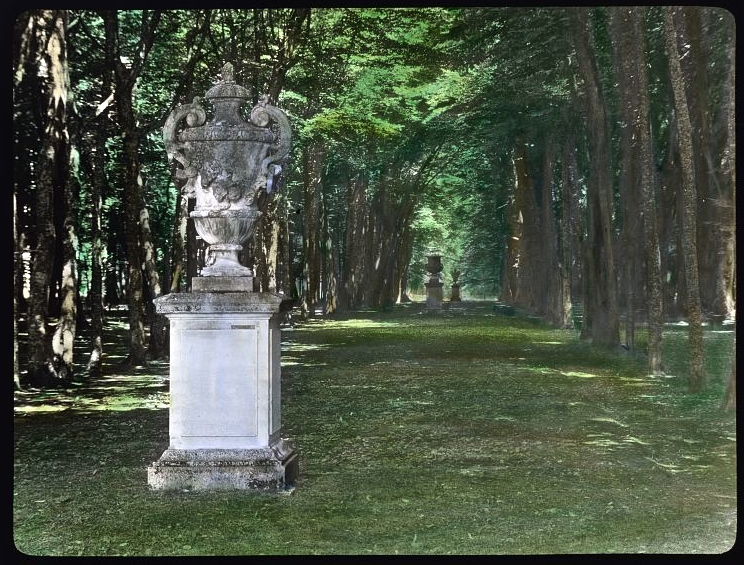
The photo above is of Chateau of Bréau, Dammarie-les-Lys, Seine-et-Marne, France. July 1925. (Click any photo to enlarge it.)
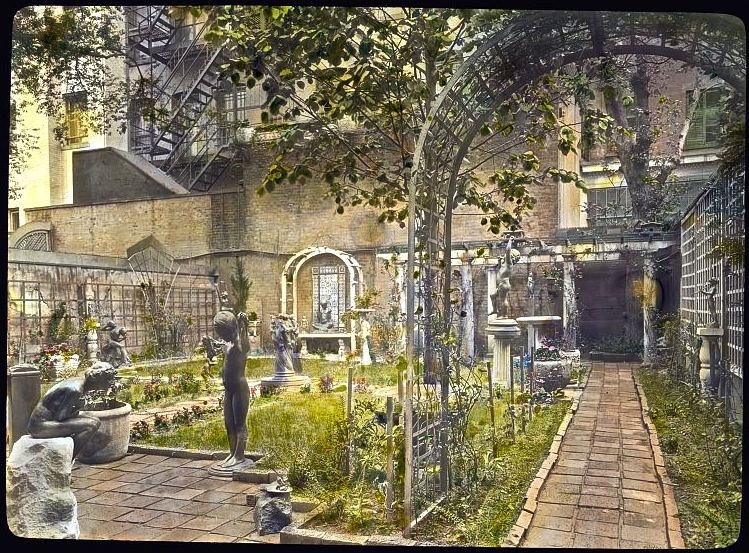
The Touchstone Garden, New York, New York. Sculpture exhibition, summer 1919.
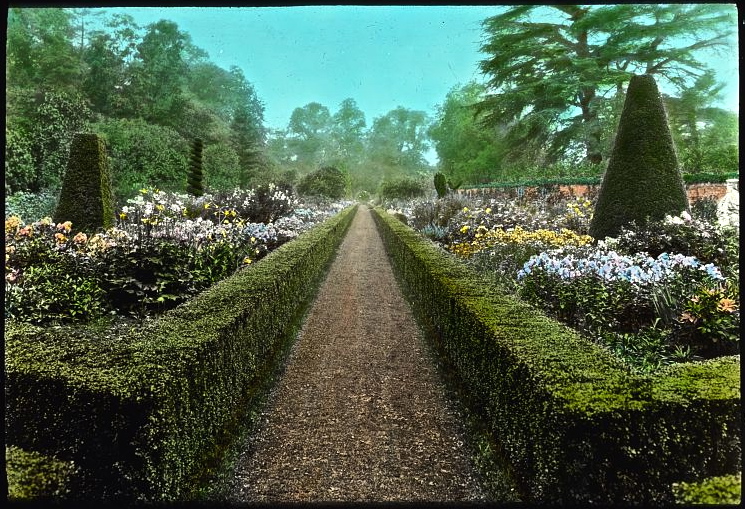
“Cliveden,” Viscount Waldorf Astor house, Taplow, Buckingham, England. Long Garden, summer 1925.

Myron Hunt house, 200 North Grand Avenue, Pasadena, California. Garden Terrace, spring 1917.
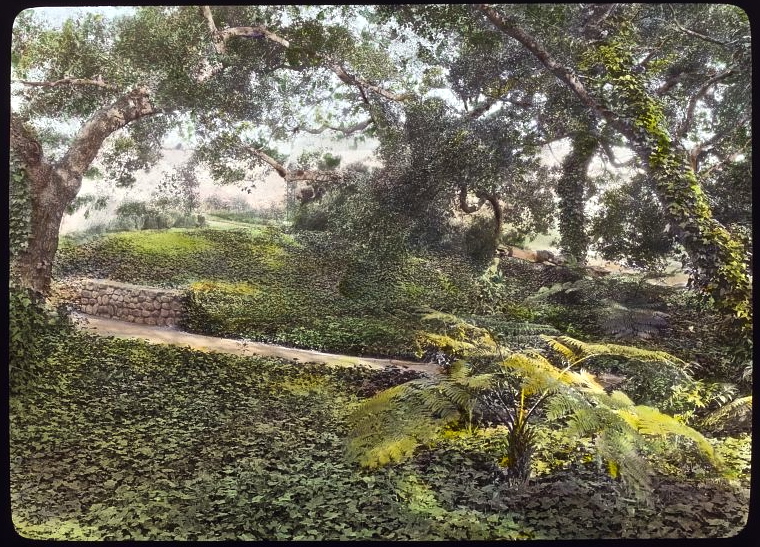
“Inellan,” Walter Douglas house, Channel Drive, Montecito, California. Pathway to Pacific Ocean, spring 1917.

“Flagstones,” Charles Clinton Marshall house, 117 East 55th Street, New York, New York. Tea house/sleeping porch.

“Gray Gardens,” Robert Carmer Hill house, Lily Pond Lane, East Hampton, New York, New York. View to Garden Trellis.

West Potomac Park, Washington, D.C. Irises along the embankment, April 1905.
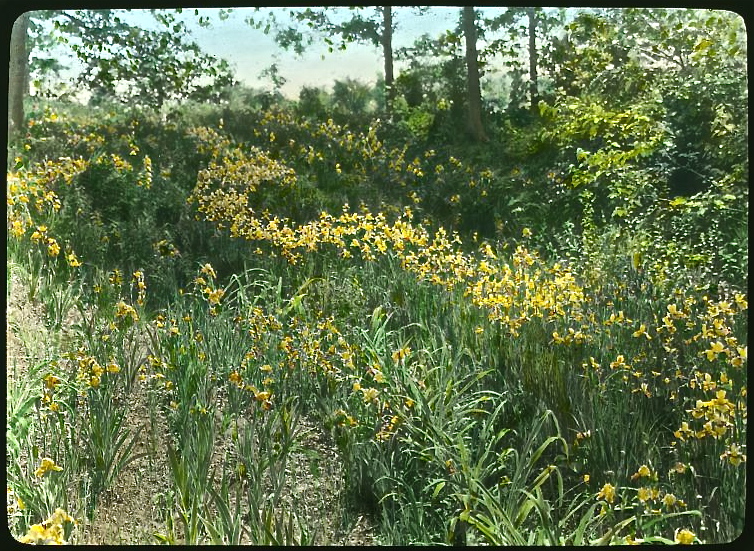
Dr. Charles William Richardson house, Chevy Chase, Washington, D.C. Irises, 1921.
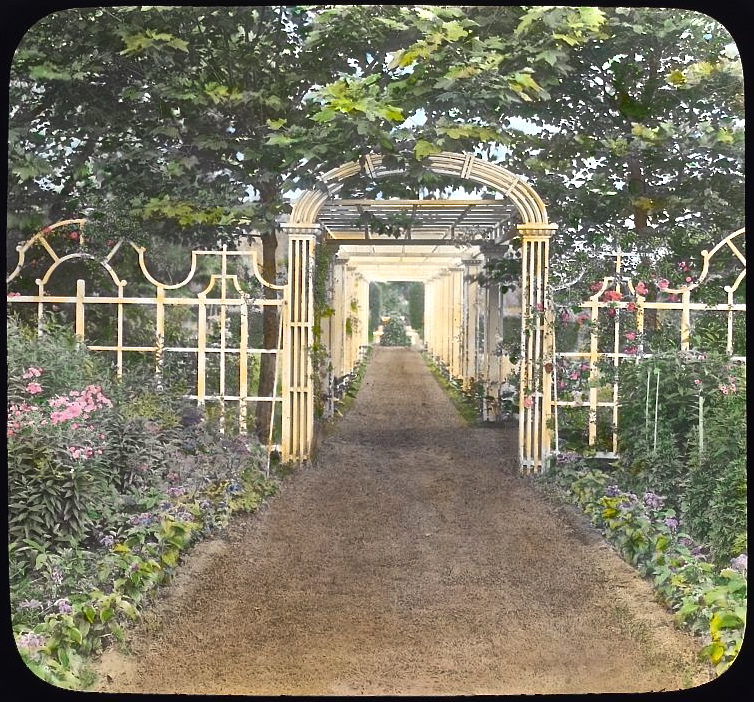
“The Fens,” Lorenzo Easton Woodhouse house, Hunting Lane, East Hampton, New York. Pergola, 1914.
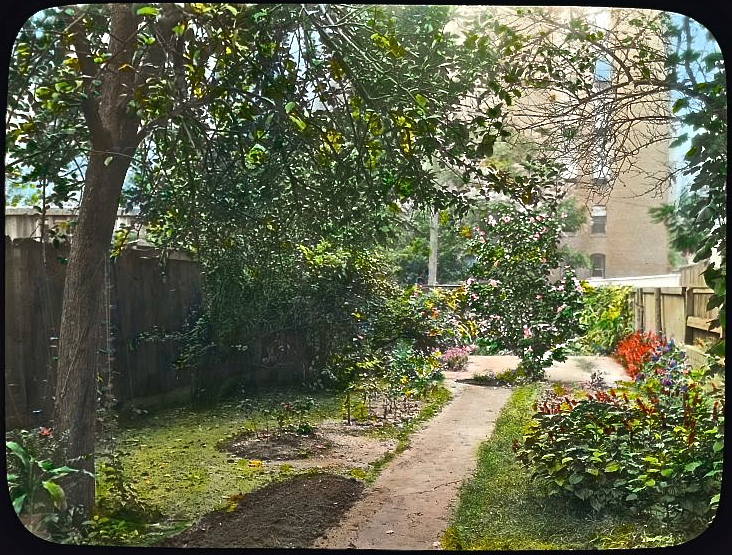
Unidentified city garden, probably in New York, New York. Pathway, 1922.
A selection of 250 of the color images can also be seen in a new book by house and garden historian Sam Watters, Gardens for a Beautiful America, 1895-1935: Photographs by Frances Benjamin Johnston. It will be published this month by Acanthus Press, in association with the Library. ($79, here — not yet available.)
The Library of Congress is the repository of Johnston’s personal papers and approximately 20,000 photographs. But the lantern slides lacked garden names, locations, and dates and, therefore, had not been released to general public access. Watters took on the challenge of cataloging the collection, and after five years of research in libraries and archives, he has transformed vague earlier library notations into detailed data. For example, an unlabeled slide was recognized as a prize winner in a 1922 design contest and is now identified as “The Janitor’s Garden, 137 E. 30th St., New York City.”
For more information about Frances Benjamin Johnston, see here and here.



 enclos*ure