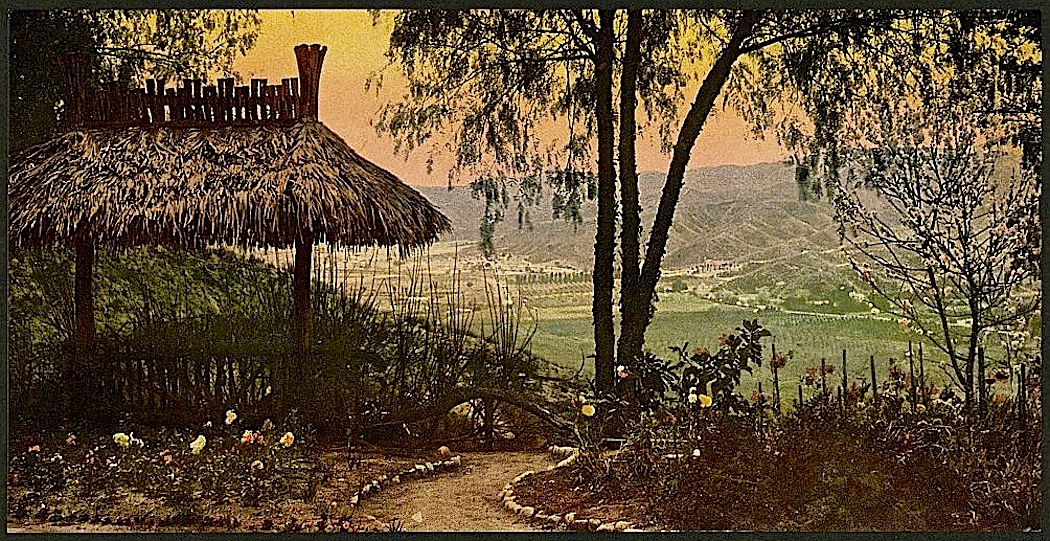
Vintage landscape: Smiley Heights

Smiley Heights, via LoCRoadside view from Smiley Heights, Redlands, California, between 1898 and 1905, a photochrom by Detroit Photographic Co., via Library of Congress Prints and Photographs Division.

(Click on the image to enlarge it.)

Alfred and Albert Smiley — twin brothers — were wealthy New York hotel owners who came to California in their sixties:

In 1889, while in California, the brothers became so impressed with the beautiful scenery and surroundings of Redlands that they purchased for a winter home 200 acres of the heights south of the town, through which tract they caused to be constructed a beautiful series of roads, both for driving and walking, and on the summit and along the northern declivities started a thousand or more species of rare plants and flowers of such varieties as flourish in this semi-tropical climate. Each of the brothers erected a beautiful and substantial residence on the crest of the hill. This property called the Canon Crest Park, commonly known as Smiley Heights, was thrown open to the public and the park has become famous throughout the land, being visited by thousands of Eastern tourists annually.

History of San Bernardino and Riverside Counties (1922) by John Brown, Jr., and James Boyd

The Smiley estate is now “covered by McMansions,”  according to this article about Redlands in The Atlantic.

Below the garden the hills fold away.
Deep in the valley, a mist fine as spray,
Ready to shatter into spinning light,
Conceals the city at the edge of night.
Yvor Winters, from “On a View of Pasadena from the Hills

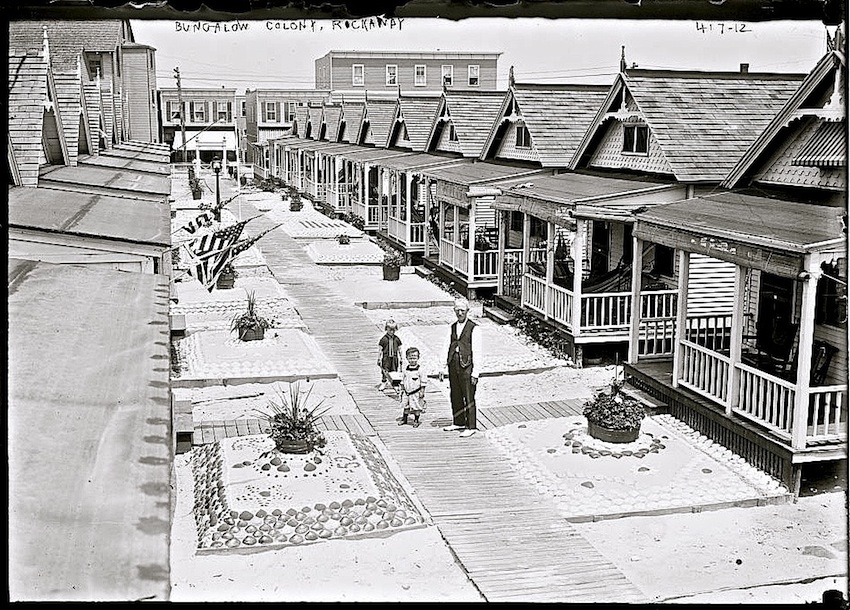
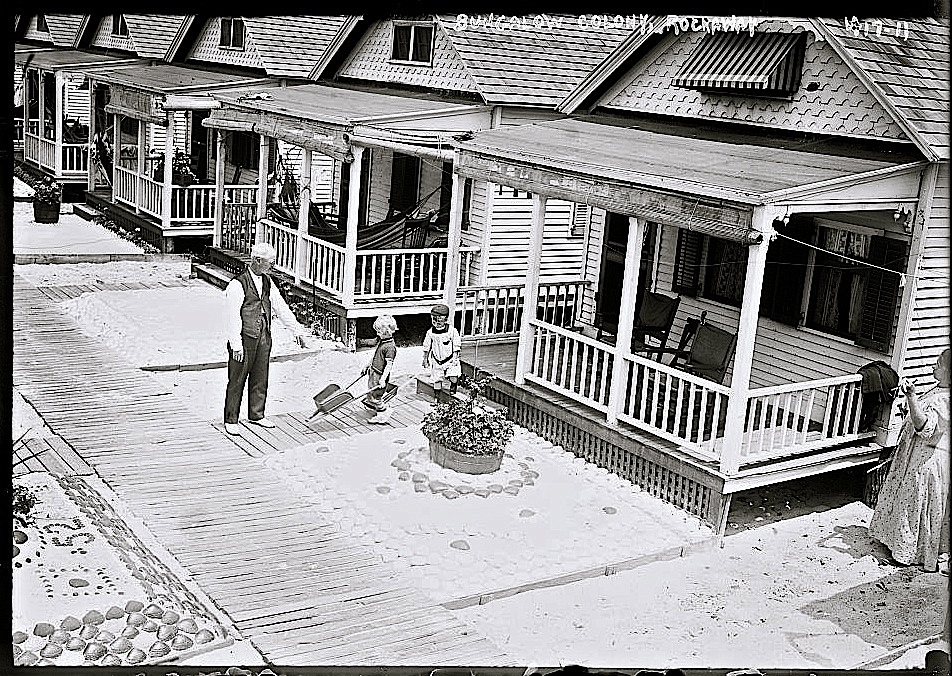
The Sunday porch: Rockaway, N.Y.

Bungalow, Rockaway NY, via LoC“Porches and front lawns of row of bungalows, Rockaway, N.Y.,” between 1908 and 1911, by Bain News Service, via Library of Congress Prints and Photographs Division.

Bungalow front, Rockaway NY, via LoC

Rockaway (or The Rockaways) is a peninsula of Long Island within the New York City borough of Queens. It became a popular beach resort in the 1880s, when a commuter rail line from Manhattan opened a stop there.

Small summer bungalows were prolific in Rockaway during the first half of the 20th century — there were over 7,000 in the area by 1933. Most were torn down, however, during 1960s urban development. The preservation of those that remain is the subject of a 2010 documentary, The Bungalows of Rockaway. You can see the trailer here — and more pictures of Rockaway bungalow life here.

Vintage landscape: green roof

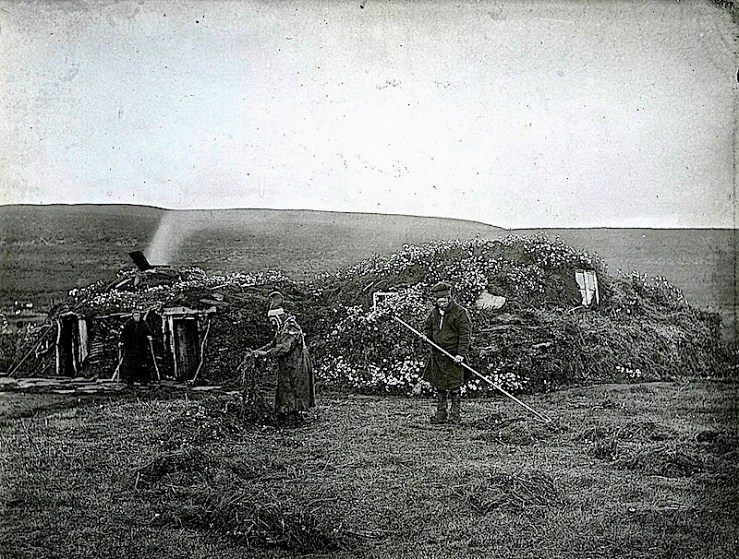
Fellesgamme i Nesseby. Høytørk.1900. Preus museumMan and woman work in front of a joint sod hut covered in grass and flowers, near the village of Vestre Jakobeselv, Norway.  Taken 1900 by Ellisif Rannveig Wessell, via Preus Museum Commons on flickr.

Living in Finnmark, in the far northeastern part of Norway, Wessel photographed the hard lives of its rural poor.  The Preus Museum — Norway’s national museum of photography — compares her to Jacob A. Riis and Lewis Hine.

She developed her own glass plates and used sunlight to make her prints.

Warm summer sun,
Shine kindly here,
Warm southern wind,
Blow softly here.
Green sod above,
Lie light, lie light.
Good night, dear heart,
Good night, good night.

— Mark Twain, “Warm Summer Sun

Life in gardens: Little Duck Key

Out of the cradle endlessly rocking. . .

Little Duck Keys, 1975, via Natl. Archives“American dreams at Little Duck Key [– part of the Florida Keys]. Commercial camping sites and travel trailer courts have sprung up throughout the Keys. Even on the smaller Keys like Little Duck, where no facilities have yet been constructed, camping is permitted by local authorities,” ca. 1975.

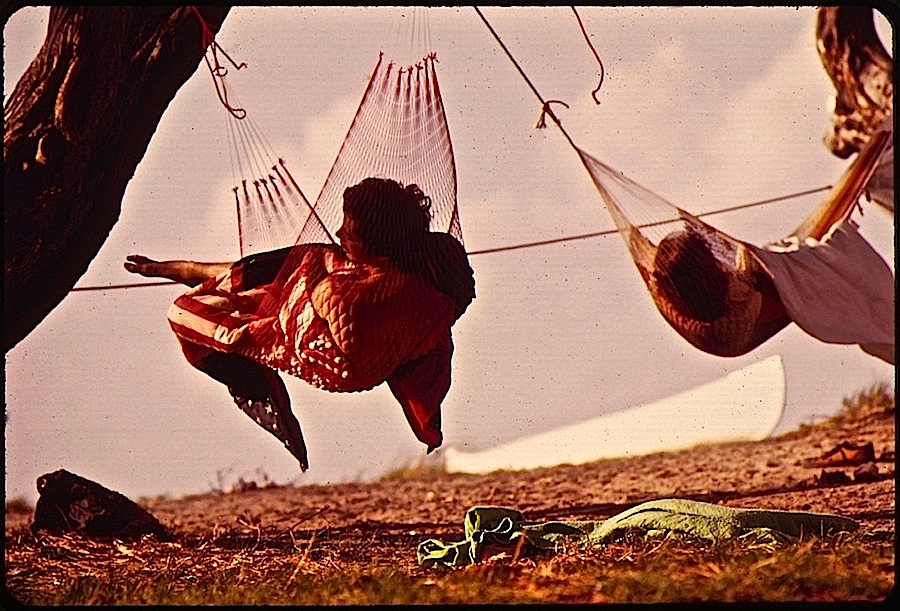
Little Duck Keys, 1975, via Natl. Archives“Campers on Little Duck Key sleep in their own hammocks,” ca. 1975.

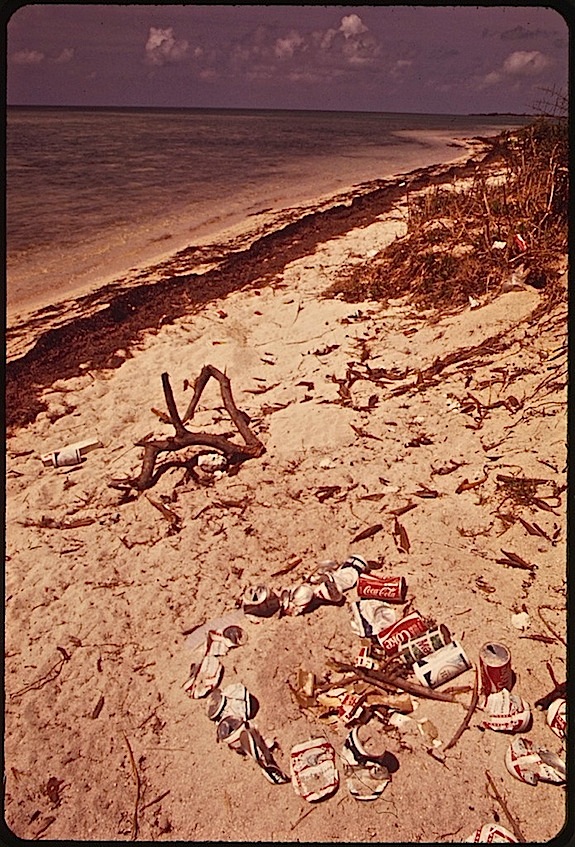
Little Duck Key, Fla., 1975, via National Archives“Beach at Little Duck Key. Little Duck, in the lower Florida Keys, is a tiny island which has not been commercially developed[;] the beach is open to visitors, who are not always careful to preserve its unspoiled appearance,” ca. 1975.

All three photos here were taken by Flip Schulke for DOCUMERICA, a 1970’s photography program of the U.S. Environmental Protection Agency.  They are shown with the original captions.

The EPA hired over 100 photographers to “document subjects of environmental concern.”  The work continued until 1977 and left behind an archive of about 20,000 images.

In addition to recording damage to the nation’s landscapes, the project captured “the era’s trends, fashions, problems, and achievements,” according to the U.S. National Archives, which held an exhibit of the photos, “Searching for the Seventies,” in 2013. 

There are more pictures from DOCUMERICA here.

Over the sterile sands and the fields beyond, where the child leaving his bed wander’d alone, bareheaded, barefoot . . . .

Borne hither, ere all eludes me, hurriedly,
A man, yet by these tears a little boy again,
Throwing myself on the sand, confronting the waves,
I, chanter of pains and joys, uniter of here and hereafter,
Taking all hints to use them, but swiftly leaping beyond them,
A reminiscence sing.

— Walt Whitman, from “Out of the Cradle. . .

Vintage landscape: Redlands gate

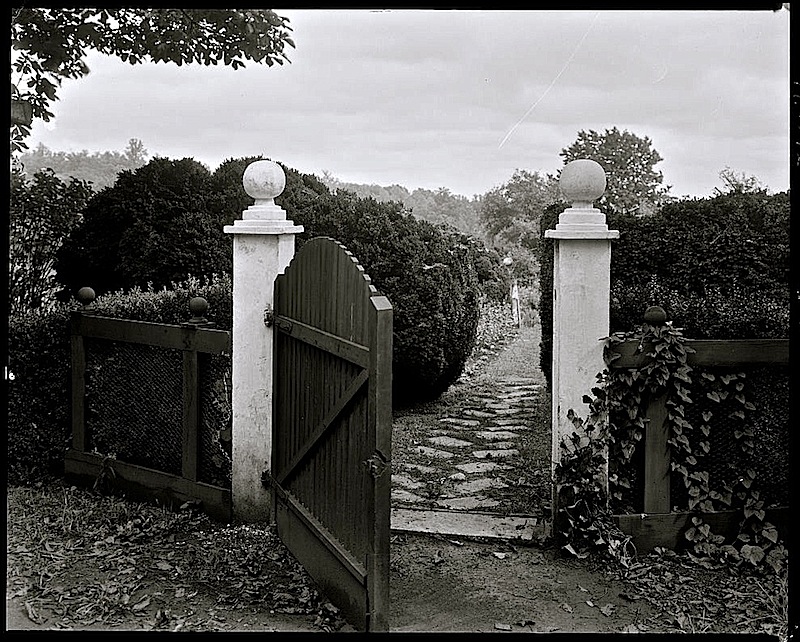
The gate, Redlands, LoCThe Redlands estate is at Carter’s Bridge, near Charlottesville, Virginia.  All photos here taken in 1933, by Frances Benjamin Johnston, via Library of Congress Prints and Photographs Division.

This slideshow requires JavaScript.

Redlands is one of many Virginia houses associated with the descendants of Robert “King” Carter.  It is still owned by members of the Carter family and is open to the public during Historic Garden Week in the spring.