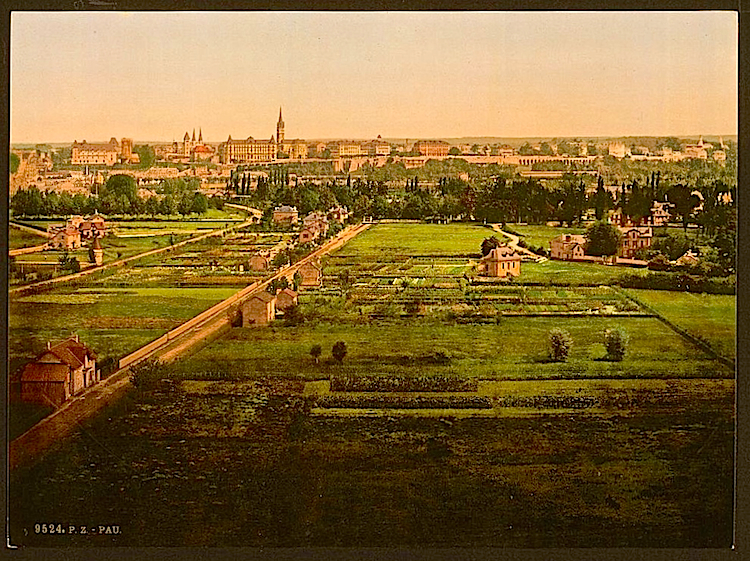
Vintage landscape: Pau, France

Pau from Jurançon, Pyrenees, FrancePau from Jurançon, Pyrenees, France,” between ca. 1890 and ca. 1900, by Detroit Publishing Co., via Library of Congress Prints and Photographs Division.

The image is part of the Library’s collection of photochroms, which includes many views of the architecture, monuments, and landscapes of France.

Vintage landscape: Chambéry, France

House of Rousseau, Library of CongressHouse of Rousseau, Les Charmettes, in Chambéry, France, between ca. 1890 and ca. 1900, a photochrom by Detroit Publishing Co., via Library of Congress Prints and Photographs Division.

Jean-Jacques Rousseau lived at Les Charmettes from 1736 to 1742.  Today, the property is a museum.

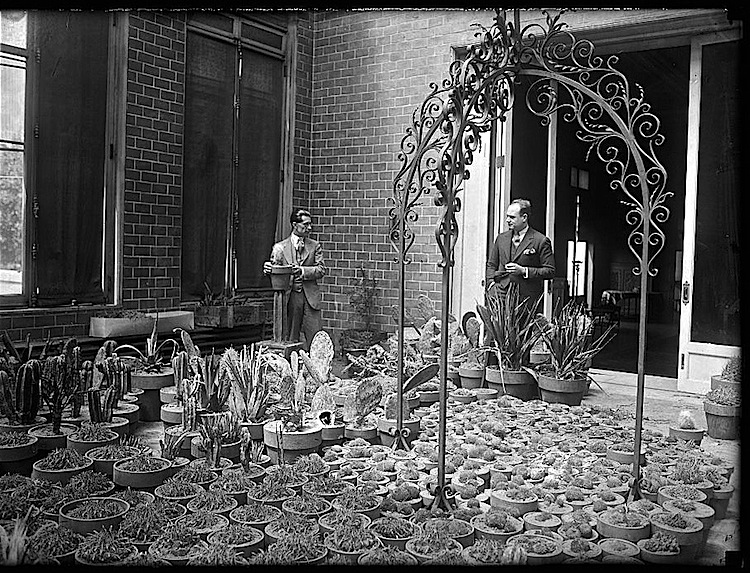
The winter garden: diplomatic cacti

Mexican Embassy cacti, Library of Congress“Mexican ambassador Don Manuel Tellez standing amidst potted cacti in the embassy’s conservatory, Washington, D.C.,” ca. 1925, by National Photo Company, via Library of Congress Prints and Photographs Division.

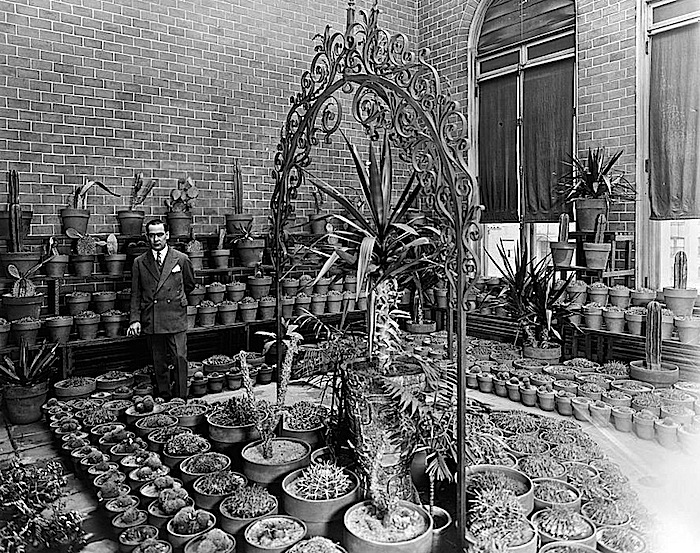
Amb. and artist in cactus garden, Mexican Amb.'s residence, via Library of CongressR.G. Gunther, a Mexican artist, and the Secretary of the Embassy, M.Y. DeNegu, among the cacti on May 28, 1929, also via Library of Congress.

More winter gardens are here.

After she left he bought another cactus
just like the one she’d bought him
in the airport in Marrakesh. . .

Next week he was back for another, then another. . .

— Matthew Sweeney, from “Cacti

The Sunday porch: Montana

This slideshow requires JavaScript.

W. C. Child Ranch, near Helena, Montana, ca. 1890,* from an Historic American Building Survey (HABS), via Library of Congress Prints and Photographs Division.

Mr. Child became rich from prospecting in Montana. He built this octagonal house on his 3,000-acre ranch in the late 1880s.

However, he used it not as a home, but as a party space.  (The whole second floor was a ballroom.) He and his friends — sometimes over 100 — would take the Northern Pacific train from nearby Helena for banquets and dances lasting late into the night.

By 1893, Child was broke and had to assign the ranch to another man.  He was found dead in the house a month later.

Child called the ranch “White Face Farm” for the Hereford cattle he raised there, and he built Montana’s largest barn to protect them during the winters. There are more details here.

The house and barn still exist as a special events center called Kleffner Ranch. *Both HABS pictures here were photocopies of original photographs; the originals are in the collection of the Historical Society of Montana.

Vintage landscape: country home

Country Home, 1904, Library of Congress“Bird’s-eye view of a new home in the country, with formal and vegetable gardens, carriage house, windmill, and farm animals,” ca. 1904, by H.M. Smyth Printing Company (Saint Paul, Minnesota), via Library of Congress Prints and Photographs Division.
Early 20th century farmhouse chic, only $$2,500.

Detail, The Country Home
Detail

I’m wondering about the white shapes in rows to the right of the house. What are they? Beehives?