Vintage landscape: groundcover dreams

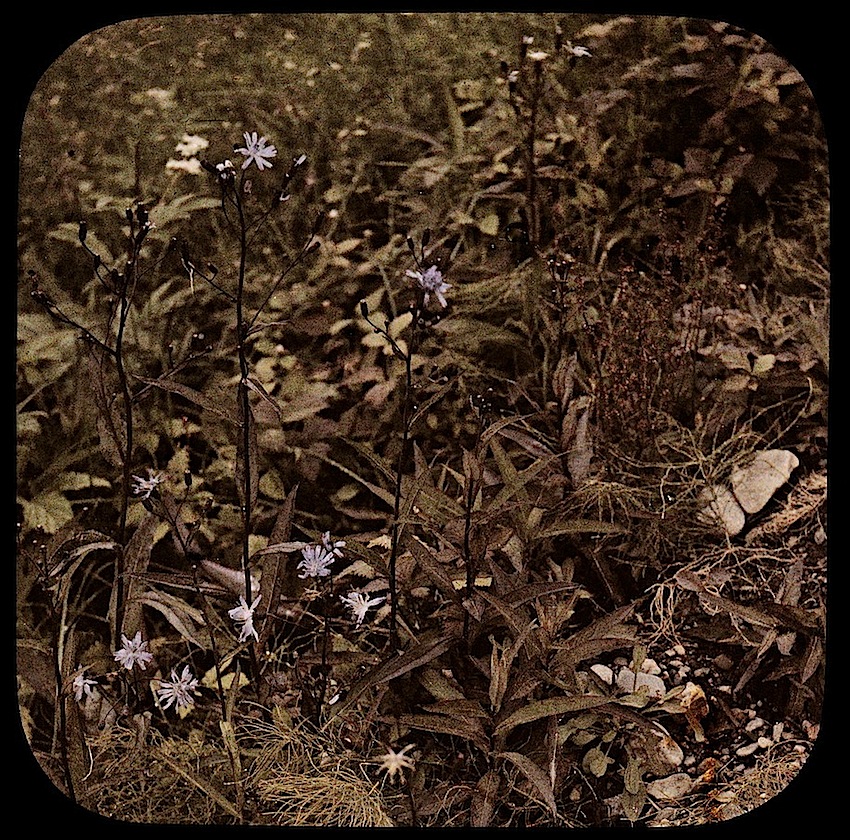
10 Groundcover Dreams, ca. 1912, via NasjonalbiblioteketBlue flowers (blå blomster) in Målselv, Troms, Norway,1912, an autochrome by Hanna Resvoll-Holmsen, via Nasjonalbiblioteket (National Library of Norway) Commons on flickr (all photos here).

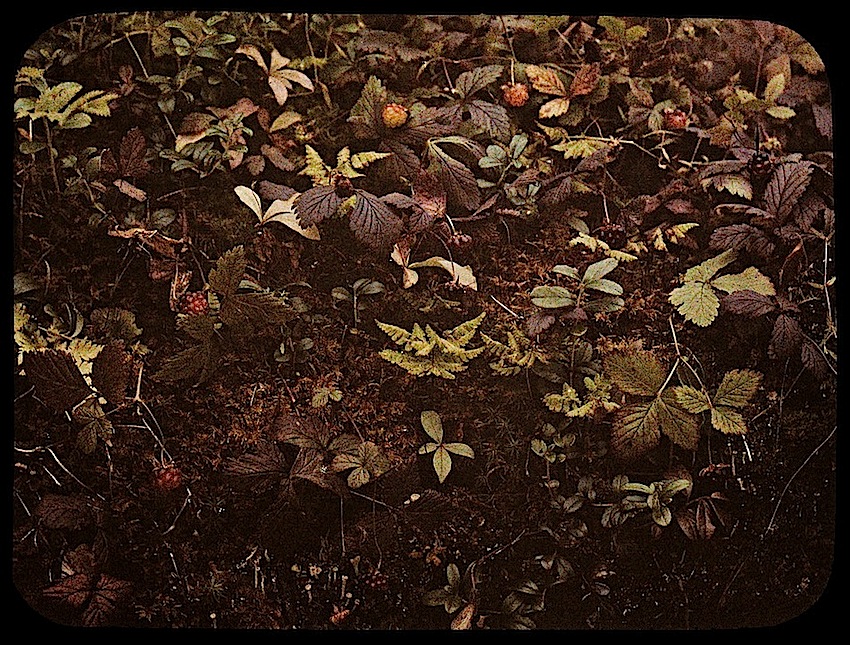
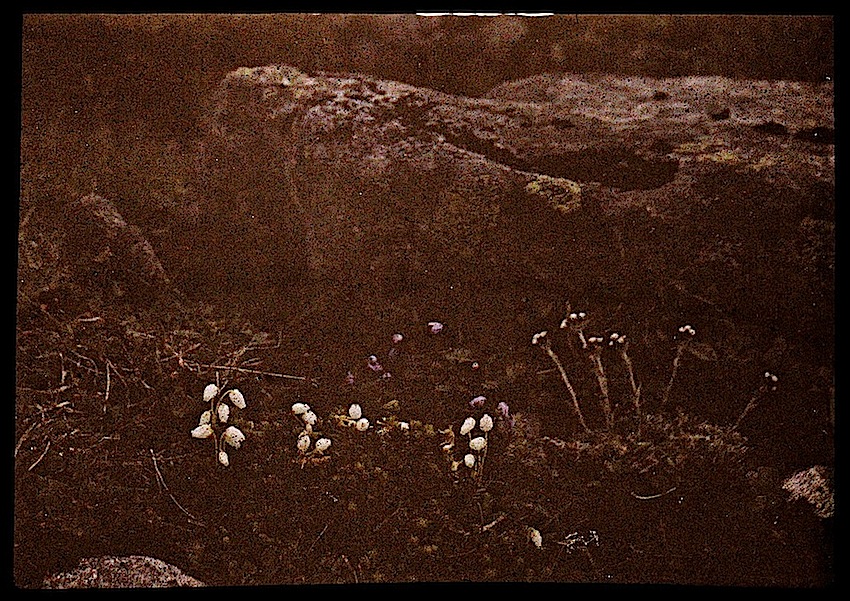
Resvoll-Holmsem was a Norwegian botanist, natural history educator, and conservationist. She took these rather moody early color pictures for her research.
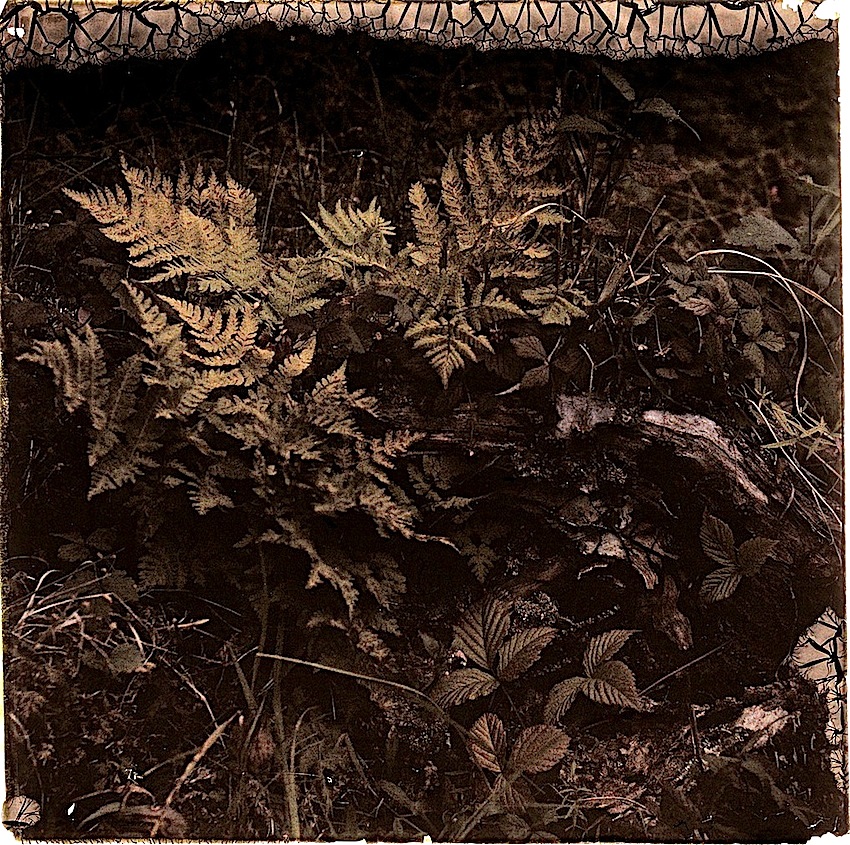
2 Groundcover Dreams, ca. 1912, via NasjonalbiblioteketFerns (bregner), 1912,  in Målselv, a municipality in the county of Troms in northern Norway.
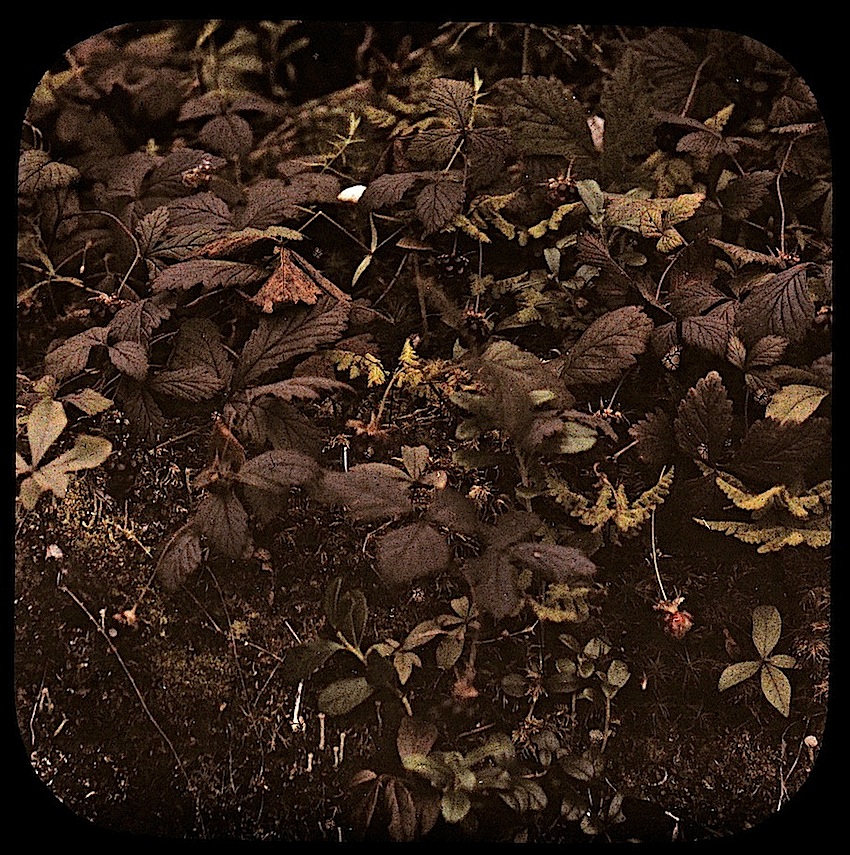
9 Groundcover Dreams, ca. 1912, via NasjonalbiblioteketWild berries, in Målselv, 1912.

8 Groundcover Dreams, ca. 1912, via NasjonalbiblioteketWild berries, in Målselv, 1912.

3 Groundcover Dreams, ca. 1912, via NasjonalbiblioteketAntennaria alpina (alpine catsfoot) and Phyllodoce caerulean (mountain heath), July 27, 1911, in Lom, Oppland, in southern Norway.
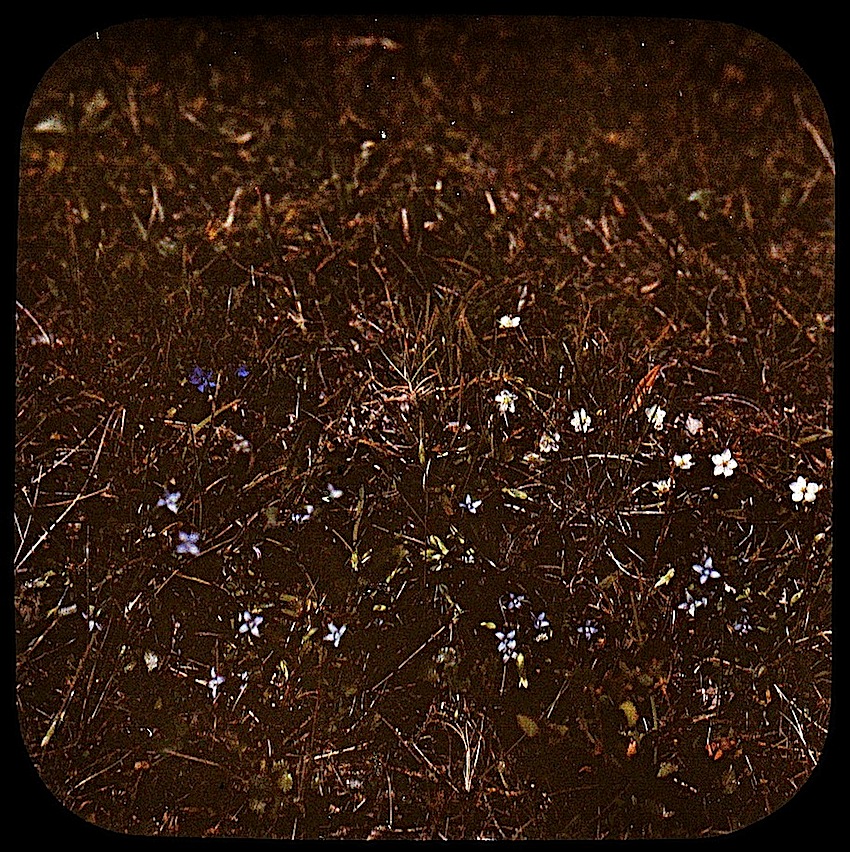
11 Groundcover Dreams, ca. 1912, via NasjonalbiblioteketGentianella tenella (Lapland gentian) and Sagina nodosa (knotted pearlwort) in Lom, July 6, 1911.
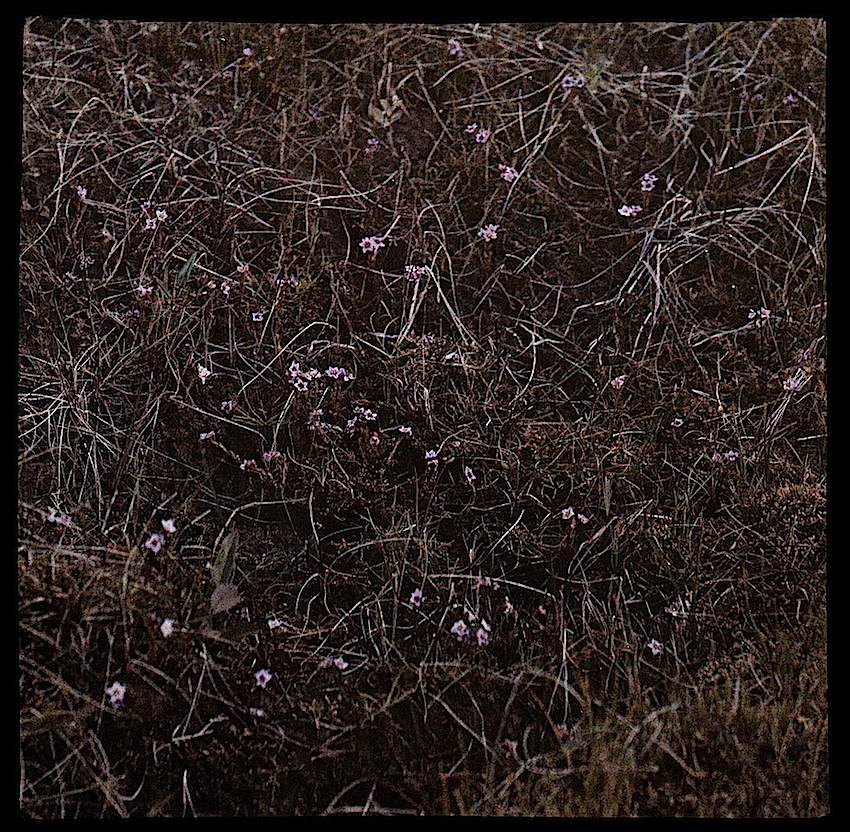
5 Groundcover Dreams, ca. 1912, via NasjonalbiblioteketSedum villosum (hairy stonecrop), Lom, July 16, 1911.
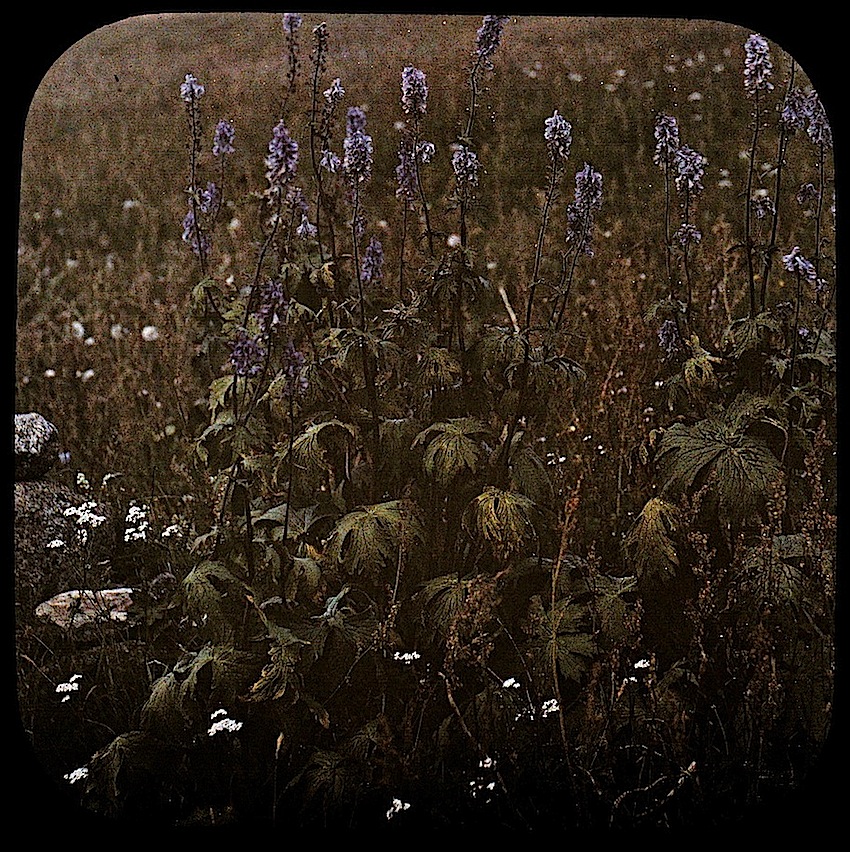
6 Groundcover Dreams, ca. 1912, via NasjonalbiblioteketAconitum lycoctonum  (northern wolfsbane) and yarrow (tyrihjelm og ryllik i naturlige omgivelser),  in Lom, August 7, 1911.
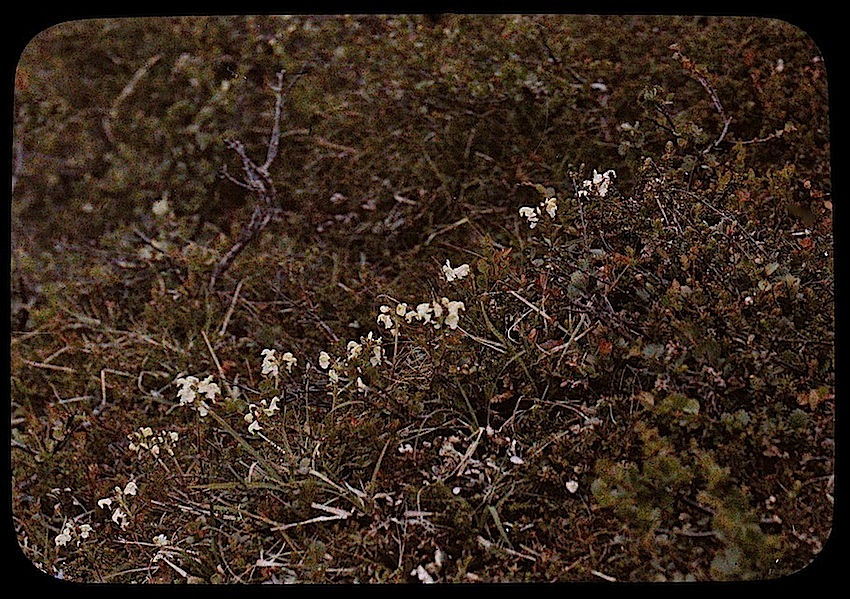
12 Groundcover Dreams, ca. 1912, via NasjonalbiblioteketPedicularis lapponica (Lapland lousewort),  in Lom,  July 5, 1911.
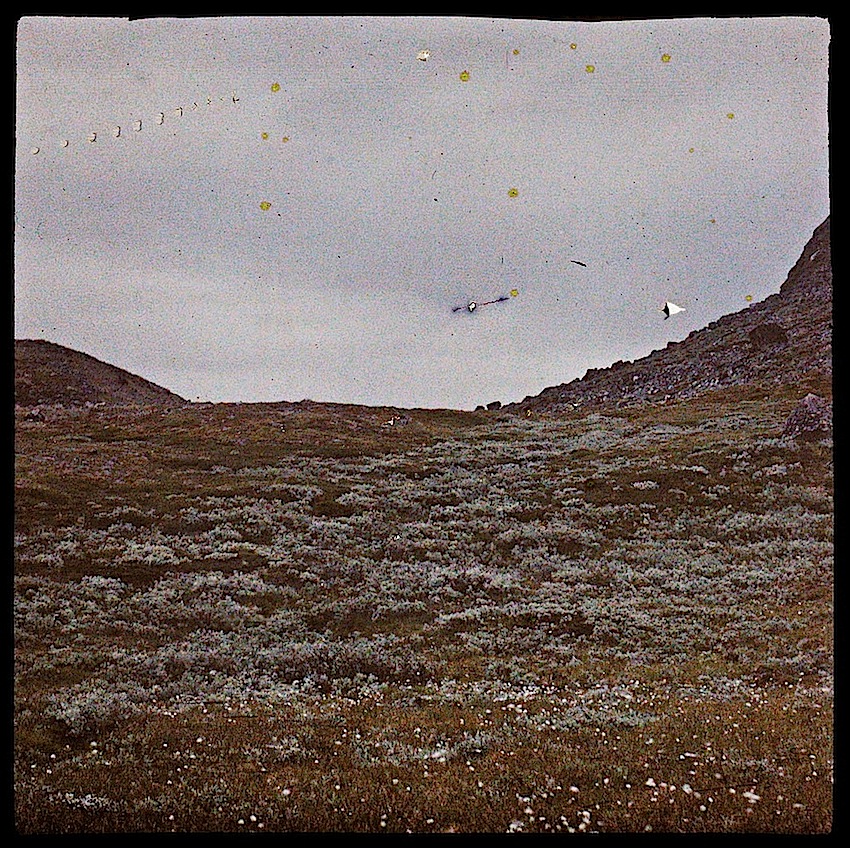
7 Groundcover Dreams, ca. 1912, via NasjonalbiblioteketScrub vegetation, at Lom, July 25, 1911.

To scroll through larger versions of the photos, click on ‘Continue reading’ below.

Oh I think of Alice gone down, down
under groundcover dreams. . .

— John Unterecker, from “…Within, Into, Inside, Under, Within…

Vintage landscape: groundcover

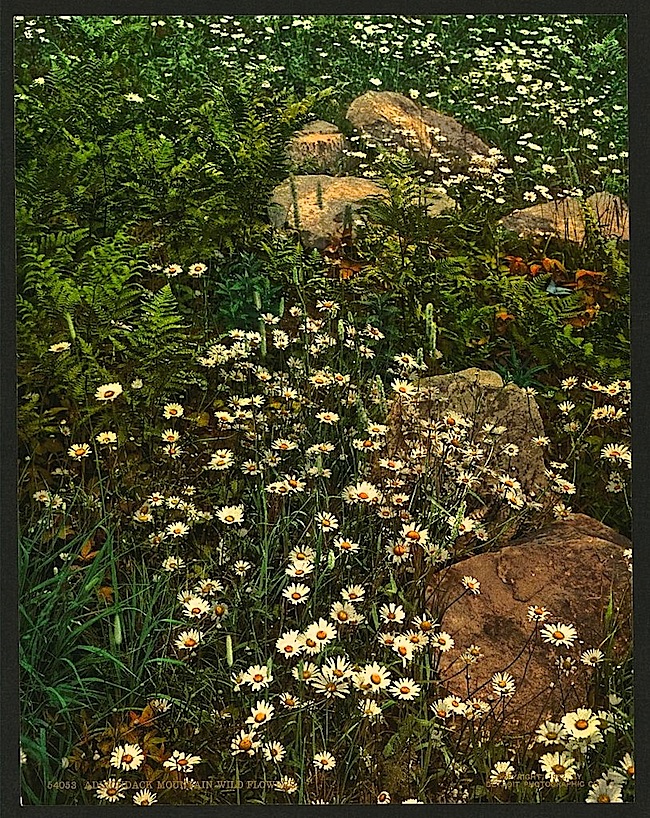
Adirondack flowers, photochrom, Library of CongressAdirondack mountain wild flowers,” ca. 1902, a photochrom by Detroit Photographic Co., via Library of Congress Prints and Photographs Division.

Here at my feet what wonders pass,
What endless, active life is here!
What blowing daisies, fragrant grass!
An air-stirr’d forest, fresh and clear.

— Matthew Arnold, from “Lines Written in Kensington Gardens

Der Maibaum

This slideshow requires JavaScript.

Maypole over the town of Degerloch, near Stuttgart, Germany, May 10, 2015.

In Swabia on the first of May a tall fir-tree used to be fetched into the village, where it was decked with ribbons and set up; then the people danced round it merrily to music. The tree stood on the village green the whole year through, until a fresh tree was brought in next May Day.

— Sir James Frazer, from Chapter 10, The Golden Bough

The Sunday porch: Dyess Colony

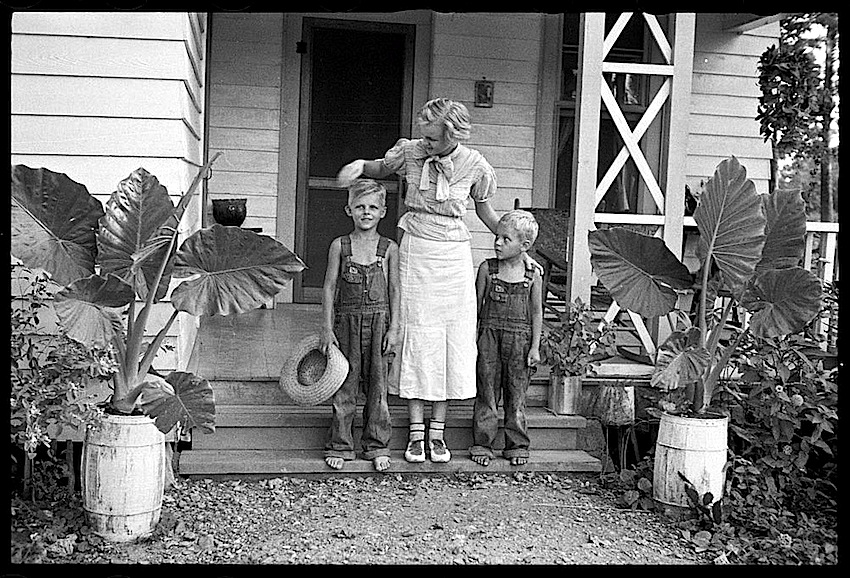
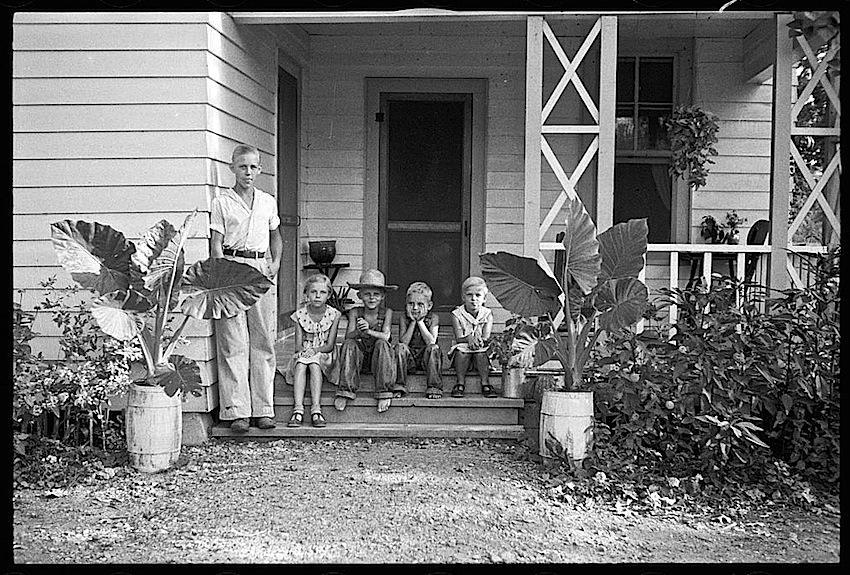
Porch, Dyess Colony, Arkansas, 1940, Library of CongressBeautiful elephant ears. This porch belonged to a farming family who were “resettled” in “Colonization Project No. 1” in Mississippi County, Arkansas.

The photos* were taken in August 1935 by Arthur Rothstein. He was on assignment for the U.S. Farm Security Administration.

Children, Dyess Colony, Arkansas, 1940, Library of Congres

The government-sponsored agricultural community had just been established the year before — the brainchild of local cotton planter William Reynolds Dyess, who was also Director of the Arkanasas Emergency Relief Administration.

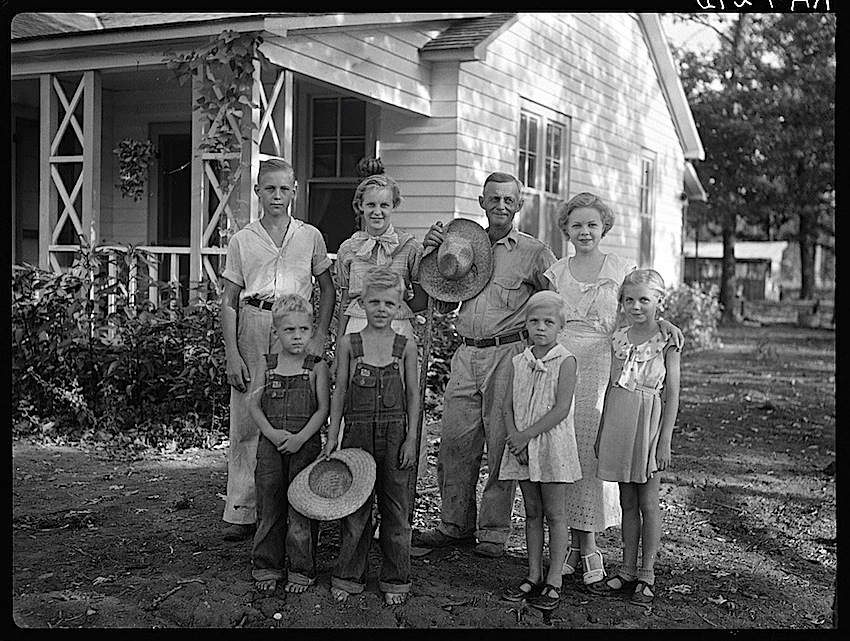
Family, Dyess Colony, Arkansas, 1940, Library of Congres

Dyess wanted to provide aid to displaced tenant farmers and sharecroppers. His idea was to put 800 families on 20 to 40-acre uncleared bottomland plots with new houses.

Dyess Colony, Arkansas, 1940, Library of Congres

The project — scaled back to 500 families — was underwritten by the New Deal Federal Emergency Relief Administration. (It was absorbed by the Farm Security Administration in 1944 and made independent of the federal government in 1951. )

“The colony was laid out in a wagon-wheel design, with a community center at the hub and farms stretching out from the middle. . ,” according to the online Encyclopedia of Arkansas. “Each house had five rooms with an adjacent barn, privy, and chicken coop. . . , plus a front and back porch.”

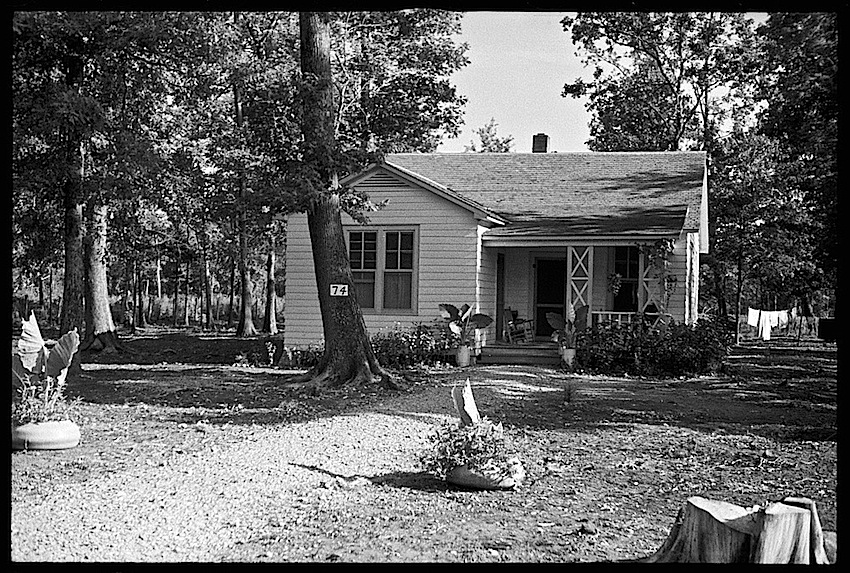
Another Dyess Colony House, Arkansas, 1935, Library of Congress
Another colony house with a mass of flowers along the front path.

Dyess was killed in a plane crash in 1936, and the colony was given his name.

Among the resettled farmers — all of whom were white — was the father of country singer Johnny Cash.  Cash lived  in house #266 from the age  of three until his high school graduation in 1950.

Today, Arkansas State University has restored the Cash home (open to the public) and is working on an adjacent original colony home, as well as the administration building and theater.

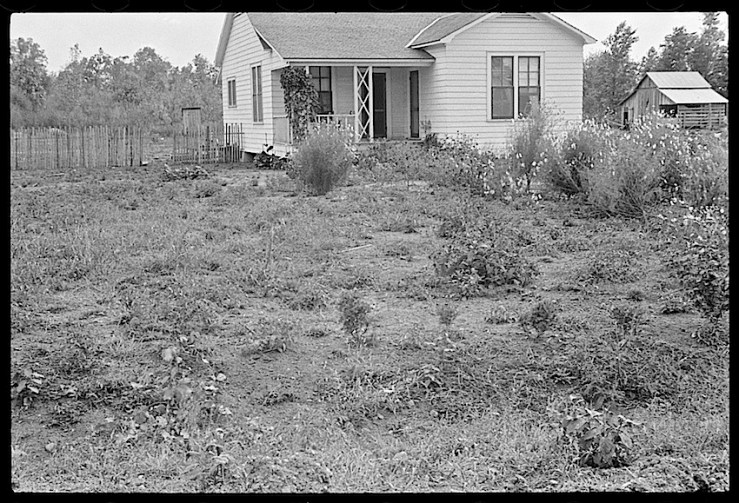
Sharecropper's house, Dyess Colony, Arkansas, 1935, Library of Congress

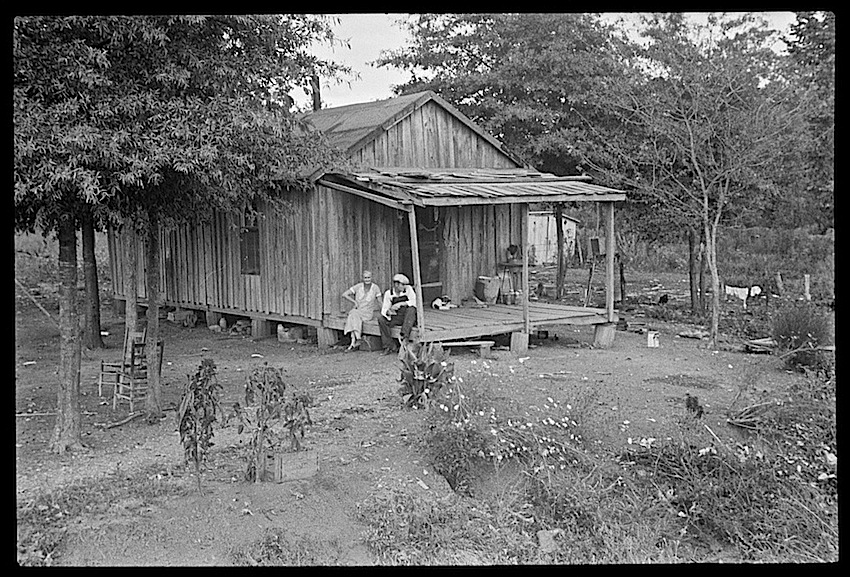
The 1935 photo above by Ben Shahn was captioned, “Sharecropper’s house optioned. Dyess Colony, Arkansas.”  I’m not sure what that means, but the picture gives an example of original local farm housing.

I like the small semi-circle of trees and the two chairs facing out on the left side.


*All photos but the last were by Rothstein, taken in August 1935. All are via Library of Congress Prints and Photographs Division.

Vintage landscape: food cellar

Food storage, 1940, Wabash Farms, Library of Congress“Food storage cellar, Deshee Unit, Wabash Farms [Cooperative], Indiana,” May 1940, by John Vachon, via Library of Congress Prints and Photographs Division.

I found the preserves in the cellar. . . .

The black raspberries were still
delicious, each cluster
burning like years in the brain.

— Michael Waters, from “Preserves