
 “Country flower fair, May 19 and 20, 1918, at the Bordeaux Town Hall. To benefit the war charities and children’s charities.” Poster art by A. Guindet, via Library of Congress Prints and Photographs Division.
Vintage landscape: Verona, Italy
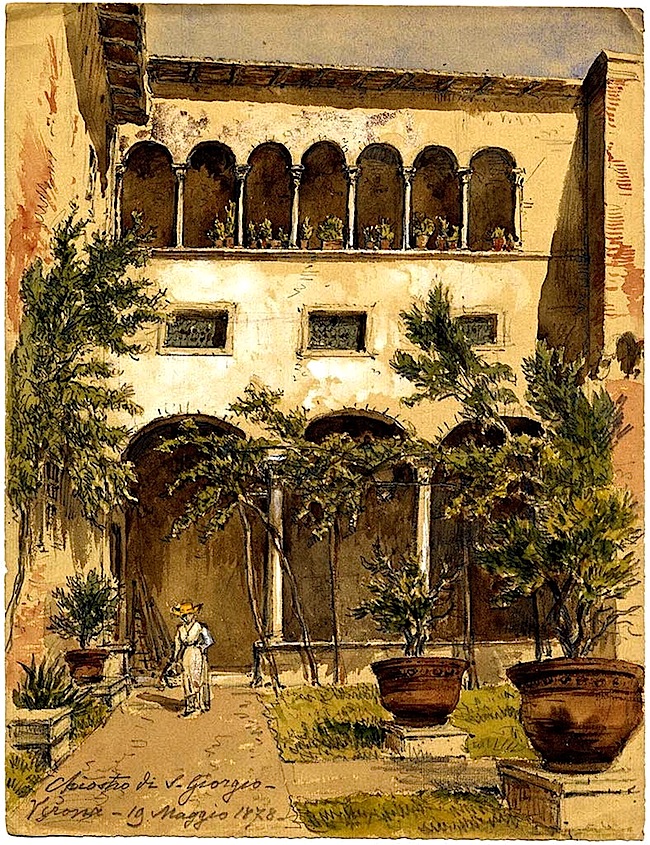 San Giorgio cloister, Verona, Italy, May 19, 1878, via National Archives of Estonia Commons on flickr.
The watercolor is one of many Italian scenes collected (perhaps painted?) by a Baroness Meyendorff in the 1870s and early 1880s.
Life in gardens: from the window
Hagar Olsson — Finnish novelist, essayist, and critic — in her parents’ home in Räisälä (then in Finland, now in Russia), ca. 1920, photo by Edith Södergran, via The Society of Swedish Literature in Finland Commons on flickr.
Edith Irene Södergran was a Finnish poet and one of the first modernists in Swedish-language literature — both she and her close friend Olssen wrote in Swedish. She was also an amateur photographer. She died in 1923, at the age of 31, from tuberculosis.
To scroll through larger versions of the images, click on ‘Continue reading’ below.
Look out our astounding
clear windows before evening.
It is almost as if
the world were blue
with some lubricant,
it shines so.— Denis Johnson, from “Looking Out the Window Poem“
Vintage landscape: a dream of summer
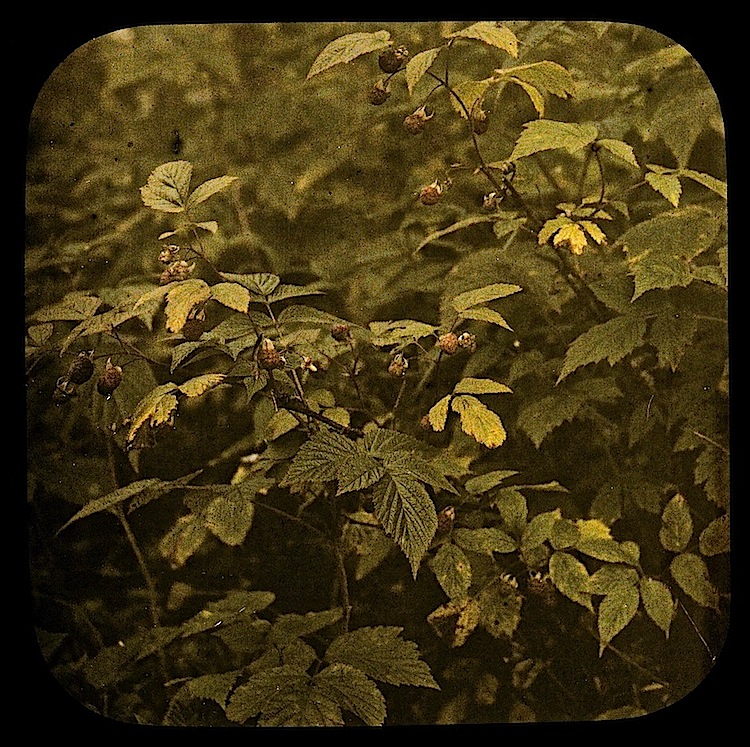
Raspberry bush (bringebær) in Målselv, Norway, 1912, one more autochrome by Hanna Resvoll-Holmsen, via Nasjonalbiblioteket (National Library of Norway).
Dream, dream, for this is also sooth.
— William Butler Yeats, from “The Song of the Happy Shepherd“
The Sunday porch: Delta Farm
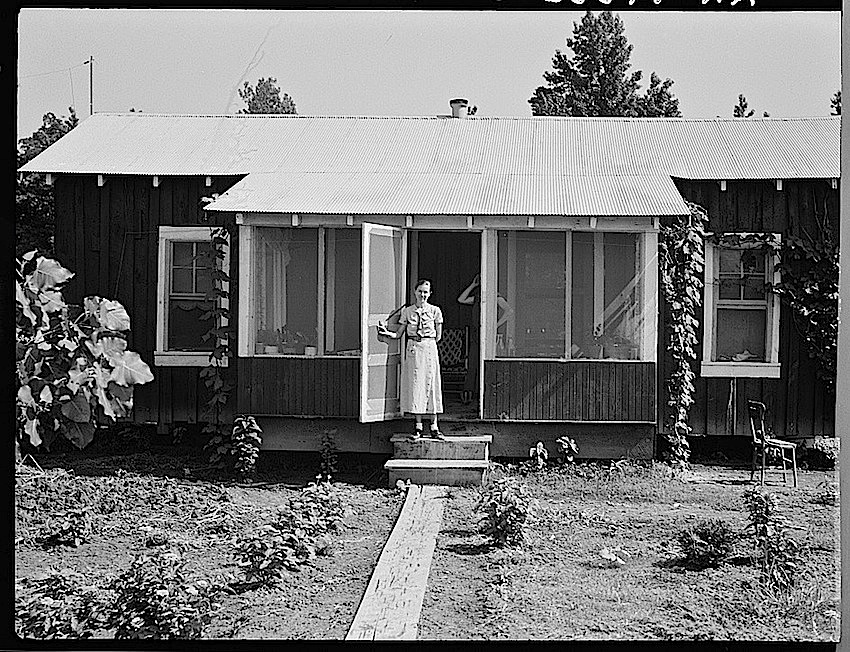 The front porch of a Delta Farm home, Hillhouse, [Bolivar County,] Mississippi,” June 1937, by Dorothea Lange, via Library of Congress Prints and Photographs Division (all photos here).
Delta Cooperative Farm was a privately owned and administered agricultural resettlement project for white and African-American sharecroppers evicted in the mid-1930s.
Founded in 1936 by several religious thinkers, educators, and organizers — including well-known missionary author Sherwood Eddy, who had $20,000 to spend from a follower — the enterprise avowed a commitment to economic equality among the races.
Over half of the first group of 31 farmers to settle at Delta were Black. All members worked together to grow cotton and cut and mill the land’s cypress timber. All of them shared in the first year’s profits: $327 per family.
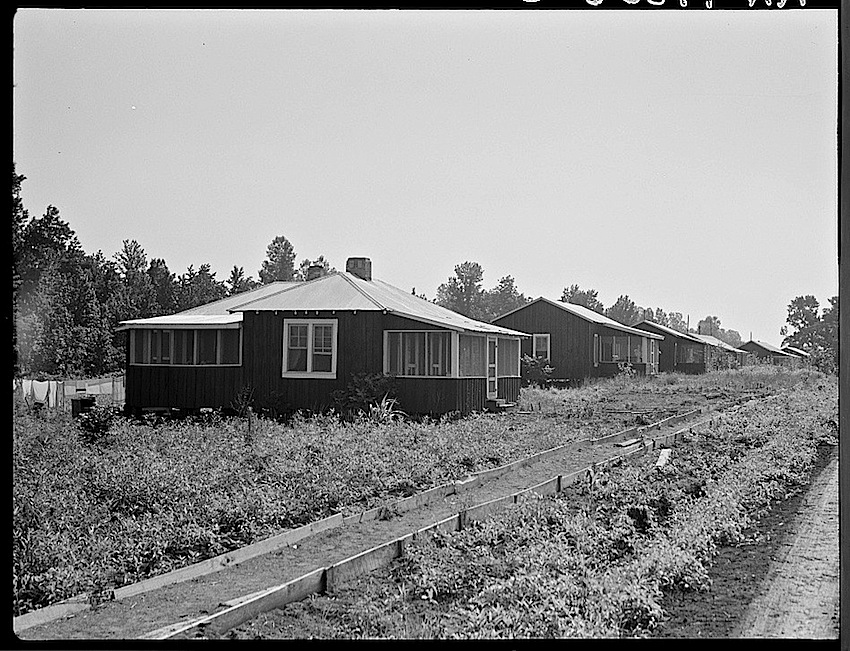
The farm’s small houses had the same simple plan and amenities — “Screen windows and porches are uncommon in cotton cabins,” noted Lange — but they were segregated in two rows: one white, one African-American, separated by a road. And the children attended segregated schools.
All the families shared the produce of a 10-acre vegetable garden, however, which appears in the photos above to have engulfed the cabins.
And they all used the farm’s clinic, nursery, and library and attended the integrated cooperative meetings. There had to be at least two Black members on the five-person farm council.
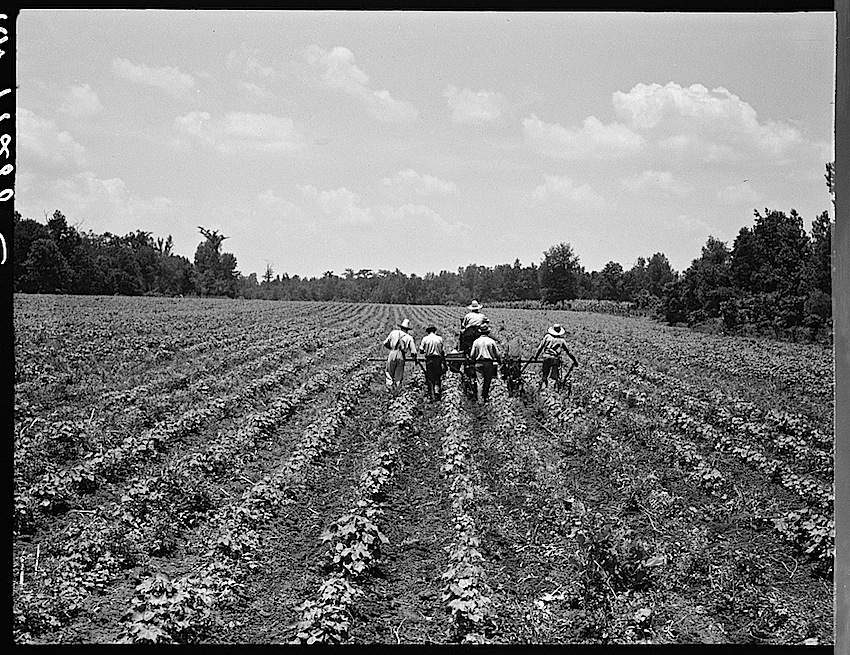
At the start of World War II, the project lost members to wartime industry jobs and military enlistment, and, in 1942, the land was sold.
Four years before, in 1938, the Delta trustees had established a second inter-racial farm project in Mississippi — Providence Cooperative Farm in Holmes County. It operated until 1955, when its staff and residents fled after being threatened by the white citizens of nearby Tchula. The empty land was sold the following year.
You can read a more complete story of the two visionary cooperative farms here.
 enclos*ure