The Sunday porch: Omaha, Nebraska

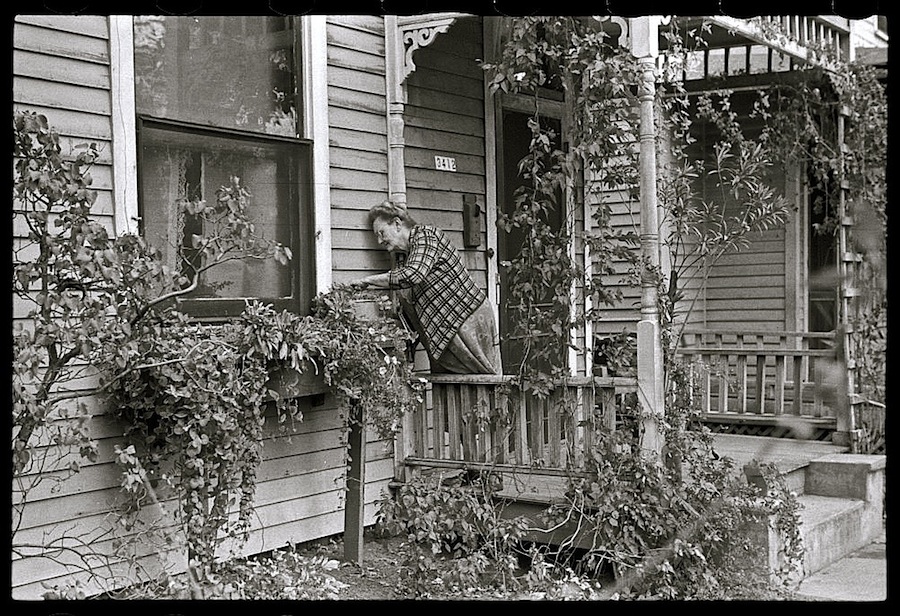
The Sunday porch/enclos*ure: Omaha, Nebraska, 1938, by John Vachon, Library of Congress“Lady tending her flower box, Omaha, Nebraska,” (probably October) 1938, by John Vachon, via Library of Congress Prints and Photographs Division.

(Click on the image to get a better look.)

The photographer, John Vachon, was on his first solo assignment for the Farm Security Administration in October and November 1938.  In addition to taking pictures of rural agricultural projects  in Nebraska, he was tasked with recording scenes of  life in Omaha for a book by Atlantic magazine writer George Leighton.

There is an interesting discussion of his Omaha work here.  His pictures in the city captured “portraits of Depression victims and scenes of comfortable everyday life,” like the one above.

Vachon later worked for Look magazine for 25 years, and he won a Guggenheim fellowship in 1973, two years before his death at age 60.

Vintage landscape: California living

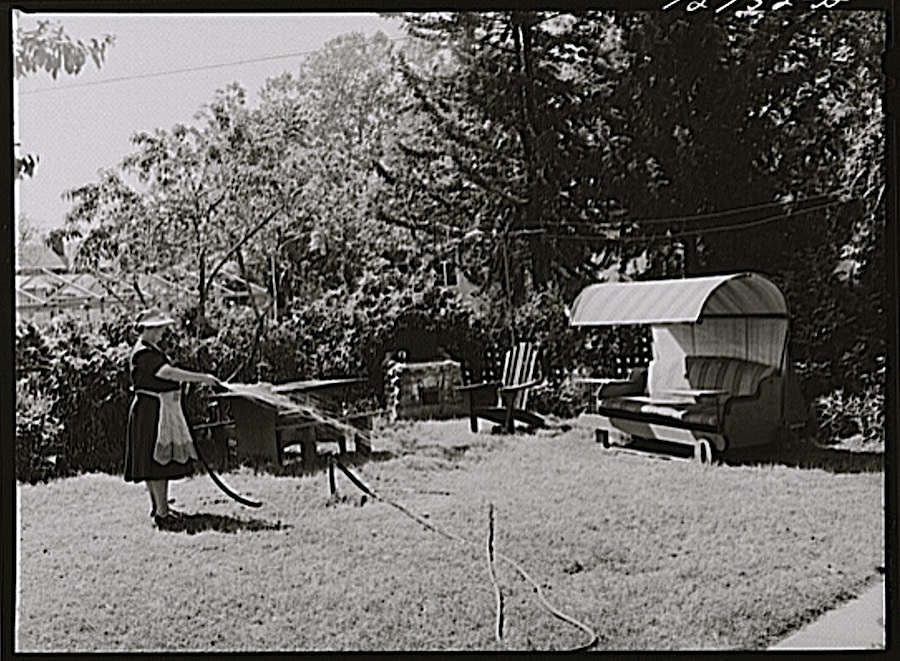
Back yard, Turlock, CA, 1943, by Russell Lee, Library of Congress

I just like this life-in-the-garden photo by Russell Lee, * of a (May) 1942 Turlock, California, backyard.  (Unfortunately, it’s not very sharply focused.)  The caption, possibly by the photographer, reads:

Housewife waters the lawn. All garden furniture and barbecue pit were made by her husband; about one out of every three houses in this town has such an arrangement in the backyard, and during the summer months people eat and spend many hours in their yards.

I particularly like the rolling sofa thing with the awning.  Turlock is located in central California between Modesto and Merced.

Lee was working for the Farm Security Administration/Office of War Information at the time.  He seems to have been sent to Turlock to photograph townfolks being resilient in the face of changes brought on by the war.  He took a number of photographs of this family, described in the Library of Congress online catalogue as from the “upper middle income group.”

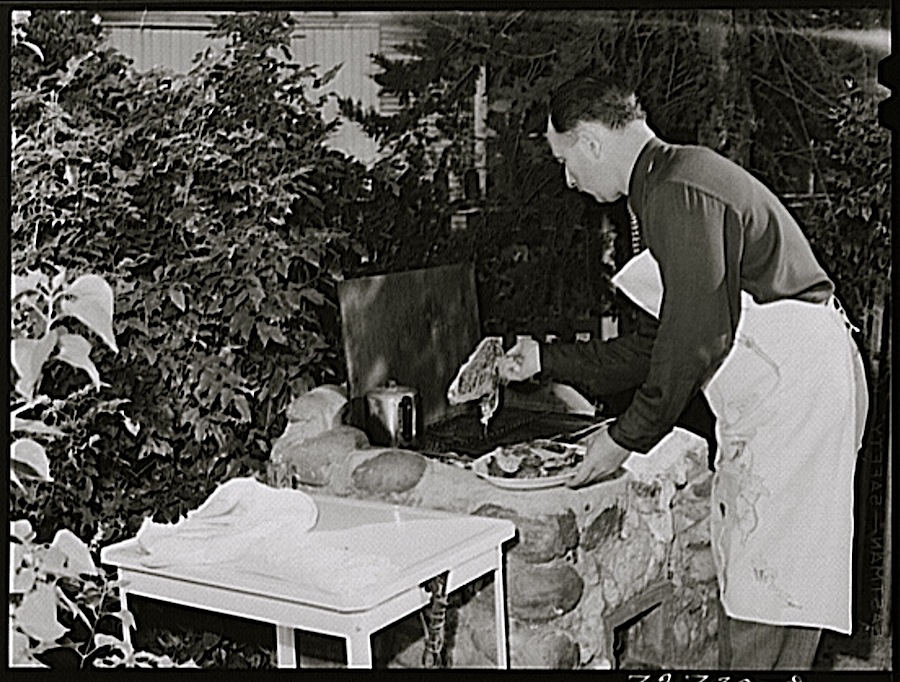
Grillling steaks, Turlock, CA, 1943, by Russell Lee, Library of CongressAbove: “Man of the house barbecues steaks over open grill in his backyard. This family keeps vegetables, fruits and meats in frozen food lockers in town.”

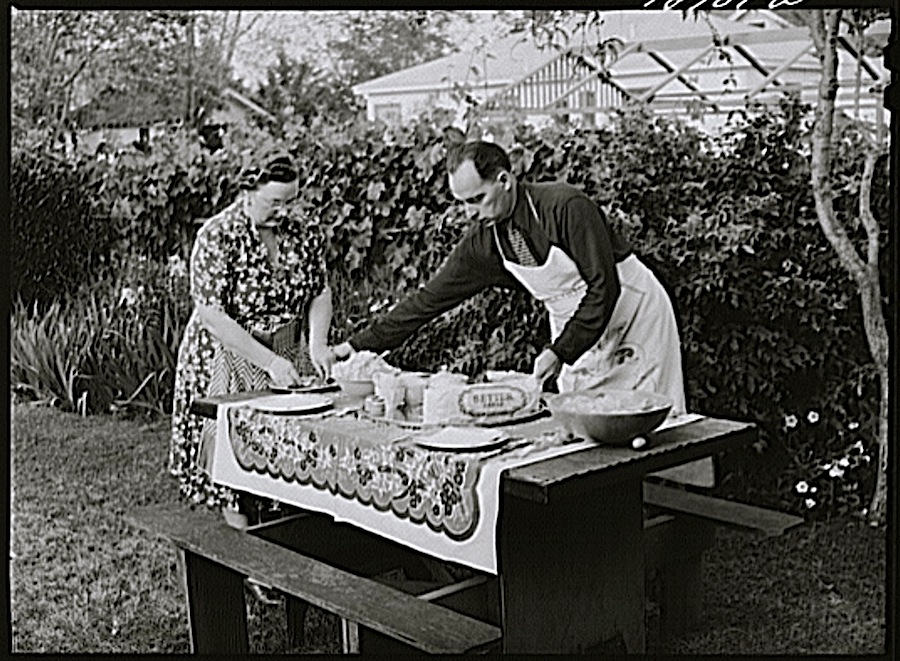
Setting the table, Turlock, CA, 1943, by Russell Lee, Library of CongressAbove: “Husband and wife get ready for dinner in their backyard. Menu: barbecued steaks, fresh peas, potato salad, potato chips, celery and olives, strawberry shortcake, and coffee.”

The package around the loaf of bread says, “Better Bread.”  Over the hedge, the neighbors seem to be putting in a greenhouse.

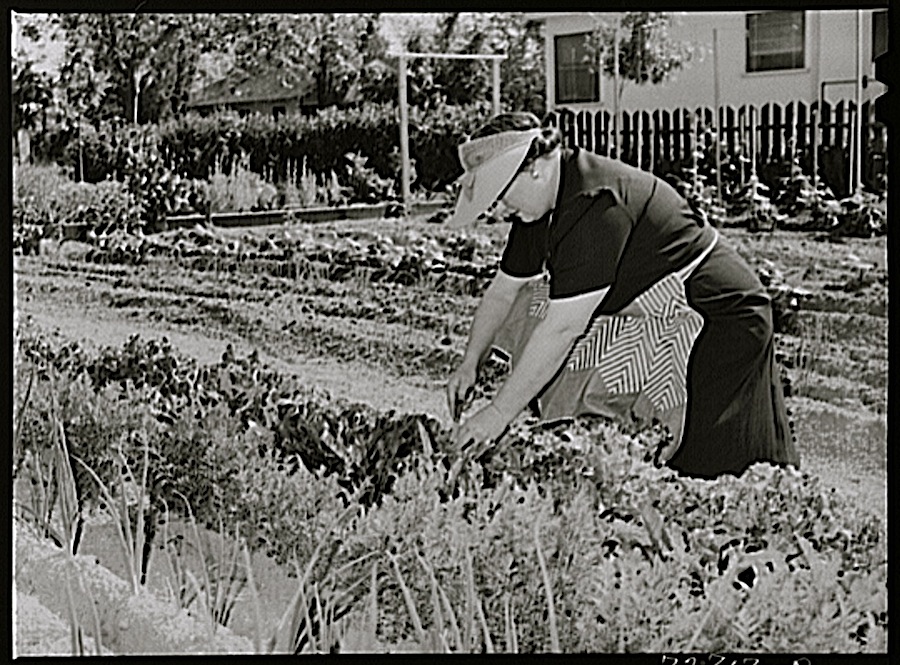
Tending the garden, Turlock, CA, 1943, by Russell Lee, Library of CongressAbove: “Housewife works in her vegetable garden. She lives in small town where there is ample space for gardens; says she would move to country if she couldn’t have a garden in town.”

It’s quite impressive — and particularly that she works it in a dress.  Here’s another view, below:

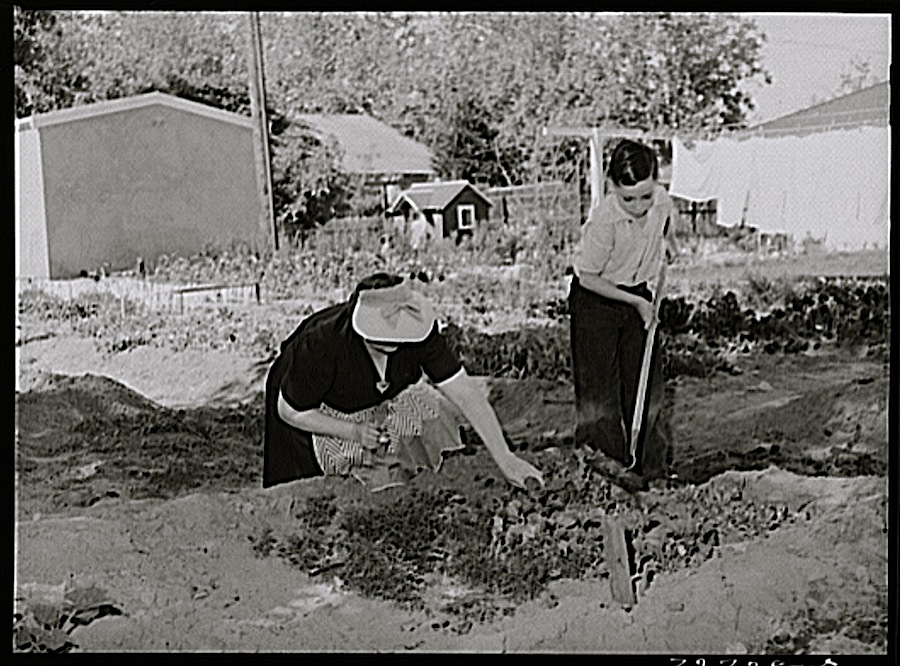
Son's garden, Turlock, CA, 1943, by Russell Lee, Library of CongressAbove: “Housewife helps her son with his garden.”

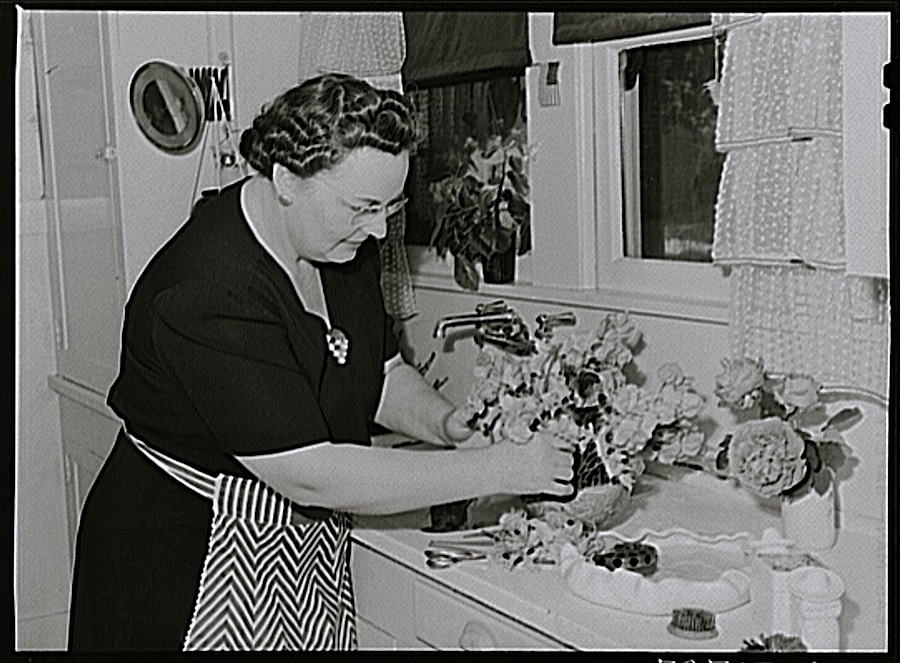
Arranging flowers, Turlock, CA, 1942, by Russell Lee, Library of CongressAbove: “Housewife arranging flowers in her kitchen.”

I like her dotted swiss curtains.

I’m going to take a break from blogging for a few weeks (except for “The Sunday porch”), but I’ll be back for GB Bloom Day in October.


* All photos here via Library of Congress Prints and Photographs Division.

Tan is the color of the season

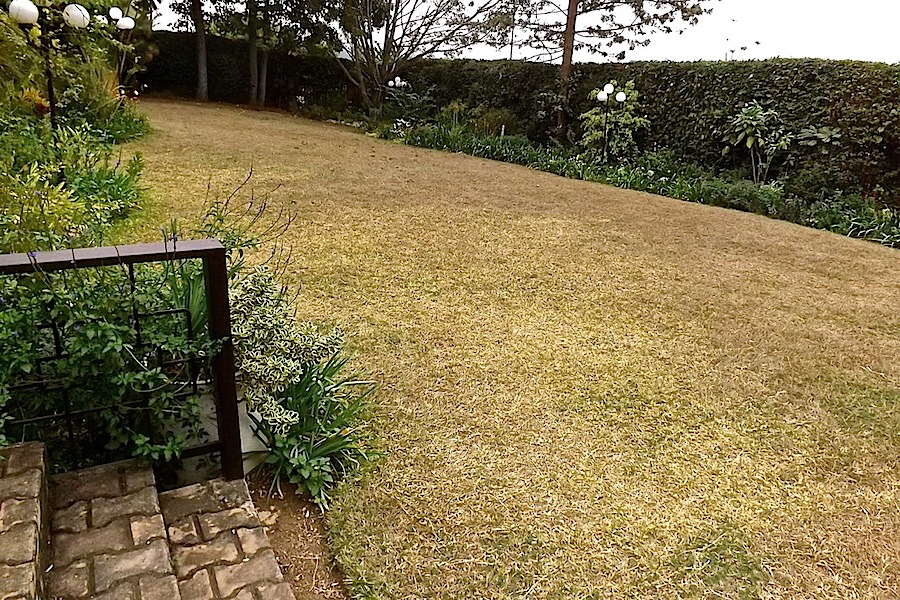
Not much is happening in our garden these days — except that the lawn becomes more and more tan-colored as the long dry season continues.

This year, we stopped watering it about the end of June. It seemed wrong to maintain green grass while the hills in our view were brown, and some city neighborhoods were having their water cut off during the daytime.
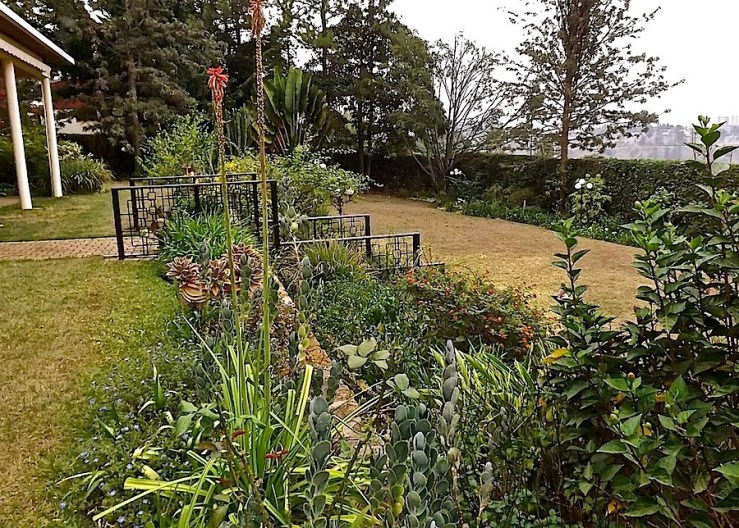
Our garden in the dry season/enclos*ure

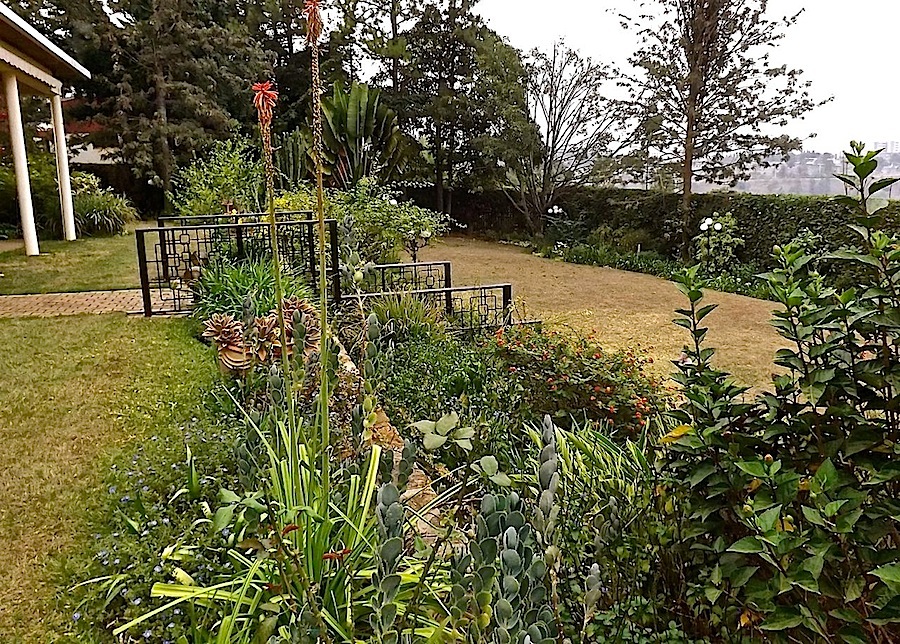
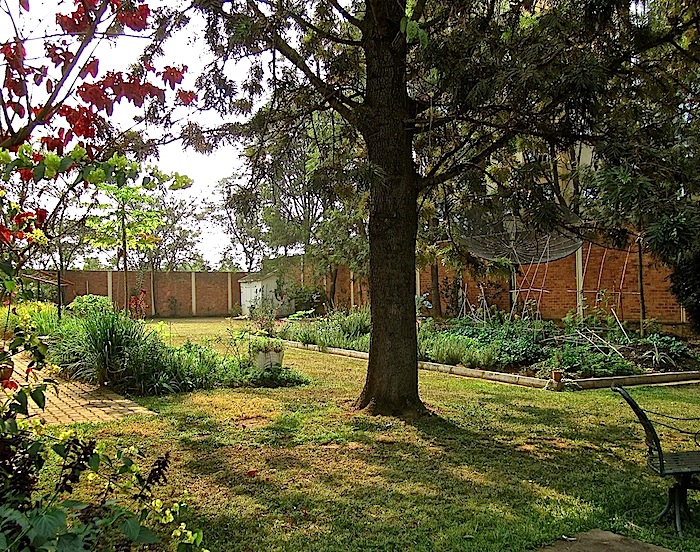
Above is a view of the upper and lower lawns.

I took these pictures this morning.  The sky was actually full of grey, rather menacing clouds (and dusty haze), and there was some wind.   This is not unusual for August, but we haven’t had any rain since May, except very briefly about three weeks ago and almost all night two weeks ago. That last one was nice, and the grass seemed to get a little greener within 12 hours, but it didn’t last.   The long rainy season normally begins in early September.

We do still water the flower borders, although not very generously.  Kniphofia, daylilies, gerbera daisies, lantana, Missouri primrose, and small shrub roses are blooming steadily.  But, of course, most plants are in a “holding pattern” and not really increasing in size.  I want to make some changes and additions to the borders, but I’ll wait until we have a rain or two.  Then, we need to work quickly before the soil becomes too soggy.

Below is the lower lawn, looking south at the steps at the center of the lawn. Actually, the tan is kind of pretty.
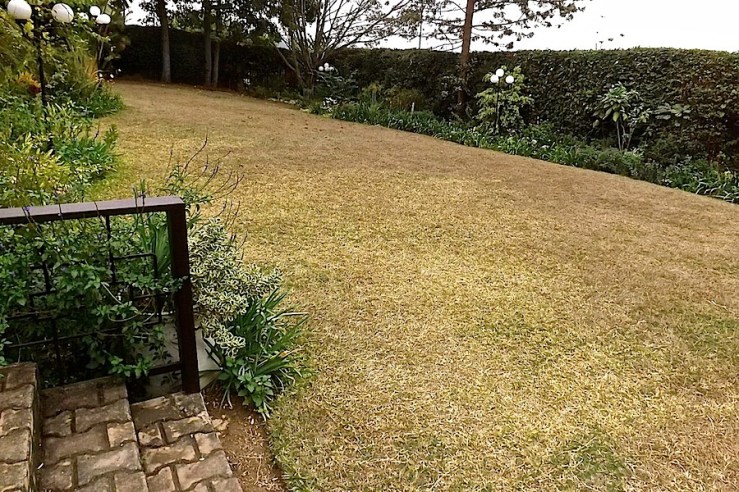
Our garden in the dry season/enclos*ure

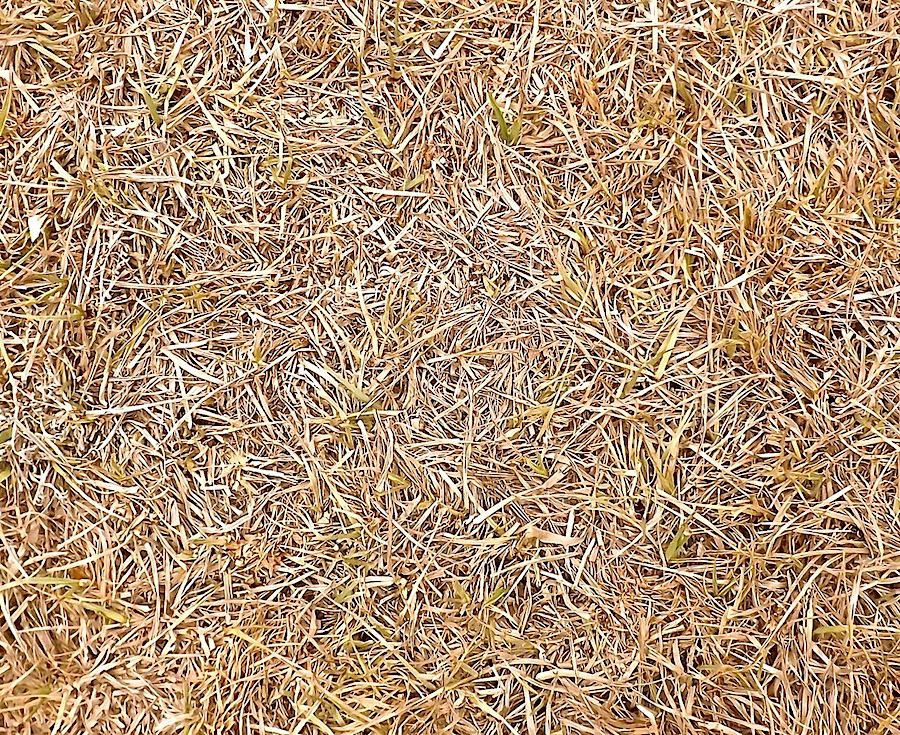
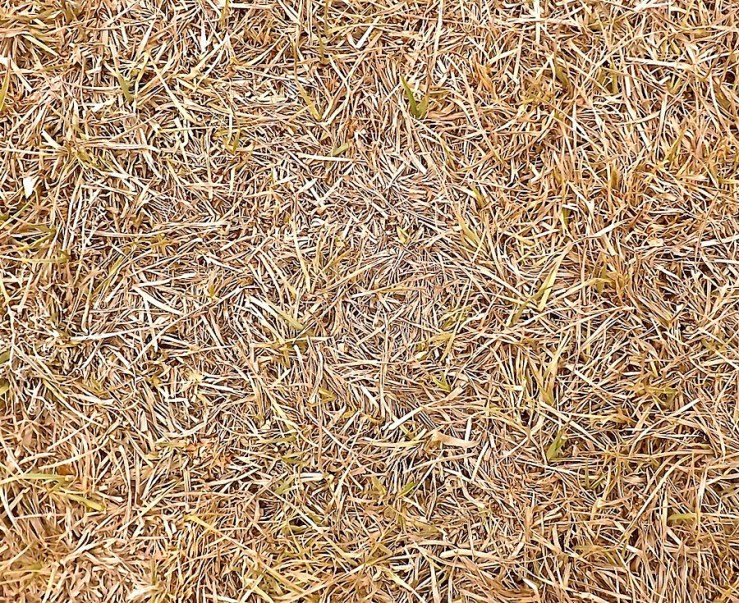
Below, a closeup.  I know it will come back, but it’s hard not to get out the sprinkler.Our garden in the dry season/enclos*ure
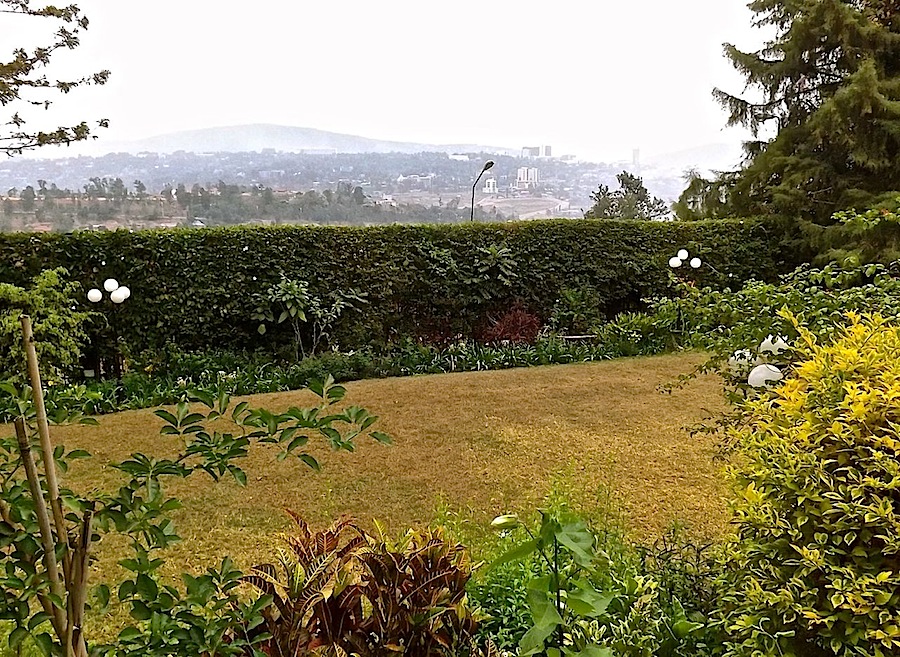
Below,  from the upper lawn, looking back across the lawn to the northwest — with a hazy view of central Kigali.
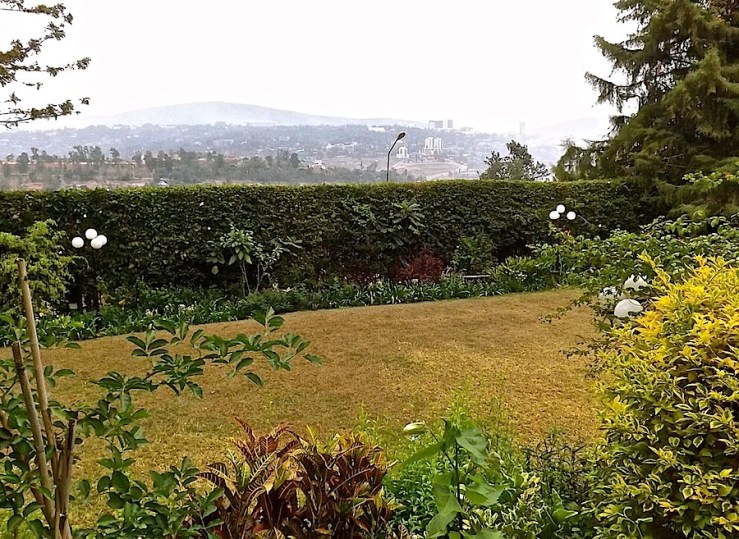
Our garden in the dry season/enclos*ure

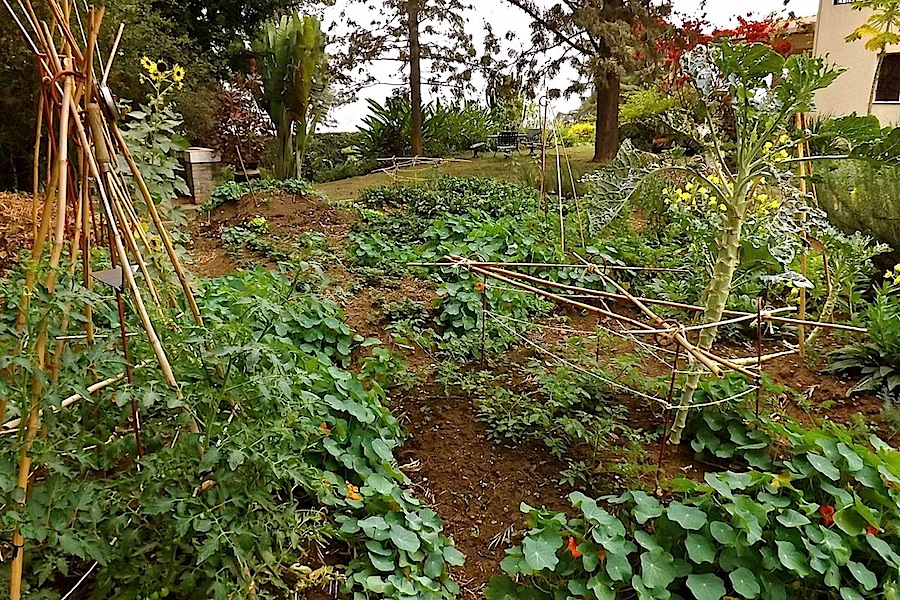
I’ve been working more on the vegetable garden lately.  This summer winter, we’ve divided it into many small* raised beds instead of a few really large ones.  It’s easier to manage now, and the kale, strawberries, basil, dill, arugula, lettuce, and rosemary are doing well — in the photo below.
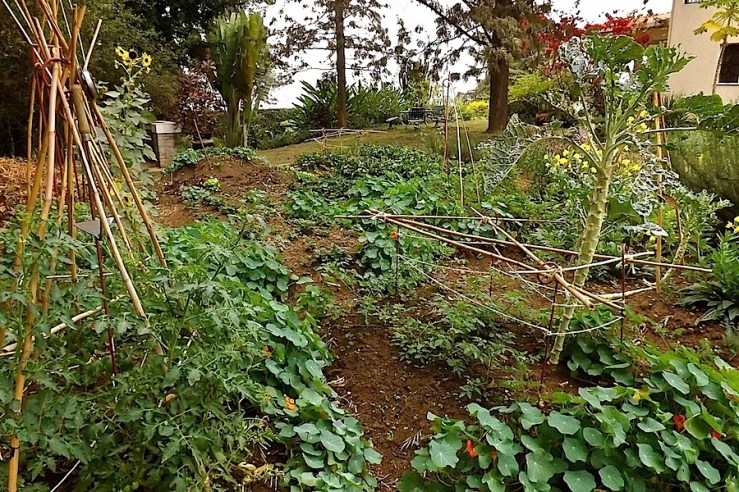
Our garden in the dry season/enclos*ure

That’s one of our two compost piles in the back.  You can just see a bamboo pole sticking out of it.  I pull the pole out occasionally and feel it.  If it’s warm and damp, the pile should be cooking nicely.

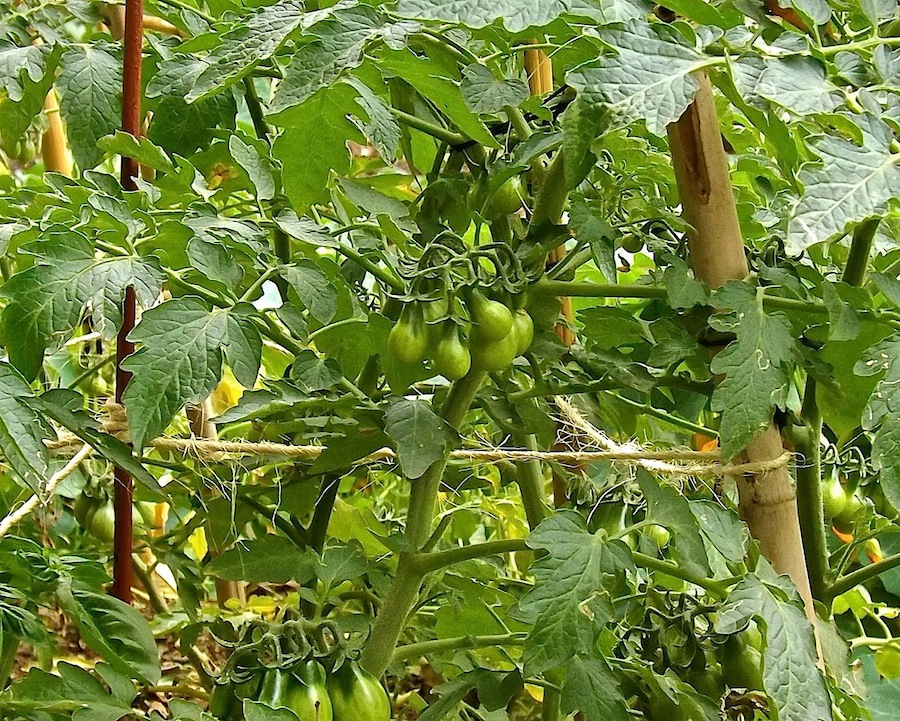
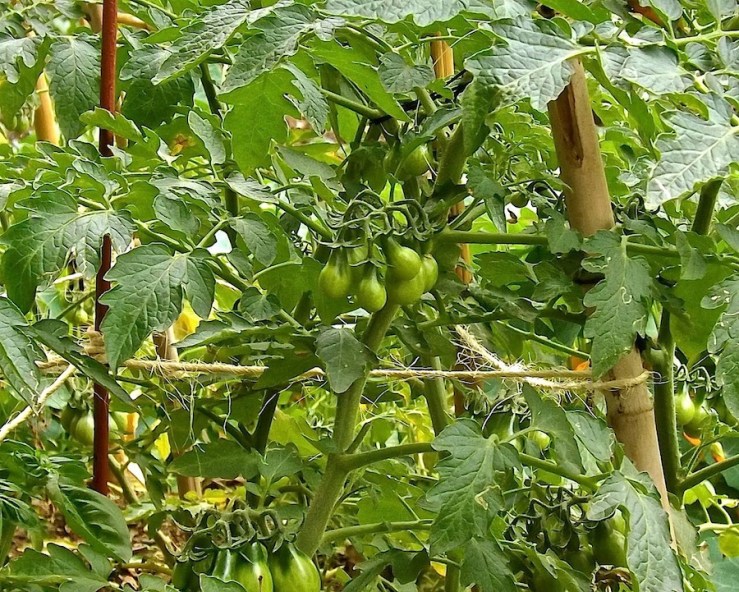
Below are my still-green cherry tomatoes; I planted both red and yellow.  The plants look good now, but when the rains start, they may suffer from too little sun and too much water. The dry season (with watering) is a good time for tomatoes and basil, but I should have started them sooner.Our garden in the dry season/enclos*ure
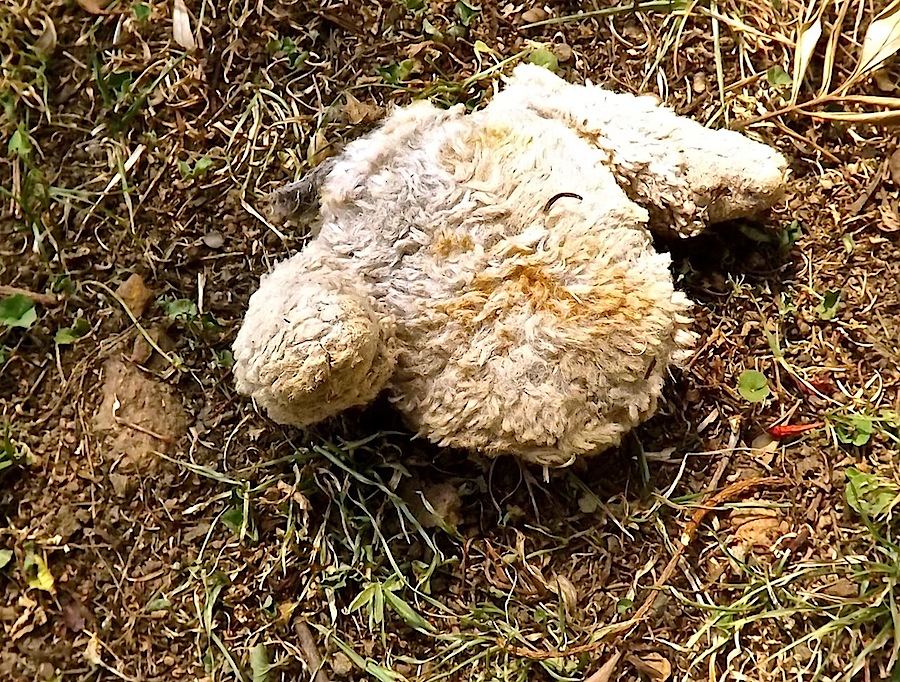
Finally, below, this is a little sad.  It’s an child’s stuffed toy — no head, no legs — that the hawks in the tree above pushed out of their nest.
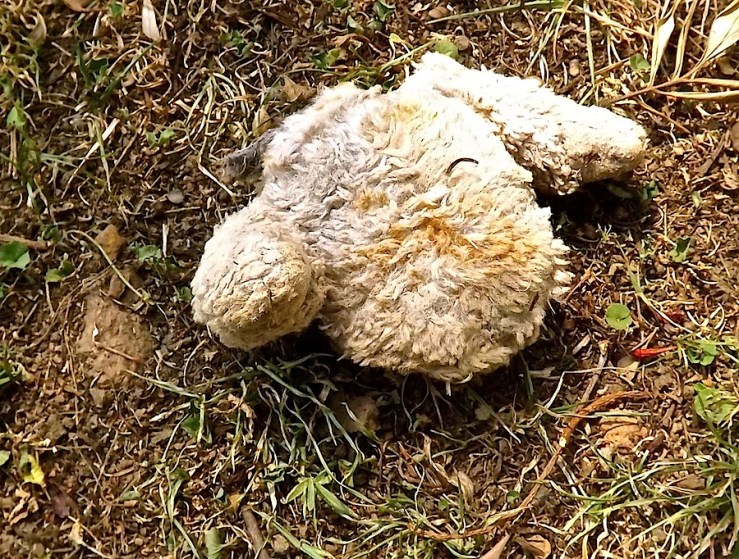
Toy dropped by hawk/enclos*ure

The nest is at least 3′ across and seems to be made of as much waste paper and cloth as of sticks and twigs.  A few weeks ago, I found someone’s bank statement under the tree, complete with name, account number, and balance.  It’s now shredded and in the compost pile; I gave this little fellow a burial there too.

When we get our first big rain and wind storm, I expect to be picking up all sorts of things.


*3′ or 4′ x 5′ (more or less)

Garden Bloggers’ Bloom Day for August

Now is the winter of our discontent
Made glorious summer . . .

by our water hoses.

We are just below the equator here in Rwanda, so technically it is near the end of winter — and of the long dry season, which began in May and normally ends in September.

But last night there was a light rain for about seven hours, so today I don’t need to water anything in the garden, not even the new plants.

The cutting garden (left) and the vegetable garden (right).

We’ve really cut back on watering this year, anyway — none for the grass and a lot less for the planting beds. The grass is going brown, but we still have a lot of flowers, particularly my stalwarts, yellow daylilies and pink gerbera daisies.

The vegetable garden with kale, sunflowers, Missouri primroses, nasturtiums.

My biggest project in the last month has been to tackle our mess of a vegetable garden, which has consisted of several not very productive, but very wide and long raised beds.  Their dimensions just weren’t manageable, so we’ve dug new paths and now all the beds are about 4′ x 5′.

Orange nasturtium in our vegetable garden.
Orange nasturtium bloom in our vegetable garden.

Growing among the argula, lettuce, kale, strawberry, and tomato plants are also celosias, nasturtiums, Missouri primroses, and sunflowers.

Sunflower (one of the shorter varieties) in our vegetable garden.
The garden with celosia, feverfew, supports for tomatoes and beans, with lettuce gone to seed in the back.
Our still rather disorderly garden with celosia, feverfew, supports for tomatoes, with a row of lettuce going to seed along the back.

Recently, I tried to grow American hardy hibiscus from seed (in the vegetable garden, where the soil is best), and, despite the fact that I have always read that this is a very easy thing to do, only about ten seedlings appeared from two packets of seeds, and for weeks they have remained at 2″ tall.

Nothing at all came up from a packet of black-eyed Susan seeds; only one plant from a packet of Verbena bonariensis.  However, alpine strawberry seeds have produced about 15 plants.

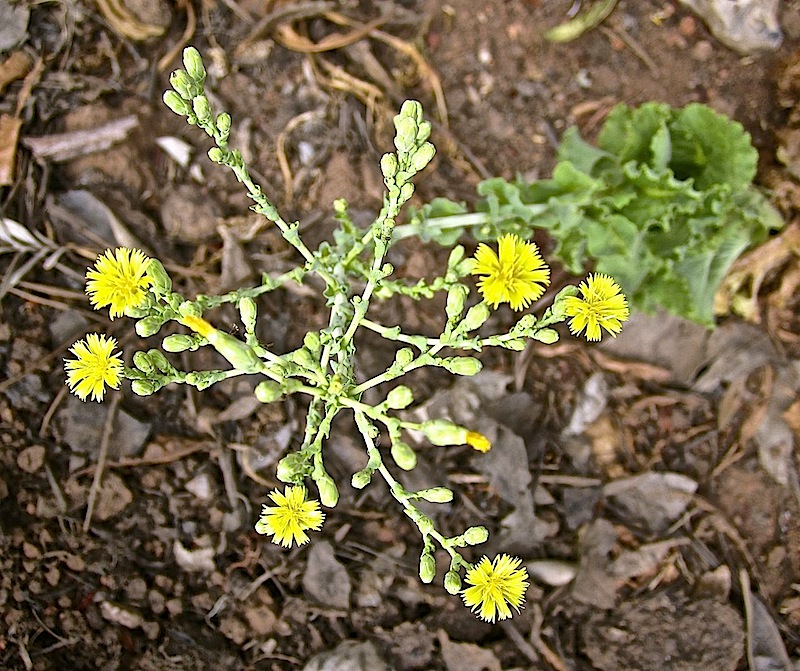
Lettuce flowers.
Lettuce flowers.

I have also done well with re-seeding lettuce, dill, basil, garlic chives, and coriander and with rooted rosemary cuttings. I have high hopes for my cherry tomato plants, many of which have clusters of tiny fruit.

Feverfew in the vegetable garden.
Celosia in the vegetable garden. The fading blooms are full of seeds.

In the long flower border along the lower lawn, I have one bloom from several purple coneflower plants that I have grown from seed.

The first coneflower bloom.
The first coneflower bloom from plants I grew from seed.

Garden Bloggers’ Bloom Day is the 15th day of every month.  Check out May Dreams Gardens to see what’s blooming in other garden bloggers’ gardens today.

Vintage landscape: berry season

Fruit jars on fence, 1938, Dorothea Lange, Library of Congress/enclos*ure

“Fruit jars being sterilized on old lady Graham’s back fence in berry season. Near Conway, Arkansas,” June 1938, by Dorothea Lange, via Library of Congress Print and Photographs Division.

We just gather and can peas, beans, berries, and sausage when we butcher the hogs in the winter. We put up seventy-five quarts of berries, sixty of beans, sixty of kraut, thirty of grapes and twenty of peaches. I swapped two bushels of grapes and got two bushels of peaches and I swapped one bushel of grapes for one bushel of apples.

— Mrs. Graham (?), Library of Congress online catalogue