Vintage landscape: into the beautiful

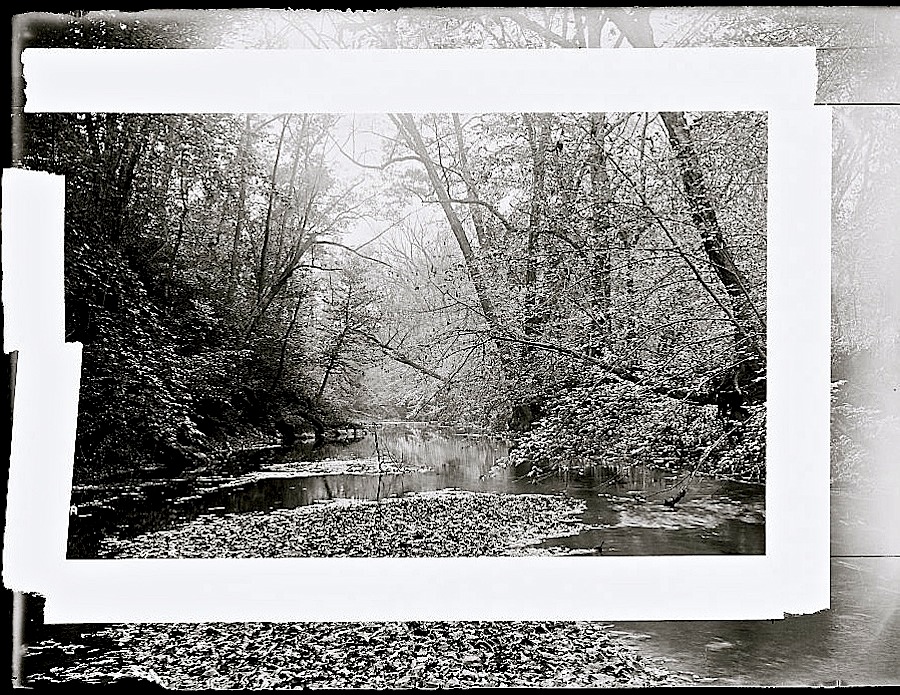
Rock Creek Park, Washington, D.C., ca. 1918-20, Natl. Photo Co. Collection, Library of CongressRock Creek Park in Washington, D.C., ca. 1909-32, photographers unknown.

As imperceptibly as Grief
The Summer lapsed away—
Too imperceptible at last
To seem like Perfidy—
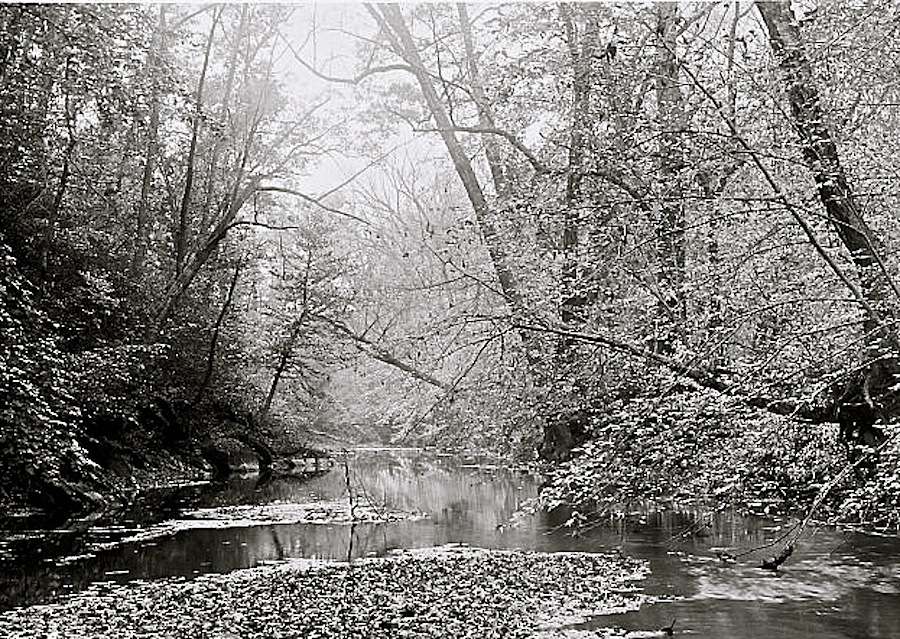
Rock Creek Park, Washington, D.C., ca. 1918-20, Natl. Photo Co. Collection, Library of Congress

A Quietness distilled
As Twilight long begun,
Or Nature spending with herself
Sequestered Afternoon—
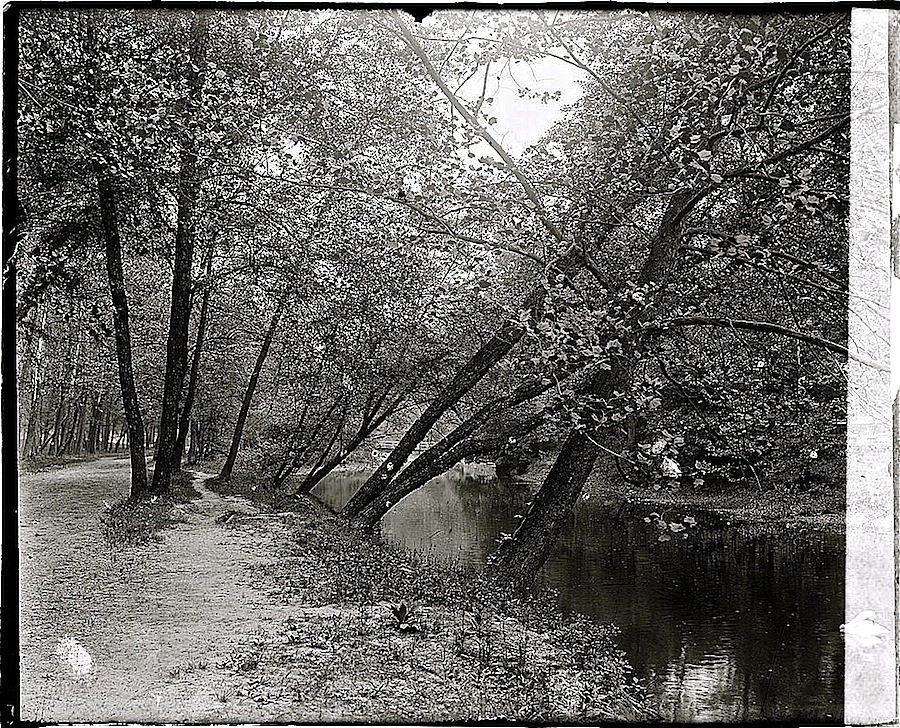
Rock Creek Park, Washington, D.C., ca. 1918-20, Natl. Photo Co. Collection, Library of Congress

The Dusk drew earlier in—
The Morning foreign shone—
A courteous, yet harrowing Grace,
As Guest, that would be gone—
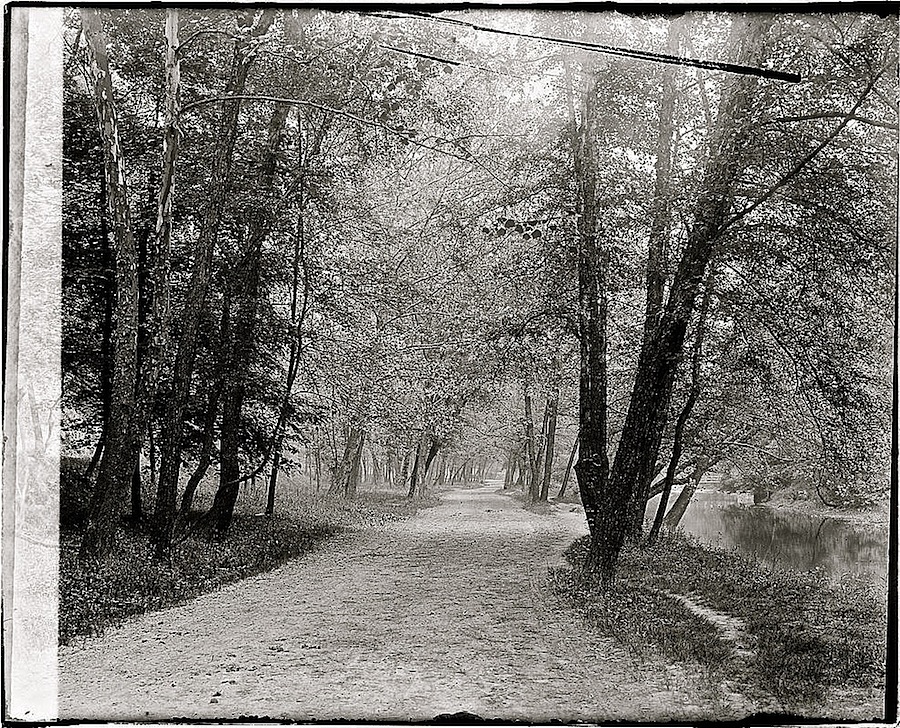
Rock Creek Park, Washington, D.C., ca. 1918-20, Natl. Photo Co. Collection, Library of Congress

And thus, without a Wing
Or service of a Keel
Our Summer made her light escape
Into the Beautiful.
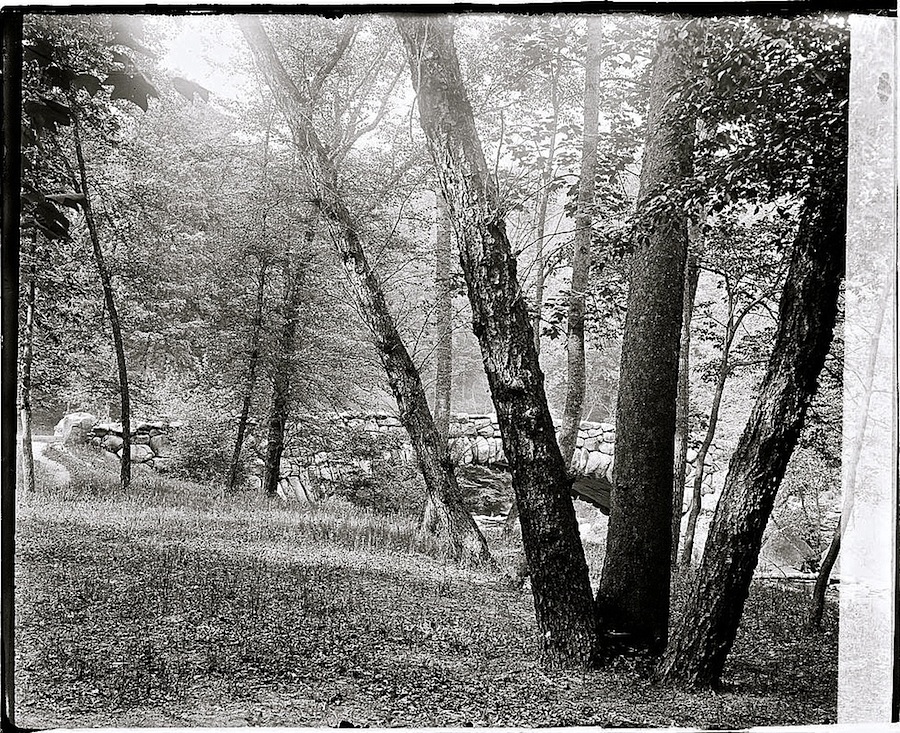
Emily Dickinson, Poem 1540 (Johnson 523)

 
Rock Creek Park, Washington, D.C., ca. 1918-20, Natl. Photo Co. Collection, Library of Congress

All photos via National Photo Company Collection, Library of Congress Prints and Photographs Division — first two: ca. 1909-23; last: ca. 1909-32; all others: ca. 1918-20.

The almost 2,000-acre Rock Creek Park was established in 1890, making it one of America’s oldest national parks.
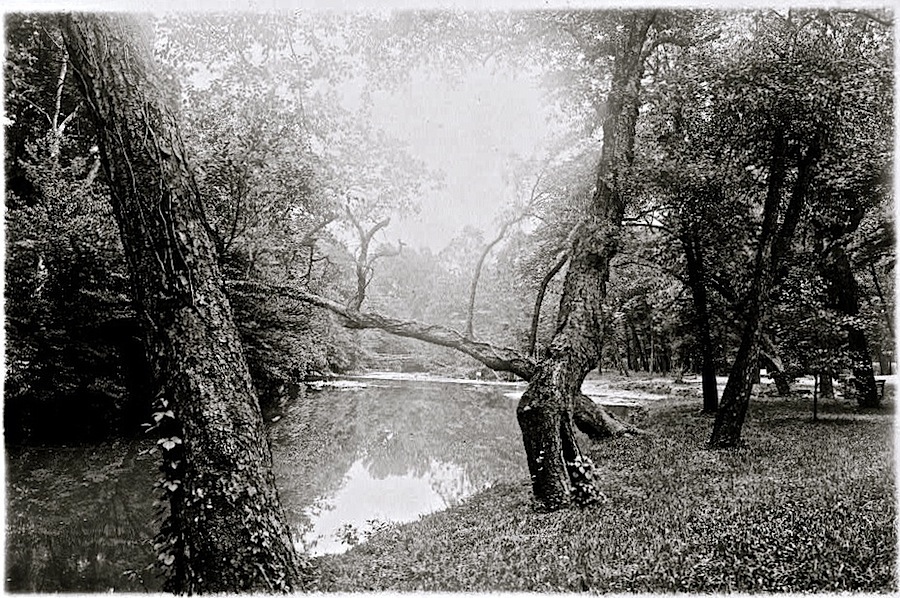
Rock Creek Park, Washington, D.C., ca. 1918-20, Natl. Photo Co. Collection, Library of Congress

The Rock Creek Park Day 2013 Festival will be held next Saturday, September 28, to celebrate the park’s 123rd. birthday.  For more information, click here.
Picturing D.C. (year by year)

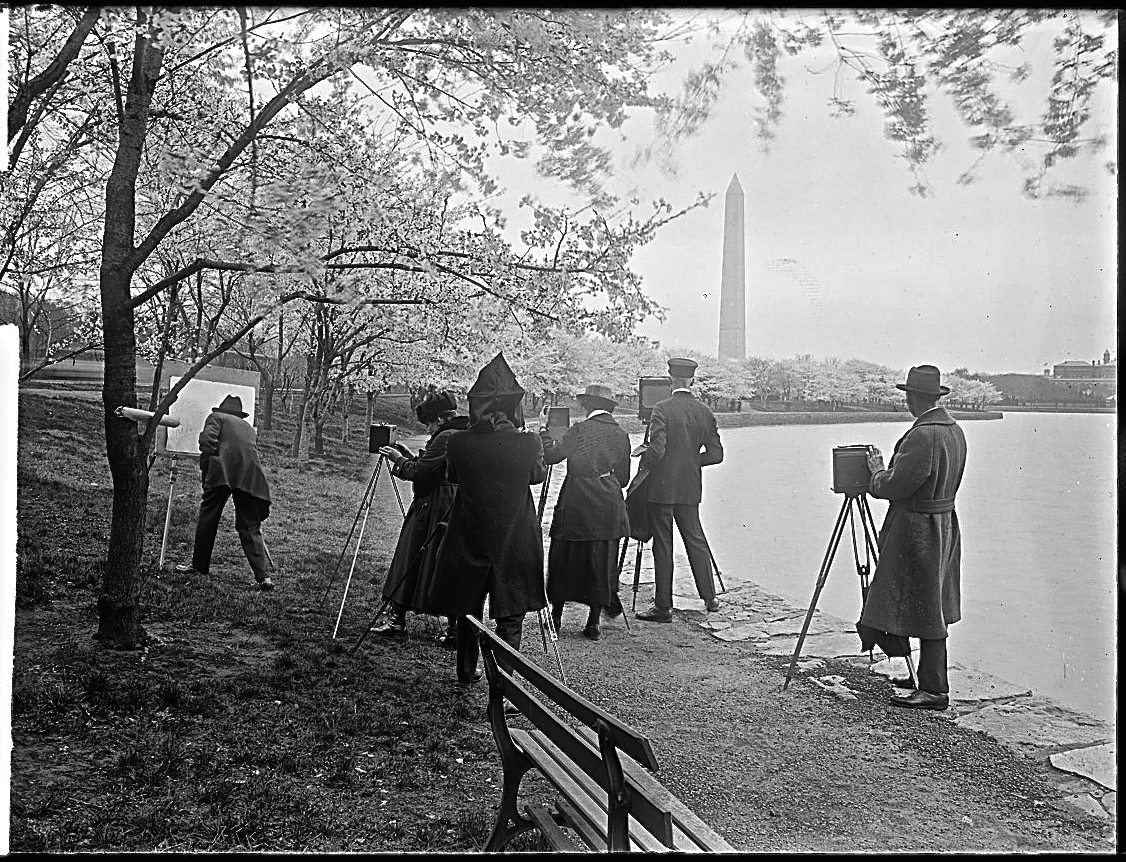
"Photographers shooting cherry blossoms, Washington D.C., April 7, 1922," by National Photo Company, Library of Congress Prints and Photographs Division.
“Photographers shooting cherry blossoms, Washington D.C., April 7, 1922,” by National Photo Company, Library of Congress Prints and Photographs Division and D.C. Past.

I want to share my recent discovery of D.C. Past, a tumblr blog that is “curating the photographic history” of Washington, D.C.

Kate Birmingham and Guillermo Esteves choose 19th and 20th century photos from the online catalogues of the Library of Congress and the National Archives.  However, when shown on D.C. Past, the images are generally much larger and (pretty darn) sharp.

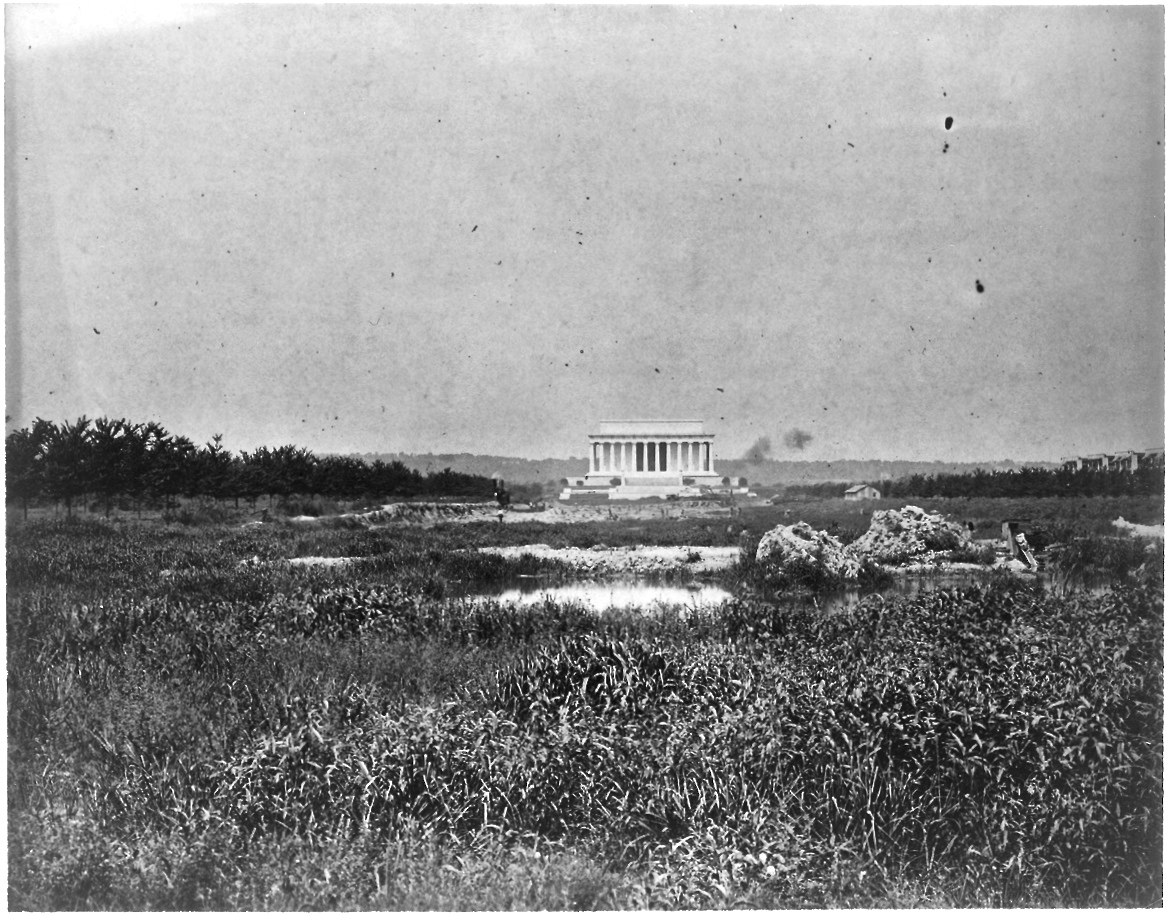
I love this early shot, below, of the Lincoln Memorial — the Reflecting Pool is still only a wetland.

"Lincoln Memorial with Marsh in foreground," 1917, by National Photo Company, Library of Congress Prints and Photographs Division.
“Lincoln Memorial with marsh in foreground,” 1917, by National Photo Company, Library of Congress Prints and Photographs Division and D.C. Past.

Four years later. . .

"Lincoln Memorial from Monument," May 30, 1922, by National Photo Company, Library of Congress Prints and Photographs Division.
“Lincoln Memorial from Monument,” May 30, 1922, by National Photo Company, Library of Congress Prints and Photographs Division and D.C. Past.

You’ll have to go to D.C. Past, here and here, for the “much larger” part.

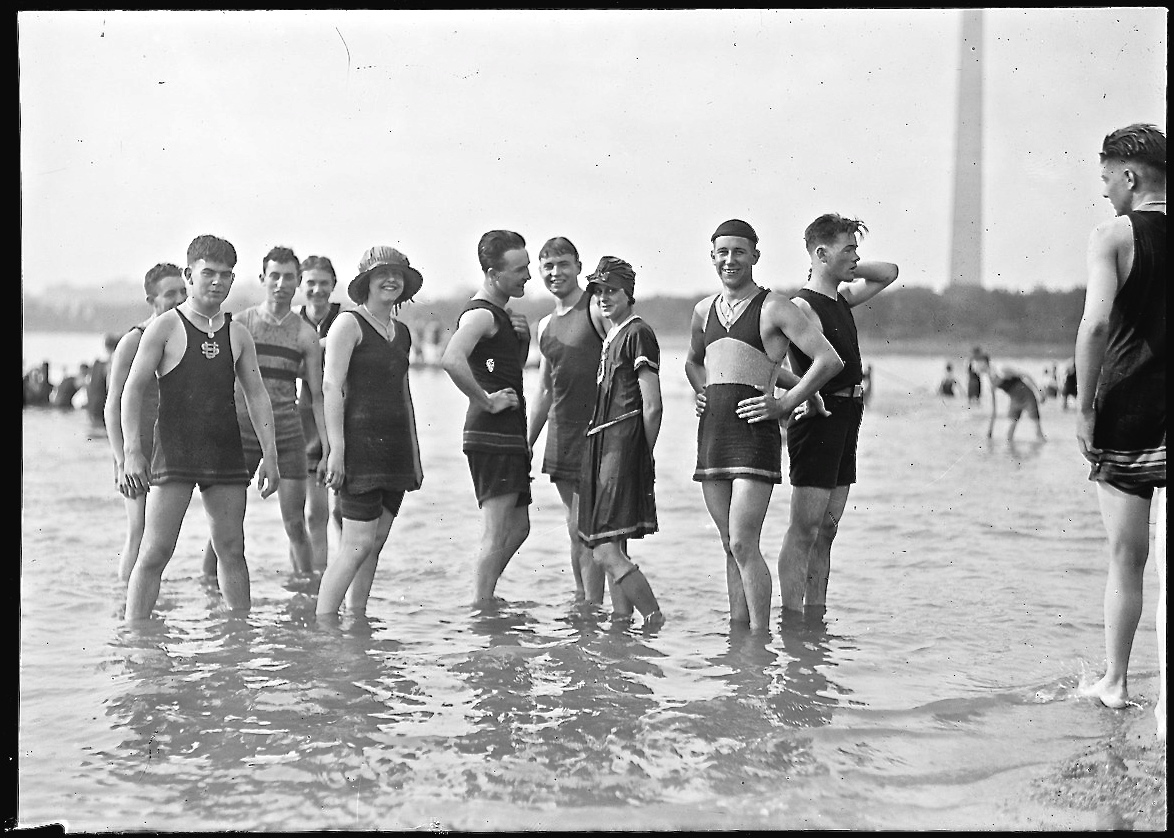
I like these swimmers below too.  They’re in the Tidal Basin.  And yesterday’s post was interesting — look at the (lack of) height of the fence.

"Bathing Beach,"  Washington, D.C., Tidal Basin, ca. 1912-1930, by National Photo Company, Library of Congress Prints and Photographs  Division.
“Bathing Beach,” Washington, D.C., Tidal Basin, ca. 1912-1930, by National Photo Company, Library of Congress Prints and Photographs Division and D.C. Past.

(A link to the photo at the top is here.)

D.C. Past is still rather new; its first picture was posted in March 2013.  But this makes it easy to catch up and get hooked.

There is also a NYC Past here and a Chicago Past here.

K Street in 1850

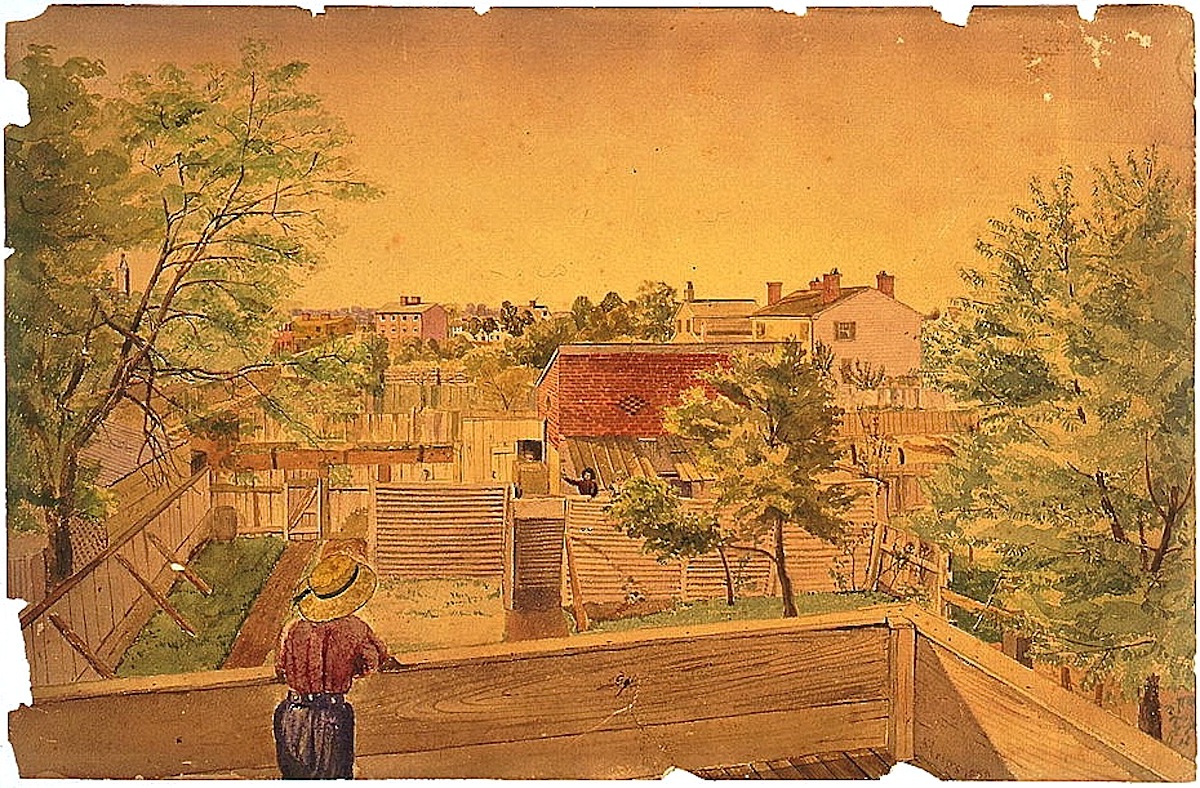
K St. backyards, Washington, DC, Library of Congress/enclos*ureView from the second story of the home of Mrs. John Rodgers at Franklin Row, K Street, N.W., between 12th and 13th Streets, in Washington, D.C.

The watercolor* depicts the backyard and adjacent neighborhood and shows children standing on balconies.

It was painted by Montgomery C. Meigs.  Mrs. Rodgers was Meigs’s mother-in-law and the widow of Commodore John Rogers, a naval hero.

Despite the modest appearance of the yard and surroundings, Mrs. Rodgers was wealthy and socially well-connected.   Even well-to-do Washington in the 1850s seems to have had a somewhat ramshackle look.

You will need to click on the image to get a larger view.  Here’s what the downtown city block looks like now.

As a military engineer, Meigs left his mark on the capital.  In the 1850s, he supervised the building of the Washington Aqueduct and the Union Arch Bridge, as well as the wings and dome of the Capitol Building.  He also played an important role in the early design of Arlington National Cemetery, and he designed and supervised the construction of the Pension Building (now the National Building Museum).


*Via Library of Congress Prints and Photographs Division.

Vintage landscape: clear sailing

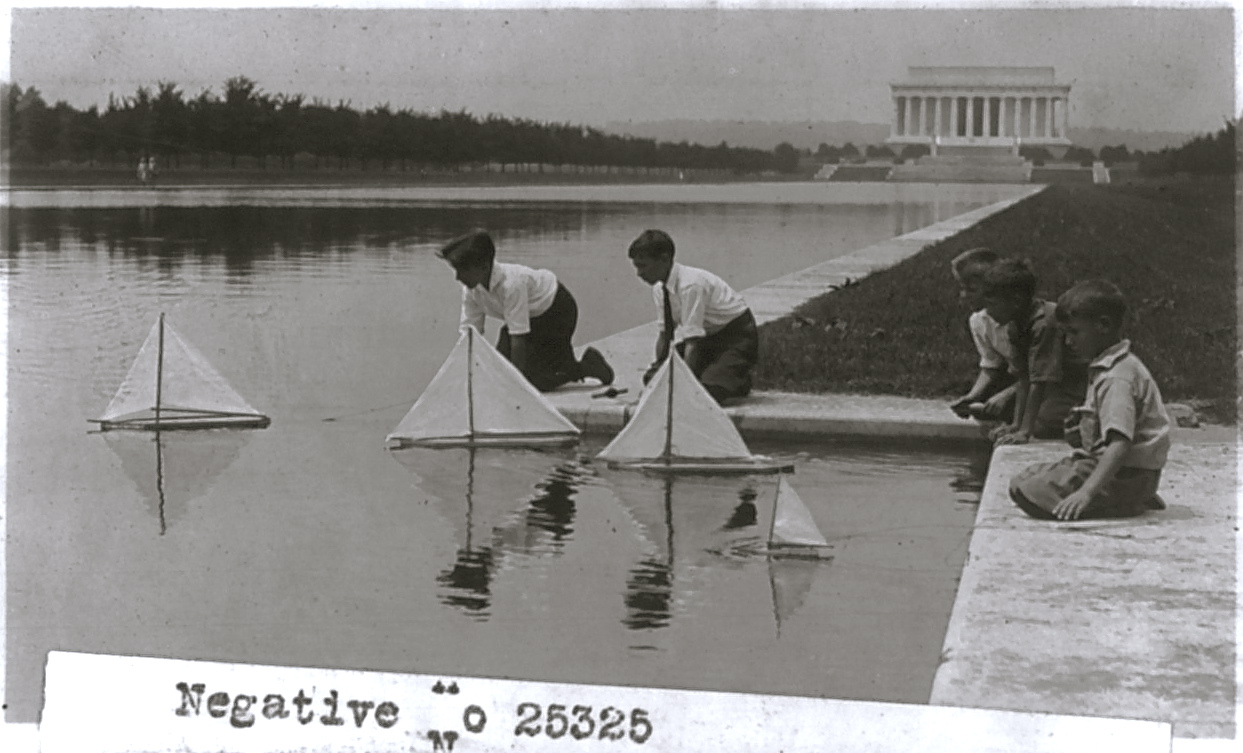
Children with sailboats on the Reflecting Pool, 1920s, Library of Congress/enclos*ure“Children with sailboats at Reflecting Pool, Lincoln Memorial in background, Washington, D.C.,” in the 1920s. Photographer unknown, part of the National Photo Company Collection, Library of Congress Prints and Photographs Division.

Unfortunately, these little boats would be swamped today, as Washington is in the grip of tropical storm Andrea.

Thunder blossoms gorgeously above our heads,
Great, hollow, bell-like flowers,
Rumbling in the wind,
Stretching clappers to strike our ears . . .
Full-lipped flowers
Bitten by the sun
Bleeding rain
Dripping rain like golden honey—
And the sweet earth flying from the thunder.

— Jean Toomer, “Storm Ending

Vintage landscape: take water, add children, part II

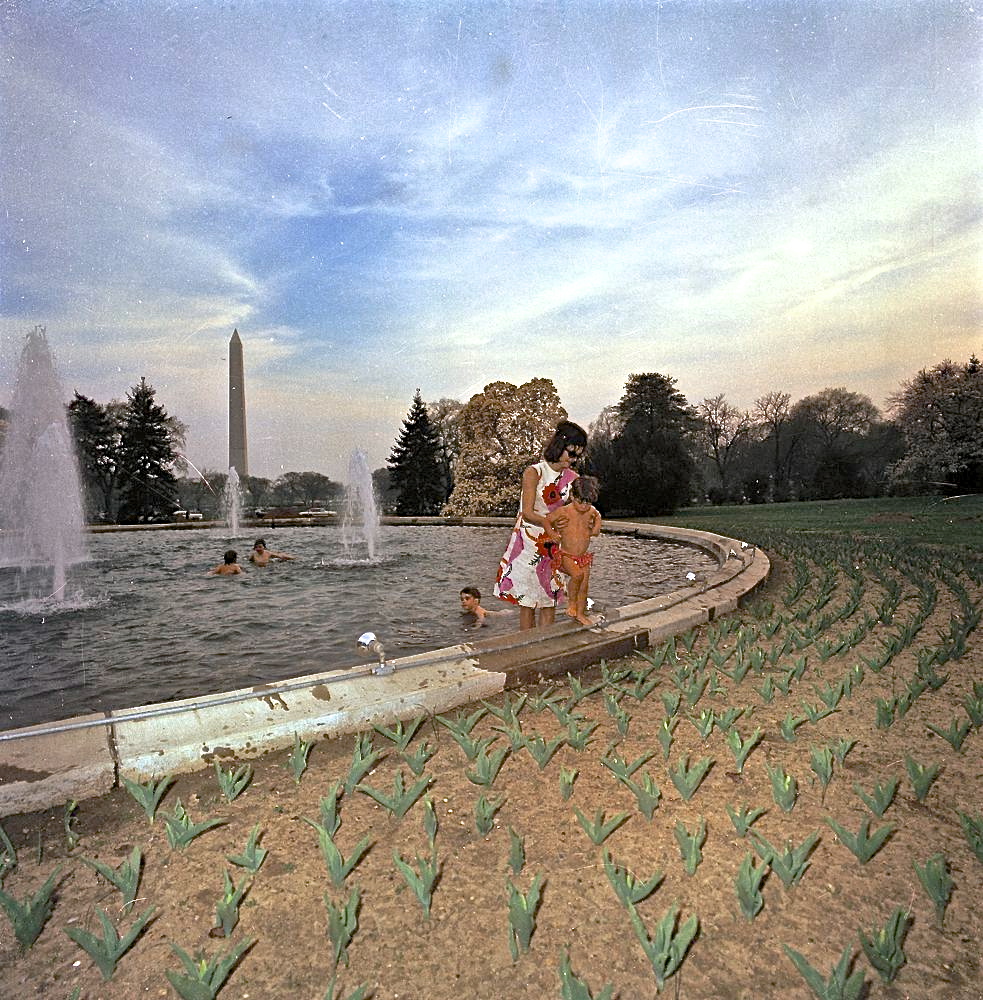
White House children's party, April 4, 1963/JFK Presidential Library

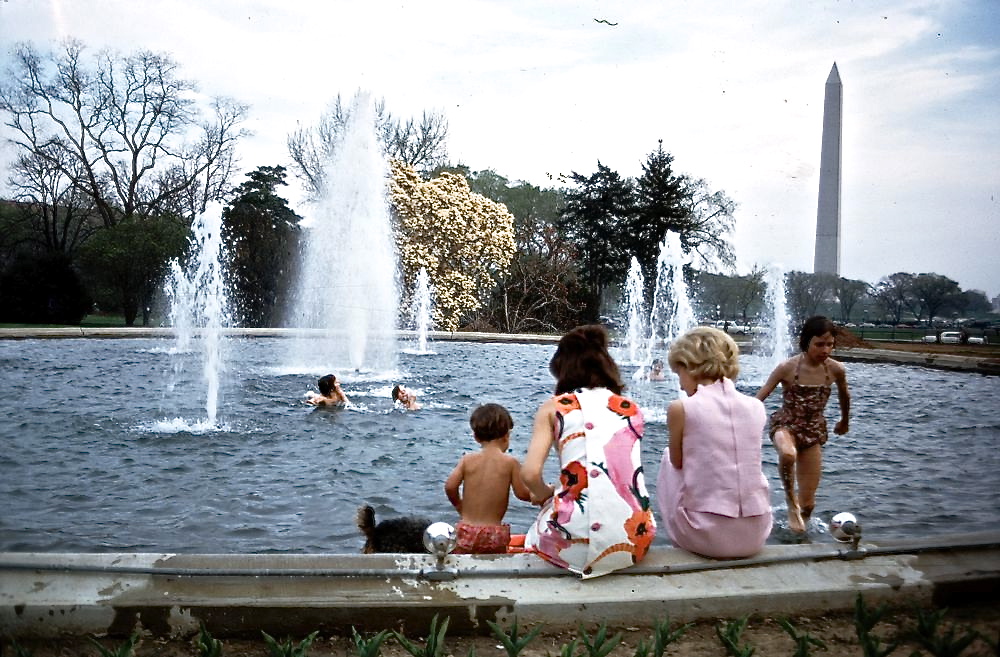
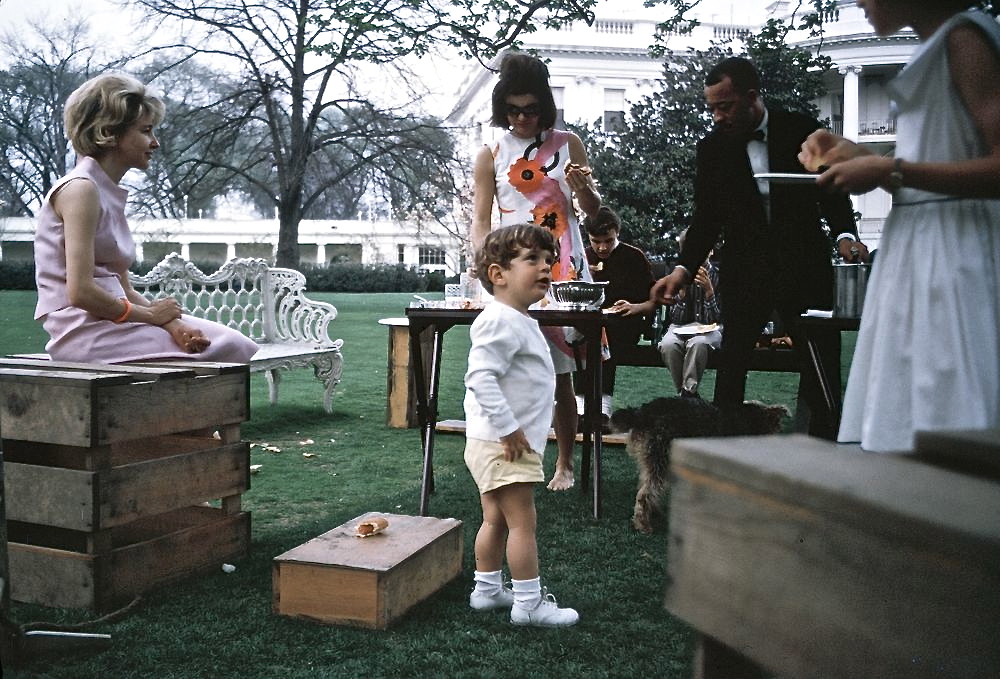
Children’s party on the South Lawn of the White House, April 4, 1963.

All photos are by Cecil Stoughton (Office of the Military Aide to the President), via the John F. Kennedy Presidential Library and Museum.

White House children's party, April 4, 1963/JFK Presidential Library

If you were wondering whether to put in a super-huge fountain or a swimming pool, please note that you can have both in one.

White House children's party, April 4, 1963/JFK Presidential Library

“Take water. . ., part I,” is here.

Remember summer? Bubbles filled
the fountain, and we splashed. We drowned
in Eden. . .

— Robert Lowell, from “The Public Garden