The Sunday porch: behind Randolph Street

This slideshow requires JavaScript.

Looking through a “slat screen” from the back porch of a house on Randolph Street (probably N.W.), Washington, D.C., May 1942, by John Ferrell, via Library of Congress Prints and Photographs Division.

OK, it’s possible that I’m easily amused.

Also, I have holiday shopping to do. . . and it’s Bloom Day.  (So more later.)

John Ferrell was a photographer for the Farm Security Administration when he took these photos.

Randolph Street, N.W., runs east-west through the Petworth neighborhood of Washington, D.C.

I’ve stayed in the front yard all my life.
I want a peek at the back.  .  .

— Gwendolyn Brooks, from “a song in the front yard


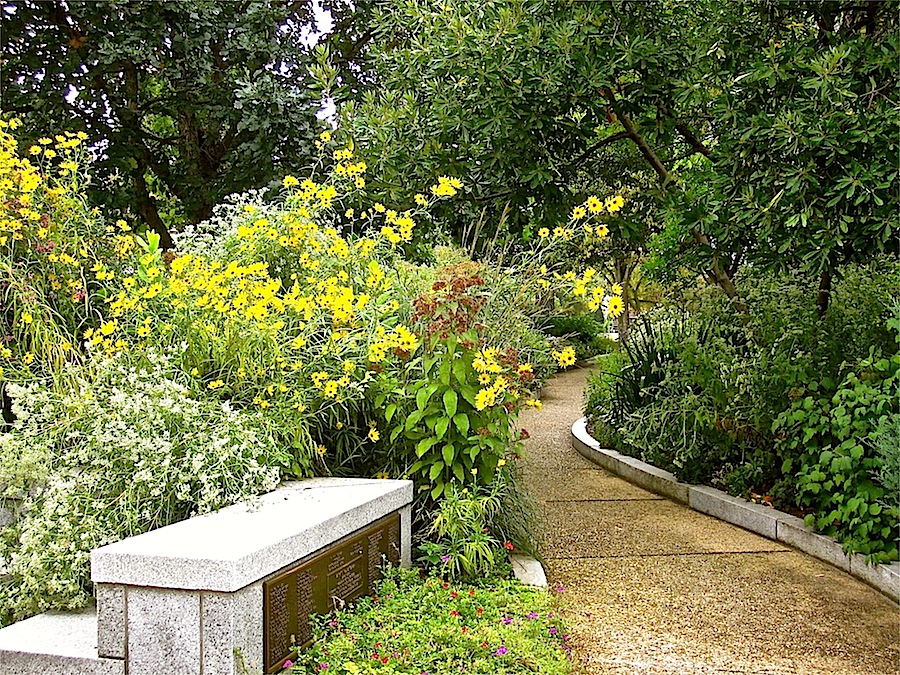
The butterfly garden in early fall

Perennial sunflowers 'Lemon Queen' on the left.

I’m sorry that these photos are a little out of season, but I enjoyed my late September visit to the Smithsonian Institution’s Butterfly Habitat Garden so much that I still wanted to share them.

The garden is a long corridor between the National Mall and Independence Avenue.  It’s bordered by very busy 9th Street, N.W., on one side and the parking lot of the National Museum of Natural History on the other.

Stepping inside, however, you feel enveloped in another world — particularly in early fall, when many of the plants are at their fullest and tallest.

Click on any thumbnail in the gallery above to enlarge the photos.

In my captions, I haven’t included many plant labels, because I didn’t take very good notes during my visit. I was depending on a list of plants at the S.I. gardens website, but, unfortunately, it seems to have been removed for the moment. However, there are some recommendations in this Smithsonian brochure, and there’s additional information here at the Smithsonian gardens blog.

To see the garden in early August in 2011, click here.

ADDENDUM:  The power of Pinterest — the mystery plant with the spiny seedpods is Asclepias fruticosa (syn. Gomphocarpus fruticosus), a species of milkweed native to South Africa.  Thanks to Miranda M.


The Sunday porch: vine-covered, par excellence

On abandon, uncalled for but called forth. . . .*

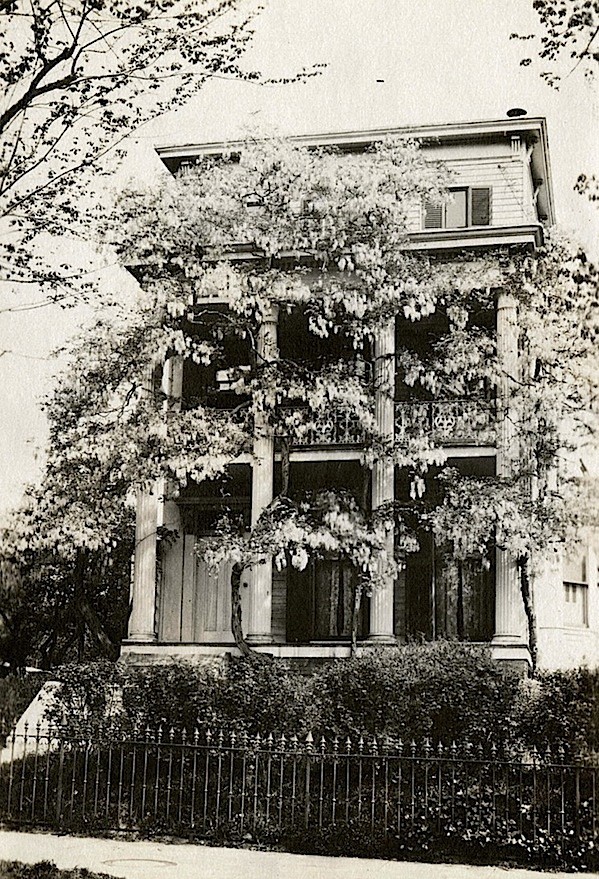
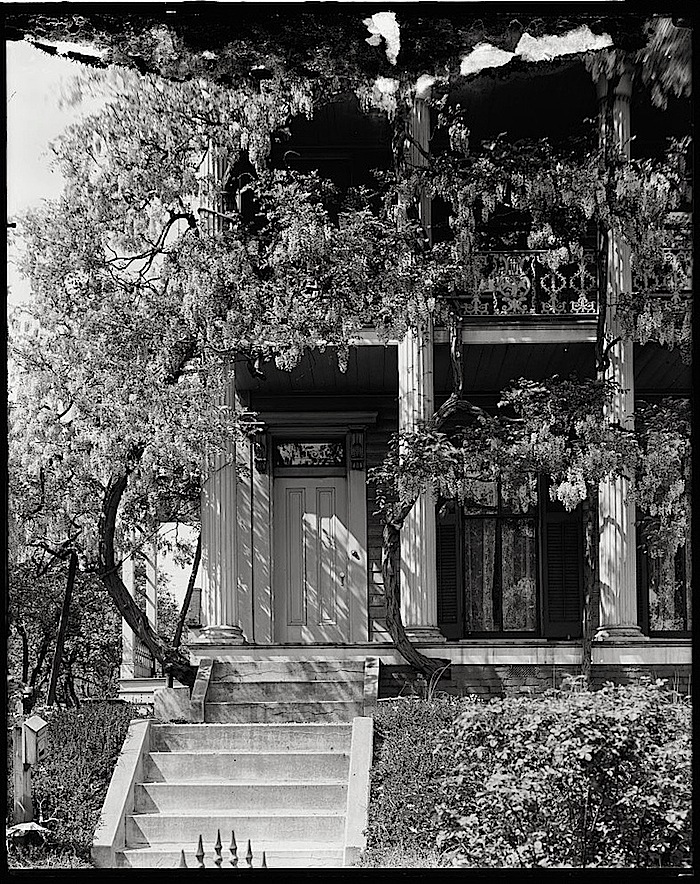
full croppedI think this is the loveliest wisteria I have ever seen.  It grew on the porch columns of “Wisteria House,” at Massachusetts Avenue and Eleventh Street, N.W., in Washington, D.C. The photo was taken in 1919, by Martin A. Gruber.**

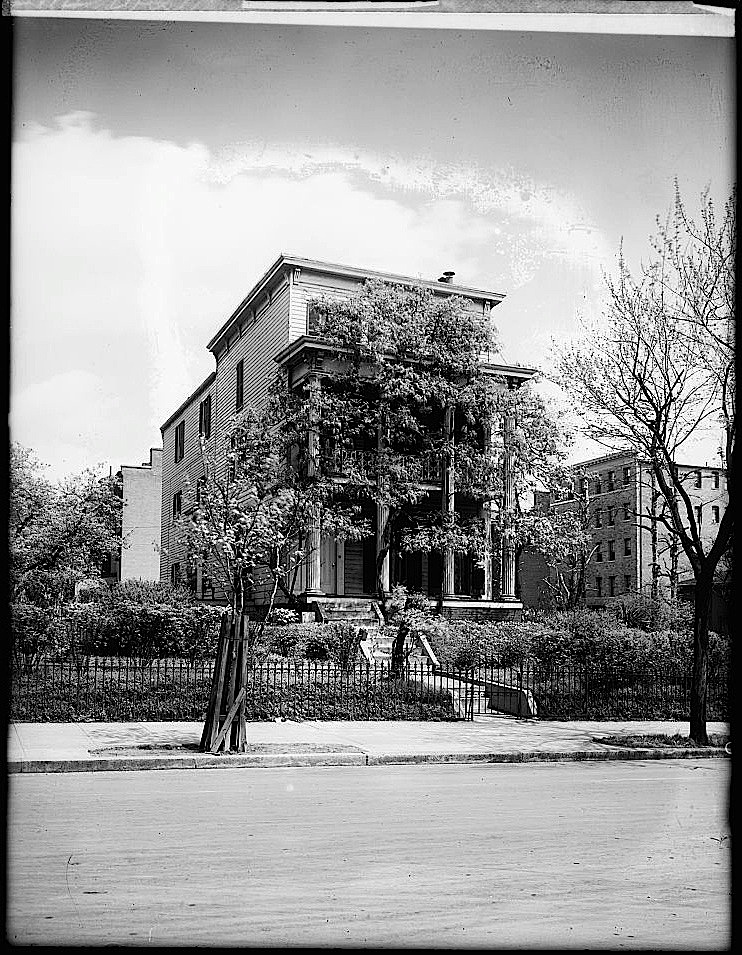
The house was torn down in 1924 to make room for the Wisteria Mansion apartment building.

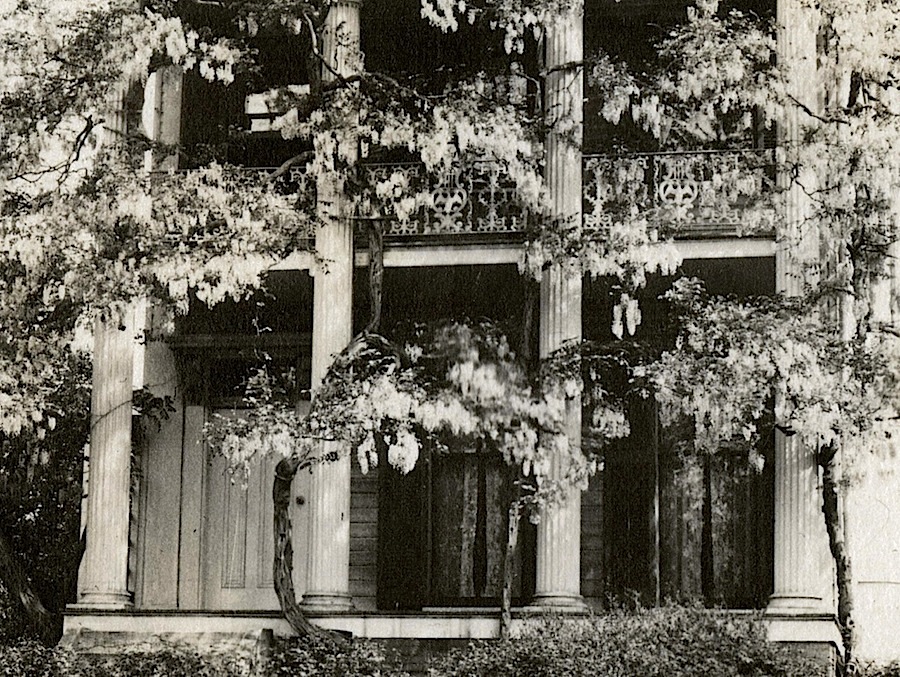
Wisteria House detail, 1919, via Smithsonian Institution CommonsA naval officer brought the vine from China and gave it to the owner of the house, probably during the 1860s, according to the blog Greater Greater Washington.

Wisteria House, Harris & Ewing photoThe Harris & Ewing** photo above, taken between 1910 and 1920, shows the trunks of the (one?) plant emerging through openings at the base of the porch.  The house was built in 1863, and the two-story portico was added in 1869 — so it looks like the wisteria was planted between those years and protected during the construction.

Wisteria House, LOC photoThe National Photo Company image above shows the house about 1920.


*Lucie Brock-Broido, from “Extreme Wisteria

**Top and second (a detail of the first) photos via the Smithsonian Institution Archives Commons on flickr.  Third and fourth photos via Library of Congress Prints and Photographs Division.

Vintage landscape: the tree sellers

For ev’ry year the Christmas tree,
Brings to us all both joy and glee.

Bring on the holiday season!

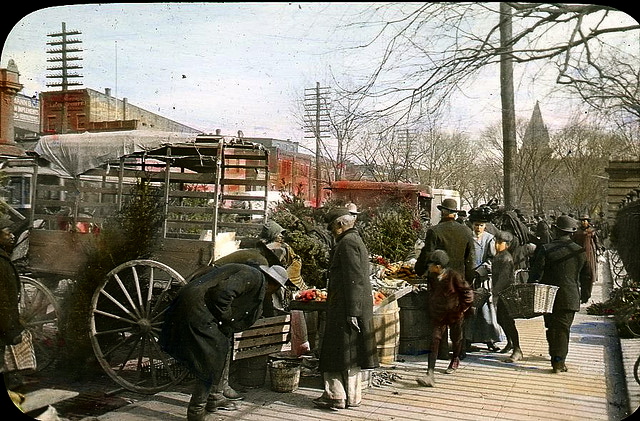
The Christmas tree sellers, via D.C. Public Library“View of street vendors at 7th and B Streets, NW [Washington, D.C.] (ca. 1880 [sic]),” by E.B. Thompson, via D.C. Public Library Commons on flickr.

B Street, N.W., was the original name for what is now Constitution Avenue (since 1931). At the time of this picture, Center Market stood on B Street, between 7th. and 9th. Streets — at the current site of the National Archives building.

Commenters on the flickr page have suggested — correctly, I think — that the 1880 date is wrong and the photo was probably taken in the first decade of the 20th century.

O Christmas tree, O Christmas tree,
Much pleasure dost thou bring me!

— from c. 1910 English version of O Tannenbaum

The Sunday porch: Petworth rowhouses

. . . . . Houses in rows
Patient as cows.

— Robert Pinsky, from “City Elegies — III. House Hour

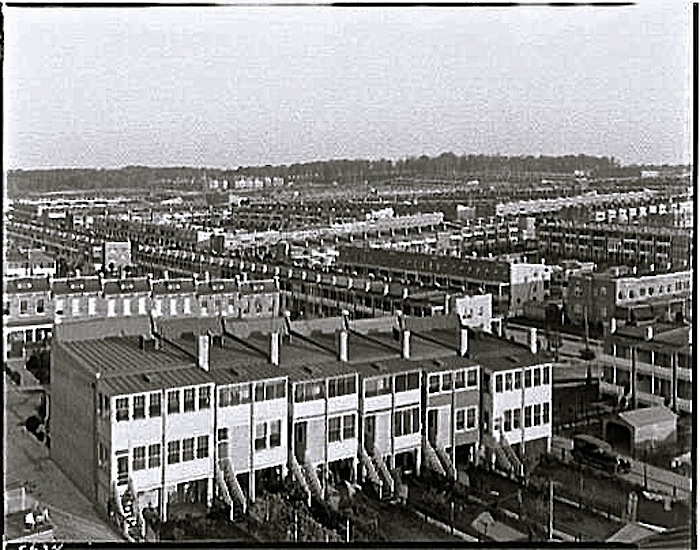
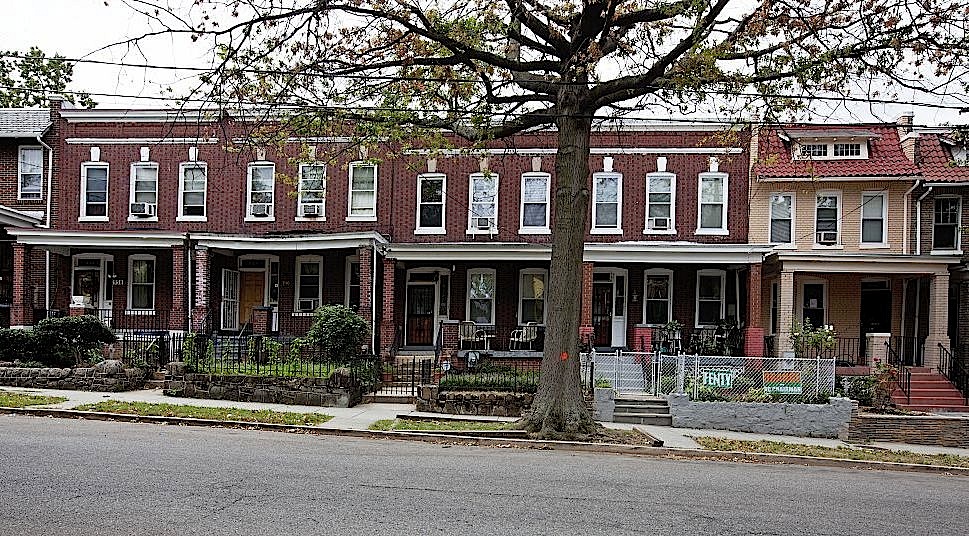
Petworth rowhousesRows of houses in the Petworth neighborhood, Washington, D.C., ca. 1920-1950, by Theodor Horydczak, via Library of Congress Prints and Photographs Division.

Petworth was farm and forest until the 1880s when the land was purchased for development.  In the 1920s and 30s, thousands of rowhouses were built, many of them in a style popularized by developer Harry Wardman (from 1907) — with its distinctive elevated front porch and tiny front yard.
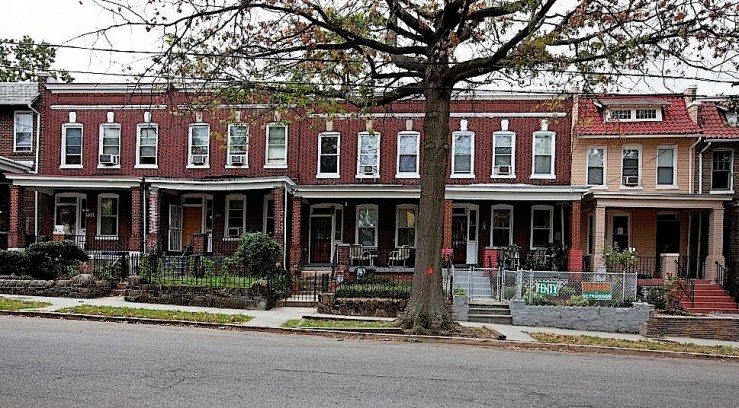
Wardman-style rowhousesAbove:  Petworth rowhouses on Shepherd St., 2010, by Carol Highsmith, via Library of Congress.

“The porches [were] a big part of growing up in Petworth.  On my block there had to be 15 or 20 kids, and you’d come home from school, get on the porch, and look down the block, and you could see this long row of porches, and you’d see everybody coming out of their house. The porches made you get to know your neighbors, they made it a neighborhood.”

— A Petworth resident in the 1940s, quoted in the Washington City Paper

Wardman built his front porch rowhouses in large parts of northwest Washington, and several other developers copied them all over D.C.

Petworth was named a “Best Old House Neighborhood of 2013” by the magazine This Old House.
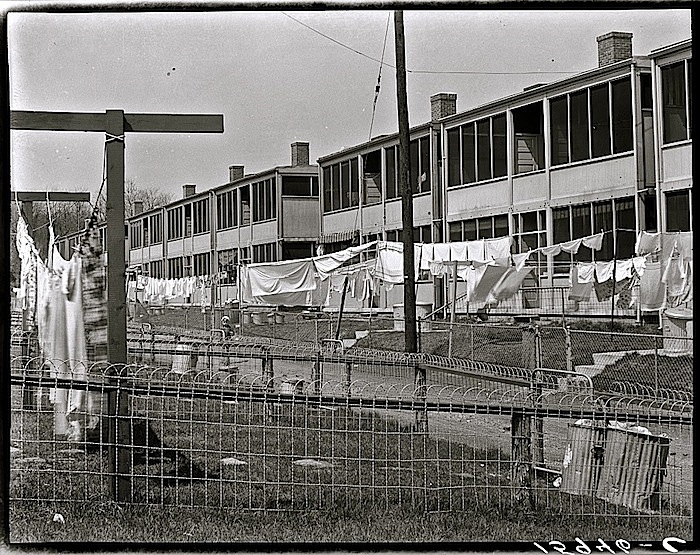
back yards and laundryAbove: backyards of rowhouses, neighborhood not noted, Washington, D.C., July 1939, by David Myers, via Library of Congress.

At the backs of Wardman-style rowhouses were screened sleeping porches (top) and kitchen porches (bottom).

Petworth resident Annette L. Olson decided to install a green roof on the top of her rowhouse front porch.  She wrote about the process for the “Where We Live” column of The Washington Post here.