Écardenville-sur-Eure

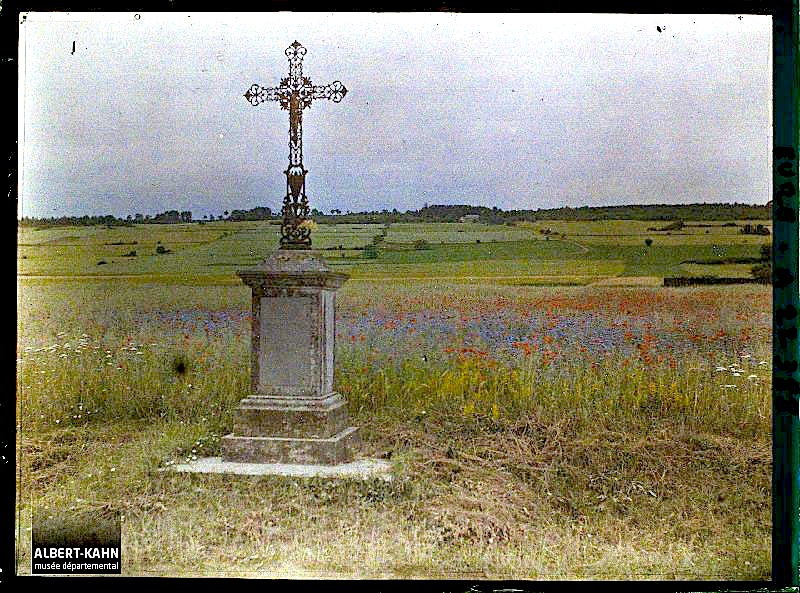
Cross and coquelicots, Écardenville-sur-Eure, Normandy, France, June 30, 1920, by Georges Chevalier, via Archives of the Planet Collection – Albert Kahn Museum /Département des Hauts-de-Seine.

This autochrome is one of about seventy-two thousand that were commissioned and then archived by Albert Kahn, a wealthy French banker and pacifist, between 1909 and 1931. Kahn sent thirteen photographers and filmmakers to fifty countries “to fix, once and for all, aspects, practices, and modes of human activity whose fatal disappearance is no longer ‘a matter of time.'”* The resulting collection is called Archives de la Planète and now resides in its own museum at Kahn’s old suburban estate at Boulogne-Billancourt, just west of Paris. Since June 2016, the archive has also been available for viewing online here.


*words of Albert Kahn, 1912. Also, the above photo (A 22 388) is © Collection Archives de la Planète – Musée Albert-Kahn and used under its terms, here.
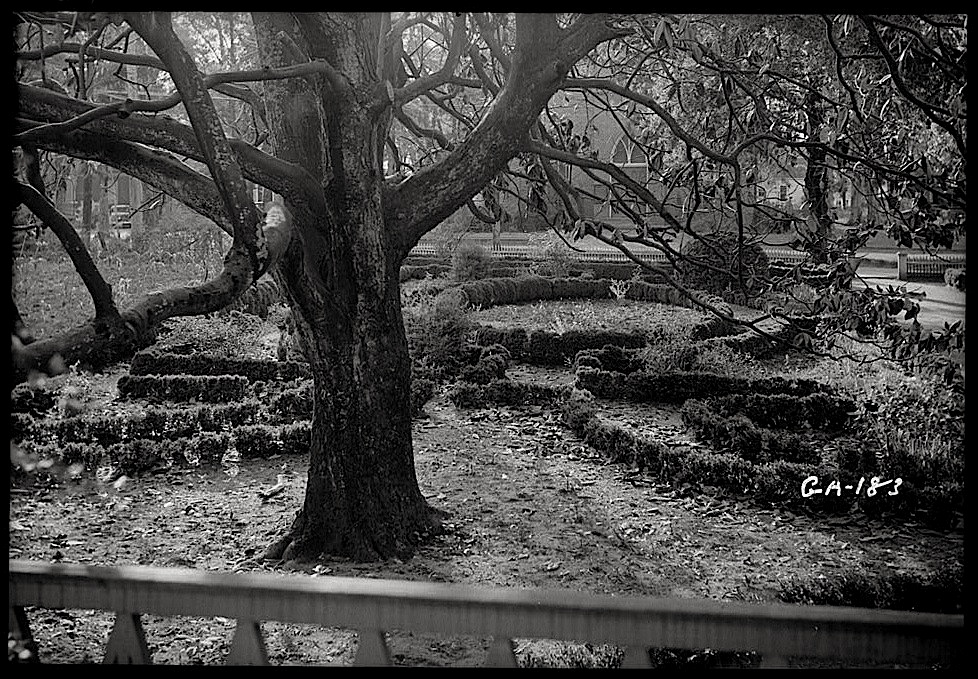
Madison, Georgia

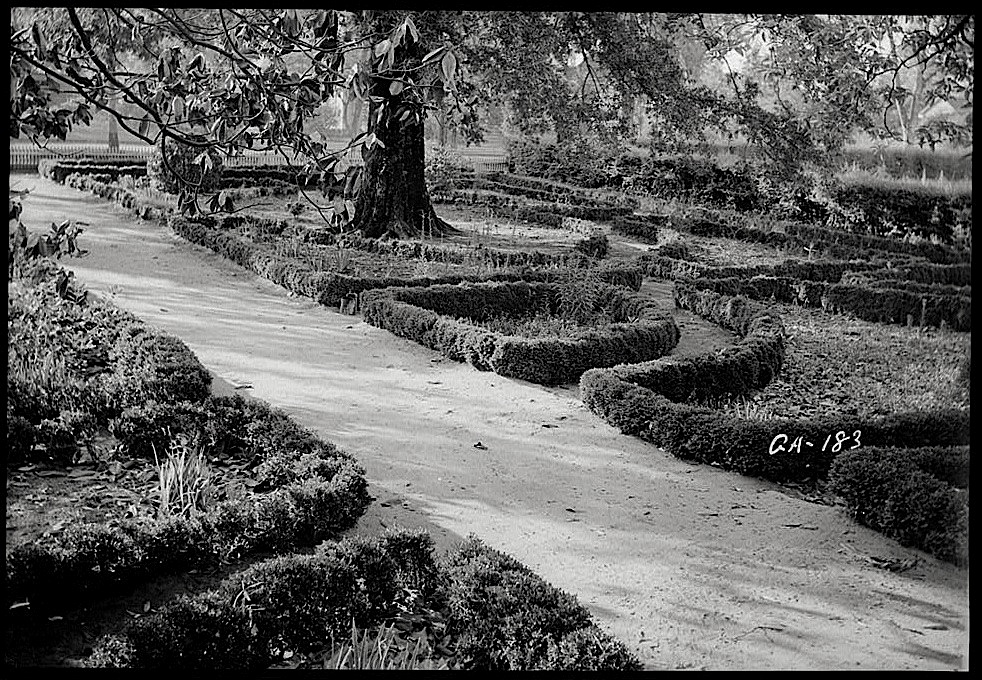
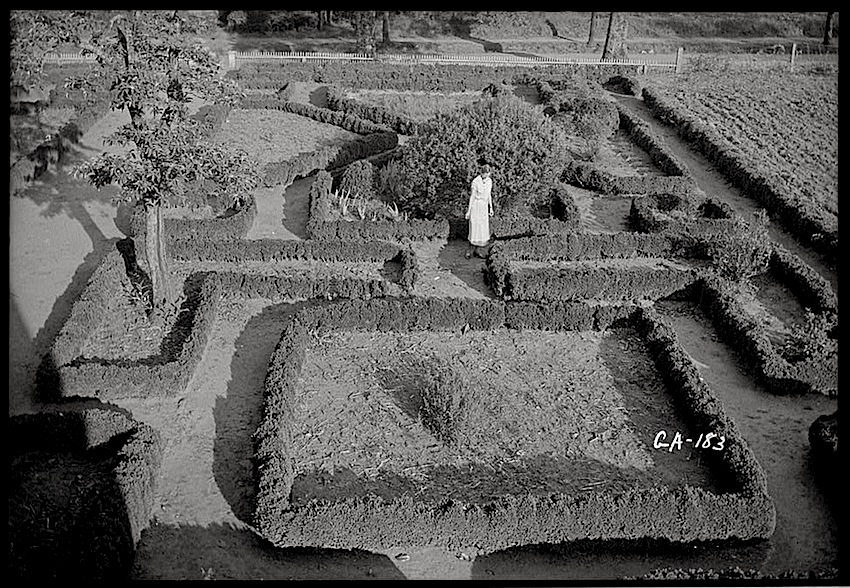
The parterre, viewed from the porch of “Boxwood” (Kolb-Pou-Newton House), Madison, Georgia, June 1936, by L. D. Andrew for an Historic American Building Survey (HABS), via Library of Congress Prints and Photographs Division (all three photos).

‘Parterre’ means ‘on the ground’ (par terre) in French.

The other side of the house, looking down from second-story window.

A parterre is a garden of planting beds laid out on level ground, typically in geometric patterns, often outlined in clipped boxwood.

This house was built about 1845; its garden was laid out about 1854. A 1935 HABS drawing of its parterres, front and back, is here.

There are more photos of the garden in this 2007 article in Garden and Gun.

Nantucket, Massachusetts

3-picket-fences-nantucket-ma-habs-library-of-congressWhitewashed picket fence, Pleasant Street, Nantucket, Massachusetts, 1969, by Jack E. Boucher for Nantucket Historical Study, HABS, via  Library of Congress Prints and Photographs Division (both photos).

Fence on Upper Main Street, Nantucket.

Is there a name for this style of picket fence — with three to four saw-tooths (saw-teeth?) on each wide board?  I feel like there must be, but I can’t find it.

The Sunday porch: Hill End


“Two women on veranda of rendered* cottage with shingle roof and front garden, Hill End, New South Wales, ca. 1872,” by Charles Baylissvia National Library of Australia Commons on flickr.

Hill End was a gold rush town. At the time of this photo, “it had a population estimated at 8,000 served by two newspapers, five banks, eight churches, and twenty-eight pubs,” according to Wikipedia. The rush was over by the early 20th century. In 2006, the town was down to 166 people.

The photographer came to Hill End as an assistant to a traveling photographer who had been contracted to take pictures of the area that could be used to advertise the mining colony and attract new residents.


*Render is stucco.

Orchids, not


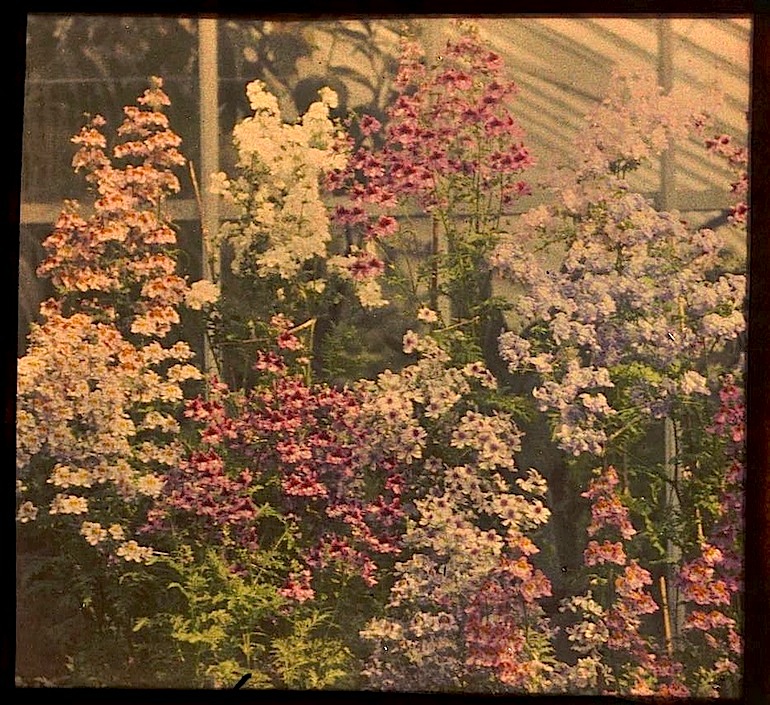
“Syzanthus Butterfly Orchid,” ca. 1909, an autochrome by Charles C. Zoller, via George Eastman Museum Commons on flickr.

I believe these are Schizanthus pinnatus, an annual herbaceous plant native to Chile and a member of the Solanaceae or nightshade family. It is also called butterfly flower or poor man’s orchid.