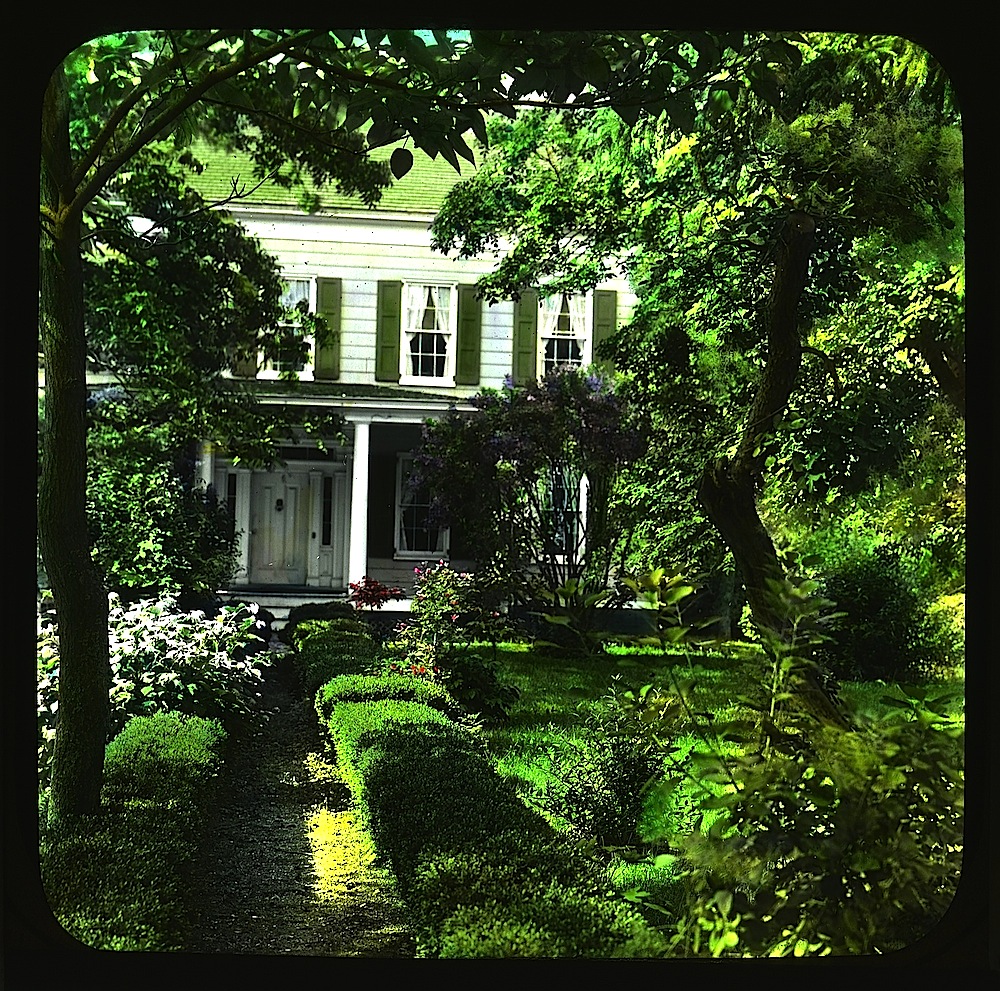
Long Island, New York

“Unidentified Garden in Long Island, New York,” 1930, a hand-colored glass lantern slide by an unknown photographer, via Archives of American Gardens, J. Horace McFarland Company Collection, Smithsonian Institution (used by permission).

Thoughts of summer. . . we woke up to snow this morning in Stuttgart.

The Archives of American Gardens holds over 60,000 photos and records documenting 6,300 historic and contemporary American gardens. Among them are over 3,100 black and white photographs and 445 glass lantern slides from the J. Horace McFarland Company, from the years 1900 to 1962. The firm printed nursery catalogs, horticultural books, and trade publications.

McFarland was an author and horticulturist, as well as a publisher. He also became an important proponent of environmental conservation and the City Beautiful movement.
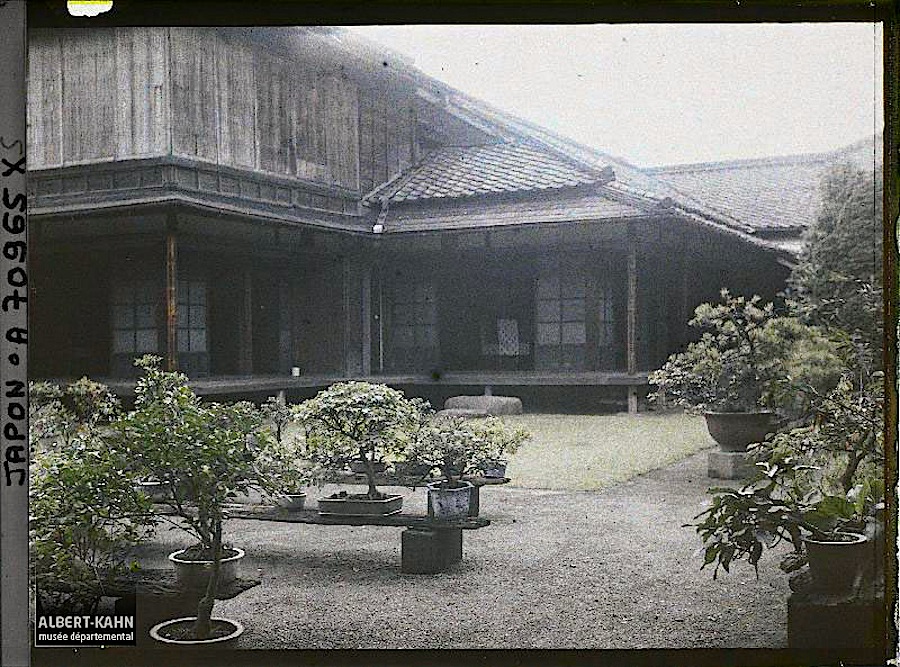
Tokyo, Japan

A garden corner of a residence (possibly of the Kitashirakawa family), Tokyo, Japan, 1926-1927, by Roger Dumas, via Archives of the Planet Collection – Albert Kahn Museum /Département des Hauts-de-Seine.

This autochrome is one of about seventy-two thousand that were commissioned and then archived by Albert Kahn, a wealthy French banker and pacifist, between 1909 and 1931. Kahn sent thirteen photographers and filmmakers to fifty countries “to fix, once and for all, aspects, practices, and modes of human activity whose fatal disappearance is no longer ‘a matter of time.'”* The resulting collection is called Archives de la Planète and now resides in its own museum at Kahn’s old suburban estate at Boulogne-Billancourt, just west of Paris. Since June 2016, the archive has also been available for viewing online here.


*words of Albert Kahn, 1912. Also, the above photo (70 965 XS) is © Collection Archives de la Planète – Musée Albert-Kahn and used under its terms, here.

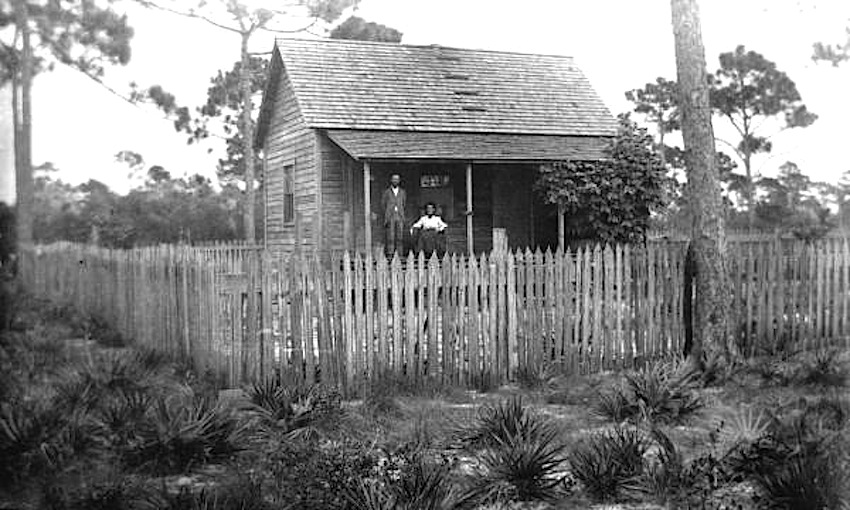
The Sunday porch: Eastpoint, Florida

Mr. and Mrs J. C. Williams on their porch, Eastpoint, Florida, ca. 1900, via Brown Family Collection, Florida Memory Commons on flickr.

The Williams were among six families who settled on a peninsula called Eastpoint, across the bay from Apalachicola, Florida, in 1898. The group called itself the Co-Workers’ Fraternity, and together the members pursued philosophical and religious study and farmed and ran seafood and lumber businesses. Land was individually owned, but profits were shared.

Specimen from Peru

Bomaria flowers in a glass bottle, Peru, 1922, possibly by J. Francis Macbride or William Featherstone, via The Field Museum Library Commons on flickr.

The photo was taken during a botany expedition to Peru from April to October 1922.

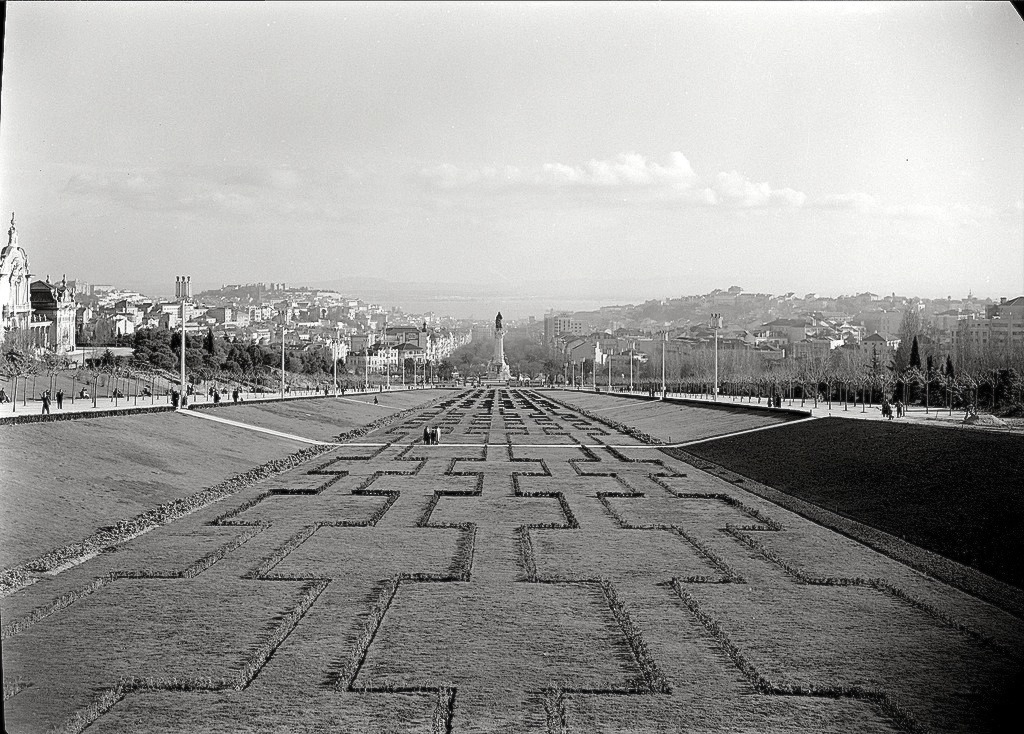
Lisbon, Portugal

Parque Eduardo VII, Lisbon, Portugal, between 1942 and 1983, by Estúdio Mário Novais, via Art Library of the Calouste Gulbenkian Foundation Commons on flickr (under CC license).

The boxwood parterres are the same today.

Originally created in the late 19th century, the park was named for British King Edward VII after his visit to the city in 1903. Its current layout was designed in 1942 by modernist architect Francisco Keil do Amaral.