Vintage landscape: Grey Gardens

Billboard near the High Line, NYC/enclos*ure While walking along the High Line in New York City last month, I spotted this billboard for a storage company.   It made me remember these Library of Congress hand-colored lantern slides by Frances Benjamin Johnston and Mattie Edwards Hewitt.

View of the walled garden from upstairs in the house. All photos via the Library of Congress Prints and Photographs Division.
View from an upstairs window of the house.   All photos via the Library of Congress Prints and Photographs Division.

This was Grey Gardens in 1914 — long before it was made famous by the 1975 documentary.

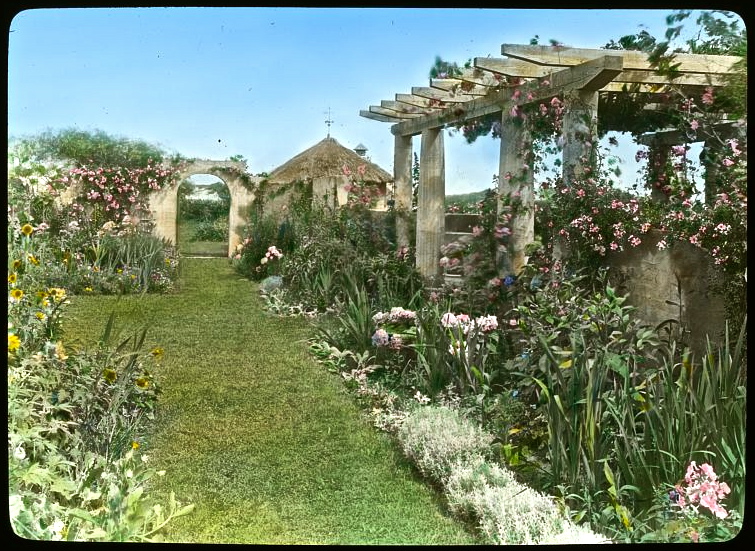
The walled garden section of the four-acre estate in East Hampton, N.Y., was designed by Anna Gilman Hill and landscape architect Ruth Bramley Dean.

Anna and her husband, Robert Carmer Hill, had purchased the property in 1913.  They sold it to Phelan and Edith Bouvier Beale (whose daughter was Little Edie) in 1927.

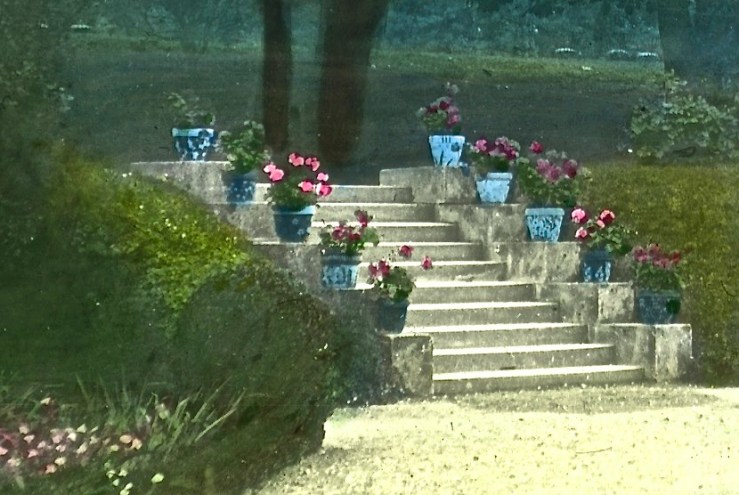
The northeast gate to the walled garden.

Hill imported the concrete walls from Spain.  She took the name for the house and garden from its environment.

It was truly a gray [sic] garden. The soft gray of the dunes, cement walls and sea mists gave us our color scheme as well as our name… nepeta, stachys, and pinks… clipped bunches of santolina, lavender and rosemary made gray mounds here and there. Only flowers in pale colors were allowed inside the walls, yet the effect was far from insipid….I close my eyes and sense again the scent of those wild roses, the caress of the hot sun on our backs as we sauntered to and fro from our bath and lazy mornings on the beach.

—Anna Gilman Hill, from Forty Years of Gardening

Beyond the property is the Atlantic Ocean.  The walled garden was 70′ x 40′.

A plan of the garden, artist unknown.

The estate (now two acres) has been owned by Ben Bradlee (formerly editor-in-chief of The Washington Post) and Sally Quinn since 1979.  They have restored both the house and garden.

Now the land between the walled garden and the ocean is filled with newer houses and gardens, and there is a very tall hedge just behind the far wall and the pergola.
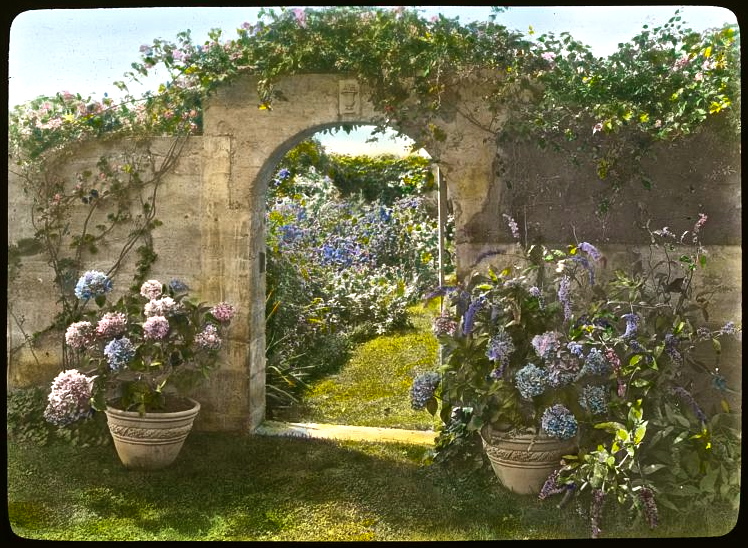
The northeast gate.
The northeast gate.
The original photograph before hand coloring.
The bench inside the northeast gate.
Looking west to pergola.
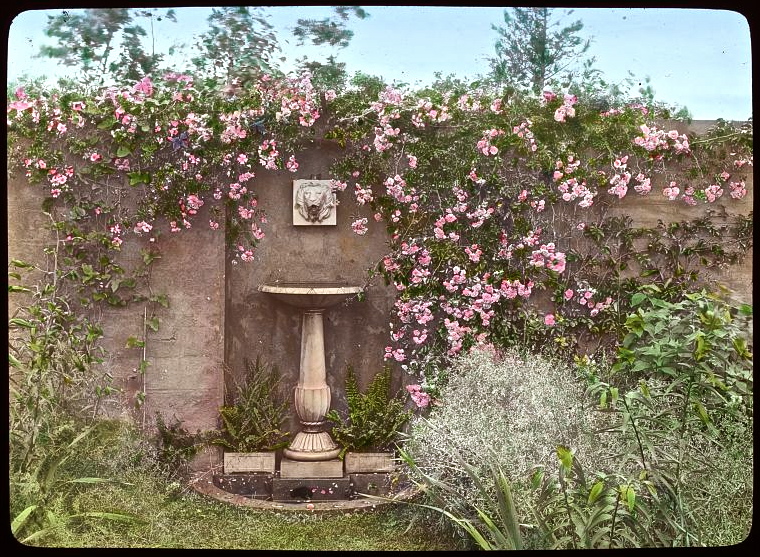
Birdbath on west wall.
Pergola and tool house gate.
East gate to the tool house.
The garden tool house.
Sunroom in the house overlooking the walled garden.

The open doorway in the photo above lined up with the pergola.  It seems that, at the time of this photo, there was an opening in the garden wall between the house and pergola.  But I can’t tell if the opening was there before or after the time of the other photographs.

Birdbath.
Birdbath.
Dovecote.
Dovecote.

Vintage landscape: the iris garden

A little Sunday morning prettiness.

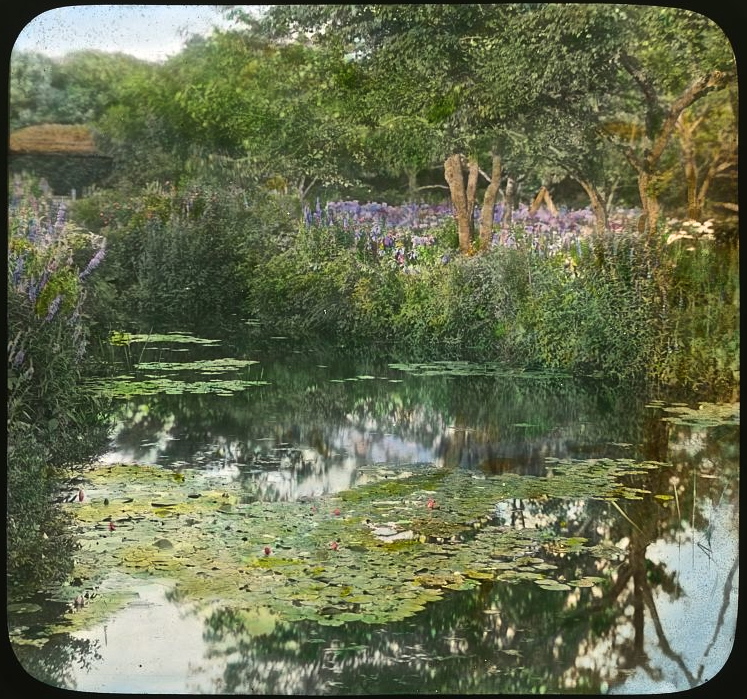
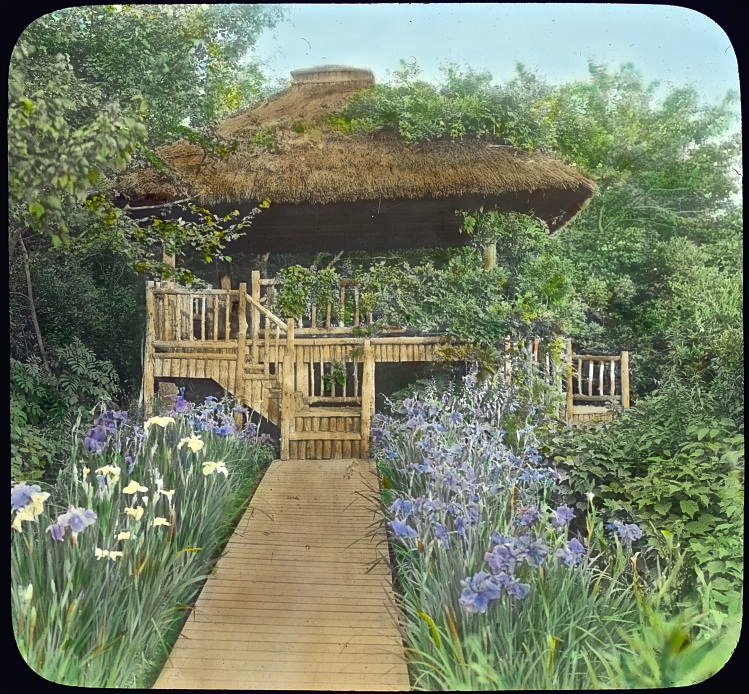
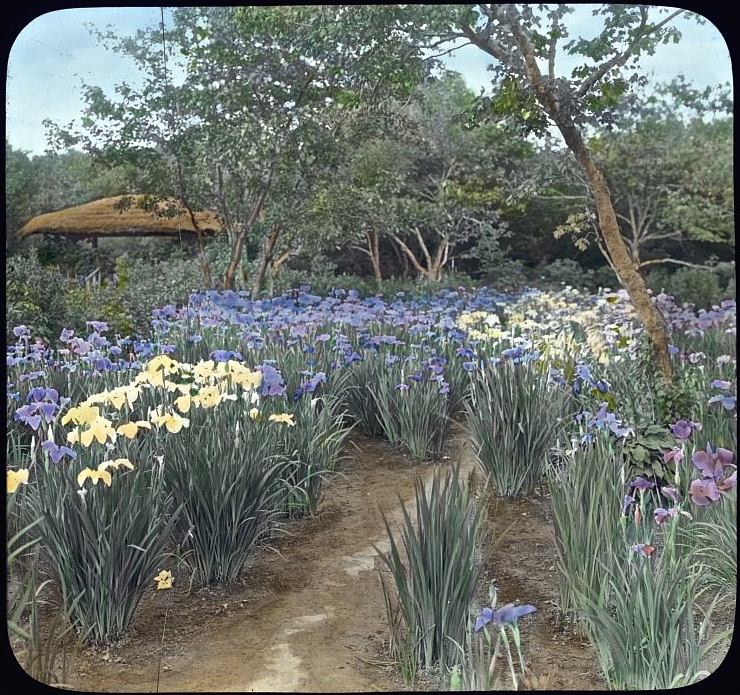
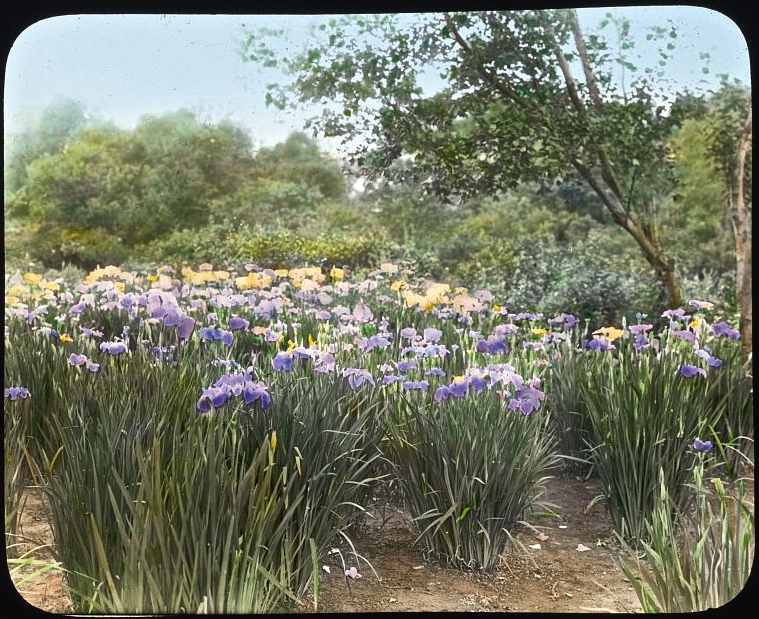
Japanese iris garden in East Hampton, NY/Library of Congress

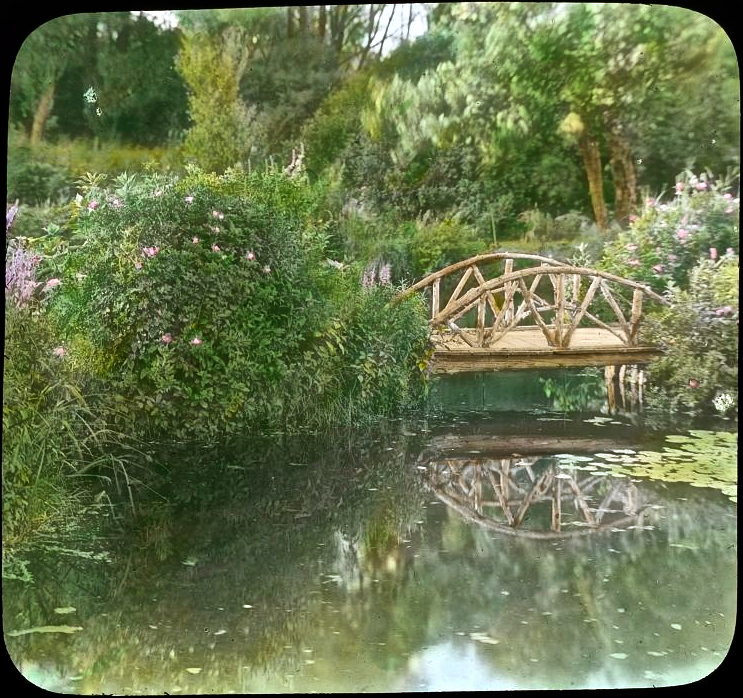
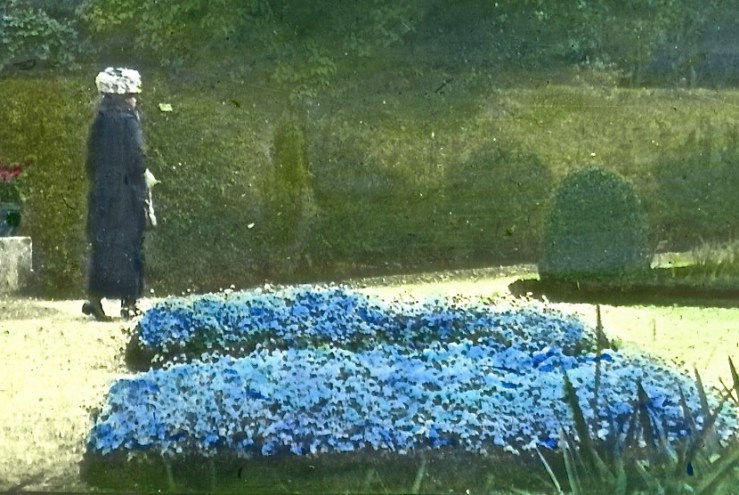
The Japanese iris garden at “Grey-Croft” in East Hampton, NY, in 1913, on hand-colored glass lantern slides.

Grey-Croft, Library of Congress

The images are part of the Frances Benjamin Johnston Collection of the Library of Congress Prints and Photographs Division.

Grey-Croft, Library of Congress

They were taken by Frances Benjamin Johnston and Mattie Edwards Hewitt, when the two photographers worked together. The slides were used by Johnston as part of her garden and historic house lecture series.

Grey-Croft, Library of Congress

The garden — owned at the time of these pictures by Stephen and Emma Cummins — is now part of the Nature Trail and Bird Sanctuary, according to the Library of Congress online catalogue.

Grey-Croft, Library of Congress

Having [divided, planted, fed, and weeded your irises] more or less faithfully, you will be rewarded by spectacular blooms in May. The iris is one of those plants that may as well be spectacularly well grown as not. Properly done — and it is at least as easy as growing tomatoes or corn or roses or things of that sort — the bloom will be so thick you cannot believe it at all, and the colors will be so sparkling and fresh you will jump (as it were) up and down.

They will be, as a rule, in total perfection by May 22, or whenever the year’s major hail and thunderstorm is scheduled.

— Henry Mitchell, from The Essential Earthman

Vintage landscape: Bagatelle Garden (and Chelsea Miscellany)

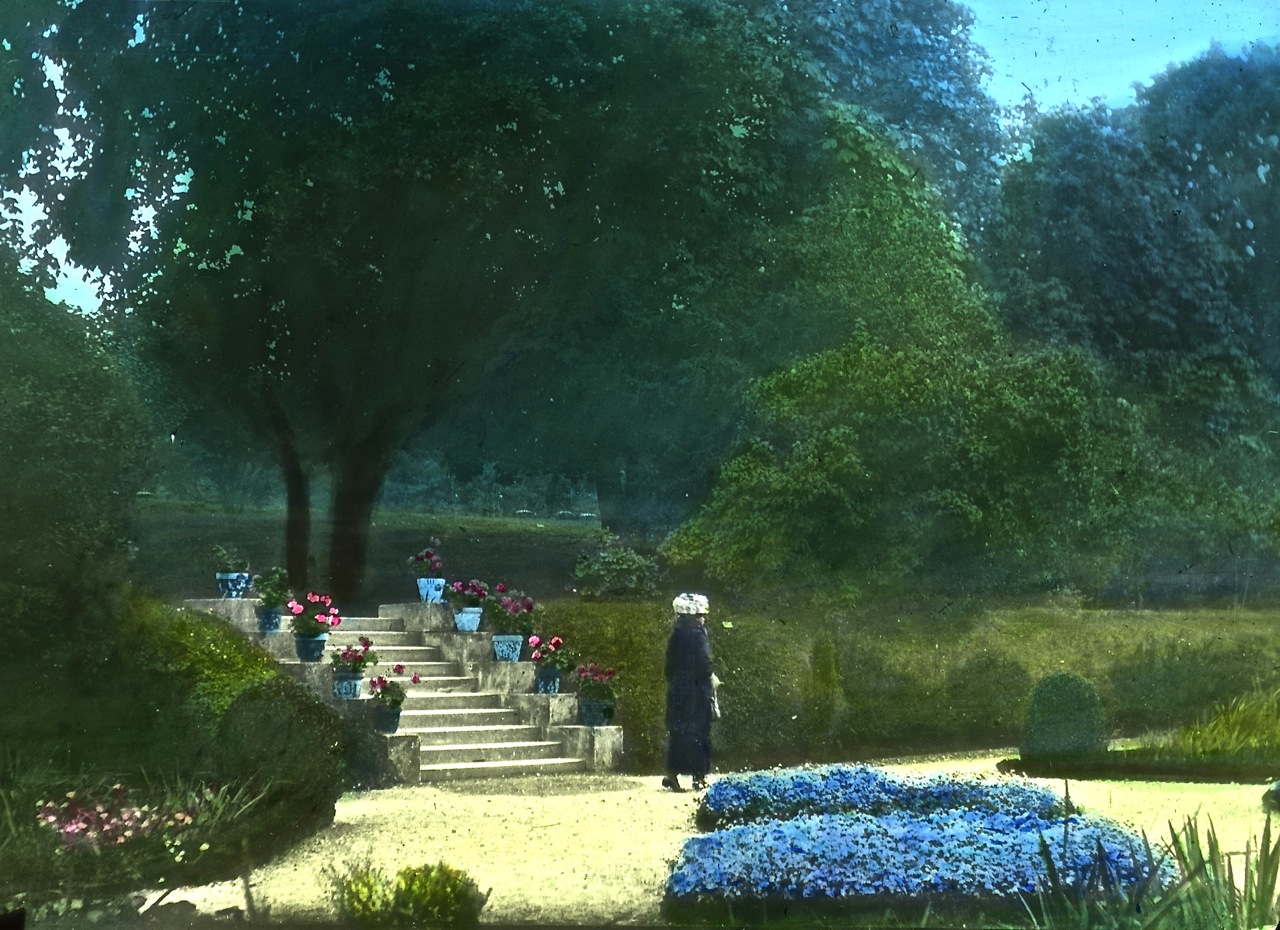
Bagatelle/enclos*ure Hand-tinted (3″ x 5″) glass lantern slide of Bagatelle Garden, Paris, France, ca. 1930, photographer unknown.

Bagatelle detail/enclos*ure
Detail.

The image is from the Garden Club of America Collection, part of the Archives of American Gardens at the Smithsonian Institution (used here by permission).

Bagatelle detail/enclos*ure
Detail.

The Archives hold over 60,000 photos and records documenting 6,300 historic and contemporary American gardens.  At its core are almost 3,000 hand-colored glass lantern and 35mm slides donated by the Garden Club of America.

Smithsonian Gardens maintains 11 gardens around the Smithsonian Institution’s grounds and also has a good blog here.

Chelsea Miscellany

It’s RHS  Chelsea Flower Show time!  Their website is here.

All The Telegraph’s  Chelsea coverage is here; The Guardian’s is here; The Independent’s is here.

BBC coverage is here.  You may need this to view it.  (View episodes soon; some expire in four days.)

The New York Times reports on how gnomes will be allowed in the show this year (only), here.  In the Herald (Dublin), “Diarmuid Gavin has branded the Chelsea Flower Show ‘dull’ and described Prince Harry’s garden at the centenary exhibition as ‘bad,'” here.

Studio ‘g’  has photos of the Best in Show winner — the Australian garden — here, and they promise more pictures to come.  Also, check out The Galloping Gardener’s report, here (thanks to GD by CM) — Gardenista’s, here — and The Enduring Gardener’s, here.   Anne Wareham of thinkinGardens comments on two of this year’s entries, here.

Sources for seeds for cow parsley — plant of the moment at this year’s show, according to Gardenista — here.

Instagram photos tagged #chelseaflowershow are here.  GAP Photos has 103 photos of Chelsea, here.  More photos, as well as plant lists, are posted on Shoot, here.

Where have you found good photos or reviews of the show?

Vintage landscape: Persian New Year

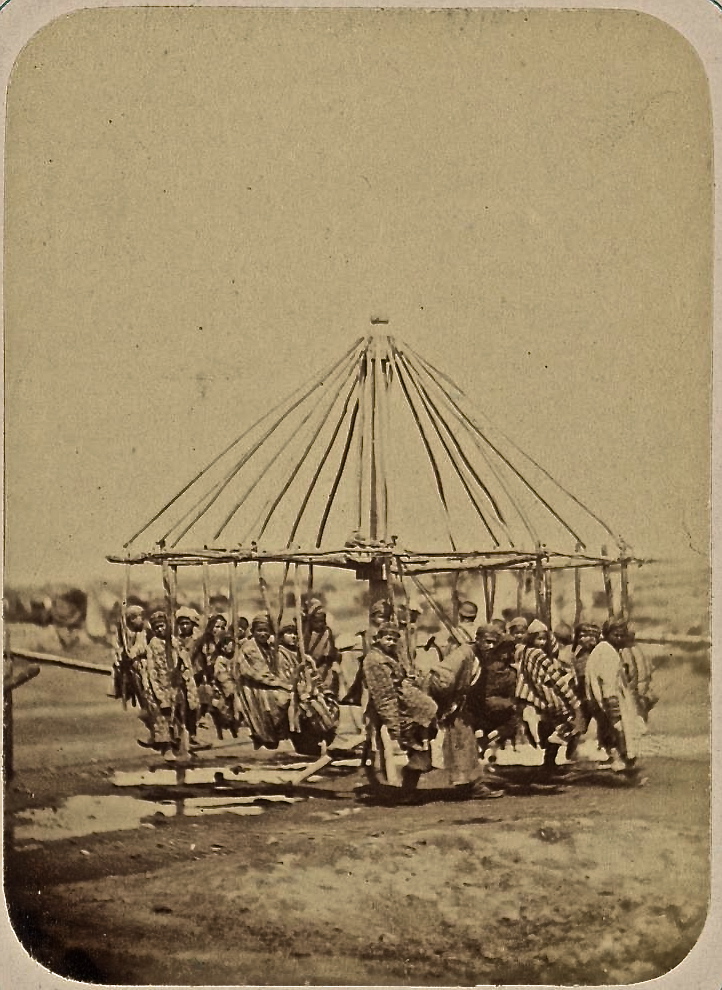
Central Asian festival for Persian New Year, ca. 1865-1872, Library of CongressChildren riding a carousel at a Persian New Year festival in Central Asia, ca. 1865 – 1872, via the Turkestan Album, Library of Congress Prints and Photographs Division.

Nowrūz or Persian New Year will be celebrated this year in many countries between March 20 and March 26.

Vintage landscape: painting the cherry blossoms

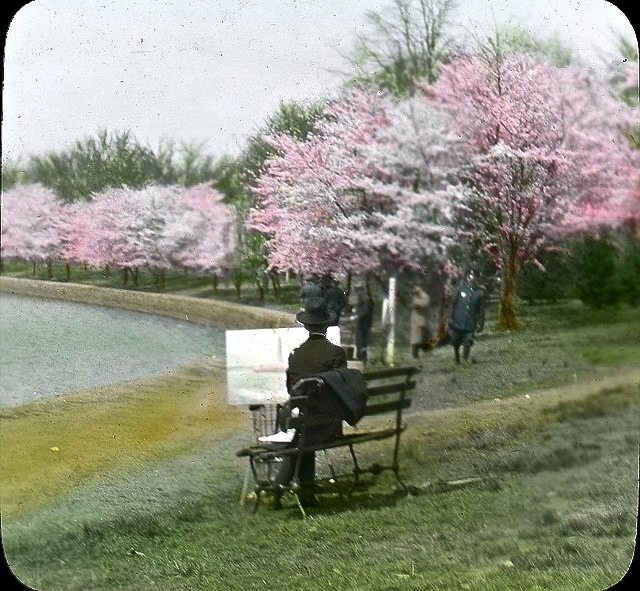
Painting the cherry blossoms, Wash., DC, c. 1920“An artist seen painting the Cherry Blossoms along the Tidal Basin,” Washington, D.C., by E. B. Thompson. The photo is undated, but was possibly taken in the 1920s. Via D. C. Public Library Commons on flickr.

The National Cherry Blossom Festival in Washington, D.C., will begin next week on Wednesday, March 20, and will continue through April 14.  Click here for more information on events and local accomodations.

The National Park Service is predicting that peak bloom (70% of the flowers open) will occur March 26 – 30.  The average date for peak bloom is April 4.

[ADDENDUM: The Capital Weather Gang blog at The Washington Post is departing from the NPS prediction.  They believe that the peak bloom will come between April 3 and 7.]

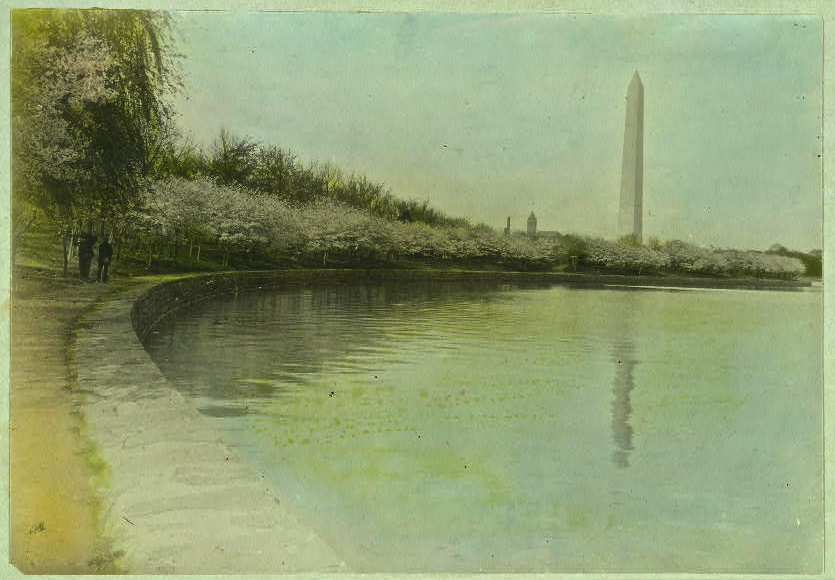
Here’s another lovely hand-colored photograph of the Tidal Basin from about 1920.

Tidal Basin, Washington, DC, c. 1920The photographer is unknown; the image is via the Library of Congress Prints and Photographs Division.

The cherry trees along Washington’s Tidal Basin were a gift from the Japanese government 101 years ago, so they would have been about 10 to 15 years old at the time of these photos.

Loveliest of trees, the cherry now
Is hung with bloom along the bough,
And stands about the woodland ride
Wearing white for Eastertide.

Now, of my threescore years and ten,
Twenty will not come again,
And take from seventy springs a score,
It only leaves me fifty more.

And since to look at things in bloom
Fifty springs are little room,
About the woodlands I will go
To see the cherry hung with snow.

— A. E. Housman, “Loveliest of trees, the cherry now