Vintage landscape: birds’ house view

Farmhouse birdhouse, via Library of Congress“Birdhouse and landscape at an old plantation home [probably this one] near Eutaw, Alabama,” May 1941, by Jack Delano, via Library of Congress Prints and Photographs Division.

Farmhouse birdhouse 2, via Library of Congress

As I was reading about the history of birdhouses, I learned that shelters like the one above, which mirror a builder’s own house or other nearby architecture, were common in Turkey from the 15th century (and probably earlier).

Their compassionate purpose was to provide winter protection to non-migratory birds.  Many were quite ornate and built right onto the sides of “mosques, madrasas, libraries, houses, inns, baths, tombs, bridges, churches, synagogues, and even palaces,” according to the Turkish Cultural Foundation website.*

In Europe, during the same period, birdhouses were built from baskets, wood, and clay as traps for collecting eggs or for capturing the birds themselves.

In colonial-era North America, both Native Americans and European settlers used birdhouses to attract and increase the local bird population for hunting and insect control.

Pines in the distance begin to brighten,
deep blue to something like green.

Everything winged must be dreaming.

Susan Ludvigson, from “Grace


*There is also a nice photo here of the very large birdhouses that were placed in Istanbul parks in the 1960s. Last December, I saw many small birdhouses in the trees along the Hippodrome, put there by the local government.
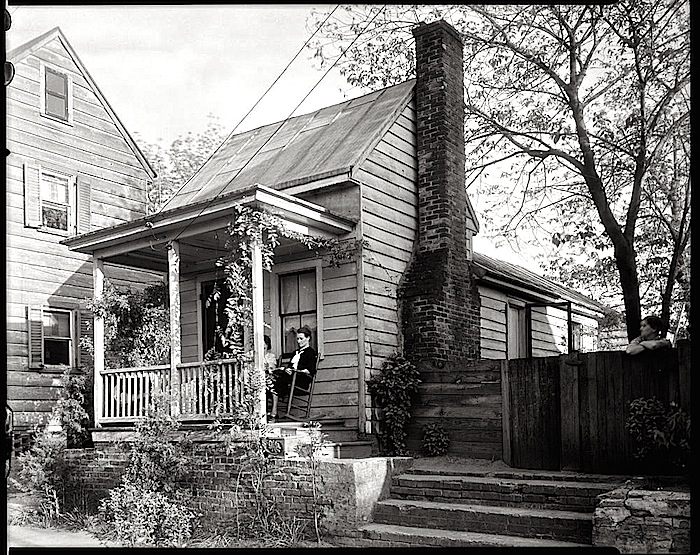
The Sunday porch: small house

Wide enough for two rocking chairs, at least. . .

Small house, via LoCNew Bern, North Carolina, 1936, by Frances Benjamin Johnston, via Library of Congress Prints and Photographs Division.

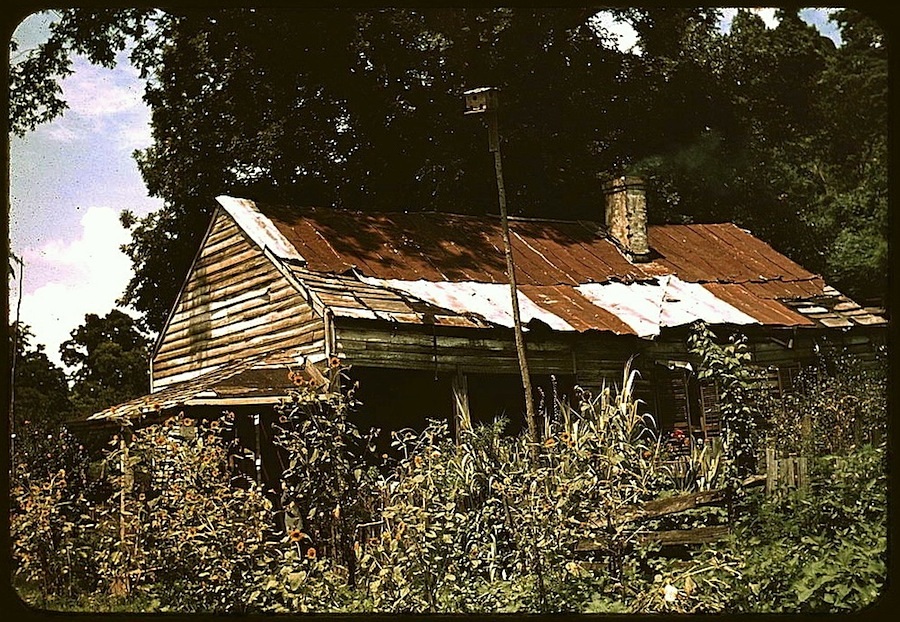
Vintage landscape: sunflowers

Miss. house surrounded by sunflowers, via LoC“An old house almost hidden by sunflowers, Rodney, Mississippi,” July 1940, by Marion Post Wolcott on Kodachrome color film, via Library of Congress Prints and Photographs Division on flickr.

I like the little birdhouse on the very tall pole.

Rodney was once a prosperous port on the banks of the Mississippi — until a large sand bar appeared  in the 1870s and changed the course of the river. The city was left two miles from the water.

By 1933, there were fewer than 100 people living there.  Today, it is considered a ghost town.

Vintage landscape: November smoke

Burning leaves in Nov., via Library of Congress“Burning the autumn leaves in Norwich, Connecticut,” November 1940, by Jack Delano on Kodachrome color film, via Library of Congress Prints and Photographs Division.

The photo shows “Broadway from the corner of Otis Street, facing toward downtown, with Memorial Park on the right,” according to the Library’s flickr page.

The lustrous foliage, waning
As wanes the morning moon,
Here falling, here refraining,
Outbraves the pride of June
With statelier semblance, feigning
No fear lest death be soon:
As though the woods thus waning
Should wax to meet the moon.

— Algernon Charles Swinburne, from “A Swimmer’s Dream

Vintage landscape: harvest

A few beautiful Kodachrome images of the season. . .

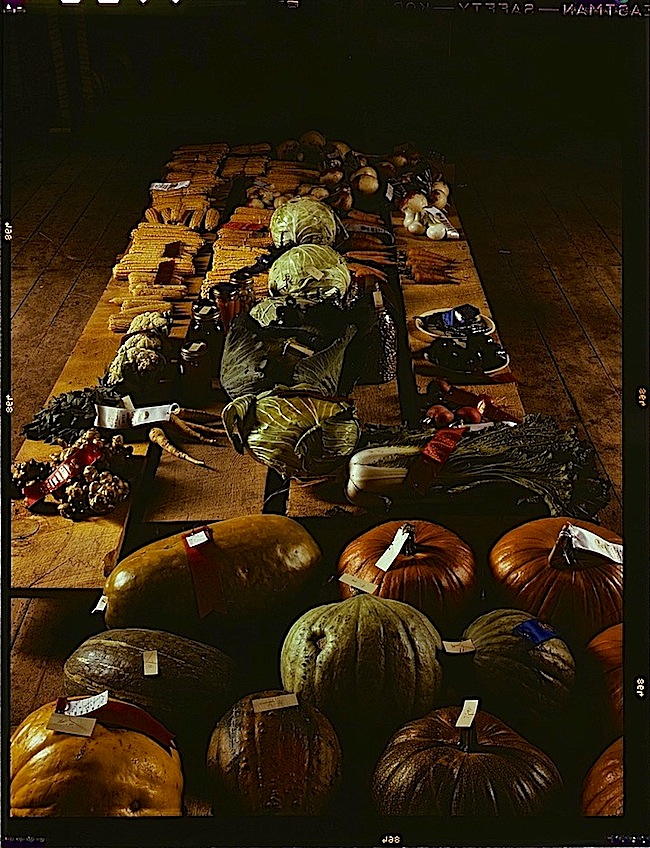
Harvest, 1940s, Library of Congress“Exhibit of crops and vegetables at the Pie Town, New Mexico, Fair,” 1940, by Russell Lee.

The story of Pie Town and of the photos Lee took there is here, in Smithsonian Magazine.

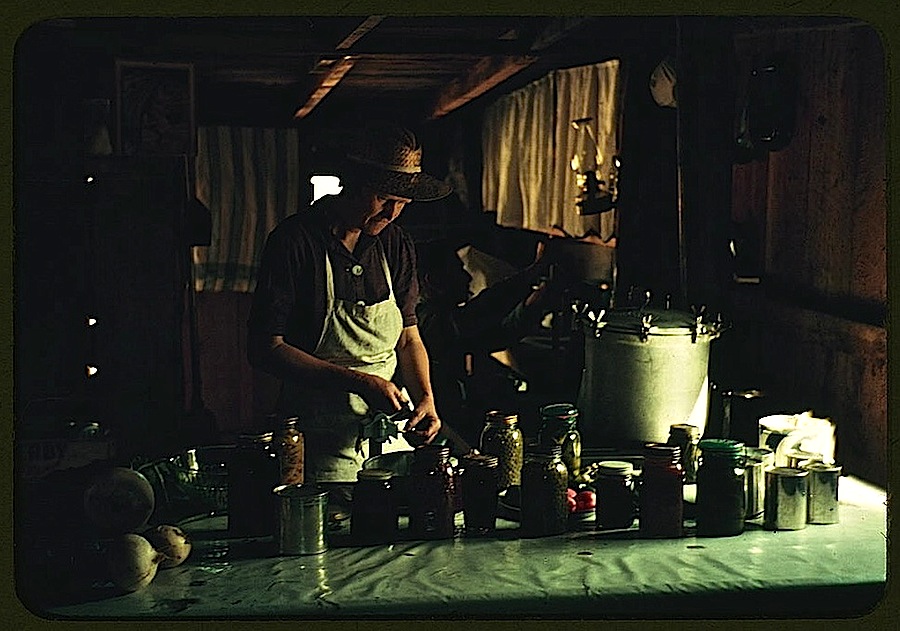
Harvest, 1940s, Library of CongressMrs. Jim Norris canning vegetables, Pie Town, New Mexico, 1940, by Russell Lee. (You can click on the image to enlarge it.)

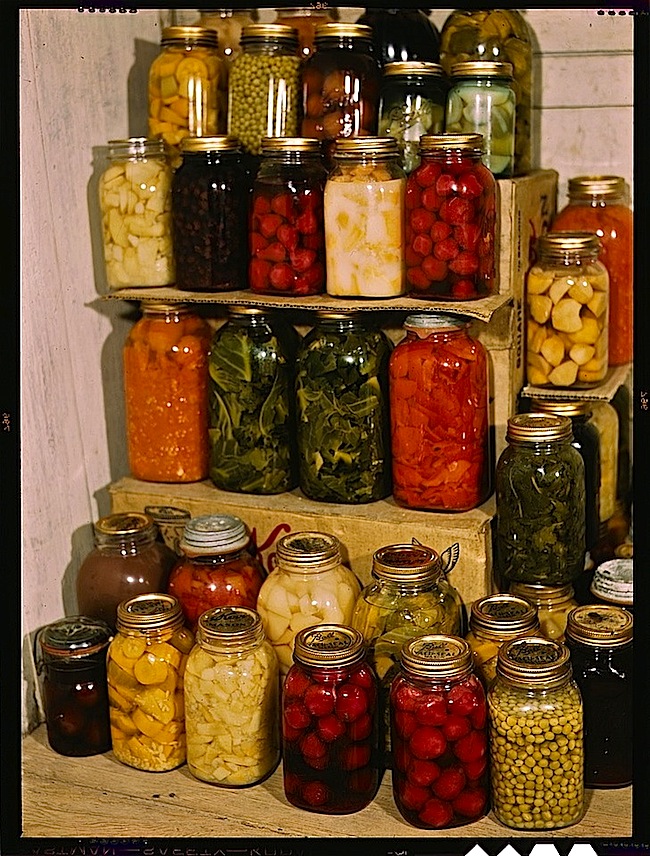
Harvest, 1940s, Library of Congress“Display of home-canned food,” between 1941 and 1945, photographer not noted.

All three images were taken for the U.S. Farm Security Administration/Office of War Information on the then new Kodachrome color transparency film.  All via Library of Congress Prints and Photographs Division.

Oh! for a thousand pumpkin seeds,
To plant for my son John;
He says that pumpkin pies are good
When the winter time comes on.

Robert Charles O’Hara Benjamin, from “The Farmer’s Soliloquy