More well-furnished porches in Queensland, Australia. . .
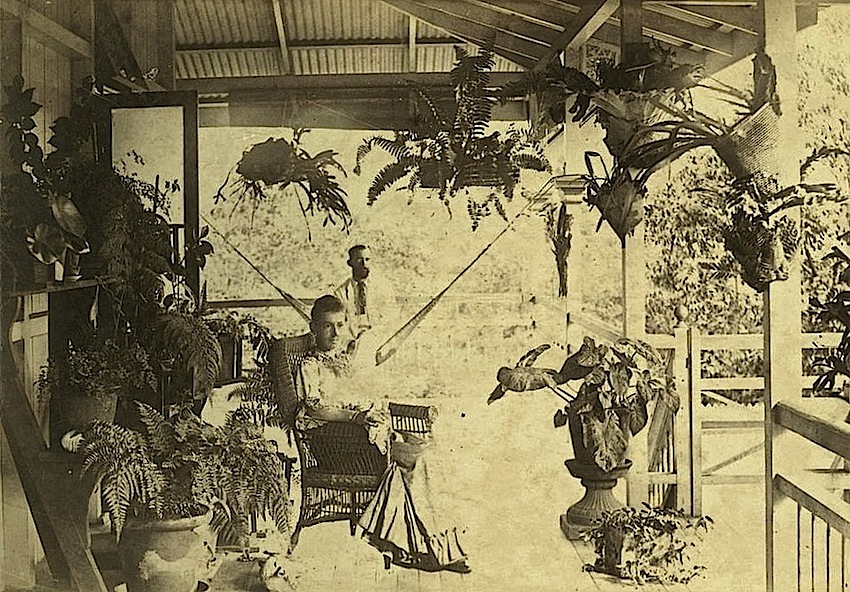
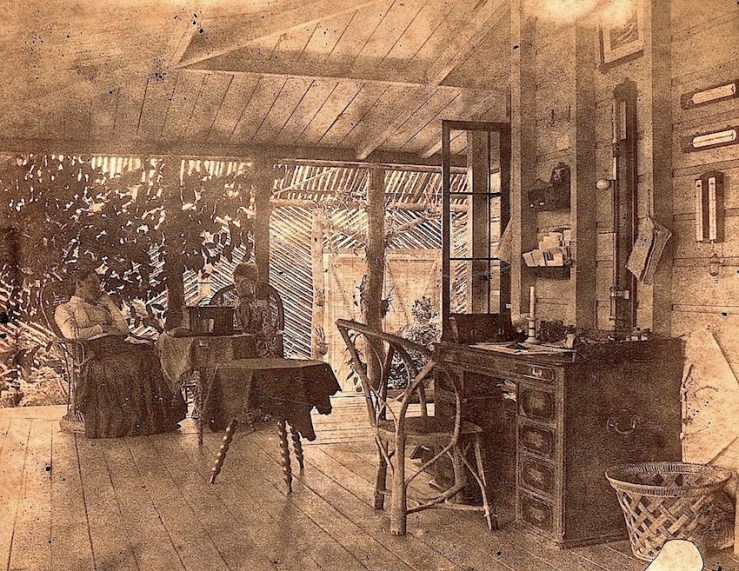 “Verandah at The Hollow, near Mackay, Queensland, about 1875,” photographer unidentified (all photos here), via State Library of Queensland Commons on flickr (all photos here).
I love the office setup on this very deep porch with an adjoining fernery or bush-house. There is also a sewing machine on the table between the two women.
These photos are not very clear, but you can click any thumbnail in the gallery below to scroll through larger versions. There are four additional pictures there too.
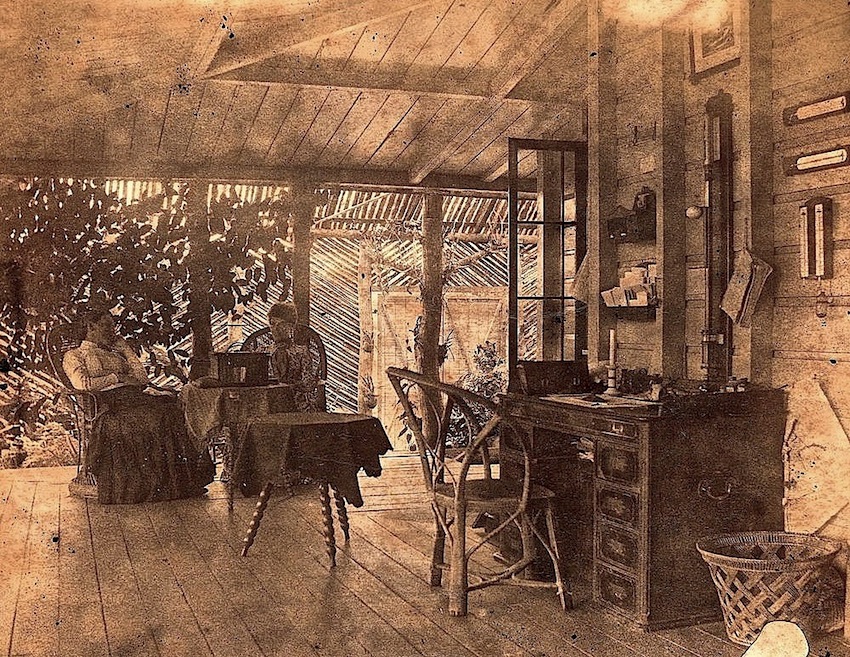
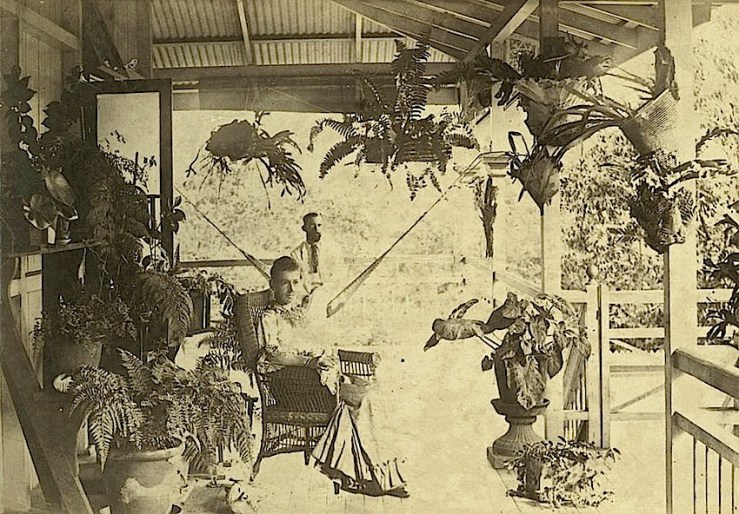 “Unidentified family on the verandah of a Cairns residence, ca. 1895.”
What a beautiful plant collection.
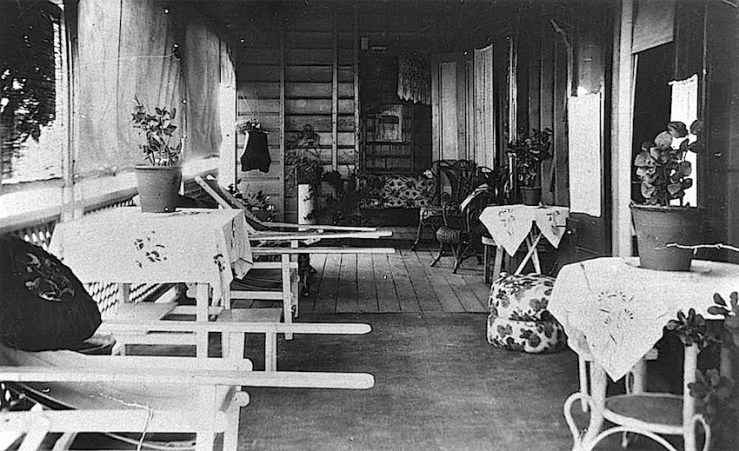 “Furniture on the verandah of a Queenslander home, ca. 1925,” photographer unidentified.
The white chairs on the left with the extended armrests are “squatter’s chairs,” typical to Queensland porches. There are two more examples here.

“Verandah of Gracemere Homestead, near Rockhampton,” ca. 1940.

“Furnishings on a verandah of a Queensland home, ca. 1925.”

“Verandah at ‘Fairseal,’ the residence of W.C. Hume at Torwood, Brisbane, 1890.”

“Invicta, the home of the Kingsfords in Cairns, ca. 1888.”

“Verandah at The Hollow, near Mackay, Queensland, about 1875.”

“Unidentified family on the verandah of a Cairns residence, ca. 1895.”

“Furniture on the verandah of a Queenslander home, ca. 1925.”
Additional links:
Gracemere Homestead 1940 photo, Rockhampton, Gracemere Homestead in 2001, GracemereHomestead history
W.C. Hume short biography, Brisbane, squatter’s chair
The Kingsfords, Cairns

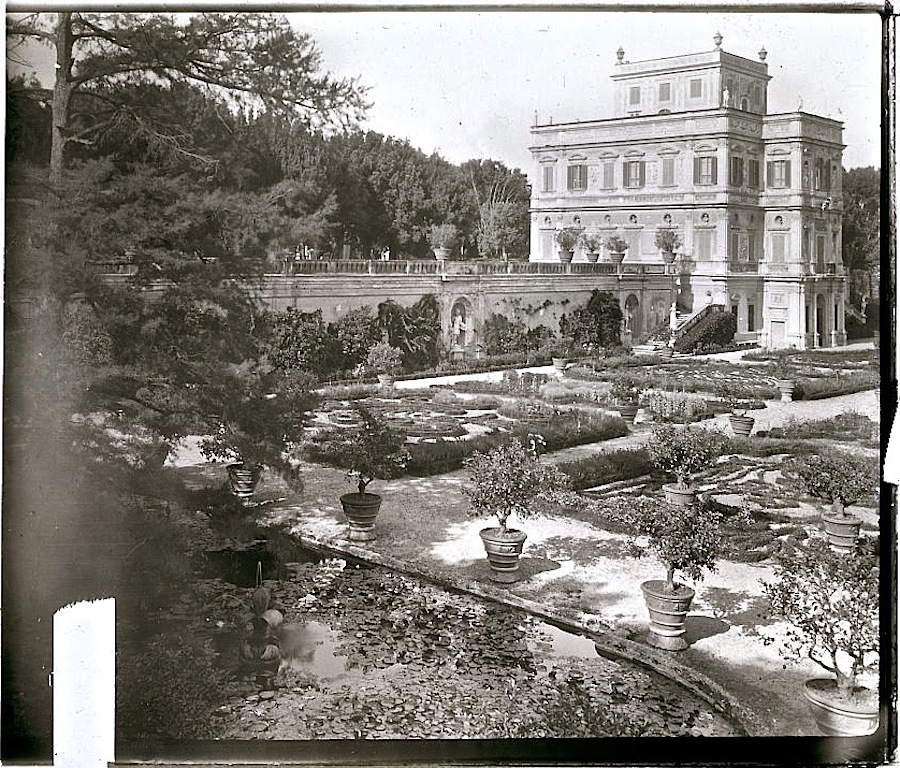 Villa Doria-Pamphili and parterre in the Monteverde section of Rome, Italy, in the summer of 1925. Photo by Frances Benjamin Johnston via Library of Congress Prints and Photographs Division.