Leicester Square

In London, in September, we went to TKTS at Leicester Square to buy discounted theater tickets.*

This slideshow requires JavaScript.

While there, I really admired this sinuous bench/hedge/fence combination, which enclosed the central garden areas of the square — particularly the use of highly polished steel for the railings.

(You can put your cursor over the slideshow to bring up a ‘pause’ button.)

The square was recently re-designed by Burns+Nice, with the installation completed in May of this year.

*We saw “Yes, Prime Minister,” which probably ought to have remained a half-hour sitcom, but was a lot of fun nevertheless.

The Story Museum, Oxford

My niece works in a really charming place in Oxford called The Story Museum. Last month, we took a day trip from London to pay her a visit, and she gave us a behind-the-scenes tour.

The Story Museum exists “to celebrate children’s stories and to share enjoyable ways for young people to learn through stories as they grow.” It has a very nice website here.

Although founded in 2003, the museum only recently found a permanent home in three 19th and 20th century buildings on Pembroke Street. In the 13th century, the site was the location of the first purpose-built college dormitory.

There is a lot of renovation work to be done, so the museum is not fully open to the public, but you can find out how to schedule a visit here.

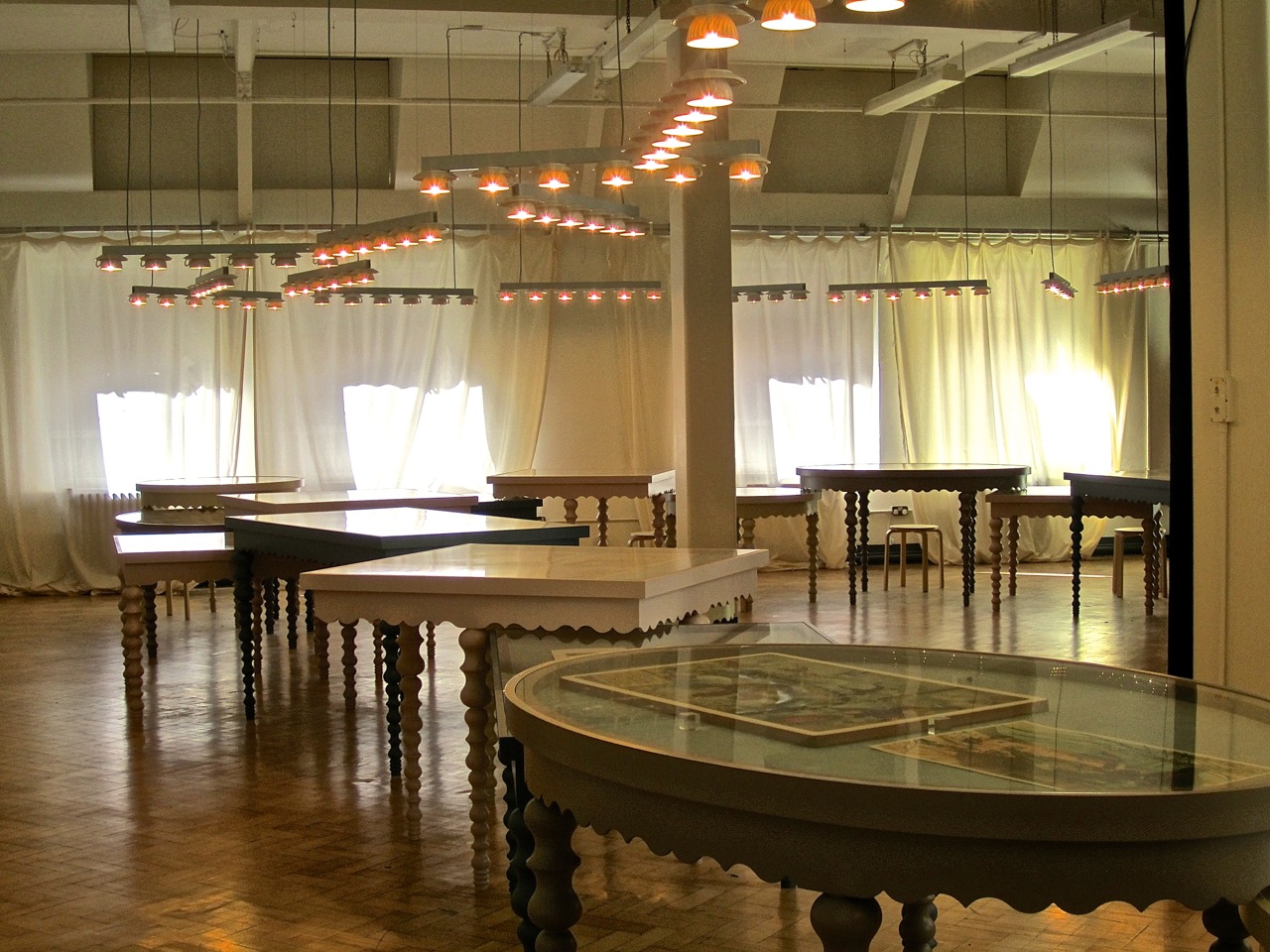
It is currently hosting the exhibit “Tea with Alice: a world of Wonderland illustration” (but only until September 16).

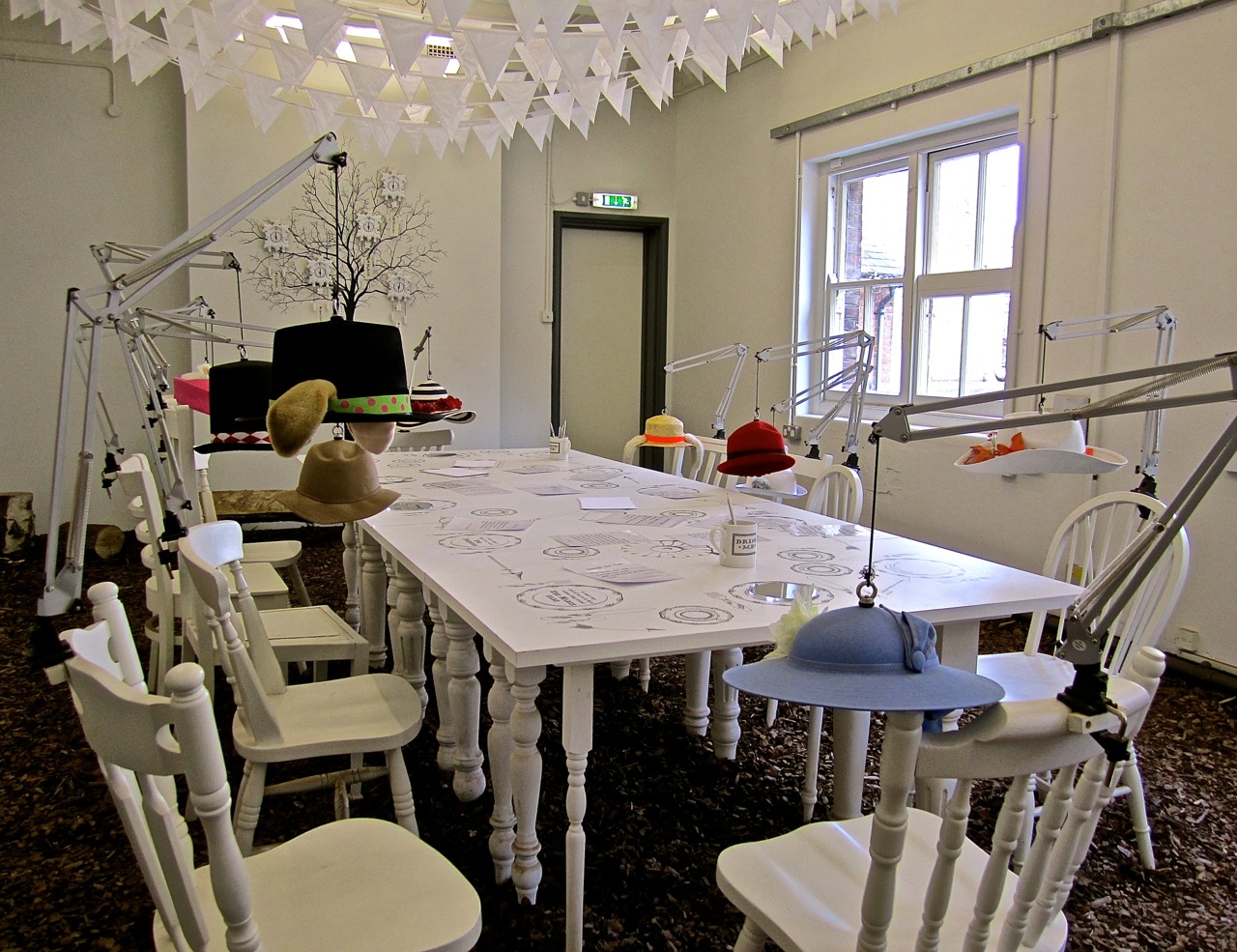
Children can take part in a Mad Tea Party in the “Be it” room.

That’s mulch on the floor.

There is also an amazing exhibit called “Storyloom” that is hard to explain, but you can hear all about it in this interview with the creator.

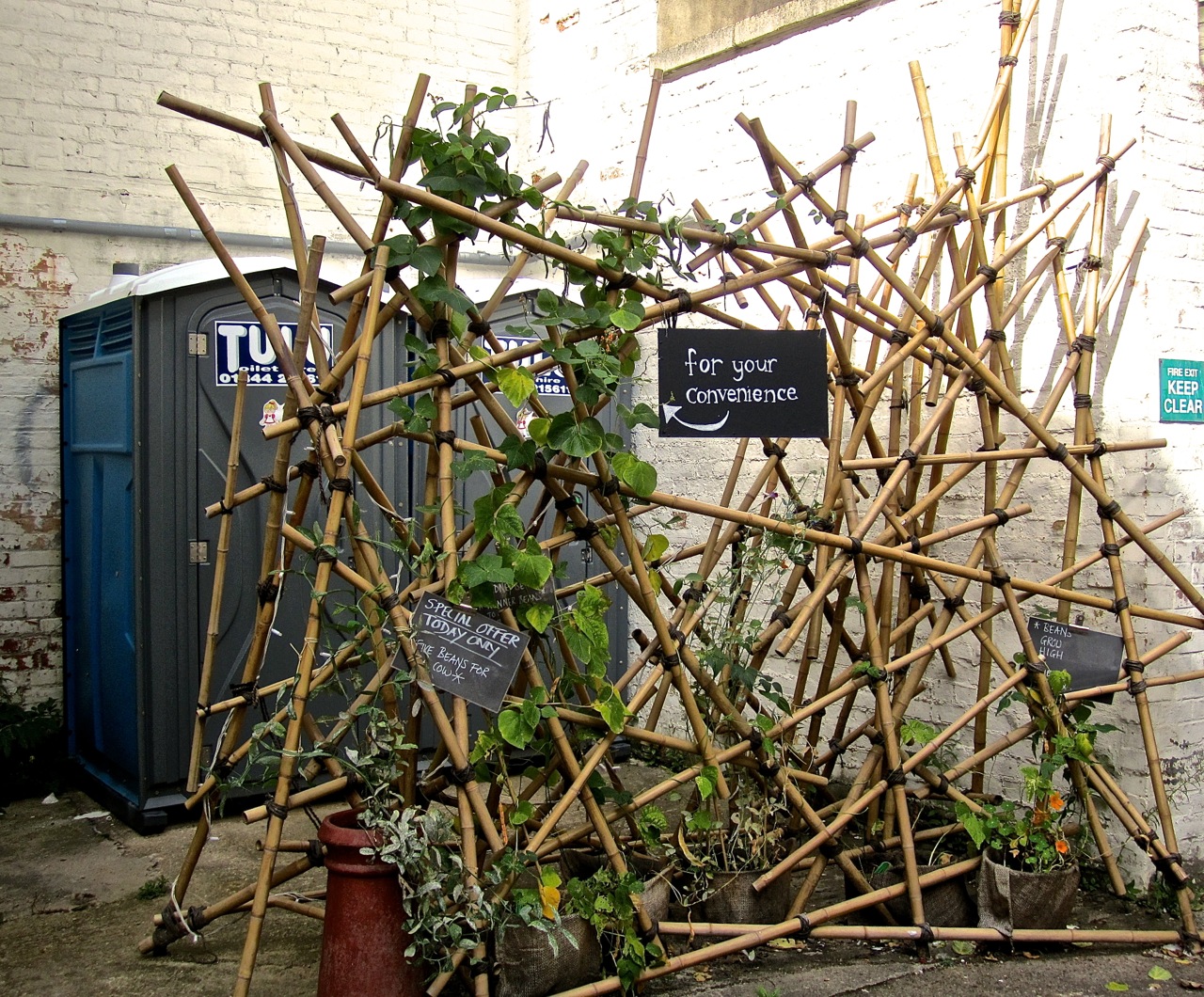
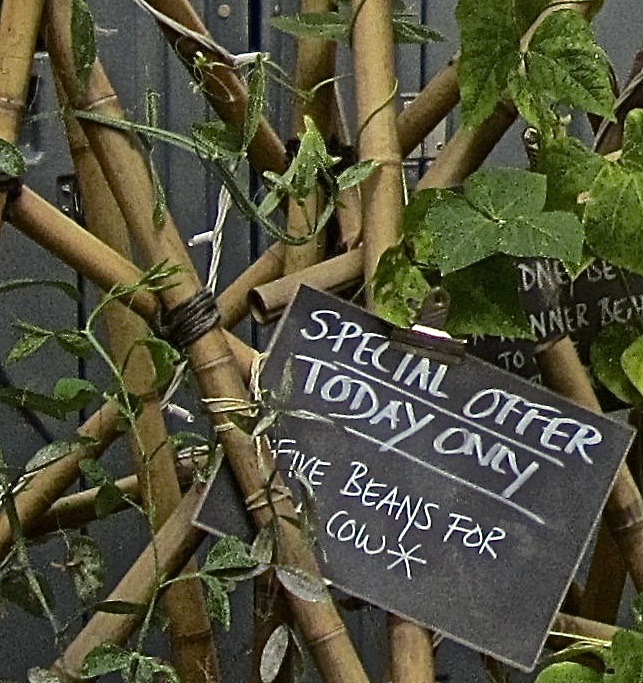
I really liked the screen for their courtyard porta-potties.

Click here for information about how to donate to the museum — in sterling, euros, and dollars.

Tavistock Square

Then one day walking round Tavistock Square I made up, as I sometimes make up my books, To the Lighthouse; in a great, apparently involuntary, rush.
— Virginia Woolf

During our visit to London about a month ago, we stayed in a hotel in Bloomsbury, and on our last morning there, being a good former English major, I had to go looking for Virginia.

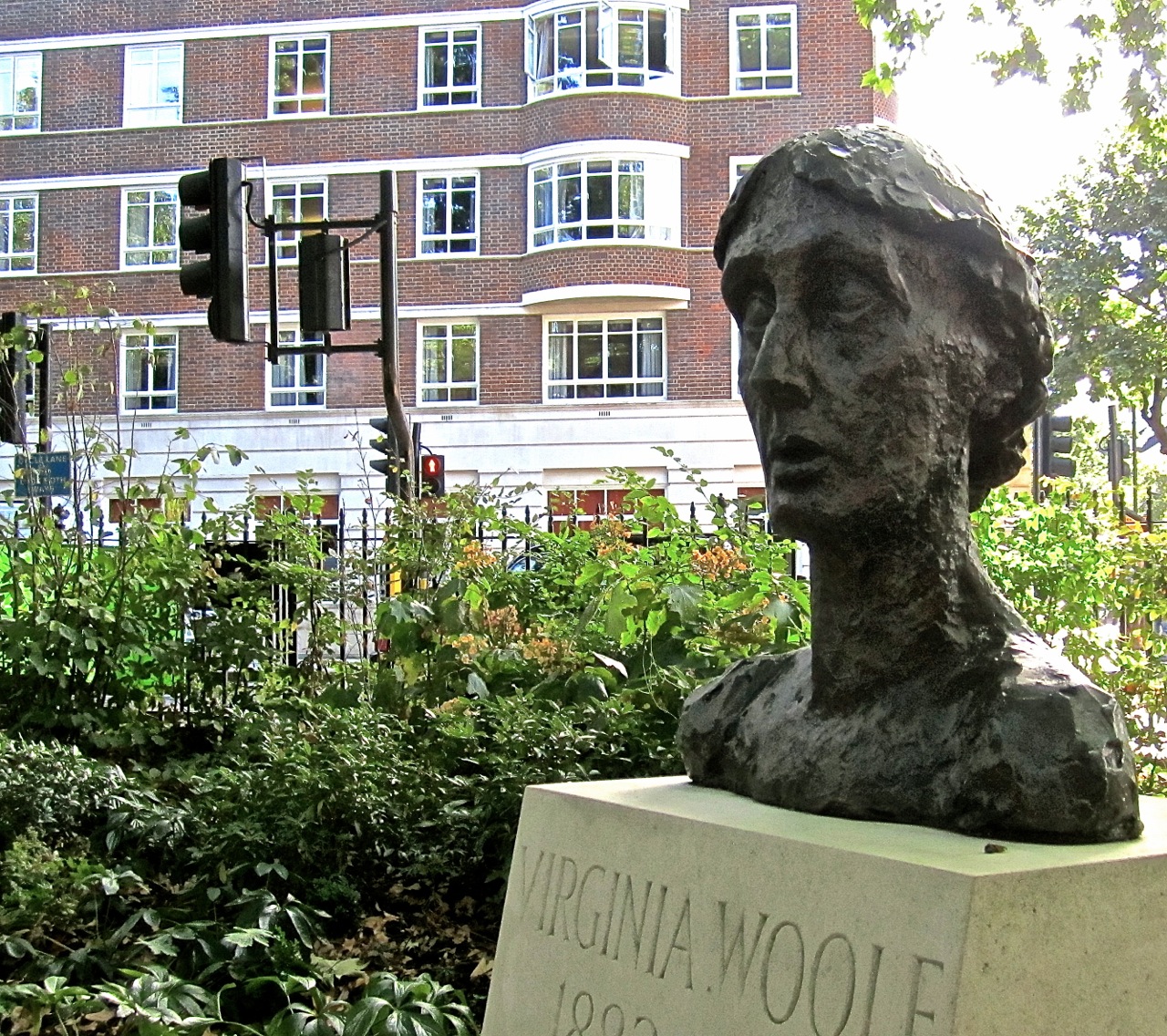
I found her small monument, inscribed with the above quote, in the south corner of Tavistock Square.  From 1924 to 1939, she and her husband lived in a house located on the site of the hotel that you can see behind her head in the photo above.

Leonard Woolf has his own memorial in the square: a Gingko biloba tree, planted in 2004 to mark his work as a colonial administrator in Sri Lanka.

Originally laid out about 1800, the square today is bordered by a wide path shaded by both tall and pollarded trees.  In the center of the park are flower beds and lawn, many benches, and a large sculpture.  It is conventional, but pretty, and a very nice place to stroll and think.

On the day when Virginia Woolf conceived her great book, only residents of the houses surrounding the square would have been able to enter its gates.  In an essay written during the hot summer of 1933, she approved “[t]he sensible and humane suggestion . . . that the squares should be opened … to those who would otherwise have no place to walk or sit but in the street.”

In 1940, Tavistock Square was temporarily opened to all when its iron fence was melted down for war use. (The park was officially opened to the public in the 1950s.)

The square is also associated with Charles Dickens, who lived in a house across from the north corner from 1851 to 1860. There, he wrote Bleak HouseHard TimesLittle Dorrit, and A Tale of Two Cities. The residence was demolished in 1901 and was replaced by an office building designed by Sir Edwin Lutyens. It is now the headquarters of the British Medical Association (BMA).

Lutyens also designed a large monument to Dame Louisa Aldrich-Blake, the first British woman to qualify as a surgeon, which was placed in the east corner in 1926.
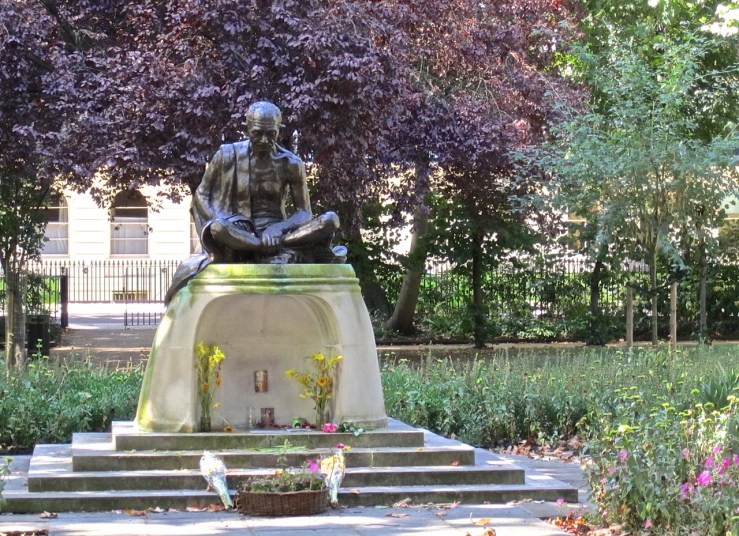
From the 1960s, Tavistock Square has been known for its various memorials to peace and non-violence, including

  • a sculpture of Mahatma Gandhi by Fredda Brilliant (shown above) (1968);
  • a cherry tree planted in memory of the victims of the nuclear bombing of Hiroshima (1967);
  • a maple tree planted by the League of Jewish Women in honor of the U.N.’s International Year of Peace (1986);
  • and the Conscientious Objectors Stone, installed by the Peace Pledge Union (1995).

Four of the park’s planting beds also honor memorial subjects  — two with plants from India and Japan, one with English shrubs for Woolf, and one with medicinal plants for Aldrich-Blake.

Several years ago, another memorial was added to the square, in the form of a small plaque affixed to the current iron fence. It marks the section of street in front of the BMA where the last of the four July 7, 2005, suicide bombers blew up the Number 30 double-decker city bus and killed thirteen of the fifty-two commuters who died that day.

Gordon Square

Most of the social and intellectual activity that we associate with the Bloomsbury Group took place about a block west of Tavistock Square in a row of houses on Gordon Square.
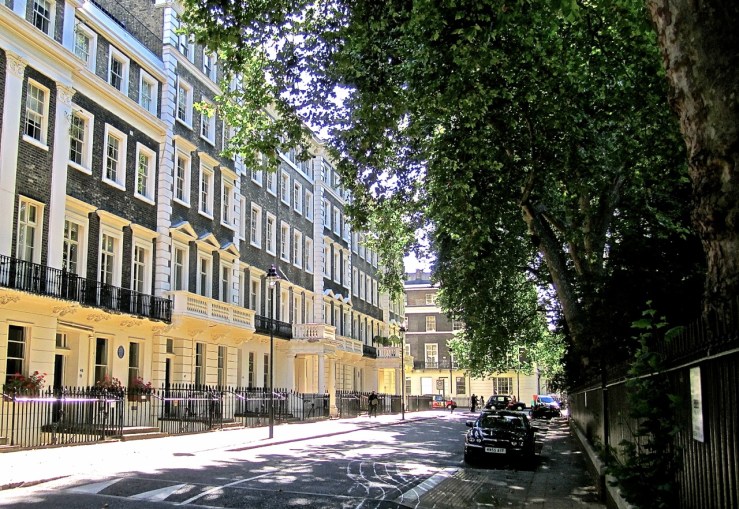
From 1904 to 1907, Virginia and Vanessa Stevens (later Woolf and Bell) lived in #46 Gordon Square with their brothers, Thoby and Adrian. The siblings held regular ‘at homes’ on Thursday and Friday evenings with such guests as Lytton Strachey, George Bernard Shaw, Maynard Keynes, E.M. Forester, Clive Bell, Duncan Grant, Roger Fry, and John Nash. (After their marriage, Vanessa and Bell took over the house from 1907 to 1916.)

From 1920 to 1925, Vanessa lived at #50 with her children and then at #39 with both her husband and lover Duncan Grant.  Strachey and other members of his family lived at #51 from 1919 to 1956.

In the photo above, #46 is the first house on the left side (with the oval plaque), four doors down is #50 and then #51.
Nyungwe Forest Lodge

Last month, we finally made a trip to southwest Rwanda, after having rescheduled twice since the spring. For me, the chief attraction of the three-day visit — which involved many hours on some very rough and curvy roads — was the drive through the 378 square mile Nyungwe National Park, one of the most species-rich mountainous rain forests in Africa.

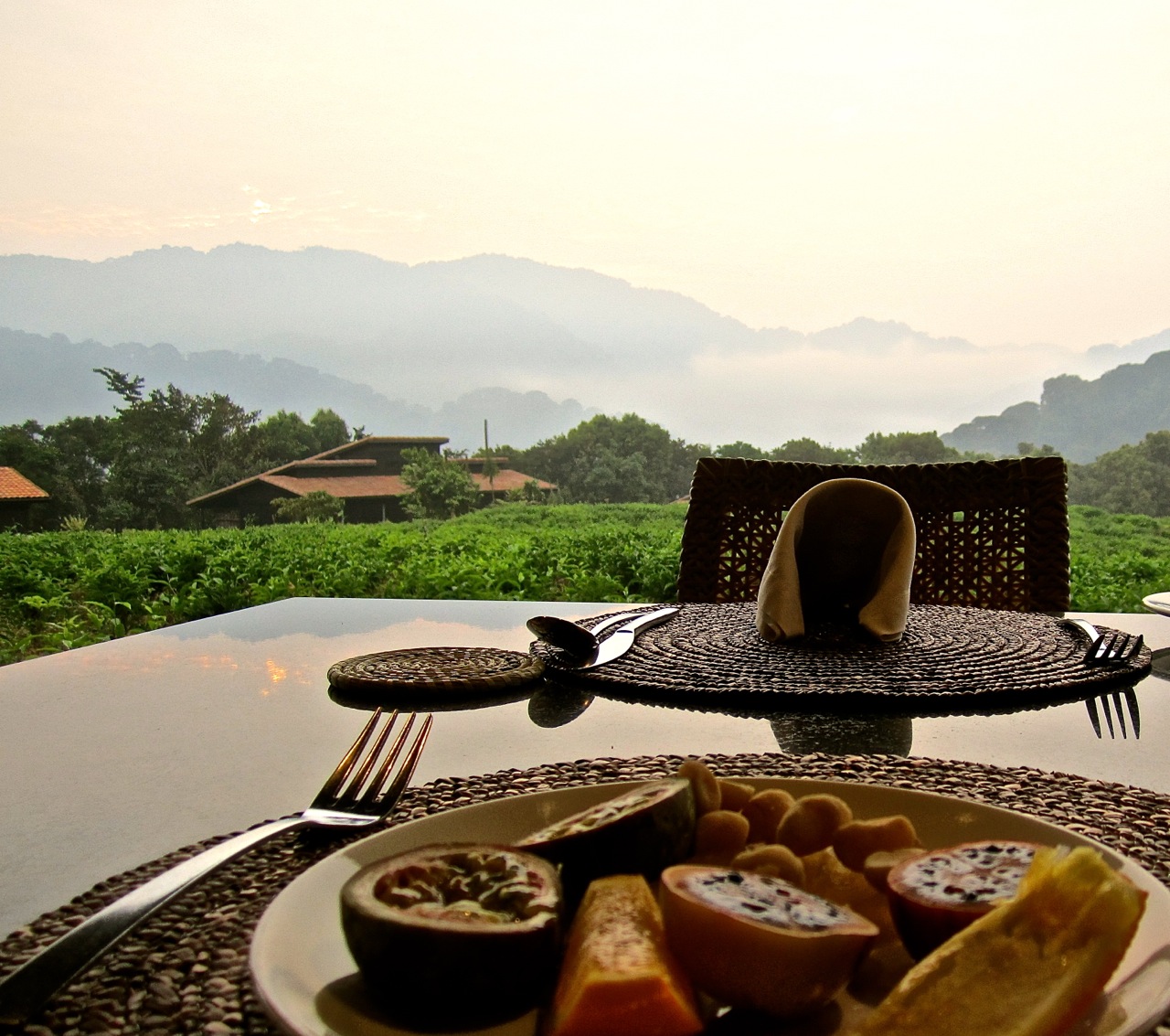
We also spent two nights at the wonderful Nyungwe Forest Lodge, possibly the best hotel in Rwanda. (Above: early morning breakfast at the Lodge.)

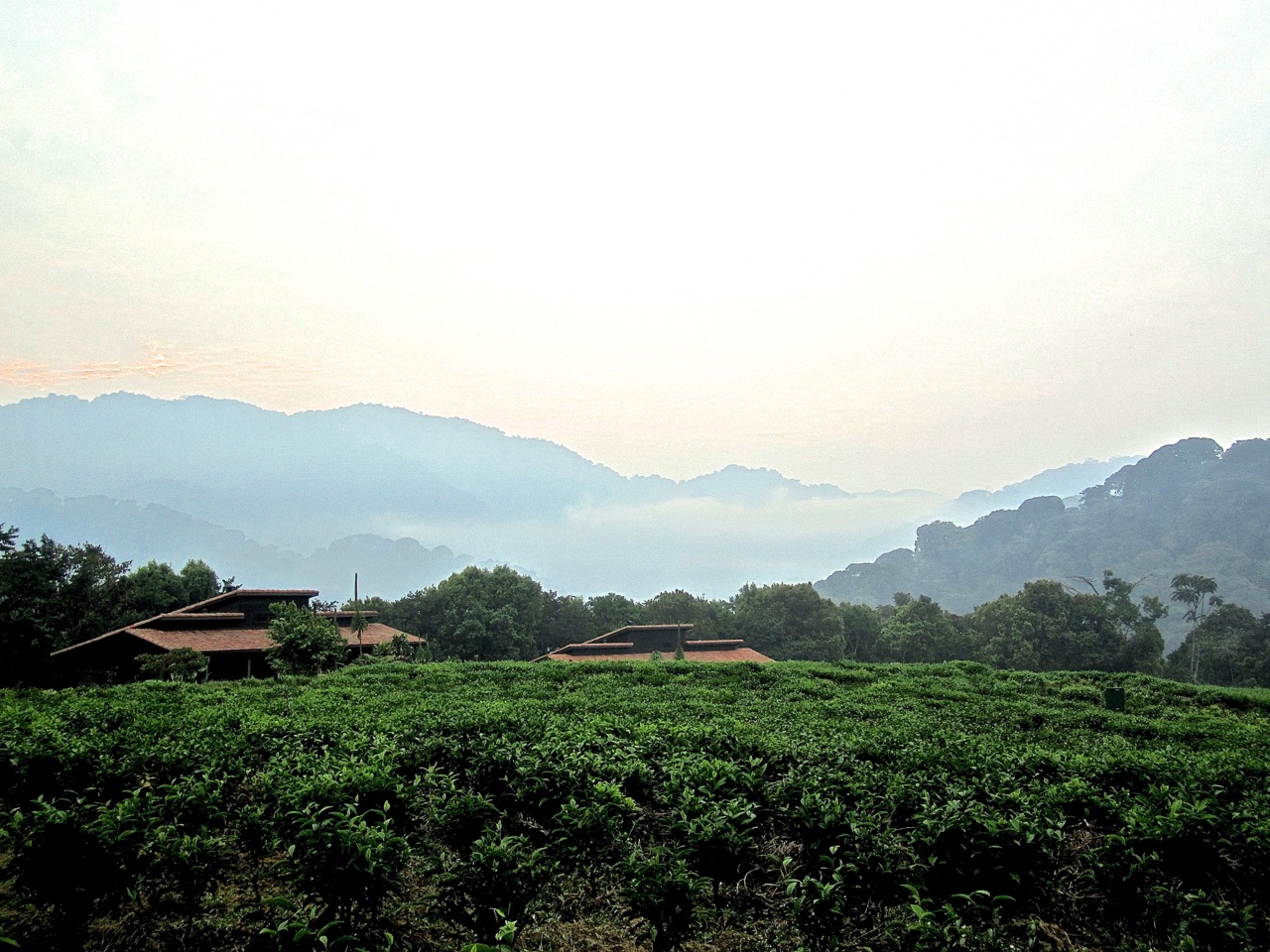
Located on the western edge of the park, the lodge offers beautiful views of two environments: the natural forest of the park and the agricultural fields of a tea plantation.

The cabins rest on the very edge of a field of tea. And their back-facing picture windows look into the forest trees (monkey sightings are common and guests are warned to close windows and doors at night).

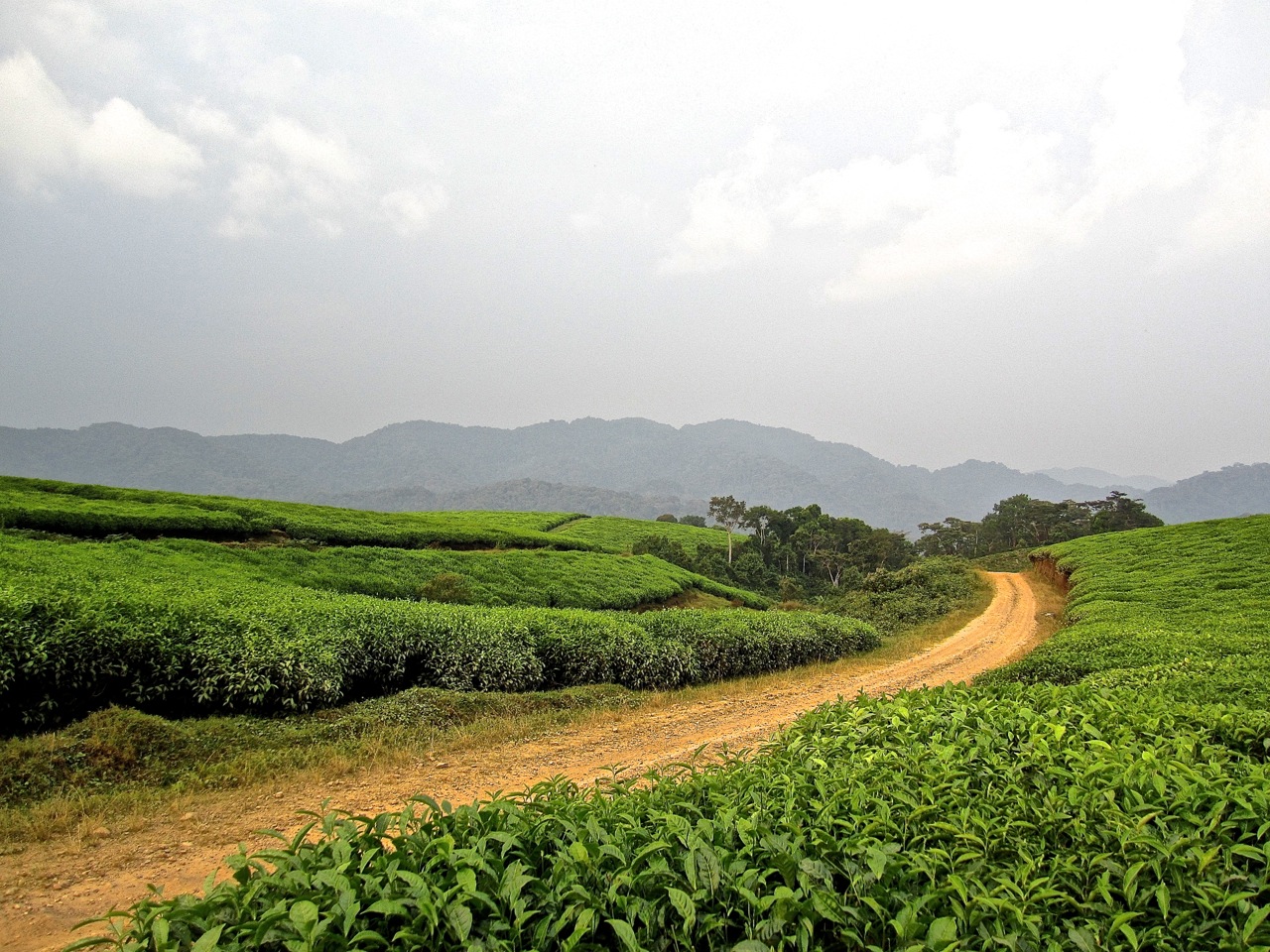
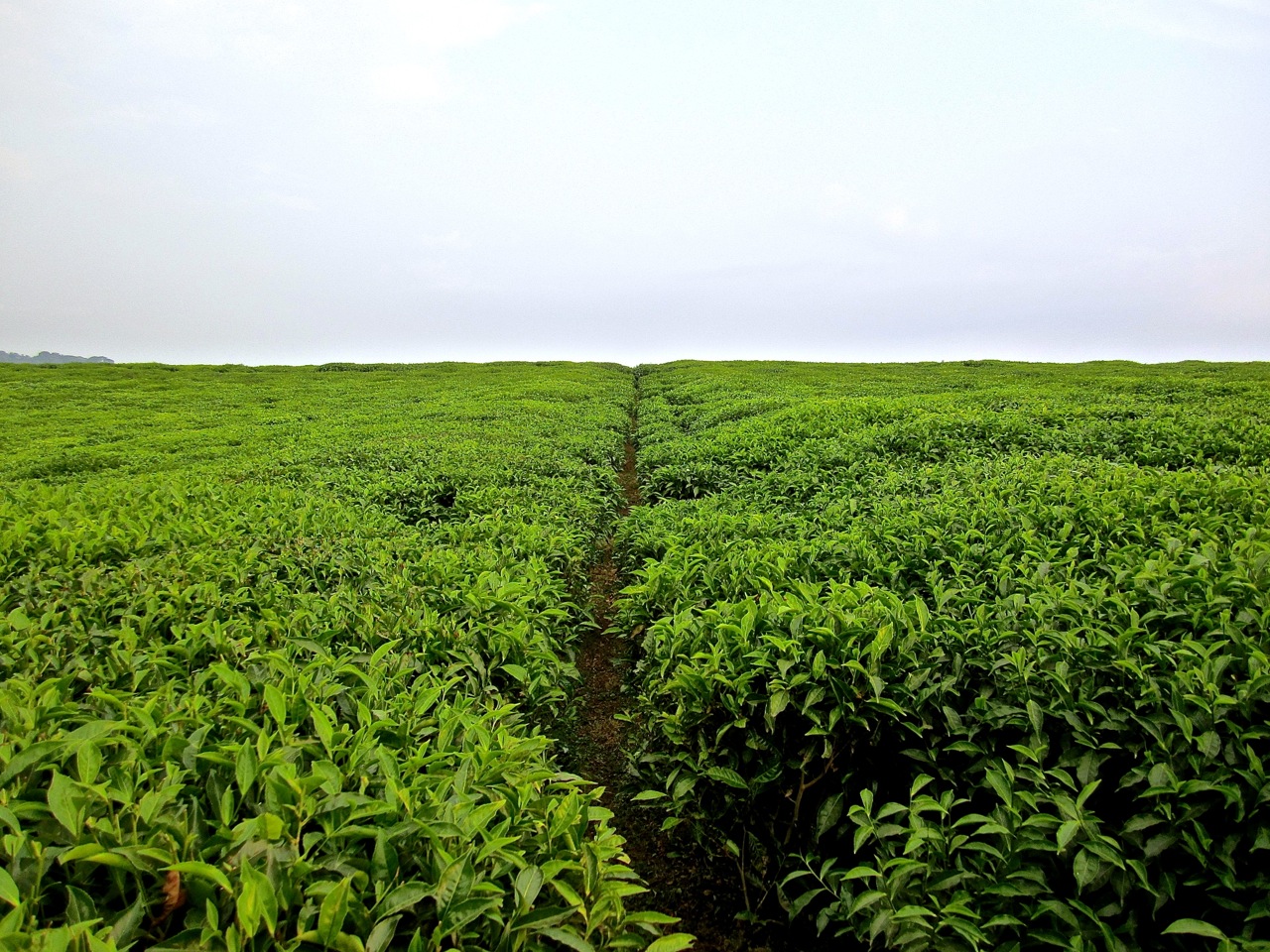
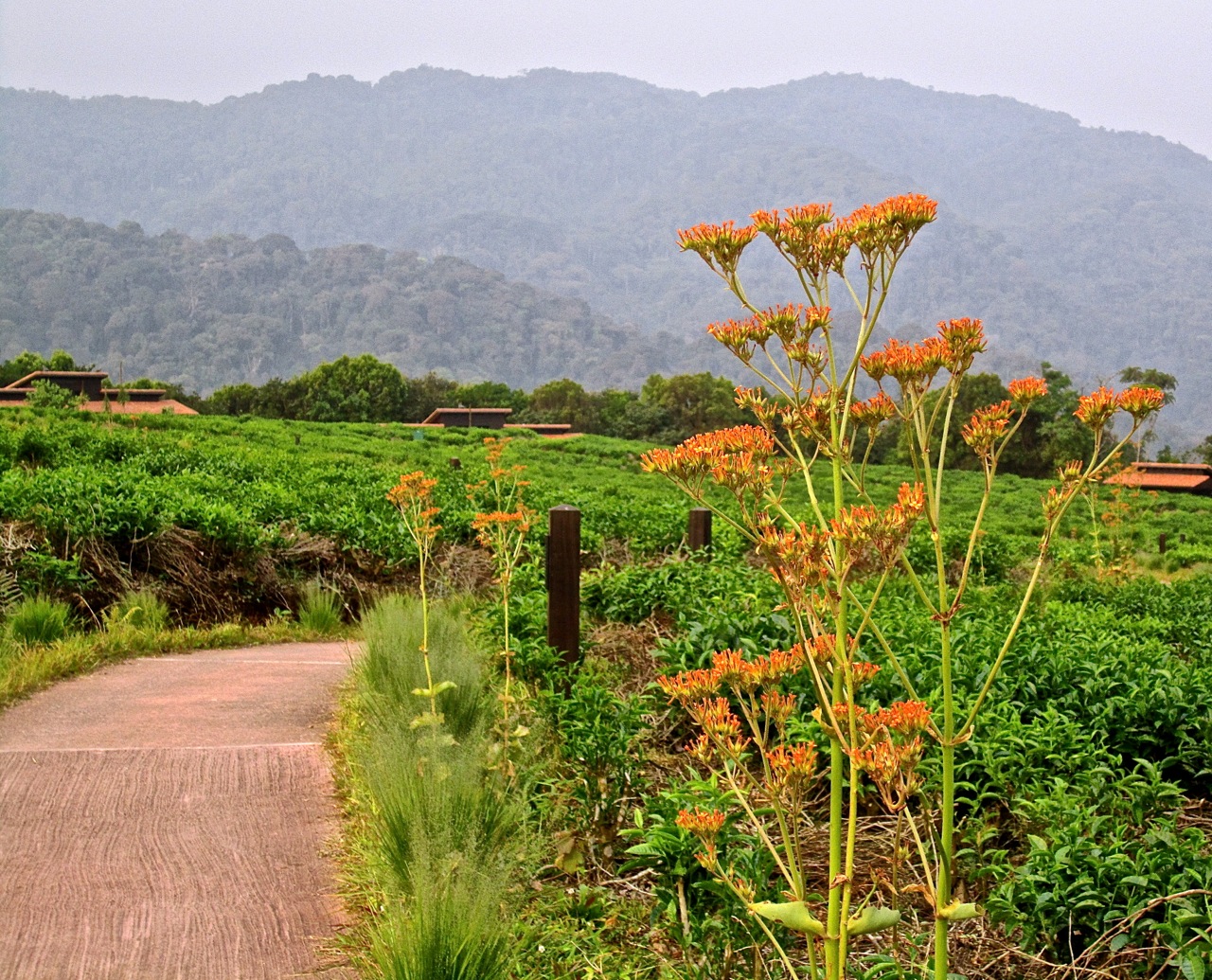
The road leading to the Lodge passes through bright green acres of tea bushes.

A local cooperative picks the tea (right up to the lodge and cabin doors) and keeps the income from its sales.

(Above: the road to the lodge and a tea collection shed.)

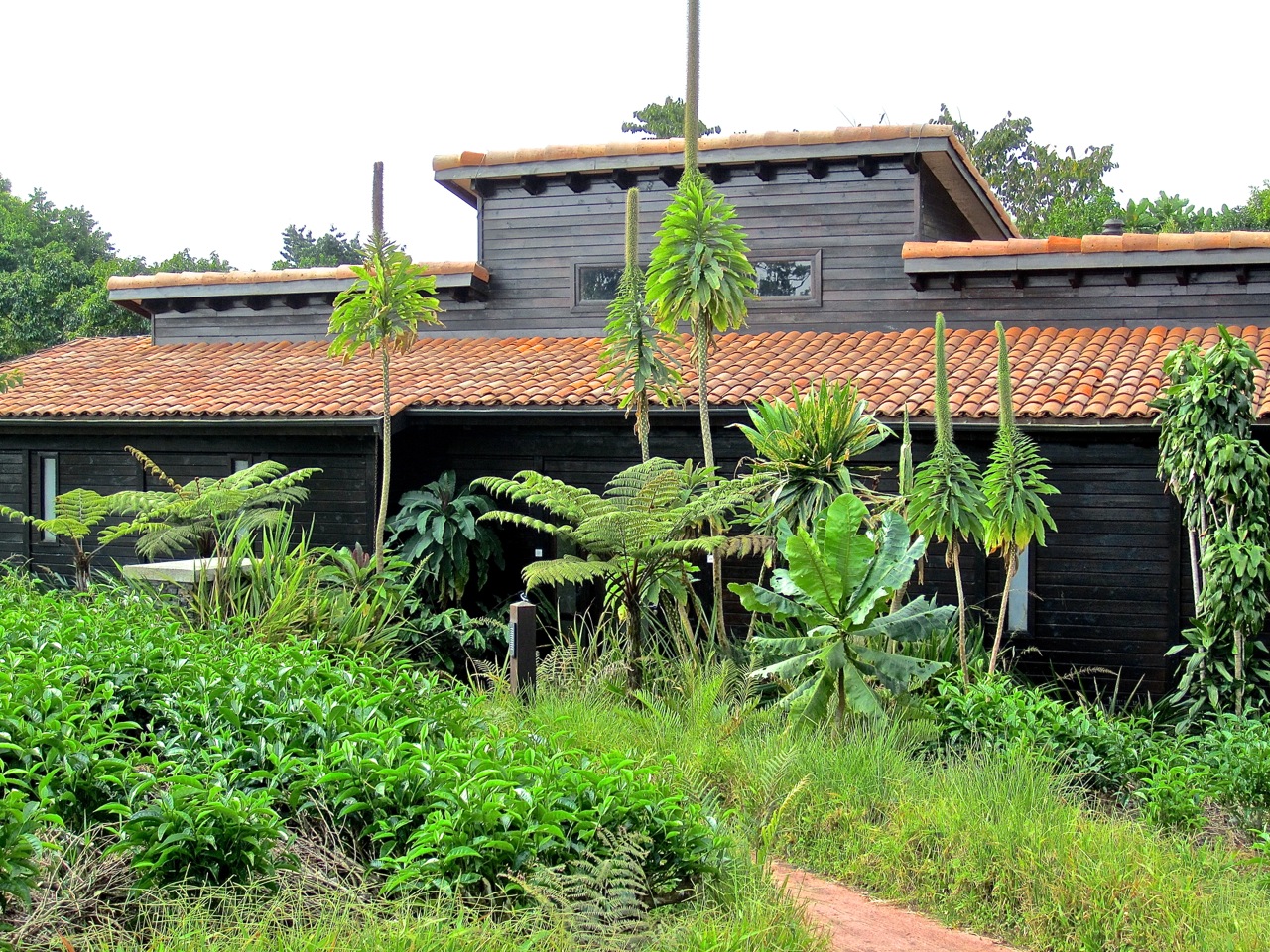
The (tea-side) entrances to the cabins are landscaped with plants from the forest. The Lodge was not allowed to bring any other plants onto its grounds.

The cabins are built on posts, lifting them off the ground.

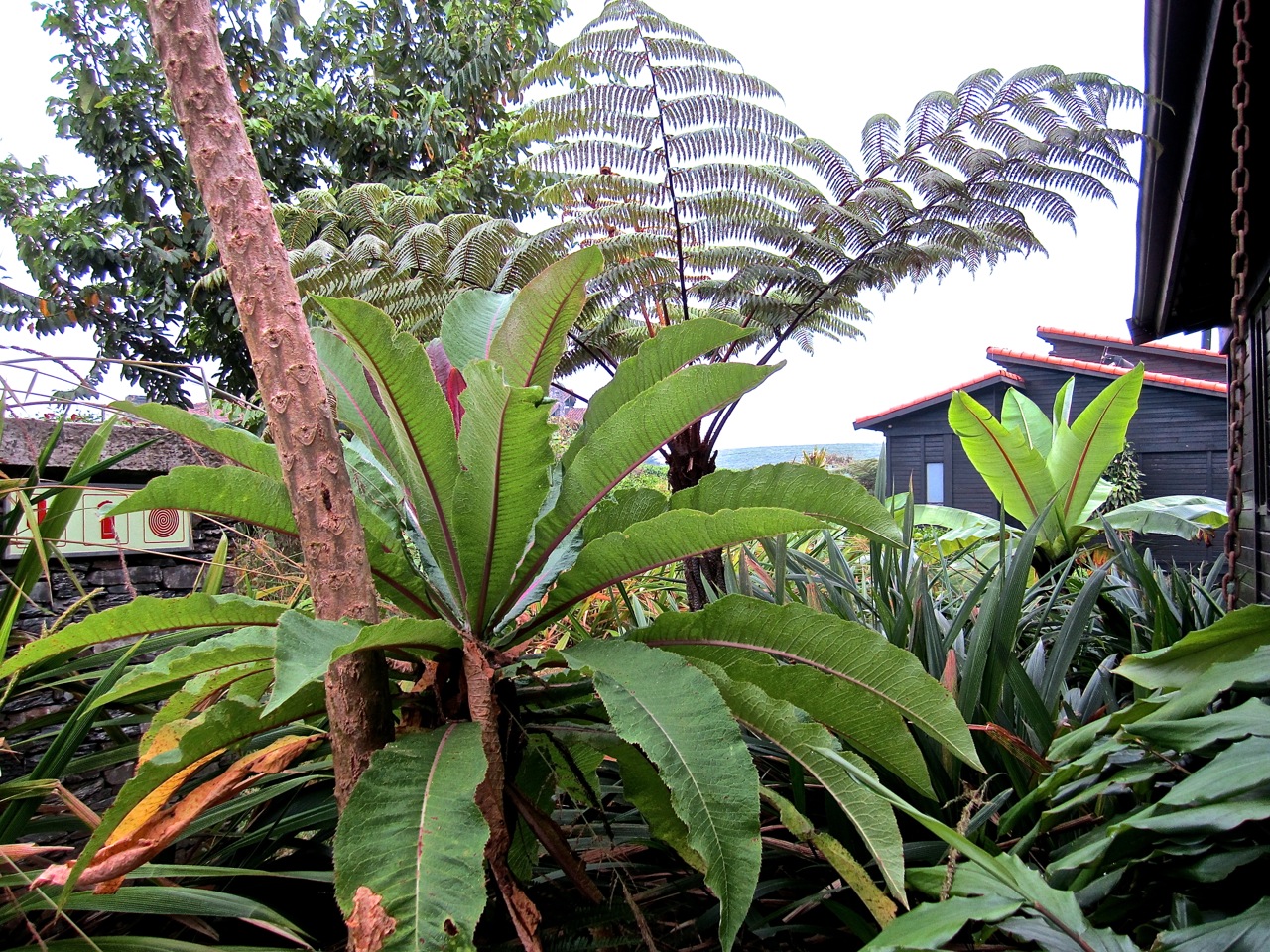
Above are some of the plants at the entrance to our cabin.  I think the tree fern in the  center background is a Cyathea manniana (a.k.a., Alsophila manniana).  I haven’t been able to identify the plant in the foreground. Way in the back on the right is a wild banana (Musa ensete).

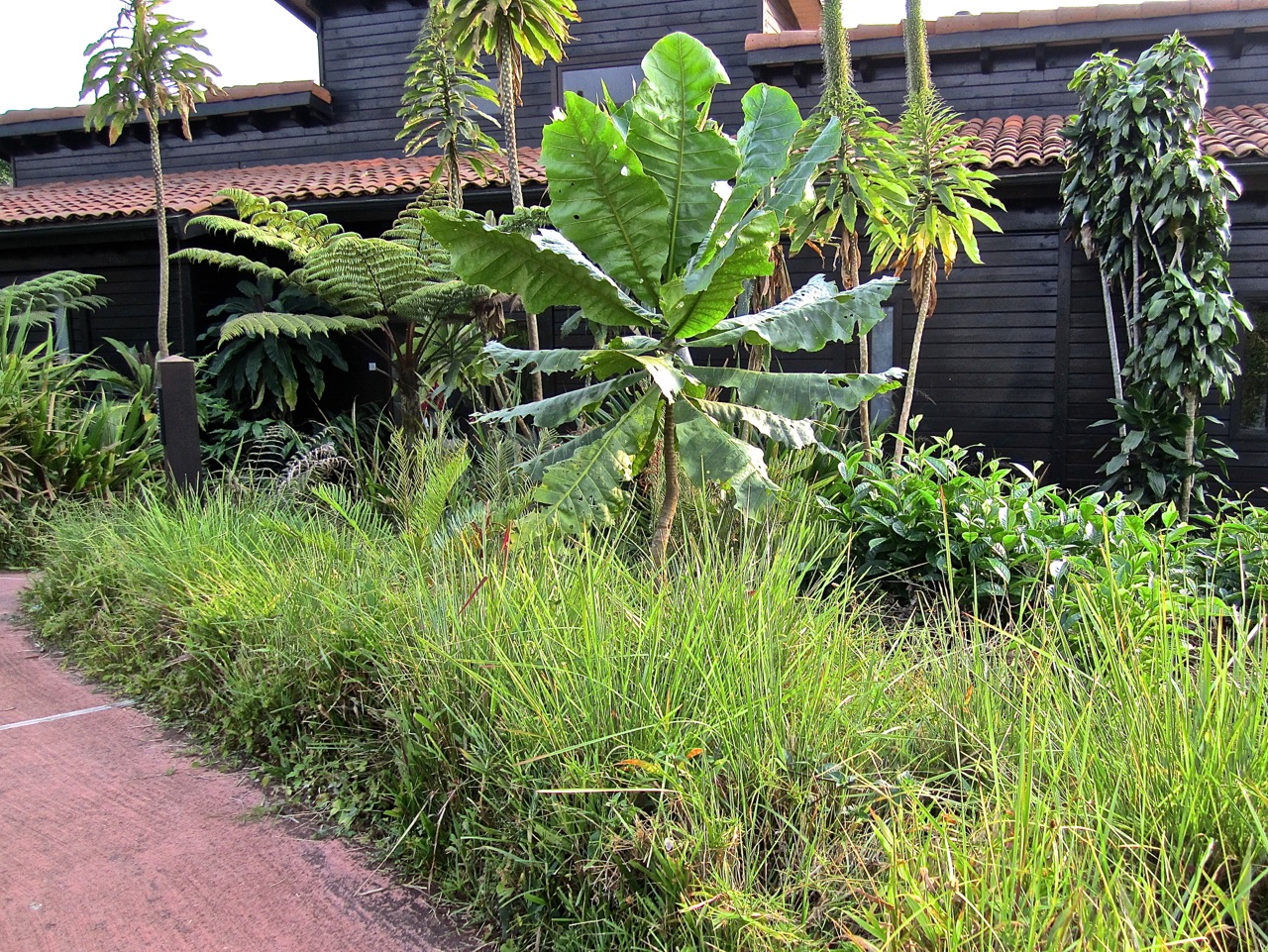
Unmown wild grass grows along the paths and among the larger plants.  I believe the small tree in the center, above, is an  Anthocleista grandiflora.  I think the plants just to the right of it are Lobelia gibberoa.

A park trail entrance is located near the Lodge grounds.  Guests are not allowed to hike, however, without paying the park fee and taking an official guide.  Both can be arranged at the Lodge.

The main Lodge building (with the lounge, bar, and restaurant) rests in the center of the tea field.

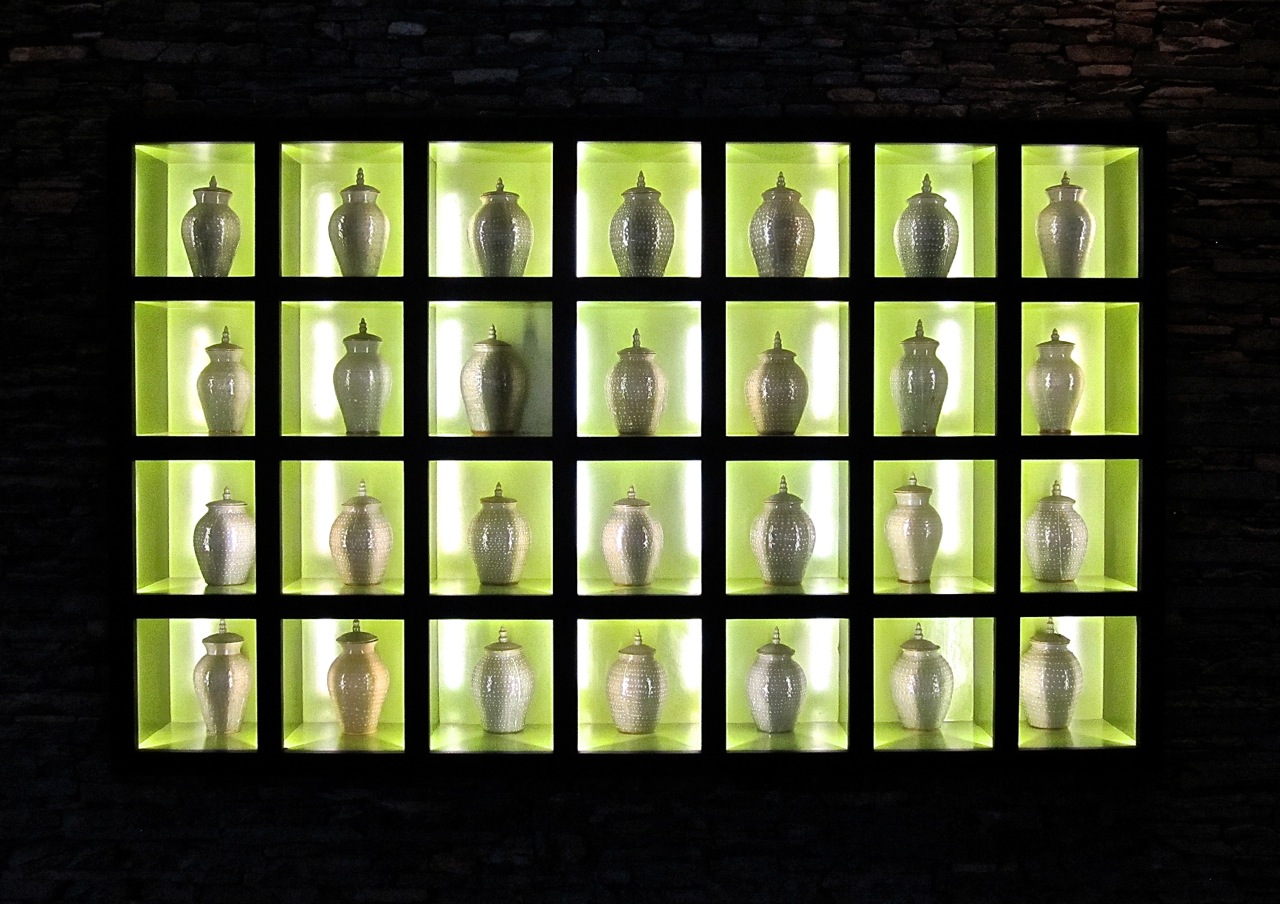
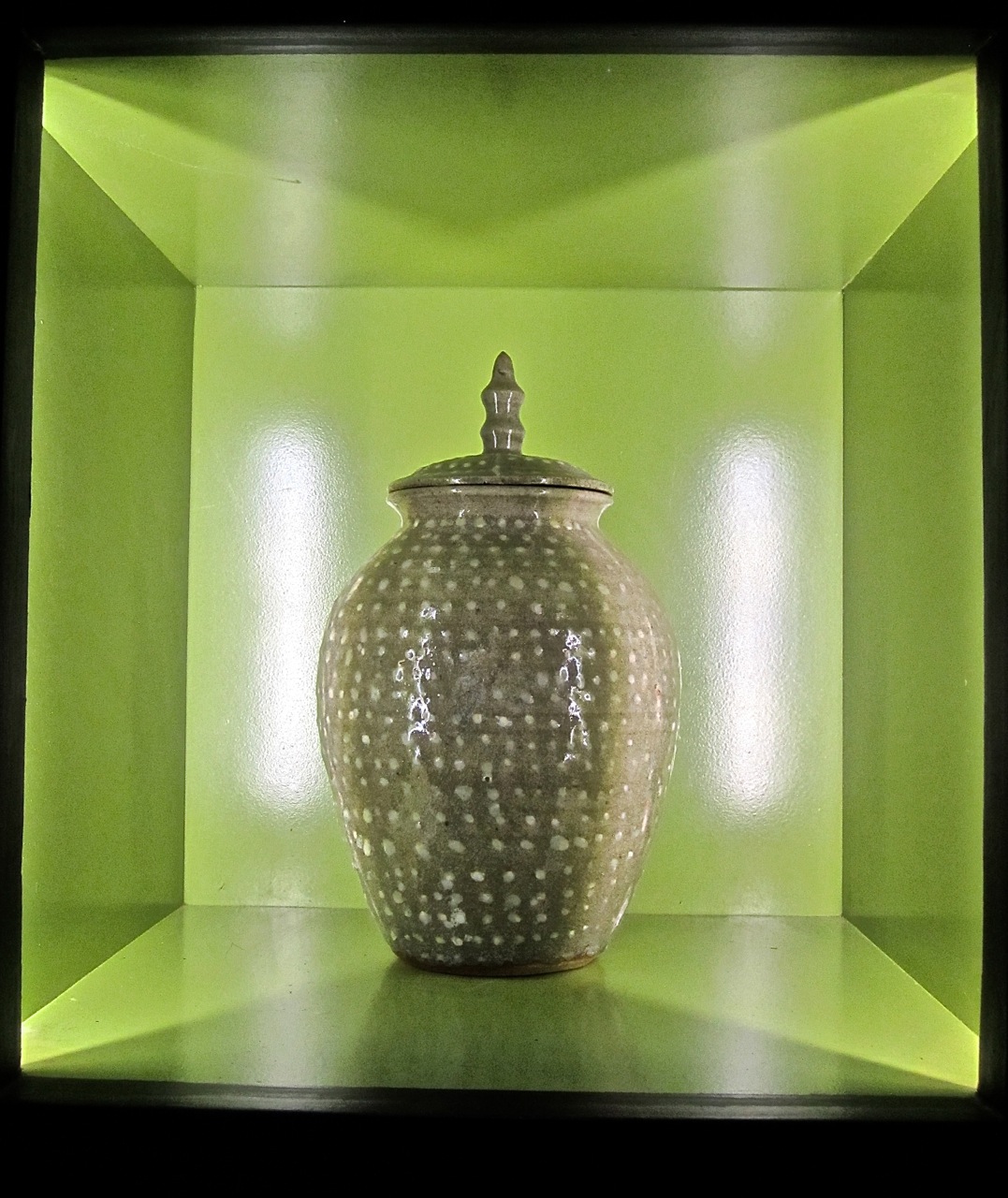
The interior is beautiful, as well.  (Above: a wall of Rwandan pottery.)

The tea grows right up to the foundations of all the buildings.  (Above: the main building terrace with rain chains.)

The tea bushes are mulched with the branches cut in the last pruning.

The Lodge’s main paths are earth-colored concrete and are set slightly below the level of the tea field.

The smaller paths are also partially hidden below the tea.

Orange Kalanchoe crenata plants line the paths.

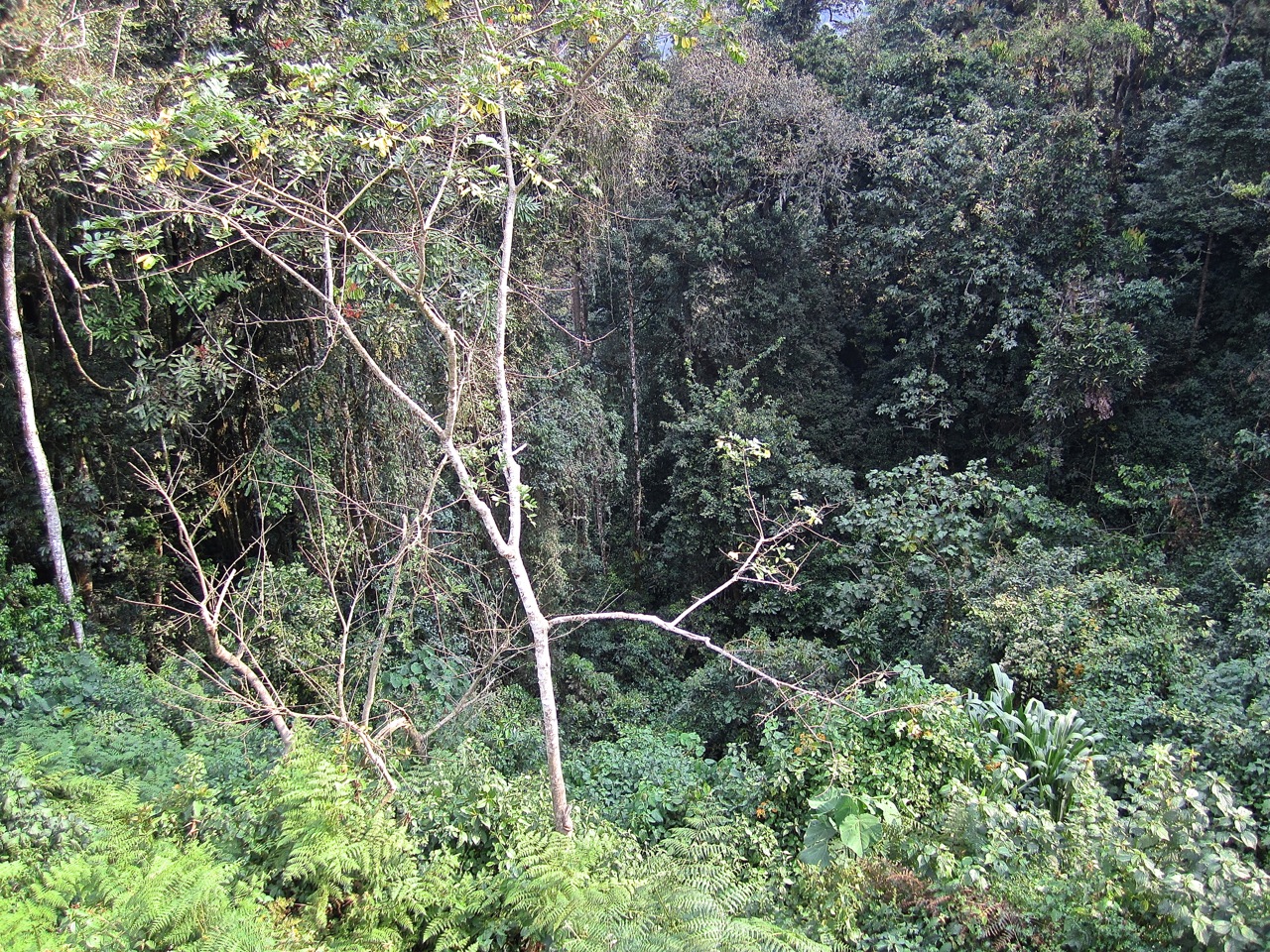
Above is the view of the forest from the pool.  The trees are full of monkeys (we learned to look for shaking branches; then we saw them everywhere).

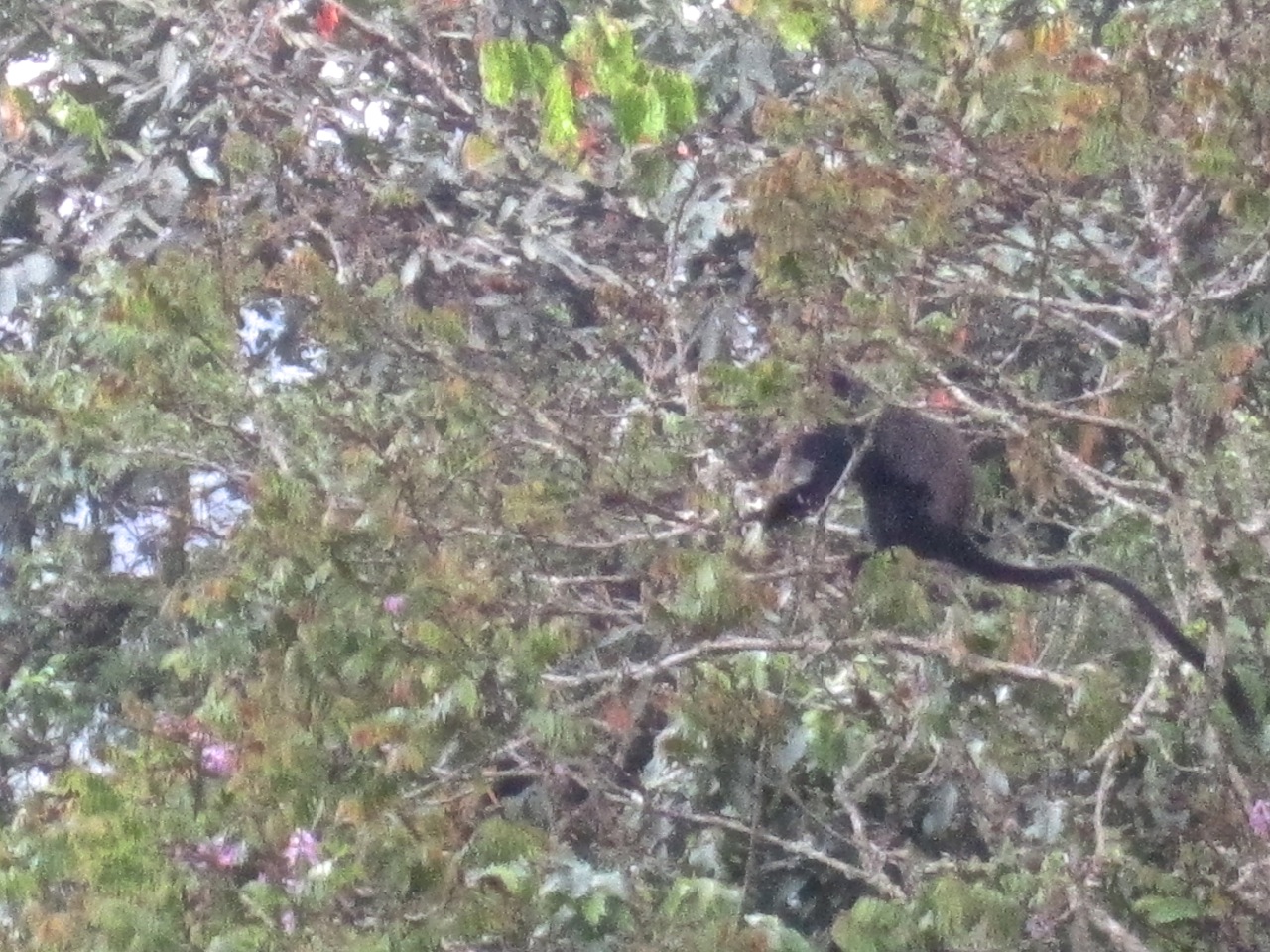
There’s one (above.)

He jumps.

And lands.  (OK, my nature photography is not so good.)

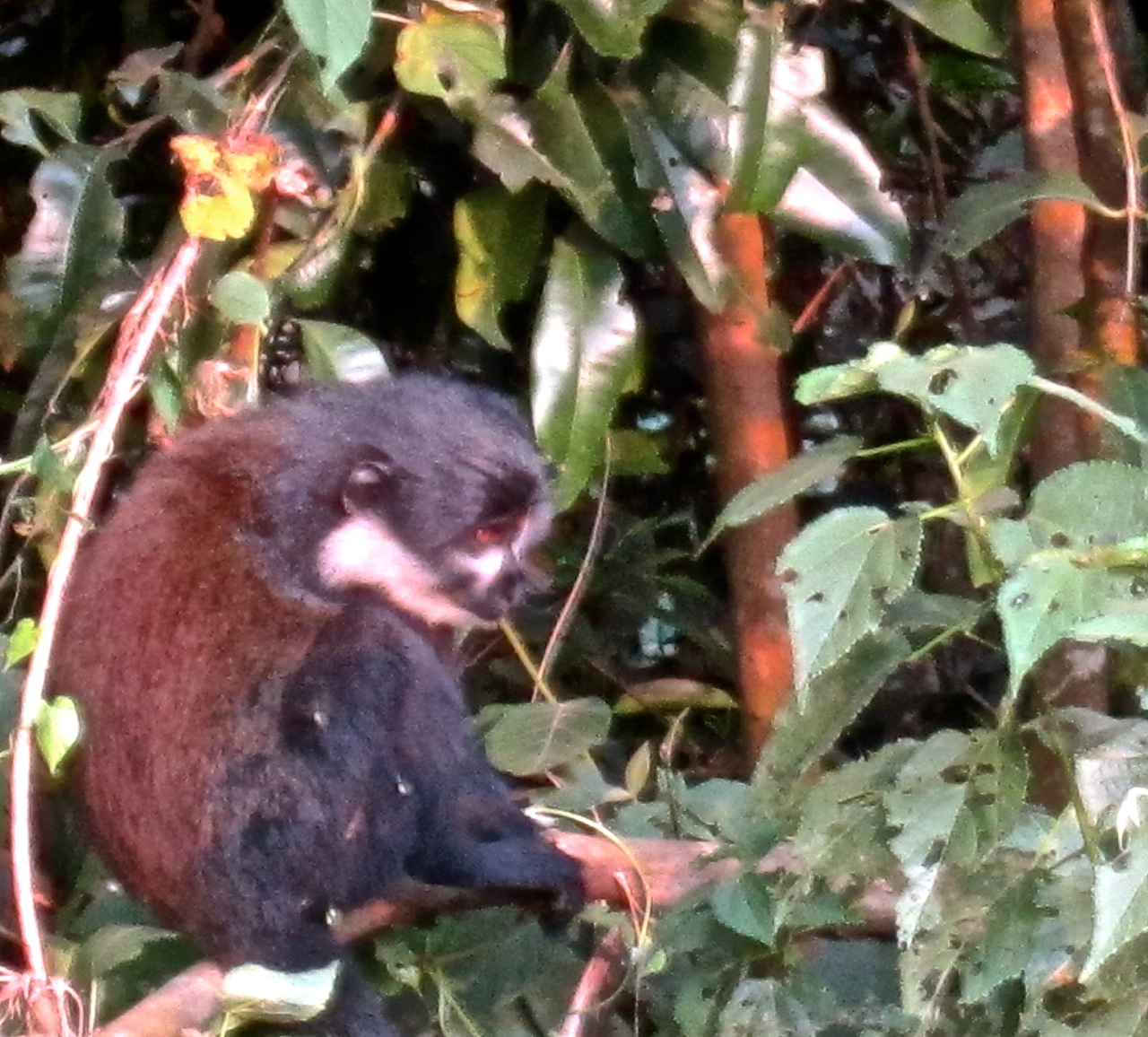
Here’s a slightly better picture.  It’s a L’Hoest’s monkey (Cercopithecus lhoesti).

Unfortunately, our travel schedule didn’t allow time to hike the park.  But my plan is to return as soon as possible.  Many people come to Rwanda to see the mountain gorillas in the north, but the Nyungwe Forest is equally remarkable, and tourists should soon begin to see it as good reason to spend more time (and money) in the country.  (Tourism is Rwanda’s number one revenue producer, followed by tea and coffee exports.)

Kwita Izina

I know I promised news of our garden renovation for my next post, but I didn’t want to wait too long before sharing my photos of the baby gorilla naming ceremony on Saturday in Kinigi-Musanze in the north of Rwanda.

The Rwanda Development Board has been holding a naming ceremony (Kwita Izina) for each year’s babies since 2005 to raise awareness of conservation in the Volcanoes National Park and to highlight the work of the various Rwandan tourism enterprises.

Banana stalks are traditionally used to mark the way to an important event. On Saturday, there were banana stalks staked up on both sides of the road from Kigali to Kinigi-Musanze (a 2-hour drive) about every 25 yards.
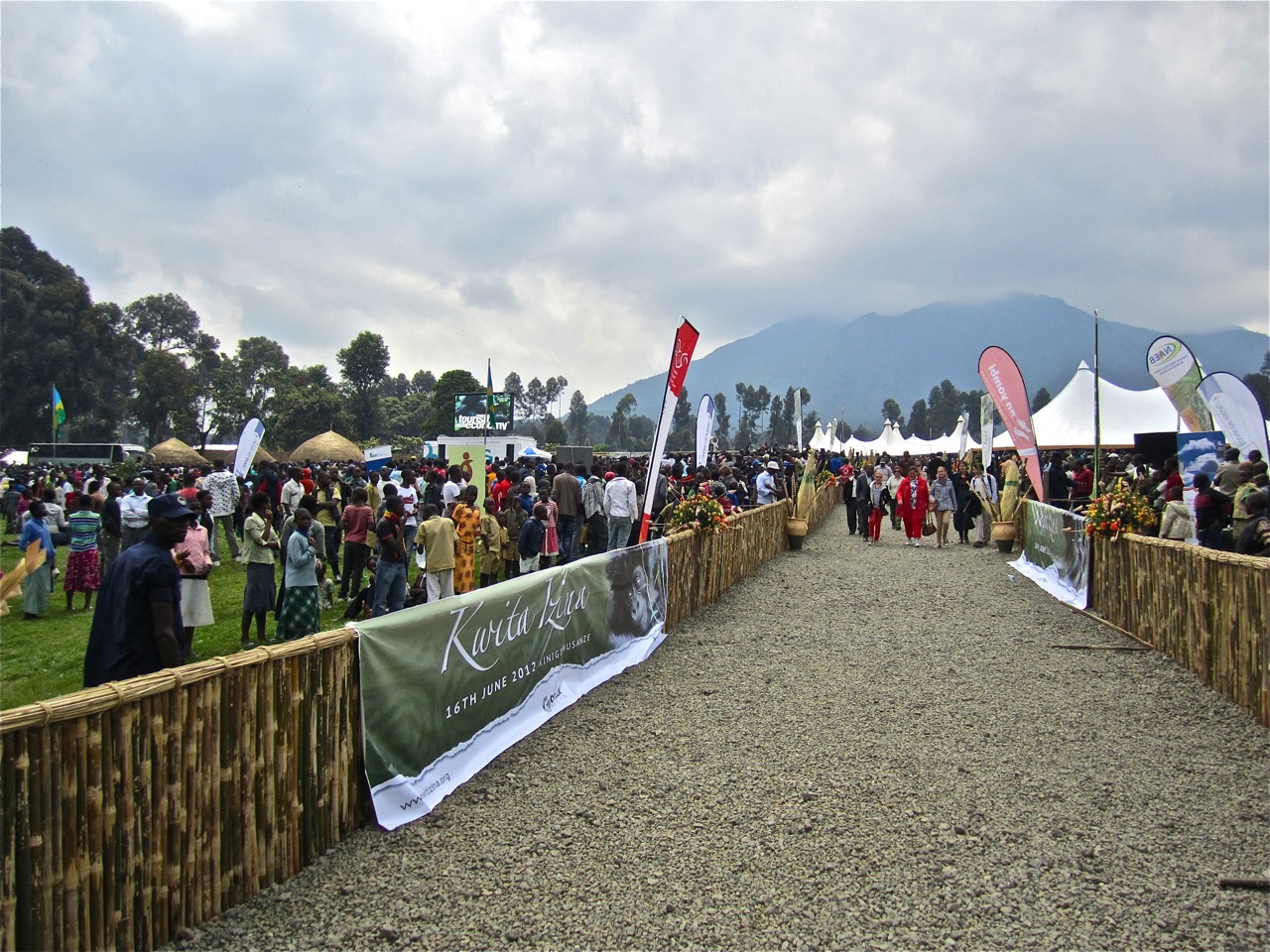
The tents and banners of the event. Unfortunately, the sky stayed overcast so we never really got a good view of the volcanoes.

Unfortunately, good animal conservation practices did not allow for the actual presence at the ceremony of this year’s 20 babies. But we had a card with their pictures, their mothers’ names, and a place to write their new names as they were called out.  You can ooh and aah over more of their really cute pictures at this link.

This baby’s mother is Nchili, and he likes kissing. Photo via kwitizina.org.
This baby’s mother is Rwandrushya. According to http://www.kwitizina.org, he has already challenged the silverback of his group.

However, we did have a fun bit of theatrics with 2o children costumed as gorillas.

The “baby gorillas” arrive.  Click the photos to enlarge them.
The “baby gorillas” cavort for the crowd as their park ranger observers take note.

They did a really good job of mimicking the movements of real young gorillas, and they were even accompanied by observers taking notes.  However, the masks were maybe a little too toothy.

The baby gorillas pose for the press.

We had a great morning, although it was quite cold — next year I will bring a blanket — and it was too overcast to see the volcanoes’ peaks.

A Rwandan drumming group entertains before the naming ceremony.
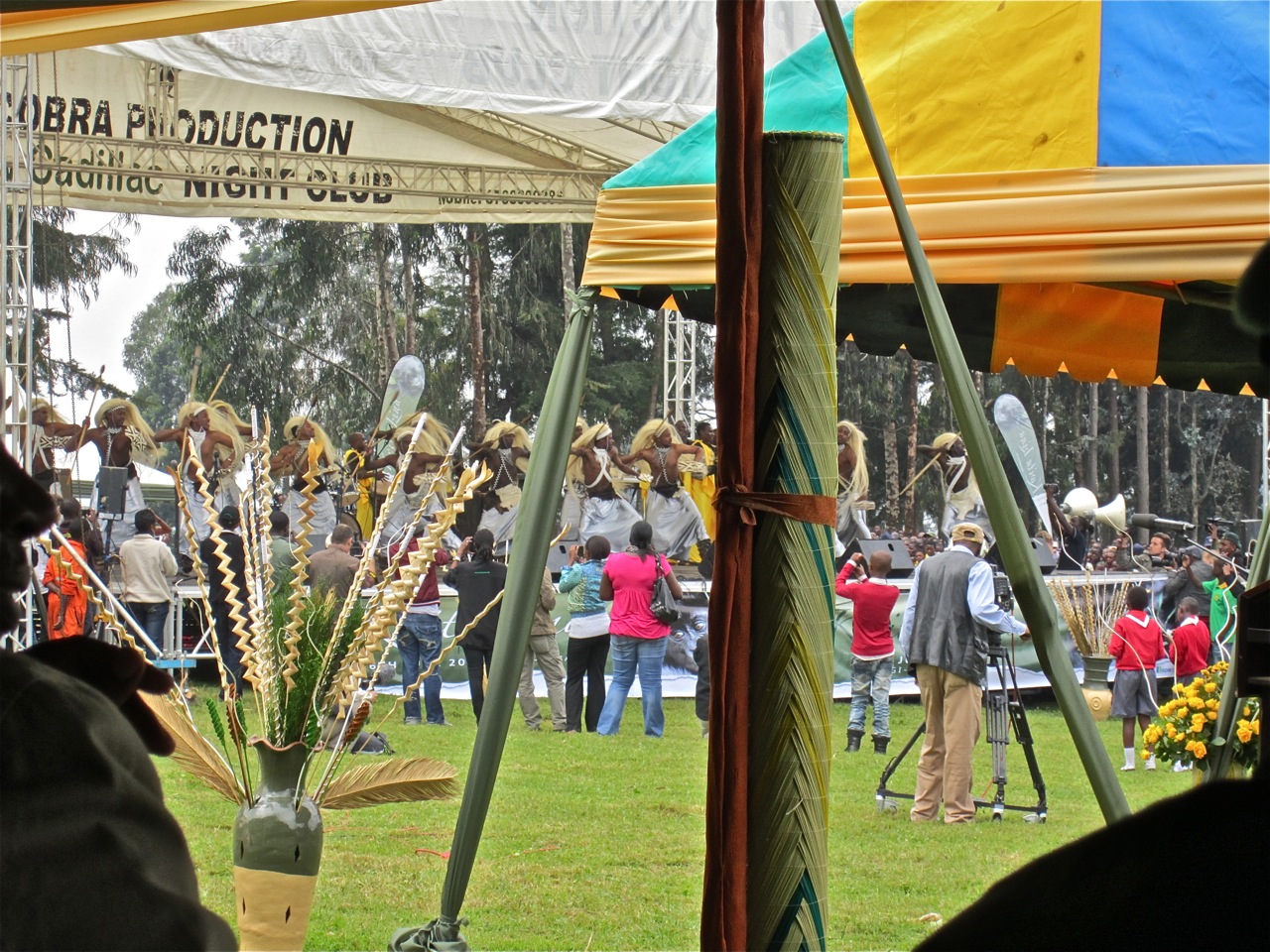
They were followed on the stage by traditional Intore dancers.
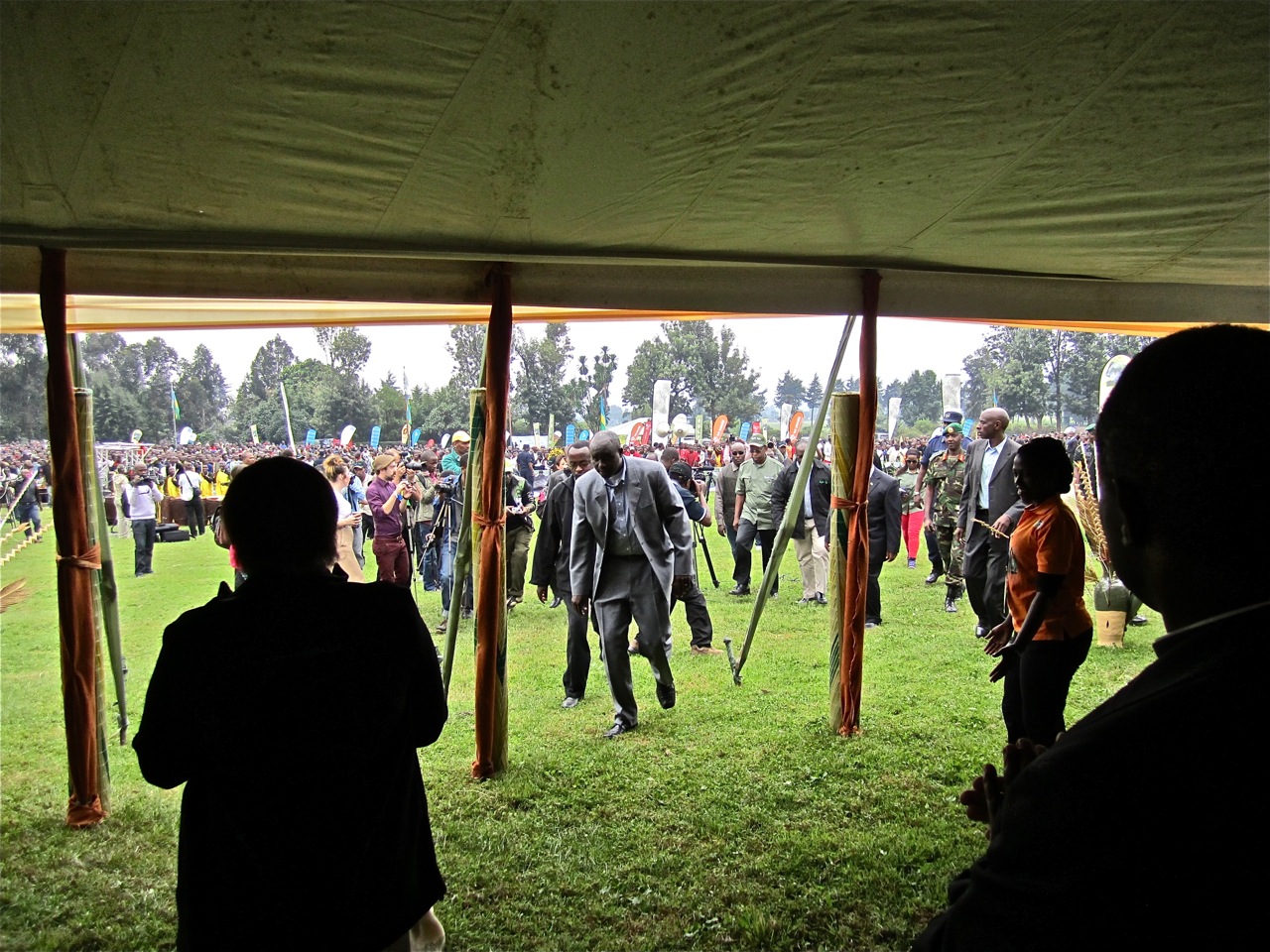
The arrival of the Prime Minister. Unfortunately, the rumor that Robert DeNiro was coming to the ceremony turned out to be untrue.
The baby gorillas onstage as the Mayor of Musanze announces a baby’s name.
A faint glimpse of a volcano peak behind the tents.

Gorilla tourism in Rwanda has contributed to a 26.3% growth in the mountain gorilla population since the last census in 2003.  Tourism brought US$200 million in revenues to Rwanda in 2010.