The Sunday porch: the peacock

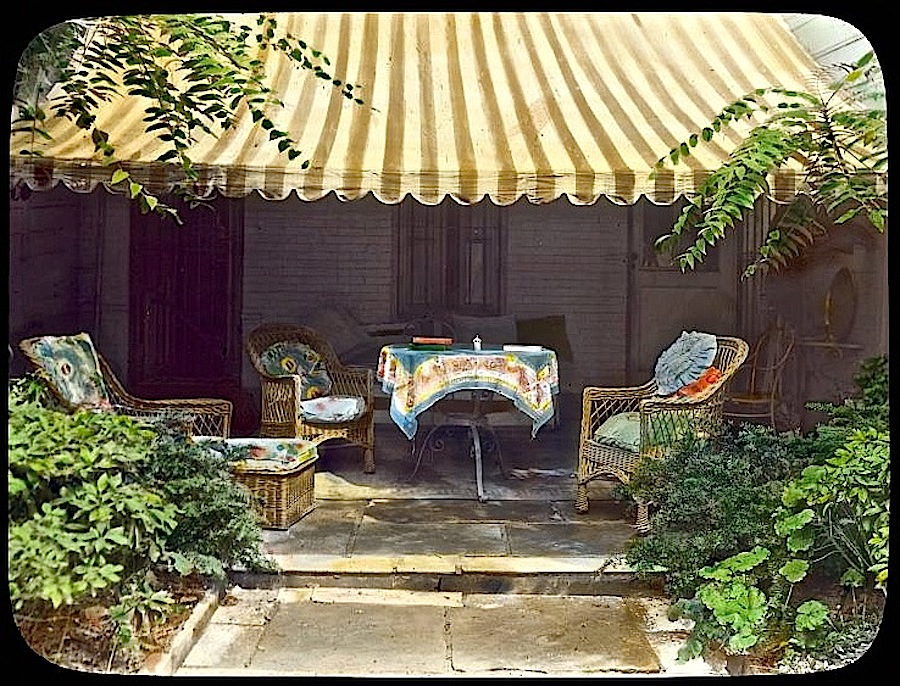
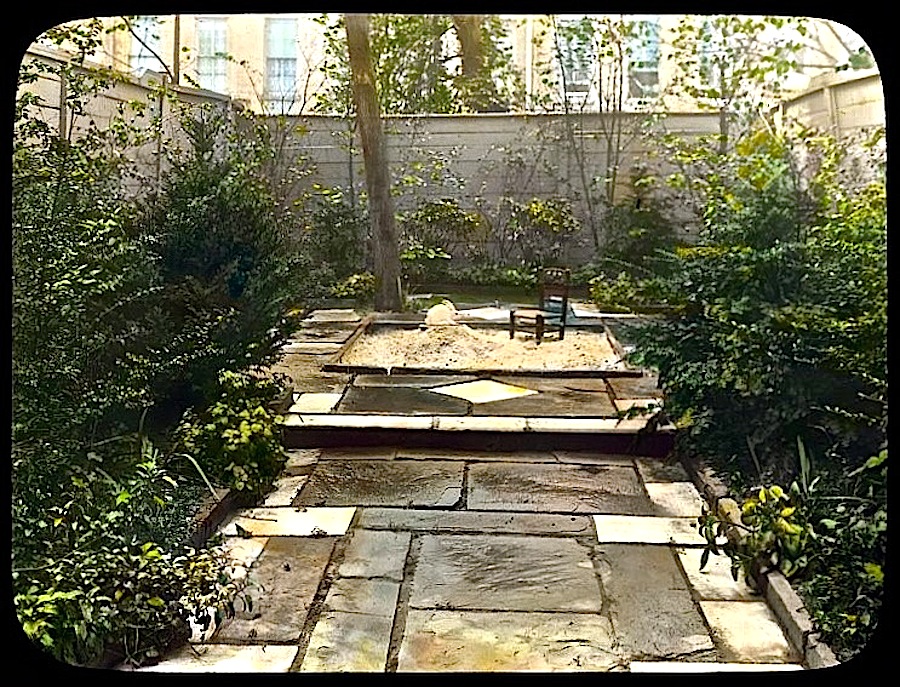
The Sunday porch/enclos*ure: Federal Hill, by FBJ, Library of CongressFederal Hill, Fredericksburg, Virginia, between 1927 and 1929, Frances Benjamin Johnston, via Library of Congress Prints and Photographs Division.

Peacocks are probably the ultimate garden ornament — if you have the room and patience.  (It takes several years for a male to grow a substantial tail covert or “train.”)

The Sunday porch: Venice patio

Venice hotel patio, Library of CongressProfessional photographers Gertrude Käsebier and Frances Benjamin Johnston eating together on a hotel patio in Venice, Italy, 1905, via Library of Congress Prints and Photographs Division.

Johnston — from Washington, D.C. — and Käsebier — from New York City — had traveled across the Atlantic at the invitation of the Royal Photographic Society of Great Britain.  On the same trip, they also visited France, Switzerland, and Italy.

The older and more successful Gertrude Käsebier had been born in a log cabin in Iowa in 1852.   After marrying* a successful businessman of aristocratic German origins and having three children,  she began to study photography at the Pratt Institute in Brooklyn.  Within ten years, by the late 1890s, she had opened a studio on Fifth Avenue in Manhattan.

At the time of this photo, she was  “one of the best known photographers in the United States,” according to her Library of Congress biography. Her portraits of women and children were shown in major exhibitions and won her critical acclaim and financial independence.

Käsebier’s ability to discern the complexities of situations helped her achieve conflicting goals. She aimed to be associated with fine art and the upper classes but she enjoyed the relatively déclassé technical art of photography. She also wanted to earn a living, a desire that brought criticism from [Alfred] Stieglitz for sacrificing art to commerce, while society frowned on women participating in any kind of business. At a time when a salesman challenged women’s right to purchase high quality photographic equipment, Käsebier encouraged women to enter the professional world. For example, she befriended and supported Frances Benjamin Johnston, whose ambition and need to earn an income may have surpassed her own.

Kasebier worked until the mid-1920s, when she turned her studio over to her daughter, Hermine.

Johnston had a long career as well, ultimately specializing in architectural and garden photography.  She retired at age 81 in 1945.


*It was an unhappy marriage and inspired her to make this photo.

The Sunday porch: Miss Kale’s

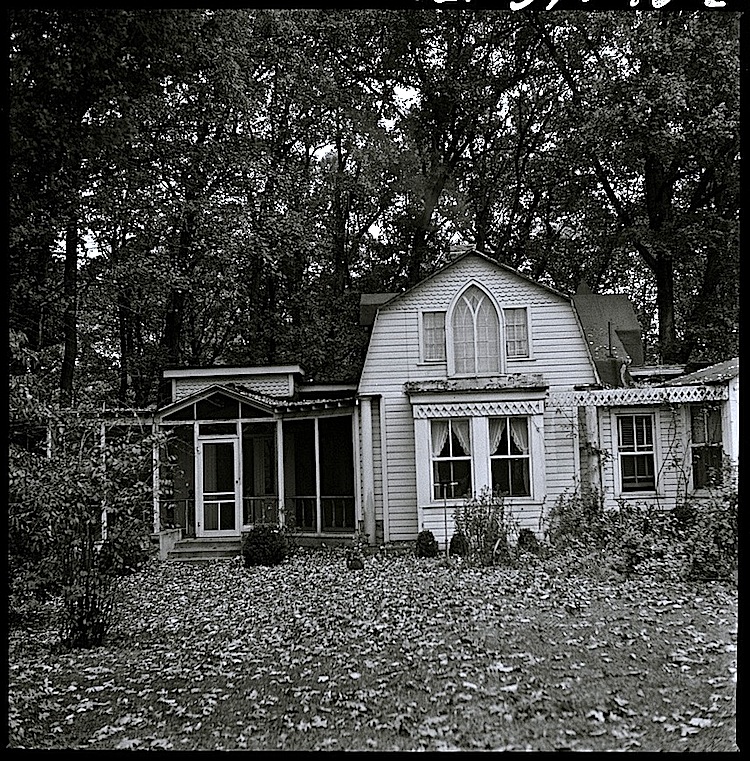
Miss Kale's house, via LoC“Washington, D.C. The home of Miss Norma Kale, a Woodrow Wilson High School English teacher,” October 1943, by Esther Bubley, via Library of Congress Prints and Photographs Division (all photos here).

What a charming, patchwork quilt of a house: a Gothic window, a Dutch Colonial Revival shape, and a couple of Greek columns. The screened porch angles away from each side of the door. There are climbing rose canes around the downstairs windows.

This slideshow requires JavaScript.

The specific location is not given.  The Palisades neighborhood in northwest Washington comes to mind.  It still has old tall trees and funny little houses set among them. But much more of the city must have looked that way 70 years ago.

Bubley took a large number of photographs of students and teachers at Woodrow Wilson High School — including several of Miss Kale grading papers at home and hosting the editors of the student newspaper in front of the fire in her living room.

Two of the pictures also include an elderly man, who may have been her father; she was about 40 at the time.

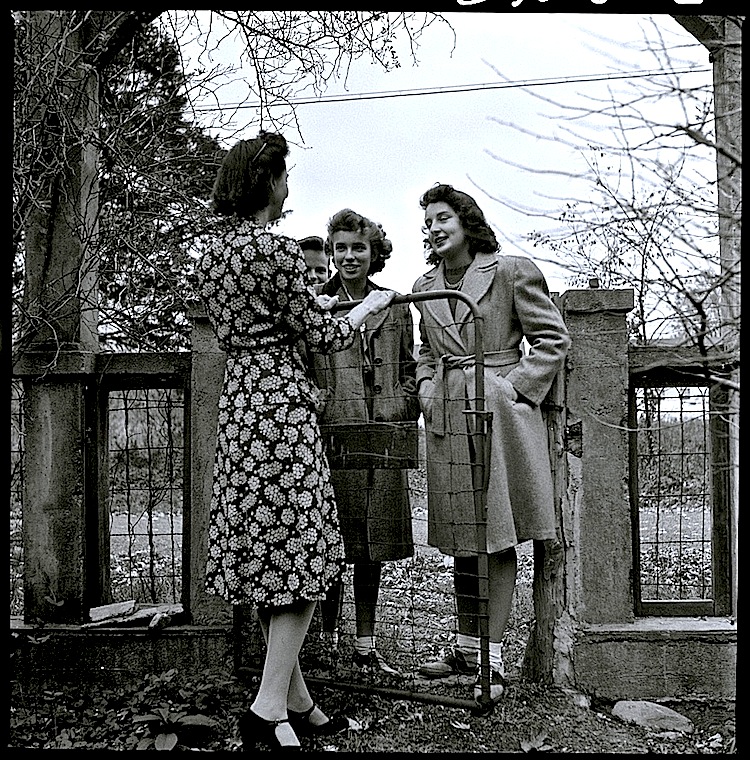
Miss Kale and students, via LoC“Miss Norma Kale. . . greeting some of her students who have come to her home on a Sunday afternoon.”

I like the old concrete and wire fence and gate too.  It looks like the posts go up to support an arbor over the gate.

Sadly, an In Memoriam page in the 1956 Woodrow Wilson yearbook said that Miss Kale had died in March of that year. It noted that “Miss Kale placed importance on nature and the worth of human character, rather than on material possessions.”

. . . I love
this garden in all its moods,
even under its winter coat
of salt hay, or now,
in October, more than
half gone over: here
a rose, there a clump
of aconite. . . .

James Schuyler, from “Korean mums

The Sunday porch: the collector

This slideshow requires JavaScript.

Farm House, Crowell’s Cross Road, Halifax County, North Carolina, between 1935 and 1938, by Frances Benjamin Johnston, via Library of Congress Prints and Photographs Division.
Still, as I went about my potting on a glorious afternoon, one small treasure after another, the world of nature that is so terrible and so beautiful appeared only in its sweetest aspect.

— Henry Mitchell, On Gardening

The Sunday porch: New York City

Murray house, 1922, NYC, by Frances B. Johnston, via Library of CongressAwning-covered back terrace of the Murray house, 129 East 69th Street, New York City, 1922. Hand-colored glass lantern slide by Frances Benjamin Johnston, via Library of Congress Prints and Photographs Division.
This looks so pleasant, but I also like the view in the other direction.

Murray house, 1922, NYC, by Frances B. Johnston, via Library of CongressLooking from the terrace to the sandbox, same house, photographer, and source.

What a nice-looking small outdoor space for both the parents and a child. (For grass, they had Central Park only three blocks away.)

According to the Library’s online catalogue, this garden was designed by Clarence Fowler. It was awarded the second prize for a city garden at the 1922 City Gardens Club of New York City photography exhibition at the New York Camera Club. Today, the house and garden no longer exist.

Johnston used these slides in her lectures on city and suburban gardens.