The Sunday porch: catching up

A repeat porch from October 2014. . .
Two women, by Michael Francis Blake, Duke University Libraries Commons on flickr“Snapshot, two women sitting on the front porch of a house, unidentified,” ca. 1912-1934, by Michael Francis Blake, via David M. Rubenstein Rare Book & Manuscript Library, Duke University Libraries Commons on flickr.

Blake was one of the first African-American studio photographers in Charleston, South Carolina.  His collection at Duke consists of 117 photos in an album entitled “Portraits of Members.”

. . . our effort to open the gift of the world,
our hope to find years
in this box we tear apart.

Allan Johnston, from “Evening Conversation

The Sunday porch: Sogn, Norway

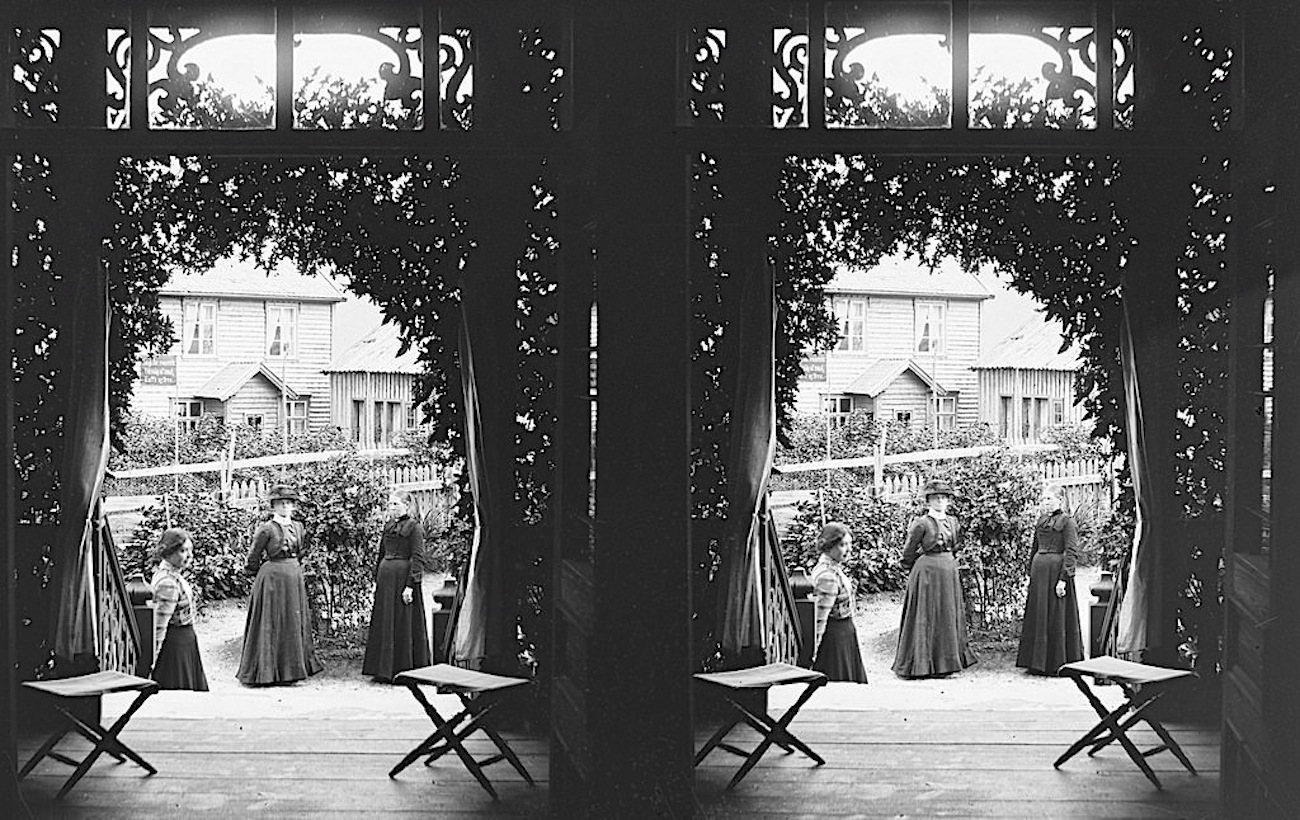
Cafe in Norway, 1898 to 1904, flickr CommonsPossibly a café, Sogn area, Norway, between 1897 and 1904, by Nils Olsson Reppen, via Fylkesarkivet (County Archives) i Sogn go Fjordane Commons on flickr.

Across the road, the sign on the house reads, “Logi for reisende. Udsalg av mad, Kaffe og Brus” (“Lodging for travellers. Sale of food, coffee and fizzy lemonade”).

Click the image for a larger view.

The Sunday porch: Iowa view

Dubuque Iowa, J. Vachon, Library of CongressView from front porch of house on the bluff, Dubuque, Iowa, April 1940, by John Vachon, via Library of Congress Prints and Photographs Division.

Dubuque is located along the Mississippi River, at the junction of Iowa, Illinois, and Wisconsin. It is Iowa’s oldest city and one of the few with hills.

At the time of the photo, mill working was an important industry in Dubuque. Vachon, on assignment in Iowa for the U.S. Farm Security Administration, wrote home, “This is the biggest sash mill and door center in the U.S. Little things fly around and get in your eye all day. Lots of smoke too.”

He may have taken this photo on April 18, when he wrote again, “Today was a good day. I walked miles and climbed awfully steep hills and got terribly tired.”

The Sunday porch: le bricolage

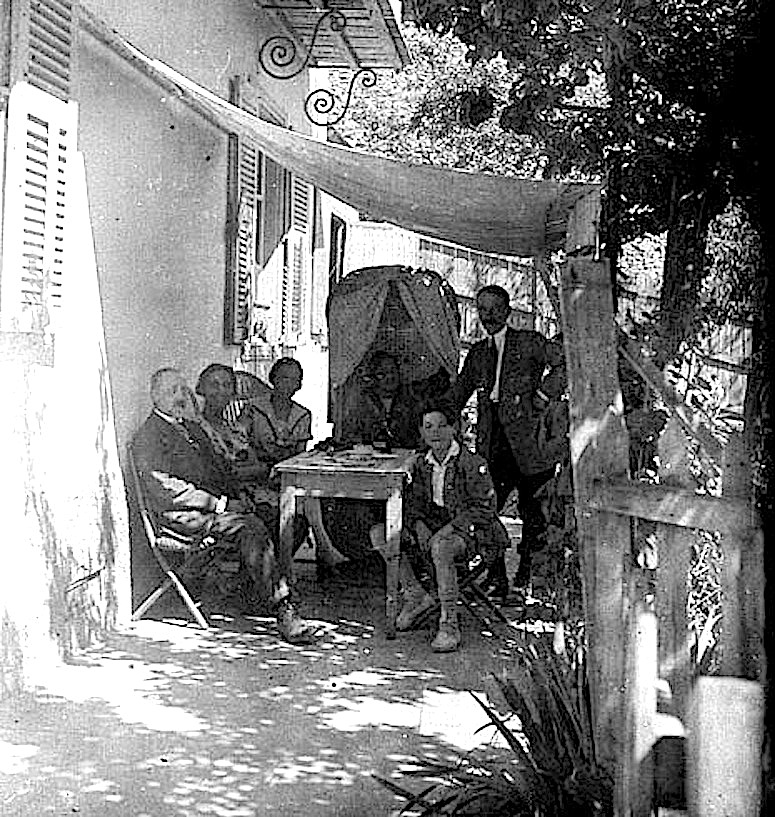
Terrace and canvas cover, France, Bibliotheque de Toulouse, flickr“Famille attablée sur la terrasse, ombragée par une bâche,” (family at a table on a terrace, shaded by a tarp) ca. 1890 – ca. 1910, by Eugène Trutat*, via Bibliothèque de Toulouse (cropped slightly by me).


*I was skeptical about the photographer because Trutat died in 1910, and the women on the left appear to be in the shorter dresses of the 1920s or 30s. However, they could be wearing the bathing suits of around 1900.

The Sunday porch: Strasbourg, France

St. Pierre le Jeune 5, Strasbourg, Aug2016, by enclos*ure

We spent Thursday through Saturday this week in Strasbourg, and a highlight of this trip for me — aside from two great meals (here and here) — was a visit to the Église protestante Saint-Pierre-le-Jeune or Young* Saint Peter’s Protestant Church.

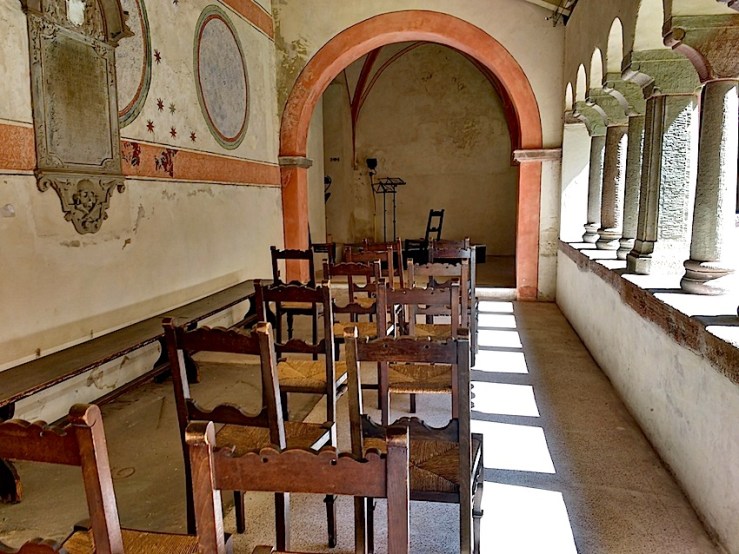
The church has the oldest surviving cloister “north of the Alps,” according to its website.

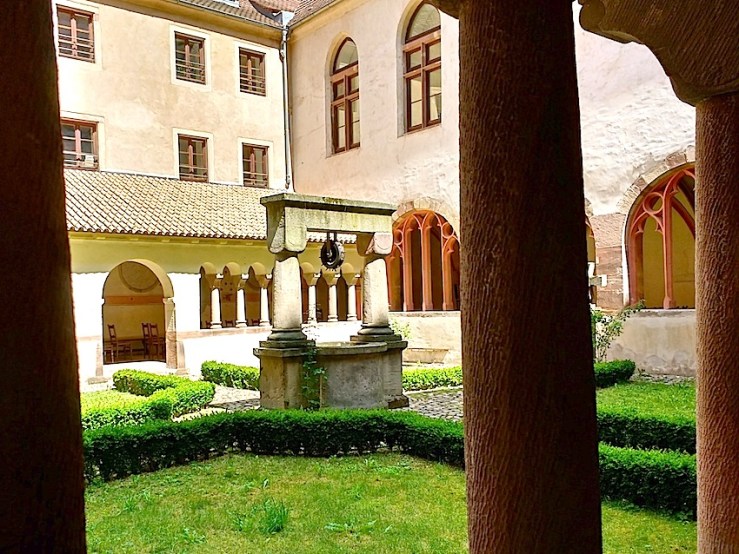
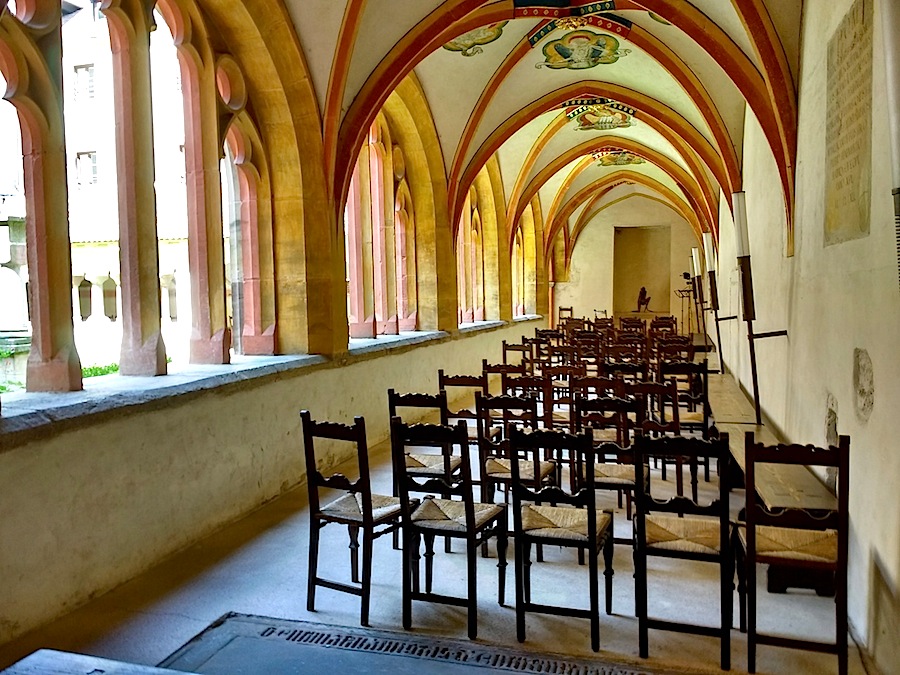
Three of the four galleries were constructed in the Romanesque style in the 11th century. The fourth, shown above and in the three photos below, was completed in the 14th century in the Gothic style.

St. Pierre le Jeune 6, Strasbourg, Aug2016, by enclos*ure

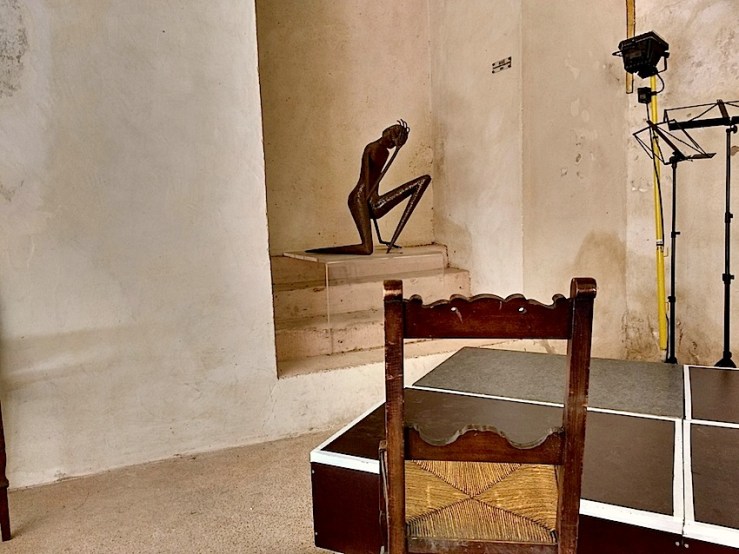
The gallery shown above and below was set up for a performance that day.
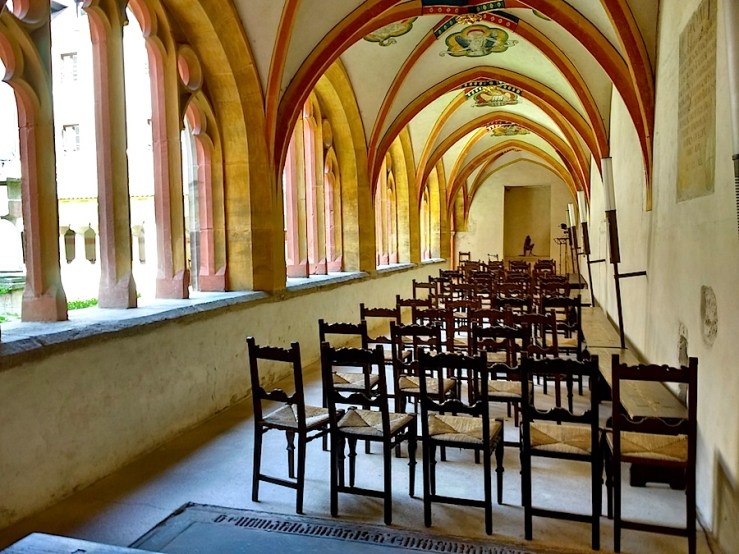
St. Pierre le Jeune 1, Strasbourg, Aug2016, by enclos*ure

St. Pierre le Jeune 7, Strasbourg, Aug2016, by enclos*ure
Behind the small stage was a modern sculpture. There were modern works throughout the church. (Unfortunately, I didn’t think to photograph their labels.)
St. Pierre le Jeune 8, Strasbourg, Aug2016, by enclos*ure

Above: a Romanesque gallery, also ready for a performance or lecture. I loved the pretty chairs, used throughout the church.

St. Pierre le Jeune 2, Strasbourg, Aug2016, by enclos*ure
A stone mason’s mark?

St. Pierre le Jeune 11, Strasbourg, Aug2016, by enclos*ure
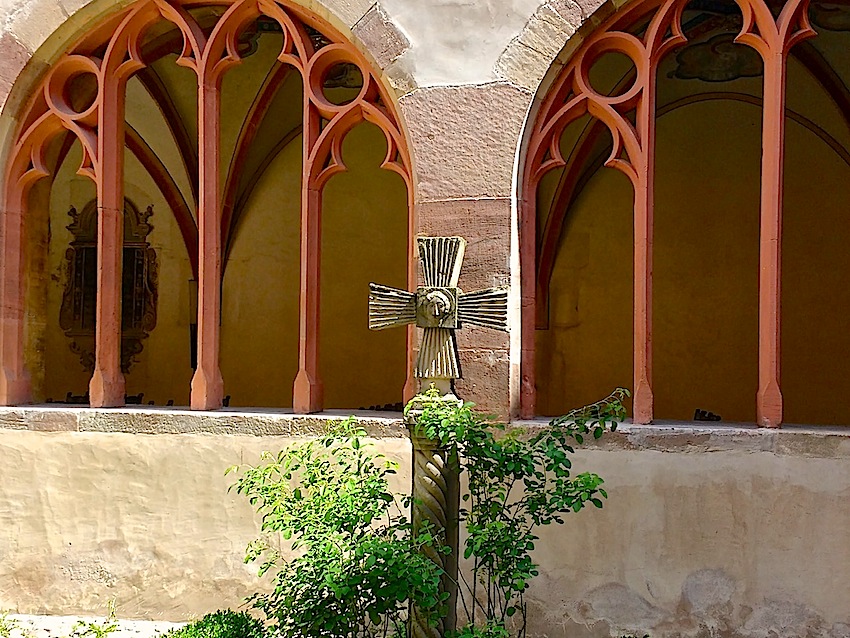
Above and below: the garden in the center.

St. Pierre le Jeune 9, Strasbourg, Aug2016, by enclos*ure

The cloister was heavily damaged and partly buried in the 1700s and then re-built in other ways. After the French revolution, the site was privatized — serving over the years as a wine cellar, a cloth factory, and apartments. It was restored to its original appearance between 2000 and 2008.

St. Pierre le Jeune 12, Strasbourg, Aug2016, by enclos*ure
On the inside, Église Saint-Pierre is remarkable for its array of colors and forms. The church was built in the 14th and 15th centuries in the Romanesque and Gothic styles.

Originally Catholic, of course, in 1524, it became Protestant.  Then in 1682, Louis XIV gave over the choir area behind the rood screen for the exclusive use of the Catholic parish. A dividing wall was built, and it remained there until 1898, when the Catholic congregation moved to its own “Young Saint Peter’s.”  In the meantime, in the 18th century, the choir had been redecorated in the Baroque style, in green and gold. Continue reading “The Sunday porch: Strasbourg, France”