Among the mountain gorillas

Last Saturday, we hiked into the Volcanoes National Park to see the mountain gorillas.
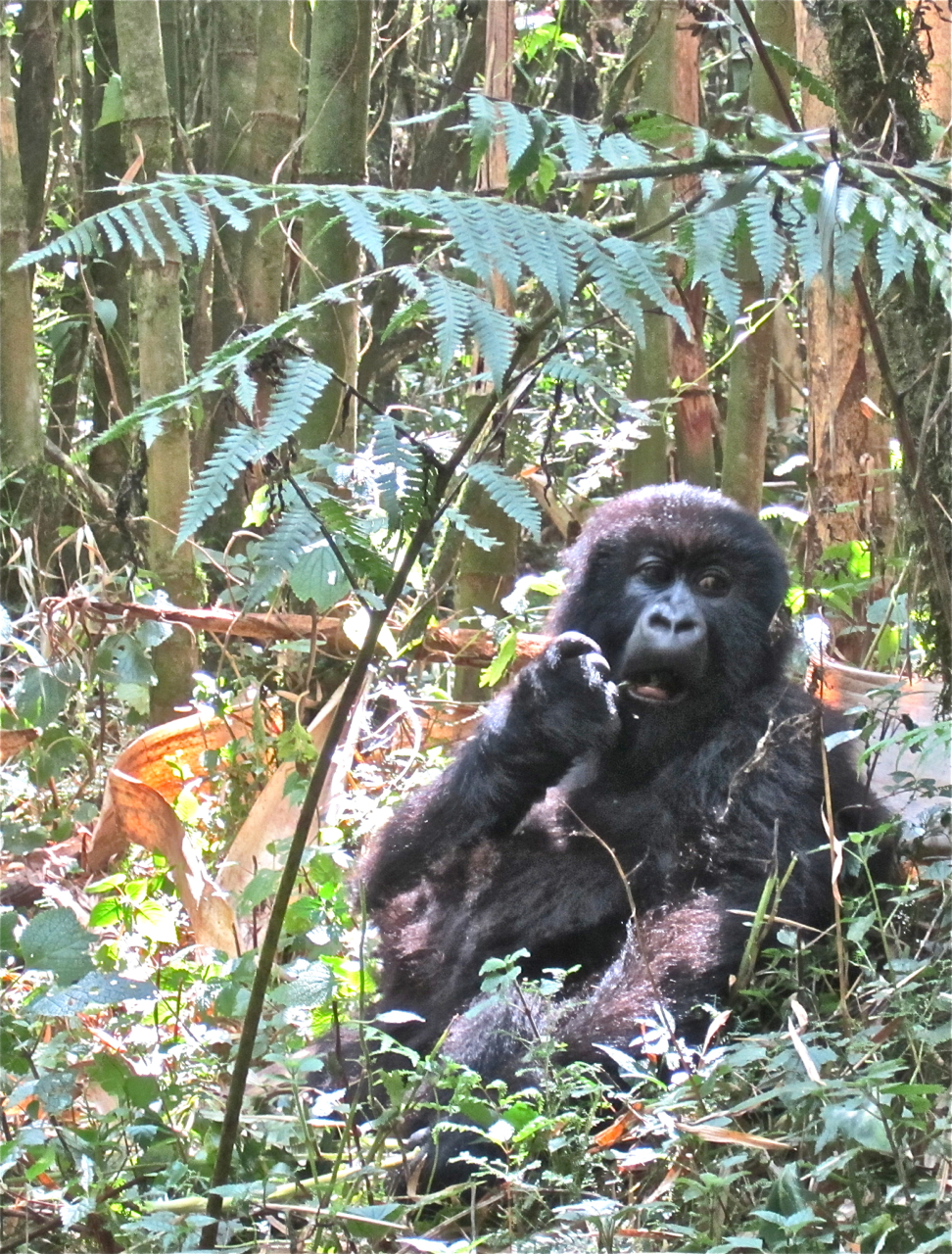
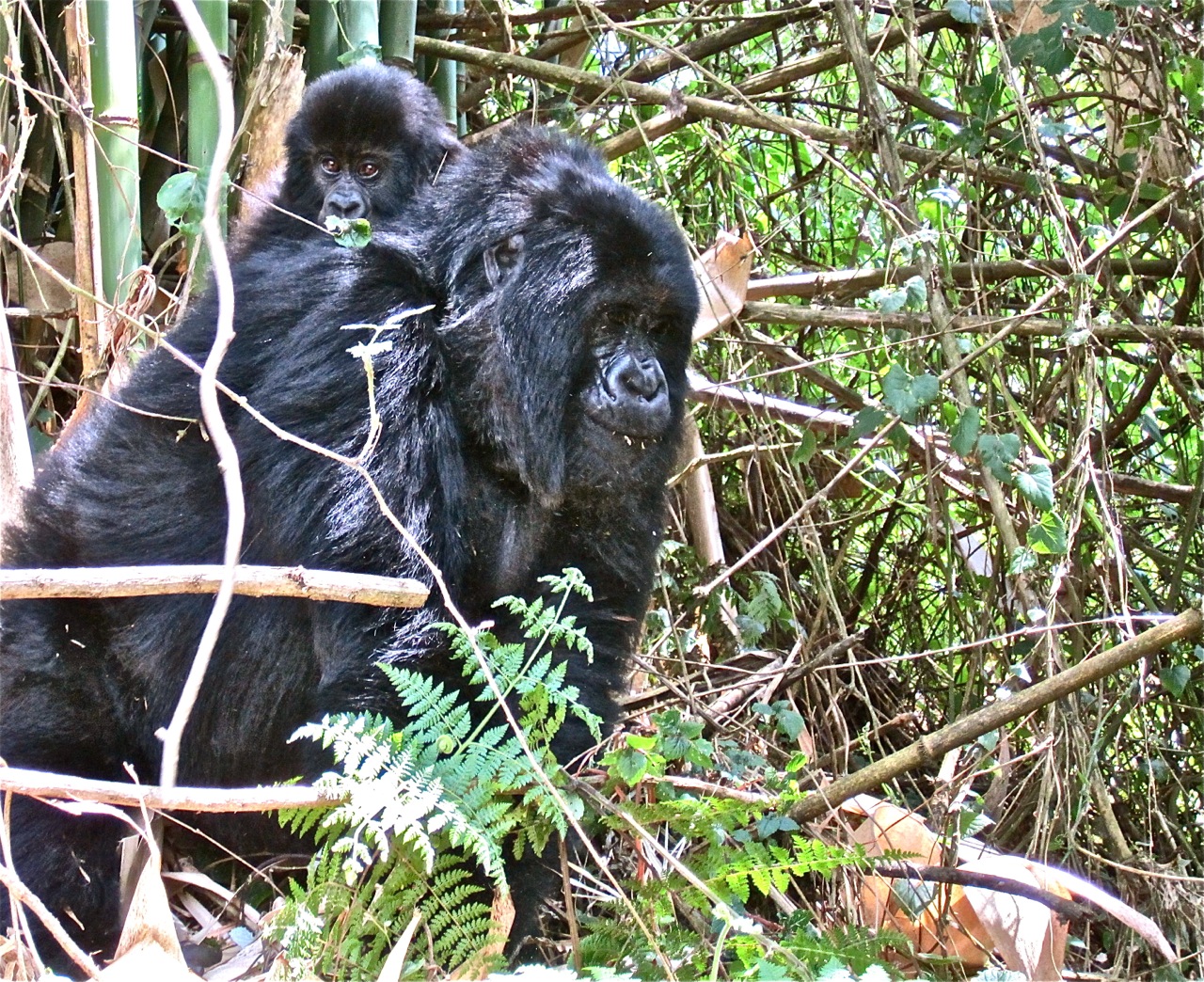
A baby mountain gorilla.

It was an amazing experience.

Mother and baby mountain gorillas.

When we arrived at the park headquarters, we asked to see one of the gorilla groups who normally live closer to the edge of the park. We didn’t feel up to one of the really strenuous hikes. However, nothing is certain with wild animals, and we walked (and climbed) for 2 hours before we found our group (the day before, they had been right inside the wall of the park).

I would have liked to have taken some photos of us tackling the steeper parts of the trail (and skirting the edge of an old volcanic crater), but I was too busy trying not to die at the time.

Earlier — after the first (easy) 40 minutes or so — our guide had stopped and given us a Rwandan saying: if you kill a cow, you cannot stop eating until whole thing is gone, tip to tail (this obviously originated before the freezer). Then, he said that the trackers ahead of us had just radioed back that our hike would be 10 cows long, and that we had already eaten 4 cows. However, only the 6th cow would be a big one.

Holy cow! (An American saying.) I climbed up much of number 6 on my knees and came down it on my bottom. Thank goodness for our porter’s hand and my walking stick.

When we found the gorillas, though, it was well worth it. They were lovely — smaller and fluffier than I had expected. Their fur had a healthy sheen, and they seemed quite content to spend an hour with us. Throughout the visit, our guide made low “hrrmm hrrmm” sounds, asking the silverback’s permission to stay; sometimes he would rumble back similar sounds in return. Several times, the little ones showed off by beating their chests.

A baby gorilla in the ferns.

For more pictures and story, click on ‘Continue reading’ below and then on the first thumbnail to scroll through large photos and captions (and there are some travel tips afterwards). To see a short video that I made, go to this link. Continue reading “Among the mountain gorillas”

Enclosures of the kings

Thanks so much to WordPress.com for including this post on its “Freshly Pressed” page this week! 
Yesterday, we visited the Rukali Palace Museum in the town of Nyanza, a couple of hours south of Kigali.

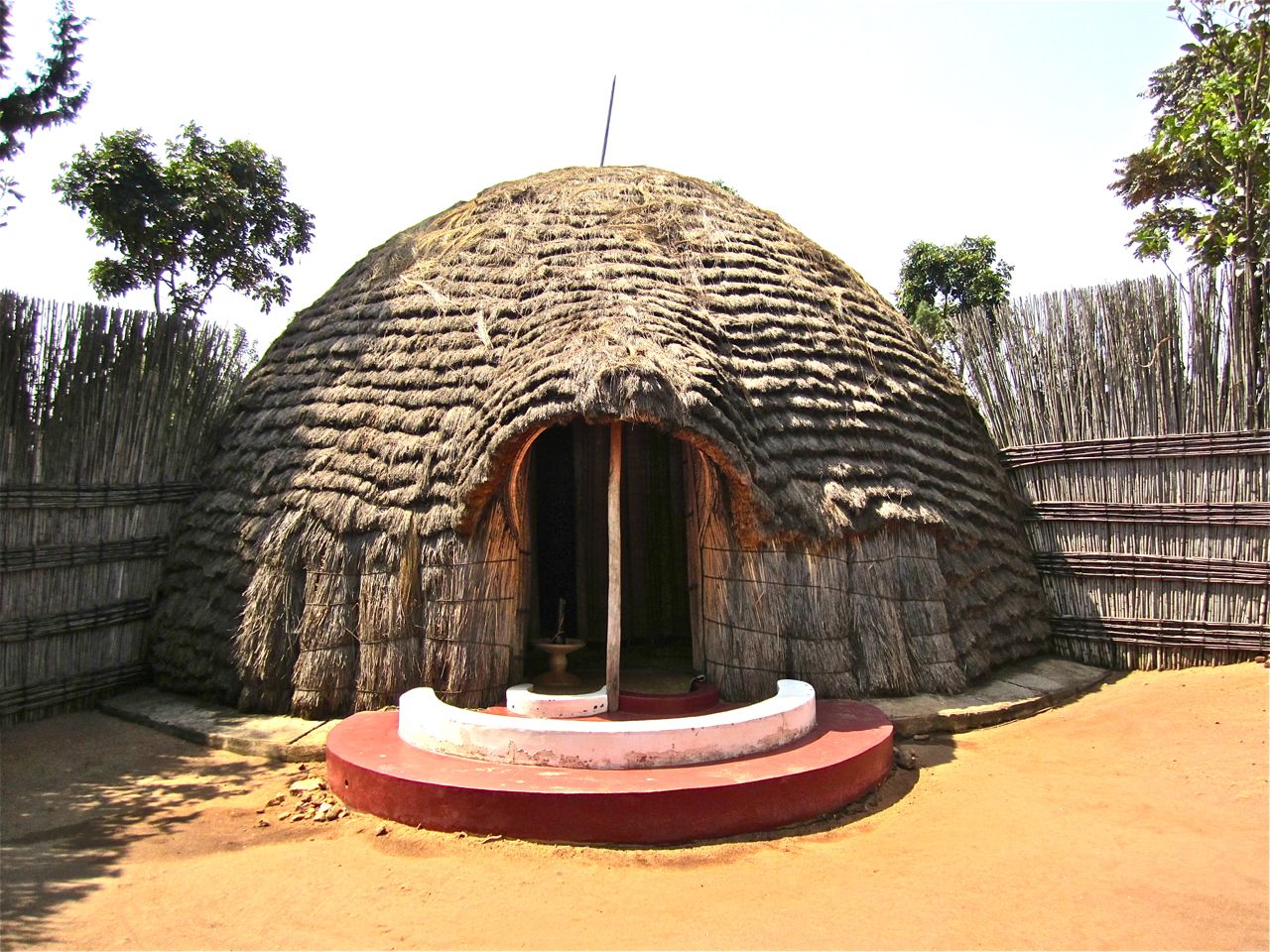
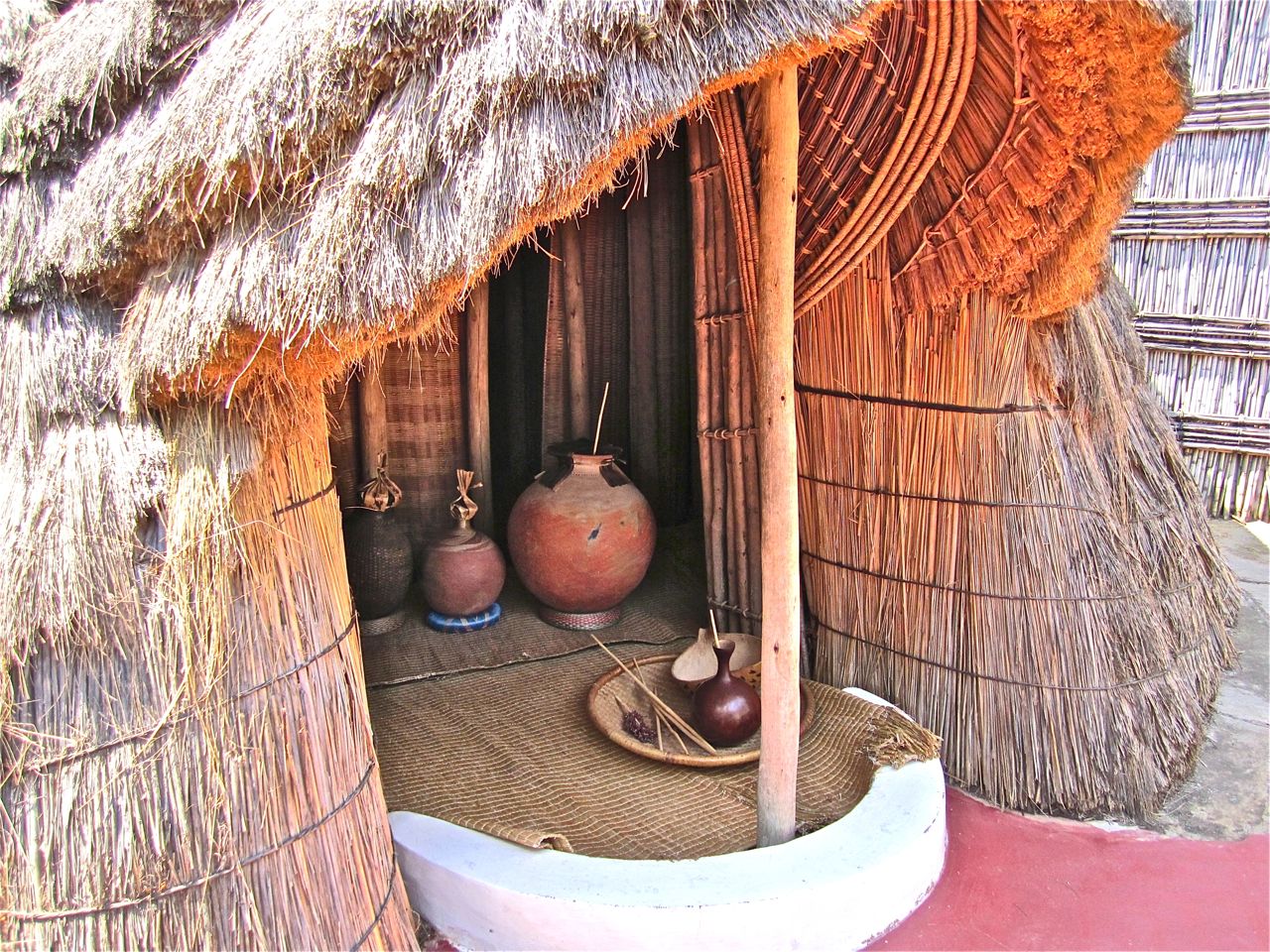
The opening of the enclosure around the house of the keeper of the king’s milk.

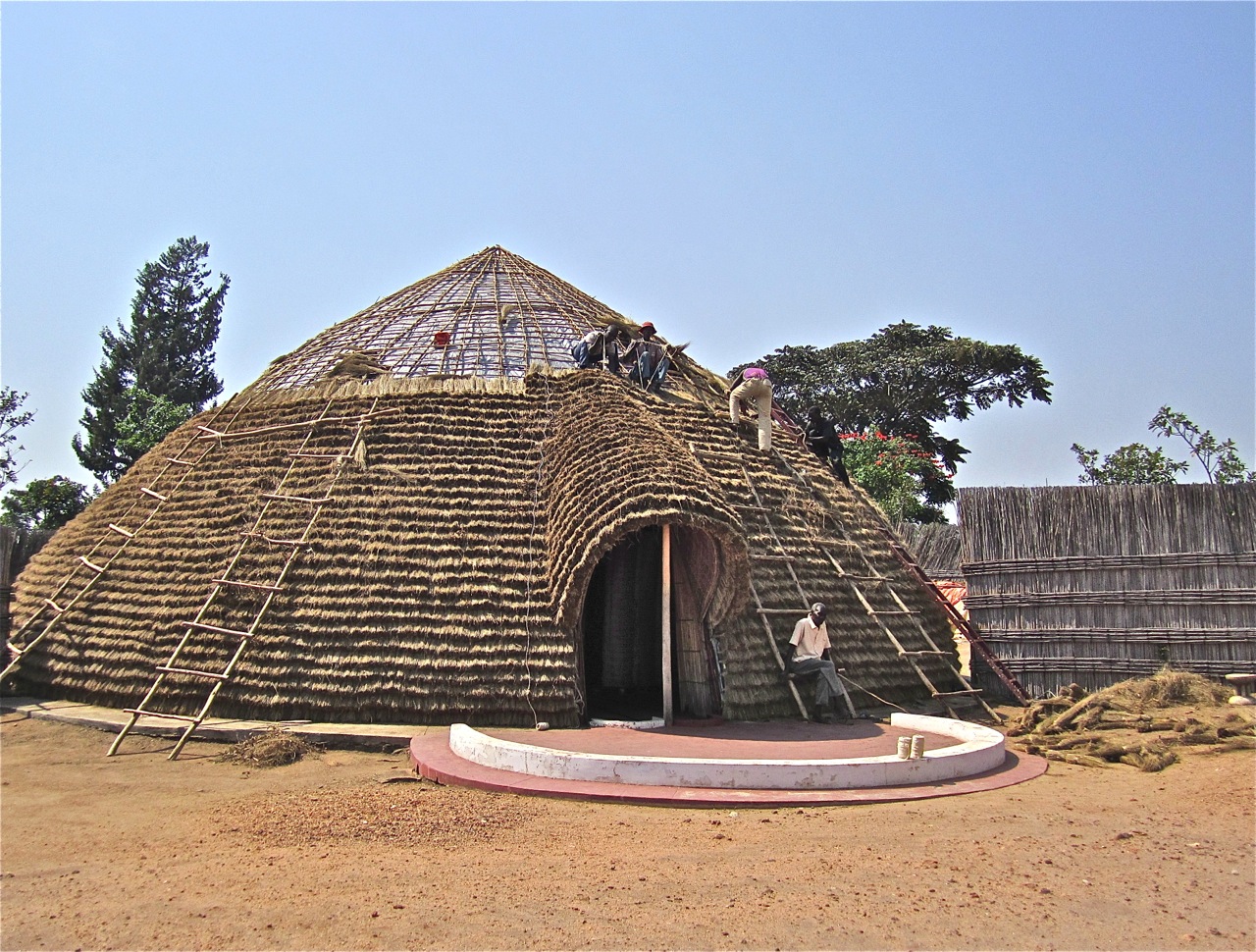
The museum grounds hold a reconstruction of the palace of Mwami (King) Musinga Yuhi V (a few miles from its original location), as well as the actual Western-style palace built for his successor, Mwami Rudahigwa Mutara III, in 1932.

The reconstructed palace is currently undergoing a 5-year refurbishment.

Musinga lived in a palace like this from 1899 until his death in 1931.

An old photograph of the actual court of Mwami Musinga.

Traditional building and weaving techniques were used to make the structures of grass, reed, and bamboo. The work is very fine.

House of the keeper of the king’s milk.
The entrance to the house of the keeper of the king’s beer.
The inside partition is woven in such a way that an inhabitant could see out, but someone outside could not see in.
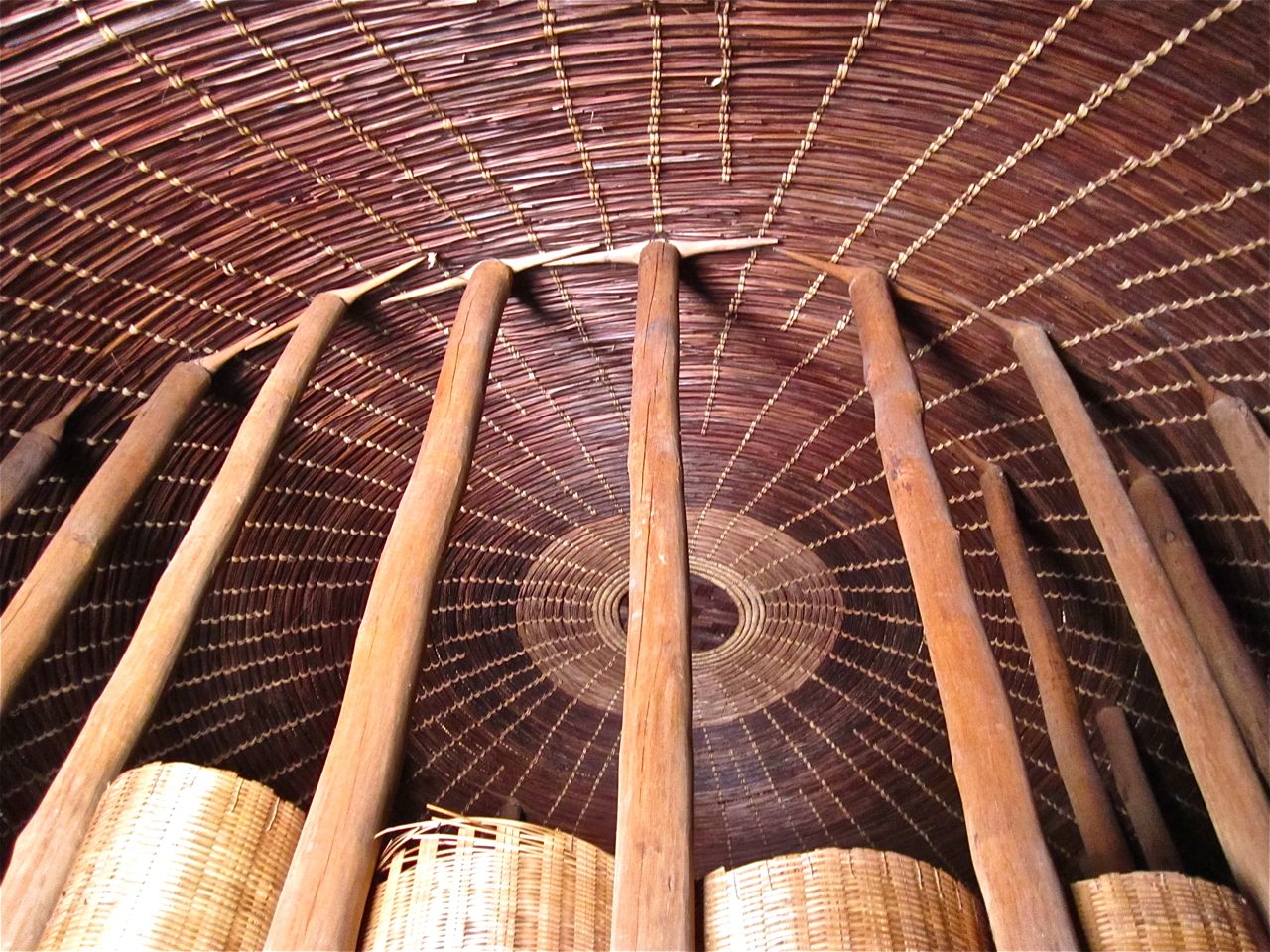
The ceiling.

A cow pen is part of the reconstruction. Cows were very important in Rwandan royal culture, and each of the king’s cows had a personal poem that was chanted or sung to call it out. They might also be decorated like this one.

A Rwandan cow wearing decoration at the reconstructed palace. Her keeper is chanting her own poem.
The pretty little calves are sleek as seals.

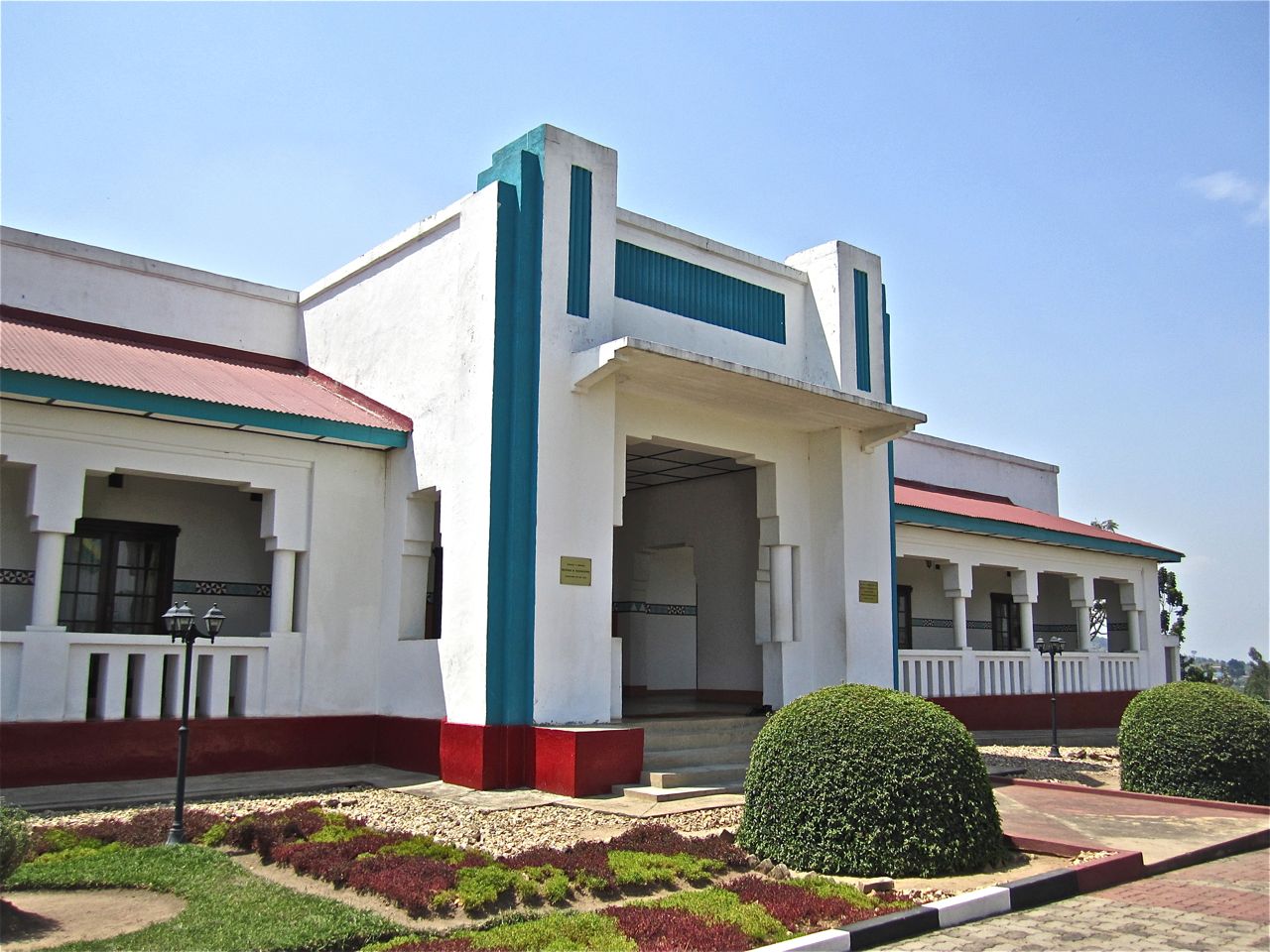
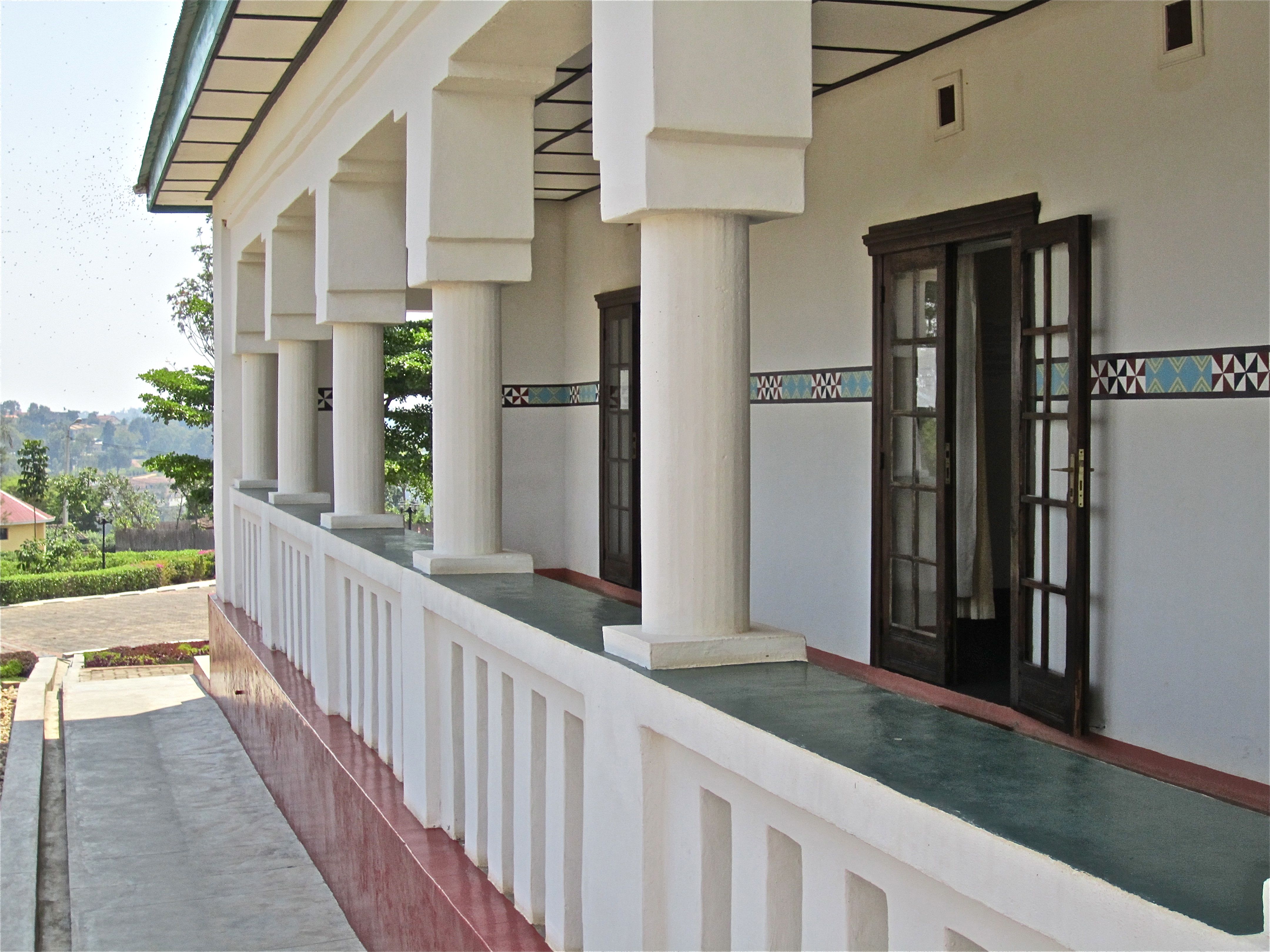
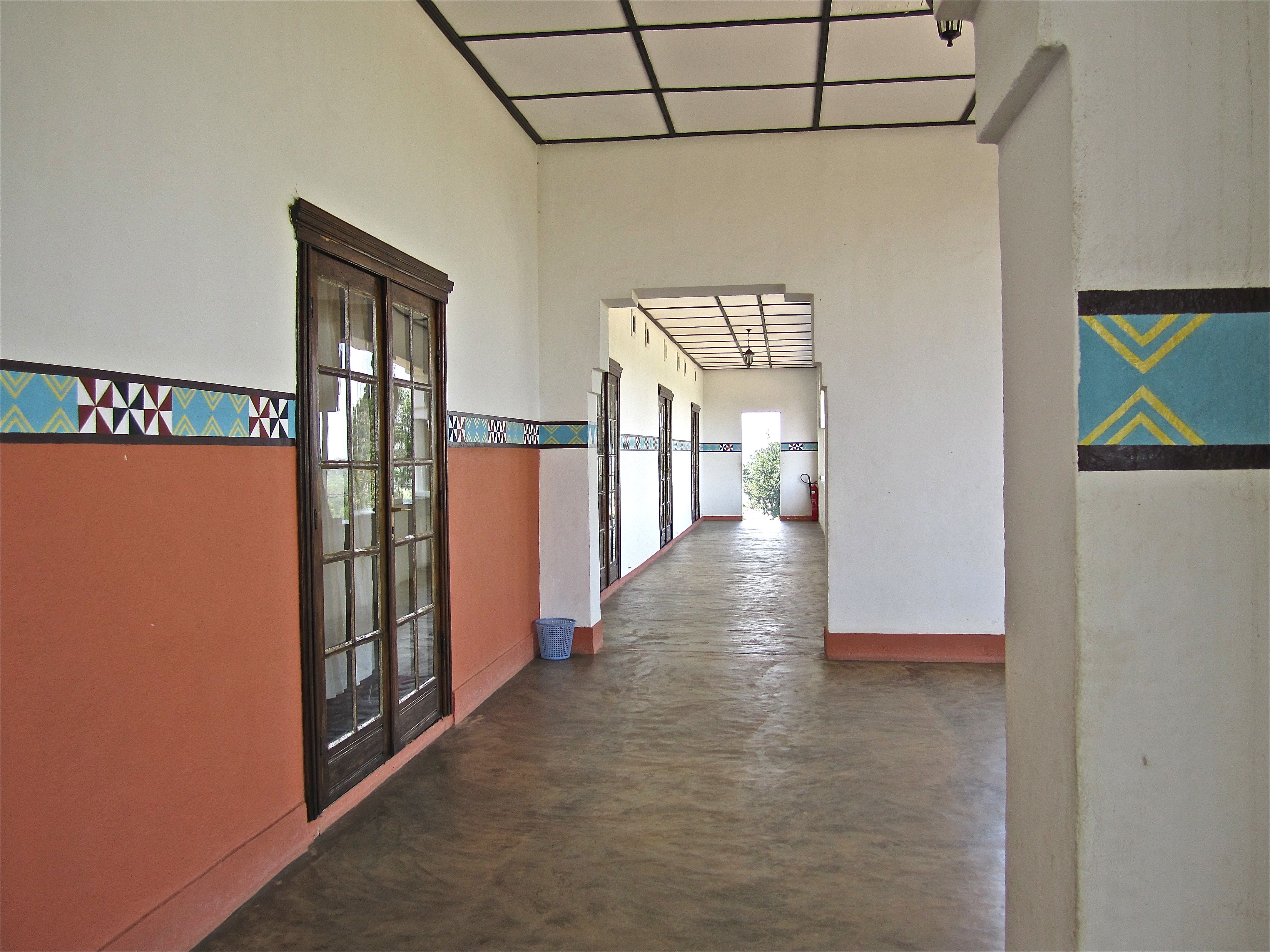
The modern palace (used from 1932 to 1959) is decorated inside and out in geometric motifs. Unfortunately, visitors are not allowed to take pictures inside.

The actual palace of Mwami Rudahigwa Mutara III, who lived here from 1932 until his death in 1959.
The front porch.
Inside, the home contains some original furniture, as well as historical photographs and maps.
Queen Rosalie and the king in the 1950s. The widowed queen was murdered in the 1994 genocide.

The courtyard garden is planted in hedges laid out in patterns like those traditionally used in baskets, mats, and room partitions.

The courtyard garden behind the more modern palace.
Room partitions of the reconstructed palace with traditional geometric patterns.

More about traditional Rwandan homes here.

(Almost) Wordless Wednesday: local texture

Mango tree in the parking lot, Lava Cafe, Musanze

Here are some of the textures and patterns from our first four months in Rwanda. Click on the first thumbnail to scroll through the photos.

On the road, part two

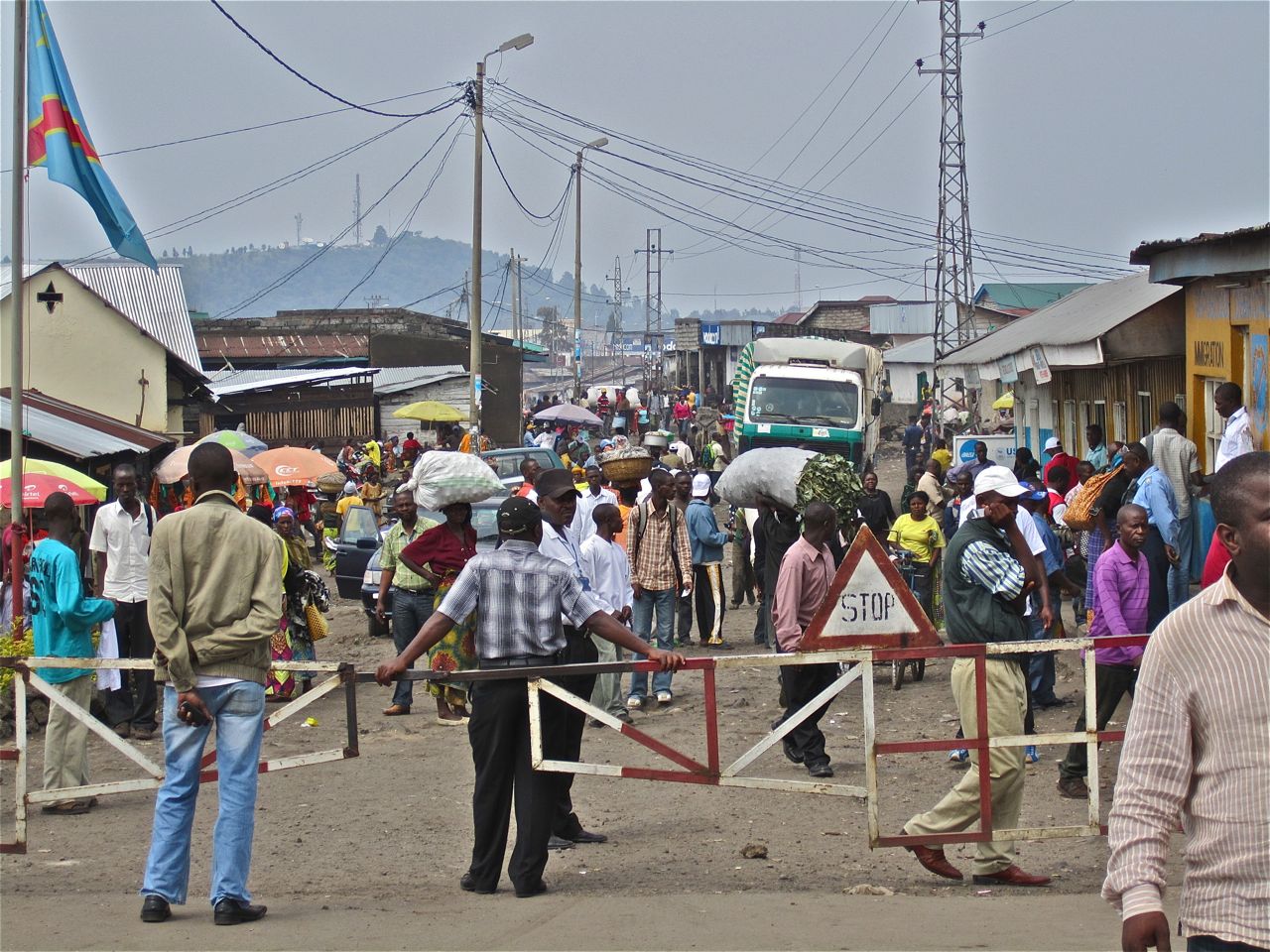
On the second day of our recent trip to the north of Rwanda, we visited a border crossing with the Democratic Republic of Congo (DRC), this one located between the otherwise contiguous cities of Gisenyi (Rwanda) and Goma (DRC).

Looking over the barrier to a street in Goma, DRC.

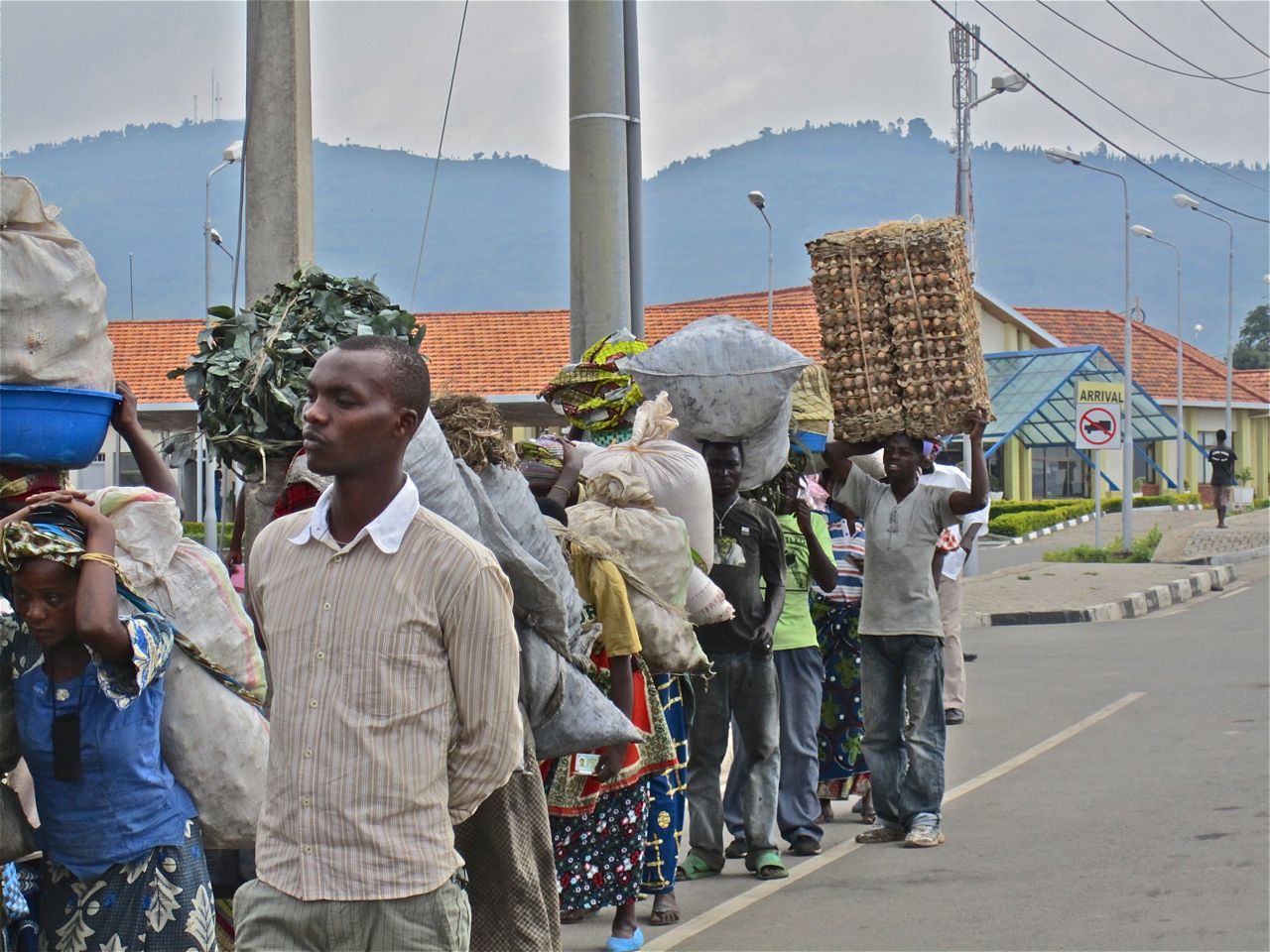
We watched a line of people, almost all carrying large parcels of food, waiting to enter  eastern Congo.

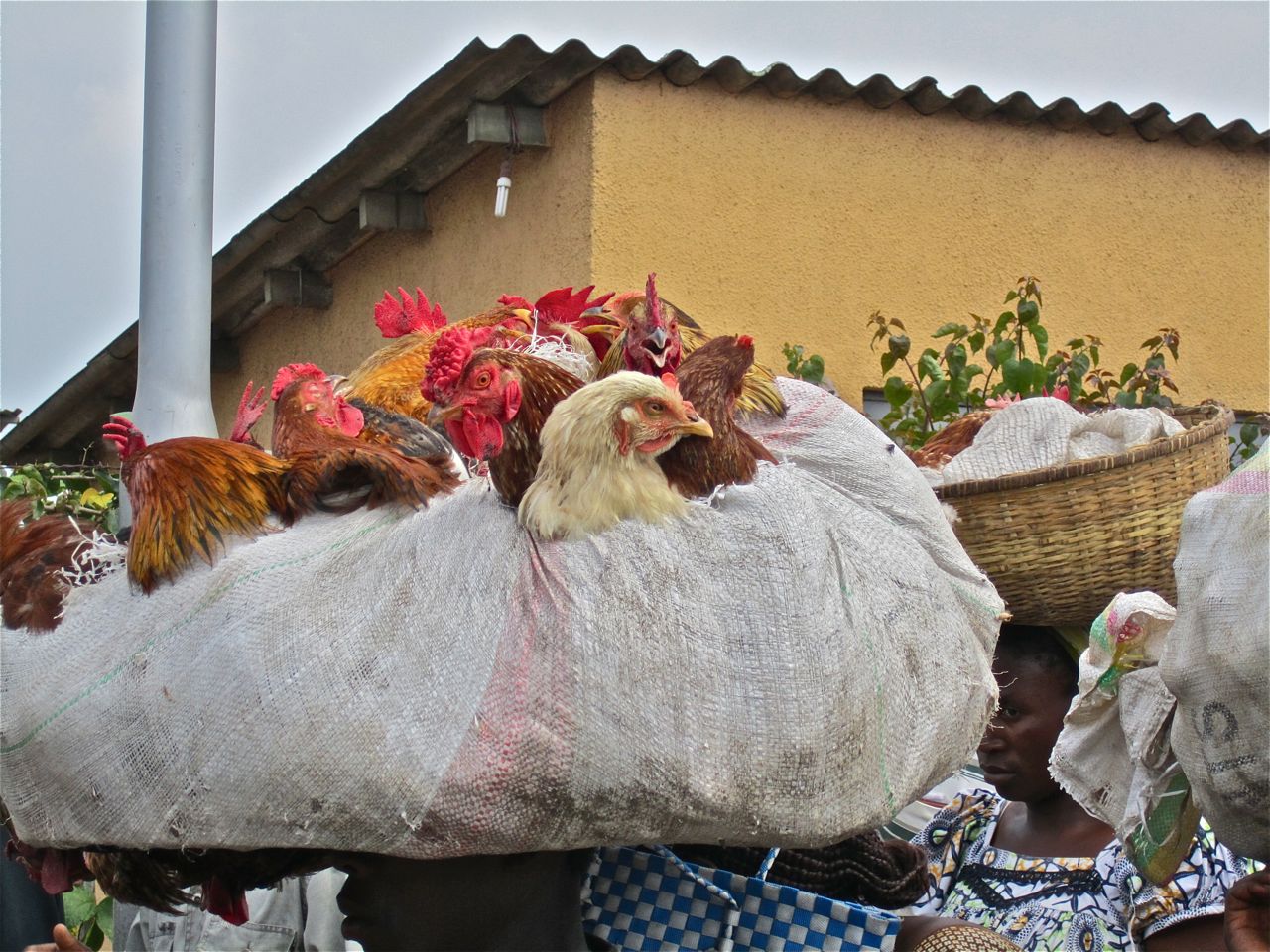
People laden with food to sell in the DRC.
I believe these chickens (who are traveling on someone’s head) would be called non-intending immigrants.  Nevertheless, they are destined for pots in the Congo.

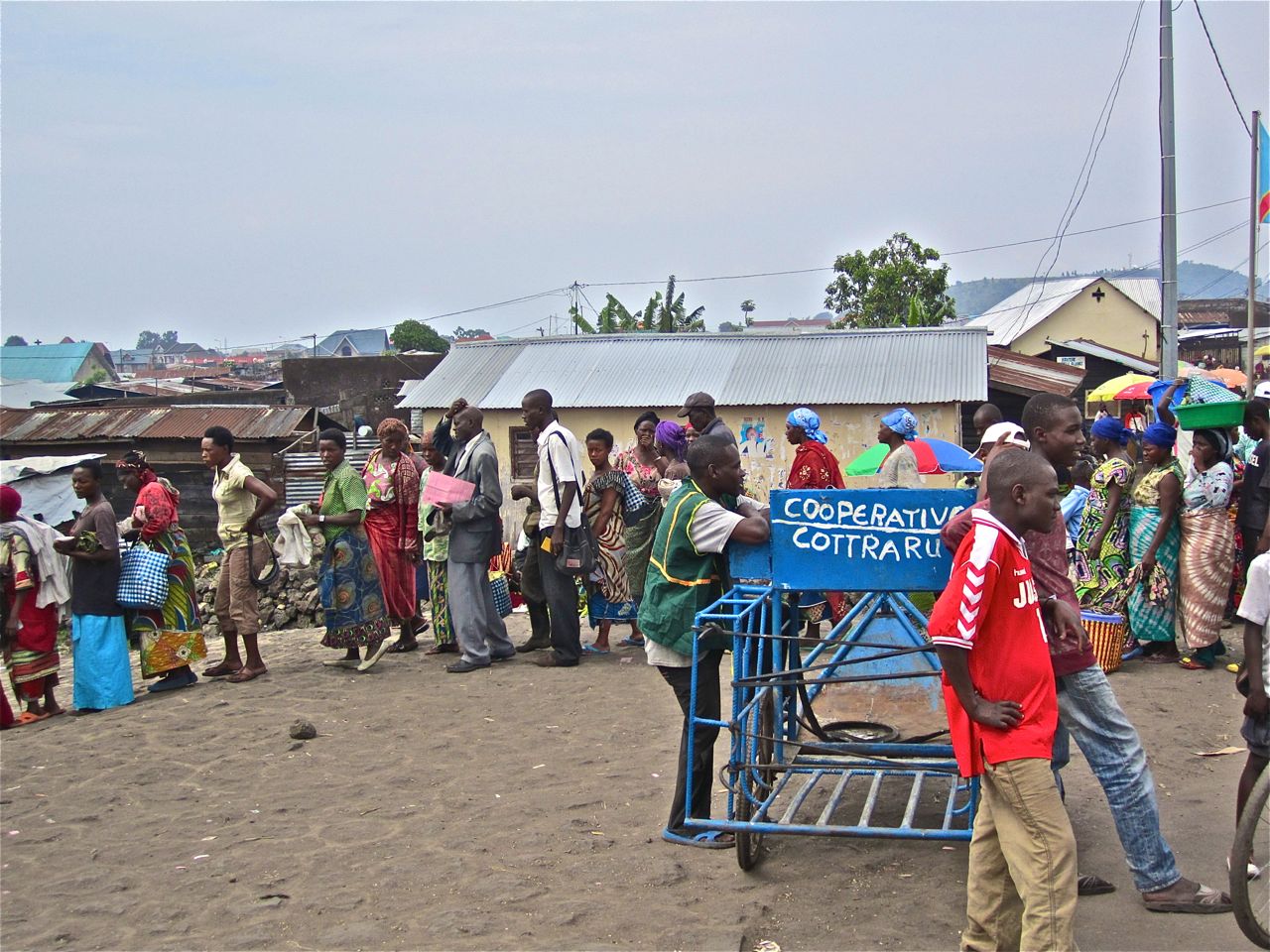
We watched another line of people, now almost empty-handed, coming back into Rwanda.

The line to leave the DRC.

Afterwards, we headed about 10 miles east to visit a small hydro-electric plant.  The unpaved road to the plant was too rough for the bus, so we had a walk through the neighboring village.

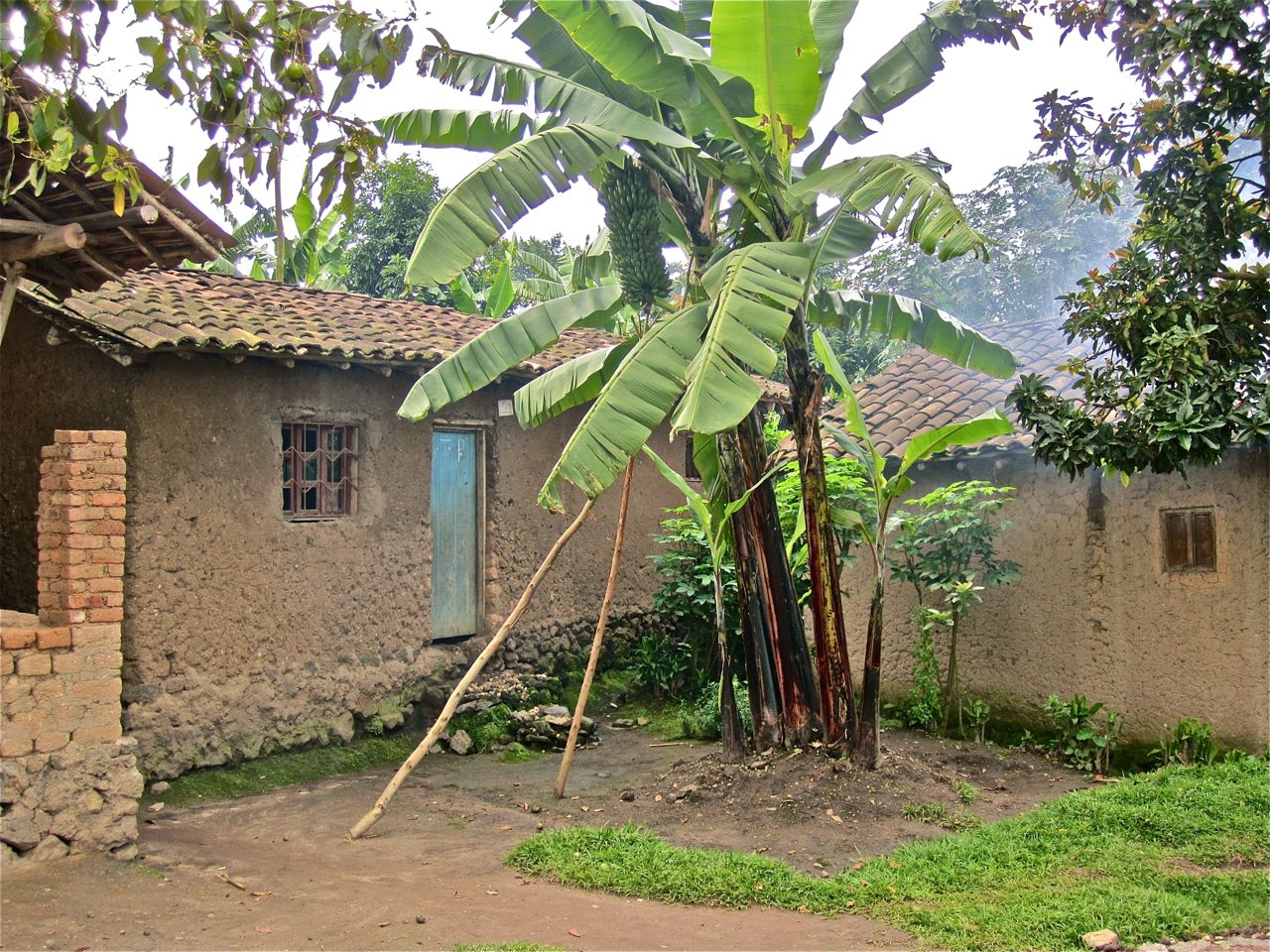
Bananas outside a village house.
House door with a blue patch.  Cassava (aka manioc) plants and beans grow in the foreground.
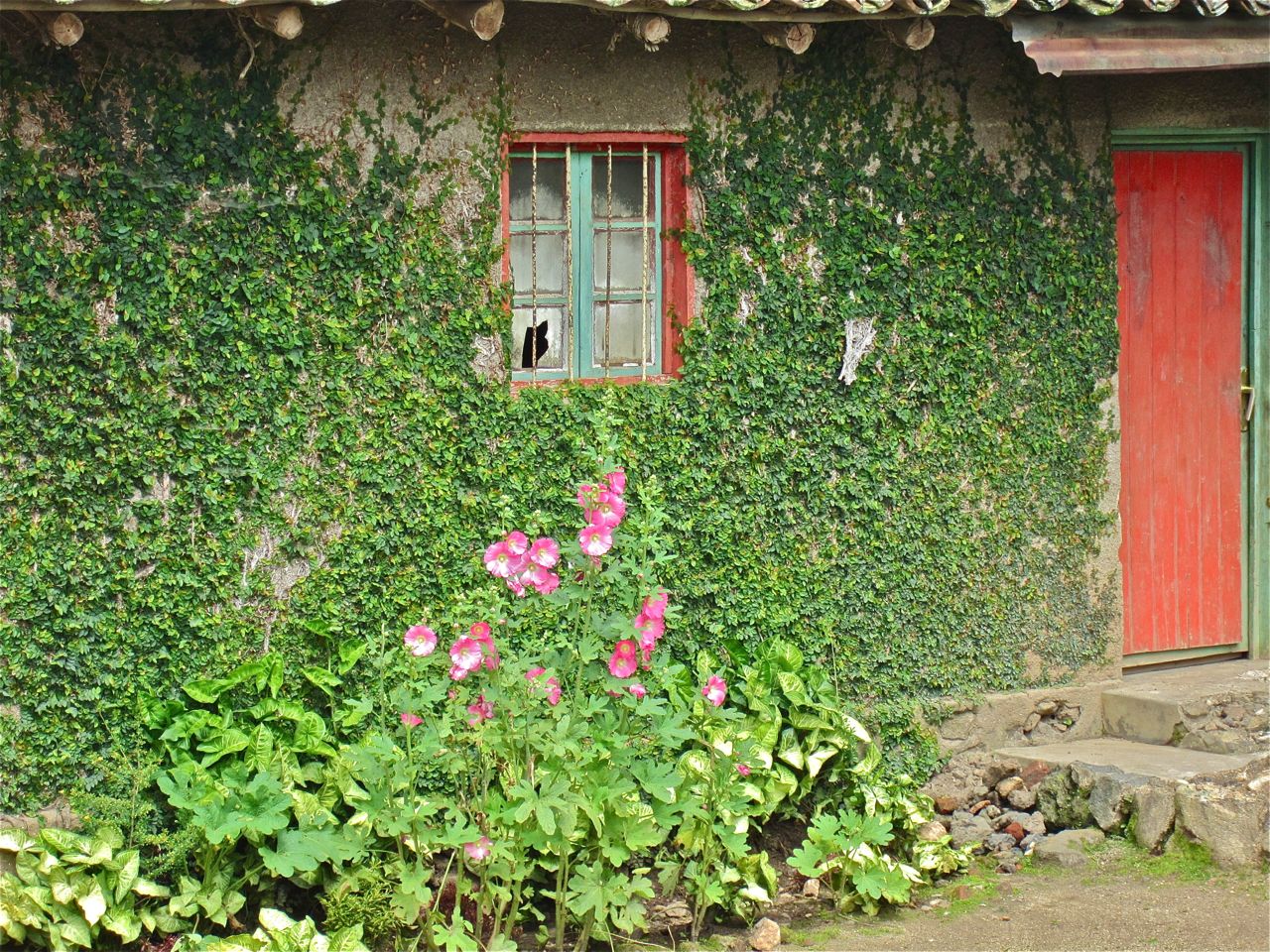
Hollyhocks by a doorway.
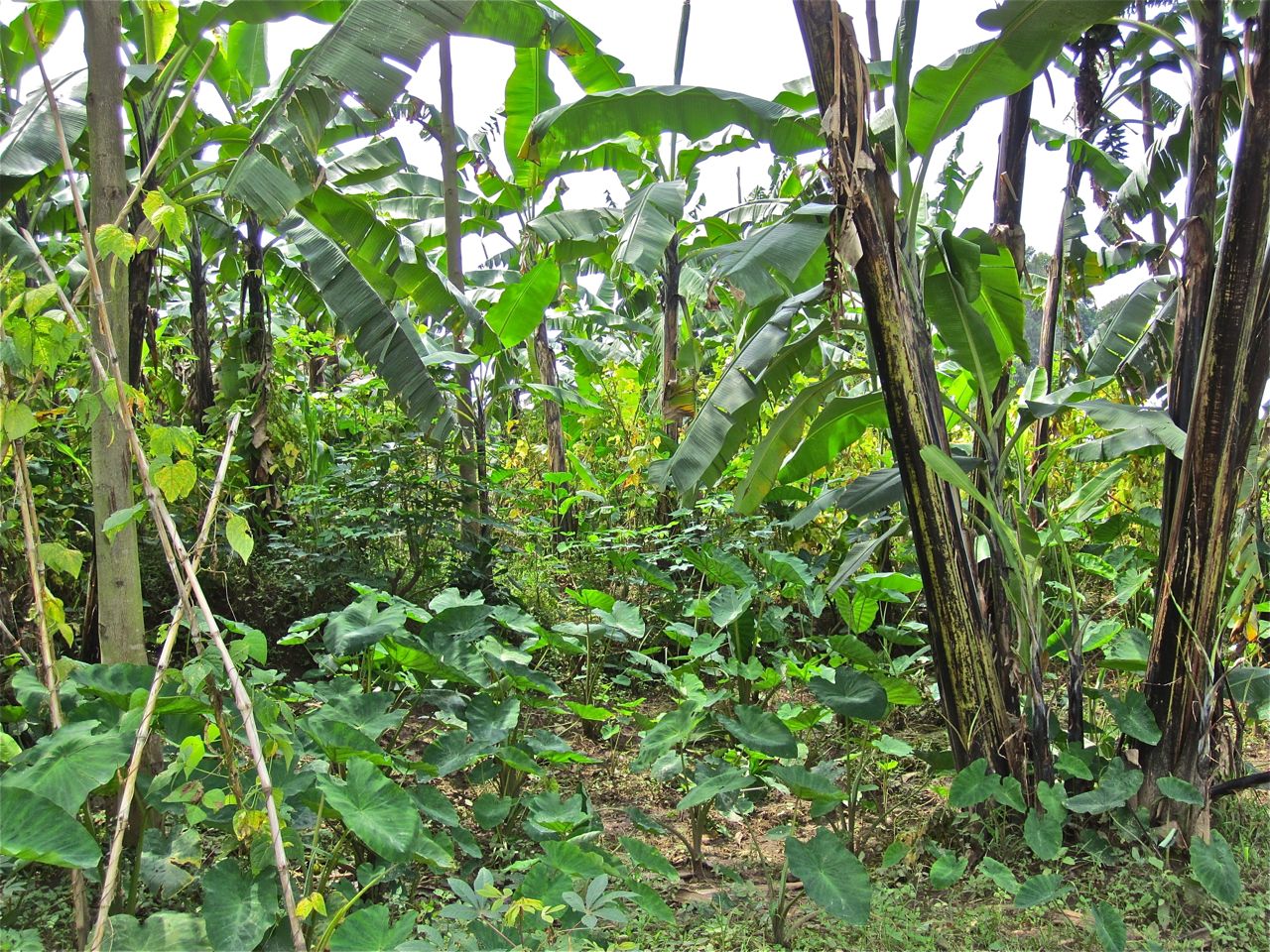
A typical garden of bananas, taro, cassava, and beans.
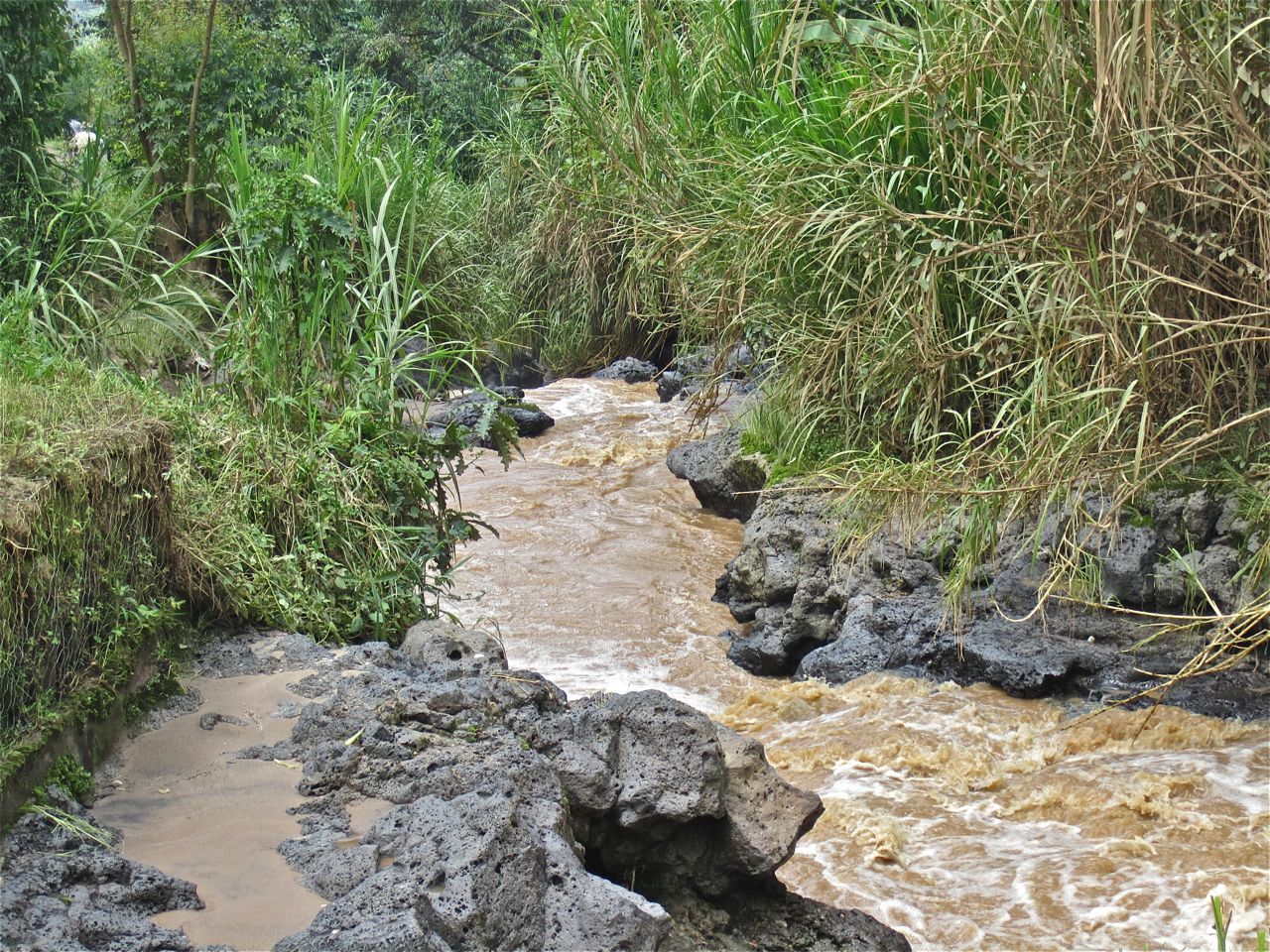
A stream bordered by long-hardened volcanic lava. The fast-moving water runs approximately parallel to the water pipe supplying water to the hydro-electric plant.
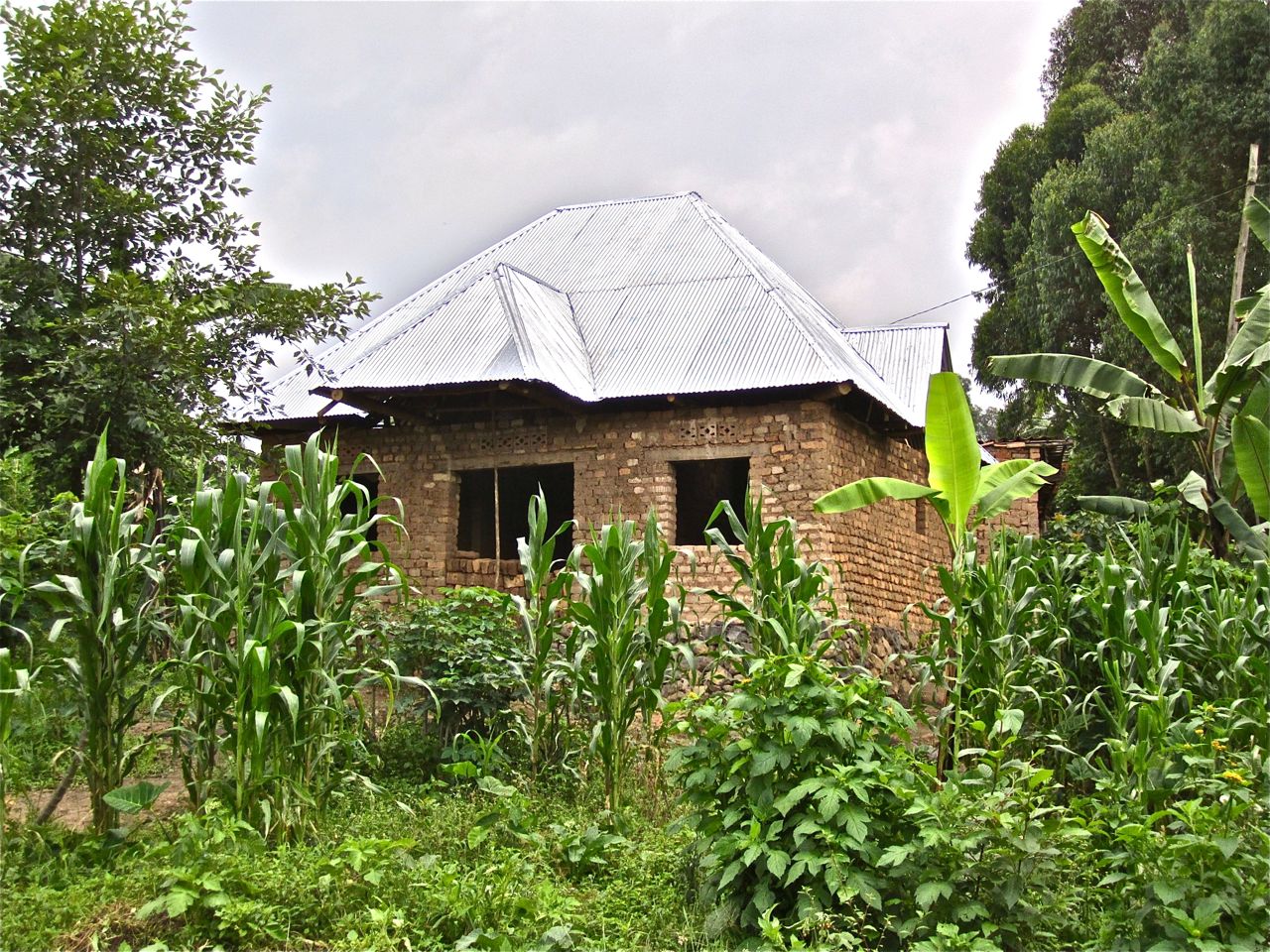
A house under construction with a roof-line typical of the Rubavu District. It seems to echo the surrounding hills and nearby volcanoes.
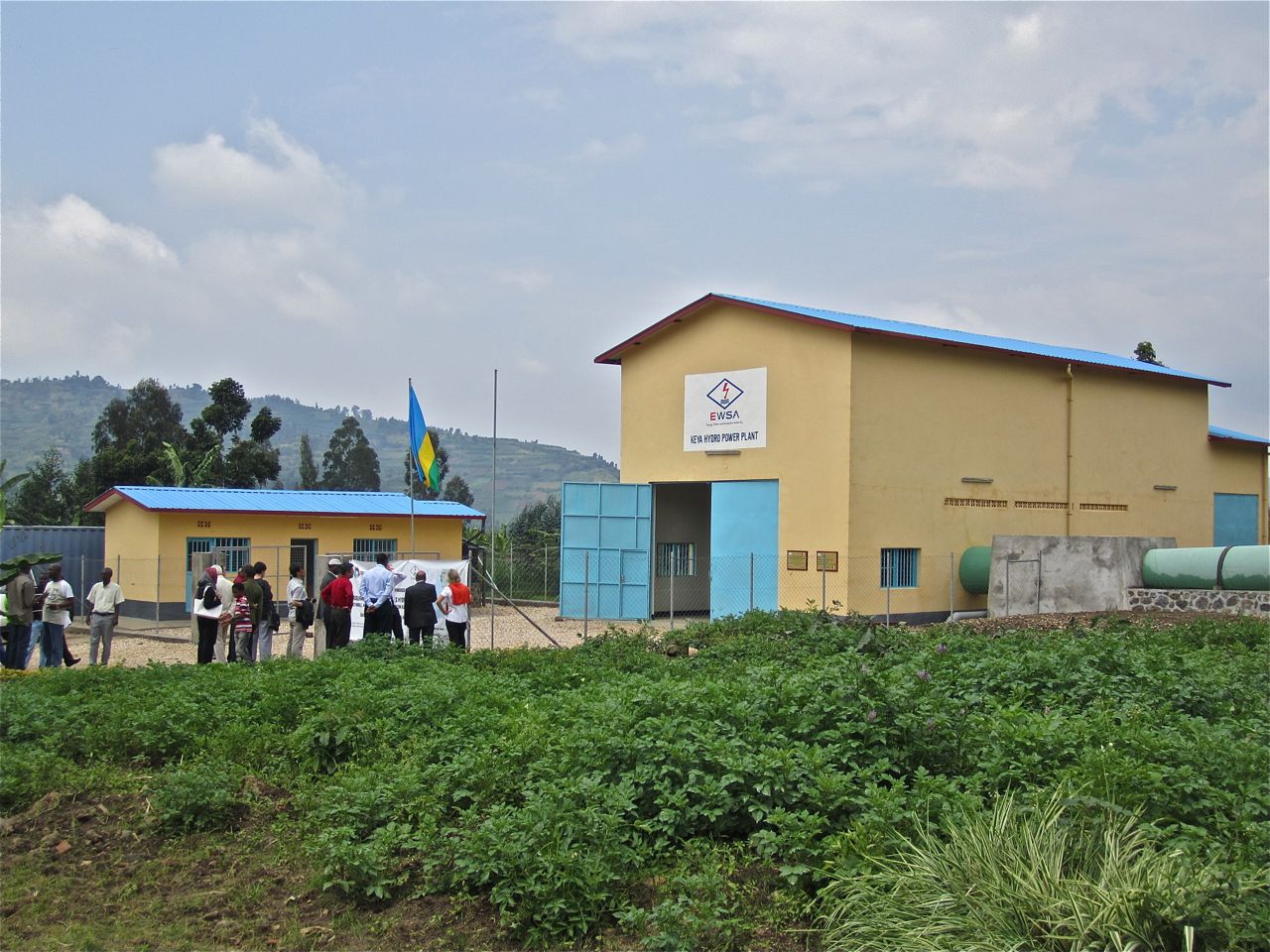
The Keya hydro-electric power plant. The water enters from the blue pipe on the right.  Built by the Rwandan government with the support of Belgium, it provides 2.2 megawatts of power.
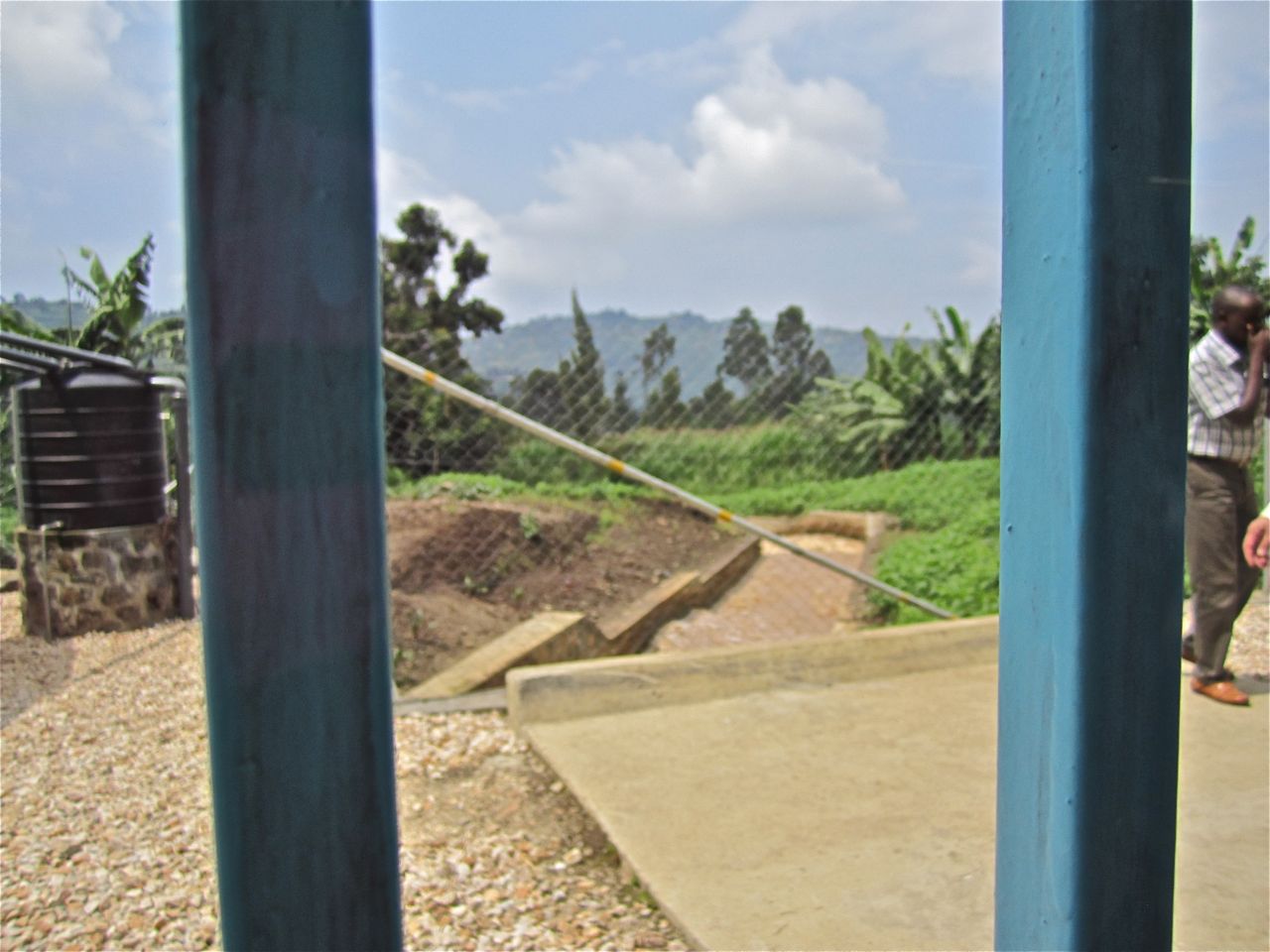
Water runs out the other side of the plant, beans planted right up to the edge. On the far left is a tank capturing rainwater from the roof of the plant’s office.

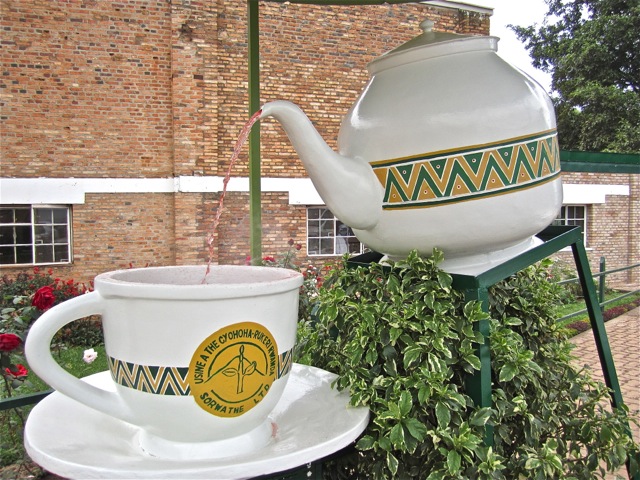
We ended our trip at the Pfunda Tea Company factory. Two thousand people work on the Pfunda Tea Estate, and the company also runs a cooperative for area tea farmers. All the tea is raised without pesticides, and, in February 2011, Pfunda Tea Company became the first company in Rwanda to obtain Rainforest Alliance certification.

One hundred and fifty people work 8 hours shifts in the tea factory, day and night. They will produce over 4.4 million lbs. (or 2 million kgs.) of black tea this year. The climate, altitude, and soil of the area is excellent for growing high-quality tea.

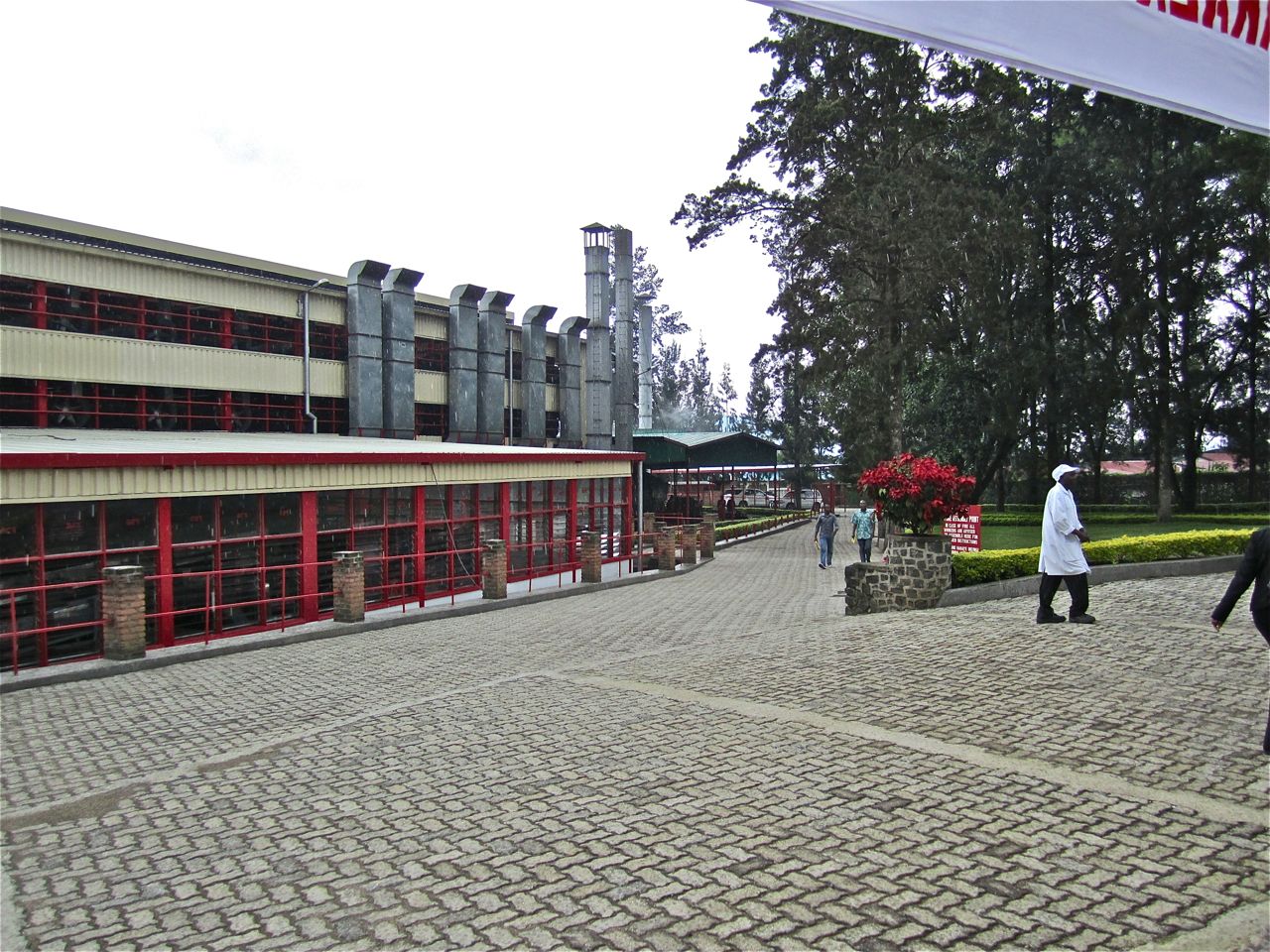
The Pfunda Tea Factory

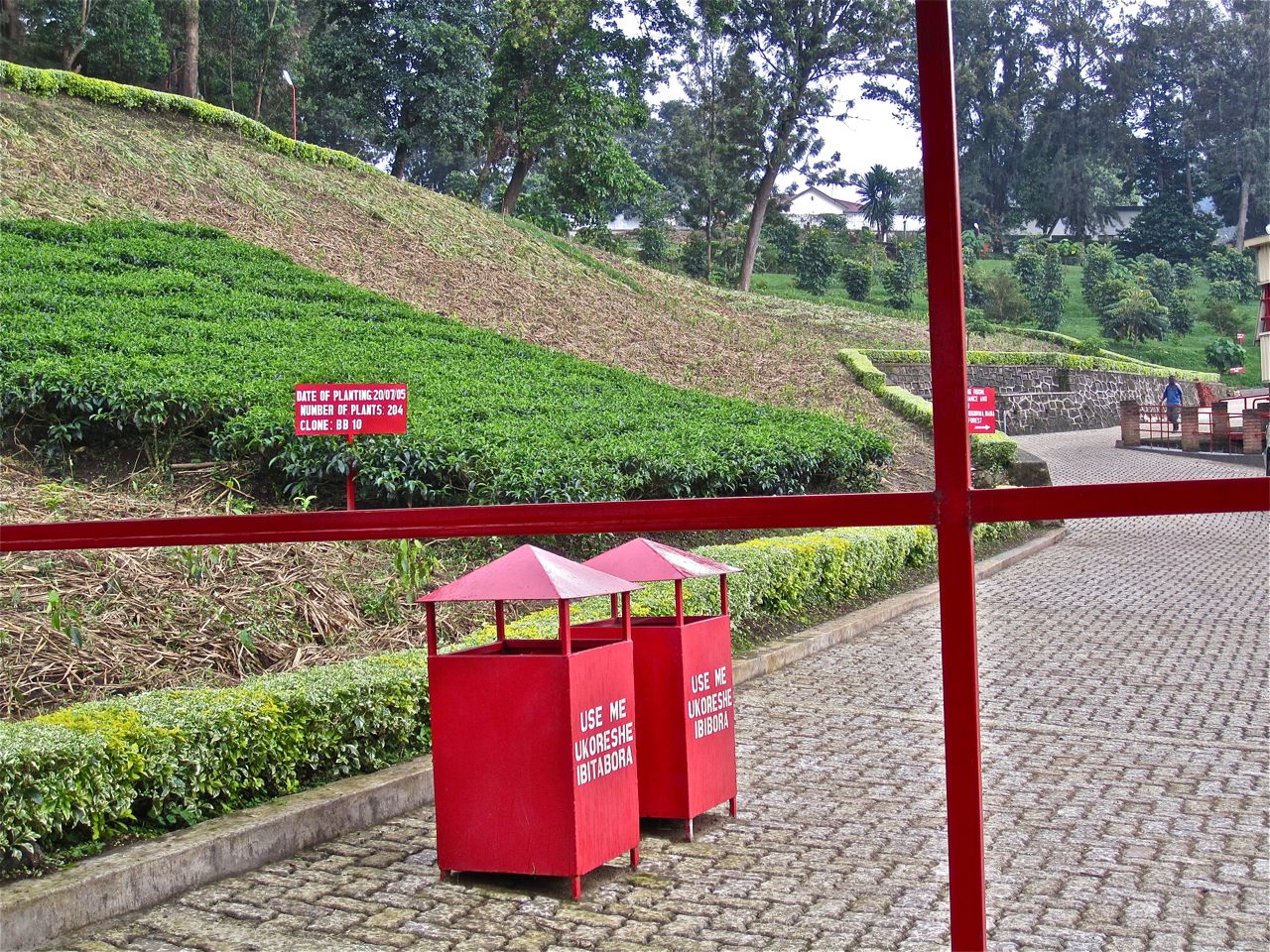
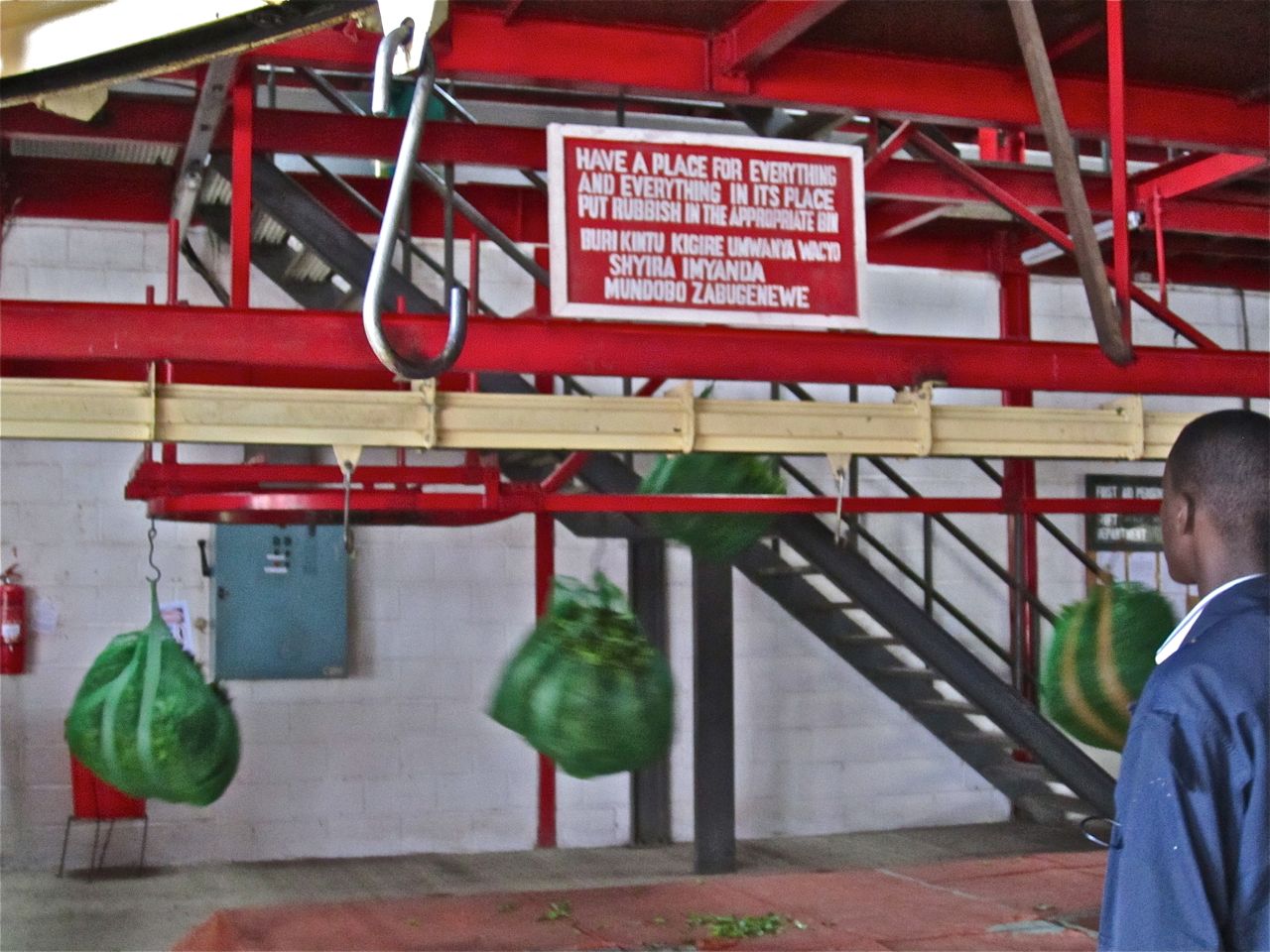
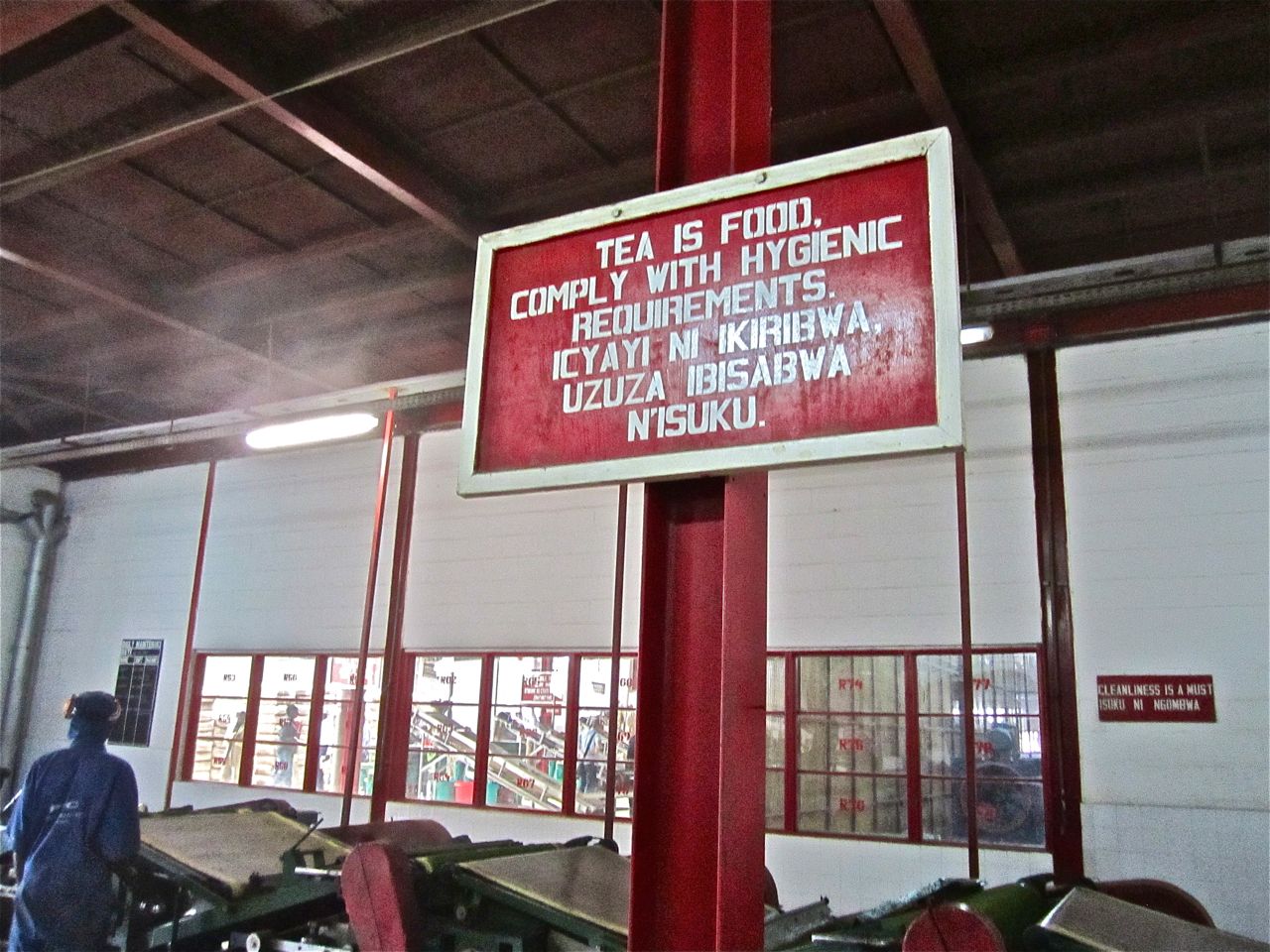
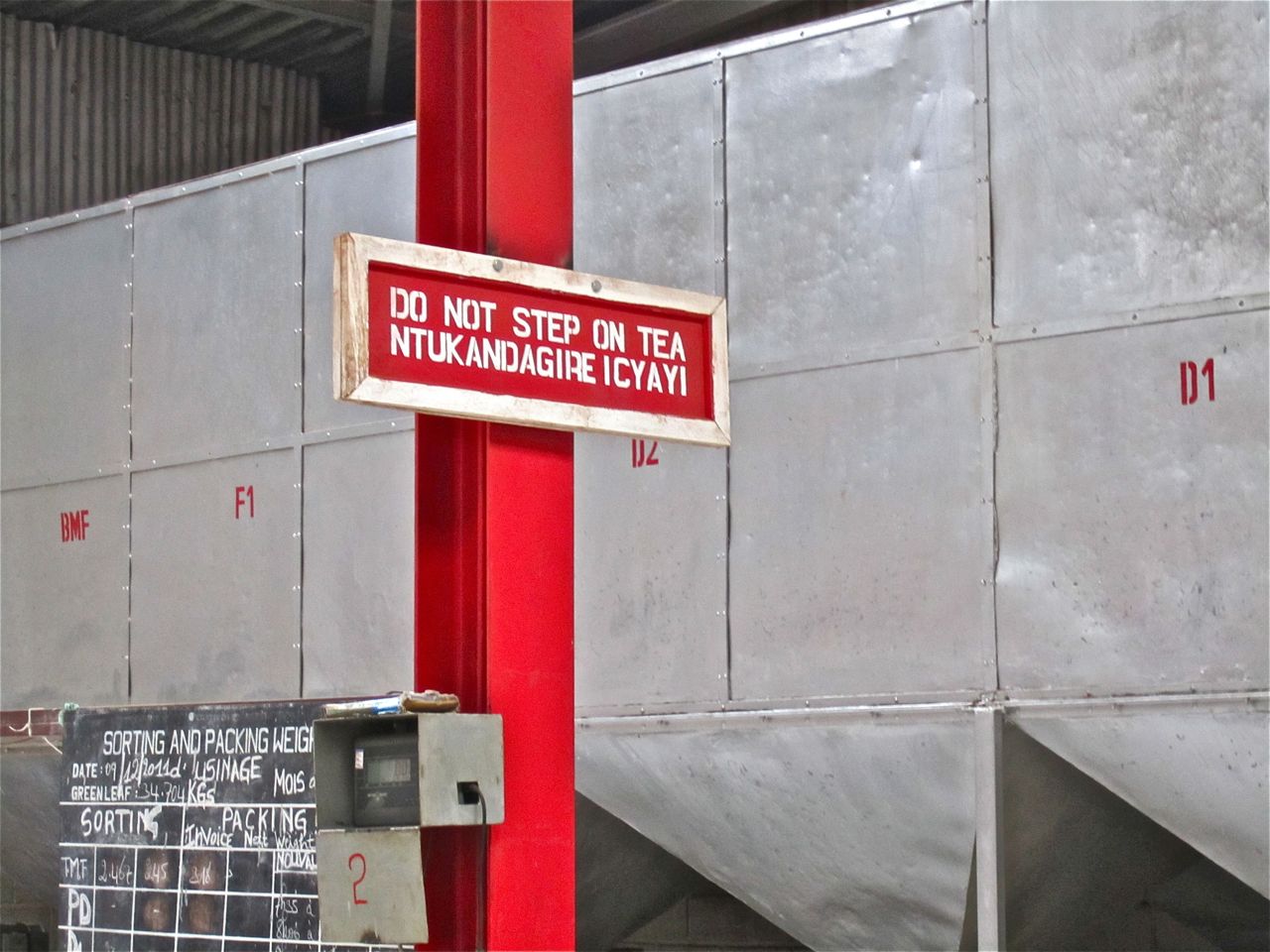
The design of the factory and its surrounding grounds — even its signage — struck me as remarkably consistent, orderly, and pleasant.  Lots of straight, clean lines in red paint and low hedges.

A test plot of tea bushes.
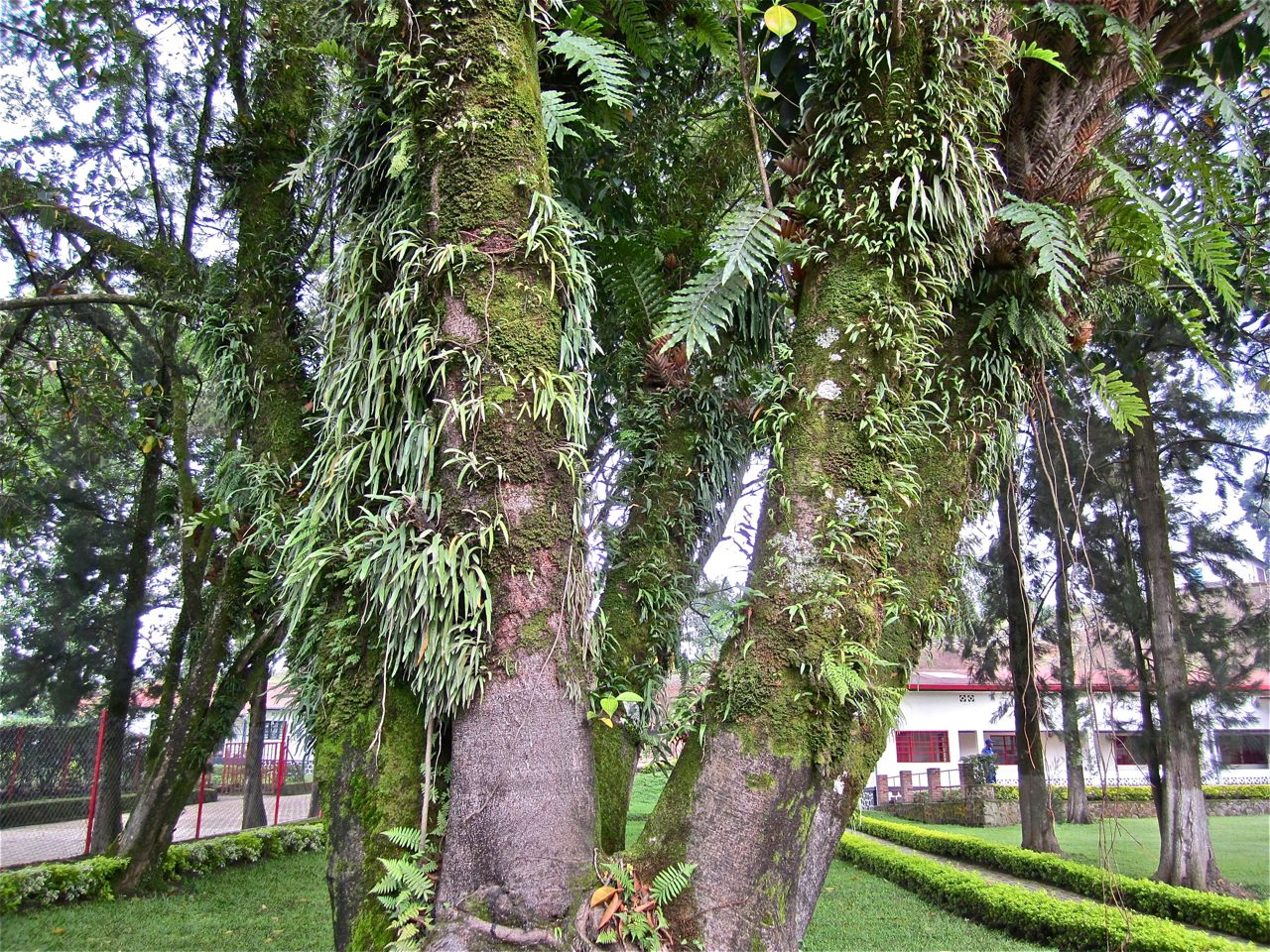
A factory tree laden with moss and ferns.
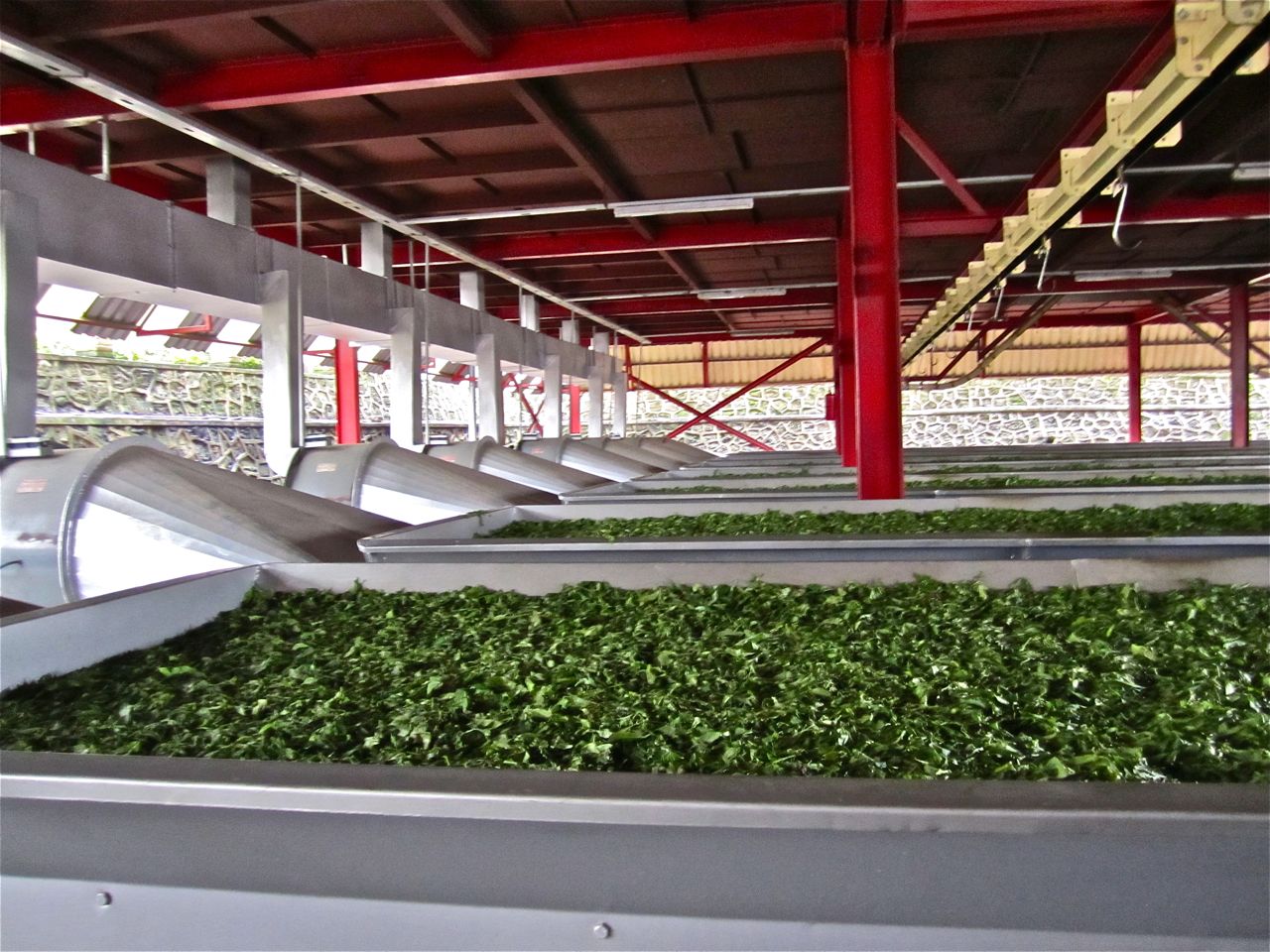
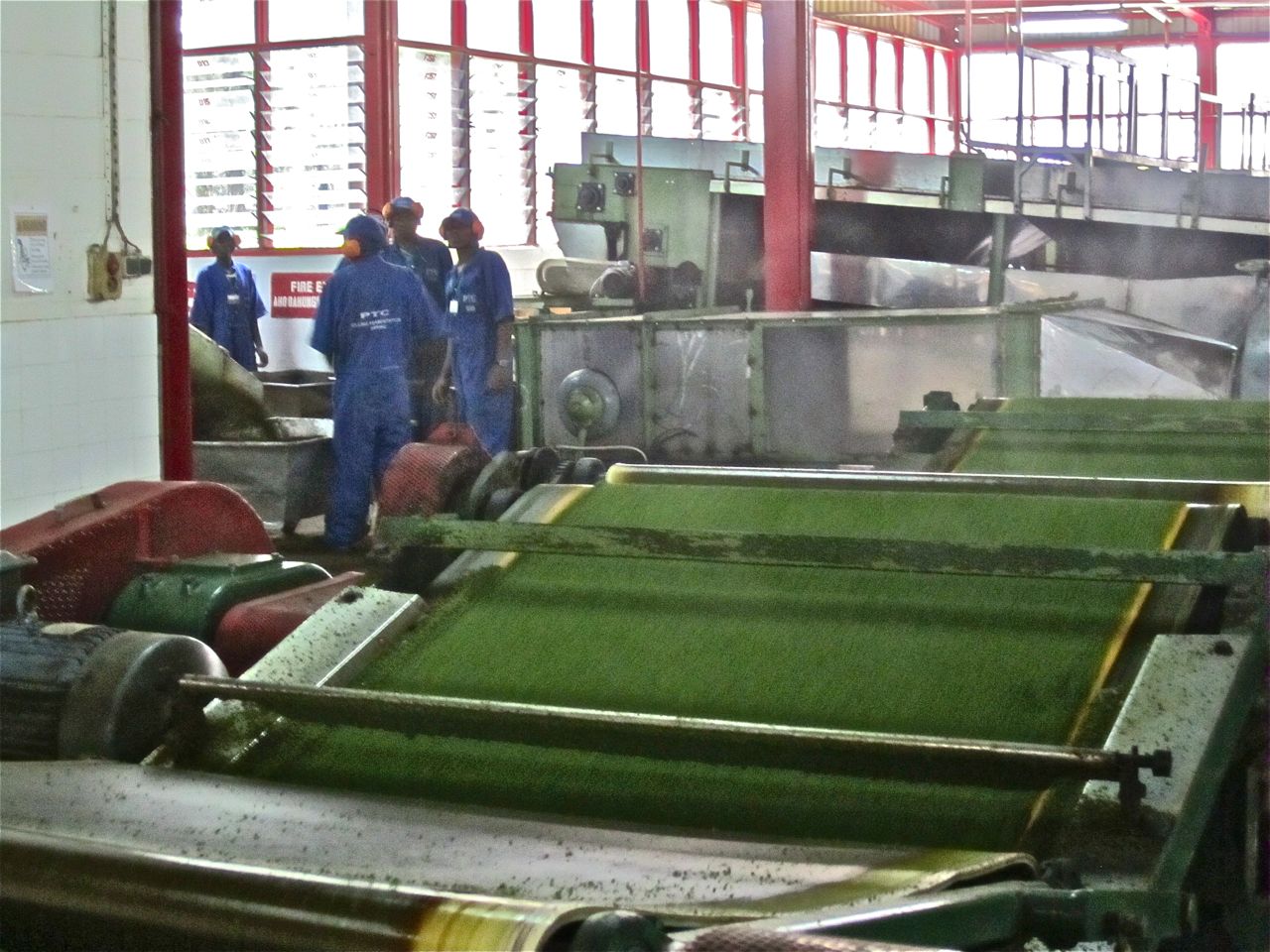
The green tea leaves dry here for approximately 15 hours. The factory smells like a combination of cut grass and brewed tea.
Dried leaves on their way to be processed. 
The leaves are finely chopped.
After the oxidation process, the now-black tea rolls off the belt and into buckets.
And put in piles before being bagged.
The factory is very orderly and clean.
A relief to tea drinkers.
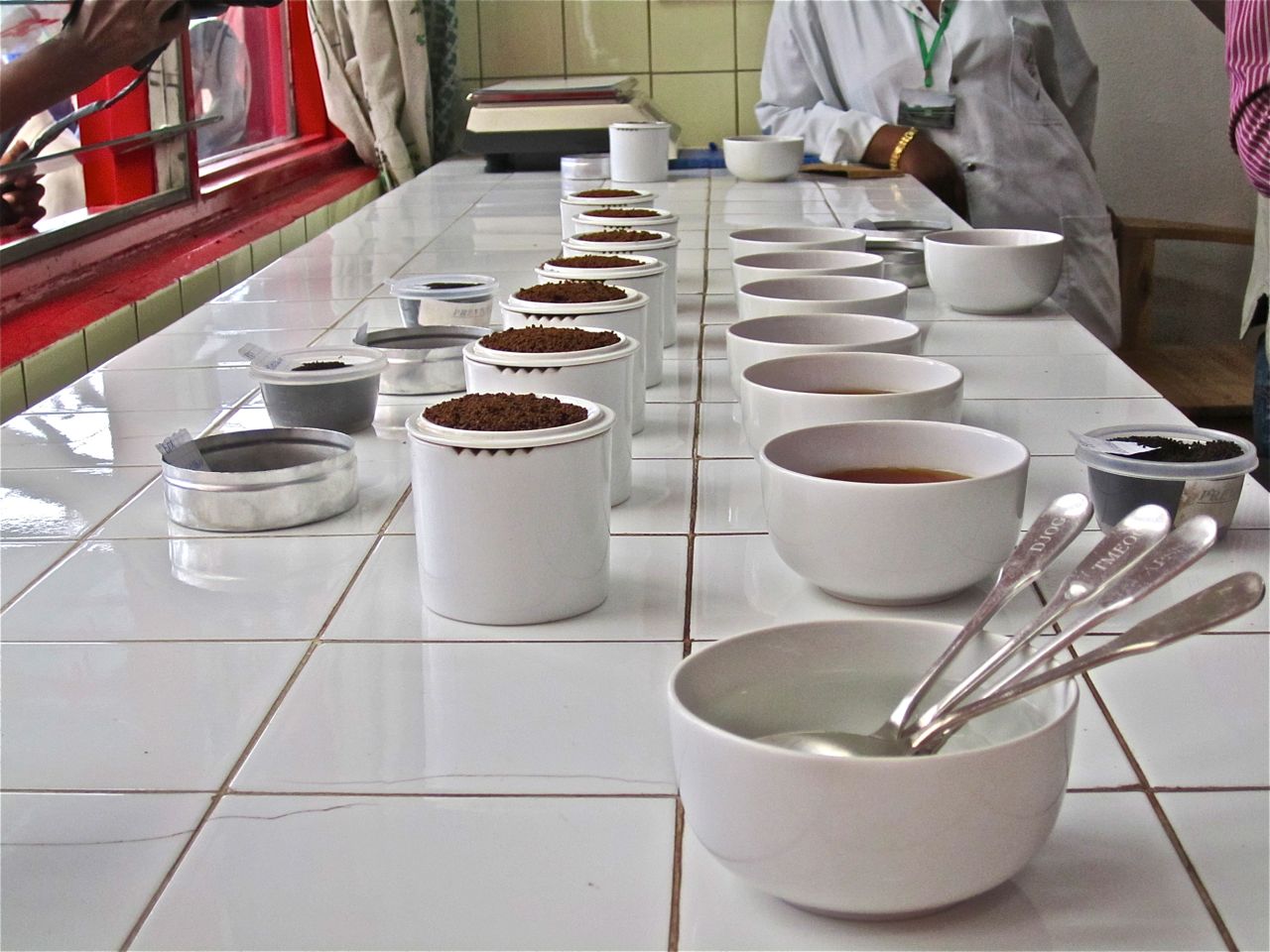
The testing and tasting room.

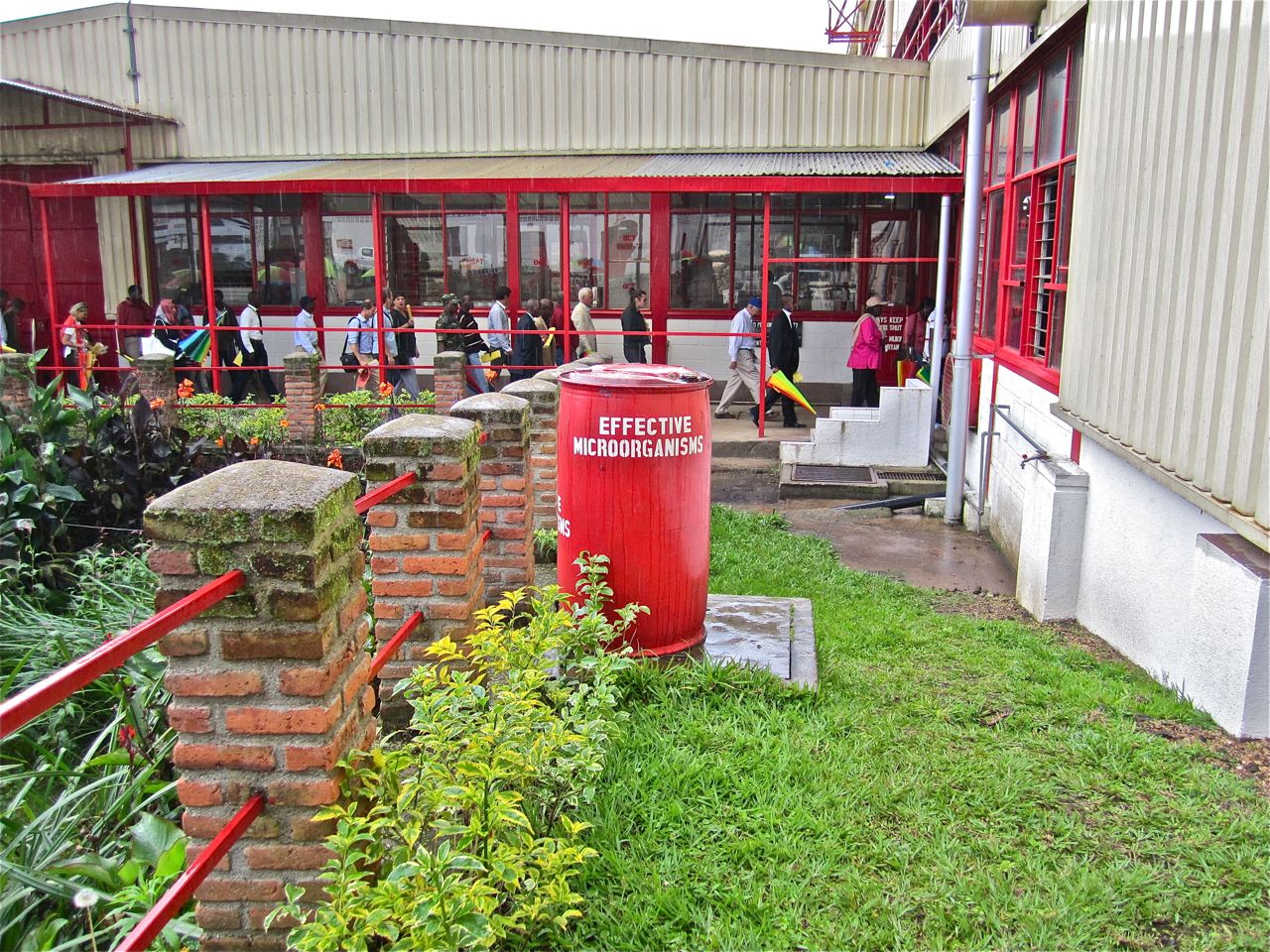
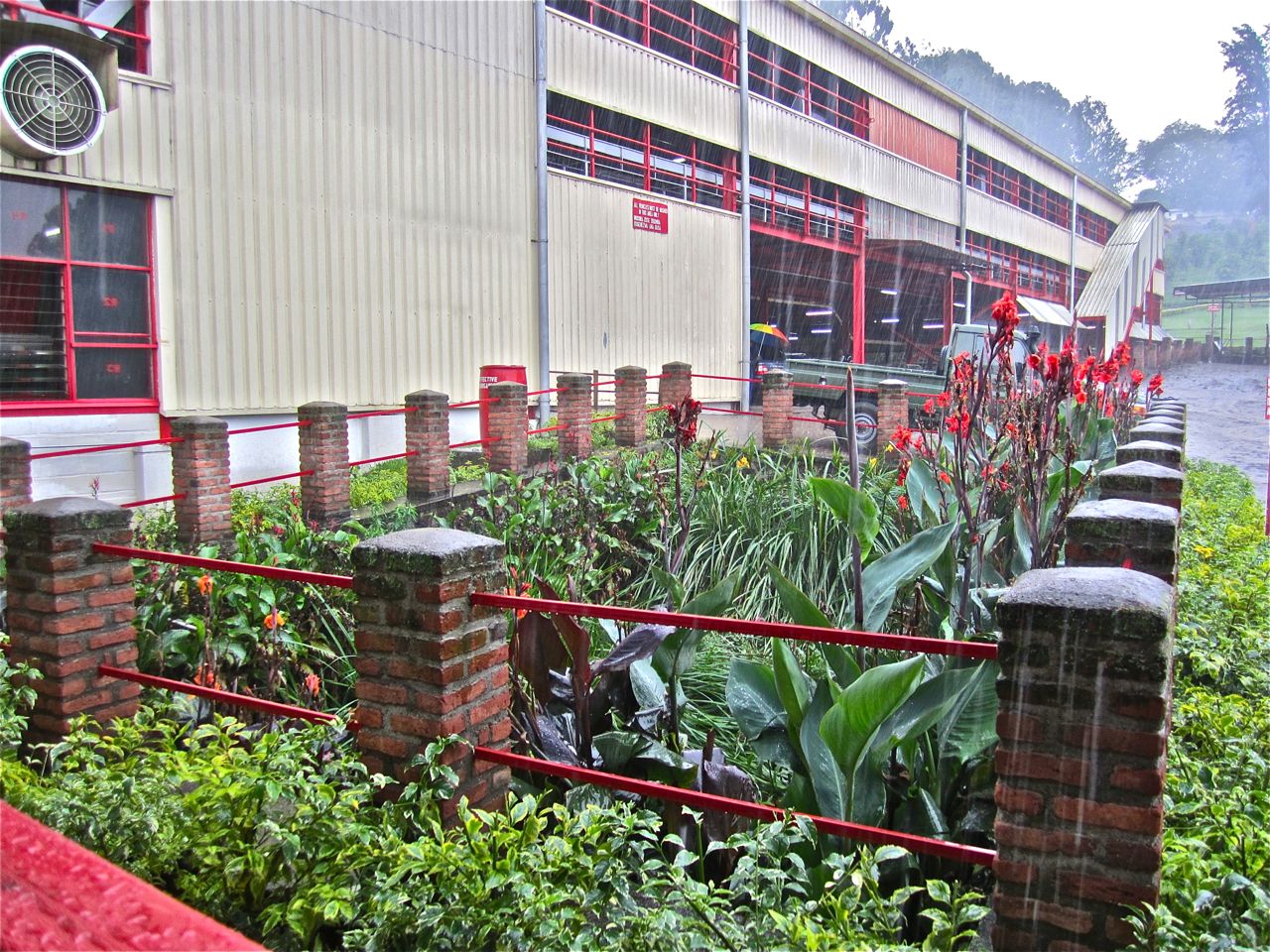
Waste water from the tea processing is diverted to a garden pool and treated with “Effective Microorganisms,” a product that cleans water and eliminates bad odors with a combination of microorganisms that were collected and cultivated naturally.

A barrel of Effective Microorganisms.
A waste water garden pool in the rain.

As we travel, I am always looking for recurrent elements in the landscapes and urban surroundings through which we pass, as well as in the architecture and craft.  I am trying to grasp what Rwanda really looks like, what it cares about, how it experiences its environment (and how I experience its environment) and how I can interpret at least some of  that in a garden design.