In a vase on Monday: grape hyacinths

This slideshow requires JavaScript.

On Saturday, I wandered around the downtown Stuttgart flower market admiring all the blooming spring bulbs — which were being sold both potted and as cut flowers (pictures below). I bought some cut tulips and then went to Butler’s for a vase and another container of seashell chips. On the way home, I stopped at a florist and bought a little pot of forced Muscari, or grape hyacinth, bulbs.

I think I should have set the bulbs lower in the vase, but I didn’t want to disturb their rootball, which I covered with the chips.

Click on any thumbnail in the gallery below to scroll through photos of the flower market.

To see what other gardeners have put in a vase today, visit Cathy at Rambling in the Garden.

Life in gardens: Mr. Hesse

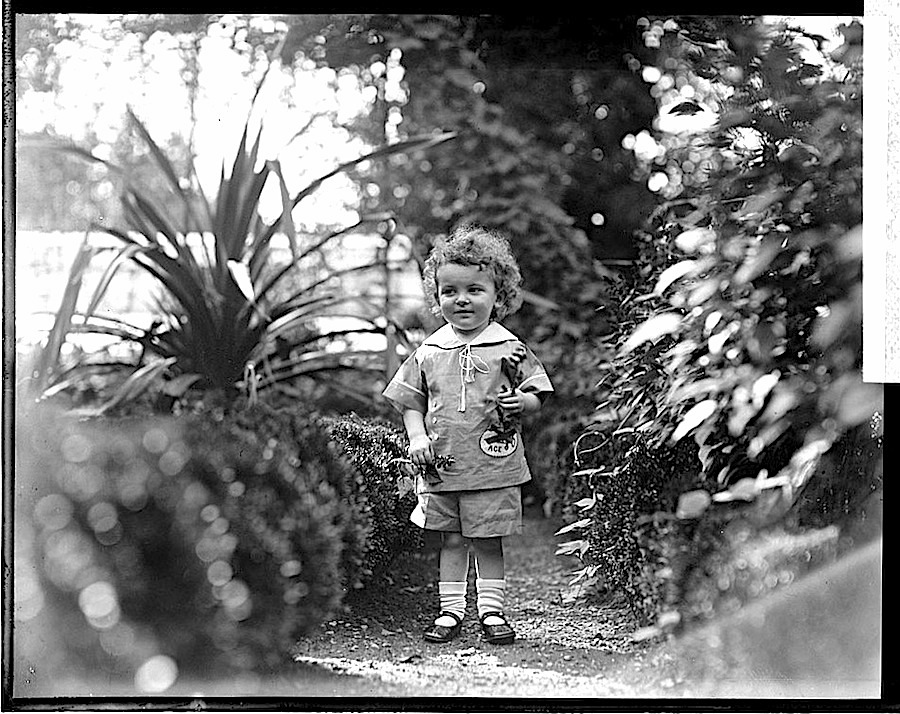
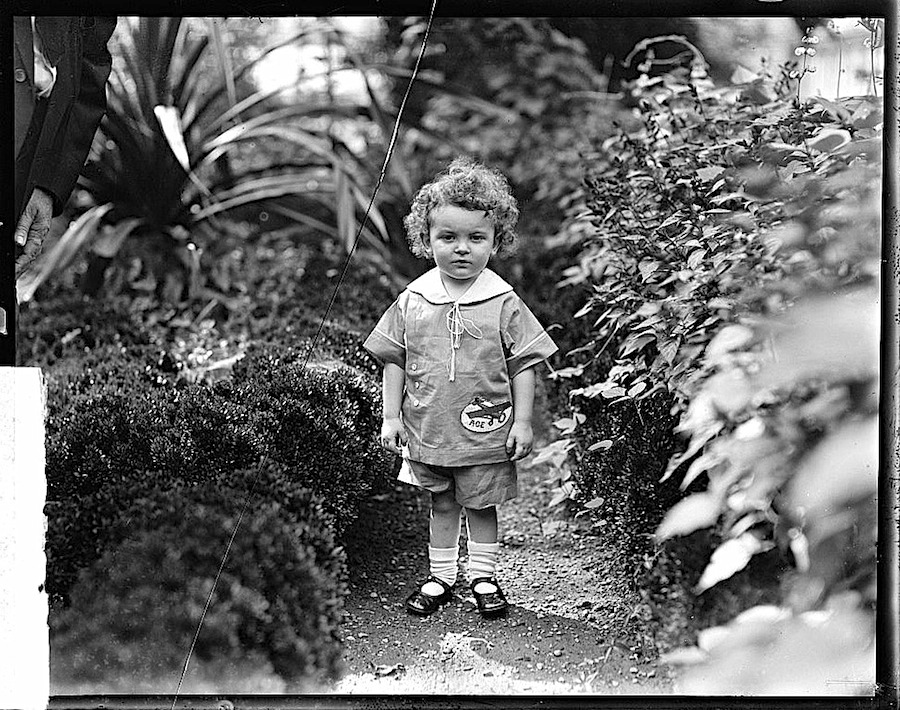
2 Mr. Hesse, Wash, D.C. 1928 or 29, Library of Congress“Mr. Hesse, Bot.[anic] Gardens,” Washington, D.C., 1928 or 29, by National Photo Company, via Library of Congress Prints and Photographs Division.

Years later, did he go back and say, “I remember it as so much bigger. . . “?

1 Mr. Hesse, Wash, D.C. 1928 or 29, Library of Congress

The little boy was almost certainly the son of George Wesley Hess, who was Superintendent and then Director of the U.S. Botanic Garden from 1913 to 1934. There are more photos of the family and the Garden here.

I bless thee, Lord, because I GROW
Among thy trees, which in a ROW
To thee both fruit and order OW.

— George Herbert, from “Paradise”

In a vase on Monday: Fritillarias

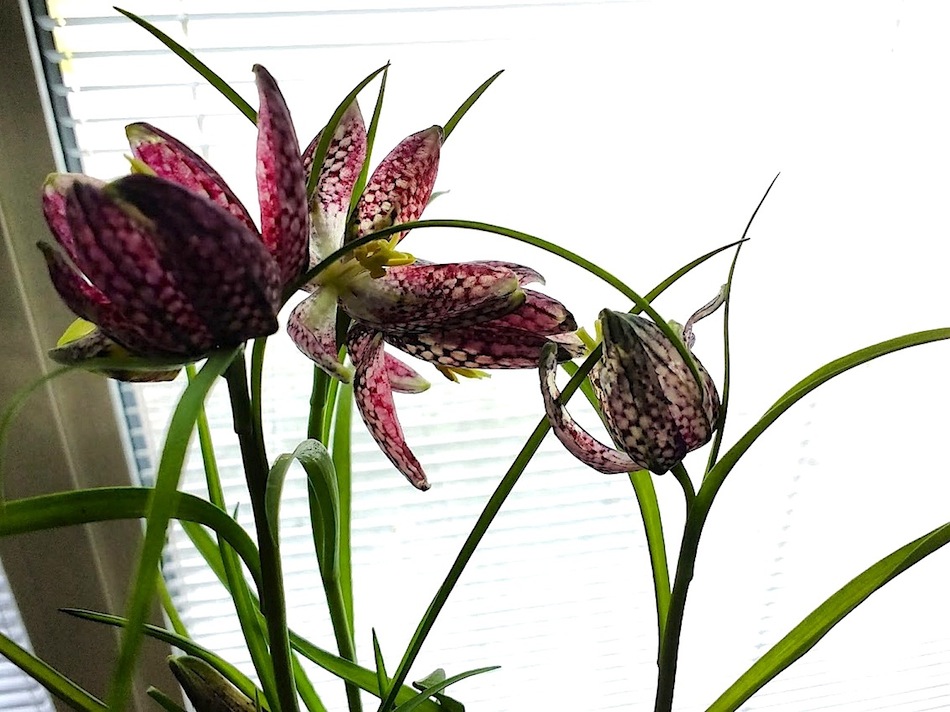
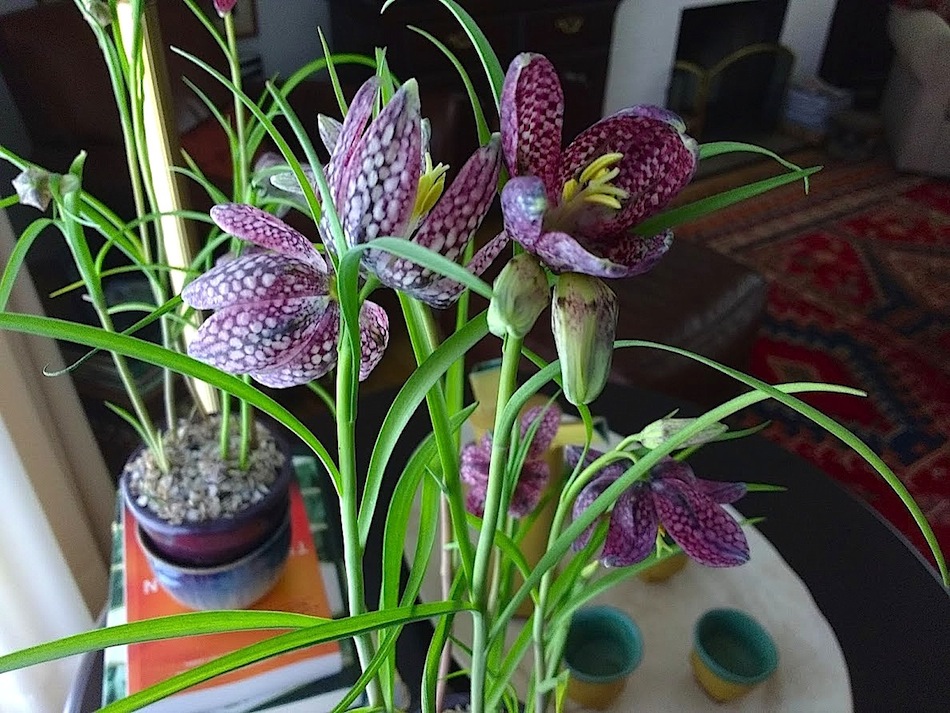
21bb potted Fritillaria meleagris, Feb. 2016, StuttgartPotted Fritillaria meleagris in our living room this week.

Fritallarias in pots, late Feb. 2016, Stuttgart, enclos*ure

The plants are 13″ to 15″ tall.

29 potted Fritillaria meleagris, Feb. 2016, Stuttgart

I love the checkered pattern on the blooms.

31 potted Fritillaria meleagris, Feb. 2016, Stuttgart, enclos*ure
Right now, almost all the supermarkets and florists here are selling small plastic pots of three or four blooming or almost-blooming spring bulbs (about €3.30 each — cheaper than a lot of cut flowers).

Potted Fritillaria meleagris, Feb. 2016, Stuttgart, enclos*ure

I replanted these into two purple ceramic pots that I had from a previous plant purchase. Then, to catch the excess water, I also put them down in blue pottery teacups from Rwanda’s Gatagara Cooperative.

25 potted Fritillaria meleagris, Feb. 2016, Stuttgart

I covered the soil with seashell chips.

32 potted Fritillaria meleagris, Feb. 2016, Stuttgart, enclos*ure

The yellow-blue sake pitcher and cups in the photos above were made by American ceramics artist Hayne Bayless.  They were purchased years ago at the Smithsonian Craft Show — which will be held this year from April 21 to 24 at the National Building Museum* in Washington, D.C.  If you plan to be in the D.C. area that week, you can buy advance (discounted) tickets here.

To see what other gardeners have put in a vase today, visit Cathy at Rambling in the Garden.

*The Oehme/van Sweden exhibit will still be there.

The winter garden: Greene County

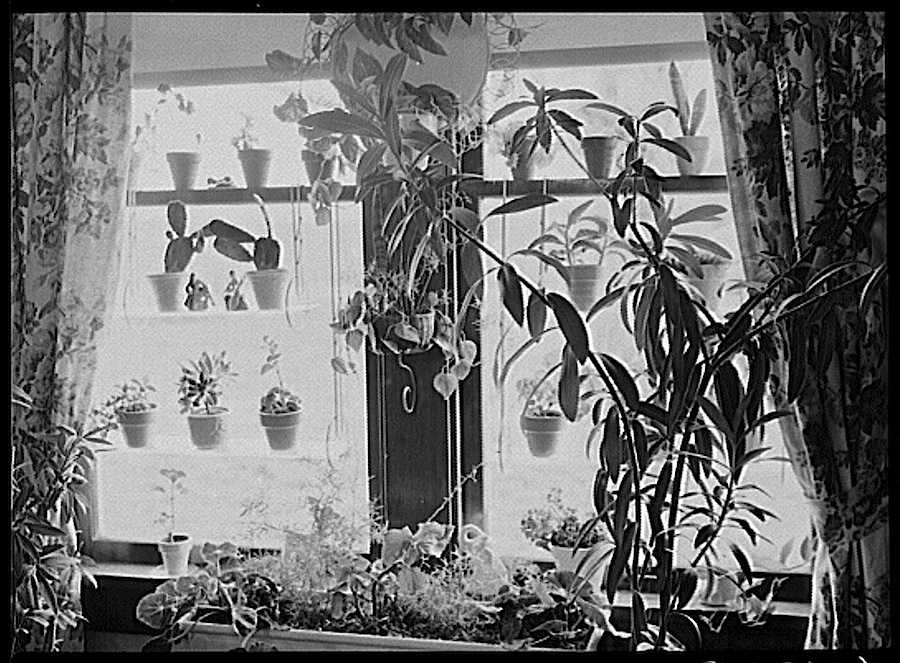
Farmhouse window, John Vachon, Library of Congress“Plants in window of farm home. Greene County, Iowa,” 1940, by John Vachon, via Library of Congress Photographs Division.

The pleasure of working outside is only matched by the pleasure of dreaming inside.

Tyler Whittle

The Sunday porch: Frankfurt

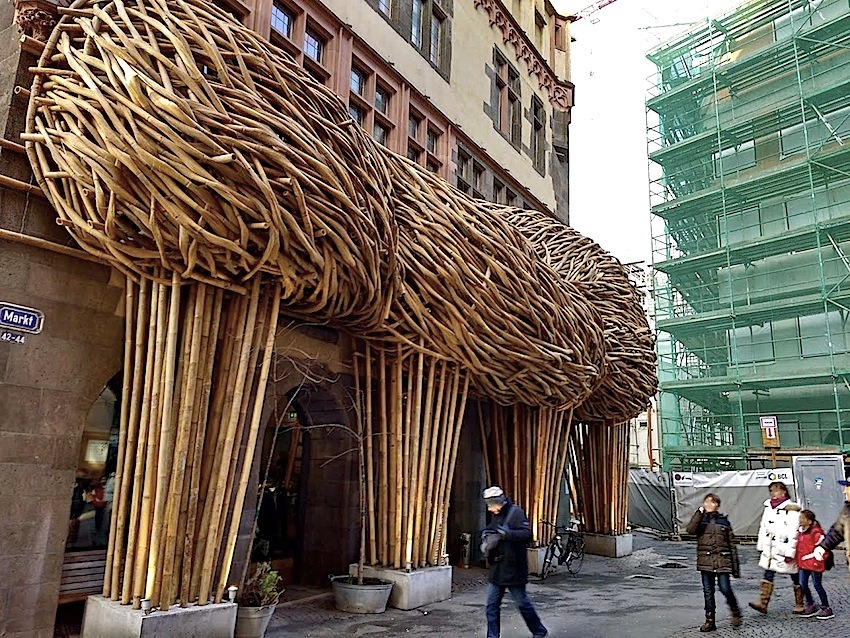
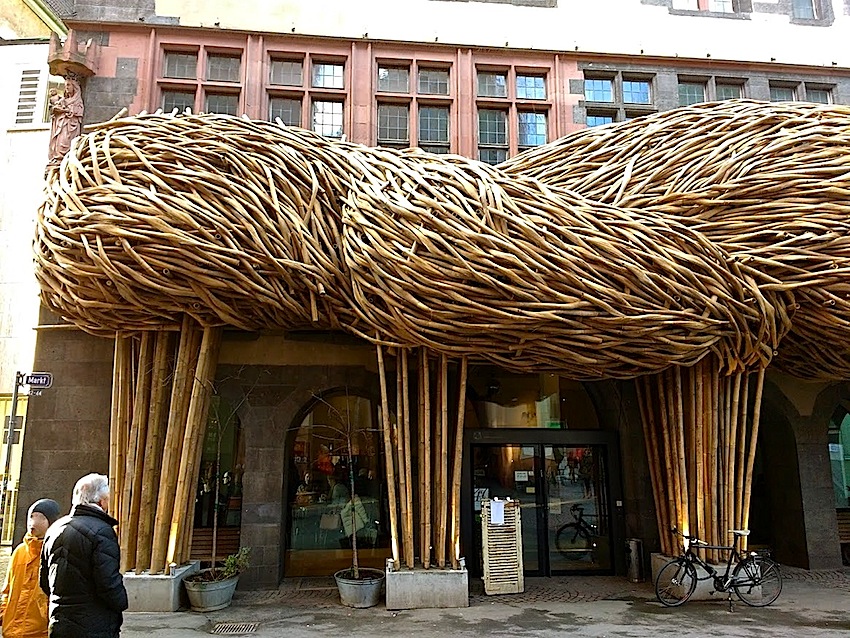
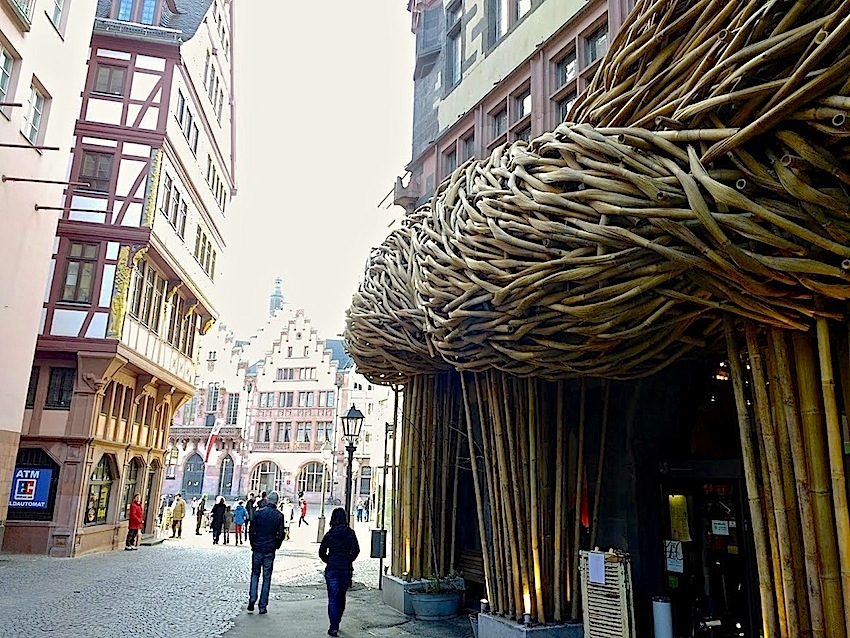
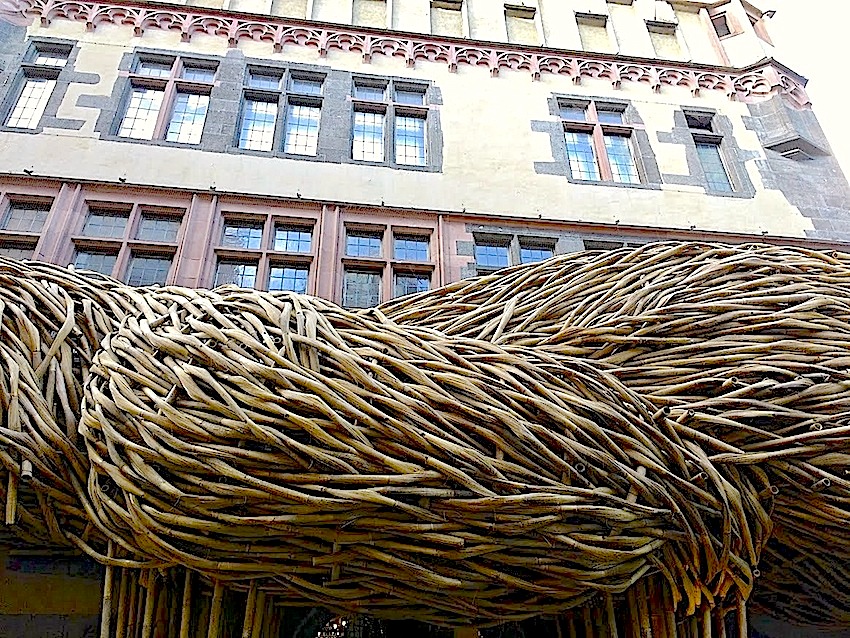
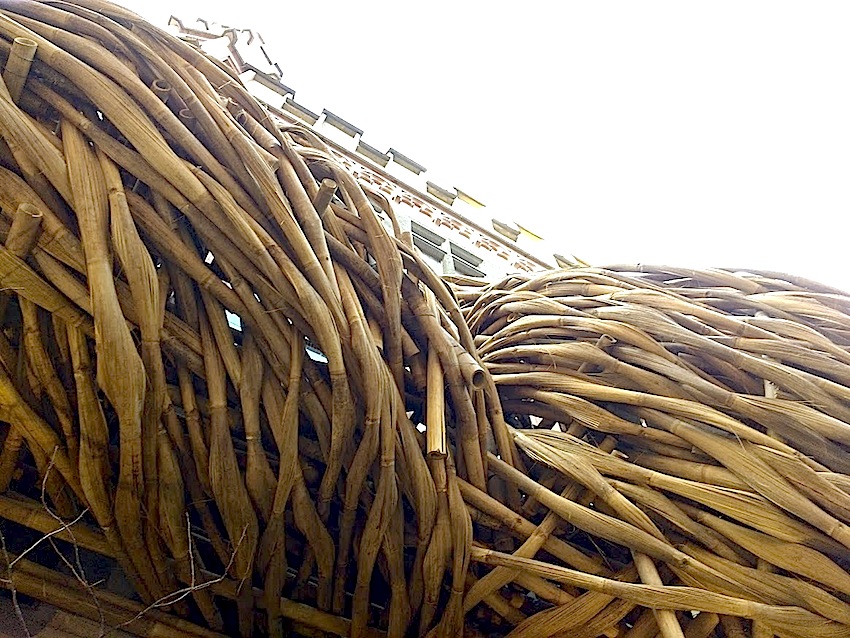
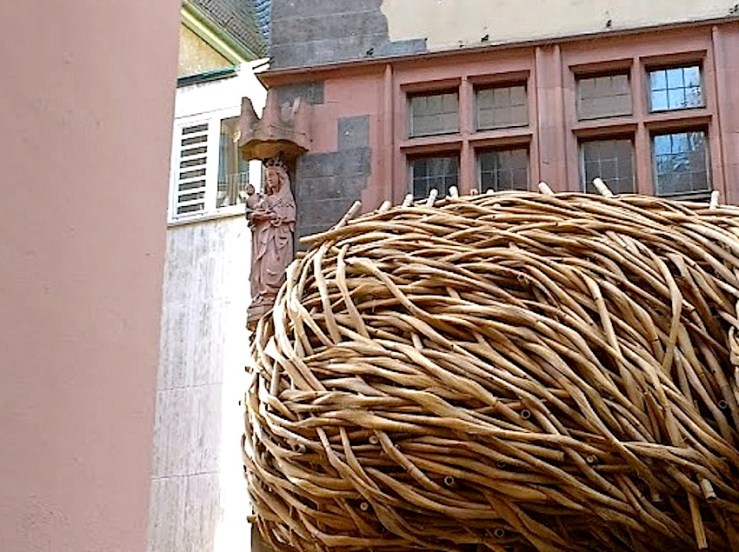
Full view 1, Frankfurter Kunstverein, Frankfurt, 2016, enclos*ure“Big Trees” (Pohon Besar) by Joko Avianto of Indonesia, on the facade of the Frankfurter Kunstverein (Frankfurt Art Club), Frankfurt, Germany.

left view, Frankfurter Kunstverein, Frankfurt, 2016, enclos*uree

The sculpture was created in 2015 for the exhibition Roots: Indonesian Contemporary Art at the Kunstverein.

Full view 2, Frankfurter Kunstverein, Frankfurt, 2016, enclos*ure

detail1, Frankfurter Kunstverein, Frankfurt, 2016, enclos*ure

detail6, Frankfurter Kunstverein, Frankfurt, 2016, enclos*ure

[“Big Trees”] consists of 1525 woven stalks of bamboo imported from plantations in West Java.  Bamboo is historically associated with traditional craft. . . .   [Avianto] borrows and reinterprets traditional Sundanese (West Java) weaving techniques to construct his exaggerated sculptural forms.  His innovative process of breaking the long compact fibres of the columns between each node of the bamboo stalk makes it pliable while maintaining its strength.  This allows for the bamboo to be manipulated, bent and woven into soft curvilinear lines.  An underlying concern for Avianto is the changing socio-economic and cultural values associated with bamboo cultivation.  This includes the decline of village owned and cultivated bamboo forests in West Java due to a new wave of global industrialisation, and the aggressive monoculture of the palm oil industry.

— from the sculpture’s label at the Kunstverein

You can watch a 4 1/2 minute video of its construction here.

detail3, Frankfurter Kunstverein, Frankfurt, 2016, enclos*uree

And from a hill,
The earth is masses
Of cane, bamboo,
And other grasses.

— Donald Hall, from “Bamboo