Black River Falls, Wisconsin

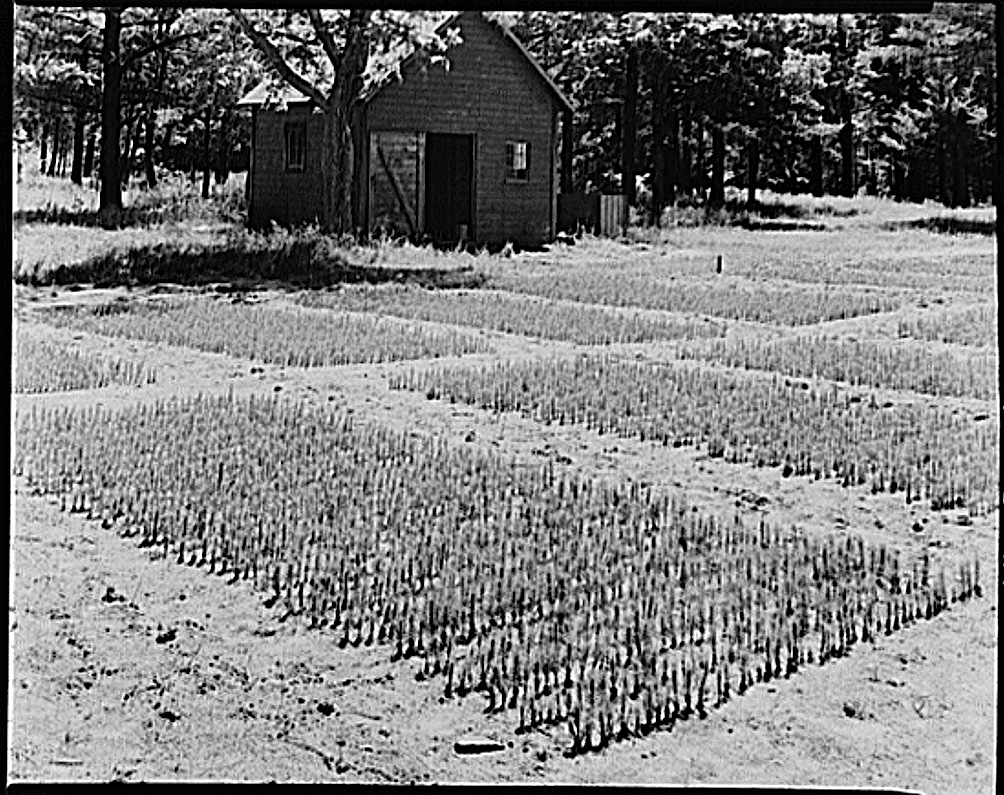
“Individual beds at nursery. Black River Falls project, Wisconsin,” June 1937, by Russell Lee, via Library of Congress Prints and Photographs Division.

In the early summer of 1937, Lee took a number of photos around the community of Black River Falls. Most were related to a land use project of the U.S. Resettlement Administration, for which he was a photographer.

The principal employment in Black River Falls, since its founding in 1839, was logging and sawmills. However, many of the people Lee photographed there were farming cut-over areas.

Today, the town is probably best known as the subject of the 1973 book (and 1999 filmWisconsin Death Trip. 

Victory rabbits

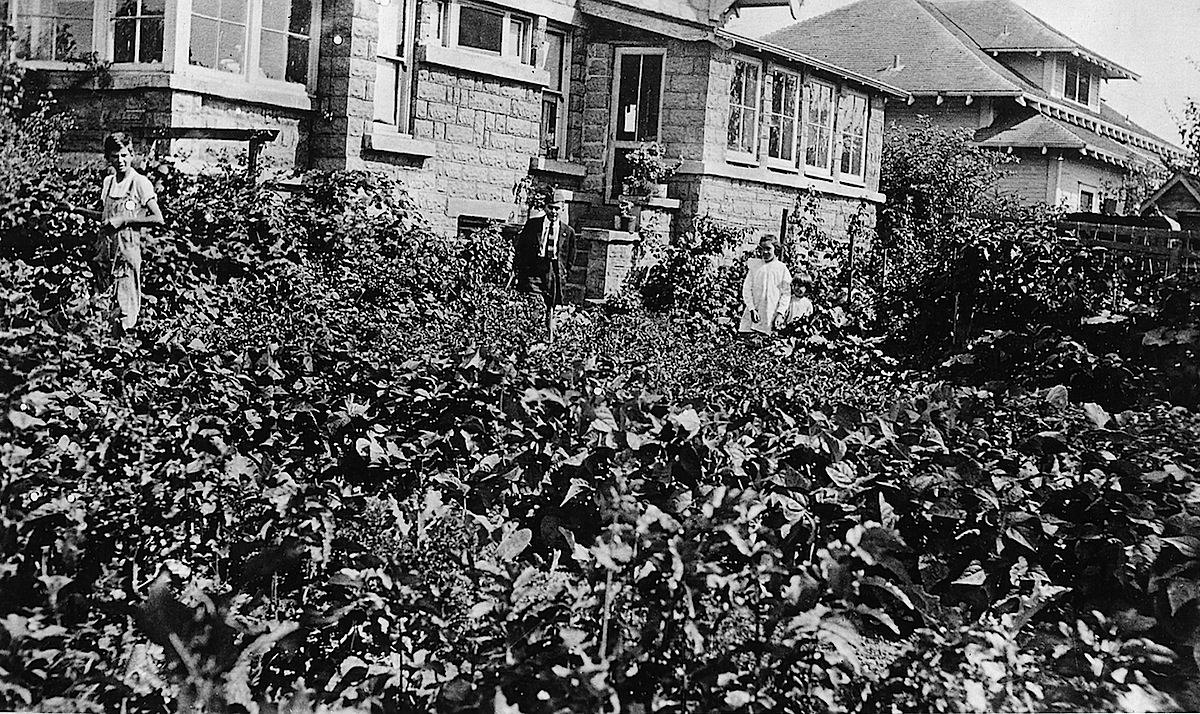
“The home garden of Clifford[,] Bernard[,] and Elizabeth Bridges who use the fertilizer from the Rabbitry for their gardens.” Photo taken in Oregon, ca. between 1915 and 1918, via 4-H Photograph Collection, OSU Special Collections & Archives Commons on flickr.

The children are members of a local 4-H club, making a WWI victory garden. I think this is the Portland home (and children) of W.R. and Elizabeth Bridges. W.R. was a proofreader for The Oregonian.

Click on “via” above for a larger view of the image.

Upper Hutt, Wellington

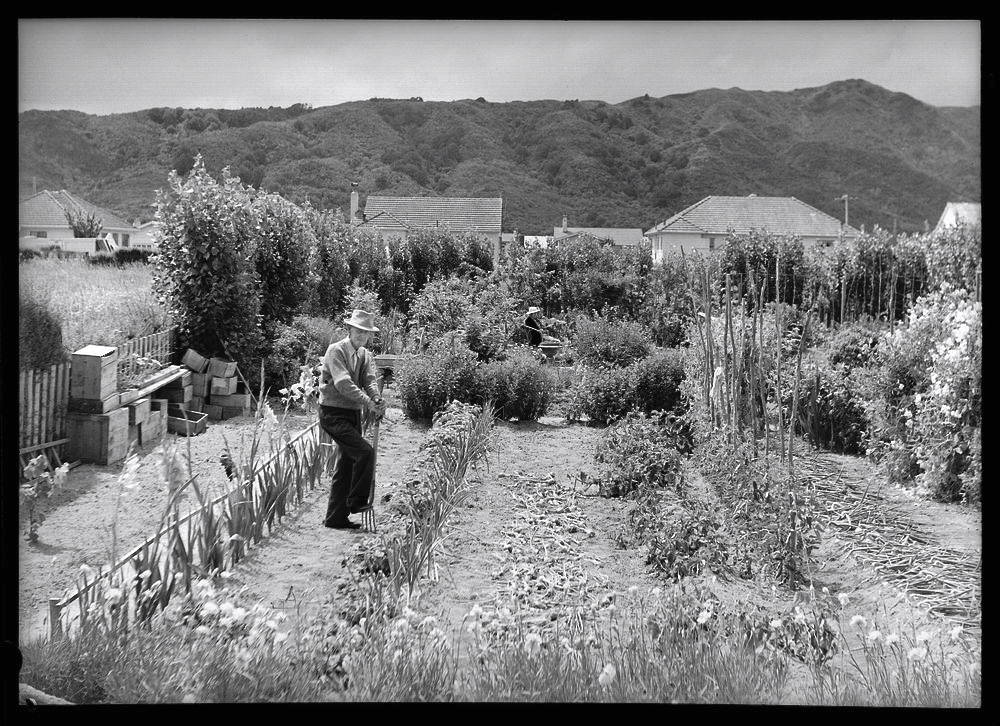
“Mrs B Captain, Ekins and garden, Savage Crescent,” Upper Hutt, New Zealand, ca. early to mid 20th c., by J.W. Chapman-Taylor, via Museum of New Zealand/Te Papa Tongarewa.

I wonder if the wooden crates stacked up on the left indicate that this was a market garden, which were common in the Hutt Valley until the 1940s.

You can click on the picture to enlarge it (or click here and then on the image to zoom in even more).

Chapman-Taylor was an important New Zealand domestic architect, builder, furniture designer, and photographer who lived in the Valley in the mid 1930s.

Morgantown, W.Va.

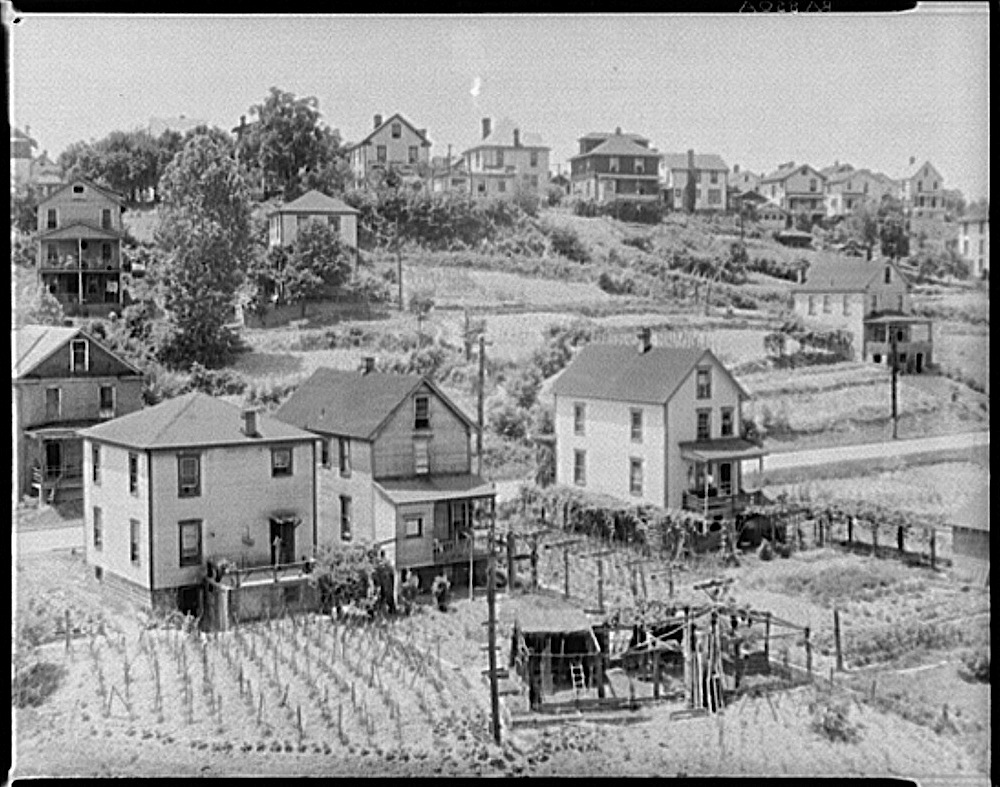
“Typical houses of Morgantown, West Virginia,” June 1935, by Walker Evans, via Library of Congress Prints and Photographs Division.

Evans may have taken the photo from an electric post like this one.

Fairfield, Alabama

“Garden – lot 9, block 11. . . .  Garden of $20 a month home,” Fairfield, Alabama, 1917,
via Frank and Frances Carpenter Collection, Library of Congress Prints and Photographs Division.

Fairfield was a planned community built in 1910 for the workers of U.S. Steel’s plants in the Birmingham area. Its (mostly white) residents could either rent or purchase modern houses with indoor plumbing and central heating. There were also parks and playgrounds, churches, a public library, and 30,000 newly planted trees and shrubs.

The photograph is one of over sixteen thousand created or collected by Frank G. Carpenter and his daughter, Frances, to illustrate his geography textbooks and popular travel books.