Our new home, as we expected, is beautiful. The garden is filled with wonderful plants and mature flowering shrubs that are familiar to me from previous posts in Africa and Latin America, although I have forgotten a lot of their names. Some time on the internet should help with that.
The beautiful shrubs are filled with a variety of birds. Unfortunately, some of them seem to live in the time zone we left behind. We have the birds that sing at 2 a.m., those that sing at 3 a.m., 4 a.m. and so forth. Ending with the ones who tap insistently on our bedroom window for several minutes every morning at 6. Continue reading “First look: Kigali, Rwanda”→
If you’ve been reading this blog awhile, you’ve probably realized that I love anything old and contorted. (No, I’m not going to make you look at any more 200-year-old boxwoods.)
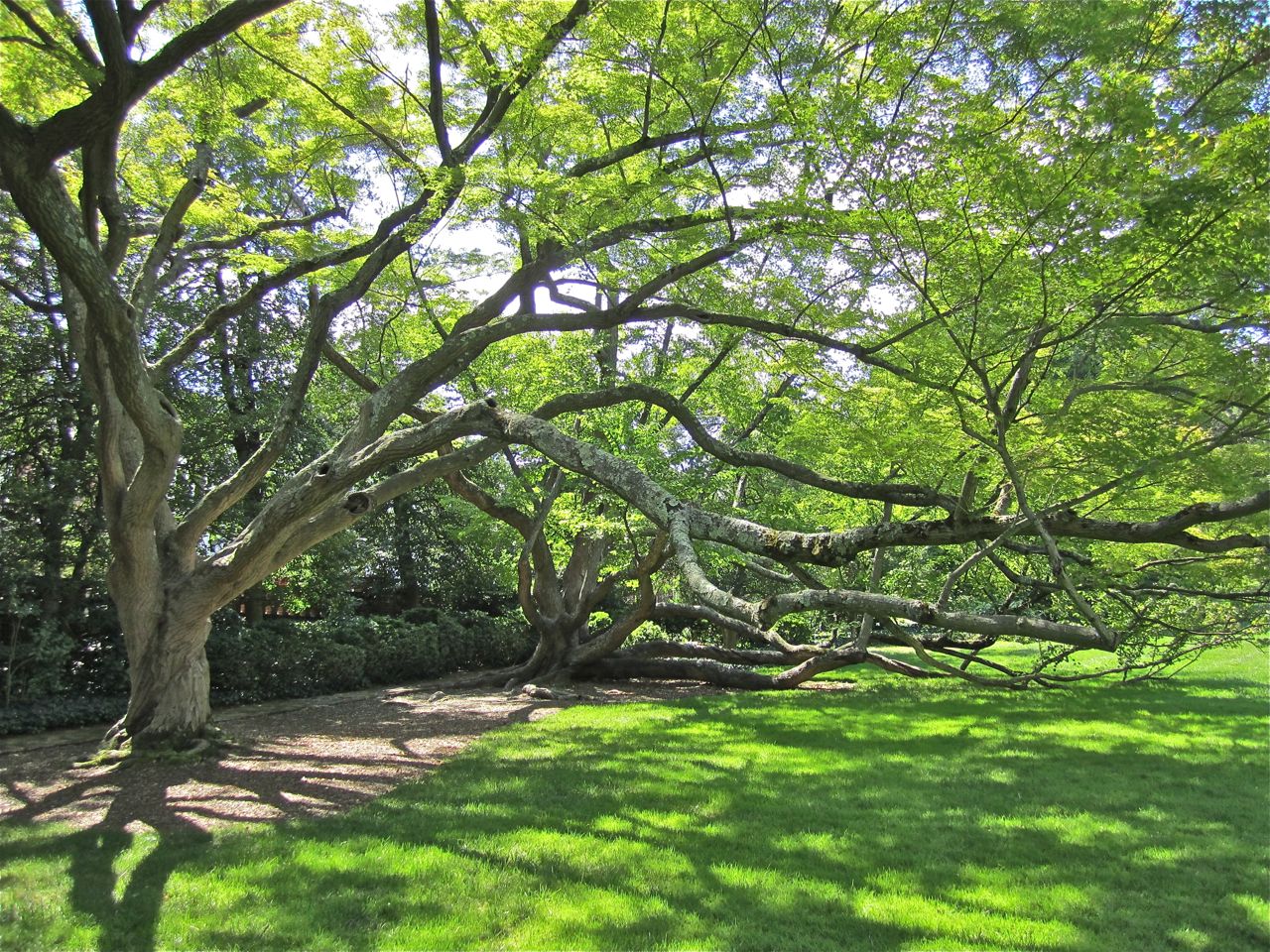
So, of course, I wanted to share my photos of two lovely old Katsura trees (Cercidiphyllum japonicum) at Dumbarton Oaks at the edge of the East Lawn.
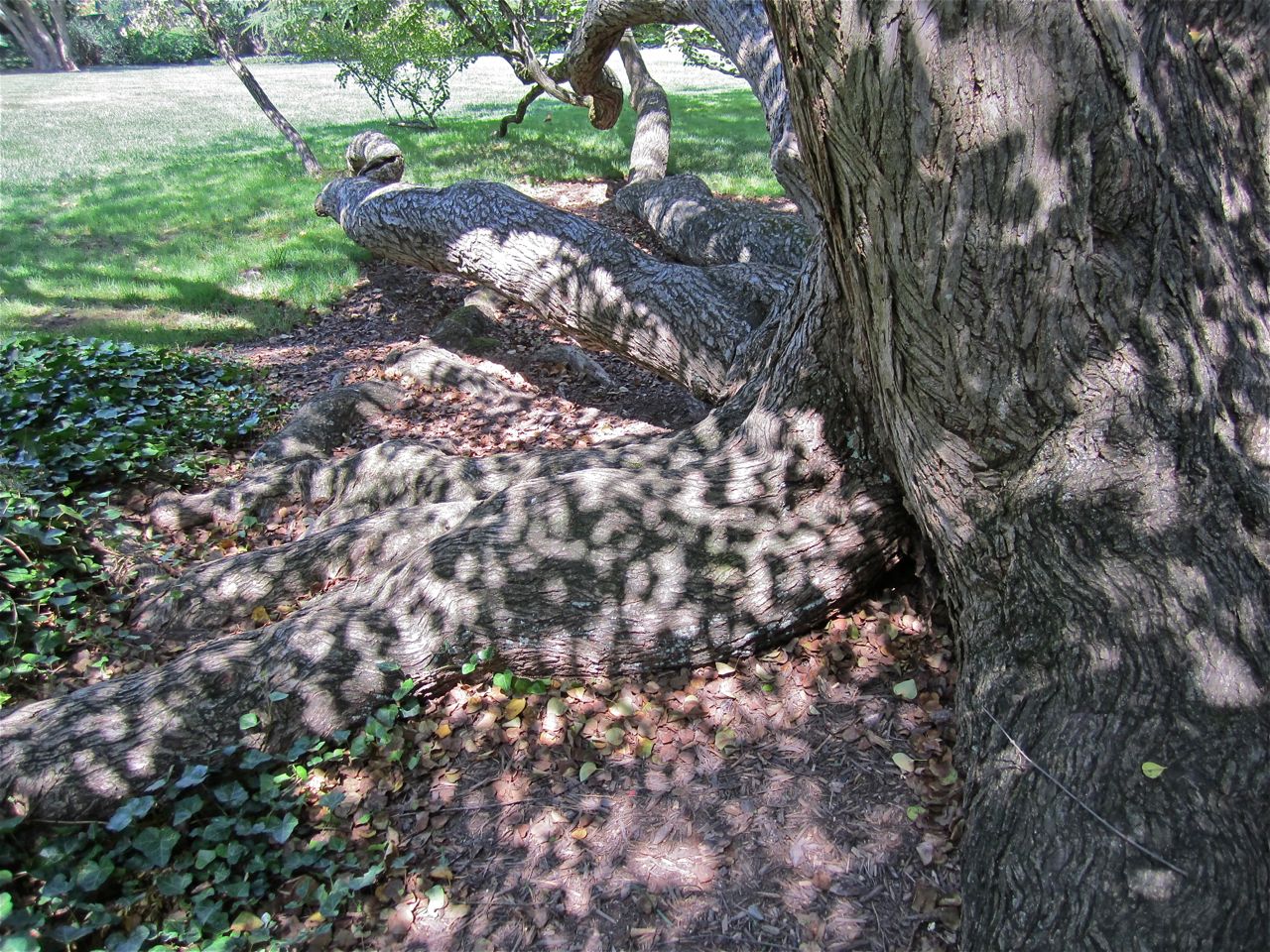
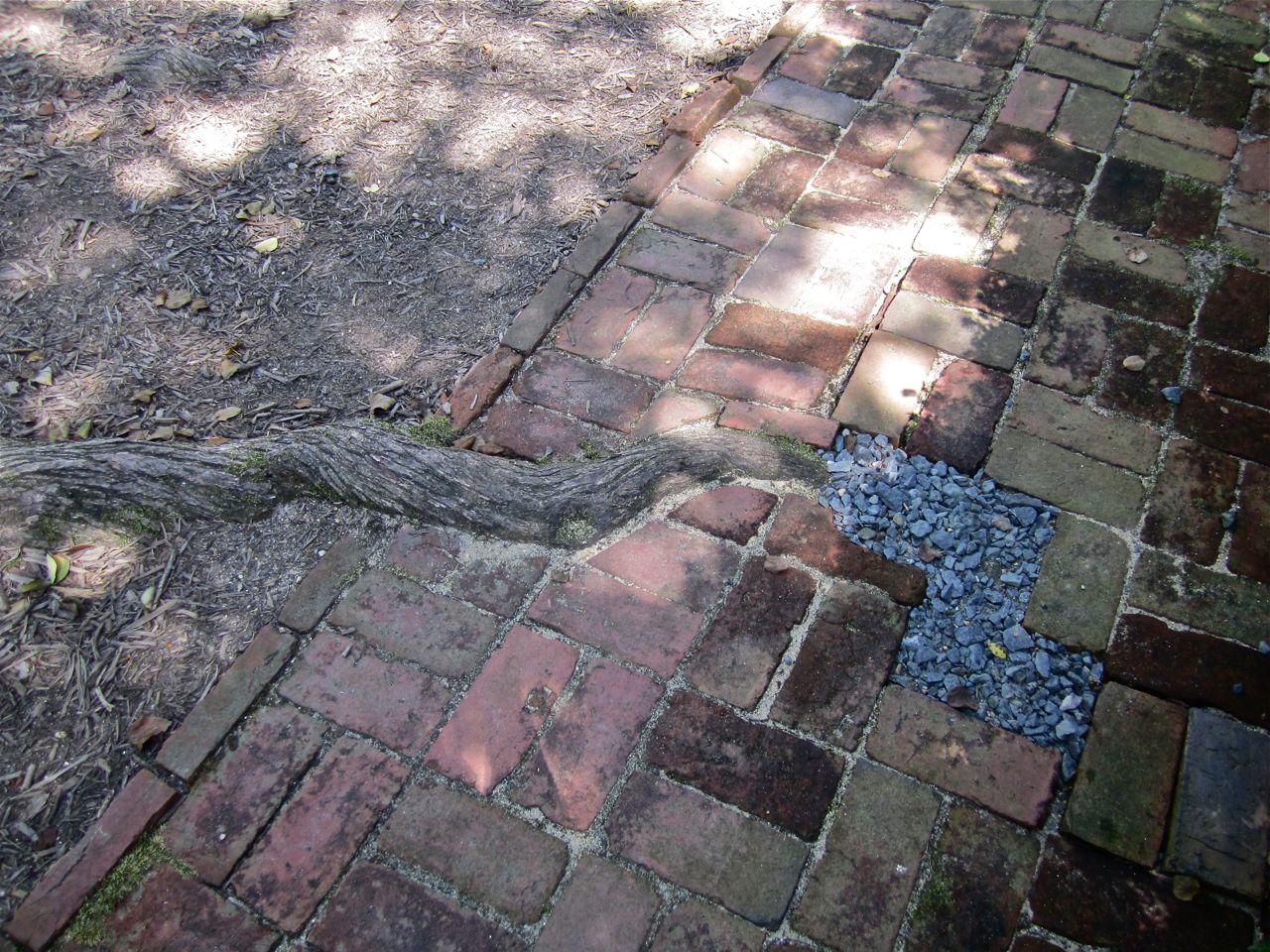
The branches of this pair of trees reach out to the lawn. Please click the photo to enlarge it and see the wonderful volume of space they enclose. Katsura trees can become multi-stemmed with age, as this one certainly has.It touches the lawn in places.Katsura trees are shallow-rooted. This one's roots have stretched out . . .. . . and broken through the walkway, which has been beautifully repaired.The long branches frame the view across the lawn. In the fall, the leaves turn yellow and apricot and are said to smell like cotton candy.
Just for fun, here’s an entertaining little video (well, I thought so) of the staff of the New York Botanical Garden moving a mature weeping Katsura tree last fall. It first appeared on the NYBG’s blog, Plant Talk.
Photo from DACOR, Inc. DACOR is an acronym for Diplomatic and Consular Officers, Retired.
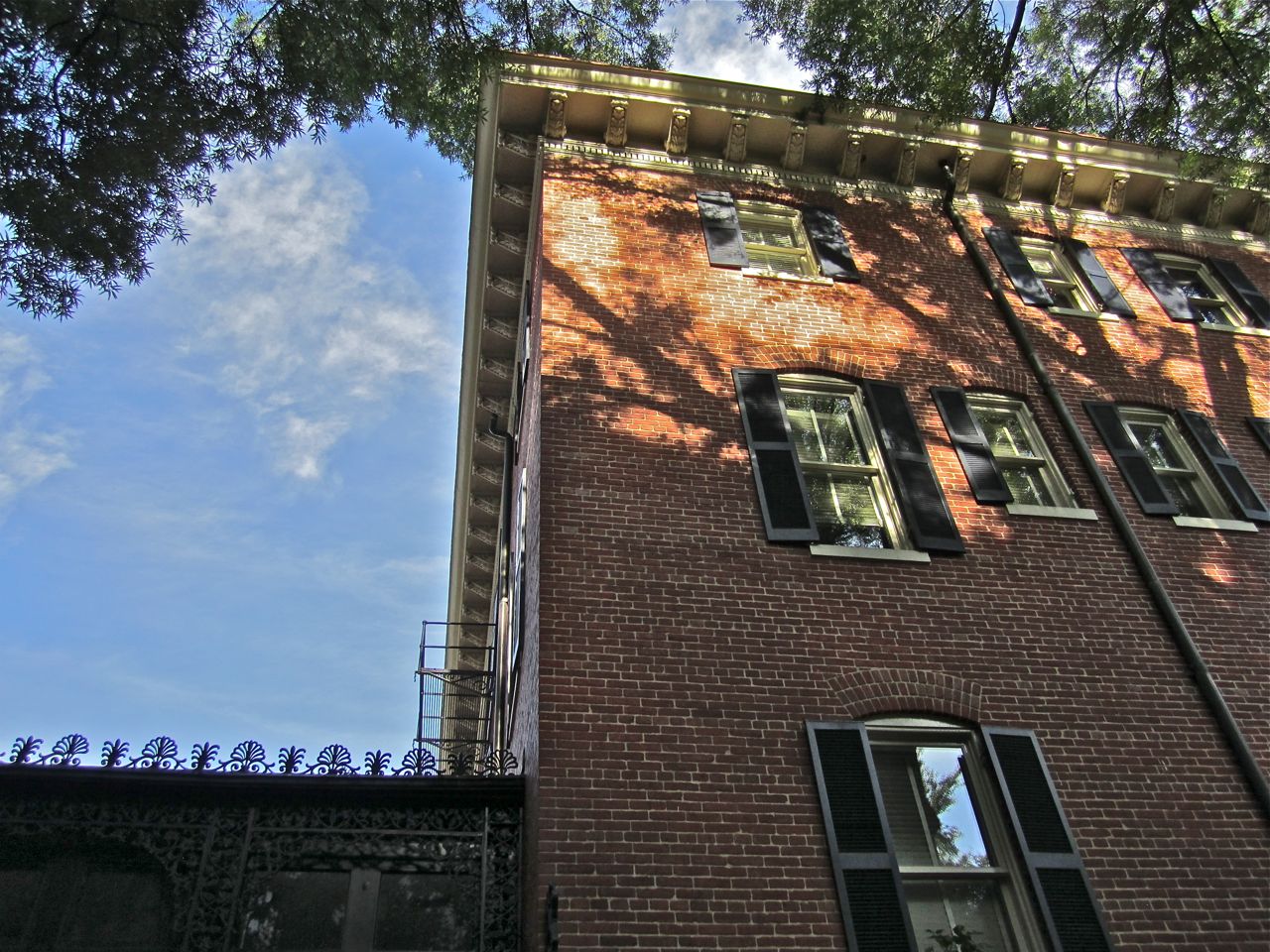
On the other side of 18th and F Streets, N.W., is the DACOR Bacon House (also known as the Ringgold-Carroll House), built in 1824/5.
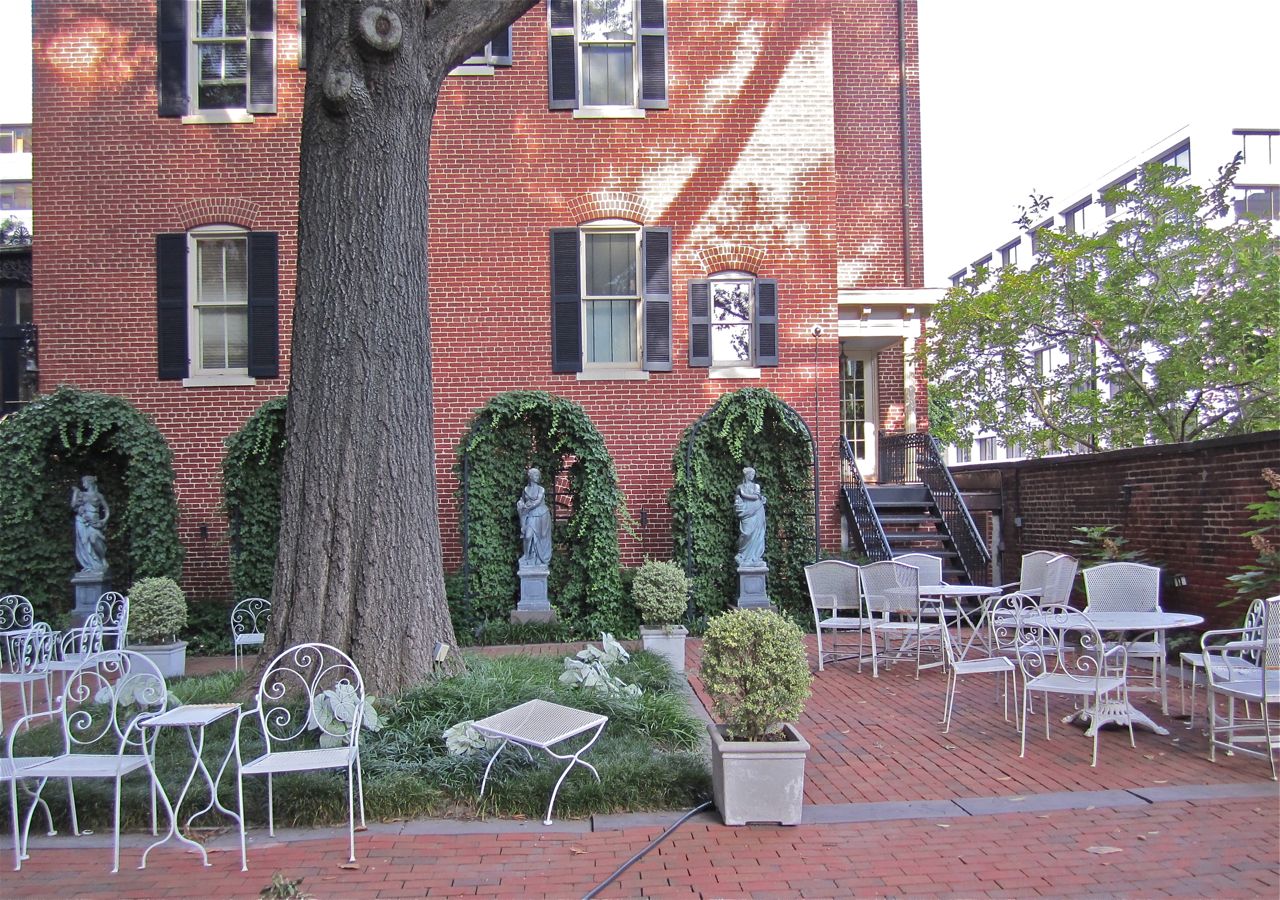
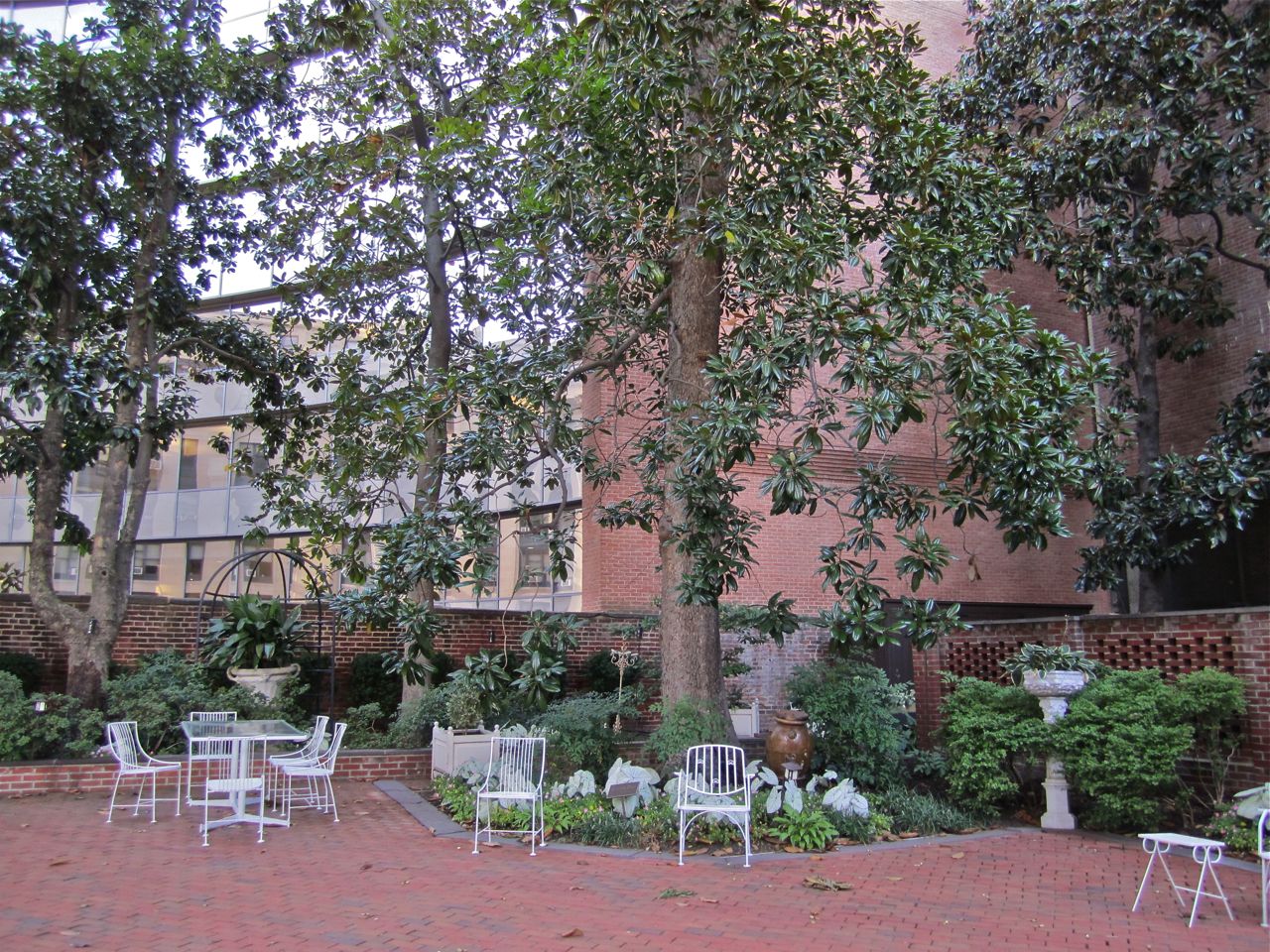
On Wednesday evening, I attended a reception there and was able to spend a little time in its nice walled garden — a serene, old-fashioned place in the midst of tall modern office buildings.
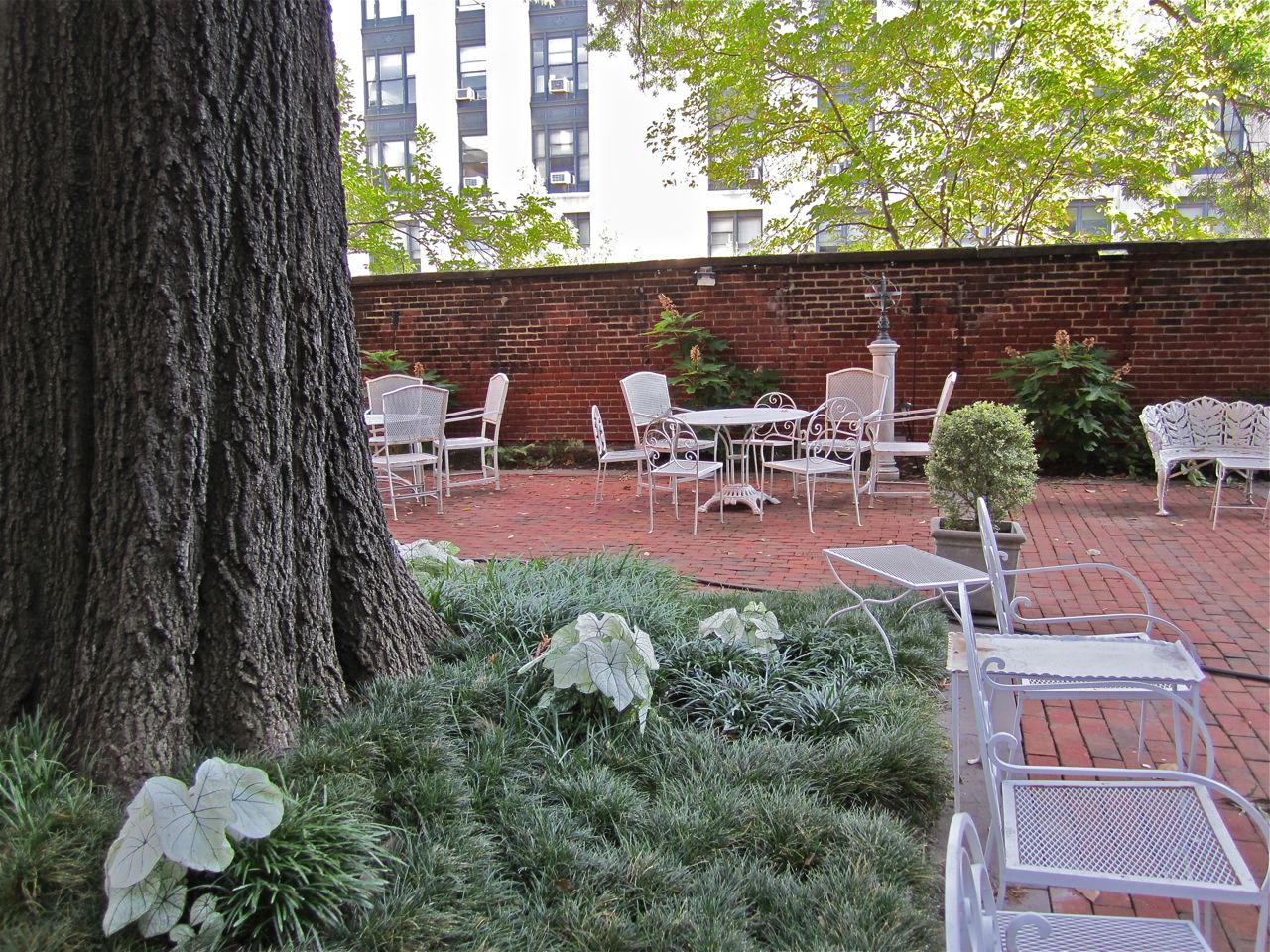
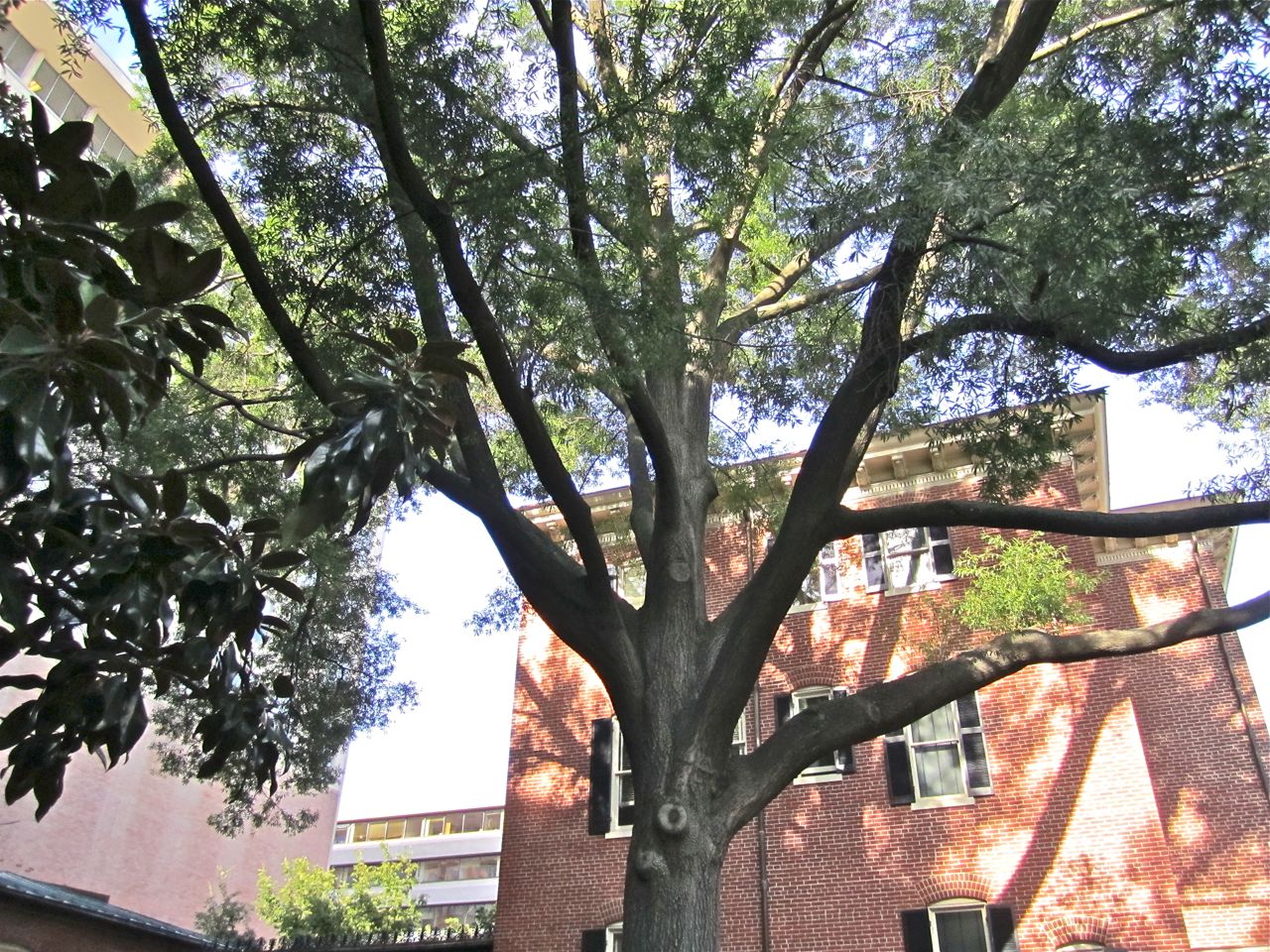
DACOR-Bacon House garden walled off from busy F Street. Unfortunately, it was too hot that evening for the event to be held outside, so the chairs are a little scattered.DACOR-Bacon House was built in 1824/5.Under a willow oak tree, a planting of coleus, lirope, and mondo grass.The garden is now surrounded by modern buildings.
From 1831 to 1833, it was a boarding house whose tenants included Chief Justice John Marshall and several other Supreme Court Justices. Virginia Murray Bacon and her husband, a U.S. Congressman, bought the house in 1925. She lived there until her death at the age of 89, when she bequeathed it to the Foundation.
I was told that Mrs. Bacon spotted the garden’s huge willow oak in the nearby town of Silver Spring about 65 years ago. She was so taken with it that she bought it and had it dug up and trucked to 18th and F Streets, then hoisted over the garden wall by crane.
The giant willow oak in the center of the garden.
DACOR Bacon House also houses the Ringgold-Marshall Museum and can be toured Mondays, Wednesdays, and Thursdays, 2:30 – 4:30 p.m. It is listed in the National Register of Historic Places.
The DACOR Bacon House Foundation works to develop mutual international understanding and strengthen ties between the people of the United States and other nations. DACOR, Inc., is an association of retired officers of the U.S. Foreign Service and of other foreign affairs agencies and their spouses.
DACOR members (click the link above) may rent the house and garden for weddings, and it would be a really lovely venue. (In the 1860s, President and Mrs. Lincoln attended a wedding there.)