The Sunday porch: conversation

1941 porch in Mobile, Alabama, by C.W. Cushman“Porch of old house at Monroe St., Mobile[, Alabama],” taken November 4, 1941, by Charles W. Cushman.*

The atmosphere of this porch is still and quiet, but I think there’s something urgent about the conversation.  The expression of the young woman in pink is serious; the woman across from her has stopped on her way (in or to her own house?) from the grocery store.  They all listen intently to the older woman in light blue.

Cushman was an amateur photographer who began documenting his travels in 1938, using expensive, (then) little-used Kodachrome film.  He continued taking color pictures for 32 years, ultimately bequeathing 14,500 slides to his alma mater, Indiana University.

NPR has an interesting audio/slide show on Cushman and his work here, and here is a series of color photos of New York City that he took in the early 1940s.


*Used with the permission of  the Charles W. Cushman Photograph Collection, Indiana University Archives.  I originally posted this image in November 2012.
The Sunday porch: Oxford, Ohio

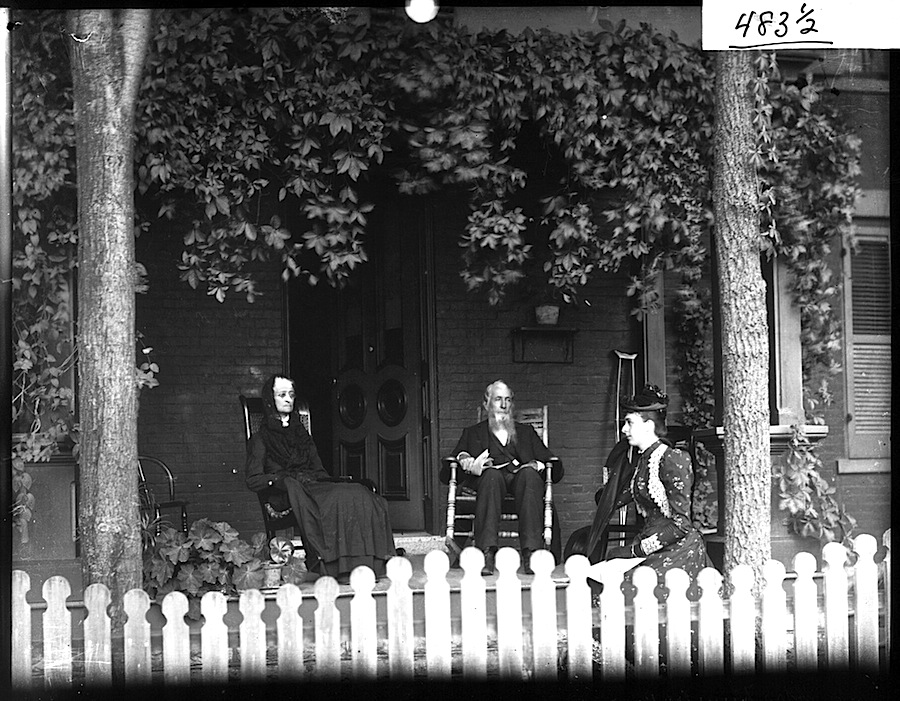
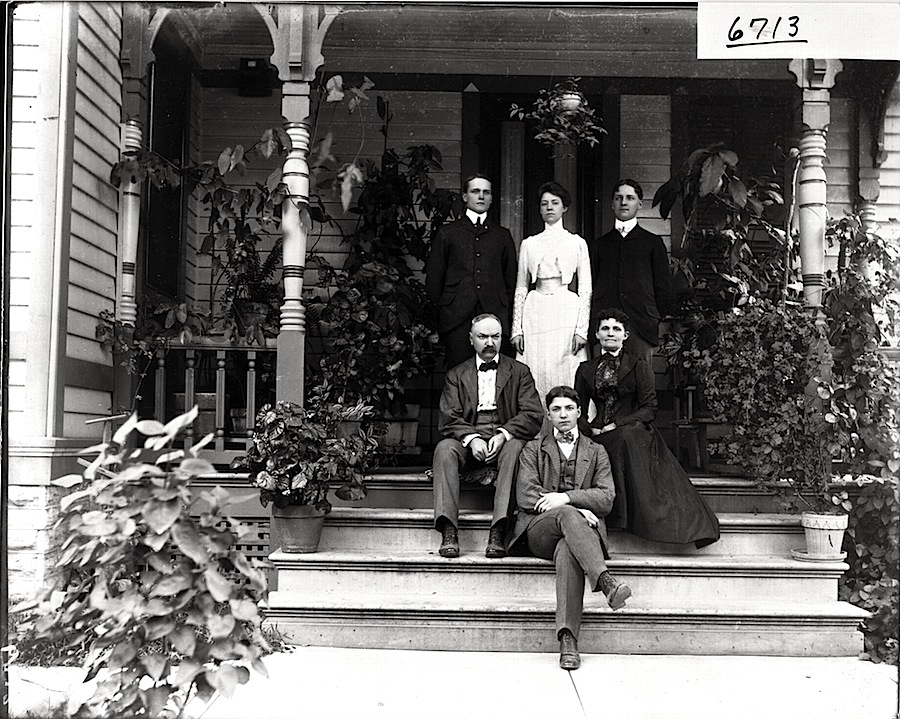
The Flower family, probably in Ohio, ca. 1905, via Miami University Libraries Commons on flickr“Flower family on porch, ca. 1905,” by Frank R. Snyder, via Miami University Libraries Commons on flickr.

Impressive porch foliage . . . and in the photo below, by the same photographer.

Mrs. C.E. Kumler family on front porch, by Frank Snyder, via Miami University Libraries Commons on flickr“Mrs. C. E. Kumler family on front porch, not dated,” also by Frank R. Snyder, via Miami University Libraries Commons on flickr.

Snyder was a successful photographer working in Oxford, Ohio, in the early 20th century.  After his death in 1958, his family donated his archive of 4,000 negatives to Miami University.

Garden Bloggers’ Foliage Follow Up is the 16th of every month. Check out more beautiful leaves at Digging.

Vintage landscape: tree delivery

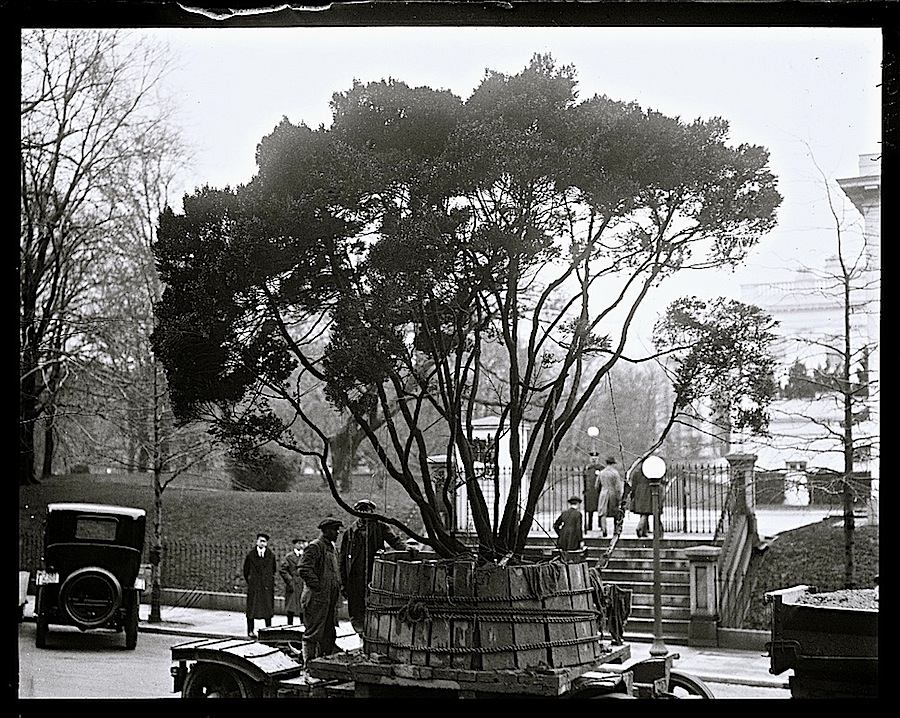
White House tree delivered, Mar. 1922, via Library of Congress. . . to the White House, Washington, D.C., March 1922, by Harris & Ewing, via Library of Congress Prints and Photographs Division.

Thomas Jefferson, the second President to occupy the White House, directed that hundreds of small trees be planted in groves around the grounds (none of them exist today).

John Quincy Adams was the first to add ornamental trees. Andrew Jackson brought in the first sycamores, elms, and maples.

There’s more about the history of the White House gardens and grounds here.

What kind of small tree/large shrub do you think this was?

I never before knew the full value of trees. My house is entirely embossomed in high plane-trees, with good grass below; and under them I breakfast, dine, write, read, and receive my company. What would I not give that the trees planted nearest round the house at Monticello were full grown.

Thomas Jefferson to his daughter, Martha, (from Philadelphia), 1793

The Sunday porch: Santa Barbara

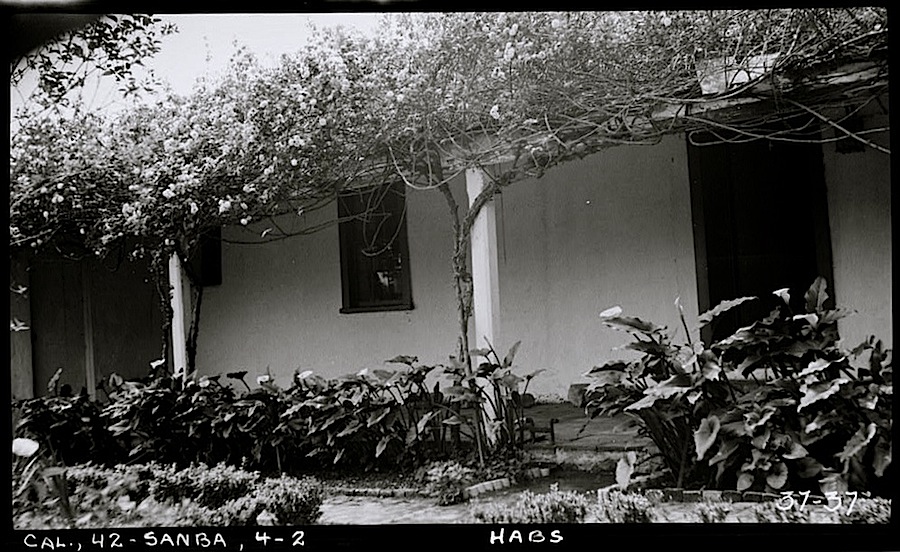
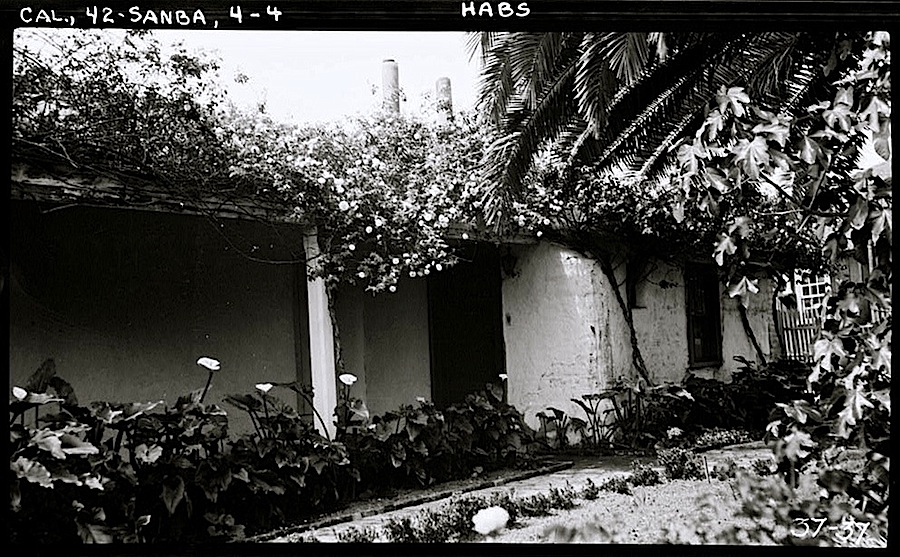
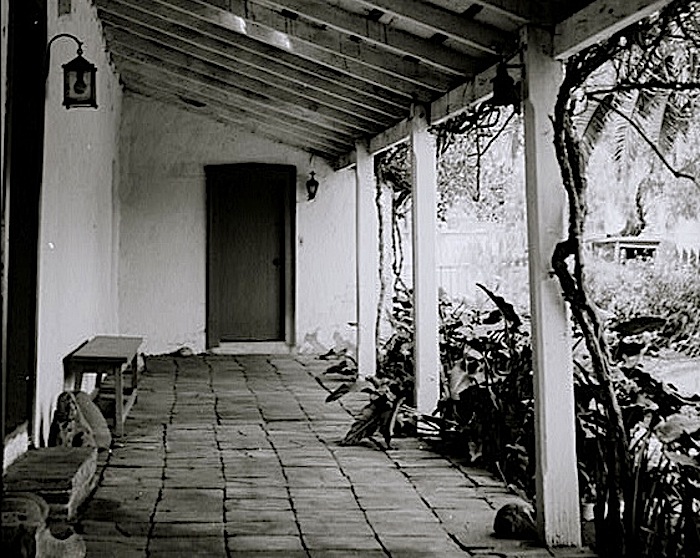
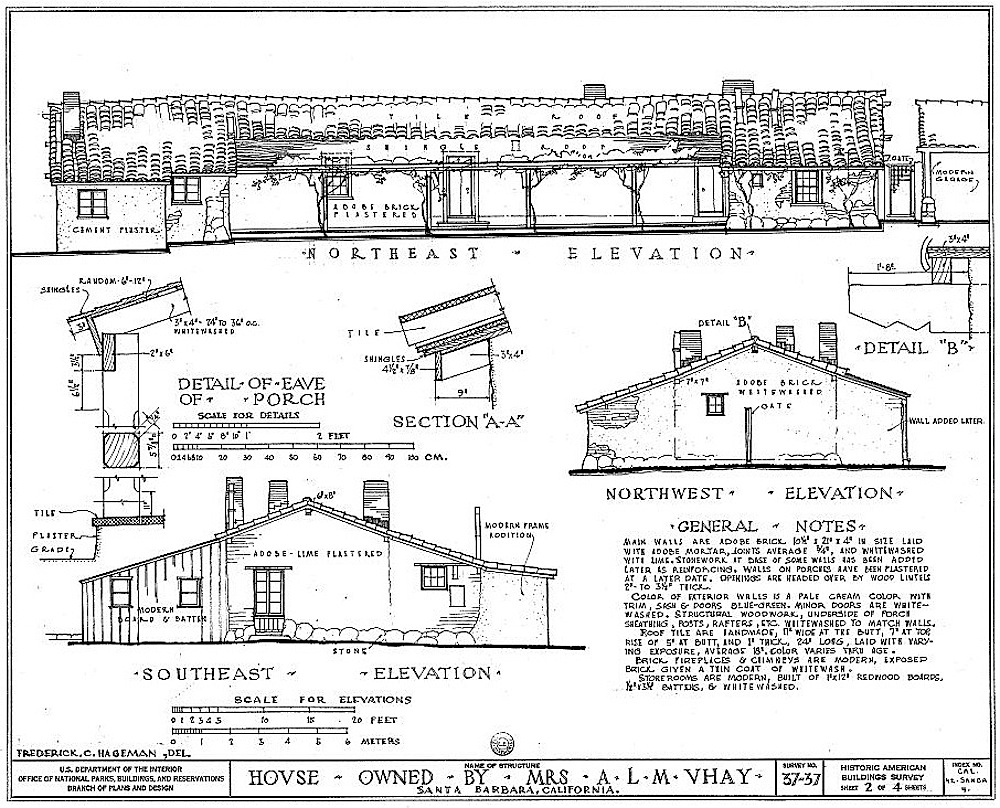
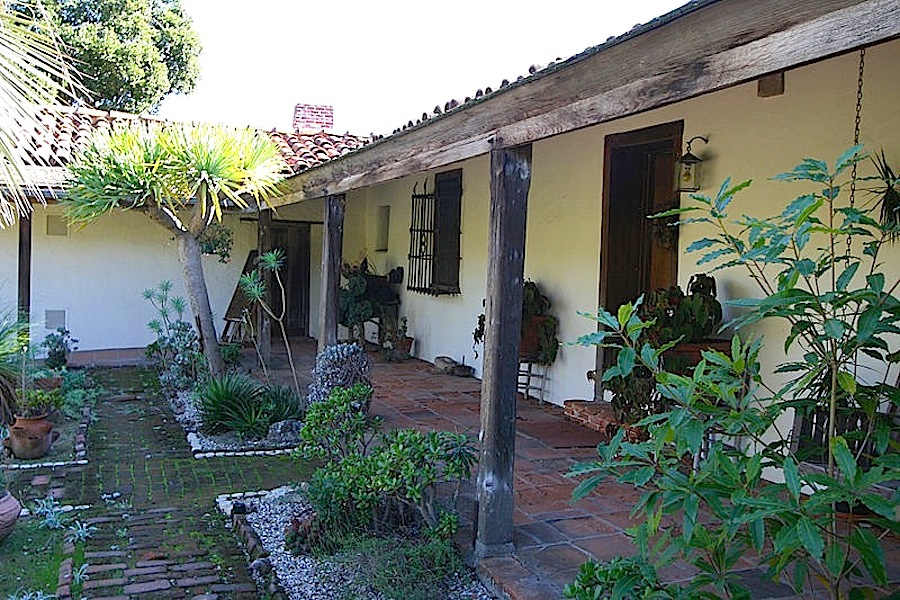
Vhay house, Santa Barbara CA, 1934, HABS, Library of CongressThe north porch of the Vhay House, 835 Leguna Street, Santa Barbara, California, April 1934, by C. A. Fletcher for an Historic American Buildings Survey (HABS), via Library of Congress Prints and Photographs Division.*

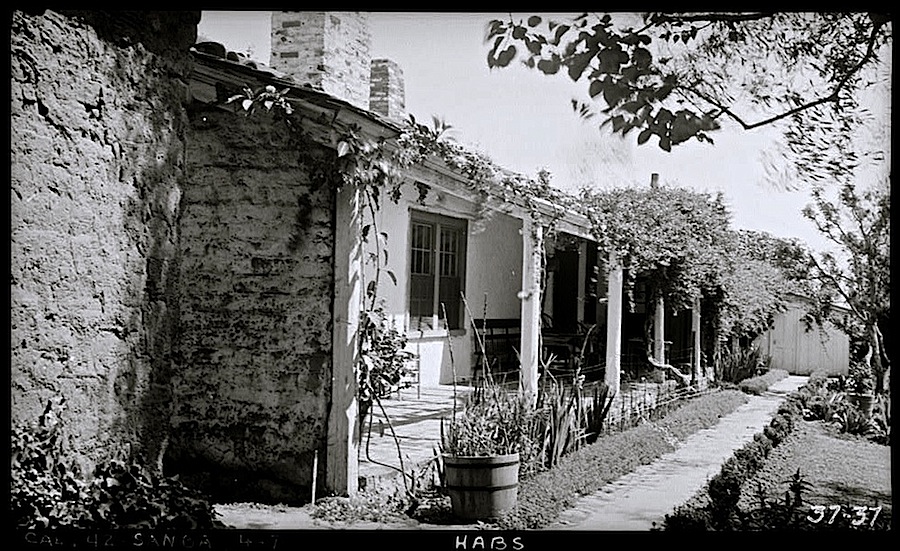
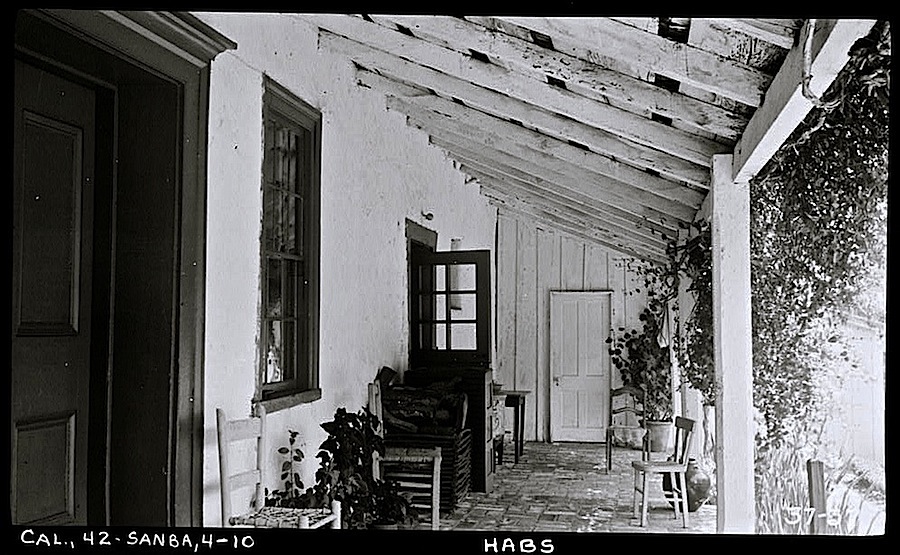
Vhay house, Santa Barbara CA, 1934, HABS, Library of CongressThe Rafael Gonzalez House, which was owned by Louise and David Vhay at the time of these photos, was built in 1825.  It is a typical adobe townhouse of the Mexican California period, with walls over 2′ (.61 m.) thick.

Gonzalez was a soldier and landowner when he built the house for his Italian bride. He became mayor or alcalde of Santa Barbara in 1829.  His daughter, Salome, inherited the home in 1866 and lived there until 1923.

The Vhays restored and enlarged the house.  It is now occupied by Randall House Rare Books.

Vhay house, Santa Barbara CA, 1934, HABS, Library of CongressAbove: bougainvillea above and calla lilies below, along the north porch, by C. A. Fletcher.

Vhay HABS, 1934, Library of CongressAbove: north porch, by C. A. Fletcher (cropped by me).

Vhay house, Santa Barbara CA, 1934, HABS, Library of CongressAbove: south porch from the southwest. Photographed April 1934, by H. F. Withey.

Vhay house, Santa Barbara CA, 1934, HABS, Library of CongressAbove: detail of south porch, east end, by H. F. Withey.

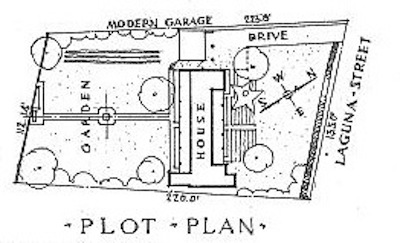
Vhay house, Santa Barbara CA, 1934, HABS, Library of CongressAbove: 1934 drawing by Frederick C. Hageman (also the small plan above).

2010 photo by Dilly Lynn, via Wikimedia CommonsAbove:  2010 photo of the Rafael Gonzalez House, now a rare book store, by Dilly Lynn, via Wikimedia Commons.  There’s also a nice painting of the house in 1953 here.

The house was designated a National Historic Landmark in 1970.

.    .    .    — for a sec
he even sees the calla lily’s furl
in the gesture of voilà!

Farnoosh Fathi, from “Sympathy


*All photos and drawings here, except the last image, via Vhay House HABS, Library of Congress.

Vintage landscape: February flowers

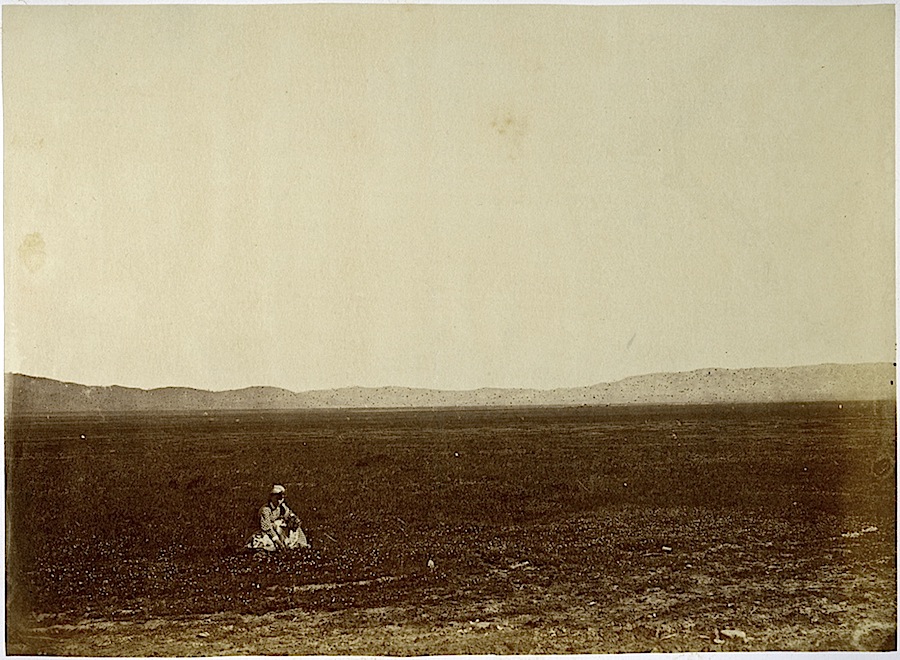
Tulare Valley, Calf. in February, via SMU, flickrTulare Valley, California; gathering flowers in February,” 1868, by Alexander Gardner, via SMU Central University Libraries Commons on flickr.

You can click on the image and enlarge it.

Best and brightest, come away!
Fairer far than this fair Day,
Which, like thee to those in sorrow,
Comes to bid a sweet good-morrow
The Brightest hour of unborn Spring,
Through the winter wandering,
Found, it seems, the halcyon Morn
To hoar February born.
Bending from Heaven, in azure mirth,
It kissed the forehead of the Earth,
And smiled upon the silent sea,
And bade the frozen streams be free,
And waked to music all their fountains,
And breathed upon the frozen mountains,
And like a prophetess of May
Strewed flowers upon the barren way,
Making the wintry world appear
Like one on whom thou smilest, dear.

— Percy Bysshe Shelley, from “To Jane: The Invitation

(Posts with photos from the here and now are coming shortly.  We had house guests and were traveling last week.)