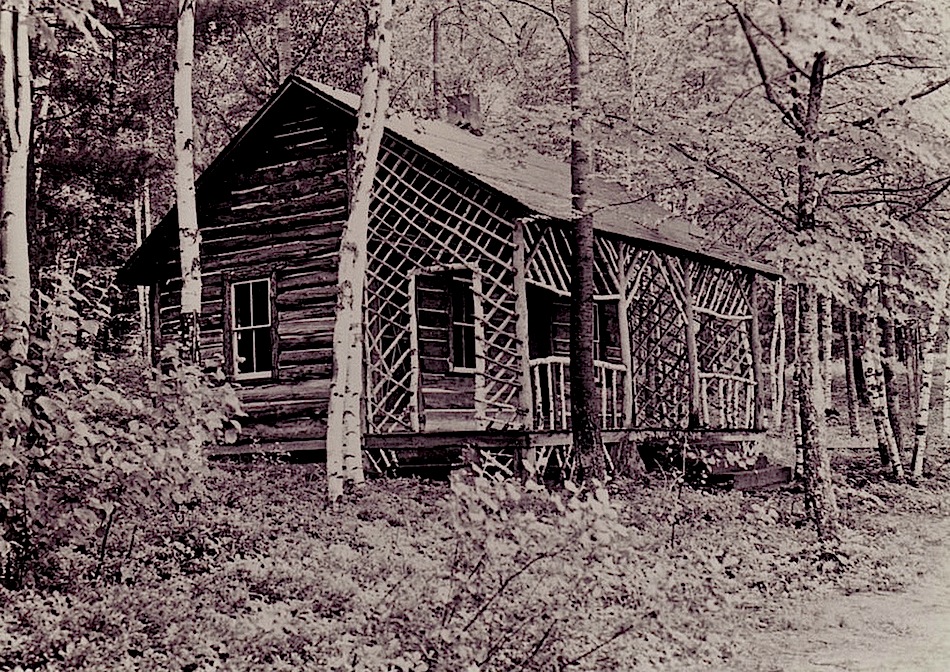
The Sunday porch: Bon Echo

Bon Echo cabin, Cloyne & District Historical SocietyRustic birch lattice on the porch of the North Cottage of the Bon Echo Inn, near Cloyne, Ontario, 1935, via Cloyne and District Historical Society Commons on flickr (both photos).

The Bon Echo Inn was established in 1889 on Mazinaw Lake.  It attracted wealthy guests who were also tea-totalers, as the religious owners did not serve alcohol.  Later, it was purchased by a founder of the Canada Suffrage Association, who made it into a retreat for artists and writers, notably James Thurber. In 1936, the Inn and many of its outbuildings were destroyed by fire and never rebuilt.  The surrounding area is now Bon Echo Provincial Park.
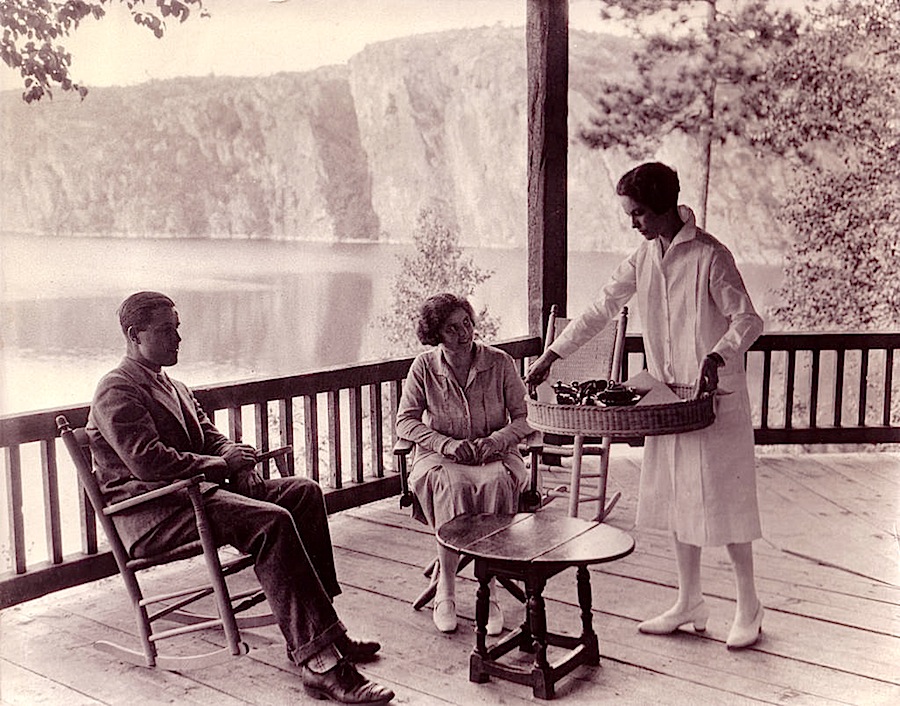
Bon Echo Inn, Cloyne & District Historical SocietyTea service on the verandah of the Inn, between 1920 and 1936.
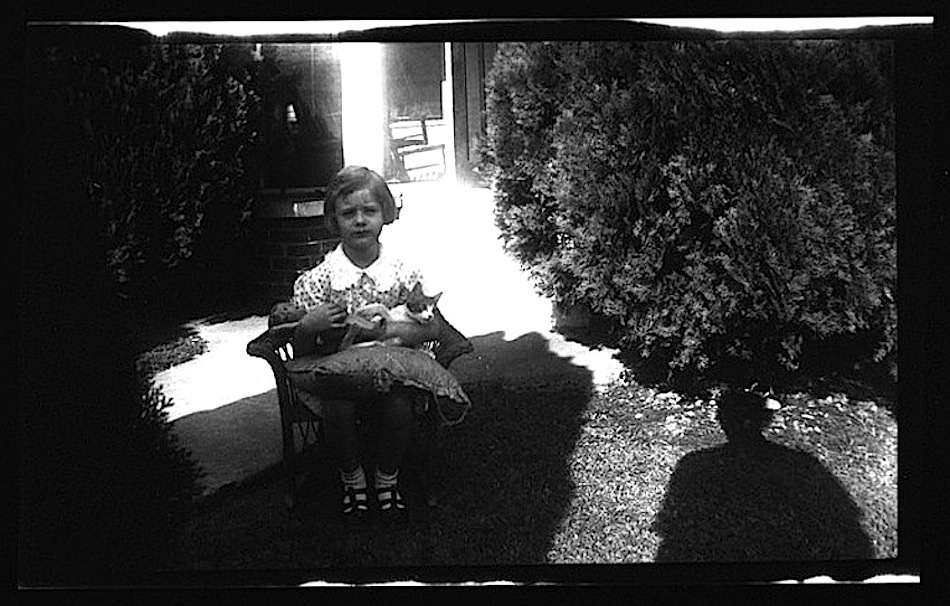
Life in gardens: group portrait

Girl with doll and cats, Mississippi Dept of Archives & History

Unidentified girl holding doll and cat, probably taken in the Jackson area, Mississippi, date and photographer unknown, via Daniel, Al Fred, Photograph Collection, Mississippi Department of Archives and History Commons on flickr.

Life in gardens: natural light

Marilyn and Elizabeth, Museum of Photographic Arts

Elizabeth and Marilyn Watson, probably in the Berkeley, California, area, 1921, by Dorothea Lange, via Museum of Photographic Arts Commons on flickr (all photos here).

Marilyn and Elizabeth 2, Museum of Photographic ArtsAbove, Marilyn Watson; in both photos, the sisters seem to be under a grape arbor. Below, they are with their mother, May V. Landis Watson, still outdoors, I believe.

Watson family, D. Lange, Museum of Photographic Arts

In 1921, Lange was 26 years old and running her own portrait studio in Berkeley. She had many well-to-do clients, as the Watsons appear to be. Ten years later, she would begin the work that made her famous: capturing the faces of the Great Depression and of the WWII internment of Japanese-Americans.

There’s a little clip from a PBS documentary on Lange here. It shows a number of her early photographs.

Life in gardens: wildflowers

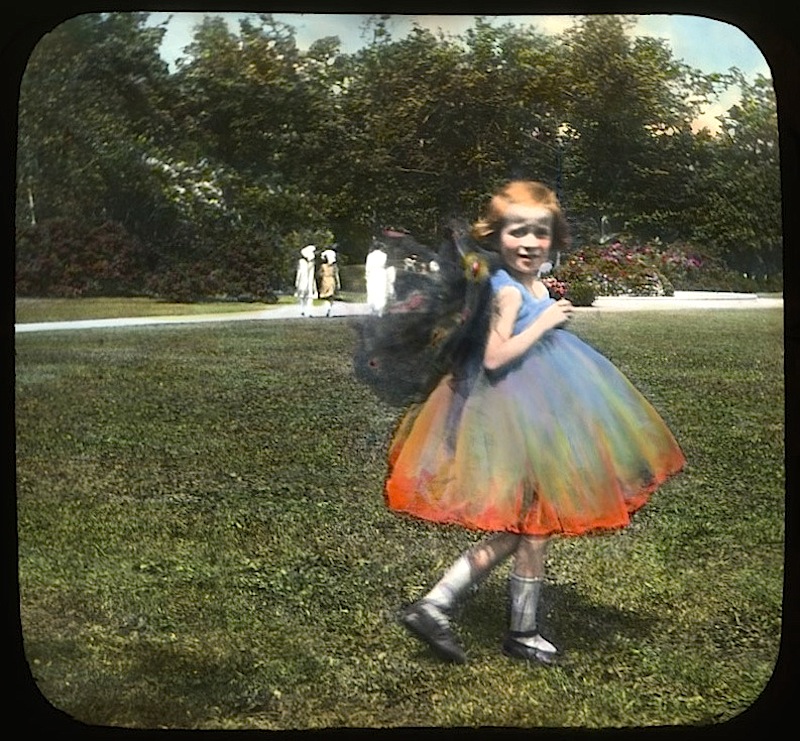
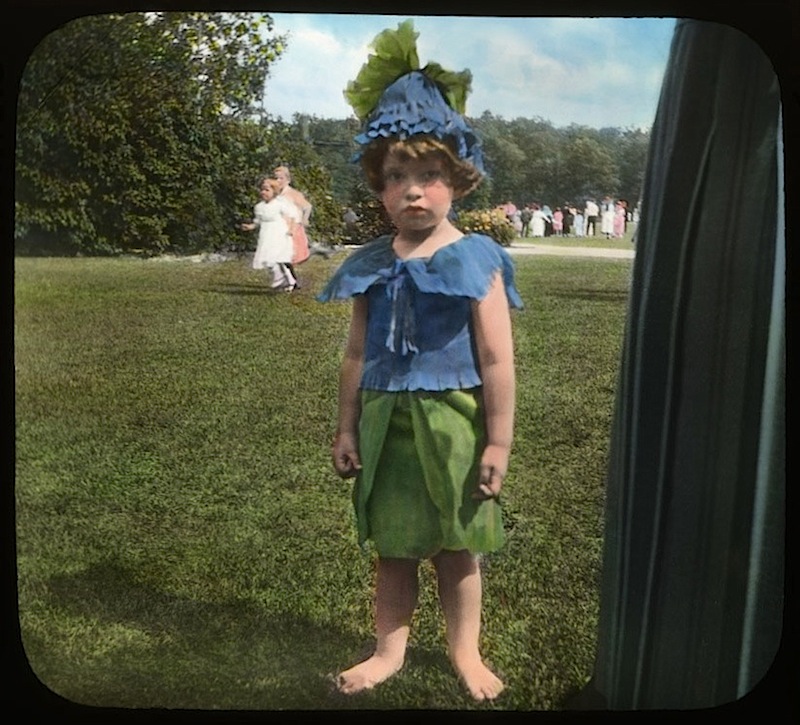
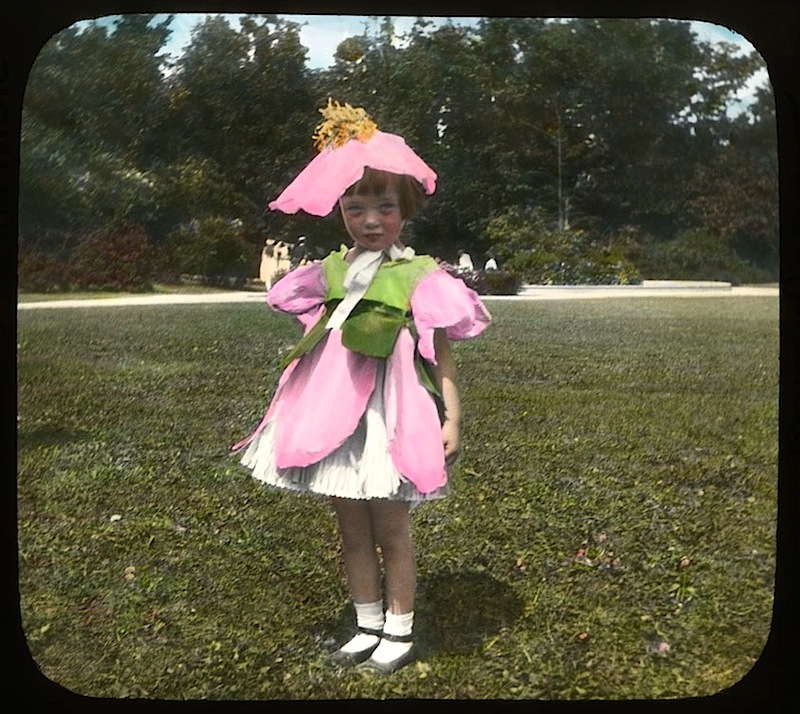
5 Child:ren in wildflower costumes, Chicago, ca. 1920, The Field Museum LibraryChildren costumed as flowers or insects for an event of the Wild Flower Preservation Society, Illinois Chapter, probably in a Chicago park, ca. 1920, hand-colored glass lantern slides by an unknown photographer, via The Field Museum Library Commons on flickr (all images here).

6 Child:ren in wildflower costumes, Chicago, ca. 1920, The Field Museum Library

The Wild Flower Preservation Society of America was founded in 1902 with money given to the New York Botanical Garden by Olivia E. and Caroline Phelps Stokes.  The funds were to be used for the protection of native plants.

1 Child:ren in wildflower costumes, Chicago, ca. 1920, The Field Museum Library

The Society dissolved in 1933, but much of its work was taken up by the Garden Club of America and by another Wild Flower Preservation Society, founded in 1925 in Washington, D.C. (which seems no longer to exist).

2 Child:ren in wildflower costumes, Chicago, ca. 1920, The Field Museum Library

3 Child:ren in wildflower costumes, Chicago, ca. 1920, The Field Museum Library

4 Child:ren in wildflower costumes, Chicago, ca. 1920, The Field Museum Library

7 Child:ren in wildflower costumes, Chicago, ca. 1920, The Field Museum Library

12 Child:ren in wildflower costumes, Chicago, ca. 1920, The Field Museum LibraryAbove and below: Mayapples.9 Child:ren in wildflower costumes, Chicago, ca. 1920, The Field Museum Library

10 Child:ren in wildflower costumes, Chicago, ca. 1920, The Field Museum LibraryAbove: a bee.

13 Child:ren in wildflower costumes, Chicago, ca. 1920, The Field Museum Library
Click here to see several more of the slides.

The Sunday porch: Kentucky

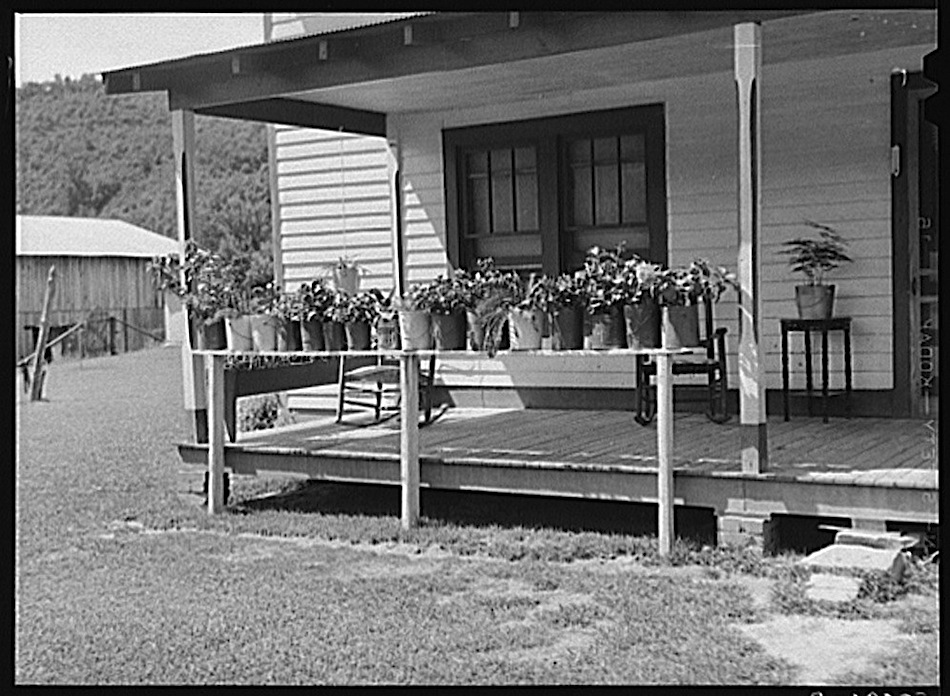
Prosperous farmer 1, Kentucky, Library of CongressFarmhouse porch with plants in painted lard buckets, Morehead, Kentucky, 1940, by Marion Post Wolcott for U.S. Farm Security Administration/Office of War Information, via Library of Congress Prints and Photographs Division.

I wish we could see the colors of the painted* containers.

Prosperous farmer 2, Kentucky, Library of Congress
Two special supports were built along the front of the porch to display the plants. (There’s a third view of the house here.)


*Here, here, and here are examples of 1930s interior paint color combinations.