The Sunday porch: Estero, Florida


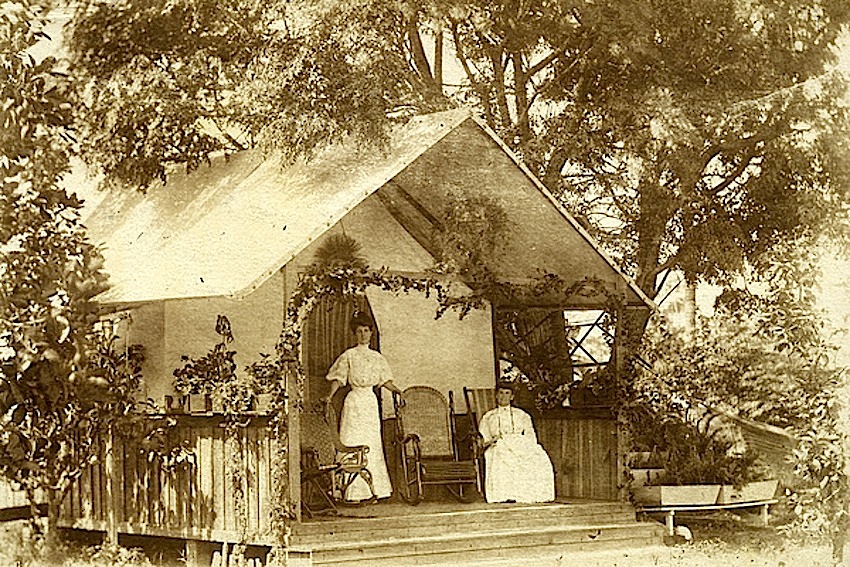
“Tent house on Koreshan property in Estero, Florida,” 1895, via Koreshan Unity Collection, Florida Memory Commons on flickr (State Library and Archives of Florida).

The Koreshan Unity was a late 19th and early 20th century utopian community whose members believed in a god that was both male and female, as well as in reincarnation, celibacy, collectivism, equality of the sexes, and cellular cosmogony.* It was founded by Cyrus Teed in upstate New York in the 1870s, and later there were also followers in Chicago and San Francisco. In 1894, the community began moving to a donated 320-acre property in Estero, Florida. During the next decade, it purchased over 5,000 additional acres and began building a settlement that “included a sawmill, cement works, bakery, machine shop, general store, art gallery, symphony, theater troupe, plant nursery and more,” according to USA Today. Its population peaked at 250 residents between 1903 and 1908; the majority were well-educated middle-class women, seven of whom managed the day-to-day affairs of the commune.

When Teed died in 1908 — and his body was not resurrected as he had promised — the commune began to decline; there were 10 members left in 1948. The last Koreshans deeded the site of its village to the state of Florida in 1961. It is now a state park.


*”Among the most interesting beliefs of Koreshan Unity was the cellular cosmogony, or the hollow earth,” according to Florida Memory.  “According to the cellular cosmogony, the earth was not a convex sphere but instead a hollow, concave cell containing the entire universe with the sun at its center and Earth’s populace living on the inside surface of the hollow cell.”
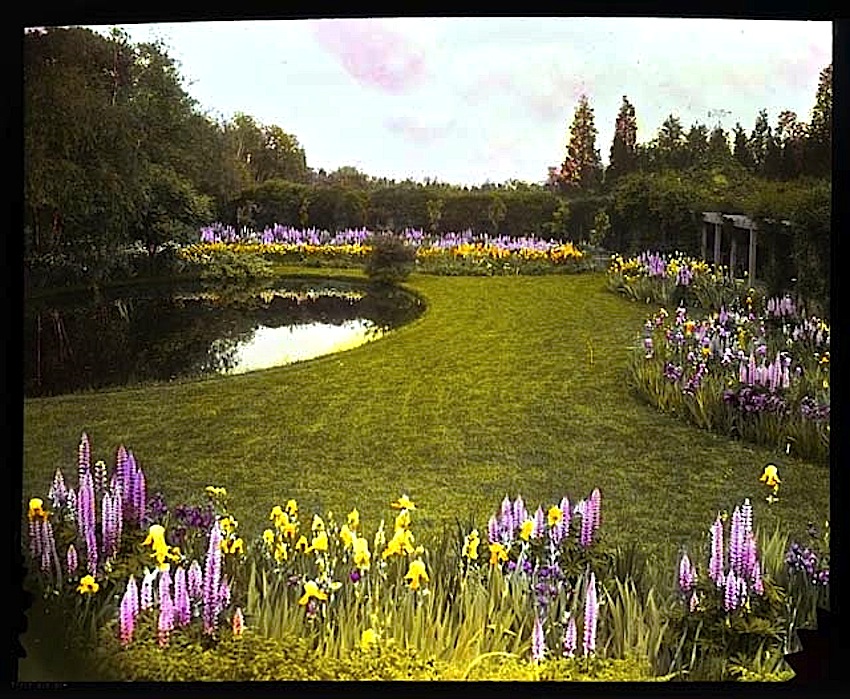
Sunnie-Holme


“Sunnie-Holme,” Fairfield, Connecticut, ca. 1930, a hand-colored glass lantern slide by John Duer Scott, via Archives of American Gardens, Smithsonian Institution Commons on flickr.

Sunnie-Holme was the summer residence of Annie Burr Jennings, whose father made fortunes in the California gold rush and as an investor in Standard Oil.  She designed at least some of the garden, influenced by the writings of Gertrude Jekyll. The house was demolished after her death in 1939 — a provision of her will. There is a photo here.

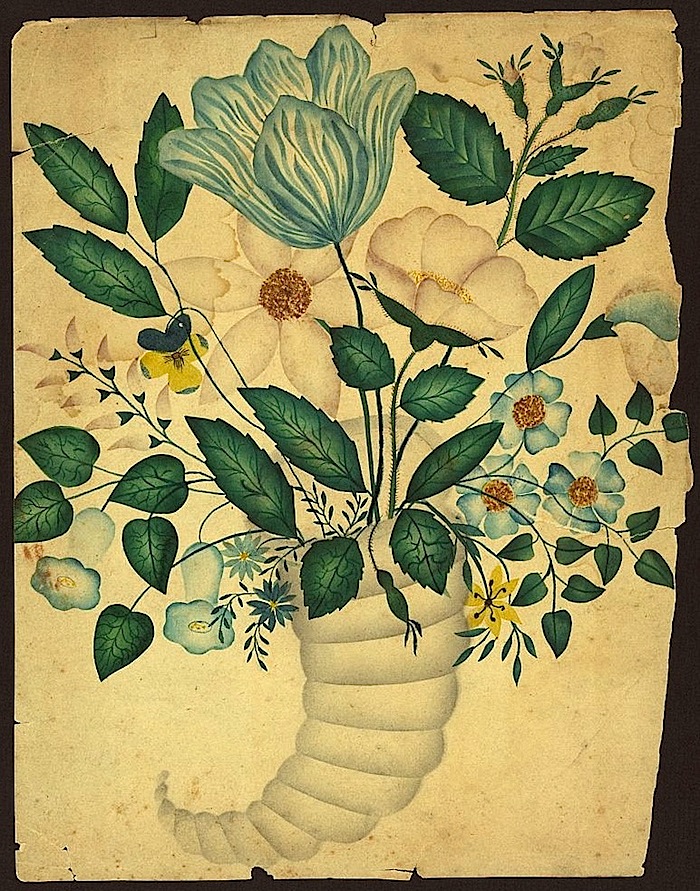
Arrangement in blue and pink

“Cornucopia of flowers,” between 1820 and 1890, an American watercolor by an unknown artist (possibly related to this?), via Library of Congress Prints and Photographs Division.

I wasn’t able to make my own flower arrangement this week for “In a vase on Monday,”‘ but to see what other garden bloggers have created, please visit host Cathy at Rambling in the Garden.

Zion path

It’s National Trails Day.
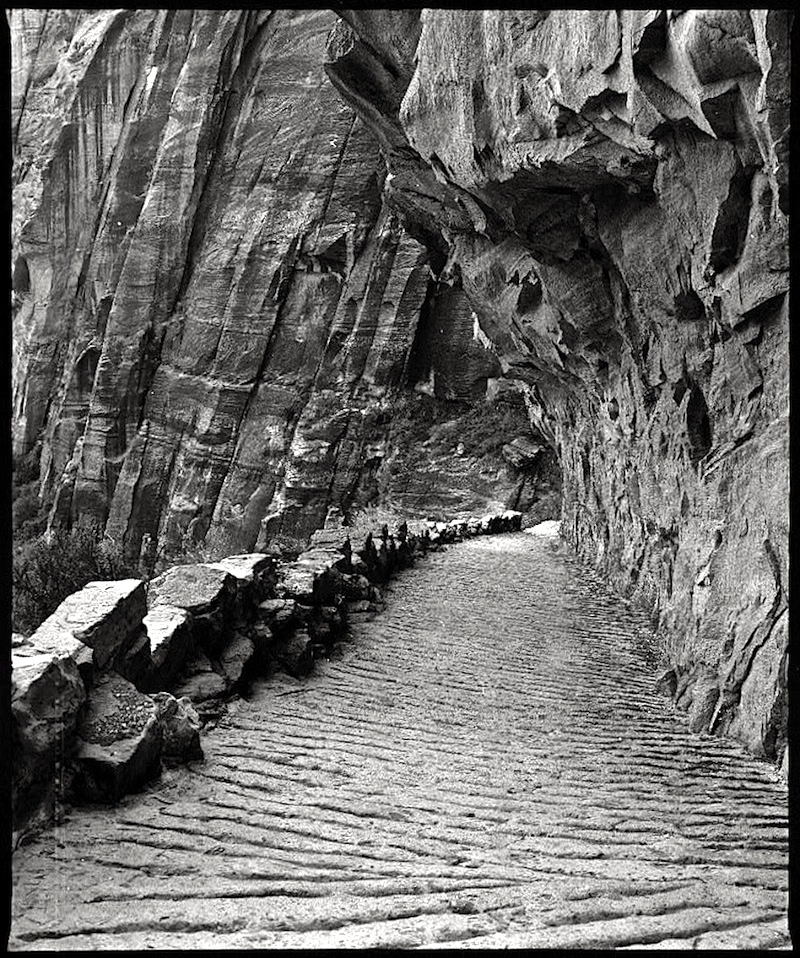
Trail, Zion Natl Park, Utah, 1980s, Library of CongressDetail of the West Rim Trail, looking southwest, Zion National Park, Washington County, Utah, 1984, by Clayton B. Fraser, via Historic American Engineering Record, Library of Congress Prints and Photographs Division.

The trail opened in 1926 and was paved in 1929 with oil mixed with sand and rock.  It was later repaved in concrete, most recently in 2007.

“Built of native stone and associated with the “National Park Service-Rustic” architectural style, the West Rim Trail possesses architectural integrity,” says the Record.  “Rock used in the masonry switchback walls was quarried locally and shaped as little as possible to provide a rough appearance, yet stable construction.”  You can read more here.

Oswego, N.Y.

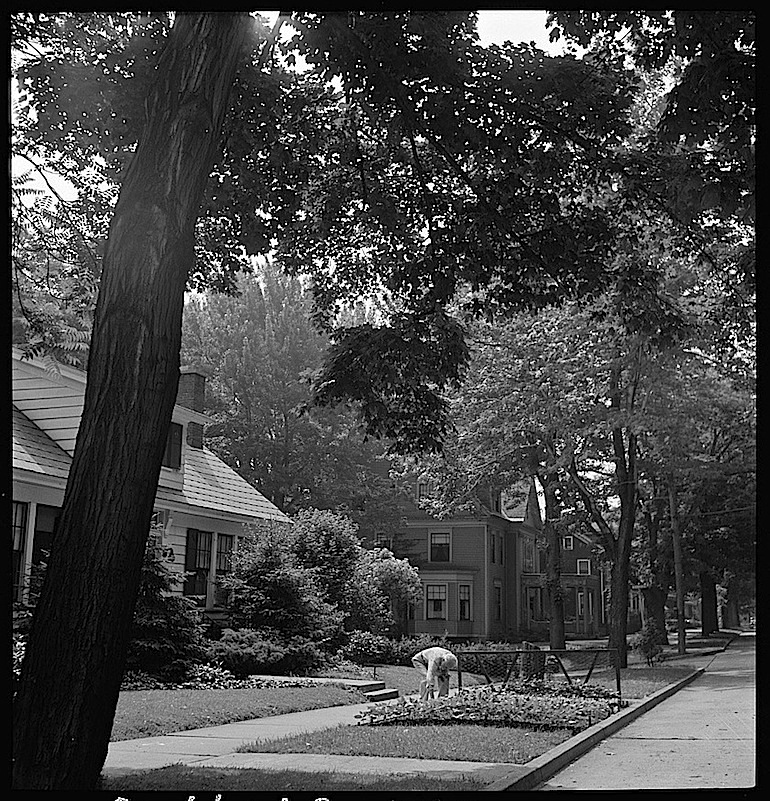
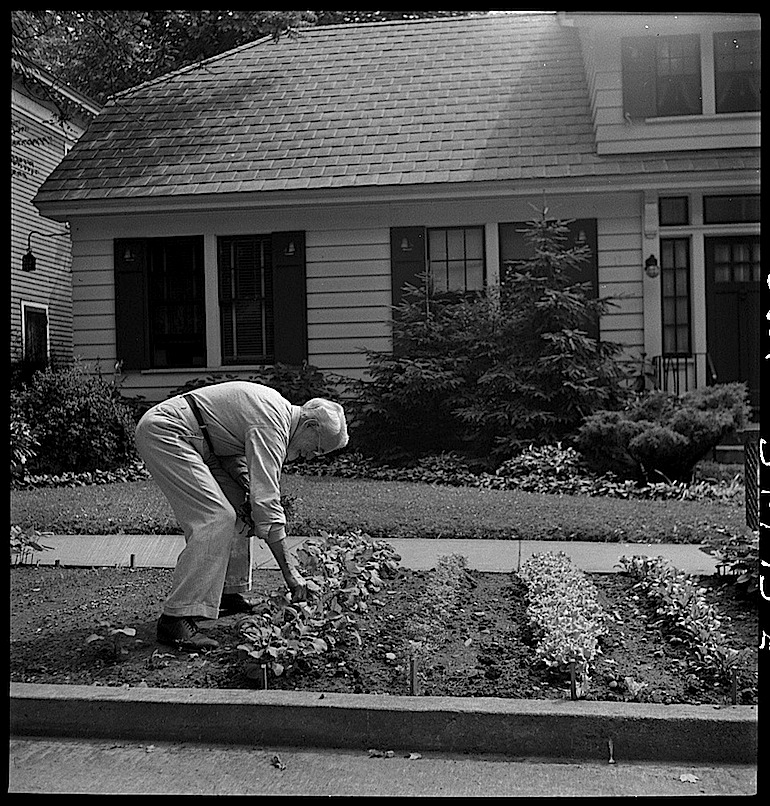
“A citizen working on Sunday morning in the victory garden he has made on the edge of the street,” Oswego, New York, June 1943, by Marjory Collinsvia Library of Congress Prints and Photographs Division (all photos here).

“Reports estimate that by 1944, between 18-20 million families with victory gardens were providing 40 percent of the vegetables in America,” according to Smithsonian Gardens.

Showing his wife vegetables as she starts on her way to church.