Vintage landscape: take water, add children, part II

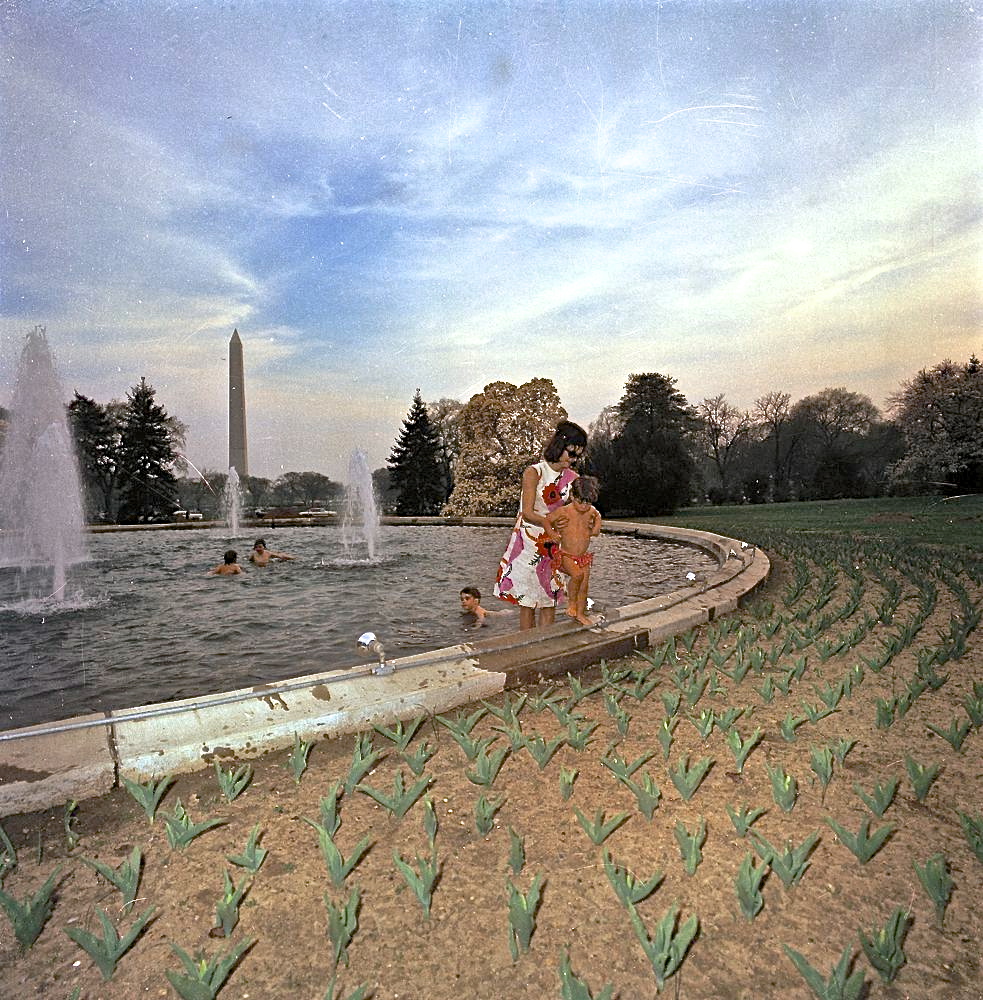
White House children's party, April 4, 1963/JFK Presidential Library

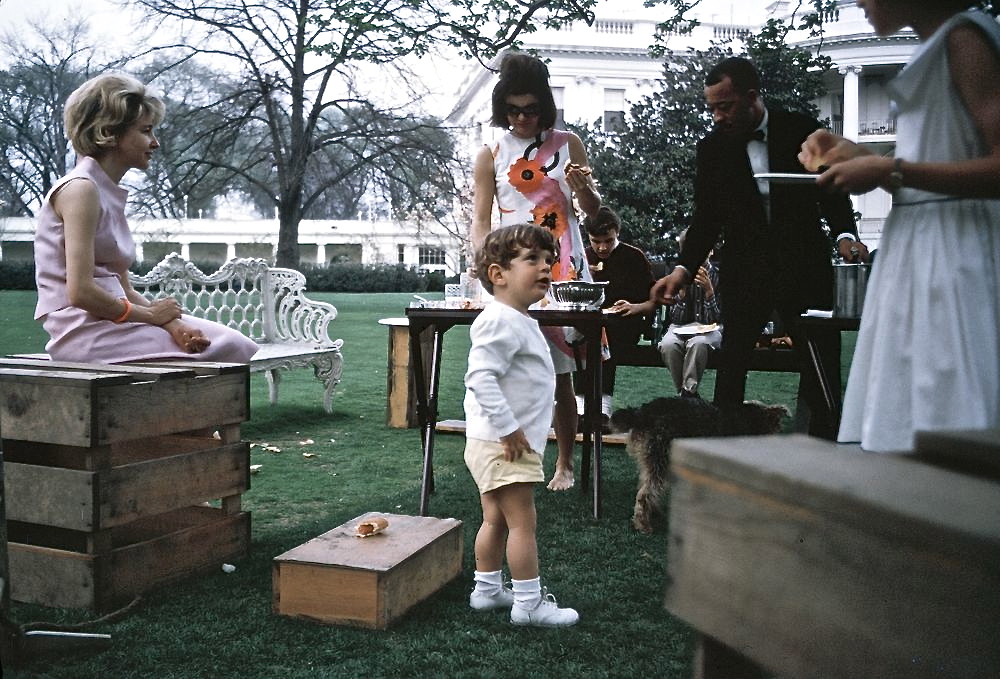
Children’s party on the South Lawn of the White House, April 4, 1963.

All photos are by Cecil Stoughton (Office of the Military Aide to the President), via the John F. Kennedy Presidential Library and Museum.

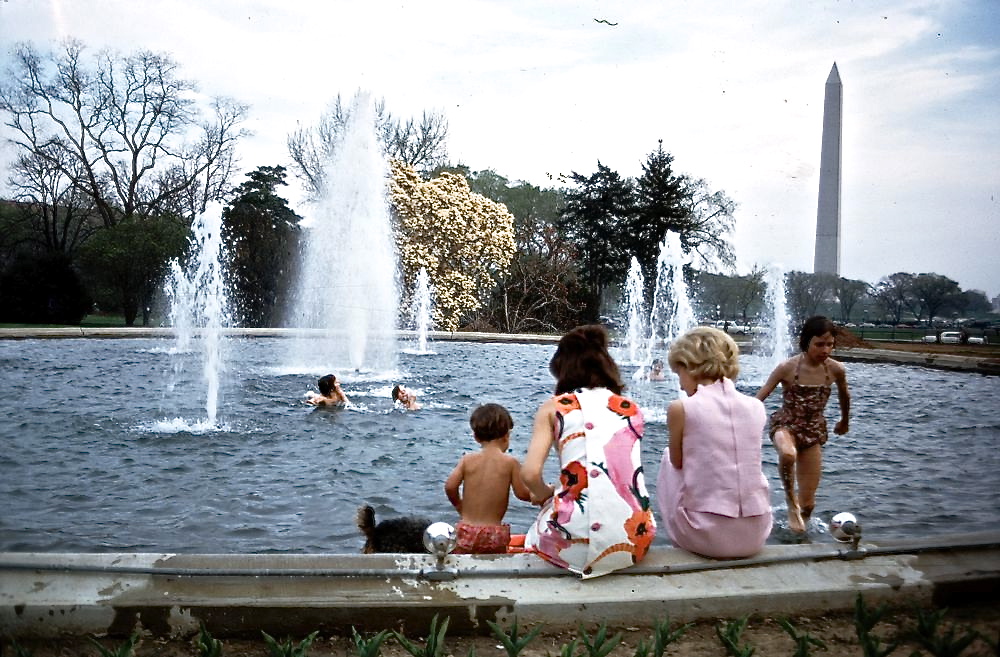
White House children's party, April 4, 1963/JFK Presidential Library

If you were wondering whether to put in a super-huge fountain or a swimming pool, please note that you can have both in one.

White House children's party, April 4, 1963/JFK Presidential Library

“Take water. . ., part I,” is here.

Remember summer? Bubbles filled
the fountain, and we splashed. We drowned
in Eden. . .

— Robert Lowell, from “The Public Garden

Vintage landscape: Grey Gardens

Billboard near the High Line, NYC/enclos*ure While walking along the High Line in New York City last month, I spotted this billboard for a storage company.   It made me remember these Library of Congress hand-colored lantern slides by Frances Benjamin Johnston and Mattie Edwards Hewitt.

View of the walled garden from upstairs in the house. All photos via the Library of Congress Prints and Photographs Division.
View from an upstairs window of the house.   All photos via the Library of Congress Prints and Photographs Division.

This was Grey Gardens in 1914 — long before it was made famous by the 1975 documentary.

The walled garden section of the four-acre estate in East Hampton, N.Y., was designed by Anna Gilman Hill and landscape architect Ruth Bramley Dean.

Anna and her husband, Robert Carmer Hill, had purchased the property in 1913.  They sold it to Phelan and Edith Bouvier Beale (whose daughter was Little Edie) in 1927.

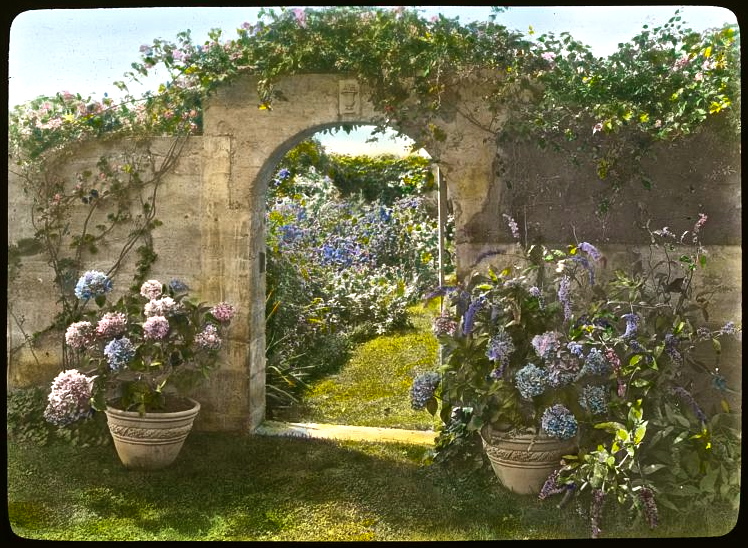
The northeast gate to the walled garden.

Hill imported the concrete walls from Spain.  She took the name for the house and garden from its environment.

It was truly a gray [sic] garden. The soft gray of the dunes, cement walls and sea mists gave us our color scheme as well as our name… nepeta, stachys, and pinks… clipped bunches of santolina, lavender and rosemary made gray mounds here and there. Only flowers in pale colors were allowed inside the walls, yet the effect was far from insipid….I close my eyes and sense again the scent of those wild roses, the caress of the hot sun on our backs as we sauntered to and fro from our bath and lazy mornings on the beach.

—Anna Gilman Hill, from Forty Years of Gardening

Beyond the property is the Atlantic Ocean.  The walled garden was 70′ x 40′.

A plan of the garden, artist unknown.

The estate (now two acres) has been owned by Ben Bradlee (formerly editor-in-chief of The Washington Post) and Sally Quinn since 1979.  They have restored both the house and garden.

Now the land between the walled garden and the ocean is filled with newer houses and gardens, and there is a very tall hedge just behind the far wall and the pergola.

The northeast gate.
The northeast gate.
The original photograph before hand coloring.
The bench inside the northeast gate.
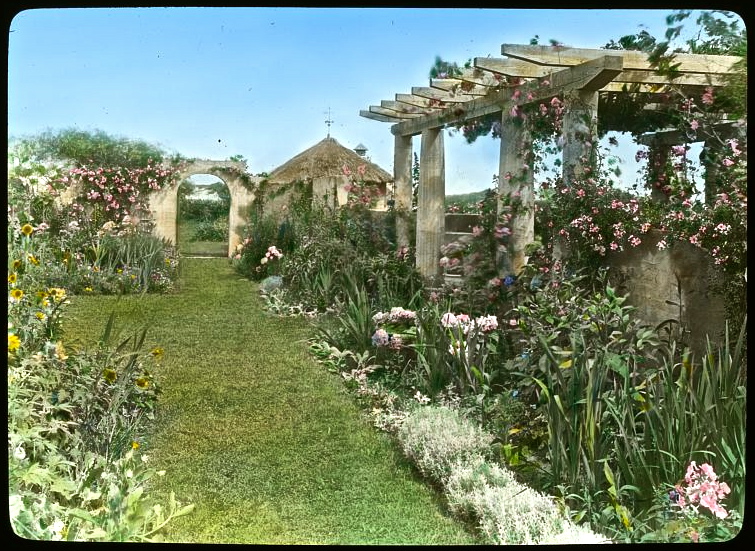
Looking west to pergola.
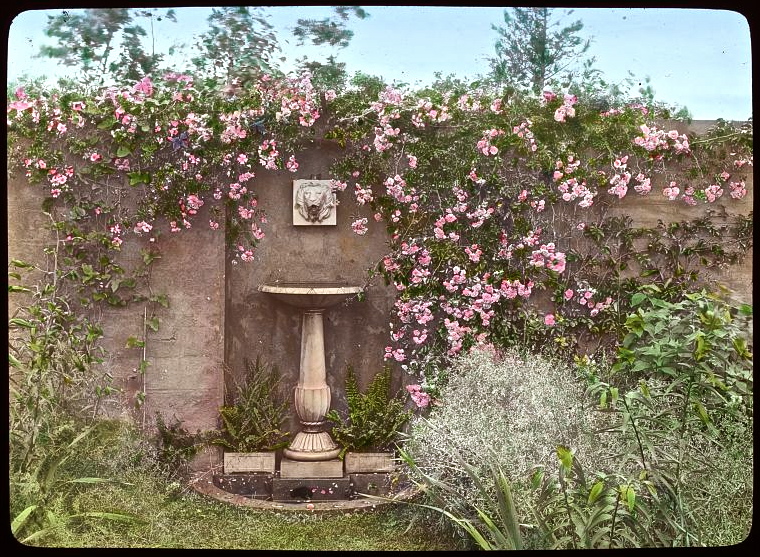
Birdbath on west wall.
Pergola and tool house gate.
East gate to the tool house.
The garden tool house.
Sunroom in the house overlooking the walled garden.

The open doorway in the photo above lined up with the pergola.  It seems that, at the time of this photo, there was an opening in the garden wall between the house and pergola.  But I can’t tell if the opening was there before or after the time of the other photographs.

Birdbath.
Birdbath.
Dovecote.
Dovecote.

Vintage landscape: the iris garden

A little Sunday morning prettiness.

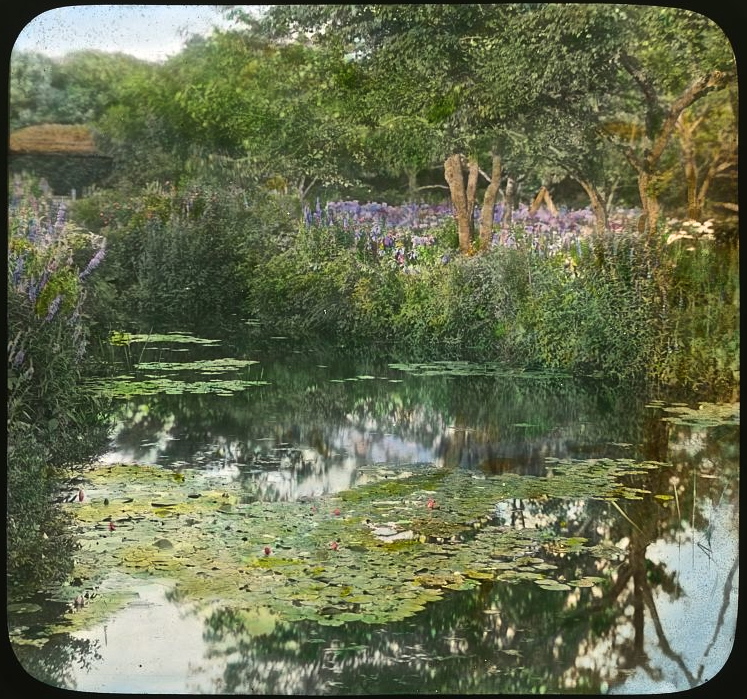
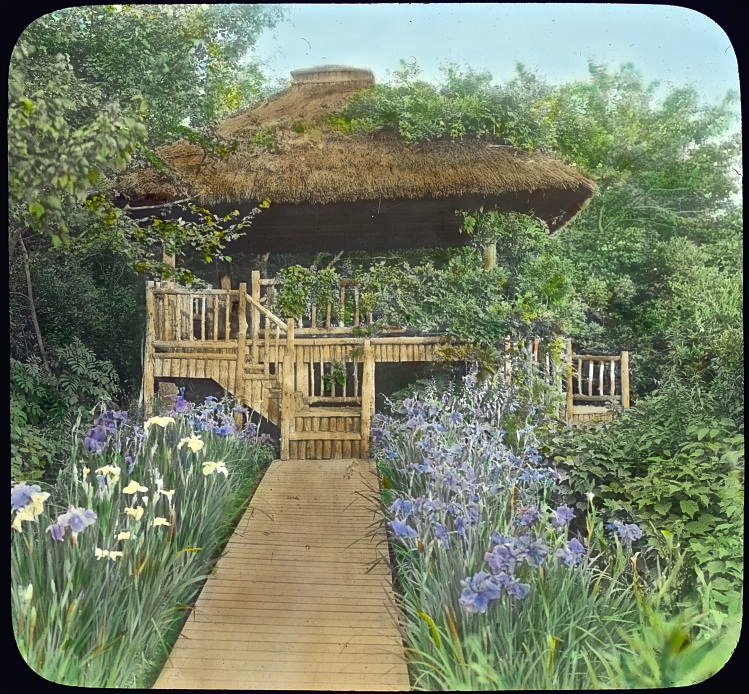
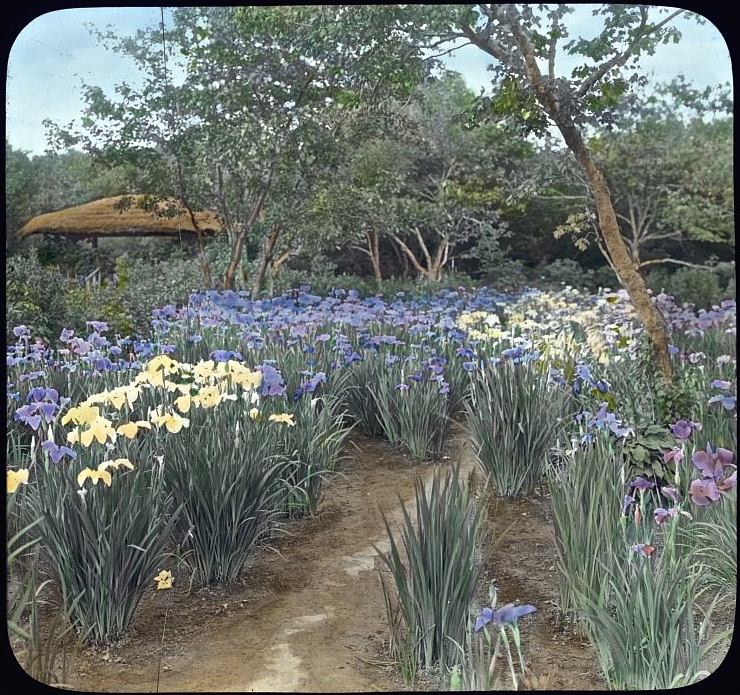
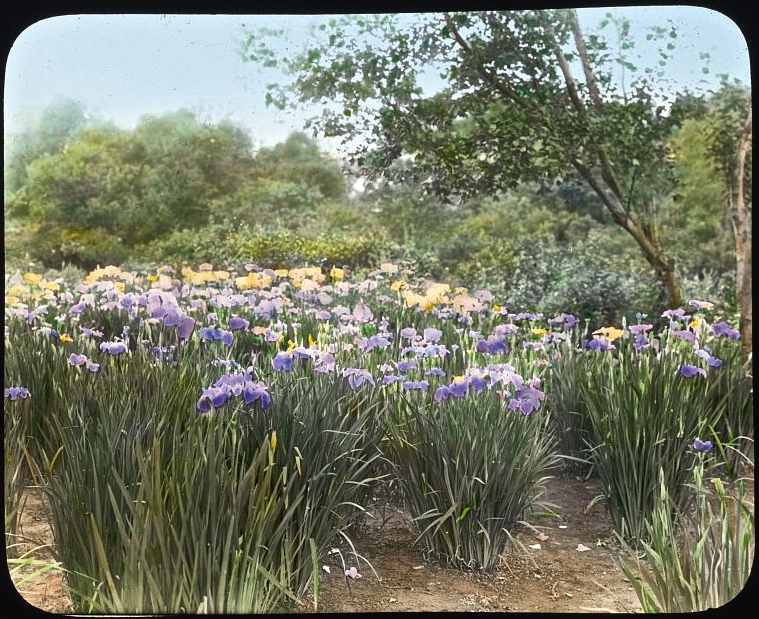
Japanese iris garden in East Hampton, NY/Library of Congress

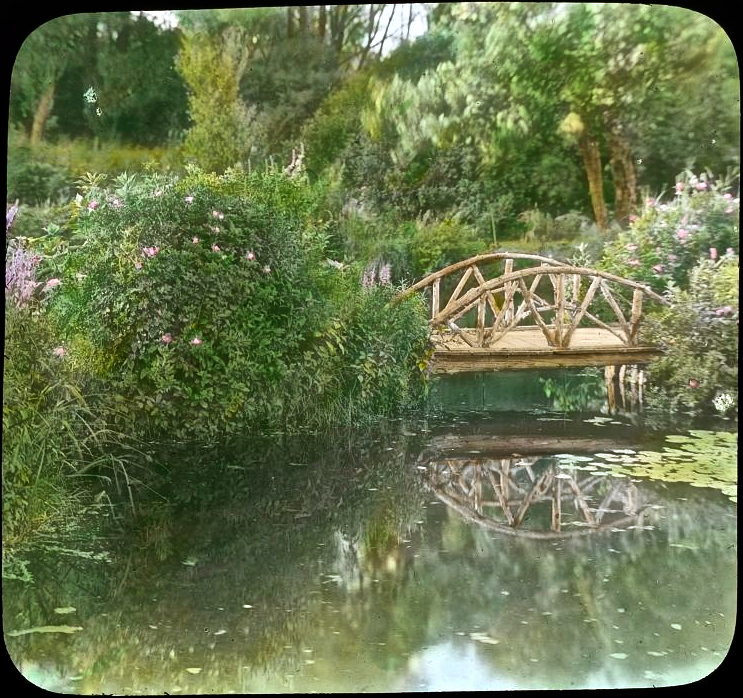
The Japanese iris garden at “Grey-Croft” in East Hampton, NY, in 1913, on hand-colored glass lantern slides.

Grey-Croft, Library of Congress

The images are part of the Frances Benjamin Johnston Collection of the Library of Congress Prints and Photographs Division.

Grey-Croft, Library of Congress

They were taken by Frances Benjamin Johnston and Mattie Edwards Hewitt, when the two photographers worked together. The slides were used by Johnston as part of her garden and historic house lecture series.

Grey-Croft, Library of Congress

The garden — owned at the time of these pictures by Stephen and Emma Cummins — is now part of the Nature Trail and Bird Sanctuary, according to the Library of Congress online catalogue.

Grey-Croft, Library of Congress

Having [divided, planted, fed, and weeded your irises] more or less faithfully, you will be rewarded by spectacular blooms in May. The iris is one of those plants that may as well be spectacularly well grown as not. Properly done — and it is at least as easy as growing tomatoes or corn or roses or things of that sort — the bloom will be so thick you cannot believe it at all, and the colors will be so sparkling and fresh you will jump (as it were) up and down.

They will be, as a rule, in total perfection by May 22, or whenever the year’s major hail and thunderstorm is scheduled.

— Henry Mitchell, from The Essential Earthman

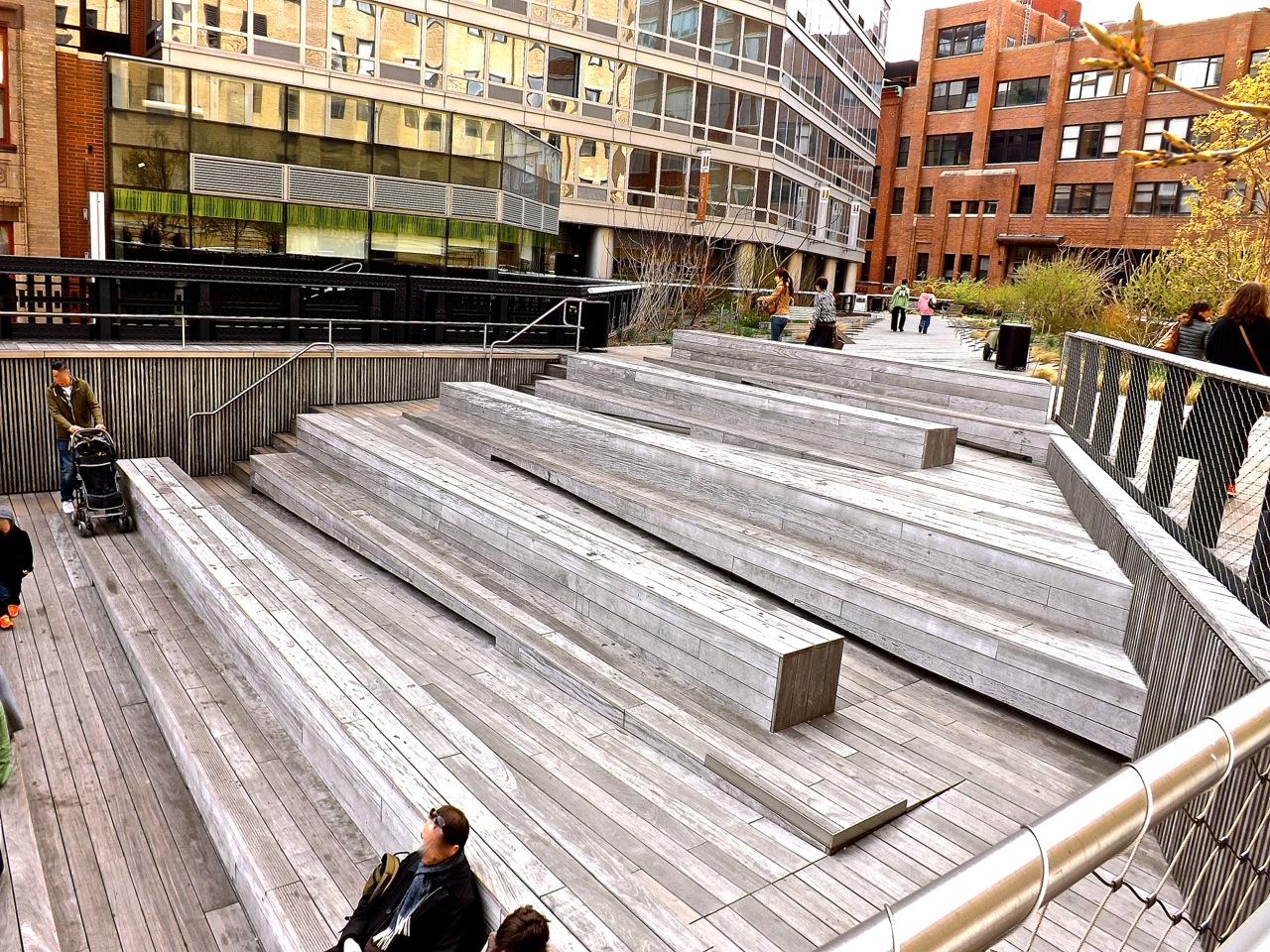
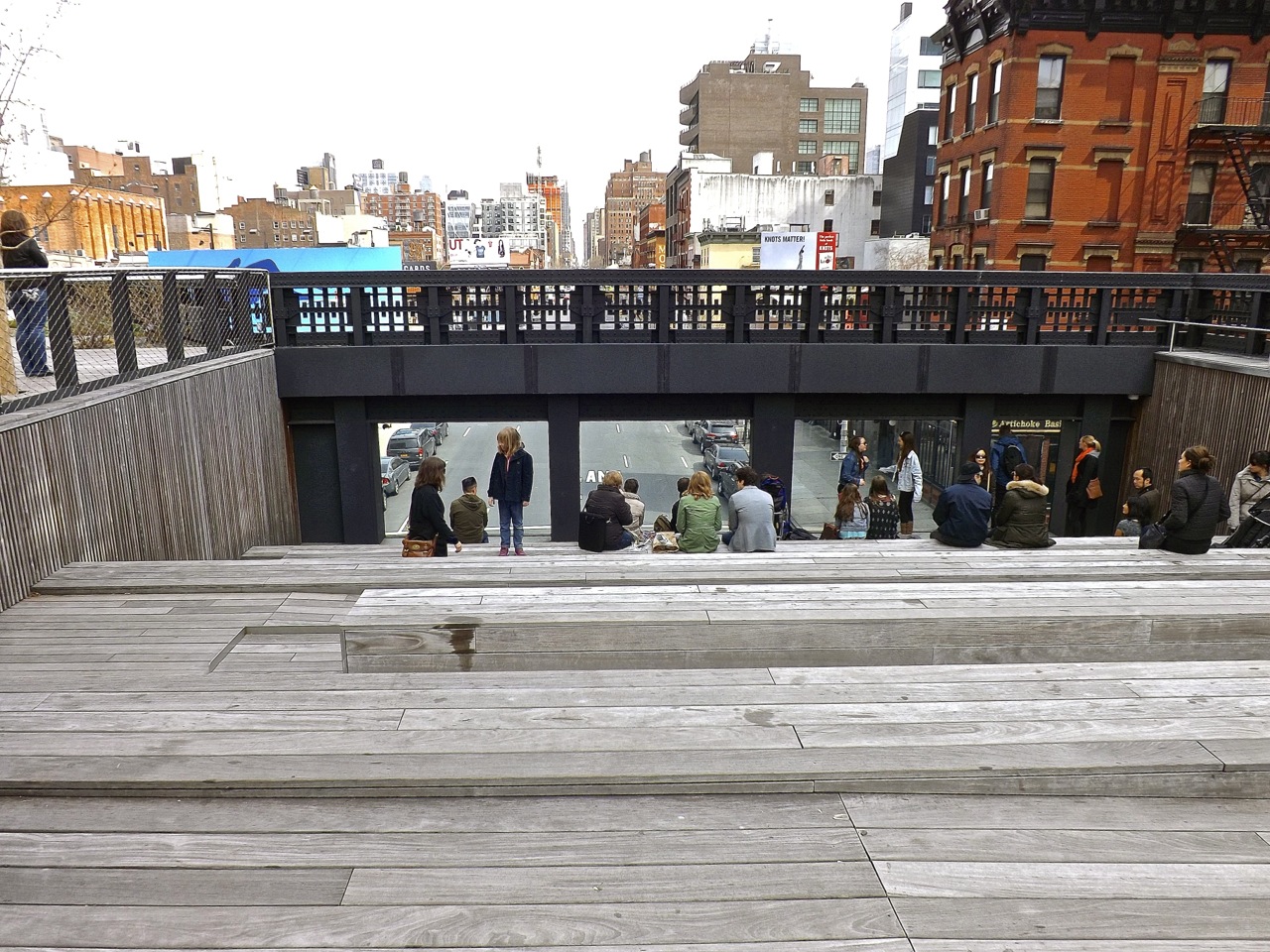
A study in steps: the High Line

High Line steps/enclos*ure

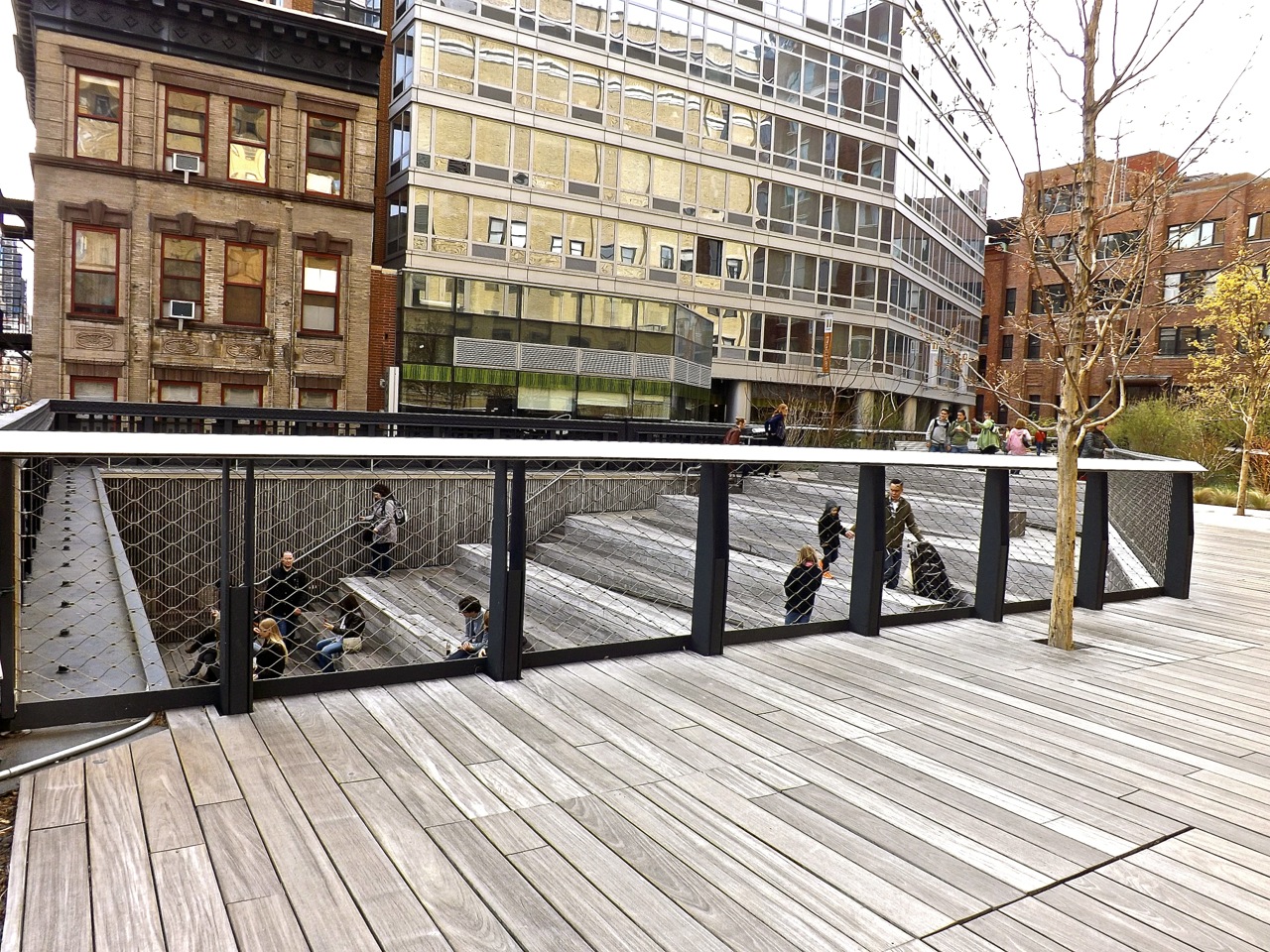
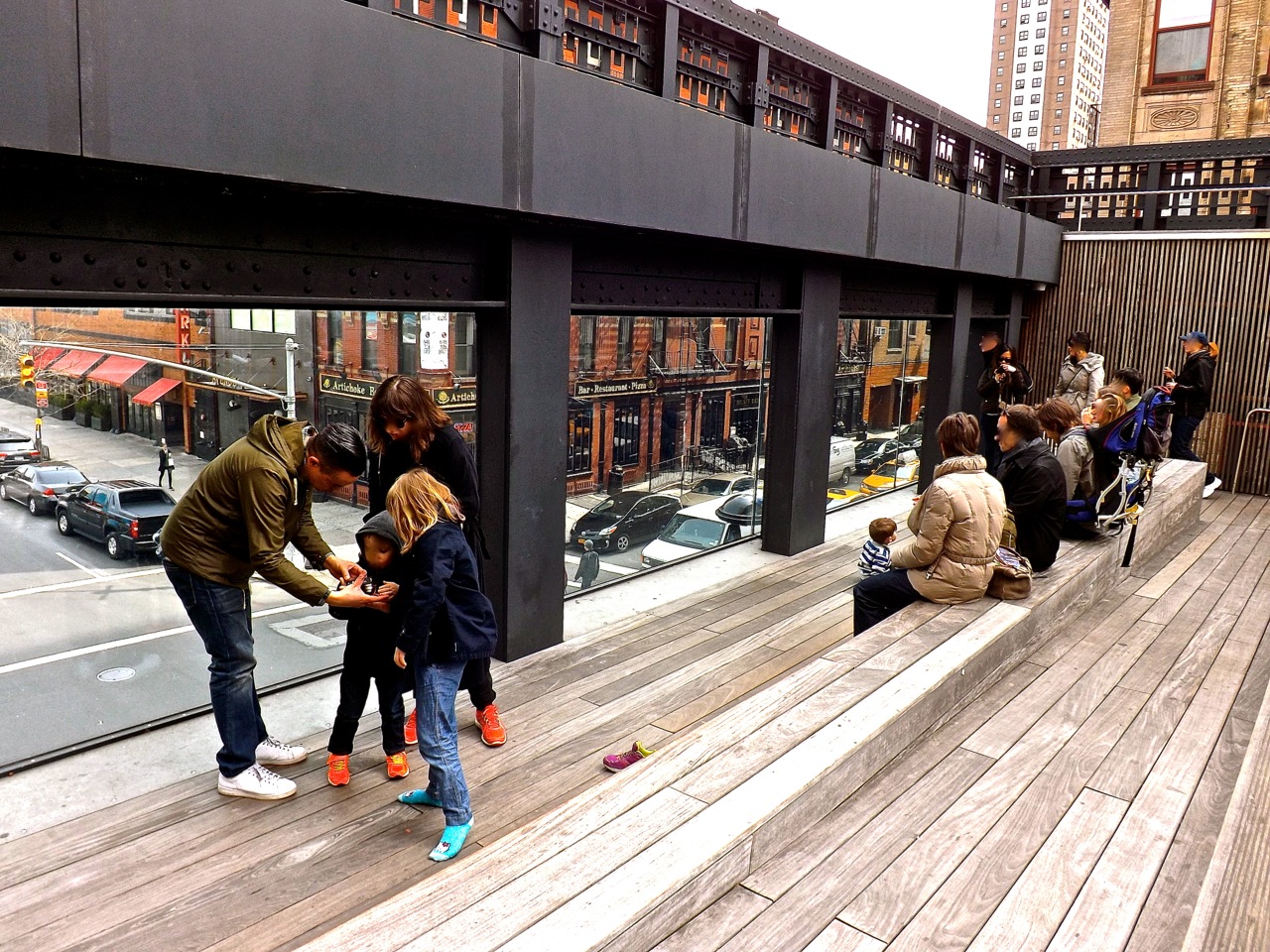
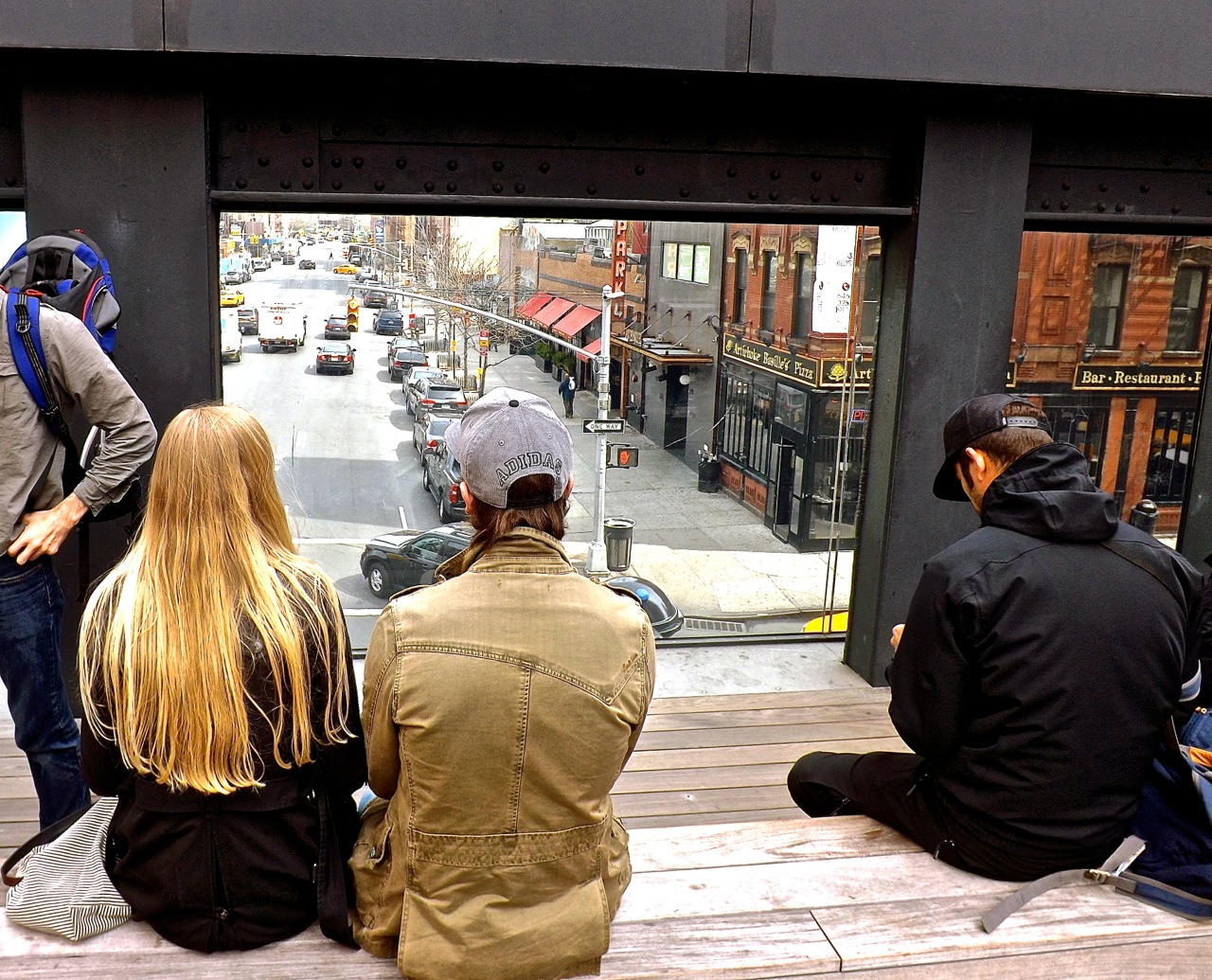
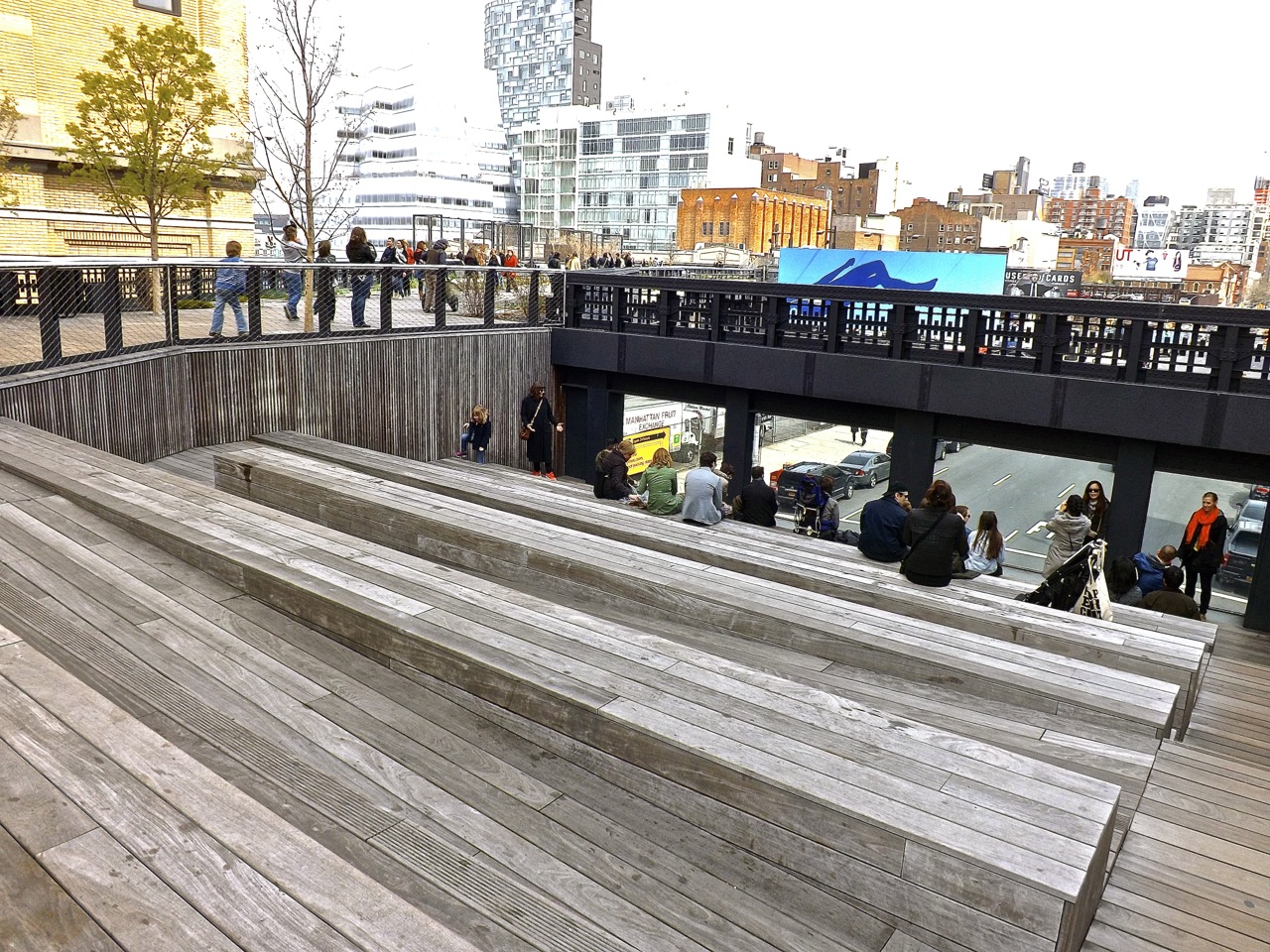
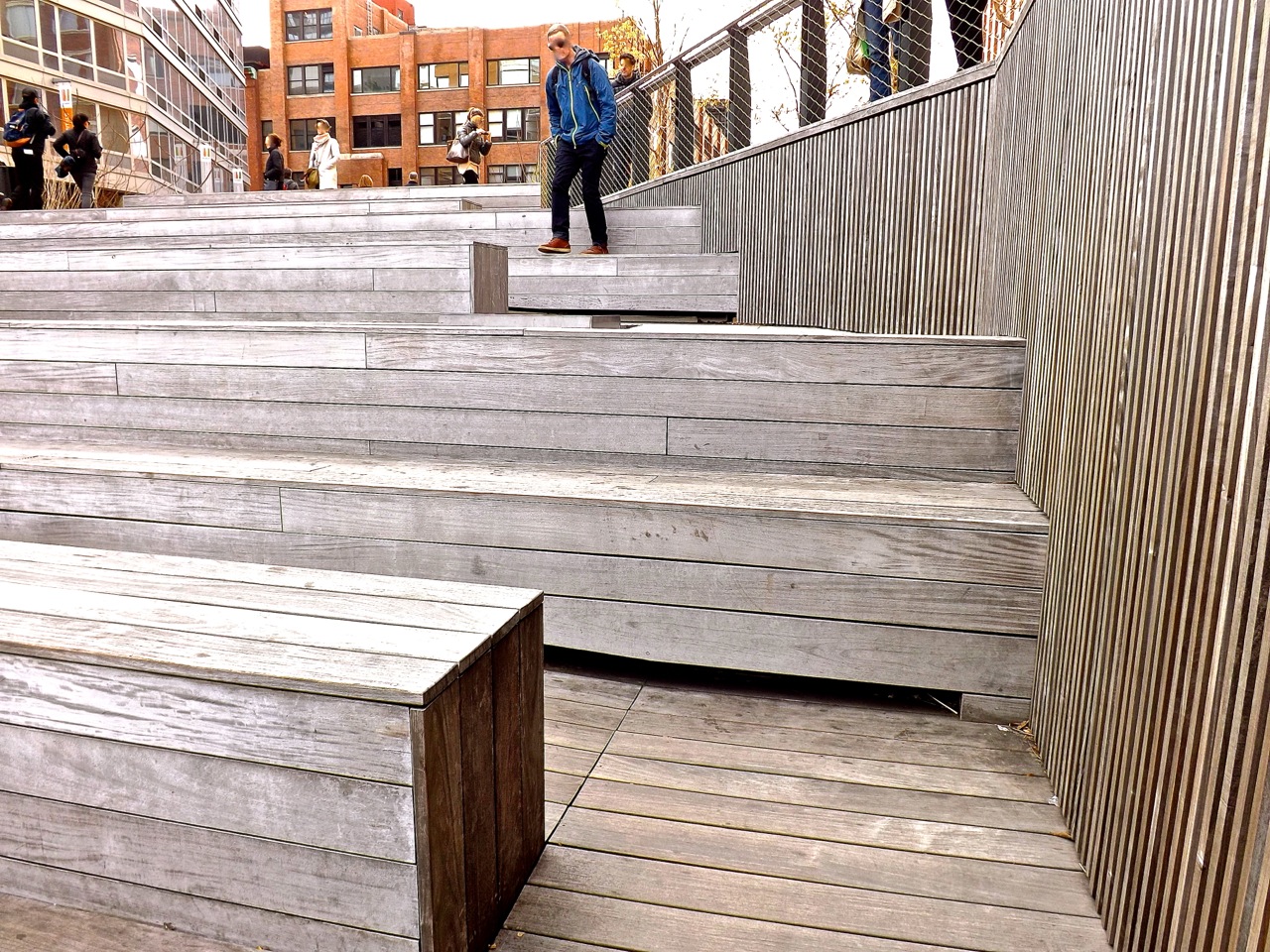
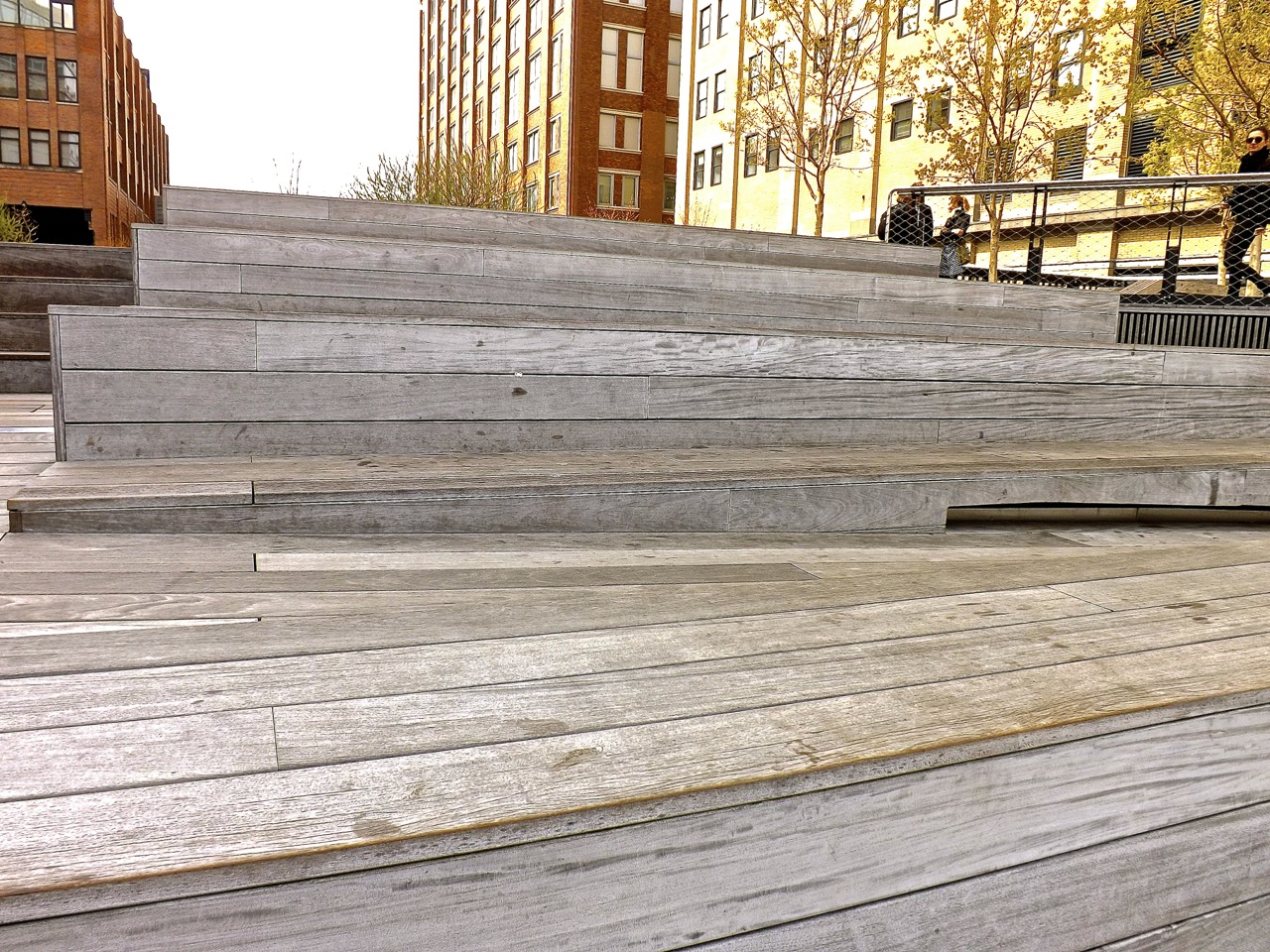
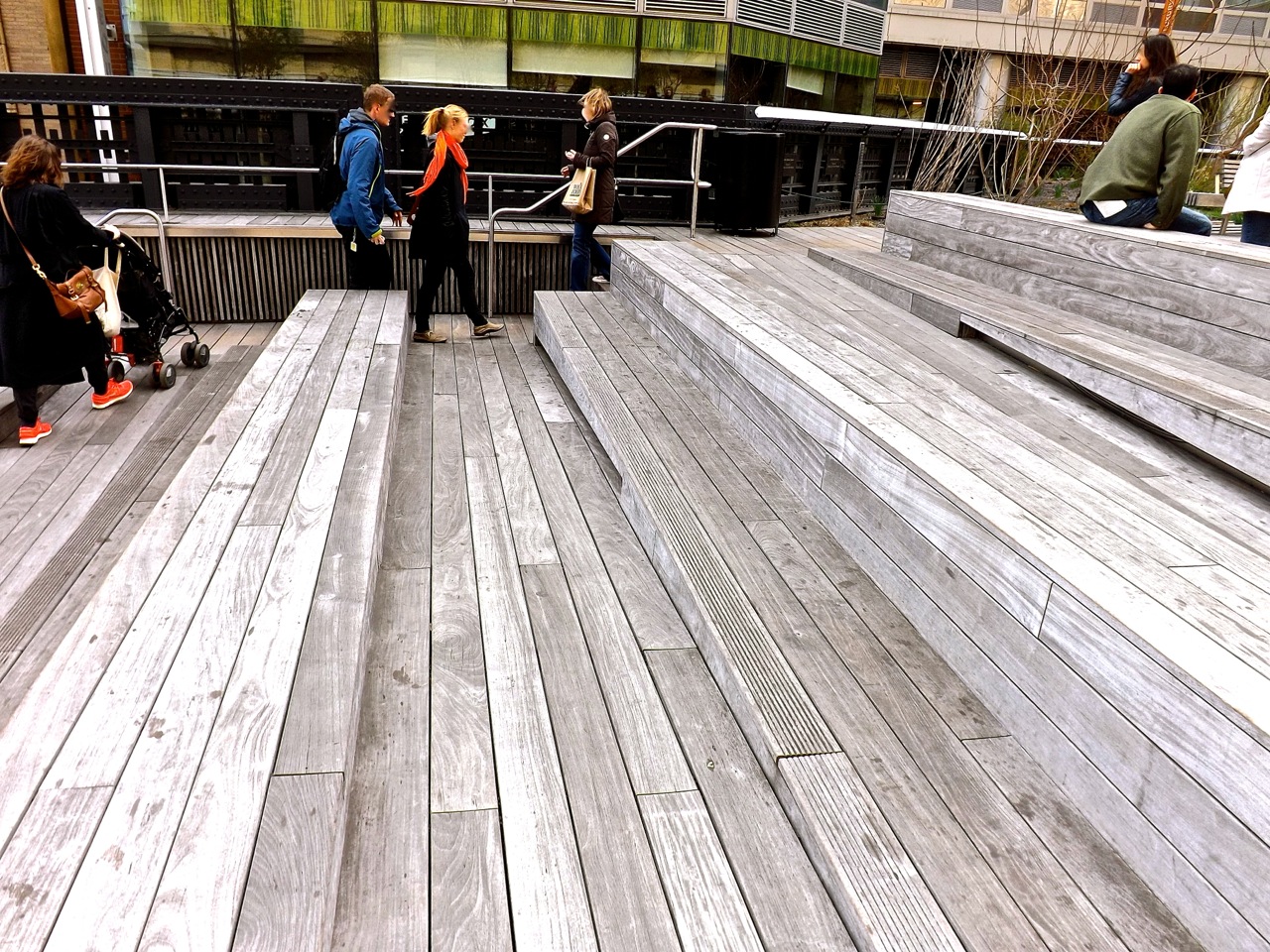
The arrangement of steps/benches at the 10th Ave. Square seems to be one of the more successful sections of the High Line — if you judge success  at least partly on the visitors’ use of and engagement with the site.

People watch the traffic with real interest, college students share snacks, couples kiss, and (perhaps a mark of a really good landscape structure) pre-teen boys find a way to engage in semi-dangerous horseplay.

High Line steps/enclos*ure

Below: the windows overlook northbound 10th Ave.  (Click any photo for a clearer, larger view.)

High Line steps/enclos*ure

Below: at the back, the High Line walkway continues toward the Chelsea Market Passage.High Line steps/enclos*ure

High Line steps/enclos*ure

High Line steps/enclos*ure

Above and below:  the traffic becomes really interesting when framed out as if on a screen.High Line steps/enclos*ure

Below:  the blue billboard over the avenue is a work of art commissioned for the High Line.High Line steps/enclos*ure

High Line steps/enclos*ure

High Line steps/enclos*ure

Below: the boys were long-jumping from bench to bench.High Line steps/enclos*ure

Above and below:  there’s a little tripping hazard at this turn (in the center of the photos — click to enlarge).  It looks there just wasn’t enough room for the angle to run out.High Line steps/enclos*ure

High Line steps/enclos*ure

Below:  looking up.High Line steps/enclos*ure

High Line steps/enclos*ure

High Line steps/enclos*ure

High Line steps/enclos*ure

To scroll through a gallery of larger images, click on ‘Continue reading’ below.


A walk along the High Line in April

The High Line, NYC/enclos*ure

I want to share my photos from our walk along the High Line in New York City last month.

It was actually our second walk — I left my camera behind on the first. It’s such a remarkable place that my husband, who has limited patience for garden tourism, readily agreed to go back with me.

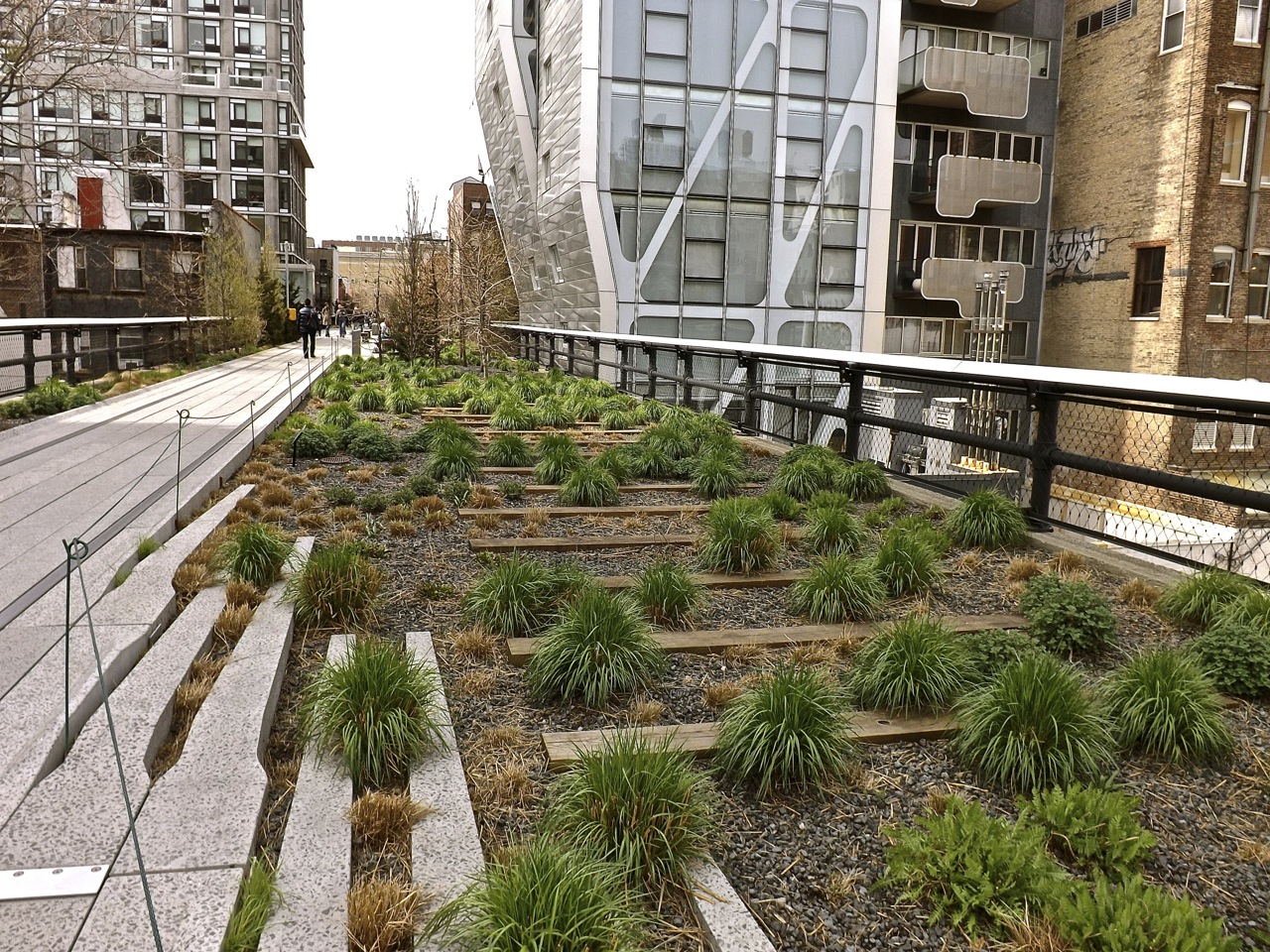
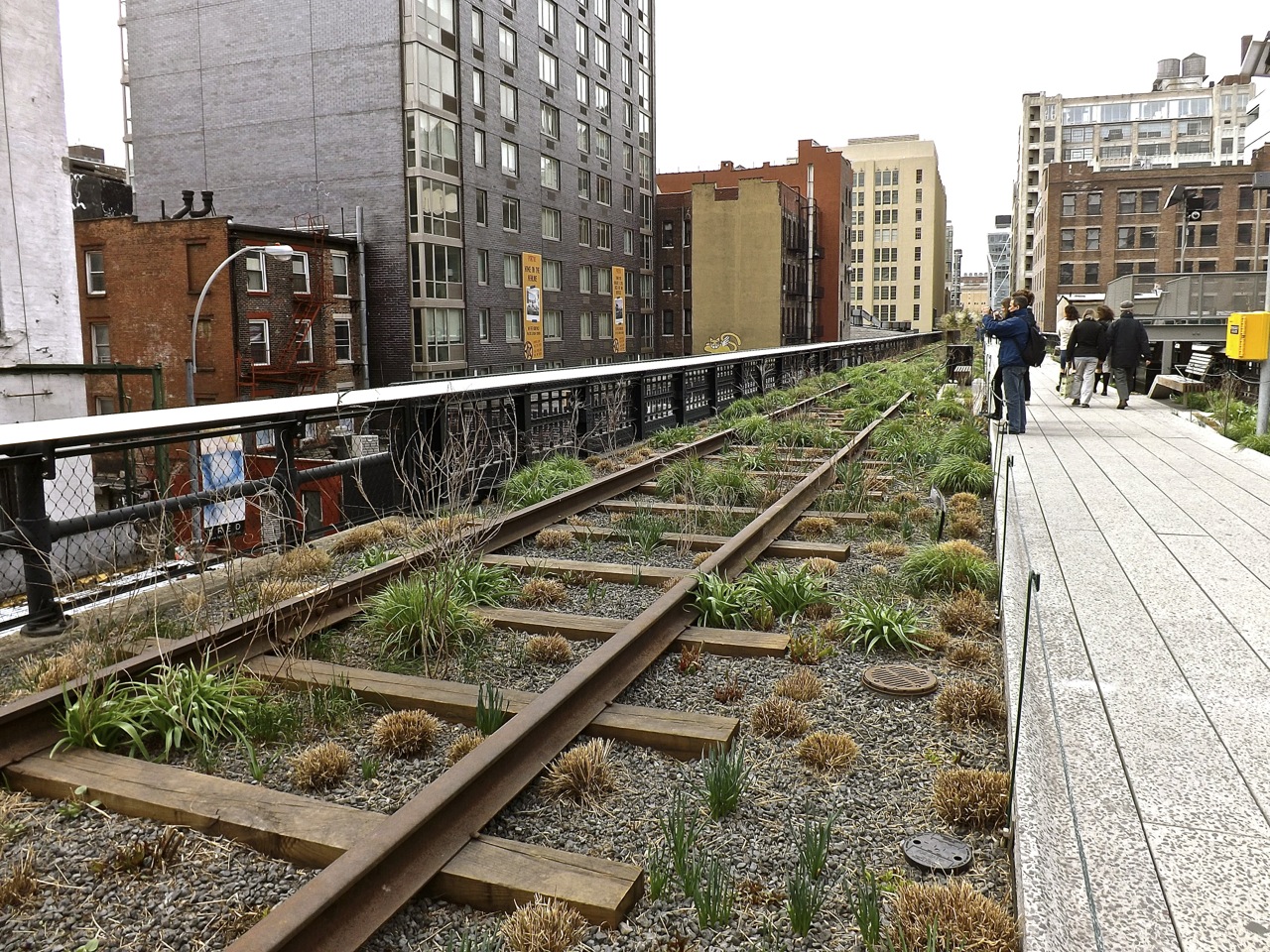
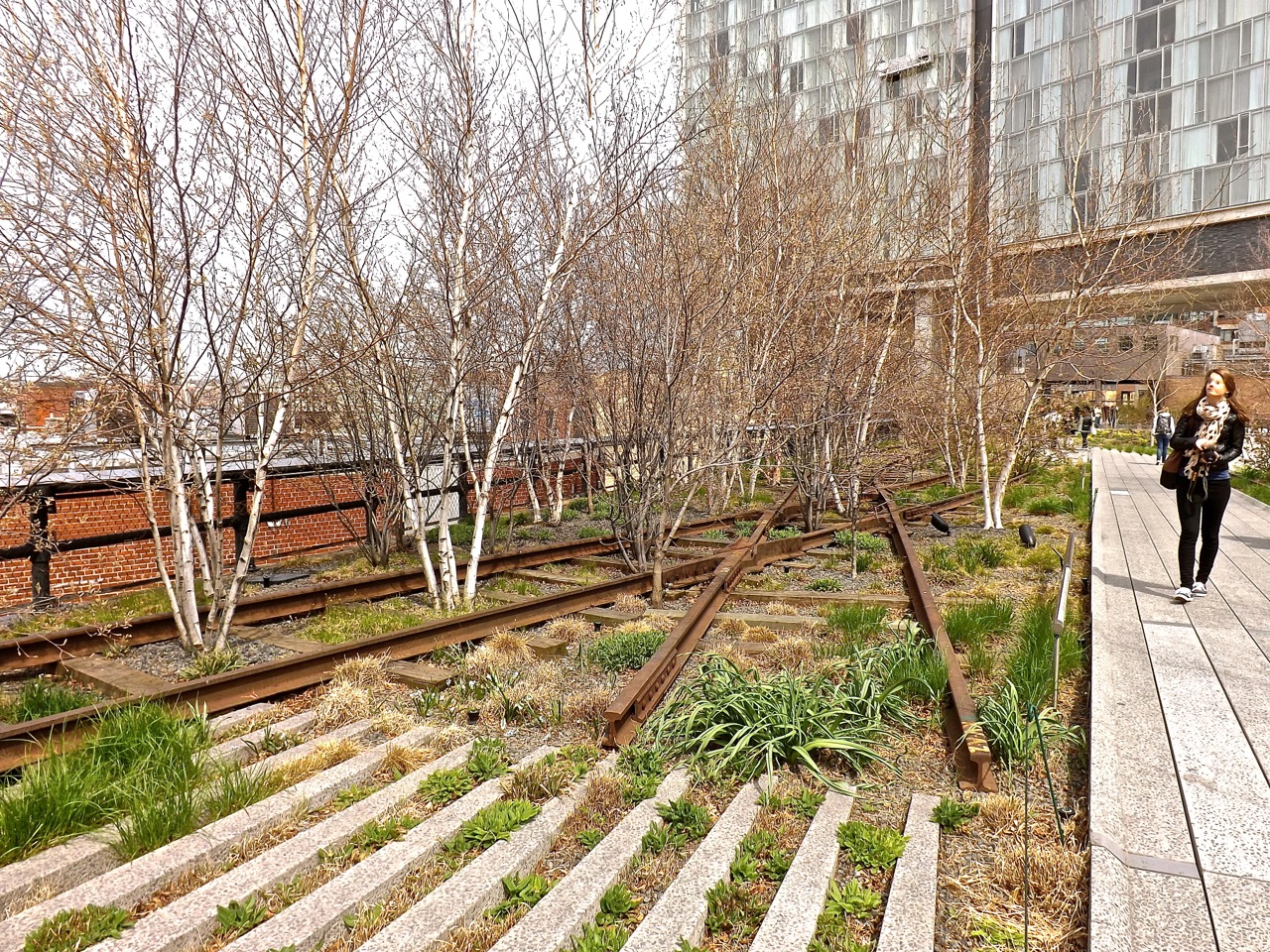
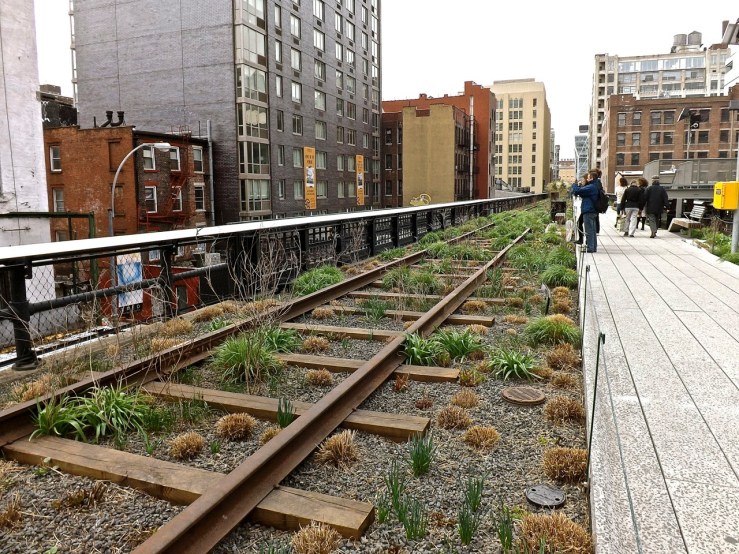
The High Line is a meadow and woodland park on top of about a mile of abandoned elevated railway line.

It trails through an crowded urban landscape and rather than offer you a retreat from the city, it puts you right up in the city’s face — with apartment windows and construction sites almost within touch and noisy traffic moving below.  The juxtaposition is thought-provoking, and the raised views are fascinating.
The High Line, NYC/enclos*ure

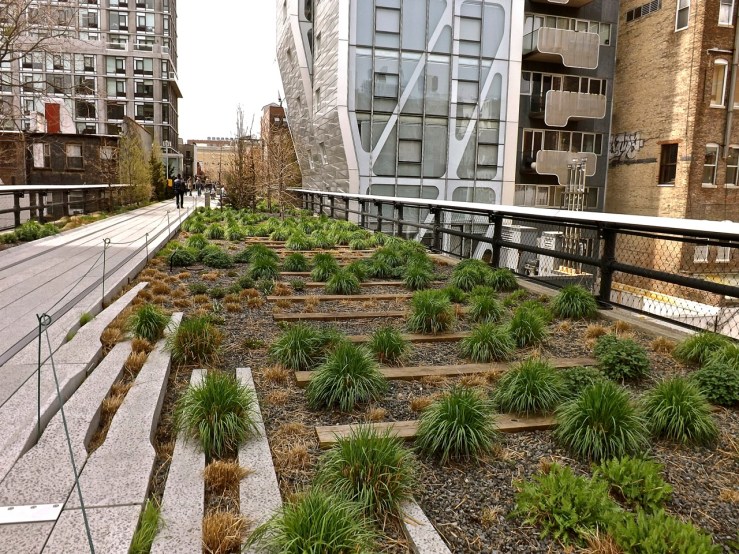
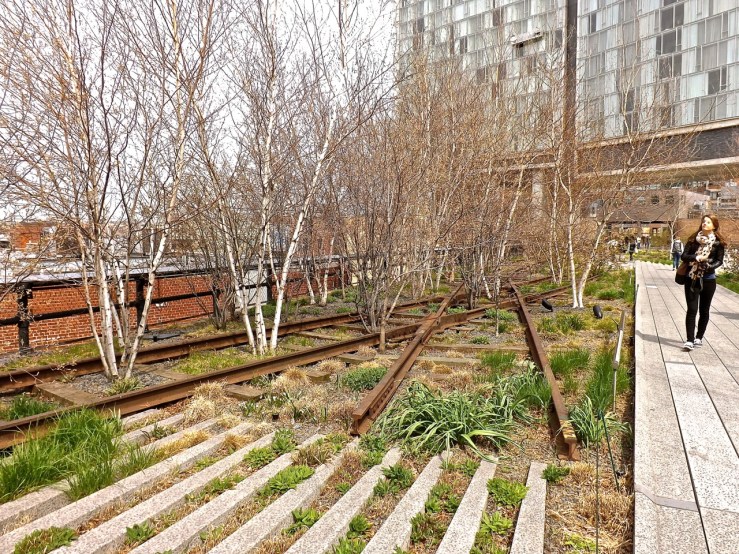
In early April, of course, we weren’t seeing most of the plants at their best, but it was interesting to see so clearly the arrangement and spacing of the grasses, some emerging perennials, and the shrubs and small trees — as well as the features of the built structure.

The High Line’s planting plans were designed by Piet Oudolf, and  I found a good summary of his approach to the meadow areas in an article by Tom Stuart-Smith in The Telegraph.

For Oudolf, planting has always been about creating moods and eliciting emotions. But the [High Line] gains an extra weight by connecting us to how plants grow in the wild. The design becomes much more about creating a plant community rather than a collection of individuals. To take one section of planting . . . , the plan shows a loose matrix of grass species planted throughout; in this case a mix of Panicum virgatum ‘Heiliger Hain’ and Calamagrostis brachytricha spaced about 1-1.5m apart with about 20 other varieties of perennial flower spread through in different-sized groups, from one plant used just singly to another planted in generous groups. The flowers therefore are always seen within a matrix of grasses, just as they might be in nature.

The full article — related to the recent publication of the book Planting, A New Perspective — is very interesting about Oudolf’s technique and influence.
The High Line, NYC/enclos*ure

I found my photos weren’t very useful at a few inches wide, so please click on the first thumbnail below to scroll through full-size images.

(The plants of the High Line aren’t labeled, but, you can download a list to take with you here.)